

Why the AI investment landscape matters now
In 2026, it feels like artificial intelligence is everywhere. From new apps to big company changes, AI is reshaping our world very quickly. This makes the world of AI startups a really important place to watch.

It’s not just about exciting new inventions anymore. It’s about big money and important rules that affect everyone.
Just look at the numbers. The first three months of 2026 saw a huge amount of money, about $267.2 billion, put into ventures, making it one for the record books, with AI taking center stage Venture Monitor. In fact, AI has become the main driver for venture capital, accounting for almost two-thirds of all deal value in the US Insights 2026 | View on Venture Capital.
This means that understanding who the top AI startups are is not just for tech fans. It’s crucial for big investors who want to put their money in the right places. It’s also vital for governments and lawmakers who need to create fair rules for these new technologies. They need to know which companies are leading the way so they can keep up with the changes and protect people. Ignoring this rapidly moving sector would mean missing out on big chances and not being ready for new challenges.
This guide will give you a clear, honest look at the world of top AI startups. We’ll explore the newest market trends and how funding is happening right now. We’ll also highlight some of the standout startups making a real difference. Plus, we’ll talk about the rules and risks coming from governments, and smart ways investors are using their money. Our goal is to help you understand this fast-paced world better. To stay fully informed on this evolving topic, get clear daily AI updates from The AI Newsletter Worth Reading. We will also look at how to navigate AI regulation 2026 to avoid risks.
1) Market landscape: Where AI investment is concentrated in 2026
So, where is all this record-breaking money actually going within the world of AI? In 2026, the big investments are not spread out evenly. Instead, they are focused on specific places and types of AI businesses.
Where the Money Flows: Top AI Hubs
Most of the money for new AI companies stays in the United States.

Almost 88% of all AI startup funding this year has gone to companies based in the U.S. AI Startup Funding Boom. In 2025, the U.S. had 1,953 new AI companies get funding. This is more than ten times higher than any other country The 2026 AI Index Report.
Within the U.S., the San Francisco Bay Area is still the main leader. It has many foundation models, the infrastructure needed, and plenty of money. New York City is also a big hub, especially for AI that helps with money matters Top 10 AI-Native Tech Hubs. Outside the U.S., places like Germany and the Netherlands are becoming important for AI talent in Europe AI talent hubs in Europe. Canada also has its own innovation areas getting funding to push AI forward Canada’s Global Innovation Clusters.
Key Areas for AI Investment
Investors are putting their money into specific kinds of AI. Here are the top areas:
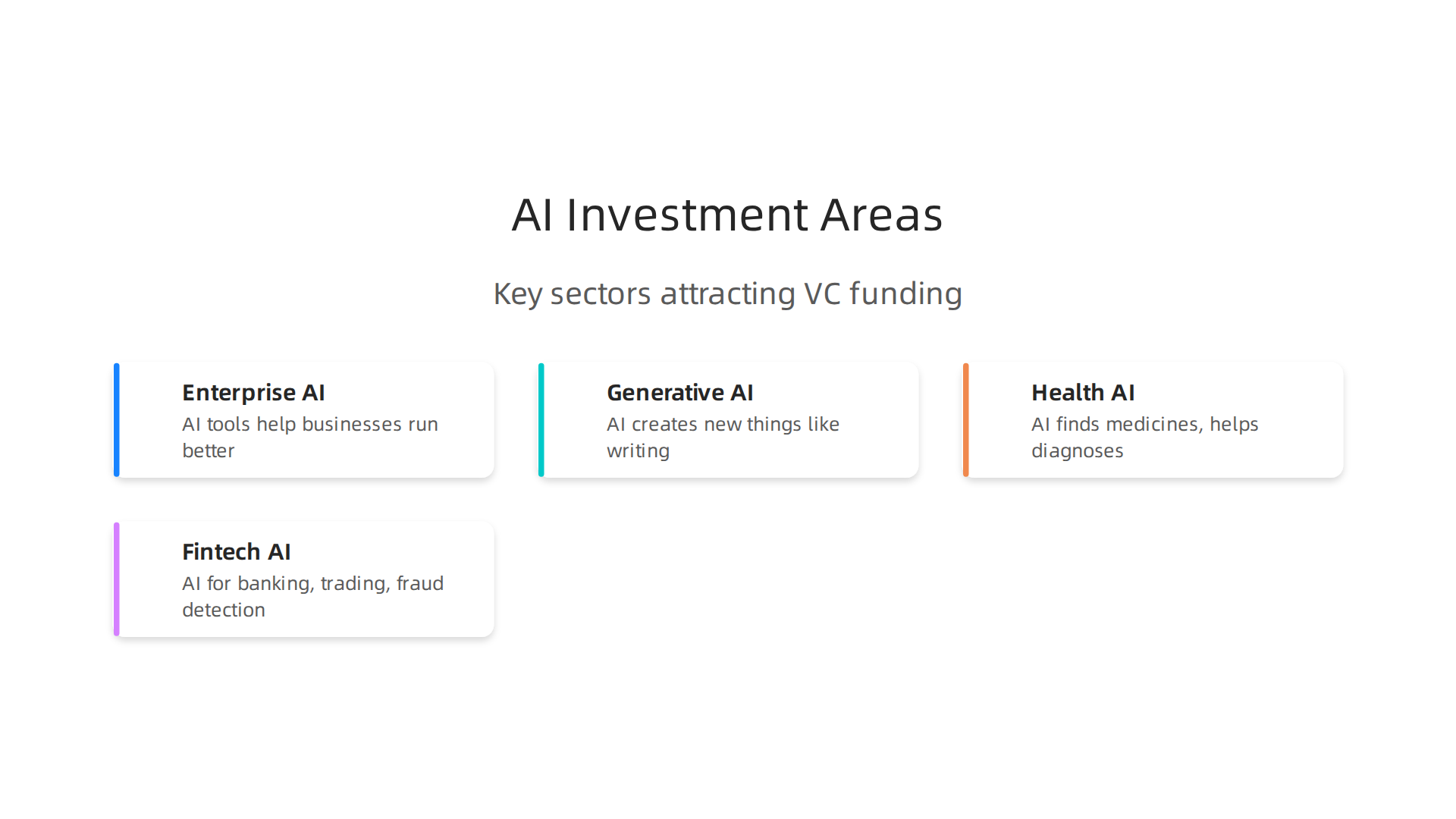
- Enterprise AI: This means AI tools that help businesses run better and faster. These are solutions for companies to improve customer service, automate tasks, or make decisions. Many top AI startups are building solutions in this space. Think of companies creating smart chatbots or tools that help employees with daily tasks. Examples might include advanced analytics for businesses or systems that streamline operations, like those offered by forethought ai or amplify ai.
- Generative AI: This type of AI creates new things, like writing stories, making pictures, or even designing code. It’s a huge focus for investment. Big tech giants like Google, Microsoft, IBM, Nvidia, and Samsung already own over 60% of the patents in generative AI from 2020 to 2025 GenAI patent landscape.
- Health AI: AI is making big waves in healthcare. It’s used to find new medicines, help doctors with diagnoses, and make health systems more efficient. Investment in AI-driven biopharmaceutical companies is a key trend Trends in AI-Driven Venture Capital Investment.
- Fintech AI: This combines AI with financial technology. It’s used in banking, trading, fraud detection, and giving financial advice. Many new top AI startups are coming up with smart ways to handle money using AI.
How Big Changes and Rules Shape Investments
The overall economy and new government rules play a big part in where investors put their money. In 2026, even though a lot of money is being invested, it’s often in fewer, larger deals AI Startup Funding This Quarter. This means investors are often picking companies they believe will become very successful. They might be looking for a flaw less ai approach to business.
Also, new rules about AI mean investors need to be extra careful. They want to make sure the companies they fund will follow these rules. Businesses are also planning to spend more on AI in 2026, especially on making AI workflows better How AI Is Driving Revenue. Understanding the details of deep tech enterprise AI is crucial for navigating this complex landscape. These changes mean that investors are looking for AI companies that are not only innovative but also stable and able to follow new rules.
The way money flows into AI startups is changing fast in 2026. While lots of cash is still being put into new AI companies, investors are being more careful about where it goes. This means fewer deals but often much bigger amounts

for the companies they do choose.
How Funding Rounds are Changing
Investors provide money to companies in different steps, called "rounds."
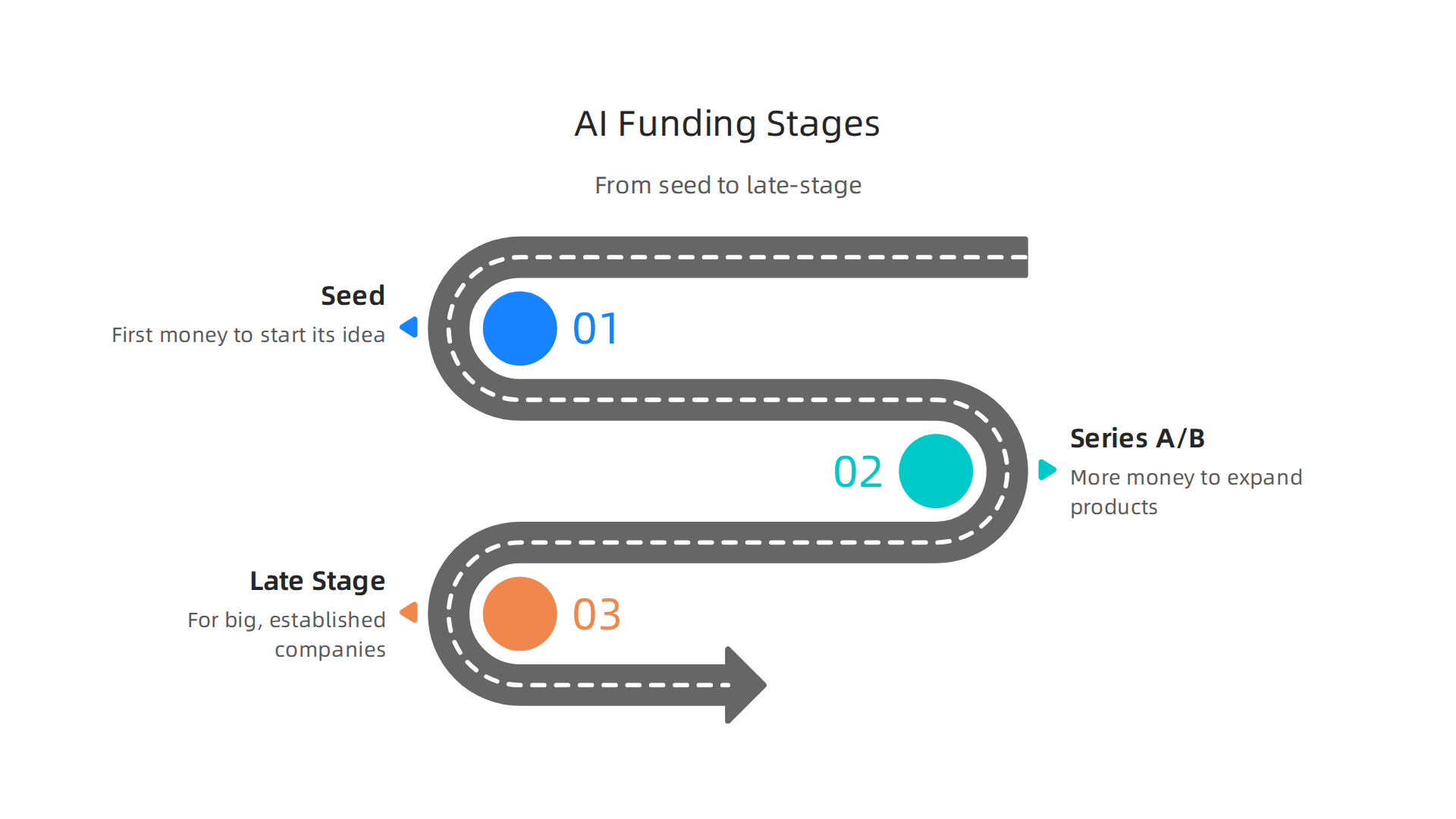
- Seed Funding: This is the very first money a startup gets to start its idea. It helps build a basic product. Even for these early stages, investors are looking for strong ideas and teams.
- Series A/B Funding: As a company grows, it needs more money to expand. Series A and B rounds help them hire more people, improve products, and reach more customers. In 2026, many top AI startups are getting large investments in these rounds to really push their growth.
- Late-Stage Funding: These rounds are for big, established companies that are ready to go even further. They might be planning to go public or make a huge expansion. We are seeing record amounts of money in these later stages for AI companies in 2026, with overall deal value reaching $267.2 billion in Q1 2026, topping many full-year totals from previous years Venture Monitor.
The big trend in 2026 is that there are fewer deals overall, but each deal is much larger. For example, AI deal counts dropped to their lowest level since 2018 in Q1 2026, but the total money invested was still very high AI Startup Funding This Quarter: Deals, Sizes, Valuations. This shows that investors are putting more money into a select group of companies they believe will be very successful, possibly looking for a truly flawless ai solution.
Who is Investing?
Both big companies and financial investment groups play a part.
- Institutional Investors: These are groups like venture capital (VC) firms, private equity firms, and hedge funds. They are putting a huge amount of money into AI. In 2025, over half of all venture capital money went to AI firms Venture capital investments in artificial intelligence through 2025. These investors are very active in all funding stages, especially for promising top AI startups.
- Corporate Investors: Sometimes, large companies invest in smaller AI startups. This can be to gain new technology, partner up, or even buy the startup later. They are often looking for tools that can help their own business grow, like specialized forethought ai or amplify ai tools.
The landscape is also shaped by how investors check out these AI companies. They have a strict investment due diligence checklist 2026 to make sure their money is safe and smart.
What Happens When Startups Grow Up? Exits!
"Exits" mean how investors get their money back after a company has grown. There are two main ways:
- Mergers and Acquisitions (M&A): This is when a larger company buys a smaller AI startup. Many big tech companies are buying promising AI startups to add new features or teams. This is a common way for early investors to see a return on their money. Before such deals, companies need an AI M&A Due Diligence Checklist for Acquirers (2026) to make sure everything is in order.
- Initial Public Offerings (IPOs): An IPO is when a company first offers its shares to the public on a stock exchange. While less common than M&A for smaller startups, successful AI companies that show strong growth and promise can have very high IPO values State of the Markets Report H2 2026. This offers a big payout for investors.
These trends show that while it’s a great time for powerful AI ideas, getting funding now means standing out in a big way. Investors want to see strong plans and clear paths to success.
Stay on top of the rapidly evolving AI and tech regulation landscape.
The AI Newsletter Worth Reading
The funding landscape shows that investors are looking for something truly special. So, what makes a company one of the top AI startups that everyone is watching in 2026? It comes down to a few key things. When people look at an AI startup, they use a kind of checklist to see how strong it is.
Here’s a simple look at what makes a great AI startup:
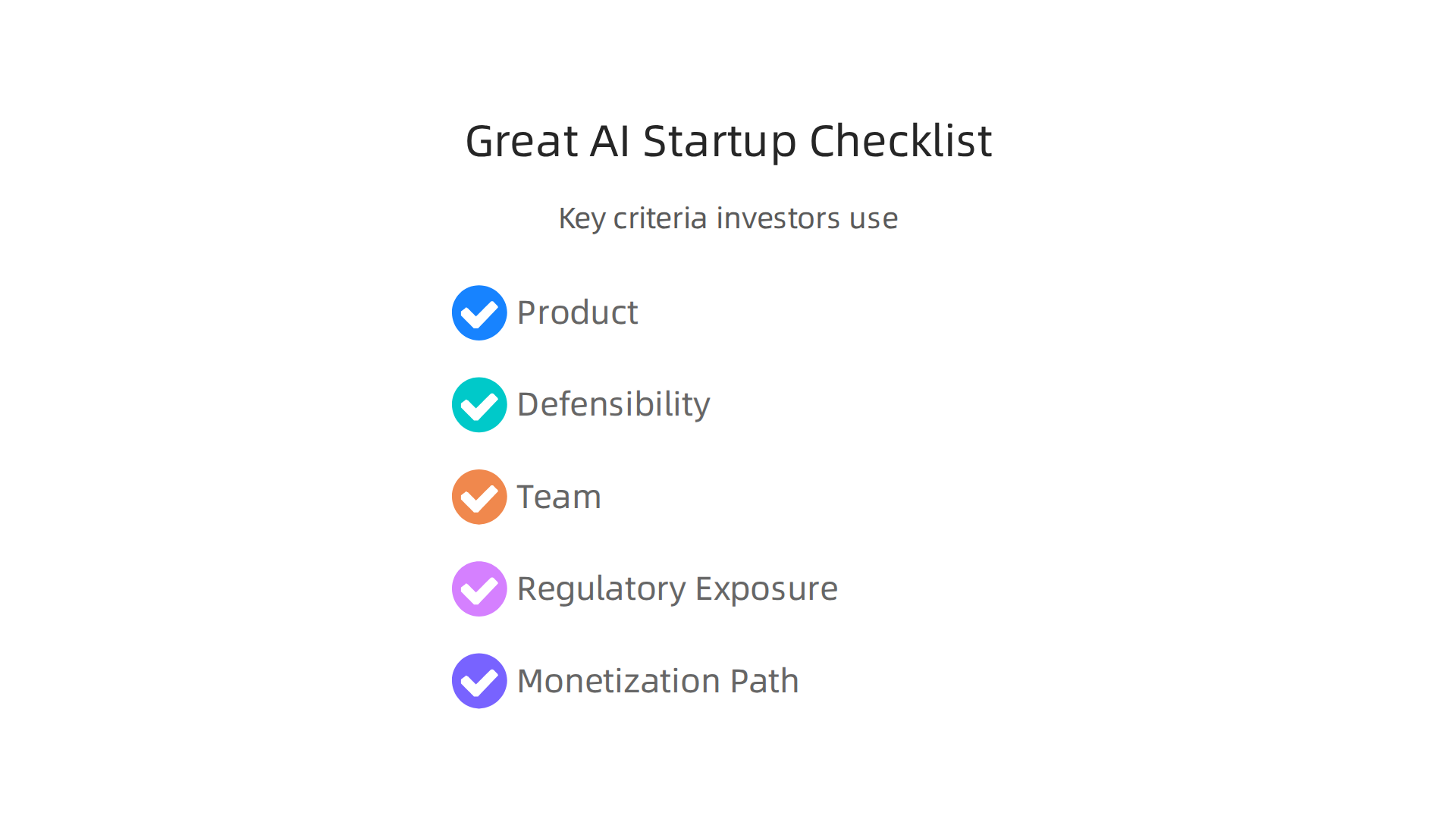
- What it Does (Product): Is the AI product truly new and helpful? Does it solve a big problem in a smart way? Top startups have a clear, exciting product that works really well.
- How Hard it is to Copy (Defensibility): Can other companies easily make the same thing? The best AI startups have something special that others can’t just copy. This might be unique data, a smart way of doing things, or a strong brand. Building robust AI systems that are hard to replicate makes a huge difference.
- The People Behind It (Team): Who is on the team? Do they have lots of experience? A strong team with a history of success or deep knowledge in AI is a big plus.
- Ready for Rules (Regulatory Exposure): The world is making more rules for AI. How ready is the startup for these new laws? Companies that think ahead about AI regulation are seen as safer bets.
- How it Makes Money (Monetization Path): Does the startup have a clear plan to earn money? Investors want to see a solid way for the company to grow and become profitable. Getting investment-ready often means having a clear plan for these points.
Different Kinds of Top AI Startups
We can also look at top AI startups by what kind of work they do. There are different types that are making a big splash in 2026:
- Infrastructure AI: These companies build the basic "bones" of AI. Think of them as creating the tools and platforms that other AI companies use to run their own products. They make it easier for everyone to build and use AI. Companies in this space are essential for the whole AI ecosystem to grow, focusing on things like faster computing or better ways to manage AI models Top AI companies in 2026: models, infrastructure, and tooling.
- Vertical AI: These startups focus on one specific industry or problem. They make AI tools that are specially designed for areas like healthcare, finance, or customer service. For example, a company might use forethought AI to help banks find fraud faster. These specialized solutions often offer a flawless AI solution for their niche.
- Developer Tools AI: These companies build tools that help other developers create their own AI applications more easily. They speed up the process of making new AI products.
- Agentic AI: A newer and exciting area involves agentic AI. These AI systems can work on their own, making decisions and taking actions to reach a goal. They are often seen as the next big step in AI, promising to deeply transform how businesses operate.
What makes a company truly stand out is its ability to not just create smart technology, but to show how that technology can be used in the real world to solve actual problems and bring value. Learning from successful deployments can offer insights into these strategies The Enterprise AI Playbook: Lessons from 51 Successful Enterprise AI Implementations. Investors want to back companies that can amplify AI in a meaningful way.
4) Innovation areas and technology moats: What differentiates long-term winners
For AI startups to truly stand out and keep growing, they need more than just a clever idea. They need to build what we call "moats." Think of a moat like a deep ditch around a castle. It makes the castle very hard to attack. In business, a moat makes it hard for other companies to copy your success or take your customers. The top AI startups are building these strong moats right now in 2026.
Let’s look at the two main kinds of moats:
Technical Moats
Technical moats come from special technology that others can’t easily get or make.
- Your Own Special Data: Many AI systems get better the more data they learn from. If a startup has its own secret stash of unique information, that’s a huge moat. This could be data from a specific industry, or data collected in a special way that no one else has.
- Unique AI Models: Some companies create AI models that are super good at one specific thing. They are built for a job that a general AI can’t do as well. For example, a model that is truly flawless AI in spotting rare diseases in medical scans. These specialized models are hard for others to recreate without years of work and expertise.
- Fitting into Business Tools: If an AI product fits perfectly into how businesses already work, it creates a strong moat. Imagine an AI that plugs right into a company’s sales or customer service software. It becomes a central part of their daily work, making it tough to switch to something else. This kind of deep tech integration is an imperative for secure operations in enterprise AI, as discussed in detail in guides on deep tech enterprise AI.
New ideas like synthetic data (data made by computers, not collected from the real world) are helping AI learn faster and safer. Also, multimodal models that can understand different types of information, like words, pictures, and sounds all at once, are becoming very powerful. And automation platforms that help AI do many tasks by itself are creating big advantages. These advancements are shaping the future of AI, as outlined in the 2026 AI Index Report.
Product Moats
Product moats are about how a customer uses and feels about the AI product.
- Hard to Switch: If it’s a big hassle for customers to stop using an AI product and move to another, that’s a moat. Maybe they’ve put a lot of their own data into it, or their whole team is trained on it. This "switching cost" makes them stick around.
- Compliance Built-In: In 2026, AI rules are a big deal. If an AI product is designed from the start to follow all the strict government rules and laws, that’s a huge advantage. Companies want AI they can trust not to cause legal problems. Making compliance a key feature, not an afterthought, is a smart move. Companies that integrate regulatory compliance into their corporate AI strategy are better positioned for success.
The push for innovation in these areas is also clear when looking at patents. Big companies like Google, Microsoft, and IBM already hold a large share of patents for generative AI, making it harder for new companies to enter certain spaces without unique ideas or approaches. The GenAI Patent Landscape in 2026 shows just how competitive this is.
To truly succeed, AI startups need to focus on these lasting advantages. They must not only create powerful technology but also embed it so deeply within customer operations and regulatory frameworks that it becomes indispensable. For leaders looking to stay informed on these critical developments, there’s a valuable resource available.
Get clear daily AI updates from The AI Newsletter Worth Reading.
5) Regulatory and compliance risks for AI startups and investors
While building strong technical and product "moats" helps top AI startups succeed, there’s another big area they must think about: rules and laws. In 2026, the world of AI is changing very quickly, and new rules pop up all the time. This means that AI companies, and the people who invest in them, need to understand these rules well. If they don’t, they could face big problems or fines.
Major Challenges from AI Rules
It’s not just one set of rules. Different places have different ideas about how AI should be controlled. In the U.S., for example, there isn’t one big federal AI law yet. Instead, many states are making their own rules. This can make things confusing for companies trying to keep up. More than 20 U.S. states have passed or are working on AI-specific laws, creating a complicated mix of rules for companies to follow, as explained in an overview of AI and Data Privacy Regulation in 2026. The European Union, on the other hand, has a broader law called the EU AI Act, which started to apply to many AI systems in August 2026. This fast growth of rules is a big deal, and the AI Regulation Wave shows how much it’s picking up speed.
Here are the main areas where AI startups and investors face risks:
- Data Privacy: AI systems often need a lot of data to learn. But this data must be collected and used in a way that respects people’s privacy. Rules like GDPR in Europe and many state laws in the U.S. say what companies can and cannot do with personal information. Startups need to make sure their AI tools handle data safely and legally from the very start. Thinking about privacy from the beginning is key for responsible AI governance.
- Model Governance: This means making sure the AI itself works fairly and safely. Regulators want to know that AI systems don’t make unfair decisions, like choosing job candidates based on bias, or that they don’t cause harm. Companies need to be able to explain how their AI makes decisions, especially for important tasks. This is about making sure AI is transparent and can be trusted.
- Specific Industry Rules: Some industries have extra strict rules. For example, AI used in healthcare must follow patient privacy laws (like HIPAA in the U.S.). AI in finance must meet rules about fair lending or preventing fraud. If a startup makes AI for one of these areas, they need to know all the specific rules for that field.
- Rules Across Countries: If an AI startup wants to sell its product all over the world, it needs to deal with different laws in different countries. What’s okay in one place might not be okay in another. This means planning carefully for how their AI will work in different markets.
Managing Risks for Founders and Investors
For founders building new AI products, and for investors looking to support the next big thing, dealing with these rules is a must. They need a plan to check for risks and make sure their AI follows the law. This involves:
- Doing Homework Early: Understanding all the rules that might apply to their AI, right from the start. This includes thinking about where their customers are, what kind of data their AI uses, and what industry they are in.
- Building Compliance In: Designing the AI system to be compliant from day one. This makes it easier to follow rules later on and avoids costly changes. For instance, building your AI to be compliant with global regulations in 2026. You can learn more about how to build AI systems compliantly in 2026.
- Staying Flexible: AI rules are still changing a lot. So, companies need to be ready to adapt their products and plans as new laws come out. This helps them navigate the future and avoid big fines, as detailed in guides about tech startup regulation design for growth to avoid billions in fines.
- Getting Good Advice: Working with lawyers and experts who understand AI and its rules can save a lot of trouble down the road. They can help companies understand the risks and make smart choices.
By focusing on these areas, AI startups can not only create amazing technology but also grow safely and securely in the changing world of 2026. This careful approach helps them become long-term winners and gives investors more confidence.
For investors, finding the best AI startups means more than just looking at cool technology. It’s about smart choices and careful steps to make sure their money helps good companies grow without big problems. In 2026, investors need a clear plan for how they check out a company and how they manage their investments.
What Investors Look For: The Diligence Checklist
Before an investor puts money into an AI startup, they do a lot of homework. This "diligence" process is like checking every part of a car before buying it. For AI companies, it’s extra important because the technology and rules change so fast. Investors use special checklists to make sure they don’t miss anything important.
Here are the main things they check:
- How Good is the Tech? Investors want to know if the AI works well. They ask about the quality of the data the AI learns from and how well the AI model performs. They also check its design and security to avoid problems. This technical check helps investors know if the startup truly has strong mastering AI capabilities. A good AI due diligence checklist for 2026 helps avoid failures and risks, covering things like data quality and model performance.
- Are They Following the Rules? As we talked about before, AI rules are a big deal. Investors look closely at how the startup handles data privacy and if its AI systems are fair and explainable. They want to make sure the company can how to make an AI compliant with global regulations in 2026 to avoid legal troubles. This step is super important, as breaking rules can lead to huge fines.
- Will People Buy It? Even the smartest AI needs customers. Investors check if there’s a real market for the AI product. They look at who the customers are, how big the business can get, and if the company has a good plan to make money. They want to see that the startup is solving a real problem for people or businesses, like how companies such as Forethought AI, Amplify AI, or Flawless AI aim to simplify complex tasks.
This careful checking helps investors understand all the risks and chances for growth before they invest. According to one guide, an AI Due Diligence Checklist 2026: Avoid AI Failures often focuses on data quality, readiness, governance, and model performance.
How Investors Put Their Money to Work
After doing all their homework, investors also think about how to best spread their investments. This is called portfolio allocation. They don’t just put all their eggs in one basket.
- Investing at Different Stages: Some investors like to put money into very new AI startups (early-stage), hoping they grow big. Others prefer to invest in companies that are already doing well and just need more money to get even bigger (later-stage).
- Focusing on Specific Areas: Many investors choose to focus on certain types of AI, like AI for healthcare, or AI that helps businesses with customer service. This way, they become experts in one field.
- Helping Actively or Passively: Some investors just give money and let the company run its own show. Other investors are more "hands-on."

They give advice, help hire people, and connect the startup with other useful contacts. This active support can be very helpful for top AI startups.
By following these strategies, investors can help nurture the next wave of successful AI companies. Staying informed about the latest developments in AI and its regulatory landscape is key to making wise investment decisions.
To keep up with the fast-moving world of AI, there’s a great way to get daily updates. Check out The AI Newsletter Worth Reading.
Summary
This article maps the fast-moving AI investment landscape in 2026, explaining where record capital is flowing, which startups stand out, and why regulation now shapes funding decisions. It shows that the majority of AI funding concentrates in the United States—especially in hubs like the San Francisco Bay Area and New York—and that enterprise, generative, health, and fintech AI are the top sectors. The piece reviews how rounds are shifting toward fewer but much larger deals, what investors and corporates look for in startups (product, defensibility, team, monetization, and regulatory readiness), and why strong technical and product moats matter for long-term success. It also outlines the main regulatory risks—data privacy, model governance, industry-specific rules and cross-border compliance—and gives practical diligence and portfolio strategies investors and founders should use to navigate growth and exits safely. Overall, readers will leave with a clear checklist of what makes an investable AI company in 2026 and how to prepare for regulatory challenges.