

Why startups must treat regulation as a strategic design constraint
Starting a new company with advanced technology used to be mostly about great ideas and building fast.

But in 2026, things are very different. The world of technology is now full of rules that can make or break even the most innovative field. These rules don’t just tell you what you can’t do. They actually shape what kind of products you can make, which markets you can enter, and how easy it is to get money from investors.
Think about it: new laws are coming out all the time for things like AI, social media, and online marketplaces. For example, 2026 is the year regulators really started to enforce these rules, not just talk about them. Big new laws are changing how companies like yours can operate, from Brussels to Washington Global Tech Regulation — What Changed in 2026 – News Blog. More than 72 countries have even launched over 1,000 different policy plans for AI alone
What Every Tech Company Needs to Know About Global AI …. In fact, mentions of AI in laws went up by more than 21% in 2024 Policy and Governance | The 2025 AI Index Report.
This means that regulation is no longer just a legal issue you deal with after your product is built. For tech startup ideas and innovative systems, it has become a core part of designing your product and planning your business. If you don’t build your products with these rules in mind from the very start, you could face huge fines or even be stopped from selling your product. We’ve seen fines like those from GDPR, which totaled €7.1 billion and are still growing GDPR Enforcement Trends: €7.1 Billion in Fines and Rising.
This article will give you a clear path forward. It’s a practical guide for founders, company leaders, and teams who handle rules. Our goal is to help you make sure your new ideas fit perfectly with all the changing rules. This way, your advanced technology can succeed without unexpected problems.
Want to stay on top of the latest rules shaping the tech world?
The AI Newsletter Worth Reading and get clear daily AI updates from The Deep View Newsletter. You can also learn more about AI Regulations 2026 Compliance Strategies for Businesses to help guide your company.
How regulation affects product design, go-to-market, and valuation
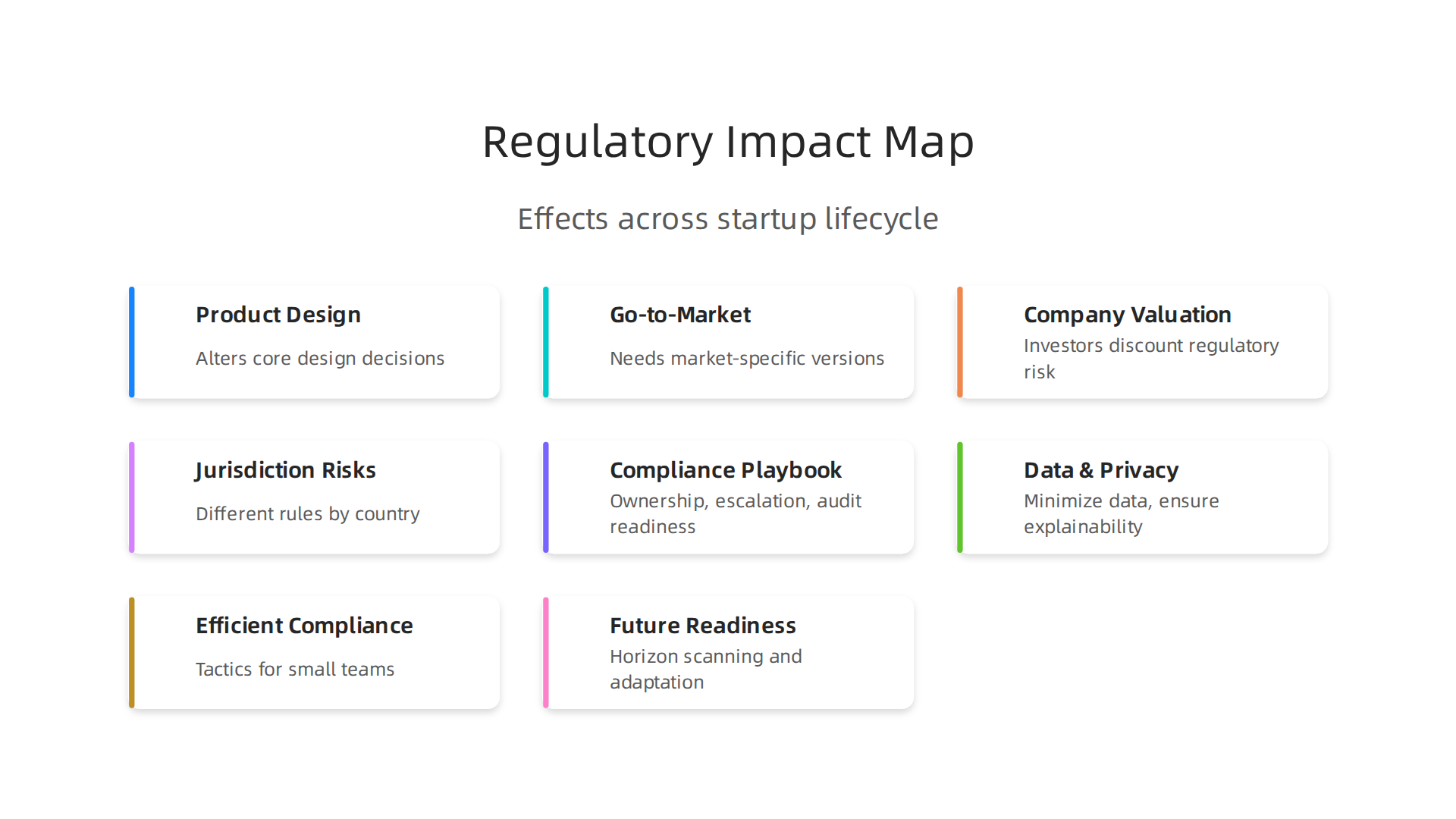
The moment you start dreaming up a new product or service for an innovative field, regulation needs to be part of that early thought process. It’s not just a checklist item for legal teams anymore. Rules and laws now deeply shape every part of a tech startup’s journey.

Regulation and Product Design
First, rules affect how you build your product itself. When you create advanced technology, like new AI systems or other innovative systems, you might need to change how they are put together. For instance, laws about privacy mean you have to think about how you collect, store, and use customer data from day one. You might need to build in ways to protect data or make sure users can easily control their information. This can mean changes to the very core of your product’s design, how its parts talk to each other, and what the user sees and does.
These changes are not small. They can require a lot of extra work, which takes time and money. It can slow down how quickly your product gets to market. Some studies show that dealing with lots of rules can even reduce how much a company invests in new ideas The Impact of Regulation on Innovation in the United States. This is especially true for young companies and tech startup ideas, where complex rules can be a heavy burden Encouraging Entrepreneurship and Innovation through ….
Go-to-Market Strategy and Regulatory Hurdles
Next, regulations heavily influence your go-to-market plans. If you’re hoping to sell your advanced technology in different countries, you’ll likely find that each region has its own specific set of rules. What’s okay in one place might be against the law in another. For example, some AI systems might be allowed in the US but face strict limits or outright bans in the EU. This means you might need to create different versions of your product for different markets. Such a strategy needs careful planning and can increase how long it takes to launch globally. Understanding these rules early can help you navigate different markets effectively, such as by reviewing US Tech Regulations 2026 Navigating Data Privacy AI Governance and Antitrust Rules specific to the United States.
Impact on Company Valuation
Finally, regulation greatly affects how much your company is worth. Investors and buyers look very closely at regulatory risk when they think about putting money into your business or buying it. If your innovative field has many complex rules, or if your product could easily get into trouble with regulators, investors will see that as a big risk. They might offer less money or demand stricter terms to protect themselves. They often price these risks into their deals. This means that a product with strong compliance built in from the start will likely be seen as more valuable and safer. A business that handles global AI regulations well for Wave AI Compliance will be much more attractive than one that ignores these important factors. Research even shows that high regulatory costs can hurt how many new companies are created Regulating entrepreneurship quality and quantity – CentAUR. So, making sure you follow the rules is not just about avoiding fines; it’s about building a stronger, more attractive company.
Mapping regulatory risk: an actionable jurisdictional checklist
Understanding regulations isn’t just about avoiding problems; it’s about making your company stronger. But with rules changing all the time, especially in an innovative field, how do you keep up? It can feel like you need a special map to guide your advanced technology. Here’s a simple way to look at different parts of the world and their rules.
Comparing Regulatory Playbooks Across the Globe
Many countries now have specific rules for new technologies like AI.
In 2026, over 72 countries have started more than 1,000 AI policy ideas What Every Tech Company Needs to Know About Global AI …. Knowing the main differences can help a tech startup idea find its way.
-
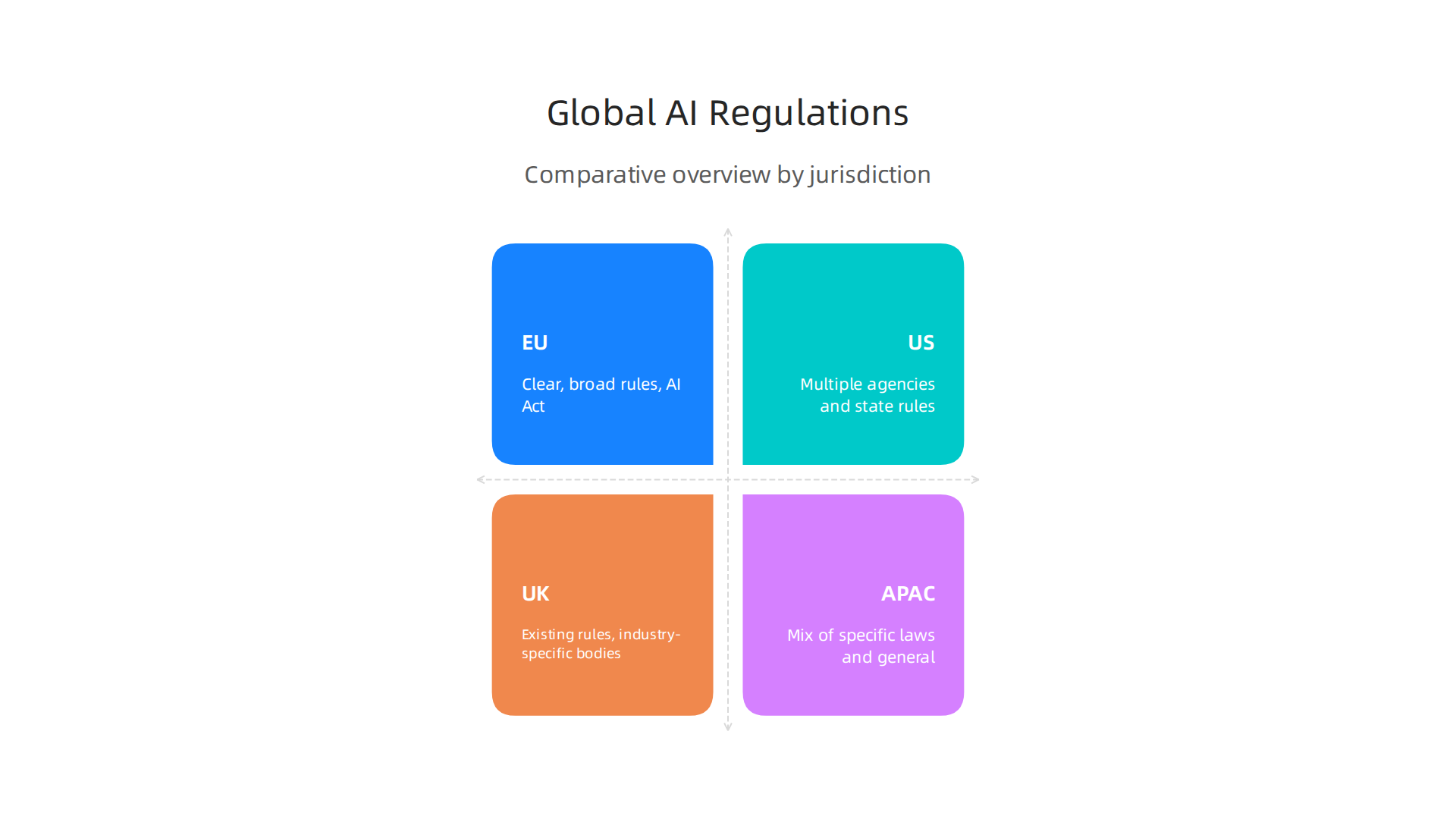
European Union (EU): The EU likes clear, broad rules. Their Guide to the EU AI Act is a big law that started in August 2024 and will be fully used by August 2, 2026. It sorts AI systems by how risky they are. The stricter the rules, the more you need to show your systems are safe and fair. They also have strong data privacy laws, like GDPR, which has led to big fines GDPR Enforcement Trends: €7.1 Billion in Fines and Rising.
-
United States (US): The US takes a different path. Instead of one big law, many different groups and states make rules. This means some rules come from the federal government, but many states also have their own privacy laws for advanced technology U.S. Tech Legislative & Regulatory Update – First Quarter …. This can make it tricky because what’s okay in one state might not be in another.
-
United Kingdom (UK): The UK doesn’t have one big AI law like the EU. Instead, they use rules that are already in place and ask existing groups to watch over AI. This means rules for AI might come from privacy laws or other industry-specific groups AI Regulation by Country 2026: EU, US, UK & Asia | AIRiskAware.
-
Asia-Pacific (APAC): This region is a mix. Countries like South Korea and Japan have their own specific AI laws. China has very strict rules for certain types of AI, especially those that create content. Other countries in Asia might use general rules or guides.
As you can see, no two major jurisdictions regulate AI the same way. Knowing these differences is key for any company in an innovative field. To learn more about getting your technology to meet these varied rules, consider reading about how to make an AI compliant with global regulations in 2026.
How to Prioritize Your Regulatory Focus
With so many rules, how do you know which ones to worry about most for your innovative systems? Here’s how to decide:
- Market Size: Think about where your most important customers are. If most of your users are in the EU, then EU rules should be your top priority. If your biggest market is the US, you’ll need to focus on those federal and state rules.
- Enforcement Intensity: Some places are stricter about making sure rules are followed. For example, the EU is known for actively enforcing its data privacy rules with big fines. So, even if your market share there is smaller, the risk of problems might be higher.
- Data Flows: Where does your advanced technology collect, store, and use data? Data travels across borders, and each stop can bring new rules. If your data touches many countries, you’ll need to understand the rules for each of those places. This is important for mastering oversight of classified and sensitive technologies for 2026 compliance as well.
Keeping up with these fast-changing rules is a big job. If you want to stay informed about what’s happening with AI rules every day, you need a reliable source. Get clear daily AI updates from The AI Newsletter Worth Reading.
Now that you know which rules matter most, the next step is to make sure your advanced technology actually follows them. This isn’t just about checking boxes. It’s about building compliance right into your product from the start.

Think of it as "compliance-as-product." This way, your innovative systems can grow without constantly running into legal roadblocks.
Turning Rules into Product Features
Legal rules can be tricky, full of long words and complex ideas. The key is to take these legal requirements and turn them into clear tasks for your product team. This means asking:
- What does this rule mean for how our product works?
- What new features do we need to add?
- Can we use automated controls to follow this rule?
For example, if a rule says you need to protect user data, your product might need a feature that encrypts information automatically. Or if a rule requires showing users how AI makes decisions, you might need a simple explanation feature. To do this, you need to map out your regulatory exposure and check your product against these rules Regulatory Compliance for Tech Companies: The Complete Guide …. This helps your tech startup ideas stay safe and compliant from the ground up. If you want to dive deeper into making sure your AI systems are compliant, consider learning about how to ensure field AI compliance in 2026.
Building a Compliance Playbook
Even with compliance built into your product, you still need a clear plan for your team. This is where a compliance playbook comes in handy. It’s like a guide book that tells everyone what to do, who is responsible, and how to handle problems.
Here are the important parts of a good playbook:
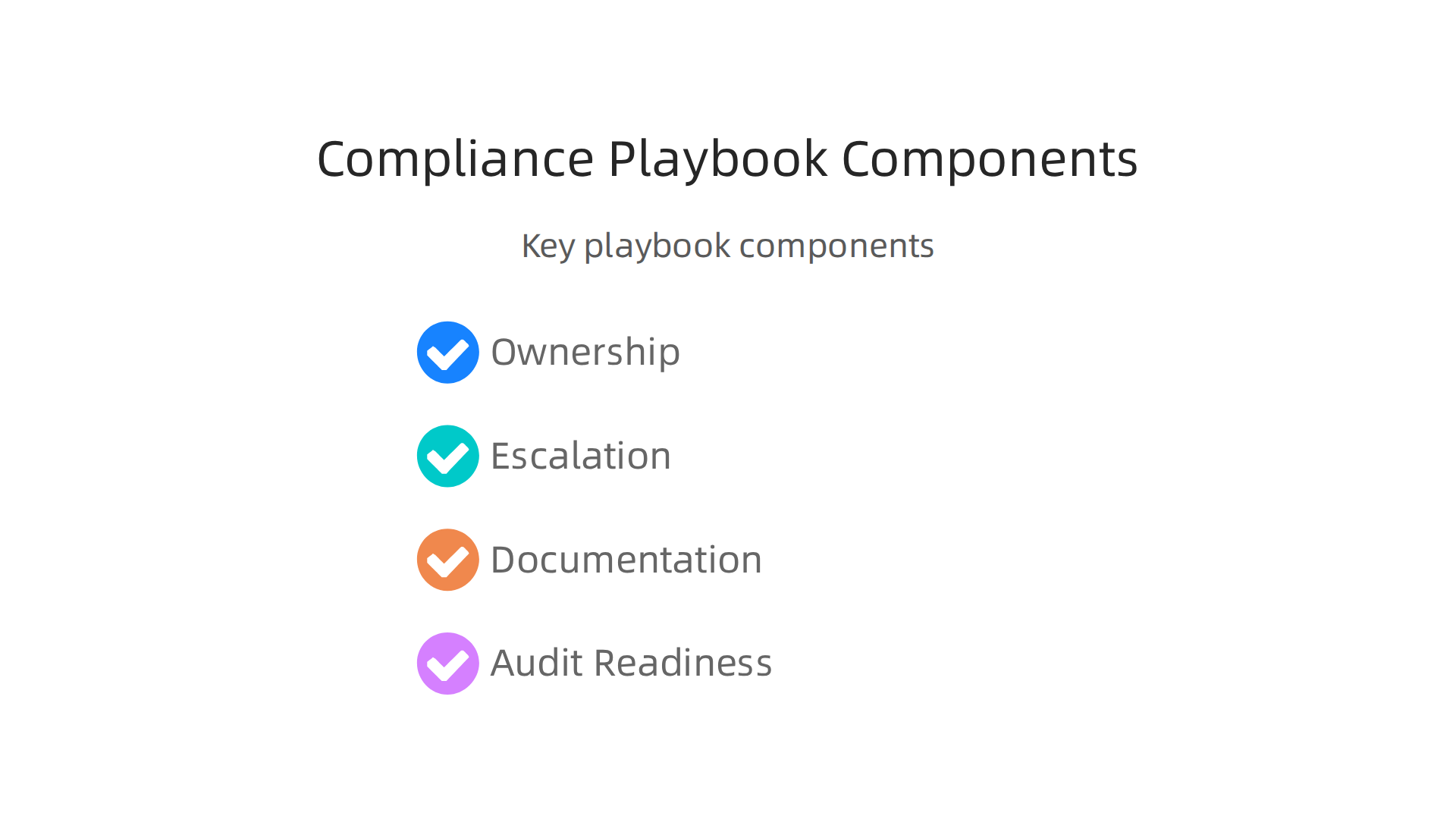
- Ownership: Who is in charge of each rule or area? Knowing this makes sure someone is always watching over specific compliance tasks.
- Escalation: What happens if a problem comes up? Who do you tell? What are the steps to fix it? A clear path helps avoid bigger issues.
- Documentation: Write everything down. This includes how your product meets rules, who is responsible, and what steps you take. Good records make it easier to show you’re compliant.
- Audit Readiness: Be ready to prove you follow the rules at any time. This means keeping your documentation organized and making sure your team knows their roles.
Developing a clear plan that ties risks to control owners and staffing helps companies navigate complex rules FinTech Regulatory Compliance Guide 2026. For more insights into staying on top of AI Regulations 2026 Compliance Strategies for Businesses, a solid playbook is a must-have for any company in an innovative field.
After you have a strong compliance plan and rules built into your products, the next big step is to share this good work with others. This is super important when you want to bring your product to market or ask people for money to help your company grow. Investors and customers want to know you’re playing by the rules, especially with new advanced technology and innovative systems.
Presenting Regulatory Readiness to Investors and Customers
When you talk to investors, they are looking for smart tech startup ideas that can grow without big legal problems. Showing them you have a clear plan for following regulations makes your company look safer and more reliable. It means you’ve thought ahead and are ready for the challenges in an innovative field. Instead of seeing rules as a burden, explain how your built-in compliance makes your product stronger and more trustworthy for customers. This can actually make your company more attractive to invest in.
Customers also care about trust. If your product handles their information or makes important decisions, they want to know it’s done right. Being open about how you follow rules helps build that trust. It shows you care about their safety and privacy.
Engaging Regulators, Counsel, and Standards Bodies Pre-Launch
It’s a really good idea to talk to important groups like regulators, legal experts, and standards organizations before you launch your product. This is especially true if you are working with new kinds of advanced technology like AI. Different countries have different rules for AI, for example, the EU has a strict AI Act, while the US uses a mix of rules from different groups
AI Regulation Compared: EU, US, UK, China (2026) – Legalithm. Getting advice early can help you understand these rules better and make sure your product is set up correctly from the start.
Working with these groups early can help you:
- Understand Complex Rules: They can help you figure out what the laws mean for your specific product, saving you from guessing or making mistakes. Studies even show that too many regulations can slow down innovation and business growth REGULATORY COMPLIANCE BURDENS. Knowing the rules helps you avoid these slowdowns.
- Get Feedback: They can tell you if your product ideas might cause problems later. This gives you a chance to fix things before it’s too late.
- Build Relationships: Talking to them shows you’re serious about being responsible. This can be helpful if new rules come out later or if you need help navigating tricky situations.
- Avoid Big Problems: Making changes after launch can be very expensive and cause delays. Early talks help you avoid these costly fixes.
Being prepared and proactive in talking about your regulatory strategy can open up new doors for your business. It allows your innovative systems to thrive in the market.
To stay on top of all the fast-changing rules and developments in the world of technology and AI, it’s wise to get regular updates. The AI Newsletter Worth Reading offers clear daily insights to keep you informed.
Navigating the world of advanced technology means also understanding special rules. This is very true for tech startup ideas that deal with data, AI, and privacy. These rules can be different depending on where you are in the world and what kind of product you’re building. It’s like an innovative field with lots of new paths, but each path has its own traffic laws.
Data, AI, and privacy: sector-specific rules startups must know
In 2026, many countries have specific rules for AI. For example, the EU has a strong AI Act that sets clear rules based on how risky an AI system might be. Other places like the US use a mix of rules from different agencies, or they rely on existing privacy laws rather than one big AI law. Countries like South Korea and Japan have also passed their own AI laws, while China has specific rules for certain AI uses AI Regulations Around the World: A 2026 Guide. This means there’s no single rulebook for everyone, and it’s important for startups to know their way around these different approaches.
Besides AI, protecting people’s personal information is a huge deal. Laws like GDPR in Europe or various state laws in the US tell companies how they must collect, use, and store customer data. If your innovative systems handle personal data, you need to be very careful about these privacy rules. Skipping them can lead to big problems and fines. For a deeper look at how different regions manage AI, you can check out this guide on AI Regulation by Country 2026.
Quick ways to handle these rules
Facing all these rules might seem like a lot, but there are simple steps your startup can take to stay on track:
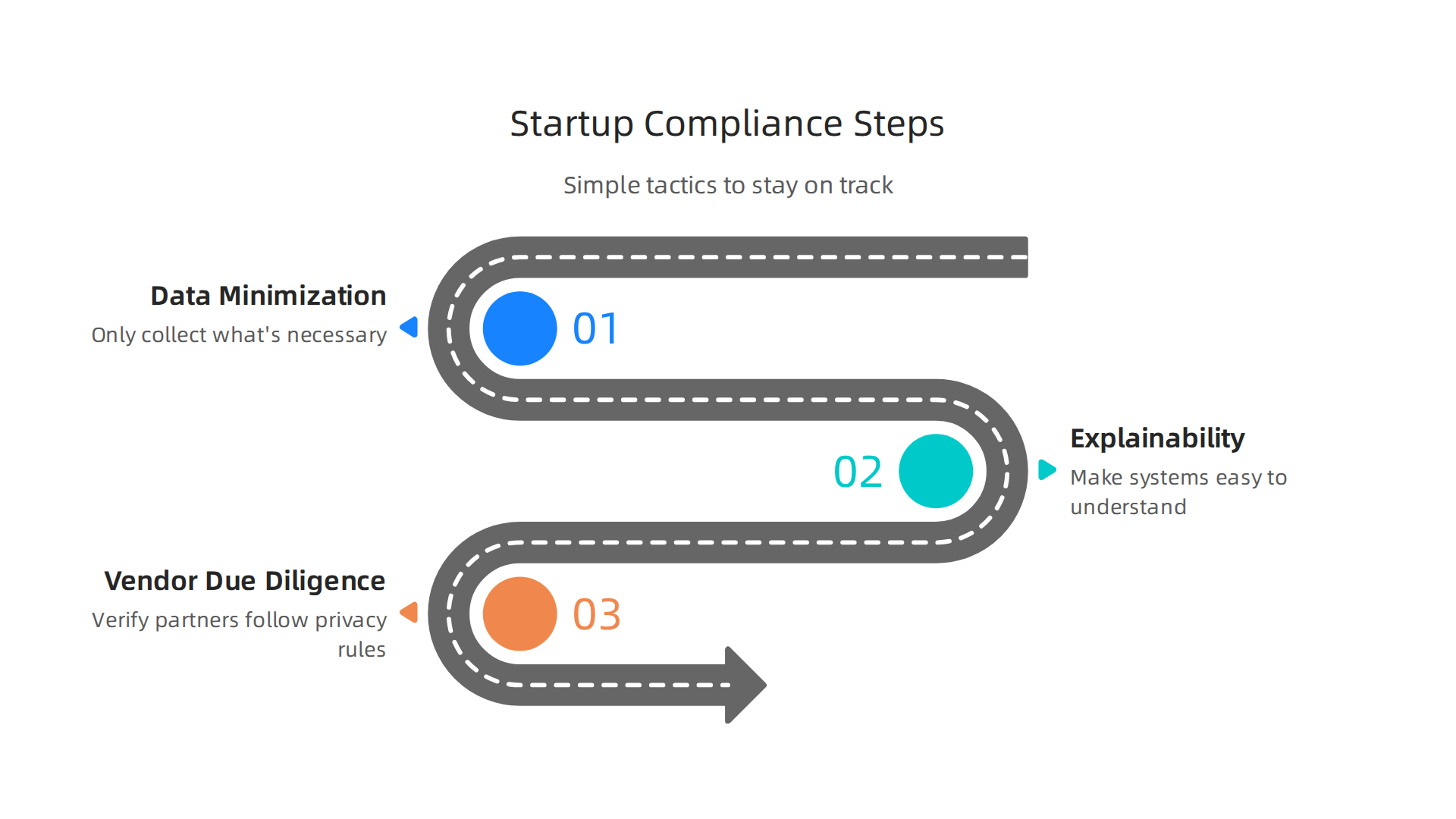
- Data Minimization: Only collect the information you absolutely need. If you don’t need a customer’s birthday, don’t ask for it. The less data you have, the less risk there is if something goes wrong. This also makes it easier to comply with privacy laws.
- Explainability: Especially for AI, try to make your systems easy to understand. If your AI makes an important decision about a person, can you explain why it made that choice? This is called "explainability" and it builds trust. It also helps you meet rules that say AI shouldn’t be a "black box." Learning how to make an AI compliant with global regulations in 2026 is a great next step.
- Vendor Due Diligence: Many startups use other companies’ tools or services. Before you sign up, always check if those companies follow good data and AI rules too. You are often responsible for what your partners do with your customers’ data. Make sure they are reliable and careful.
By thinking about these points from the start, your tech startup ideas can grow strong and safe in this fast-moving innovative field.
Navigating all those rules can feel heavy, especially for a small team with big tech startup ideas. But don’t worry, even in an innovative field like advanced technology, there are smart ways to handle compliance without needing a huge legal department. It’s all about being clever with your time and money.
Resource-efficient compliance: tactics for small teams
First, you need to decide what’s most important. Think about "minimum viable compliance." This means doing the absolute necessary things to avoid major legal trouble right now. For instance, if you handle customer data, making sure your privacy policy is clear and follows basic rules is a must. A good way to start is by looking at a Startup Compliance Checklist 2026 to see common requirements.
As your innovative systems grow, you’ll want to aim for "long-term resilience." This is about building strong practices that can handle new rules and bigger challenges over time. It’s like building a house: you start with a strong foundation, then add more features as you go. Planning ahead can help your startup manage AI regulations 2026 compliance strategies to avoid million dollar fines.
Here are some simple steps to make compliance easier for small teams:
- Outsourcing Help: You don’t have to do everything yourself. Sometimes, hiring outside experts for specific tasks can save you time and money. For example, a lawyer who specializes in tech rules can quickly set up your privacy policy or review contracts. They know the ins and outs of
advanced technologylaws better than you might. - Checklists: These are your best friends! Simple checklists can help you keep track of tasks you need to do regularly, like backing up data or reviewing security settings. Many resources offer a practical 8-step checklist for startups that can make things clearer.
- Low-Cost Tools: There are many affordable tools and software designed to automate compliance tasks. These tools can help you keep records, monitor data, or manage privacy requests without needing extra staff. They can be especially useful for keeping up with the fast pace of an
innovative field. Some companies even use AI to automate regulatory compliance. For more on this, you can explore how SVR Intelligence automates regulatory compliance across global jurisdictions.
By using these smart tactics, your startup can stay compliant and safe, even with a small team. Staying informed about new rules and trends is also key.
Get clear daily AI updates from The Deep View Newsletter. The AI Newsletter Worth Reading
Staying informed about new rules and trends is super important. In an innovative field like advanced technology, you can’t just react to rules after they’re made. You need to look ahead and guess what new rules might come next.

This is called horizon scanning, and it helps your startup stay ready.
Anticipating future rules: horizon scanning and adaptive policies
For small teams, building this foresight into your plans means keeping an eye on big changes in technology and law. This is especially true for advanced technology like Artificial Intelligence (AI), where rules are still forming around the world in 2026. For example, some places like the EU have already put in place broad AI laws, while others like the US use more specific rules for different areas, and China has its own focused rules AI Regulation Compared: EU, US, UK, China (2026). Understanding these different ways countries regulate AI is key for any company with tech startup ideas that want to go global.
Here’s how to build monitoring and smart planning into your product and legal roadmaps:
- Watch Global AI Trends: Laws about AI are always changing. As of 2026, many countries are focusing on how risky an AI system is. Systems that affect things like jobs or healthcare are seen as higher risk and face more rules Where AI Regulation is Heading in 2026: A Global Outlook. Knowing this helps you understand where future rules might apply most strongly to your
innovative systems. You can learn more about making your AI compliant with global rules by reading about How to Make an AI Compliant with Global Regulations in 2026. - Track Key Dates and Updates: Pay attention to when new laws officially start. For example, the EU AI Act has different parts taking effect at different times throughout 2026 and 2027 AI Regulation Trends 2026: Policies Across the US, UK & EU. If your product or service uses AI, these dates tell you exactly when you need to be ready.
- Create "What If" Plans: Think about different futures. What if a new rule makes a certain feature of your product too hard to offer? What if data privacy rules get much stricter? Having plans for these situations helps you be flexible. This could mean changing your product’s design or even choosing to focus on different markets. For instance, knowing about US Tech Regulations 2026 can help you decide if certain features are worth the risk in that market.
By watching these signals and planning ahead, your startup can avoid surprises and keep innovating without getting into legal trouble. It’s all about being smart and ready for what’s next.
Summary
Regulation is no longer an afterthought for technology startups; it now defines what products you can build, where you can sell, and how investors value your company. This article explains how global rules—especially new AI, privacy, and export controls in 2026—affect product design, go‑to‑market plans, and valuation, and shows founders how to map jurisdictional risks and prioritize the most important rules. You’ll learn practical steps to translate legal requirements into product features, build a clear compliance playbook with ownership and audit readiness, and present regulatory readiness to investors and customers. The guide also covers low‑cost tactics for small teams, vendor due diligence, and horizon scanning so you can anticipate future rules and keep innovating without costly surprises.