

Introduction: Why AI Website Making Matters Now
In 2026, the way we build websites is changing quickly, all thanks to smart computer programs called Artificial Intelligence, or AI. It’s not just a small trend anymore. Actually, the global AI-powered website builder market is expected to be worth around $3.24 billion this year, and it’s set to grow even more in the coming years, possibly reaching $17.43 billion by 2035 AI Powered Website Builder Market Size to Hit USD 17.43 ….
This shows just how much AI website making matters right now.
AI helps make websites much faster and smarter. Imagine an AI tool that can design a website for you just by understanding what you need. This means businesses can get online quicker and reach their customers more effectively. These tech driven solutions are not only about speed but also about creating websites that truly fit each person. AI can personalize what visitors see, making their experience much better. It also helps businesses run their websites more efficiently, saving time and money.
For people who lead technology companies, those who invest in new ideas, and teams that make sure rules are followed, AI-driven websites are a big deal. They offer new ways to grow and improve, but also bring up new things to think about, like how to keep things fair and secure. Understanding these changes is key to staying ahead in our fast-moving world.

To keep up with all the big changes in AI and technology rules, there’s a helpful newsletter that gives you daily updates. Get clear daily AI updates from The AI Newsletter Worth Reading.
1. The Strategic Case: Business Benefits and ROI of AI Websites
Going forward, businesses are seeing big gains by using AI to build their websites.
It’s not just about cool new tools. It’s about real money saved and more customers found.
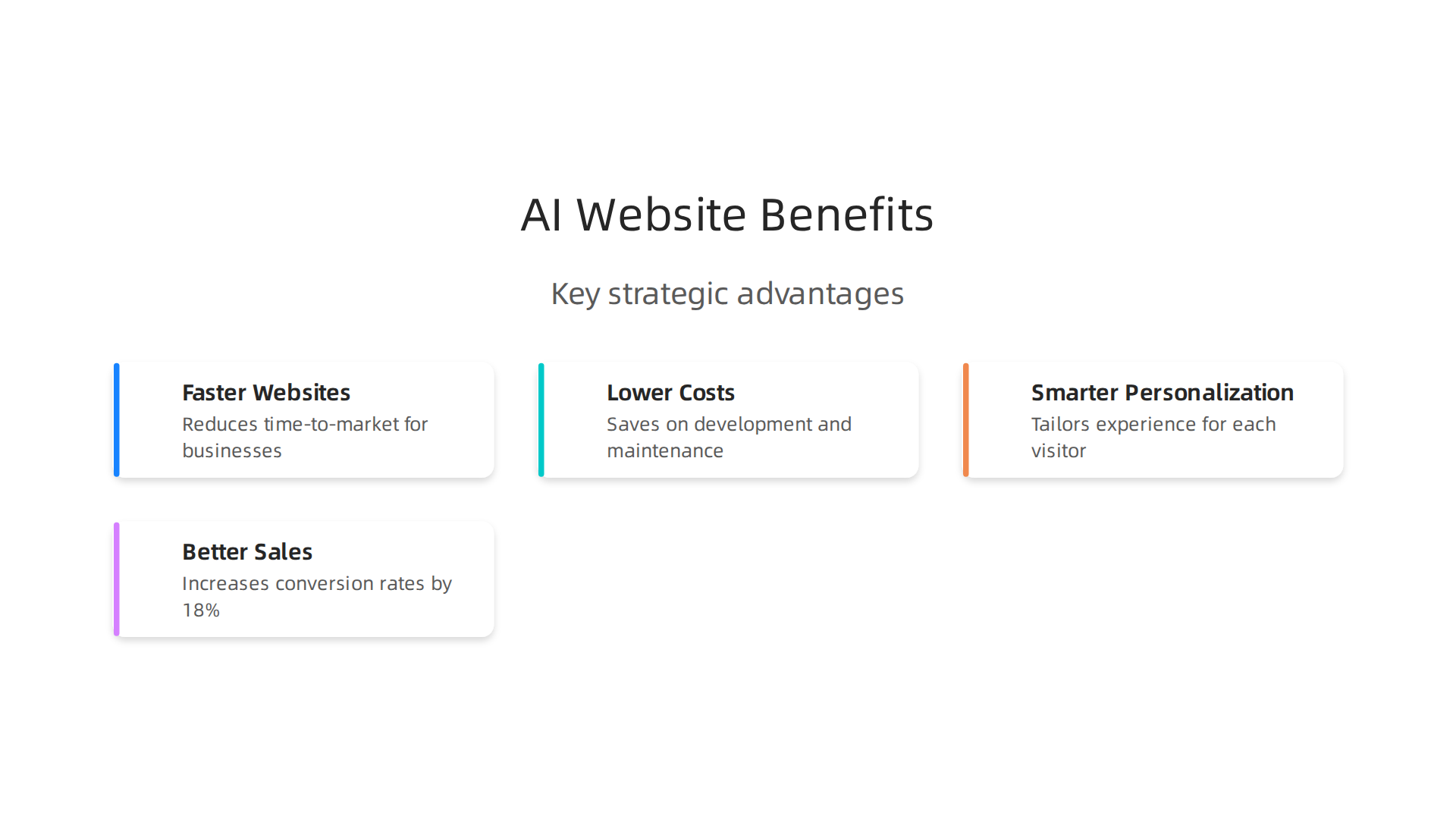
Faster Websites, Lower Costs
One of the best things about ai website making is how fast it works. Imagine needing a new website for your business. In the old days, it took many weeks or even months and a lot of money to hire designers and coders. Now, AI can help you put together a site in a much shorter time. This means your business can get online and start reaching customers faster. This quicker launch time is often called "reducing time-to-market."
Not only is it faster, but AI also helps you save a lot of money. AI tools can handle many tasks that used to require expensive experts. This lowers the overall cost of making and keeping a website. In fact, some reports show that using AI builders can save a lot on development costs, sometimes as much as 97% compared to traditional methods AI Website Case Studies 2026: Real ROI, Traffic &….
This significant reduction in artificial intelligence cost estimation makes powerful websites reachable for almost any business.
Smarter Personalization and Better Sales
Beyond speed and cost, AI websites are also much smarter. They can learn about each person who visits your site. For example, if someone often looks at shoes on your online store, the AI can make sure they see more shoes or related items next time they visit. This is called personalization, and it makes the website feel just right for each visitor.
This smart personalization and automation can greatly increase how many visitors do what you want them to do, like buy a product or sign up for a newsletter. This is called increasing conversion rates. When AI helps create these personalized paths for visitors, businesses can see a big jump in conversions. One study found that personalized user journeys, thanks to AI, boosted conversion rates by 18% from the first visit to becoming a qualified lead CMO Website ROI: AI & CRM Tactics for 2026. This shows a clear return on investment (ROI) for using these advanced tech solutions.
AI also helps with making your business run smoother. It can do many routine tasks automatically, like updating product information or sending out emails. This means your team has more time for bigger, more important jobs. All these benefits together mean businesses get a better return on their investment when they choose to use AI for their websites. Learning how to use AI strategically can really change how a business grows and succeeds.
Choosing the right way to build your website with AI is super important for your business success. It’s not just about if you should use AI, but how. In 2026, there are mainly three ways people are making ai website making happen: using AI website builders, choosing a headless setup, or adding AI features to an existing Content Management System (CMS). Each has its own good and bad points.
AI Website Builders: Quick and Easy
AI website builders are like magic tools. You tell them what you need, and they quickly put together a website for you. Think of services like Squarespace Blueprint AI Website Builder. They are great for small businesses or for testing new ideas fast. They save a lot of time and money, making the artificial intelligence cost estimation much lower than hiring a full team.
However, there’s a catch. While they are fast, you don’t get as much control over every tiny detail. If you need special features or very unique designs, AI builders can struggle AI Website Builders in 2026: A Developer’s Honest Take. They might not be the best for very complex online stores or websites that need to connect to many other systems. Also, sometimes you can get "stuck" with one builder, making it hard to move your website to a different service later. This is often called "vendor lock-in" The Truth About AI Website Builders in 2026.
Headless Architecture: Full Control for Experts
At the other end, we have "headless" or "decoupled" websites. This is a more advanced way of building. Imagine your website content (like text and pictures) being stored separately from how it looks on your screen. This gives businesses a lot of control and flexibility. Developers can use their favorite tech solutions to create unique designs and complex functions. It also means the website can work across many different places, like on a computer, a phone, or even smart devices Headless CMS vs No Code Website Builders.
The downside? This approach usually costs more money and requires skilled tech teams to set up and manage. It’s a powerful choice for big companies that need special features and can grow a lot, but it’s not a quick solution for everyone No-Code vs Headless vs Traditional CMS Guide 2026. Sometimes, even with headless systems, tools are emerging to make it easier for marketing teams to edit content without code Creating No-Code Experiences for Headless Marketing Teams.
CMS-Integrated AI Features: The Middle Ground
A common choice that sits in the middle is using AI features within a regular CMS, like WordPress. These are often called AI plugins. You get to keep your familiar website system but add smart AI tools on top. These tools can help with things like writing content, making images, or even improving your website’s search engine ranking. It’s a way to get some AI benefits without starting from scratch. Many platforms, including some of the best AI Headless CMS in 2026, are bringing AI into their core offerings.
While this offers a good balance, it still means you’re largely tied to the CMS you picked. And, like any software, it can come with its own challenges, such as ongoing updates and maintenance. But for many businesses, it’s a practical way to become more tech driven without huge changes. In 2026, even with AI builders and headless options, WordPress still plays a big role, but the rules are changing AI builders and headless CMSs are rewriting the rules.
Making Your Decision
Choosing the best approach for your business depends on what you value most. Here’s a simple way to think about it:
- Control and Customization: Do you need a website that looks and acts exactly how you want, with very specific features? Then a headless setup might be for you, but be ready for more work.
- Speed and Ease: Do you need to get a website up and running very quickly and with less effort? An AI website builder could be the best choice. Many of the 10+ Best No Code Website Builders (2026) offer this.
- Scalability: Do you expect your website to grow very big and handle a lot of visitors or products? Headless systems are often better for this.
- Developer Skillsets: Do you have a team of skilled developers, or are you looking for a solution that doesn’t need much technical know-how?
Each method has its trade-offs, and the "best" choice is the one that fits your specific business needs and resources.
To stay updated on the fast-changing world of AI and its impact on businesses, including different tech solutions for website building, consider subscribing to The AI Newsletter Worth Reading.
Now that you’ve thought about the different ways to build a website using AI, let’s talk about how artificial intelligence helps with the look, feel, and usability of your site. This is often called design, user experience (UX), and accessibility.
3. Design, UX, and Accessibility: What AI Can (and Can’t) Do
AI plays a big part in making your website look good and work well for everyone. When it comes to ai website making, AI can handle many tasks that used to take a lot of human effort and time.
How AI Helps with Design and User Experience
- Layout and Design Ideas: AI tools can quickly suggest different layouts, color palettes, and font combinations. You can tell them what kind of business you have, and they’ll offer designs that fit. This saves a lot of time in the early stages of putting a website together.
- Writing Content (Copywriting): AI is great at writing text for your website. It can help create product descriptions, blog posts, and even catchy headlines. This is especially helpful for small businesses or those who need to put out a lot of content quickly. However, it’s very important that a human checks this content to make sure it’s correct, sounds natural, and offers real value to readers. Google itself emphasizes the need for human review to meet its E-E-A-T standards (Experience, Expertise, Authoritativeness, and Trustworthiness) for any AI-generated content for SEO in 2026. For more on this, consider exploring strategic AI content creation.
- Personalization: Imagine your website changing slightly for each visitor based on what they like or what they’ve looked at before. AI can do this. It helps show the right products or information to the right person, making their visit much better. This smart approach makes websites more effective and truly tech driven.
- Accessibility Checks: AI can also scan your website to find basic problems that might make it hard for people with disabilities to use. For example, it can check if colors have enough contrast or if images have descriptions for screen readers. This helps ensure your website is welcoming to everyone.
Where Human Oversight is Still Key
Even with all these amazing AI abilities, people are still very important. Relying only on AI for design and UX decisions has its downsides:
- Lack of Unique Touch: AI-generated designs can sometimes look too similar or lack a unique "human" feel. True creativity and a deep understanding of a brand’s personality often come from people.
- Complex UX Decisions: While AI can personalize, it might not always understand the deeper emotional needs or cultural differences of users. A human designer can conduct user research and testing to find out what real people truly want and need, going beyond what the AI can guess.
- Ensuring Quality and Trust: Even if AI writes content, a human must edit it for tone, accuracy, and clarity. Google’s guidelines for AI-generated content in 2026 make it clear that unique value and expertise, often from human input, are necessary for good ranking. Things like having author bios and citing sources are crucial steps that humans need to manage.
- Deep Accessibility: Basic accessibility checks are good, but full accessibility often needs a human expert who understands the many ways people interact with websites and can solve more complex issues.
- Avoiding Bias: AI learns from data, and if that data has biases, the AI might create designs or content that unintentionally exclude certain groups. Human review helps spot and fix these issues.
In short, AI is a powerful helper for website design, UX, and accessibility, making many tasks faster and easier. But for the best results, human creativity, empathy, and careful checking are still absolutely necessary in 2026 to make sure your website is truly special, effective, and welcoming to all.

Even with all the great ways AI helps with how a website looks and feels, there’s another very important part: how your website shows up on search engines. This is called Search Engine Optimization, or SEO. When you’re using AI for ai website making, you need a smart plan for your content.
4. SEO and Content Strategy: Optimizing AI-Generated Content
Artificial intelligence can make creating content much faster. It helps you get new articles and web pages ready in less time. This means you can share more information with your audience.
How AI Speeds Up Content for SEO
- Faster Content Creation: AI tools can write drafts of blog posts, product descriptions, and other web content very quickly. This saves a lot of time compared to writing everything from scratch. It’s especially useful for making a lot of content, but remember a human should always check and improve it.
- Finding Good Topics and Ideas: AI can look at what people are searching for and suggest topics that will get more visitors to your site. It can also help group similar topics together, which search engines like Google really appreciate. This is called "topic clustering," and it shows that your website has deep knowledge on a subject.
- On-Page SEO Tasks: AI can help with small but important SEO jobs. It can suggest keywords to use, write good titles and descriptions for search results (meta descriptions), and even help make sure your content is easy to read. Tools for Generative AI SEO can guide you on creating content that performs well in AI search in 2026. This makes your website more visible to people looking for what you offer.
- Staying Up-to-Date: Since AI learns from new information, it can help you keep your content fresh and relevant. This is important because search engines prefer websites with current and useful information.
Why Human Review is Essential for AI Content
Even though AI is a powerful tool for making content, you can’t just let it do everything on its own. If you do, you risk hurting your website’s standing with search engines and your readers.
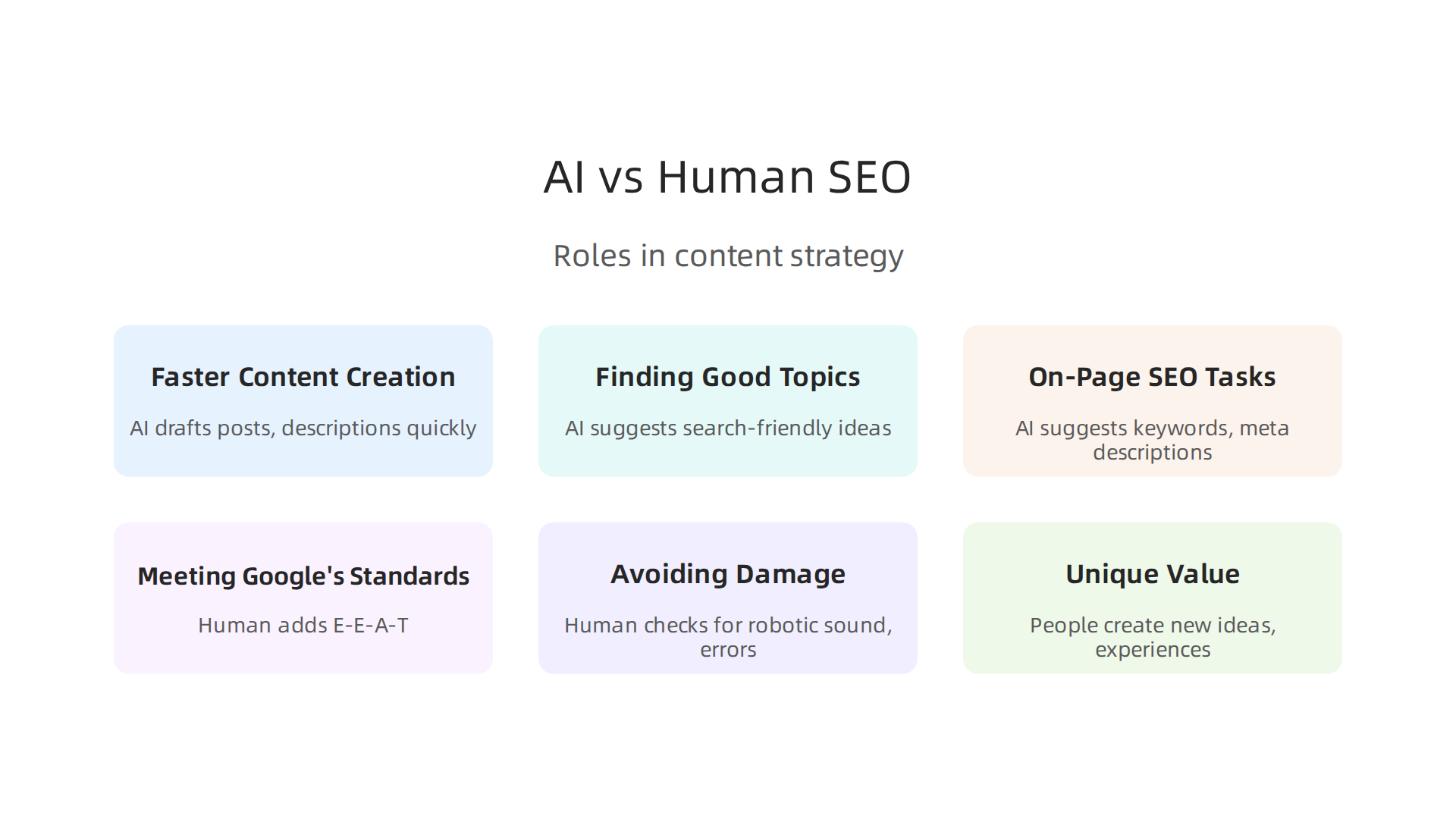
- Meeting Google’s Standards: In 2026, Google still wants to see content that shows E-E-A-T: Experience, Expertise, Authoritativeness, and Trustworthiness. While AI can help draft, it doesn’t have experience or expertise. A human writer or editor needs to add that unique touch, check facts, and make sure the information is truly helpful and correct. Google’s rules make it clear that your website needs to provide real value, whether content is AI or human-generated. You can learn more about Google policy on AI generated content 2026.
- Avoiding Reputational Damage: Content that sounds robotic, has errors, or isn’t truly original can make people lose trust in your brand. It can also make your website rank lower in search results, making it harder for people to find you. To rank safely with AI-generated content in 2026, human editing is a must.
- Unique Value and Insights: AI is good at putting together existing information, but it often struggles to create truly new ideas or share personal experiences. People are much better at providing unique insights, solving problems in creative ways, and connecting with readers on a deeper level.
- Compliance and Accuracy: For many businesses, especially those dealing with important information, accuracy is key. AI can sometimes make mistakes or "hallucinate" facts. A human must verify all information, especially when dealing with compliance or sensitive topics. Keeping up with AI changes and ensuring your content meets regulatory needs is crucial, which is where mastering LLM AI developments 2026 can help.
In conclusion, AI is an amazing helper for getting content onto your website quickly and making sure it has good SEO elements. But to make sure your content is high-quality, trustworthy, and truly stands out, human oversight is still the most important ingredient in your tech driven content strategy for 2026.
Stay informed on the latest AI and tech regulation trends shaping content creation and SEO.
The AI Newsletter Worth Reading
Even though making content with AI needs human help to be good, there’s another big part of using AI that demands careful attention: the legal side. When you’re using AI for ai website making, you’re also dealing with lots of data. This brings up rules about privacy and making sure everything is compliant.
5. Data, Privacy, and Compliance: Legal Risks of AI Websites
Building a website with artificial intelligence means you’re likely collecting, using, and storing a lot of visitor data. This makes data privacy and compliance super important. In 2026, rules for AI and data are changing fast, and businesses need to keep up.
Key Rules for AI-Powered Websites
Many countries and states are putting new rules in place for AI. These rules cover things like:
- **How AI uses personal information:
** AI systems often learn from data, and sometimes that data includes details about people. You need to be very careful about how this personal information is handled.
- Personalization: AI can make websites feel very personal to each visitor. But collecting enough data to do that also comes with strict privacy rules. You have to be clear with your users about what data you collect and why.
- Visitor Data Collection: Every time someone visits your ai website making tools or just browses your site, data is collected. This includes things like their location, what they click, and how long they stay. Laws like the EU’s GDPR and new US state laws require businesses to protect this data. In 2026, many places are making privacy risk assessments mandatory for any activities that might pose a big risk to consumer privacy or security, as noted in a 2026 Privacy Compliance Roadmap.
- Transparency: New rules often say you must tell people when they are interacting with an AI, like a chatbot. You also need to explain how the AI makes decisions, especially if those decisions affect people in important ways.
It’s clear that AI regulation is growing quickly. California, Colorado, and the European Union, for example, are all pushing for more transparency and good governance for automated tools. This includes new rules around AI and children’s privacy too, with updates to laws like COPPA coming this year, according to a 2026 Data Security and Privacy Compliance Checklist. Some big obligations for "high-risk" AI systems, which include those used in critical areas like education or employment, will start in August 2026 under the EU AI Act. These rules mean companies need to do risk assessments and make sure their AI is safe and fair, explains insights from a Global Privacy Watchlist.
What Compliance Teams Need to Do
For businesses using tech driven tech solutions like AI on their websites, compliance teams have important jobs:
- Assess Data Flows: They need to understand where all the data is coming from, where it goes, and who uses it within the company and outside. This includes figuring out which AI systems might be "high-risk" based on new laws.
- Review Vendor Contracts: If you use outside companies for AI tools or services, you need to check their contracts carefully. These contracts should clearly state how they handle your data and if they follow all the privacy rules. For example, the Department of Justice has a new program about bulk data transfer to "countries of concern" that affects businesses this year, highlighting the need to check vendor agreements carefully, according to Data Privacy, Cybersecurity, AI developments shaping 2026.
- Manage Cross-Border Processing Risks: If your website collects data from people in different countries, or if you use AI tools that send data across borders, you face different rules in different places. This is known as cross-border processing, and it adds more layers of complexity to compliance.
- Data Retention and Deletion: Companies must also have clear plans for how long they keep data and when they delete it. Data should only be kept for as long as it’s needed for the reason it was collected.
Basically, "AI data privacy" means you have legal duties when AI systems gather, use, create, or guess information about people. This also involves making sure your AI is responsible and accountable. Businesses need to know all about these AI Data Privacy Obligations in 2026. Understanding these complex rules is crucial to avoid big fines and build trust with your customers. You can learn more about how to ensure field AI compliance in 2026 to protect your business.
After making sure your tech driven AI website follows all the rules, the next big step is to check if it’s actually doing a good job. It’s like building a fast car: you want to make sure it runs well, not just that it’s safe to drive. For websites made with AI, this means looking closely at how people use your site and if it helps you reach your goals.
6. Measuring Performance: Analytics, A/B Testing, and KPIs
When you use AI for ai website making, it’s super important to watch how well your site is doing. This helps you understand what’s working and what needs to change. Because AI can change things on your site so quickly, you need good ways to keep track.
Important Numbers to Watch for AI Websites
You’ll want to keep an eye on a few key things:
- How much people engage with your site: This means how long visitors stay on pages, how many pages they look at, and if they come back. If your AI is creating content, you want to see that people like it and spend time reading or interacting.
- Conversion funnels: This tracks if people are doing what you want them to do. Are they signing up for your newsletter, buying a product, or filling out a form? AI can help personalize these steps, so watching your conversion rates is very important. For example, personalized user paths powered by AI have increased conversion rates by 18% in some studies, showing how valuable these AI & CRM Tactics for 2026 can be.
- Content quality signals: Even if AI makes the content, humans still judge it. Look at things like comments, shares, and if people are leaving quickly from certain pages. These tell you if your AI-generated content is truly helpful and interesting.
These numbers help you understand the return on investment (ROI) for your AI website. Knowing how to measure AI ROI is key for any business owner in 2026. Experts say you should pick specific tasks and measure how much time they take before and after using AI to see the real difference, as explained in a guide on How to Measure AI ROI.
Using A/B Testing with AI
A/B testing is like trying out two different versions of something to see which one works best. For example, you might have two different headlines on your homepage to see which one gets more clicks. AI can make A/B testing much smarter and faster. Instead of you guessing what to test, AI can suggest new ideas and even run many tests at once. This means you can find the best ways to improve your website much quicker.
Actually, by 2026, many successful A/B tests will use AI to come up with ideas and spot problems, cutting down on manual work by 40%. This can lead to a 15% increase in conversions, as noted in insights on AI A/B Testing. A SaaS startup even saw a 128% boost in conversions by testing 12 different landing page designs with AI, showing the big benefits of AI in AI Website Case Studies 2026.
Designing Experiments and Dashboards
When your website uses AI, you need special ways to test changes and see results. It’s not always easy to tell if a good or bad result came from the AI’s changes or from something else.
Here’s how to think about it:
- Baseline first: Before you let AI make big changes, know how your site performs now. This is your starting point. You need to set clear goals or Key Performance Indicators (KPIs) like how many people sign up for something or how much money you make.
- Test one thing at a time: If your AI changes many things at once, you won’t know which change caused the results. Try to design tests where only the AI part is different, or only one AI-driven change is happening.
- Clear dashboards: Your reports should clearly show how AI updates affect your chosen KPIs. This helps you separate the impact of the AI model from other changes you might make to your site, like a new design or marketing campaign.
It’s all about making smart choices based on real numbers, especially when dealing with advanced tech solutions like AI.
Want to stay on top of all the fast changes in AI and tech rules? The AI Newsletter Worth Reading delivers clear, daily updates directly to your inbox.
Once you understand how your AI website is performing with real numbers, the next big step is to plan how you will fully launch it and choose the best tools to help. It’s like carefully planning a trip after knowing where you want to go and how fast your car can run.
7. Implementation Roadmap and Vendor Selection Checklist
Bringing an AI website to life means more than just turning it on. You need a clear plan, especially because AI can change and learn so much.
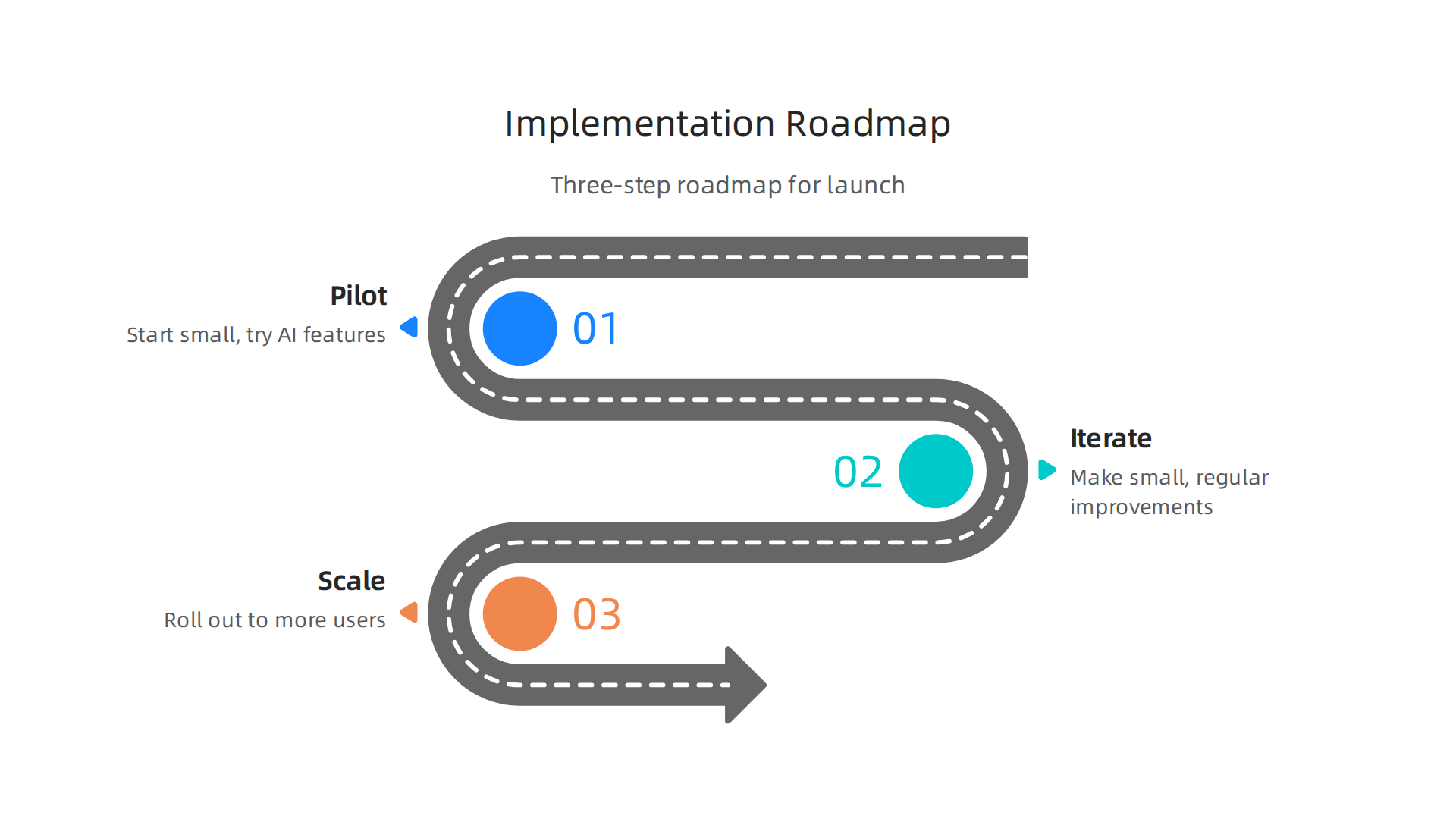
This helps make sure your new site works well and keeps getting better.
A Smart Plan to Launch Your AI Website
It’s usually best to roll out an AI website step by step, not all at once. This way, you can fix small problems before they become big ones.
- Pilot: Start small. Pick a part of your website or a small group of users to try out the AI features first. This "pilot" stage lets you see how the AI works in real life without affecting everyone. Your team can learn a lot here. It helps ensure your new tech driven solution is solid.
- Iterate: This means making small, regular improvements. After the pilot, you’ll have feedback and data. Use this information to make the AI better, fix any issues, and fine-tune its settings. This is a team effort, often involving your product, marketing, and tech teams working together. This step-by-step improvement process is key for scaling AI successfully, as explored in articles on how to move from pilot to scale with AI for business in 2026.
- Scale: Once you’re happy with how the AI is performing in the small tests, you can roll it out to more users or to your whole website. This needs careful planning to make sure your systems can handle more traffic and that the AI continues to perform well. Different teams will need to own different parts of this. For example, your IT team might handle the technical setup, while your content team oversees the AI-generated text.
How to Choose Your AI Website Builder
Choosing the right partner or tool for your "ai website making" project is super important. There are many options, from simple tools like a squarespace blueprint ai website builder to more complex headless CMS with AI.
Here’s a checklist to help you pick wisely:
- How they handle your data: Ask how the vendor keeps your information safe and private. This is a big deal for following rules and keeping customer trust.
- Easy to connect with other tools: Does the AI website builder play nicely with the other software you use, like your customer list or sales tools? This is called integration. Some AI tools might struggle with advanced custom interactions or connecting to external frontends like mobile apps, as noted in "The Truth About AI Website Builders in 2026" insights on their limitations.
- Can you understand the AI? This is about "model explainability." Can the vendor show you why the AI made certain choices? It’s important to know how the AI works, especially if something goes wrong. Developers often find that AI builders give speed but less precision in how things interact or perform, according to a developer’s honest take on AI Website Builders in 2026.
- What kind of support do they offer? Look at their Service Level Agreements (SLAs). This tells you how quickly they will help you if there’s a problem. Good support is key for any tech solutions you rely on.
- Long-term fit: Think about your business growth. Can this AI website builder grow with you, or will it hold you back later? Some systems might cause "vendor lock-in," meaning it’s hard to switch if you want to. In the debate of AI Website Builder vs Traditional Web Design, experts point out trade-offs in long-term architecture ownership. You need to consider the artificial intelligence cost estimation over time.
By asking these questions, you can choose an AI website making tool that fits your needs now and in the future.
Summary
This article explains how AI is reshaping website creation in 2026, showing the business benefits, the main technical approaches, and the risks leaders must manage. It covers three common ways to adopt AI—AI website builders for speed, headless architectures for control, and CMS-integrated AI for a balanced approach—and explains when each is appropriate. You’ll learn how AI helps with design, personalization and accessibility, while also seeing why human oversight remains essential for creativity, quality and trust. The piece outlines how to use AI safely for SEO and content, how to meet evolving data-privacy and regulatory obligations, and how to measure real performance with KPIs and A/B tests. Finally, it gives a practical rollout plan and vendor checklist so teams can pilot, iterate and scale AI websites while avoiding common compliance and vendor-lock pitfalls.