
Why LLM AI Developments Matter Now
The world of artificial intelligence is changing very fast. You might hear a lot about "LLM AI" or large language models. These are computer programs that can understand and create human-like text, answer questions, and even help with tasks like taking notes. In 2026, these tools are not just fancy gadgets; they are powerful forces reshaping how businesses work, how money is invested, and even how laws are made.
Big changes in LLM AI are happening all the time. Just look at the progress models have made from 2020 to 2026, as seen in many reports tracking their abilities hmnshudhmn24/llm-benchmarks-capabilities-2020-2026. This rapid growth means that business leaders, people who invest money, and teams focused on following rules need to understand what’s new. They need simple, clear information to make smart choices. It’s not enough to just know AI exists; you need to know what it can do and what it might mean for your work right now.
But with all this excitement comes big challenges. How do we truly know if these LLM AI tools are working well and doing what they are supposed to do? This is called "evaluation," and it is a complex topic that experts are still figuring out,
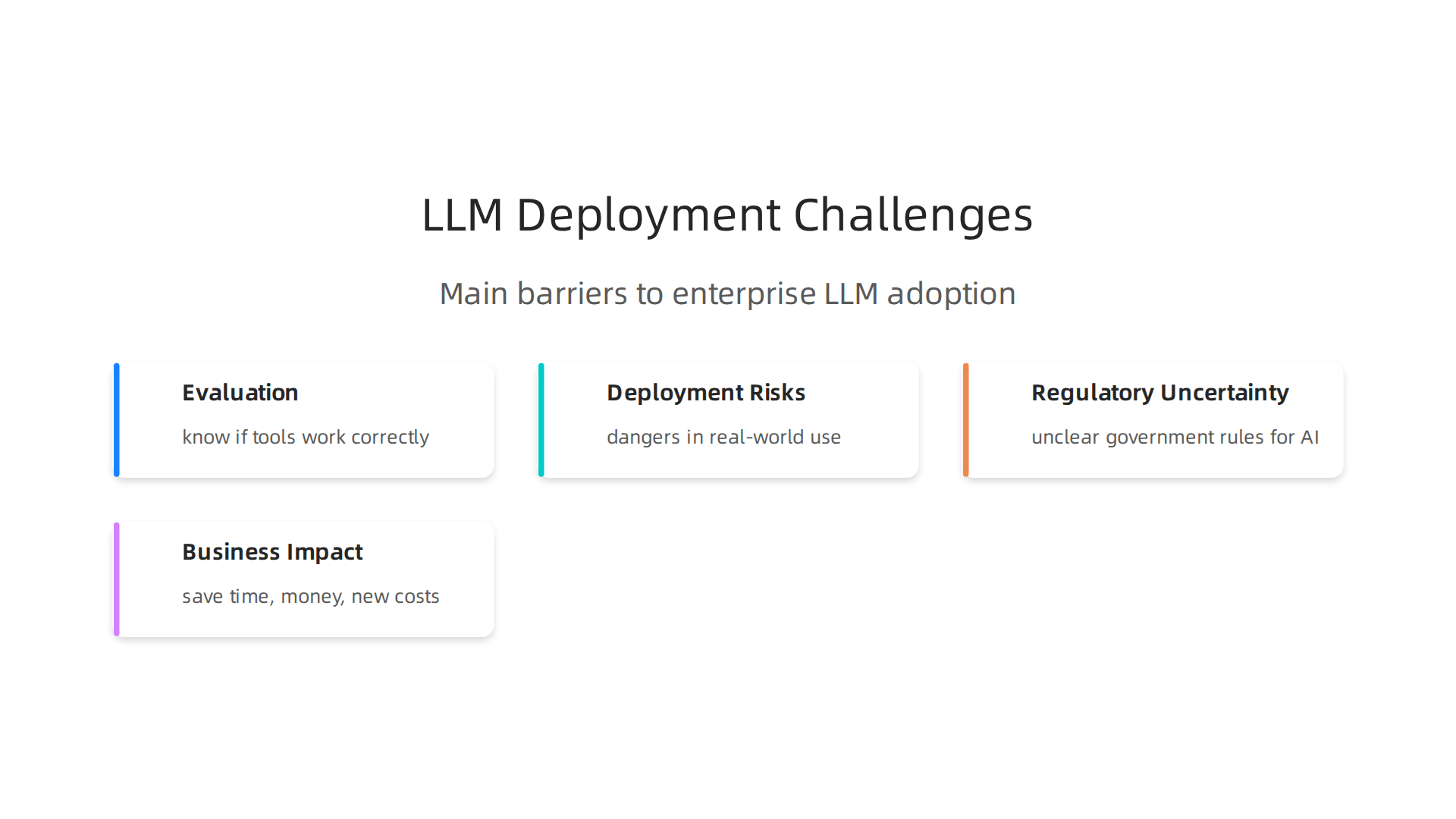
with many new benchmarks coming out in 2026 to track performance across different tasks AI Model Benchmarks and Pricing Dataset 2026. Then there are "deployment risks," which means the dangers that can come up when we start using these AI tools in real-world situations. Think about mistakes they might make or how they might be used in ways we didn’t expect.
On top of that, there’s a lot of "regulatory uncertainty." Governments around the world are trying to catch up and create rules for AI. These rules are still being written and can be different in different places, making it hard for companies to know how to keep their AI compliant. Knowing how to make an AI compliant with global regulations in 2026 is a key question for many businesses. Finally, all these things have a huge "business impact." LLM AI can save time and money, but it can also bring new costs and problems if not handled carefully. Keeping up with these changes is vital for anyone involved in tech, business, or legal work.
To help you stay informed and make sense of these fast-moving changes, there’s a valuable resource available. The AI Newsletter Worth Reading offers clear, daily updates on AI and technology rules, helping you cut through the noise.
1) LLM architectures and recent technical advances
Now that we know LLM AI is important, let’s look at how these smart systems are built. Think of an LLM AI like a very big brain made of computer code. The way this brain is put together is called its "architecture." In 2026, we see some main trends in how these LLM AI models are designed and improved.
One big trend is making these models even larger. Bigger models can hold more information and learn more complex patterns. Another important design choice is something called "retrieval-augmented systems." This means the LLM AI doesn’t just rely on what it already knows. It can also look up information in external databases, like searching a giant library, to answer your questions better. This helps the AI provide more accurate and up-to-date answers, which is super useful for tasks like taking notes or generating summaries.
Then there’s "multimodal integration." This is a fancy way of saying that LLM AI is learning to understand and create more than just text. It can now work with pictures, sounds, and videos too. Imagine an AI that can not only write a story but also create the images for it, or an AI voice actor that can turn text into spoken words with different character voice ai styles. These advancements are pushing the boundaries of what LLM AI can do. To dive deeper into the basic ideas behind these systems, you can learn about artificial neural network basics every business leader needs to understand.
When we talk about LLM AI, we also look at how well they perform and how much power they use. This means we compare "foundation models" to "fine-tuned models." Foundation models are the big, general-purpose AI brains that are trained on huge amounts of data. They can do many different tasks, but they might not be perfect for a very specific job. Think of them as a general handyman who can fix many things.
On the other hand, "fine-tuned models" are foundation models that have been specially trained on a smaller, more focused set of data for a particular task. They become very good at that one thing. For example, a fine-tuned model might be amazing at creating marketing emails, while the general foundation model is just okay at it. This usually means fine-tuned models are more efficient for specific uses, often costing less to run and giving better results for their special job. Comparing different LLM models for performance, cost, and speed is an ongoing effort in 2026, with many resources tracking these "LLM Benchmark Wars" LLM Benchmark Wars 2025–2026: Performance, Cost, Speed, and Value.
Choosing between a big foundation model and a smaller, fine-tuned one depends on what you need. If you want a tool for many different tasks, a foundation model might be best. But if you have a very specific business need, a fine-tuned model might offer better performance and save you money in the long run. There are many benchmarks that help us compare these models A Survey on Large Language Model Benchmarks.
When deciding on the right LLM AI for a business, it’s not enough to just know how they are built. You also need a way to compare them fairly. This is where "benchmarks" come in. Benchmarks are like standardized tests for LLM AI models. They help us see how well an LLM AI works and what its limits are.
How Benchmarks Help Businesses
In 2026, benchmarks are super important for companies. They help leaders choose which LLM AI to buy or use, which is called "procurement." For example, a benchmark might show that one LLM AI is much better at summarizing documents than another. This helps businesses pick the best tool for tasks like creating notes ai or quick reports. Looking at these tests helps make smart choices about how to use AI strategically, ensuring the model fits the company’s needs and budget. You can find detailed surveys comparing models by performance and cost in resources like the AI Model Benchmarks and Pricing Dataset 2026 and a wide array of AI Benchmarks 2026.
Benchmarks also play a big role in "compliance." This means making sure the LLM AI follows all the rules and laws. For instance, if an LLM AI is used in a sensitive area, tests can show if it acts safely and without bias. This is key for companies to avoid problems and stay legal, especially with new AI rules coming out all the time. Learning how to make an AI compliant with global regulations in 2026 is a must for any business.
What Current Tests Do Well and What’s Missing
Today’s benchmarks are good at testing some basic things. They can check if an LLM AI understands language well, can answer questions correctly, and can write clear text. Many different benchmarks exist to track LLM capabilities, with some datasets covering the progress of LLM AI from 2020 all the way to 2026 across many areas LLM Benchmarks & Capabilities 2020–2026.
However, there are still some important things these tests often miss. These are called "evaluation gaps":
- Robustness: How strong is the LLM AI? Can it handle tricky questions or unexpected inputs without making big mistakes? We need tests that push the AI to its limits to see if it breaks easily.
- Fairness: Is the LLM AI fair to everyone? Sometimes, LLM AI can show biases that come from the data it learned from. This can lead to unfair or harmful answers. New ways to test for fairness are still being developed. Multilingual evaluation, for example, is getting more attention, as shown in studies like The State and Fate of Multilingual, Contextual Evaluation in….
- Emergent Behavior: This means when an LLM AI does something new or unexpected that its creators didn’t plan for. It’s hard to test for things you don’t expect!
- Safety Testing: This is about making sure the LLM AI does not cause harm. Can it create dangerous instructions, spread wrong information, or act in risky ways? This is a very big concern in 2026, and we need better ways to test and prevent these problems. More work is being done on ways to test LLMs for various tasks and concerns, as explored in AI Benchmarks and Datasets for LLM Evaluation.
These gaps show that even though LLM AI is very smart, we still need smarter ways to test it. This will help make sure these powerful tools are used safely and responsibly.
To keep up with the fast pace of LLM AI developments and the important rules that come with them, staying informed is key.
Get clear daily AI updates from The AI Newsletter Worth Reading.
Using powerful LLM AI in a business setting goes beyond just knowing about benchmarks. It’s about how these smart tools are actually put to work to solve real problems and make things better. In 2026, many companies are finding new ways to use LLM AI, fitting it into their daily operations. The global LLM market is growing very fast, expected to reach around $150 billion by 2035, showing how much businesses believe in this technology. Over 80% of businesses are expected to have started using generative AI models or tools by the end of 2026, which is a big jump from just a few years ago 50+ Mind Blowing LLM Enterprise Adoption Statistics in 2026.
Common Ways Businesses Use LLM AI
Companies are using LLM AI for many different tasks. Here are some of the most common ones:
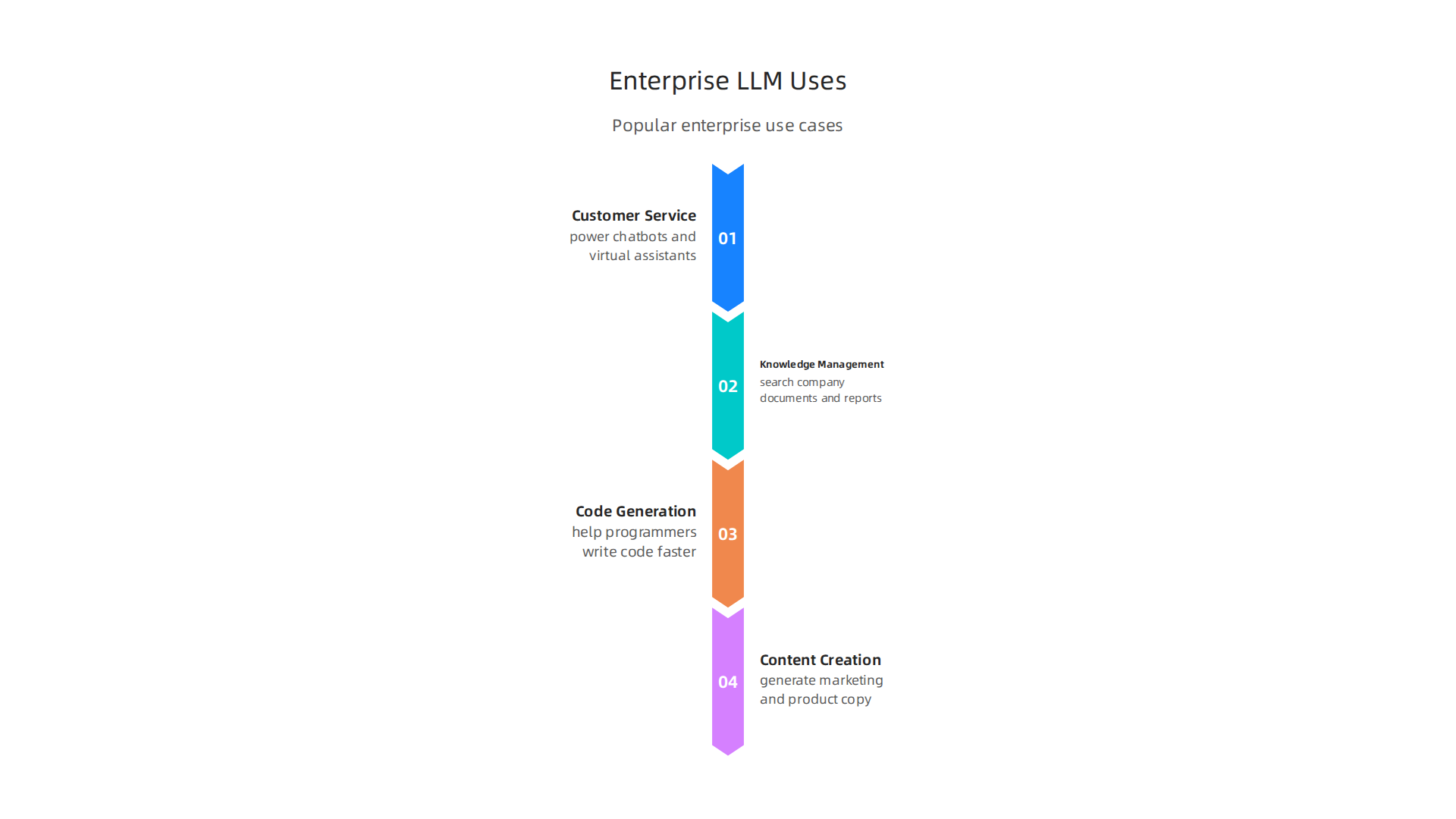
- Customer Service: LLM AI can power chatbots and virtual assistants that help customers with their questions quickly. This frees up human agents to handle more complex issues.

It can also help draft responses for agents, making their work faster.
- Knowledge Management: Imagine an LLM AI that can instantly search through all a company’s documents, reports, and internal guides to find exactly what an employee needs. This is called enterprise search, and it makes finding information much easier for teams like HR, legal, and IT LLM in Enterprise: A Complete Guide. This helps employees get answers faster and can be a big help for creating summary documents or even advanced [notes ai].
- Code Generation and Development: LLM AI can help programmers write code faster, fix mistakes, and even explain complex code. This speeds up software development and helps teams work more efficiently.
- Content Creation: From writing marketing copy to drafting emails or even creating scripts for virtual assistants with a specific [character voice ai], LLM AI can generate different kinds of text content. It can also help with creating unique voices for an [ai voice actor] for various media.
These are just a few examples. LLM AI is also used for things like summarizing legal documents, personalizing marketing messages, and helping with product design [LLM use cases for enterprises in 2026: What works at scale – N-iX].
How LLM AI Fits into Businesses
Putting an LLM AI into a company’s systems usually means weaving it into existing tools and ways of working. Businesses often don’t use LLMs as separate programs but rather embed them directly into their workflows. A smart way to do this for tasks that need a lot of information and strict rules is called Retrieval Augmented Generation (RAG). RAG combines an LLM with a special database to make sure that every answer the AI gives is based on reliable, up-to-date company data Enterprise LLM Integration Patterns and Architectures in …. This is key for things like answering compliance questions or giving technical support. Companies often follow a careful plan to choose, build, and scale their language AI, making sure it fits their needs Choosing, Building, and Scaling Language AI in 2026.
Things to Think About When Using LLM AI
When businesses use LLM AI, they need to consider a few important things to make sure it works well:
- Latency: This is about how fast the LLM AI gives an answer. For things like customer service chatbots, quick answers are a must. Companies might use methods like "caching" common questions or sending less urgent tasks to smaller, faster AI models to improve speed How to Optimize LLMs for Enterprise Success in 2026.
- Cost Management: Running LLM AI can be expensive, especially for large models and many users. Businesses need to keep an eye on costs and find ways to use the AI smartly without breaking the bank.
- Data Handling: LLM AI often needs a lot of data. Companies must have good plans for collecting, organizing, and keeping this data safe. This includes handling different types of information, like documents, emails, and real-time streams, in a unified way LLM Enterprise Deployment: A Step-by-Step Implementation Guide ….
- Monitoring: Once an LLM AI is in use, it’s very important to keep watching how it performs. This means checking its accuracy, making sure it doesn’t make errors, and catching any problems early. Companies should set up strong monitoring systems from the very beginning 10 Best Practices for LLM Deployment in Production 2026. This also involves testing new versions against current ones to ensure improvements are actually happening.
By paying attention to these points, businesses can make sure their LLM AI tools are effective, secure, and truly helpful for their work. For companies looking to expand their AI knowledge and ensure their strategies align with best practices, learning how to use AI strategically is a vital step in 2026.
When bringing LLM AI into a business, it’s not just about how fast it runs or how much it costs. Companies also need to think about all the rules and laws that come with using such smart technology.

Understanding these rules is a vital part of using AI strategically. In 2026, the world of AI laws is changing quickly, and businesses must keep up.
Key Legal Risks with LLM AI
Using LLM AI tools comes with several important legal risks that businesses need to understand:
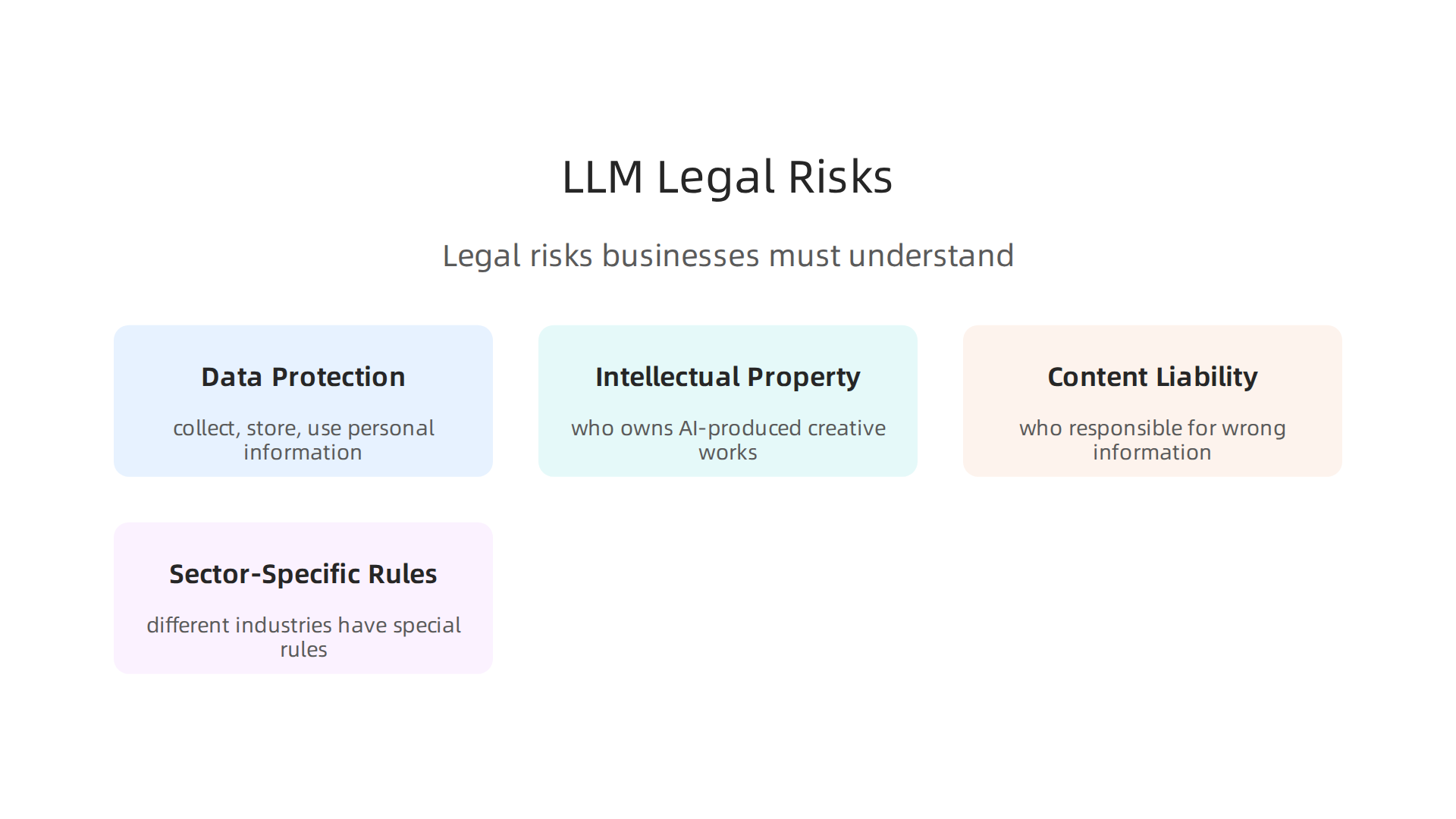
- Data Protection: LLM AI needs a lot of data to work. This means businesses must be very careful about how they collect, store, and use personal information. Laws about data privacy are strict in many places. If an LLM AI uses customer data or other sensitive information, companies must make sure they follow all privacy rules to keep that data safe.
- Intellectual Property (IP): This is about who owns the creative works an LLM AI might produce. If an LLM AI creates marketing content, images, or even code, who has the rights to it? There are also questions if the AI was trained on copyrighted material. These are tricky areas that are still being figured out. For example, the use of a unique [character voice ai] or an [ai voice actor] for content generation can raise questions about originality and ownership.
- Content Liability: Sometimes, an LLM AI might give wrong or unhelpful information. If a chatbot gives bad advice to a customer, or if an LLM creates inaccurate [notes ai] from a meeting, who is responsible for any problems that happen? Businesses need plans to check what the AI produces and take responsibility for it.
- Sector-Specific Rules: Different industries have their own special rules. For example, using LLM AI in healthcare will have different rules than using it in banking or for government services. Companies must know the specific rules for their type of business.
How Different Countries’ Rules Shape AI Use
The rules for LLM AI are not the same all over the world. These differences greatly affect how businesses design their products, manage their data, and choose their technology partners.
- United States: In the U.S., the government is working on general guidelines for AI. For instance, the White House released a National Policy Framework for Artificial Intelligence in March 2026, giving recommendations for a unified approach to AI laws White House Releases National Policy Framework for Artificial Intelligence. However, many different states also have their own AI laws, making a complicated mix of rules for companies to follow. This means a company might have to follow different rules depending on where its customers are.
- European Union: The EU has taken a very strong stand with its AI Act, which is one of the most complete AI laws in the world. This law looks at the risks of AI systems, with many of its rules becoming fully applicable in August 2026 AI Act | Shaping Europe’s digital future – European Union. Businesses that operate in the EU must follow these strict rules, especially for "high-risk" AI systems.
- Global Impact: Because rules vary so much, businesses must think about where their LLM AI products are used. This affects:
- Product Design: AI tools need to be built in a way that can be changed to meet different country’s laws.
- Data Flows: Companies must be careful about where data is sent and stored, making sure it follows the privacy laws of each region.
- Vendor Selection: Choosing AI partners who also understand and follow all these different rules is very important.
Staying on top of these global changes is a big job. To learn more about navigating these complex requirements, explore Mastering Global AI Regulations 2026 for Wave AI Compliance. There are over 72 countries that have started looking into AI policies by mid-2026, showing just how widespread these new laws are becoming AI Regulations Worldwide: Global Overview of AI Governance in 2026.
Keeping up with the fast-changing world of AI laws and regulations is key for any business.
Get clear daily AI updates from The AI Newsletter Worth Reading.
Staying on top of the fast-changing world of AI laws and regulations is key for any business. But knowing the rules is just the first step. Companies also need to put practical plans in place to manage the risks that come with using LLM AI. This is called risk management, governance, and model stewardship. It means setting up clear ways to keep the LLM AI safe, fair, and working well from start to finish.
Practical Governance Frameworks
A strong plan for using LLM AI needs clear rules about who does what and how the AI is handled through its whole life.
- Roles and Responsibilities: Businesses need to decide who is in charge of the LLM AI at each step. This means figuring out who designs it, who checks it, who uses it, and who makes sure it follows all the rules. Clear roles help everyone know what they need to do.
- Lifecycle Controls: Think of this as a roadmap for your LLM AI. It starts from the moment you decide to use an LLM AI tool, like one that helps create [notes ai] from meetings or a [character voice ai] for marketing. The roadmap includes testing, deploying (or putting it into use), and then constantly checking and updating it. Following a guide from when you first think about using an LLM to putting it into action is crucial for success, as highlighted in the Enterprise LLM Deployment Guide — POC to Production 2026.
- Documentation: Keeping good records is super important. This means writing down how the LLM AI was built, what data it used, how it was tested, and how it’s supposed to be used. Good documentation helps everyone understand the AI and makes it easier to fix problems or prove it follows rules later.
- Incident Response: Even with the best plans, sometimes things go wrong. An LLM AI might give bad advice, or it might act in a way you didn’t expect. Businesses need a plan for what to do when problems happen. This plan should include how to find the problem, fix it, and tell the right people about it.
Technical Controls and Operations
Beyond the rules and plans, there are also technical steps to manage LLM AI safely.
- Monitoring: Once an LLM AI is in use, it needs to be watched closely. Businesses should set up systems to keep an eye on how the AI is performing. Is it giving good answers? Is it working fast enough? Is it being fair? This constant checking helps catch issues early. Setting up good monitoring and alerts from day one is one of the 10 Best Practices for LLM Deployment in Production 2026.
- Access Controls: Not everyone should have full access to change or train the LLM AI. Companies need to set up rules about who can get to the AI systems and the data they use. This helps prevent mistakes or bad actors from causing problems.
- Provenance for Training Data and Outputs: This means knowing where the data used to train the LLM AI came from and where the AI’s outputs are going. For example, if you use an [ai voice actor] for your content, you need to know what voices were used to train that AI and who owns them. Knowing the source of data and the path of the output helps ensure fair use and prevents legal issues.
Putting these controls in place helps businesses use LLM AI tools like generative [notes ai] or personalized [character voice ai] safely and smartly. To dive deeper into ensuring your AI efforts meet legal standards, learn How to Make an AI Compliant with Global Regulations in 2026. If you’re specifically working with AI-generated voices, understanding the unique challenges is critical; explore AI Voice Generation: Legal, Ethical Risks, and 2026 Business Compliance.
Market Impact, Investment Trends, and Go-to-Market Considerations
The world of Large Language Models (LLM AI) is growing super fast and changing how businesses work. These powerful AI tools are not just for big tech companies anymore. They are becoming a key part of how many businesses operate in 2026. This fast change affects how companies compete, what products they build, and where investors decide to put their money.
How LLM Advances Change Business
New developments in LLM AI are shaking up many industries. Companies that use LLM AI for things like creating quick summaries (think notes ai) or making unique voices for ads (like a character voice ai or ai voice actor) are finding new ways to stand out. The global LLM market is booming. Experts say it will grow from about $10.57 billion in 2026 to almost $150 billion by 2035 LLM statistics 2026: Adoption, market growth, and trust data. This huge growth means more companies are jumping in.
Actually, by 2026, the enterprise LLM market alone is expected to be worth around $5.91 billion. It could grow to over $48 billion by 2034 Enterprise LLM Market Size, Share | Growth Report [2026- …]. This kind of growth makes everyone rethink their product plans. Businesses are adding LLM AI into their tools to make them smarter and more helpful. This also means new companies are popping up with clever AI solutions.
What Founders and Investors Need to Know
For people starting new companies and for investors looking for smart places to put their money, understanding LLM AI is key.

They need to look closely at two main things: legal rules and technical risks.
1. Regulatory Risks
Governments around the world are making new rules for AI. For example, in March 2026, the White House shared a plan for how AI should be regulated in the US White House Releases National Policy Framework for Artificial Intelligence. Also, the EU AI Act, which is a big set of rules for AI, fully started in August 2026 AI Act | Shaping Europe’s digital future. These rules can be complex. There are also many different state laws in the US that businesses need to follow AI Regulations Worldwide: Global Overview of AI Governance in ….
Founders and investors must ask:
- Does this LLM AI product follow all the current laws?
- How might new laws in the future affect it?
- What if the AI makes a mistake or creates biased results? Who is responsible?
Ignoring these questions can lead to big fines and harm a company’s reputation. It’s smart to have a clear plan for how the business will follow AI rules. For more help, explore various AI regulations 2026 compliance strategies for businesses.
2. Technical Risks
Besides legal concerns, there are also technical challenges with LLM AI.
- Data Quality: What kind of data was used to train the LLM AI? If the data is bad or biased, the AI might give wrong or unfair answers.
- Security: How safe is the AI system from hackers? Can important data be stolen or misused?
- Performance: Will the LLM AI work well consistently? Will it be fast enough for users? What happens if it goes down?
Founders should show investors how they plan to manage these technical risks. This means having good security measures, testing the AI often, and having a plan for when things go wrong.
Knowing about these market shifts, legal needs, and technical challenges helps founders build stronger companies and helps investors make smarter choices. It’s about being ready for what’s next in the exciting world of LLM AI.
For deep insights into the rapidly evolving landscape of AI and technology regulations, don’t miss out. Get clear daily AI updates from The AI Newsletter Worth Reading.
Summary
This article explains why large language models (LLMs) are rapidly reshaping business, law, and investment in 2026 and what decision‑makers need to know now. It covers how modern LLMs are built (including retrieval-augmentation and multimodal features), the difference between foundation and fine‑tuned models, and why benchmarks matter for procurement and compliance. The piece highlights gaps in current evaluation—robustness, fairness, emergent behavior, and safety—and shows common enterprise uses like customer service, knowledge search, code generation and content creation. It outlines core legal risks (data protection, IP, content liability), how varying national rules change product design, and practical governance and technical controls for safe deployments. Finally, it looks at market trends, investor concerns, and a pragmatic approach for pilots, scaling, and ongoing monitoring so teams can adopt LLMs responsibly and strategically.