
Why the Definition of Technology Matters More Than Ever
We throw around the word "technology" every day. You use it at work, in conversations with friends, and while scrolling through the news. But here’s the thing: the technology meaning is surprisingly slippery. What counts as technology? A smartphone? A pencil? The alphabet? If we cannot agree on a clear definition, how can we ever hope to regulate it?

Philosophers have wrestled with this question for centuries. The philosophical reflection on technology dates back to ancient Greece, where thinkers like Plato and Aristotle explored how tools and crafts shape human life. Over time, the word has taken on many meanings. Today, we use synonyms for tech like "gadgets," "digital tools," and "automation systems." But the core idea remains contested.
This matters more than ever in 2026. Regulators around the world are drafting laws for artificial intelligence, data privacy, and autonomous vehicles. But if the synonym for tech used in one law means something different in another, we end up with confusion and gaps in protection. For example, is an AI chatbot "technology" in the same way a factory machine is? The answer changes how rules apply.
In this article, we will trace the semantic journey of "technology" from its philosophical roots to its modern usage. We will look at what is computer systems technology means today and how that shapes business strategy and policy decisions. Understanding the past helps us navigate the present.
If you want to stay ahead of these fast-moving debates, a solid grasp of the technology meaning is your first step. It is not just an academic exercise. It affects your compliance choices, your product design, and your risk management.
And speaking of staying updated, regulations shift almost weekly. That is why we recommend The AI Newsletter Worth Reading from The Deep View. It gives you clear daily AI updates so you never miss a critical change.
Get clear daily AI updates from The Deep View Newsletter and keep your finger on the pulse of tech regulation.
In the next section, we will dive into the earliest definitions of technology and how thinkers like Aristotle and Francis Bacon shaped our modern view. You will see that the synonyms of tech we use today have deep historical roots.
Historical Definitions: From Techne to Systems
The word technology did not always mean what it means today. In ancient Greece, the closest term was techne. This Greek word referred to skill, craft, and art. It covered everything from carpentry and pottery to medicine and music.
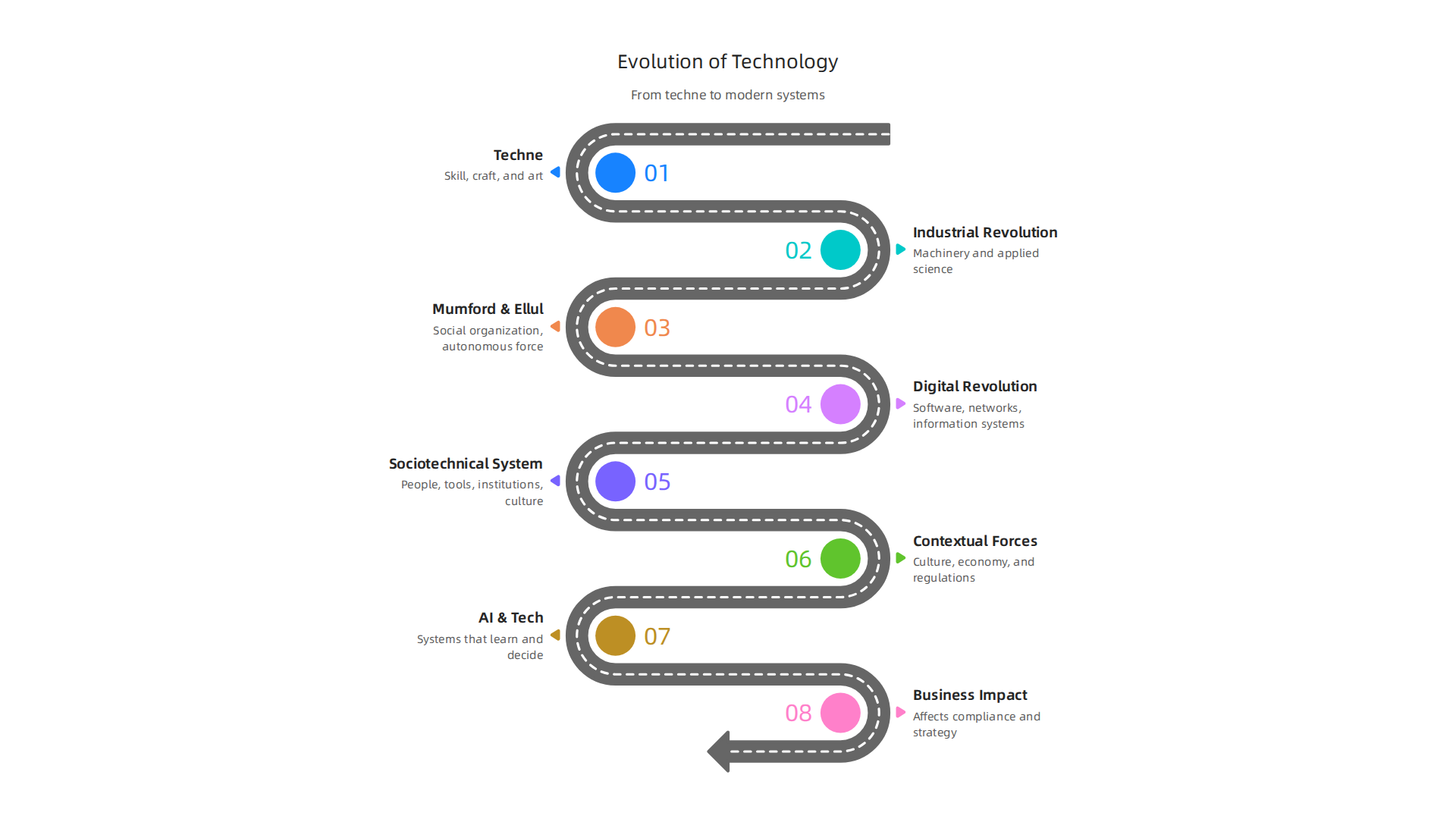
Techne was not about machines or digital tools. It was about human know-how and making things by hand.
The first philosophers to think deeply about techne were Plato and Aristotle. Aristotle even built his idea of the four causes around how craftspeople create objects. He wanted to understand what makes a thing what it is. This early thinking laid the groundwork for later debates about the technology meaning. For a deeper look at these roots, you can read the comprehensive history in the Stanford Encyclopedia of Philosophy entry on technology.

For centuries, techne stayed tied to human skill. Then the Industrial Revolution arrived and changed everything. Factories filled with machines. Steam engines replaced muscle power. The synonyms for tech shifted from "craft" to "machinery" and "applied science." Technology became something you could see, touch, and operate. It was no longer about the carpenter’s hands. It was about the loom that wove cloth on its own.
By the early 1900s, thinkers started to realize technology was more than just hardware. Lewis Mumford, a historian and philosopher, argued that modern technology had created a "megamachine" of social organization. He believed the real power of technology lay not in tools but in how we structured work and society. Jacques Ellul, a French sociologist, went even further. He said technology had become an autonomous force that shaped every part of life. Ellul called this "technique" a system of efficiency that pushed out human values.
These ideas expanded the definition of technology beyond objects. Technology became a sociotechnical system where people, tools, institutions, and culture all interact. You see this today when you think about AI regulation. An algorithm is not just code. It is part of a system that includes training data, business goals, legal rules, and human oversight. Understanding this broader definition helps you spot risks that a narrow view misses.
If you want to see how these historical ideas apply to current compliance challenges, check out our detailed guide on the definition of technology and its role in business and risk. It shows how these old debates shape real-world decisions in 2026.
The Industrial Revolution’s Influence on Technology Meaning
The Industrial Revolution changed the technology meaning more than any other event before it. Before the 1700s, most people thought of technology as human skill and handmade craft. But once steam engines, spinning jennies, and massive factories arrived, that old idea shattered.

Suddenly, the word technology became attached to large machines and industrial processes. People started using machinery as a synonym for tech. If you worked in a cotton mill or a steel plant, you were using technology. It was big, loud, and visible. This shift was so powerful that even today, many people still picture factories and robots when they hear the word. According to the authoritative history of technology during the Industrial Revolution, this period marked a "quickening in the rate of growth and change" that reshaped society from the ground up.

Thinkers of the time noticed this change too. Karl Marx, the famous philosopher and economist, saw technology as a driving force behind economic and social change. He argued that machines and factories were not neutral tools. They reshaped who had power, who did the work, and how wealth moved through society. For Marx, the synonyms of tech included "means of production" and "industrial capital." This view was radical. It said technology was not just stuff you use. It was part of a larger system that determined your place in the world.
This era also gave rise to the idea that technology is "applied science." Before the Industrial Revolution, scientists and craftspeople often worked separately. But during the 1800s, inventors started using scientific principles to build better machines. People began to see technology as science put into practice. This idea sticks with us today. When we talk about computers, we often call them "applied science" or "engineering." It is a common synonym for tech in business and education.
In fact, this applied science mindset helped create the entire field of what is computer systems technology. Computer systems are the direct descendants of the machines and engineering methods born during the Industrial Revolution. A computer is just a very fast, very complex machine that processes information using scientific logic. So the Industrial Revolution did not just change the technology meaning for its own time. It set the stage for every gadget and digital system we rely on in 2026.
If you want to see how these old ideas apply to modern challenges like AI regulation, check out our detailed guide on artificial intelligence and machine learning explained for 2026 business leaders. It shows how the applied science view of technology shapes today’s compliance decisions.
The Industrial Revolution locked in the idea that technology means big machines, applied science, and economic power. That version of the technology meaning still rules our thinking. But as we move deeper into the 2020s, new technologies like AI are forcing us to update that definition once again. Staying current on these shifts is critical for anyone who works with tech. To stay ahead of these fast-moving changes, consider subscribing to The AI Newsletter Worth Reading for clear daily updates that help you understand where technology is heading next.
The Digital Revolution: Software, Networks, and Information
The Industrial Revolution gave us big machines. The Digital Revolution did something different. It made technology invisible.
Starting in the middle of the 1900s, a new kind of technology appeared. Small, fast computers replaced steam engines. Software replaced mechanical gears. And the technology meaning shifted again.
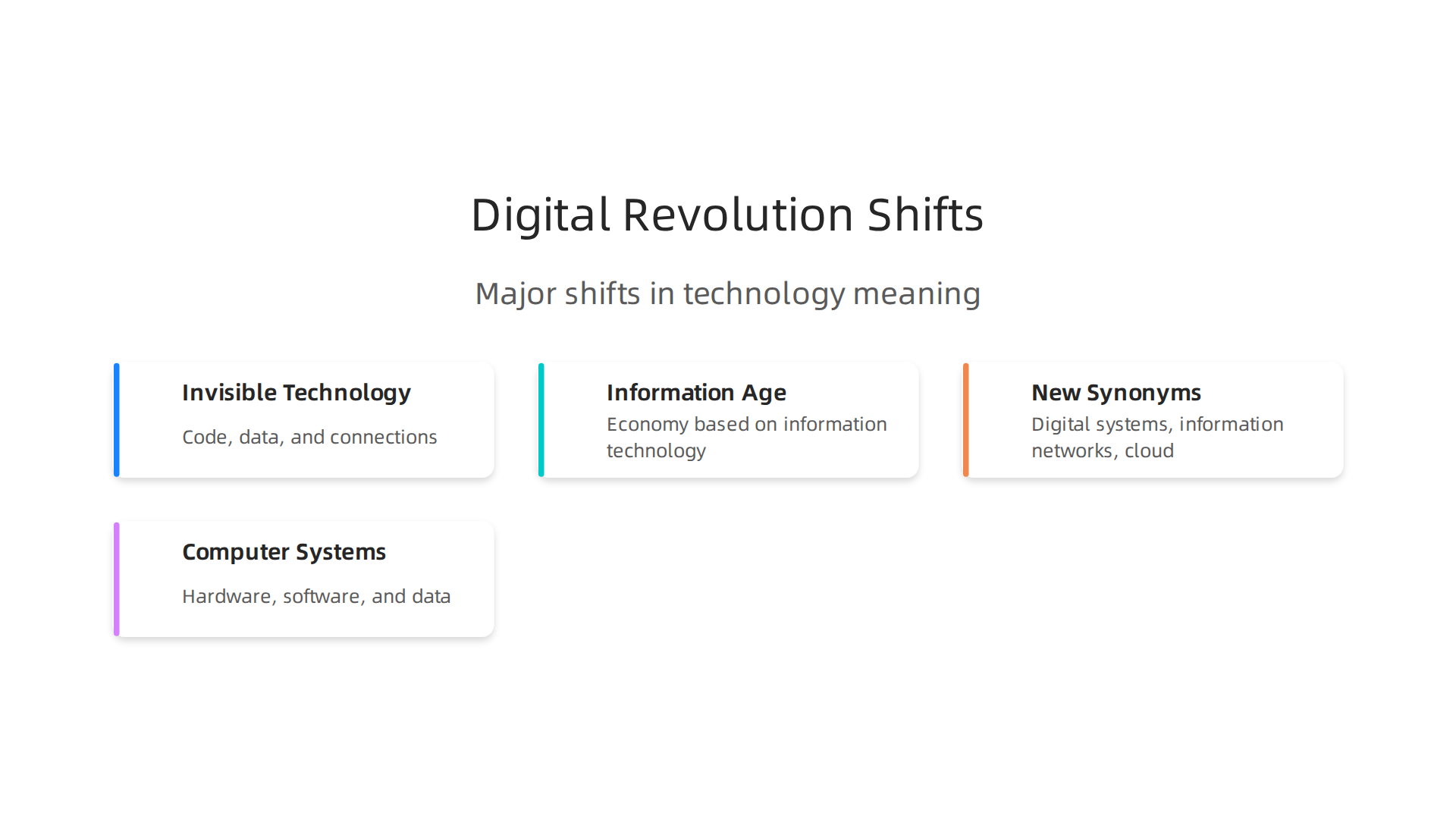
Now technology did not just mean physical tools you could touch. It meant code, data, and connections.
This period, often called the Information Age, turned information into the most valuable resource. The Wikipedia overview of the Information Age explains it as a period defined by the rapid shift from traditional industries to an economy based on information technology. Computers became smaller and more powerful. The internet connected the world. Suddenly, synonyms for tech included "digital systems," "information networks," and "the cloud." These words describe things you cannot hold in your hand, but they changed everything.
Think about your smartphone. It is a computer in your pocket. But the real magic is not the hardware. It is the software, the apps, the data flowing through wireless networks. This is the what is computer systems technology question in action. A computer system is a combination of hardware, software, and data that works together to process information. The Digital Revolution made computer systems the main synonym for tech in offices, schools, and homes.
In the 1980s and 1990s, personal computers from companies like Microsoft and Apple made this new technology accessible to everyone. Then the World Wide Web launched in 1989. Communication changed forever. People could send messages, share files, and access knowledge from anywhere. The meaning of technology expanded to include virtual spaces and digital interactions.
Definitions from this era emphasize systems and interactivity. Technology became less about individual machines and more about how those machines connect and exchange information. A factory in the Industrial Revolution was a place. A network in the Digital Revolution is a system. This shift matters for business leaders in 2026 because so many compliance and risk questions now center on data, algorithms, and digital platforms.
If you want to see how this modern definition of technology connects to real-world compliance issues, explore our guide on the definition of technology and its impact on 2026 business compliance. It breaks down how regulators now view software and data as technology that needs oversight.
The Digital Revolution expanded technology meaning beyond factories and machines. It added software, networks, and information processing to the picture. And that sets the stage for the next big shift: the rise of artificial intelligence and the need for a whole new understanding of what technology really is.
AI and Emerging Tech: Redefining Technology in the 21st Century
And here we are. Artificial intelligence is that next big shift. It changes the technology meaning in a deep way. For the first time, technology is not just a passive tool you use. It can act on its own. It can make decisions. It can learn.

Think about an AI agent that schedules your meetings or a self-driving car that navigates traffic. These systems do not just follow fixed rules. They sense the world, reason about it, and take action. The Microsoft AI trends overview for 2026 puts it clearly: AI is moving from answering questions to being a true partner.

It amplifies human abilities instead of just replacing tasks. This is a new synonym for tech — "collaborative intelligence."
Other emerging technologies stretch the definition even further. Biotech lets us edit genes. Quantum computing solves problems no classical computer can touch. These are not just faster versions of old machines. They are entirely new categories of capability. What is the technology meaning when a computer can design new drugs or a gene editor can rewrite DNA? It becomes harder to separate the tool from the outcome.
For regulators, this creates a big problem. How do you define AI for legal purposes? The Brookings glossary of AI and emerging technologies points out that AI systems show intentionality, intelligence, and adaptability. That sounds almost human. So if an AI makes a mistake, who is responsible? The developer? The user? The algorithm itself? These questions are forcing governments to rethink what counts as technology in the first place.
In 2026, the synonyms of tech keep expanding. Words like "autonomous systems," "generative models," and "agentic software" are becoming common. They all point to one thing: technology is no longer just a thing you hold. It is a partner, a decision maker, and sometimes even a creator.
If you need to keep up with how these rapid changes affect your business, consider getting clear daily AI updates from The AI Newsletter Worth Reading. It helps you stay ahead of regulations and new definitions as they emerge.
You can also dig deeper into how regulators are handling this shift with our guide on AI regulations and compliance strategies. The technology meaning is still evolving. But one thing is sure: the 21st century is redefining it completely.
How Context Shapes Meaning: Cultural, Economic, and Regulatory Forces
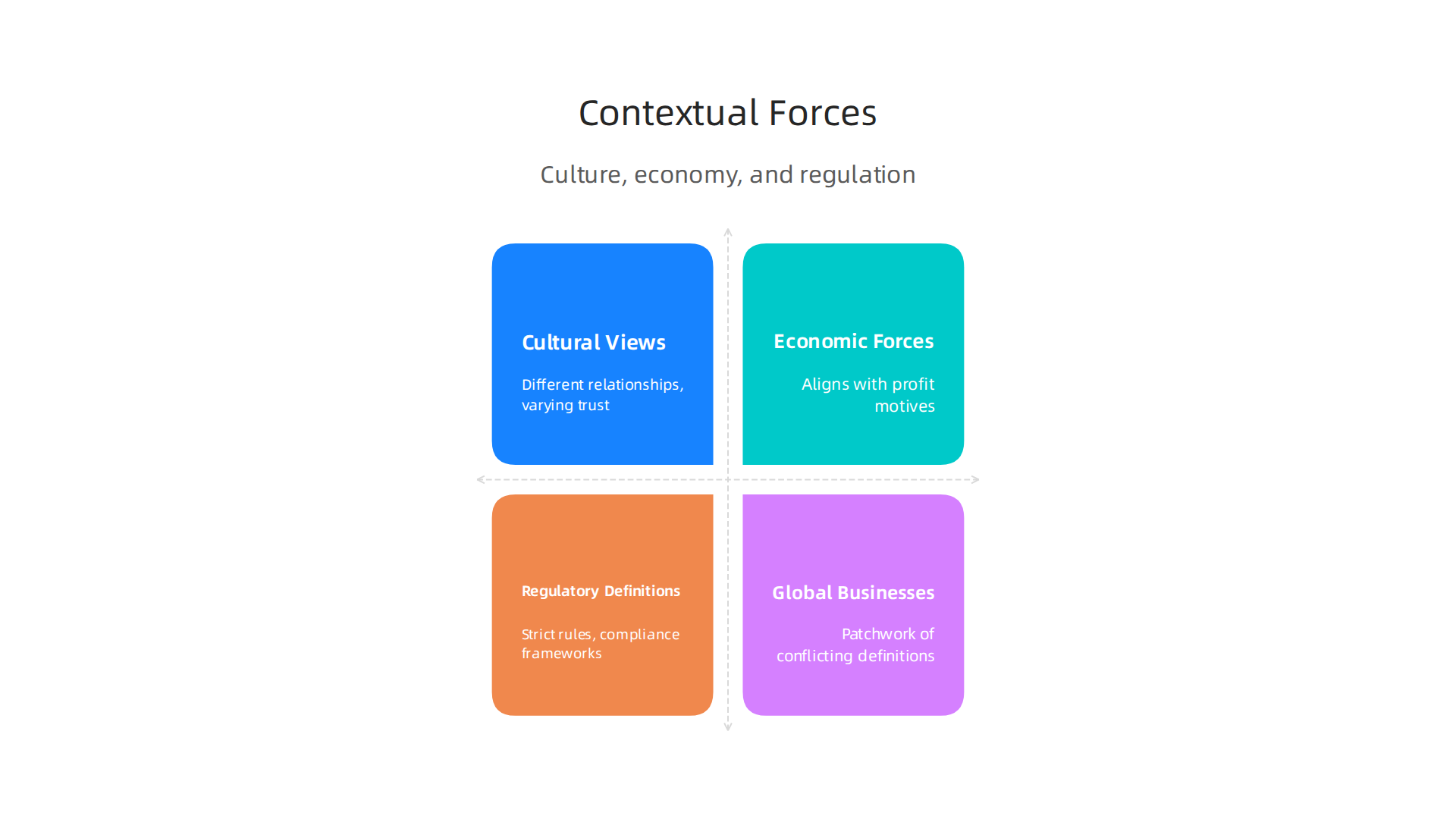
Think about what the word "technology" means to you. Now imagine someone in a rural village in Kenya, a banker in London, and a regulator in Brussels all answering that same question. You would get different answers. That is because the technology meaning is not fixed. It changes with culture, money, and laws.
Cultural Views Change Everything
Different cultures have different relationships with technology. In some countries, people see it as a tool for progress. In others, they view it with caution. Public opinion surveys from around the world back this up. The Stanford HAI global public opinion report shows that trust in AI varies widely by country. For example, people in Southeast Asian nations are much more excited about AI companions than people in the United States. These cultural gaps make it hard for countries to agree on shared rules. What seems like a harmless synonym for tech in one culture may feel like a threat in another.
Economic Forces Narrow or Widen the Definition
Money also shapes the synonyms of tech. Investors and businesses define technology in a way that fits their goals. A startup building a new health app calls itself a tech company. A factory installing robots does too. But a farmer using a soil sensor might not get the same label. Economic incentives push us to focus on the newest, most profitable tools. This can leave out older but equally important technologies. If you are trying to raise funding, you want your product to fit the synonym for tech that investors are looking for. That is why buzzwords like "AI-powered" and "platform" show up everywhere. The definition bends to where the money is.
Regulatory Definitions Clash with Everyday Use
Here is where things get really messy for compliance teams. In healthcare, finance, and telecom, regulators have their own strict definitions of what counts as technology. These definitions often conflict with how regular people or businesses use the term. For example, a simple customer database might not feel like "technology" to you. But under data privacy laws, it absolutely is. The CSA guide to IT compliance explains that IT compliance means following specific rules about data protection. That means your what is computer systems technology question gets answered by lawyers, not engineers. The same goes for financial systems, medical devices, and even smart toys. Each sector has its own synonyms of tech baked into law.
This patchwork of definitions creates real headaches for global businesses. A tool that is "technology" in one country might not be considered one in another. That is why companies need to stay on top of how different regulatory bodies are defining things. It is also a good reason to understand the full picture of how technology is understood across borders. Our guide on the definition of technology and how it shapes business compliance walks through these differences in more detail.
The technology meaning is not a one-size-fits-all idea. Culture, money, and regulation each pull it in a different direction. And in 2026, those forces are stronger than ever.
Why Technology Meaning Matters for Business Strategy and Compliance
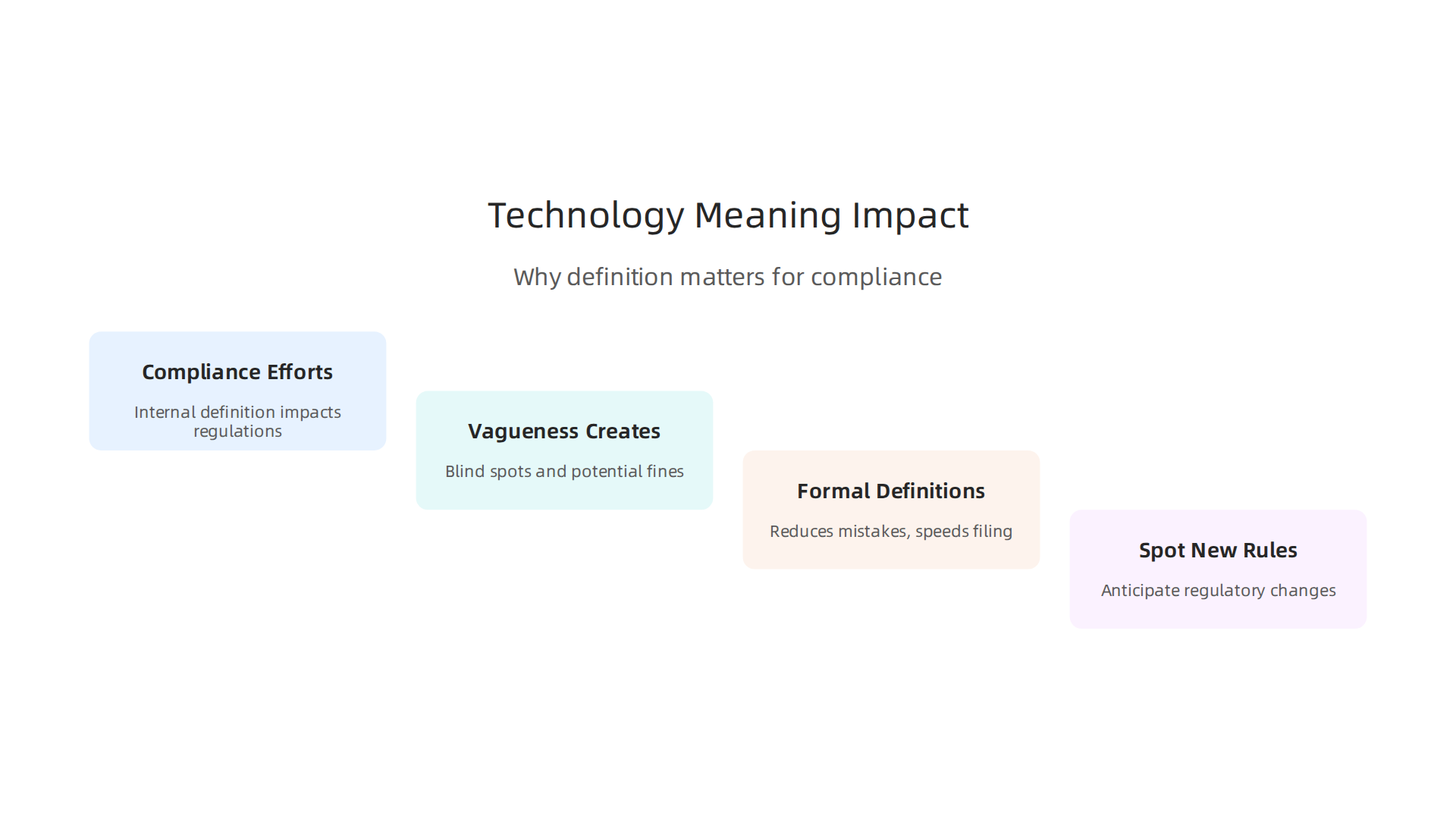
So why should you care about all these shifting definitions? Because the technology meaning your company uses internally can make or break your compliance efforts.
When regulators show up, they will not ask what you feel technology is. They will ask what rules apply to the systems you run. And if your internal synonym for tech is too narrow, you might miss something critical.
Here is the real problem. Many companies never sit down and agree on a clear what is computer systems technology answer for their own operations. They use the term loosely in meetings, in product docs, and in risk assessments. That vagueness creates blind spots. For example, if your team does not classify a data analytics tool as "technology," you might skip the security controls that a regulation demands. That is how fines happen. According to the regulatory compliance risk assessment guide, a strong compliance program starts with understanding your exposure. And you cannot understand exposure if you cannot define what technology means in your own environment.
This is why compliance teams are pushing for formal internal definitions. They need everyone in the company to use the same synonyms of tech when filling out risk reports or building new features. A clear definition helps with product development too. Engineers need to know if their work triggers a specific regulation. Lawyers need to know if a new tool counts as "technology" under a foreign data law. When everyone agrees, filing is faster and mistakes drop.
Staying ahead of changes in the technology meaning also helps you spot new rules before they bite you. Regulators in 2026 are expanding their definitions every year. Biometric data, neural data, even geolocation data are now treated as regulated technology categories in some states. If your internal synonym for tech does not include these, you will scramble when a new law passes. Tracking how the meaning evolves is not just homework. It is a shield.
Want to stay on top of these shifts without spending hours reading legal documents every day? You can get clear daily updates on AI rules and tech regulation from The AI Newsletter Worth Reading. It breaks down complex changes into short, useful summaries.
For a deeper look at how to build internal definitions that keep you safe, check out this piece on AI regulations compliance strategies. It walks through practical steps for aligning your technology meaning with what regulators expect.
Summary
This article shows why defining