

The world of business is changing faster than ever in 2026, and one big reason is artificial intelligence. While many companies already use popular AI tools, a new type of AI is making an even bigger splash: AI agents. These aren’t just smart computer programs; they are truly game-changers for how businesses operate.
What Makes AI Agents Different?
Think about most traditional AI tools. They often need you to give them specific commands for each step. They are very good at one thing, like writing a short email or finding data, but they wait for you to tell them what to do next.
AI agents are different. They are software systems that can understand instructions, make their own choices, and then act on those choices all by themselves to reach a goal 1. Imagine an employee who knows what to do, plans how to do it, and then gets it done without you having to guide them through every single step. That’s closer to what an AI agent can do. They can perceive things, think about them, and then take action 2.
This ability to act autonomously is what sets AI agents apart from other popular AI tools. Instead of being just an "AI toolkit" you pick up for a single task, an AI agent can manage a whole project. This shift is huge for businesses looking to stay ahead. To understand more about this technology, you can read our guide on what is agentic AI and how it is changing business in 2026.
Big Value for Business Leaders
For business leaders, AI agents offer a lot of value. Here’s how:
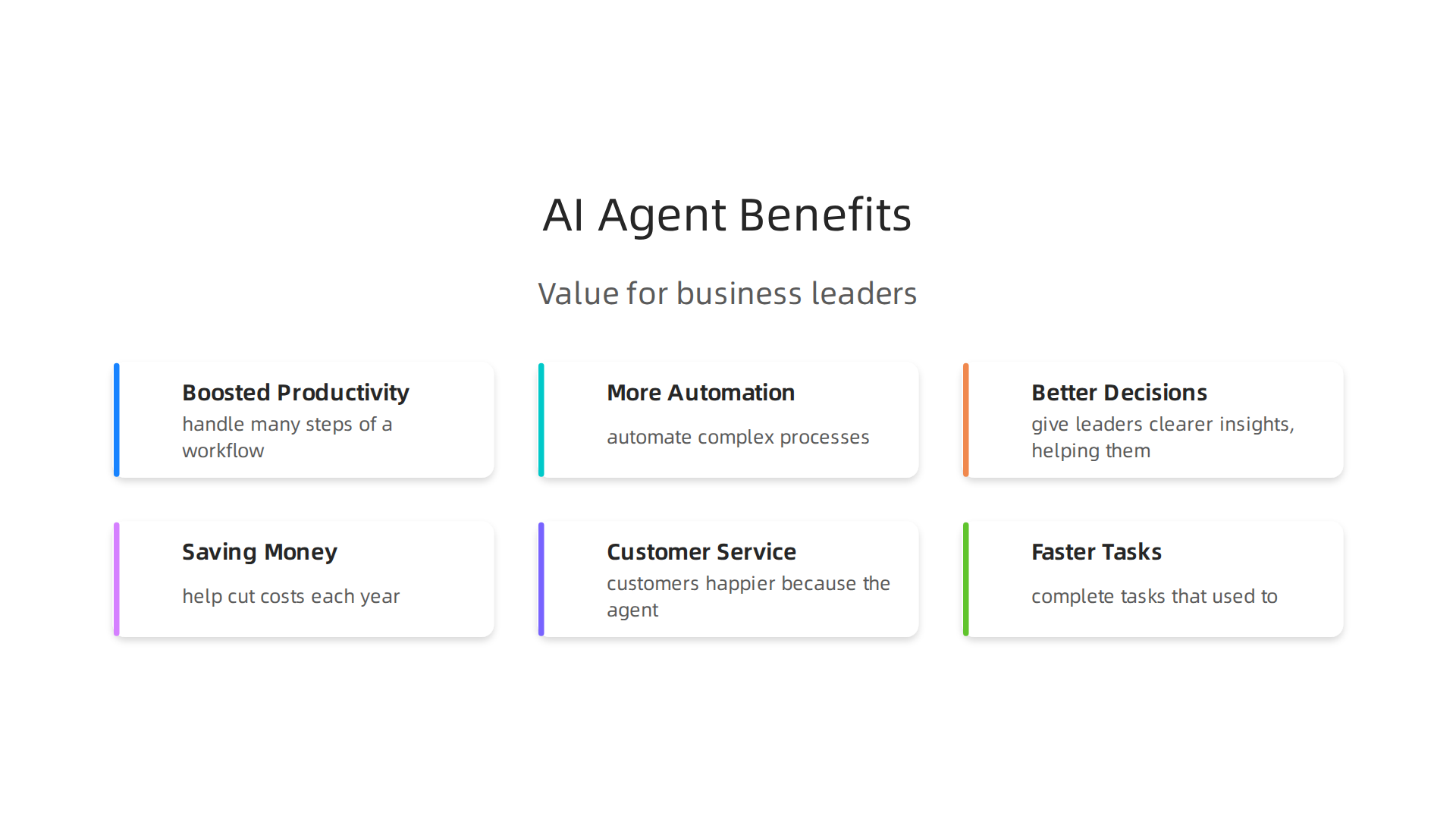
- Boosted Productivity: AI agents can handle many steps of a workflow on their own, freeing up your team to focus on more complex, creative tasks. This means more gets done in less time.
- More Automation: Imagine AI agents managing coding projects or handling many customer questions from start to finish. They can automate complex processes that used to need a lot of human effort 3. This moves beyond simple automation to smarter, goal-oriented automation.
- Better Decisions: By processing lots of information and understanding complicated situations, AI agents can give leaders clearer insights, helping them make smarter choices for their company. Tools like Coactive AI or Toolify AI are part of a growing landscape where such intelligent systems become invaluable.
In short, AI agents aren’t just new tech; they are changing how we think about work itself. For leaders in 2026, understanding and using these agents will be key to making their businesses more efficient and ready for the future.

Learning to use AI strategically is a must for any decision-maker today.
Want to keep up with the latest in AI and tech regulation?
The AI Newsletter Worth Reading
As we saw, AI agents go beyond simple tools. They can think, plan, and act on their own. But not all AI agents are built the same. Just like people have different jobs, there are different kinds of AI agents, too. They also help businesses in many different ways.
Different Kinds of AI Agents
To truly understand AI agents, it helps to know about their different types. Experts often group them by how much they can do on their own and what they are used for.
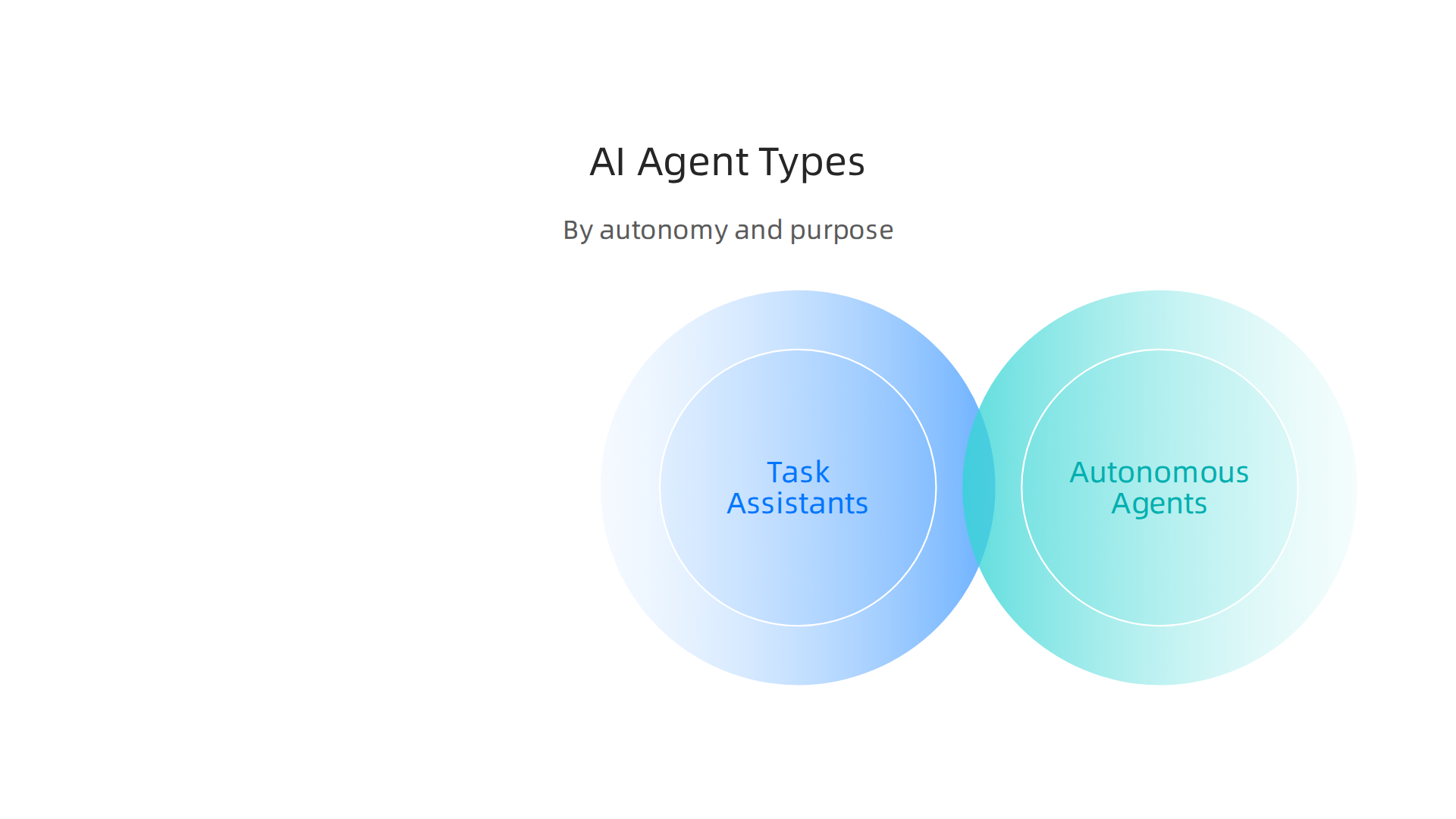
Here are the main types:
- Task-Specific Assistants: These are like very smart helpers for one particular job. They are given a clear goal and all the tools they need to achieve it. Think of an agent that helps you write a blog post from start to finish or finds specific information for a report. While they are smart, they usually don’t decide on new goals by themselves. They are very good at following instructions for complex tasks.
- Autonomous Agents: These agents can do more on their own. They don’t just follow a set of steps; they can figure out the best steps to take to reach a goal. They can learn from their actions and change their plans if something unexpected happens. For instance, an autonomous agent might manage a marketing campaign, adjusting ads based on how they perform. A recent report classifies AI agents by their level of freedom to make decisions, among other things 1.
- Multi-Agent Systems: Imagine a team of these autonomous agents working together. That’s a multi-agent system. Each agent might have a different role, but they share information and work toward a bigger common goal. For example, one agent might handle sales, another customer support, and another logistics, all communicating to improve the customer experience. This kind of setup can manage very complex operations.
These classifications help businesses decide which kind of agent is best for their needs.

They are not simply "popular ai tools" but more like specialized workers designed for specific kinds of digital tasks.
AI Agents in Business: Real-World Examples
So, how do businesses actually use these different types of AI agents? The applications are wide and varied, helping companies from startups to large corporations in 2026. Here are some ai agents examples across different business areas:
- Sales and Marketing:
- Lead Generation: An AI agent can search the internet for potential customers, gather information about them, and even personalize initial contact messages.
- Campaign Optimization: Autonomous agents can adjust advertising budgets and strategies in real-time to get the best results, based on user behavior and market trends.
- Personalized Recommendations: Like the suggestions you get on shopping websites, agents can learn your preferences and recommend products or services you’re likely to want.
- Customer Support:
- Smart Chatbots: These are not your old, simple chatbots. Today’s AI agents can understand complex customer questions, look up answers, and even perform actions like processing returns or changing orders. They can handle many tasks that used to require a human agent 2.
- Help Desk Automation: Agents can sort incoming support tickets, answer common questions, and make sure urgent issues go to the right human team member.
- Operations (Ops):
- Supply Chain Management: AI agents can monitor inventory, predict demand, and even suggest optimal shipping routes to save time and money.
- IT System Monitoring: They can watch over computer systems, spot problems before they become big issues, and sometimes even fix them automatically.
- HR Tasks: From screening resumes to answering employee questions about benefits, AI agents can make HR processes more efficient.
- Research and Development (R&D):
- Data Analysis: AI agents can quickly go through huge amounts of data to find patterns and insights that human researchers might miss.
- Code Generation and Testing: For tech companies, AI agents can write parts of computer programs and then test them for errors, speeding up development.
- Market Research: An agent can gather and summarize information about competitors and market trends, providing valuable input for new products.
Companies are starting to use AI agents in these areas because they can save time, reduce costs, and help employees focus on more important work. For instance, early evidence shows that "Productivity & Workflow" and "Learning & Research" are two of the biggest uses for AI agents today 3. Understanding these ai agents examples helps show how valuable they are. Learning how to best use this technology is becoming a key skill for any business leader in 2026. For more ideas, you might find our guide on how to use AI strategically useful.
After looking at the different kinds of AI agents and their general uses, it’s time to see them in action. Many businesses in 2026 are already using these smart helpers in real ways. These real-world ai agents examples show how they make things faster, more accurate, and more personal across many industries. They are much more than just popular AI tools; they are changing how daily work gets done.
Here are some specific examples of AI agents working in different industries:
Finance Industry
In finance, AI agents are like sharp-eyed assistants that help manage money and spot risks.
- Catching Fraud: AI agents can watch millions of transactions very quickly. If something looks unusual, like a purchase in a strange place or a very large amount, the agent can flag it right away. This helps banks stop fraud faster and keep people’s money safe.
- Checking Trades: Imagine checking countless records of buying and selling stocks. AI agents can cross-reference these records across many computer systems. They find any mistakes and send them to a person to fix. What used to take days for a team of people can now be done overnight by an agent 12 Enterprise AI Agents Use Cases Transforming Enterprises in 2026. This makes sure everything is correct and helps avoid big problems.
- Making Reports: Financial companies have to create many reports for the government. AI agents can gather information from different places and fill out these reports automatically. This saves a lot of time and makes sure the reports are always correct.
Healthcare Industry
AI agents are also making a big difference in healthcare, helping both patients and doctors.
- Patient Support: Smart AI agents can answer common questions from patients about appointments, medicines, or symptoms. They can help people get the information they need quickly, freeing up nurses and other staff to focus on direct patient care.
- Managing Appointments: Agents can help schedule, change, and remind patients about appointments. This reduces missed appointments and makes sure clinics run smoothly.
- Finding Information: For researchers and doctors, AI agents can quickly scan huge amounts of medical papers and patient records. They can find patterns or information that might help in finding new treatments or understanding diseases better.
Retail Industry
From small shops to big online stores, AI agents are changing how we buy and sell things.
- Personal Shopping: You know how online stores suggest things you might like? That’s often an AI agent at work. It learns what you prefer and shows you products just for you. This makes shopping easier and more fun.
- Stock Control: An AI agent can keep track of how much of each item is in a store or warehouse. It can predict when things will run out and even order new stock automatically. This means stores always have what customers want.
- Customer Service: When you chat with a helpful chatbot on a shopping website, it’s likely an AI agent. It can answer questions about orders, returns, or product details, providing quick help around the clock. Some companies like Klarna have seen their AI assistants handle millions of chats a month, greatly speeding up resolution times 7 enterprise AI agent use cases in production (2026).
Manufacturing Industry
In factories and production lines, AI agents are helping make things better and cheaper.
- Quality Checks: AI agents can use cameras to look at products as they are being made. They can spot tiny flaws that humans might miss, making sure only perfect items go out to customers.
- Machine Care: Agents can watch machines to see if they are working properly. If a machine looks like it might break soon, the agent can warn people to fix it before it causes a problem. This is called predictive maintenance and saves a lot of money and downtime.
- Supply Chain Help: Just like in other industries, agents can optimize how raw materials get to the factory and how finished products get to customers. They can find the best routes and schedules, saving time and fuel.
These ai agents examples show a clear trend: businesses are using AI to automate tasks, improve accuracy, increase speed, and offer more personalized experiences. This leads to cost savings and better outcomes for both companies and customers. As AI agents become more common, many people wonder about the future of jobs. You can learn more about how this might affect work in 2026 by reading our article on AI taking over jobs in 2026.
Staying informed about these fast changes in AI and its rules is super important for anyone in business today. For daily updates on AI and technology rules, consider getting The AI Newsletter Worth Reading.
Now that we’ve seen many real-world ai agents examples across different jobs, you might wonder how these smart helpers actually work. It’s like looking under the hood of a car to see its engine and parts. Understanding this helps us see why AI agents are such powerful tools in 2026. They are built using special designs that let them think, act, and learn.

How AI Agents Are Put Together
Most AI agents use a few main ideas in their design:
- LLM + Toolchains: Think of an AI agent as having a very smart brain (a Large Language Model, or LLM) and a set of hands (toolchains). The LLM is good at understanding questions and making plans. But it can’t actually do things in the real world on its own. That’s where toolchains come in. These are like specific apps or programs the agent can use. For example, an agent might use a tool to search the internet, send an email, or pull data from a company’s sales system. This makes the agent much more capable than just a chatbot. If you want to dive deeper into how these smart brains work, you can explore mastering LLM AI developments 2026.
- Retrieval-Augmented Generation (RAG): Sometimes, even the smartest LLM doesn’t have all the latest information or can sometimes "make things up." This is where RAG helps. It lets the AI agent look up information from a trusted source, like a company’s documents or a special database, before it tries to answer a question or complete a task Research Report: RAG system design. This makes the agent’s responses much more accurate and helpful. In 2026, RAG is a key part of building reliable AI agents, moving beyond simple question-and-answer systems to sophisticated "knowledge runtimes" Agentic RAG.
- Closed-Loop Agents: These are agents that can work more on their own. They don’t just do one thing and stop. Instead, they can plan a task, try to do it, see the results, and then adjust their plan if something didn’t work. This is like a person who tries something, learns from it, and tries again better. For complicated tasks in big companies, AI agents often work in a way where a main agent breaks down big jobs and gives smaller parts to other, more specialized agents. This is a common practice for AI agents used in real business settings in 2026, giving them "narrowly scoped authority" to make sure they work reliably AI Agents in Production: What’s Actually Working in 2026.
How AI Agents Connect with Other Systems
For AI agents to be truly useful, they need to connect with other computer programs and systems that businesses already use. Here are common ways they do this:
- API-first: Many AI agents are built to connect using APIs (Application Programming Interfaces). Think of an API as a digital doorway that allows two different computer programs to talk to each other. This is a very common way to add AI agent features to existing software.
- Embedded SDKs: Sometimes, developers want to build AI agent parts right into their own software. They might use an SDK (Software Development Kit), which is like a toolbox of pre-made parts and instructions. This lets them make their existing apps smarter with AI features.
- Orchestrated Microservices: For big, complex business tasks, AI agents might be part of a larger setup called "orchestrated microservices." This means that the entire task is broken down into many tiny services, each handled by a small, specialized AI or computer program. A main "orchestrator" agent makes sure all these small parts work together smoothly, like a conductor leading an orchestra. This is how many advanced AI toolkit solutions and popular AI tools are built today.
By understanding these architectures and how they connect, you can better appreciate the intelligence behind the AI agents examples we discussed earlier. These powerful designs make AI agents some of the most exciting new tools for businesses in 2026.
After learning about how AI agents are built, the next big step is choosing the right one for your business. It’s not as simple as just picking a name off a list of ai agents examples. In 2026, many smart businesses know they need to look closely at what these agents can really do and how safe they are. Think of it like buying a new car; you don’t just look at the color. You check the engine, the safety features, and how much it will cost to keep it running.
Choosing the Right AI Agent: Vendor Selection and Evaluation Checklist
When picking an AI agent, you want to make sure it’s a good fit for your company. This means thinking about several important things, not just the fancy features.
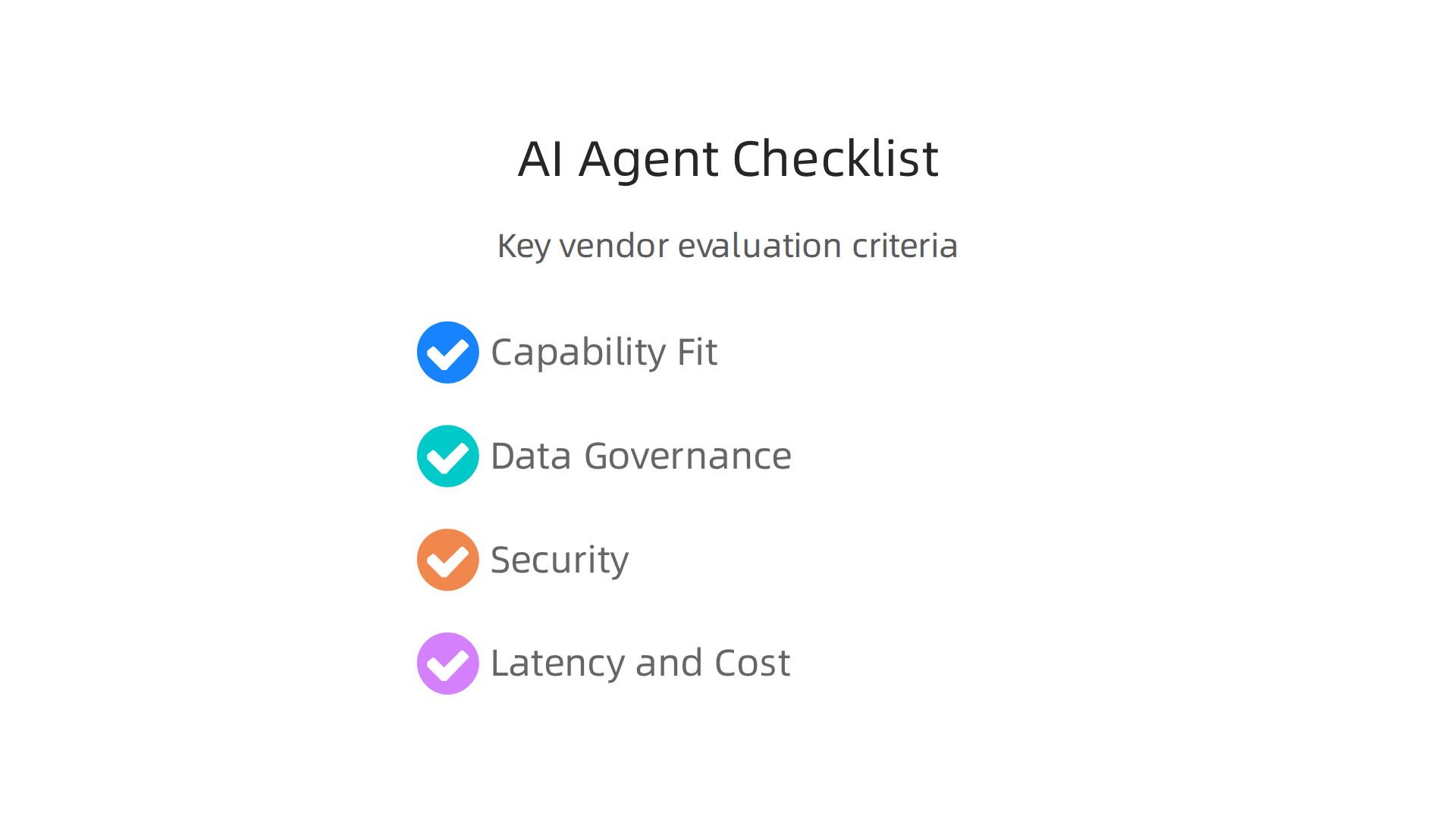
Businesses today need a clear plan for choosing the best AI partners.
Here are the main things to look at:
- What it can do for you (Capability Fit): Does the AI agent actually solve the problem you have? Some AI agents are great for customer service, while others are better at crunching numbers or managing projects. You need to make sure the agent’s skills match your needs. It should also connect well with the computer programs you already use. Many popular AI tools work best when they can easily link up with your existing systems.
- How it handles your data (Data Governance): This is super important. You need to know how the AI agent will use, store, and protect your company’s information. Will your data be used to train the AI model for other companies? You should have the option to say no to this. Look for vendors who offer clear choices about data residency, meaning where your data is stored. This helps you follow privacy rules like GDPR and HIPAA. Businesses now ask for proof that vendors are serious about data safety, not just promises. This is called "buyer-side governance" and it’s a big deal in 2026 for businesses using AI agents.
- How safe it is (Security): Your company’s data needs to be kept very safe. Ask about security checks and certifications the vendor has, like SOC 2 Type II. This shows they have been checked by outside experts and meet high standards for keeping data safe. Also, check how they manage access. Can you set rules for who in your company can use the AI agent and for what? An Enterprise AI Agent Platform: Buyer’s Checklist (2026) will tell you to ask about things like single sign-on (SSO) and role-based access.
- How fast and how much (Latency and Cost): How quickly does the AI agent do its work? And what does it cost? Not just the upfront price, but also ongoing costs. Some agents might be cheap to start but get expensive if you use them a lot. You want a good balance between speed, quality, and cost. It’s wise to get clear pricing upfront or at least a range.
Your Team’s Checklist for AI Agent Selection
Different teams in your company will have specific questions when looking at AI agents:
- Procurement Teams: These are the people who buy things for your company. They should look for a clear plan that covers many points like how autonomous the agent is, how it uses tools and APIs, how it remembers things, and how you can watch its performance. They should also look for specific rules about security, compliance, and who is responsible if something goes wrong. An AI Agent Procurement Checklist (2026) can have 60 questions just for them.
- Legal and Compliance Teams: These teams make sure your company follows all laws and rules. They need to know about data privacy, how the AI makes decisions, and if there are "kill switches" to stop an agent if it goes rogue. They’ll also check for certifications like ISO/IEC 42001. Ensuring that the AI agent follows regulations is key to avoiding big fines, so knowing how to make an AI compliant with global regulations in 2026 is critical.
- Engineering Teams: These are the tech experts. They will want to know how easy it is to connect the AI agent to your current systems using APIs or SDKs. They’ll also look at how to monitor the agent’s work and if it has ways for a human to step in and check things. This is part of making sure you can build robust AI for your business.
Choosing the right AI agent is a big decision that involves many parts of your company. By using a detailed checklist and asking the right questions, you can pick an agent that truly helps your business grow safely and smartly in 2026.
Staying informed about the fast-changing world of AI and its rules is crucial for making good choices.
The AI Newsletter Worth Reading will keep you up to date.
Choosing an AI agent is a big first step. But the real work starts after you pick one. Now, you need to put it to use in your business. This means making sure it works well, watching how it acts, and checking if it’s truly helping your company make money or save time. This part is called "operationalizing" your AI agents.
Operational Best Practices for AI Agents
Getting your AI agent ready for prime time isn’t just a flip of a switch. You need a careful plan.
- Testing Before Launch (Staging): Imagine you’re building a new car. You wouldn’t just drive it straight onto the highway. You’d test it on a private track first. It’s the same with AI agents. You should test them in a safe "staging" area. This lets you see if they work as expected without causing problems for your real customers or business tasks. It helps you catch any issues before they become big problems.
- Starting Small (Controlled Rollout): Once testing looks good, don’t just give the AI agent to everyone at once. Start by letting a small group use it. This way, you can fix any small bugs or confusion quickly. Then, little by little, you can give more people access until it’s fully running across your company. This method is often called "from pilot to scale," and it’s a smart way to bring new tech into a business safely From Pilot To Scale With AI For Business In 2026.
- Clear Boundaries (Narrowly Scoped Authority): In 2026, smart companies use AI agents for very specific jobs. Instead of giving one agent too many tasks, they break down bigger jobs into smaller ones. Then, they give each small job to a special agent. This way, if one agent has a problem, it doesn’t mess up everything. Experts say that putting AI agents into production works best when they have "narrowly scoped authority," meaning they focus on a few tasks well AI Agents in Production: What’s Actually Working in 2026.
Watching Your AI Agents Work (Monitoring and Observability)
Once your AI agents are running, you need to keep a close eye on them. This is like checking the dashboard of your car to see its speed, fuel, and engine health.
- Why Monitor? You want to make sure the agents are doing their job correctly, quickly, and safely. Are they making good decisions? Are they using too many computer resources? Are they following all the rules and laws?
- What to Look For: You should check how well the agent performs, how accurate its answers or actions are, and how much it costs to run. You also need to watch how it handles data. Using special tools for monitoring, like those that create "structured tracing," can help you see exactly what your AI agent is doing step by step AI Agent Monitoring: 2026 Observability Guide. This also helps ensure your AI systems are compliant and trustworthy Build Robust AI Design Test and Monitor Compliant AI Systems In 2026.
- Using RAG Systems: Many modern AI agents use something called Retrieval-Augmented Generation (RAG). This means the agent looks up information before it gives an answer. Monitoring these systems is important to make sure they find the right information and give useful responses RAG Best Practices for 2026.
Making AI Agents Smarter (Feedback Loops and Retraining)
AI agents aren’t set it and forget it. They need to keep learning.
- Feedback Loops: This is how you tell the AI agent what it did well and what it needs to improve. When an agent makes a mistake or gives a wrong answer, a human can step in and correct it. This feedback helps the agent learn. This is part of a bigger system for managing your AI, ensuring you can control AI effectively.
- Retraining: Based on the feedback and new data, the AI agent’s "brain" (its model) can be updated. This is called retraining. It helps the agent get better over time, adapt to new situations, and stay useful.
Showing the Value (Measuring ROI) and Staying Safe (Managing Risk)
Businesses need to know if their AI agents are worth the investment. This is where measuring "Return on Investment" (ROI) comes in.
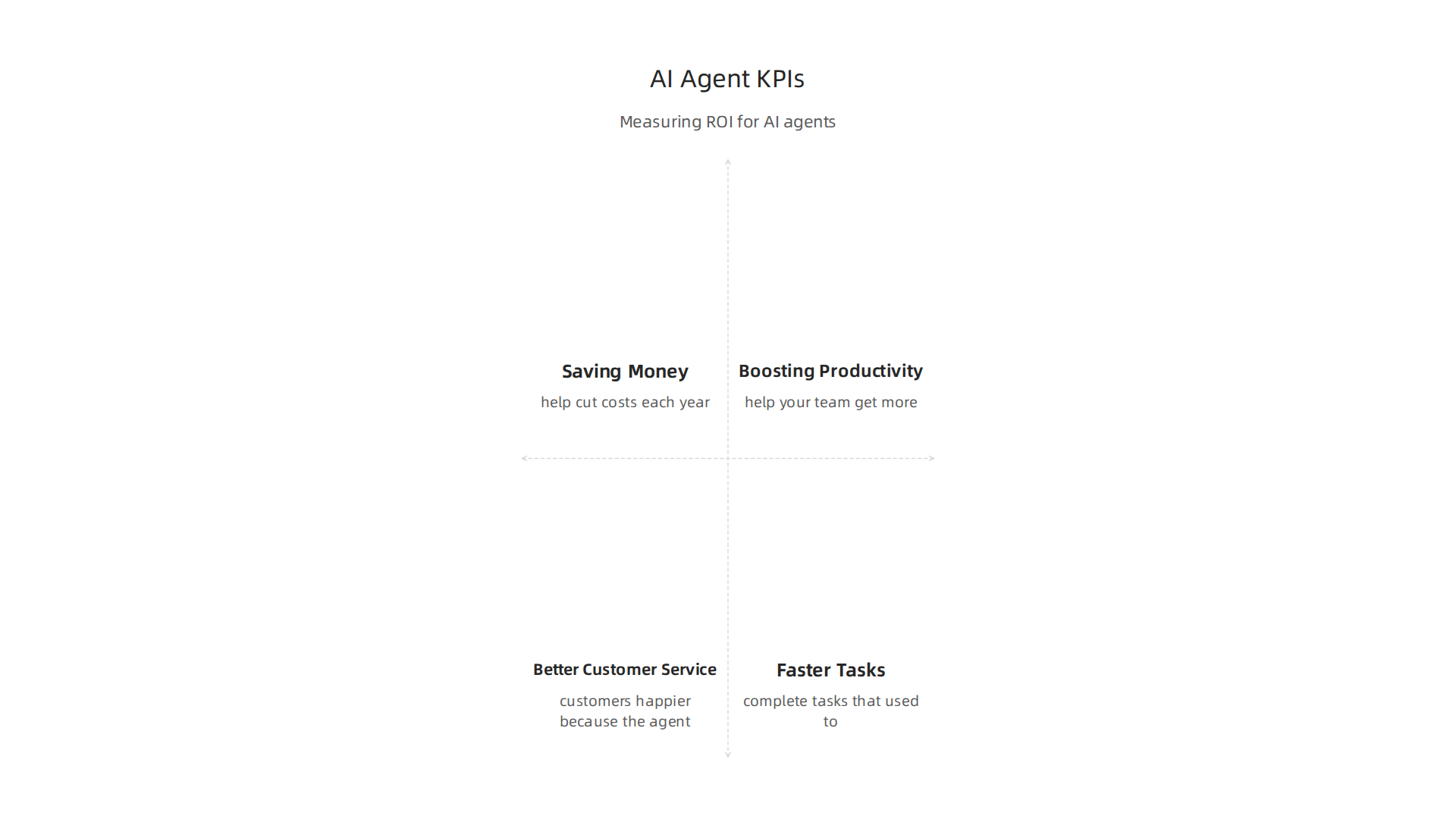
- Key Performance Indicators (KPIs): These are special numbers you track to see if the AI agent is doing its job well.
- Saving Money: Does the agent help cut costs? For example, some AI agents save companies a lot of money each year by handling many customer chats automatically 15 Enterprise AI Agent Use Cases Driving ROI in 2026.
- Boosting Productivity: Does it help your team get more done? Many companies see a big jump in how much work gets done with AI Top 25+ AI agent use cases for enterprises in 2026.
- Better Customer Service: Are customers happier because the agent answers their questions faster or more accurately?
- Faster Tasks: Does it complete tasks that used to take days in just hours or overnight, like checking financial records AI Agents in the Enterprise 2026: Real Deployments and Results?
- Managing Risk: By constantly watching your AI agents and using feedback, you can spot risks early. This helps you avoid problems like wrong decisions, data leaks, or breaking important rules. It’s all about making sure your AI is helpful and safe for your business. In 2026, companies often track things like "verified resolution" to see if the AI agent actually helped a user finish a task, and "repeat contact" to check if the problem stayed solved AI Agent Case Studies: 8 Real Deployments. These metrics help prove the agent’s real impact.
Once your AI agents are running smoothly and you’re watching their performance, there’s another very important step: making sure they follow the rules. This is called "governance, risk, and compliance." It means setting up guidelines, spotting possible problems, and making sure your AI systems meet all the laws and standards.

In 2026, this is a big deal for any business using AI, because laws are changing fast across the globe Governing AI in 2026: A Global Regulatory Guide White.
Key Issues for AI Agents
When we talk about AI agents and rules, some big topics come up:
- Data Privacy: AI agents often handle lots of information. You must make sure they protect people’s private data. This means having clear rules about how data is collected, used, stored, and deleted. For example, the EU AI Act includes strict requirements for data governance, especially for high-risk AI systems Data Sovereignty Requirements under the EU AI Act (2026).
- Explainability: Can you understand why an AI agent made a certain decision? For many important tasks, like in healthcare or finance, you need to be able to explain the AI’s actions. This is called "explainable AI" and it helps build trust and ensures fairness. Learning how to get your AI to provide clear reasons for its actions is key for executive trust Explainable AI for 2026 Compliance and Executive Trust.
- Liability: If an AI agent makes a mistake that causes harm, who is responsible? Is it the company that built the AI, the company that used it, or someone else? These questions are still being worked out by lawmakers, but businesses need to think about them now.
- Cross-Border Data Flows: Many companies operate across different countries. This means AI agents might process data that moves from one country to another. Each country might have its own rules about data, making it tricky to ensure all data movements are legal and safe. An effective AI Governance Framework: The Complete 2026 Enterprise Guide will address these complexities.
Practical Governance Controls for AI Agents
To handle these issues, businesses need specific tools and plans. These are like the safety gears for your AI toolkit.
- Model Cards: Think of a model card as an instruction manual for an AI agent. It tells you what the agent is for, how it was trained, what its limits are, and how well it performs. This helps everyone understand the AI better and use it safely AI Governance Documentation: Guide for 2026.
- Audit Logs: These are like detailed diaries of everything an AI agent does. Every action, every decision, and every piece of data it touches should be recorded. This helps you track what happened if something goes wrong and proves your AI agents examples are behaving correctly AI Agent Governance Guide 2026: Compliance, Access Control.
- Access Controls: Not everyone should have full control over your AI agents or the data they use. Access controls mean only certain people can make changes or see sensitive information. This keeps your AI safe from accidental mistakes or bad actors.
- Incident Playbooks: Even with the best plans, problems can happen. An "incident playbook" is a step-by-step guide for what to do if an AI agent has a serious issue, like giving wrong information or breaking a rule. This helps your team react quickly and fix the problem. The lifecycle includes detection, classification, investigation, and remediation AI Data Governance in 2026: Documentation Standards.
By using these controls, you can make sure your ai agents examples are not just smart, but also responsible and trustworthy. It’s about staying on top of the rules in a world where new popular ai tools are always appearing.
Want to stay informed about the rapidly changing world of AI regulations? Get clear daily AI updates from The AI Newsletter Worth Reading.
Summary
This article explains how AI agents — autonomous software that plans, decides and acts toward goals — are reshaping business in 2026. It defines the main agent types (task-specific, autonomous, multi-agent), shows practical examples across sales, support, finance, healthcare, retail and manufacturing, and describes the technical building blocks such as LLMs combined with toolchains, RAG and closed-loop architectures. The guide walks through vendor selection criteria (capability fit, data governance, security, latency and cost), operational best practices (staging, controlled rollouts, narrow authority) and the monitoring, feedback and retraining routines needed to keep agents reliable. It also covers how to measure ROI with concrete KPIs and the governance controls—model cards, audit logs, access controls and incident playbooks—required to manage legal and regulatory risk. Readers will learn how to choose, deploy and govern AI agents so they deliver measurable value while staying compliant and safe.