

Why ‘future generation computer systems’ matters now
In 2026, the world of computers is changing very fast. We are seeing amazing new types of future generation computer systems. These are not just faster computers. They include things like AI accelerators, quantum computers, and neuromorphic systems that work more like a brain. These new technologies are changing how businesses work and what governments need to watch out for.
The arrival of smart AI and other advanced computing tools is creating an ai revolution. This means big chances for businesses to do new things and make better products. For example, specialized AI systems, sometimes called nerd AI because they handle really complex tasks, are helping companies solve tough problems faster than ever. But with great power comes the need for clear rules.
Here’s the problem: technology is moving at lightning speed, but laws and rules are much slower to catch up. This creates a tricky situation for everyone. Business leaders need to make smart plans for their companies. Investors want to know where to put their money without big risks.

And teams that make sure companies follow the rules (compliance teams) are trying hard to understand what’s okay and what’s not.
For example, getting some advanced computing items to certain places in the world needs special permission, even for things like building data centers or training powerful AI models. Rules about exporting advanced computer chips are always changing, with different policies for different countries and types of chips. The US government keeps updating its rules to control these new technologies, which can make things very complex for global businesses BIS Strengthens Export Controls on Advanced Computing.
This fast change and scattered rules mean there’s a lot of uncertainty. Companies face planning risks because they don’t know what new rules might come next. Keeping up with these changes is a huge task, especially when there isn’t one simple set of guidelines. To navigate this, leaders need clear, up-to-date information on technology rules around the world.
To help you stay on top of all these changes, you can explore more about US Tech Regulations 2026: Navigating Data Privacy, AI Governance, and Antitrust Rules.
Want to get daily clear updates on AI and technology regulatory insights delivered straight to your inbox?
The AI Newsletter Worth Reading
How next-generation compute architectures change regulatory risk
The quick march of technology, especially in future generation computer systems, means we have to look at old rules in new ways. These advanced systems, like special computer parts for AI or new quantum-hybrid setups, are not just about doing things faster. They create brand new challenges for how governments make rules and how companies follow them.
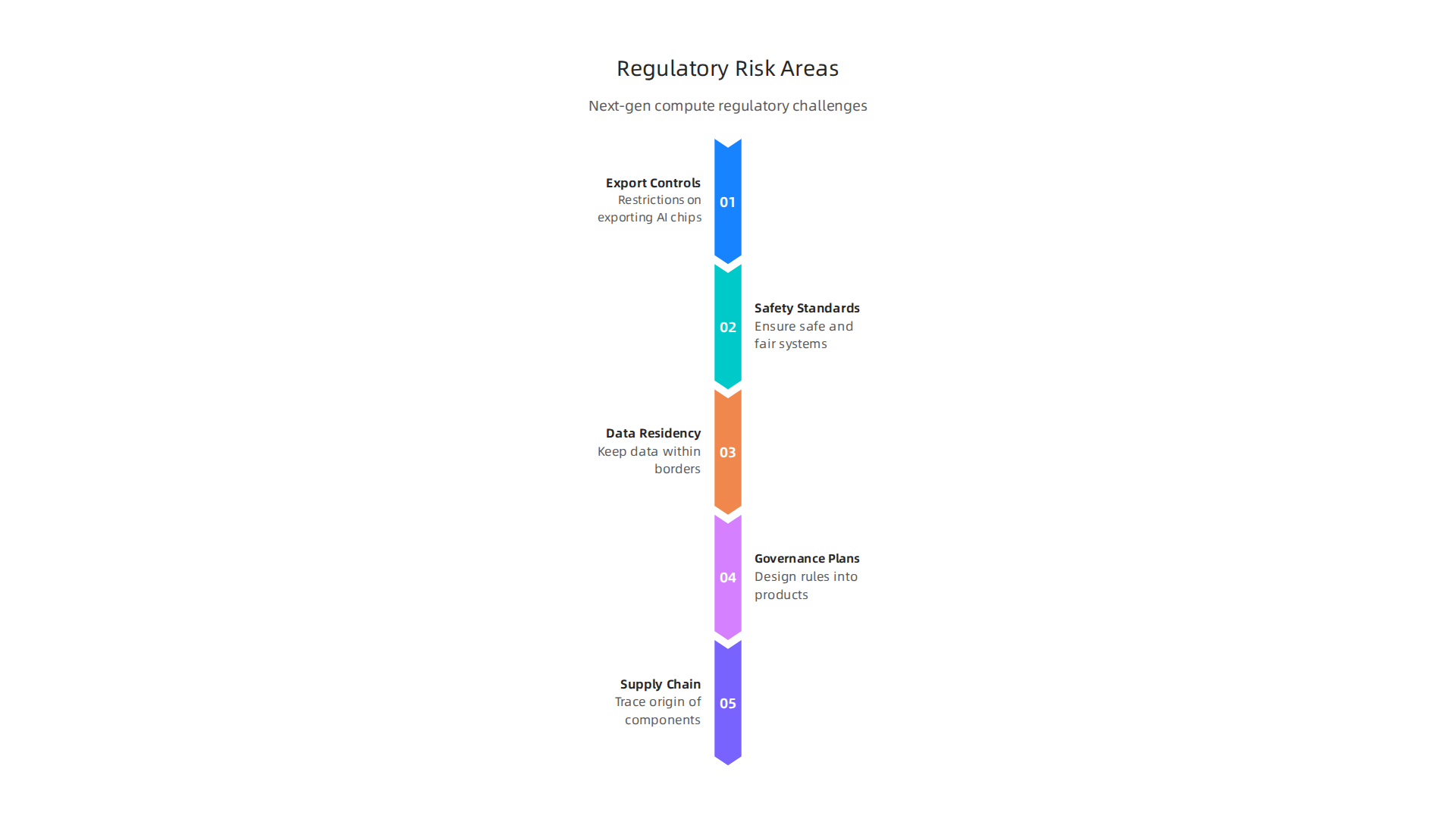
This changes what businesses need to think about for their products and how they get their parts.
One big area of change is export controls. Imagine trying to send a powerful new AI chip from one country to another. Even simple things like building big data centers can be tricky. In 2026, the US government has very specific rules about exporting these advanced computing items. For example, some advanced AI semiconductors, like those used in smart AI or even nerd AI systems, need special approval to be sent to certain places. This applies not just to the chips themselves but also to equipment used to make them or even to some large computing systems like supercomputers BIS’s new enforcement guidance clarifies license requirement for exports of advanced computing items. Also, companies that build data centers now face many checks on national security and supply chains Global Data Center Projects Face Expanding US National Security Scrutiny.
Beyond export rules, new computer architectures also bring up questions about safety standards and where data is kept. As smart AI systems become part of more products, there’s a strong need to make sure they are safe and fair. Think about how a self-driving car’s AI decides what to do. There need to be clear rules for how these systems are designed and tested. Also, with global companies, where data is stored and processed (data residency) can become a big problem. Different countries have different rules about keeping data inside their borders.
For companies, this means they need clear governance plans. They have to think about these rules when they design new products. For instance, if a new product uses an AI chip that can’t be exported to a certain market, that changes the whole product plan. The supply chain, which is how a company gets all its parts, also needs careful checking. Businesses must know where their components come from and if there are any restrictions on those parts. Keeping track of these complex rules is key to avoiding big problems. To learn more about building compliant AI systems, you can check out how to make an AI compliant with global regulations in 2026.
Key technological trends to watch in 2026
Building on our talk about how new computer parts bring new rules, let’s look at the cool new types of computer brains making waves in 2026.
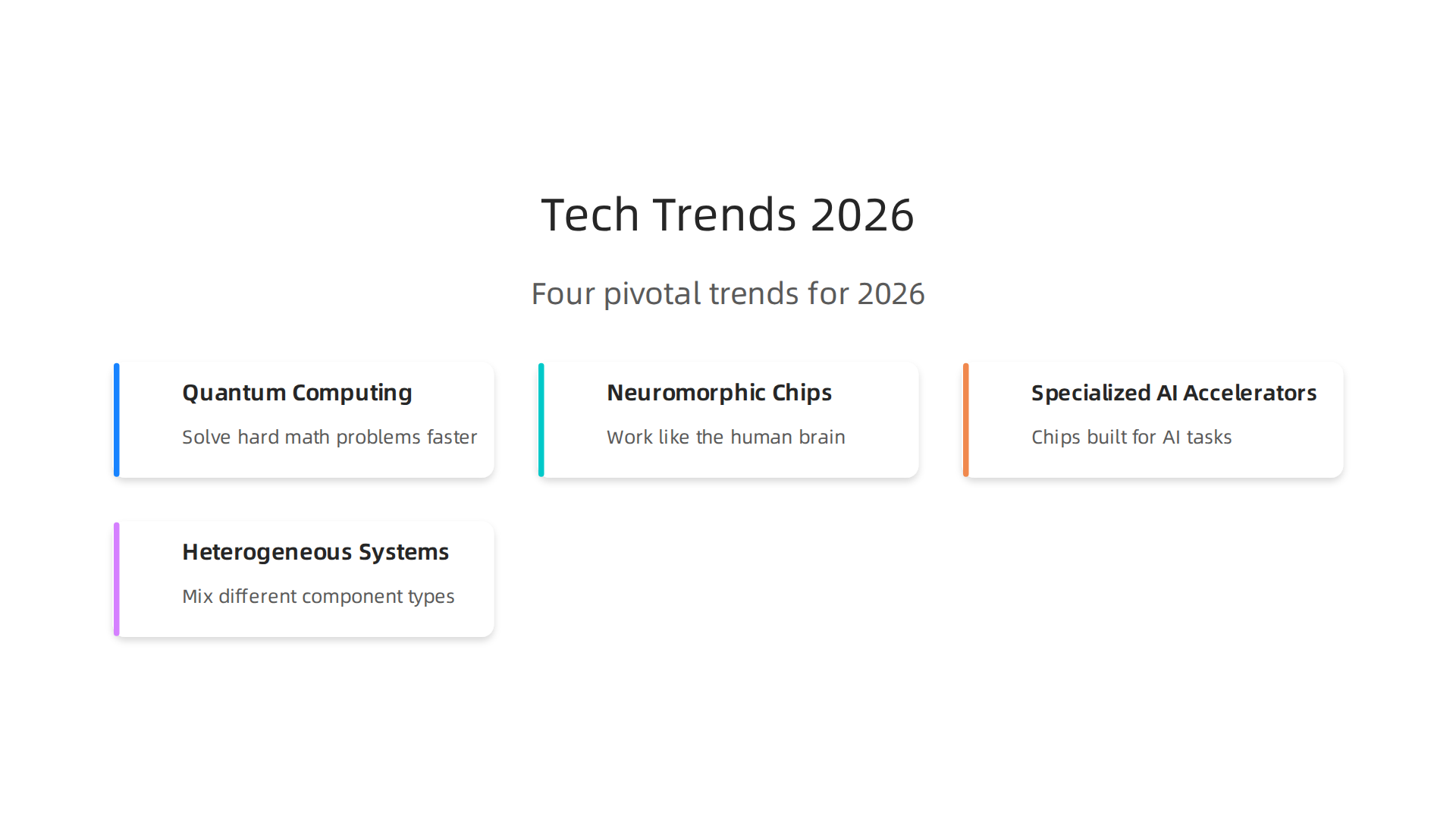
These are the future generation computer systems that everyone is watching, and they are changing everything. We are seeing big leaps in quantum computing, neuromorphic chips, special AI accelerators, and systems that mix different kinds of computer parts.
Quantum Computing
First up is quantum computing. This isn’t your grandma’s computer. It uses tiny particles to do super-hard math problems much faster than regular computers ever could. While still quite new, it has huge potential, especially for solving problems that even the fastest normal computers can’t handle. Imagine it leading the next ai revolution by finding new ways to train smart AI systems. Right now, quantum neuromorphic computing is working on making brain-like networks inside quantum hardware to speed things up even more Quantum neuromorphic computing. Even though it’s still being developed, its long-term effects on technology are expected to be very big Impact of quantum and neuromorphic computing on …. For those curious about the cutting edge, knowing about quantum artificial intelligence labs can give you a peek into this exciting area.
Neuromorphic Chips
Then we have neuromorphic chips. Think of these as computer chips designed to work like the human brain. They can learn and adapt, which makes them perfect for advanced smart AI tasks and nerd AI projects. These chips use much less power than traditional ones, making them very efficient. Scientists are working hard to put them into more real-world uses, though it will take some time for them to be common Roadmap to Neuromorphic Computing with Emerging …. There’s a clear roadmap for how these brain-like computing systems will grow and change Roadmap to neuromorphic computing with emerging technologies.
Specialized AI Accelerators and Heterogeneous Systems
Next, we have specialized AI accelerators. These are chips made just for AI tasks, like NVIDIA’s GPUs, which are super good at running AI programs quickly. Then there are "heterogeneous systems," which means mixing different kinds of computer parts to get the best performance for specific jobs. These systems are already very important in 2026 for training big AI models and are becoming key for almost every new tech product. The way we control how much computer power is used for AI systems is a big part of keeping them safe and following the rules Controlling AI Through Hardware & Compute Access (2026).
How Maturity Shapes Regulatory Focus
The stage of development for these new technologies really matters for how governments make rules. Technologies that are very new, like quantum computing, usually have fewer rules right now because they are not widely used yet. But as they get closer to being used everywhere, like specialized AI accelerators, lawmakers pay much more attention.
Governments and groups around the world are watching these technologies closely. The International AI Safety Report 2026, for example, talks about how fast AI is growing and the new challenges it brings for safety and rules International AI Safety Report 2026. As technologies mature and show up in more products, regulations become tighter and more specific. This means businesses working with any of these future generation computer systems need to keep a close eye on what’s coming next. Staying ahead of these changes is key to avoiding problems and making sure products can be sold everywhere.
For leaders needing to keep up with the constant changes in AI and tech regulations, staying informed is critical.
Get clear daily AI updates from The Deep View Newsletter.
[The AI Newsletter Worth Reading](https://subscribe.thedeepview.com/subscribe?utm_term=techregulationnewstoday.com)
As the exciting new computer brains like quantum and neuromorphic chips become more real, governments and groups around the world are getting busy. They are setting up rules to make sure these powerful future generation computer systems are used safely and fairly.

Think of it like building a new highway: first, engineers show how fast cars can go, then the government makes rules about speed limits and signs to keep everyone safe.
Types of New Rules
In 2026, we are seeing a few main kinds of rules for compute and smart AI:
- Standards and Guides: These are like instruction manuals. They tell companies the best ways to build and use AI systems. These often start as suggestions but can later become actual laws. They help make sure AI systems are safe, fair, and easy to understand. As AI systems become more mature, so do these guides Artificial intelligence maturity model: a systematic literature ….
- Rules for Specific Areas: Some industries have special rules. For example, AI used in hospitals has different rules than AI used to pick songs you might like. This is because mistakes in healthcare AI can be very serious. These "sectoral rules" make sure smart AI fits the special needs and risks of each area. It’s important for businesses to learn how to make an AI compliant with global regulations in 2026.
- Controlling What Gets Sent Out: Governments also care about who can get their hands on very advanced computer parts and strong AI. These are called "export controls." They aim to stop powerful technologies, especially those that could lead to an ai revolution, from falling into the wrong hands. This means companies building or using advanced future generation computer systems might face rules about where they can sell or send their products. Businesses need to understand classified technologies in 2026: what businesses must know about export controls and compliance.
How Rules Are Put into Action
Putting these rules into action is a big job. Governments are working hard to make sure companies follow the new laws. Here’s what’s happening:
- More Checking: Companies are getting checked more often to make sure their AI systems follow the rules. This means keeping good records and being ready to show how their smart AI works.
- Working Together (or Not): Many countries want to work together to make similar AI rules. This helps big companies that sell products all over the world. But sometimes, different countries have different ideas about what’s best. This can make things tricky for global businesses, which often need to integrate regulatory compliance into their corporate AI strategy.
- Big Companies Face More Scrutiny: Multinational firms, which operate in many countries, face extra challenges. They must understand and follow rules from different places, which can be hard because these rules might not always agree. Keeping up with global changes is a major part of AI regulation 2026: navigate compliance and avoid risks.
The way we build and use future generation computer systems is changing very fast. This makes it a challenge for governments to create rules that keep up with new technology Modern computing: Vision and challenges. Staying informed about these rules is not just a good idea; it is a must for any business working with AI today.
Compliance Playbook: Integrating Regulatory Foresight into Product and Legal Strategy
Since keeping up with new rules for advanced technology is so important, businesses need a clear plan. It’s not enough to just know about the rules; you need to build them into how your company makes products and handles legal matters from the very start. This is called a compliance playbook. It helps you bring together your technical plans and your legal safety checks.
How to Create Your Compliance Playbook
Think of this playbook as a guide for using future generation computer systems in a way that stays safe and follows the law. Here are the key steps:
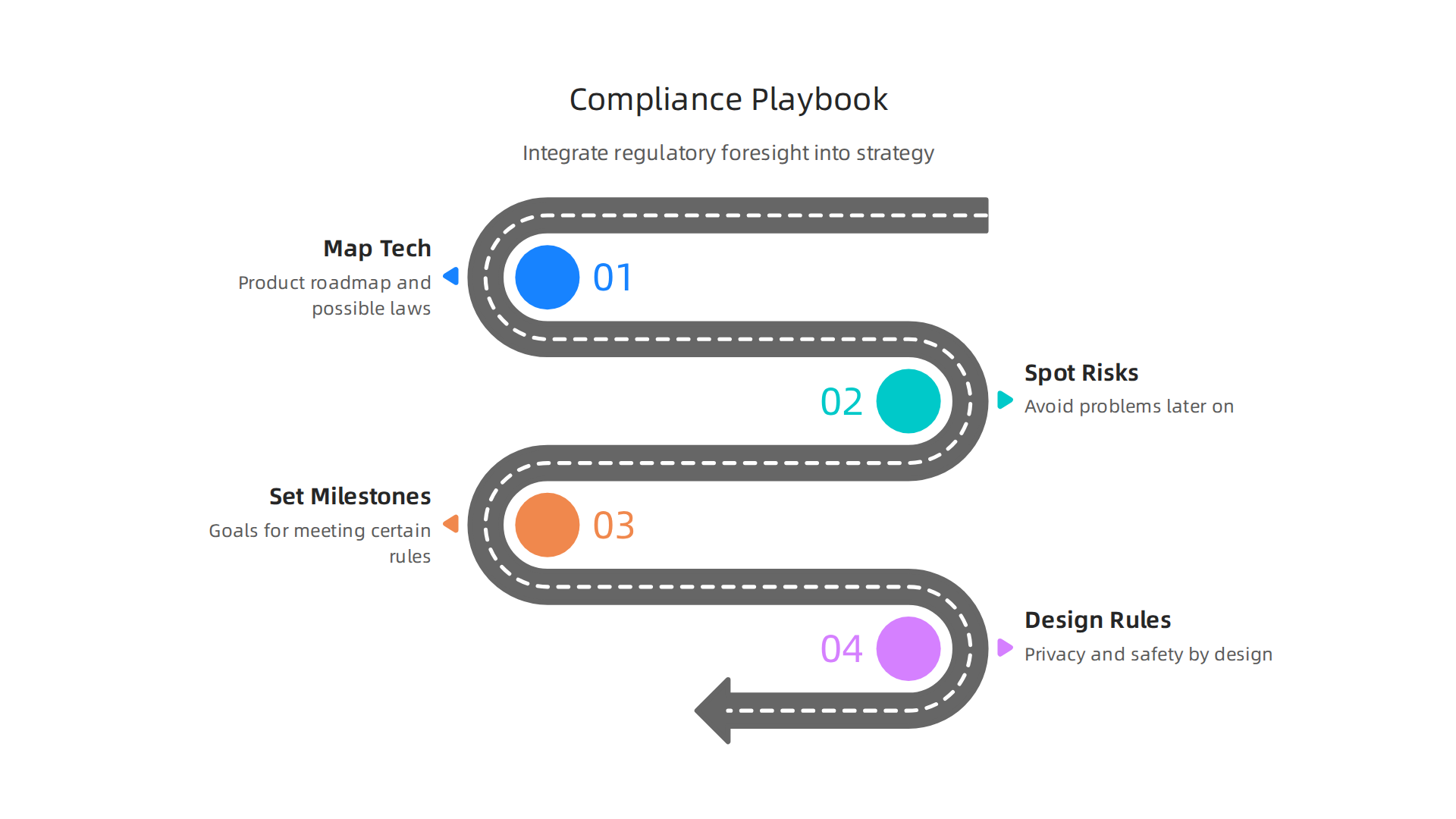
- Map Your Tech and Rules: First, look at what your company is building. Are you using smart AI for new features? How might these new features be seen by different rules around the world? You need to put your product roadmap side by side with a list of all the possible laws and guides that might apply. For example, if your company creates AI for healthcare, you’ll need to look at specific rules for that field Health Sector Publishes Framework A.I. Cybersecurity Governance.
- Spot the Risks Early: As you plan new products or features, ask yourself: "What could go wrong here with the rules?" It’s like checking the weather before a big trip. If you know there might be a storm (a new tough rule), you can pack an umbrella (change your product design). This helps you avoid problems later on that could cost a lot of time and money. Many companies are now publishing "Frontier AI Safety Frameworks" to show how they manage risks when building advanced AI models International AI Safety Report 2026.
- Set Up Milestones for Compliance: Just like you have goals for when a product feature should be ready, you should have goals for when your product needs to meet certain rules. These are "compliance milestones." They help you check in regularly to make sure you’re on track. For instance, new guidelines for "agentic AI" or self-acting AI systems are being developed, and businesses will need to meet these.
- Build Rules into Your Design: The best way to follow rules is to build your smart AI products with the rules in mind from day one.

Don’t wait until the product is almost finished. This is often called "privacy by design" or "safety by design." It makes sure your future generation computer systems are compliant without big, costly changes later. If you want to build systems that meet these high standards, consider reading about Build Robust AI: Design, Test, and Monitor Compliant AI Systems in 2026.
Helping Small Teams Navigate the Rules
For smaller teams or companies, keeping up with all these rules can feel like a huge task. But you can still do it!
- Focus on What Matters Most: Not every rule will affect your business the same way. Prioritize the rules that are most important for your type of product and your customers. Which rules could cause the biggest problems if you don’t follow them? Start there.
- Use Smart Tools: There are tools and services that can help you track changes in regulations. Think of them as your personal helpers for nerd AI rules. They can alert you when a new rule might impact your work, saving you a lot of time searching.
- Learn and Adapt: The world of AI and computing is always changing. That means the rules will change too. Make sure your team is always learning. Attend webinars, read reports like the latest AI Safety Report, and talk with other businesses about how they are handling things. This helps you adapt quickly to new challenges, whether it’s a new export control or a shift in how compute resources are governed Controlling AI Through Hardware & Compute Access (2026).
Creating a compliance playbook helps your business stay safe, builds trust, and makes sure you are ready for the future. It’s a key step for any company wanting to lead in the ongoing ai revolution without stumbling over legal hurdles.
Staying on top of rapidly changing AI and tech regulations is a full-time job. Get the essential daily updates delivered straight to your inbox.
The AI Newsletter Worth Reading
Creating a good compliance playbook is just the first step. Next, your business needs to know where the biggest rule-following challenges might pop up, especially with new future generation computer systems. These are like "compliance hotspots" where the rules are changing fast and can cause big headaches if you’re not ready.
Hardware Export Controls
One major hotspot is around hardware export controls. Governments are keeping a close eye on advanced chips and the computing power they offer. This means rules for sending or even remotely accessing powerful chips across borders are getting stricter. For example, the U.S. has rules about sending advanced semiconductors to certain countries, especially for things like smart AI development. These rules affect companies like Nvidia, making it tricky to sell their powerful chips overseas without special checks US-China AI Chip War 2026: Export Controls, Rare Earths …. In 2026, we’re seeing how these rules are changing the export landscape, even for remote access to computing power A Changing Export Control Landscape: H200 Exports, Remote ….
This hotspot directly impacts:
- Procurement: How and from whom your company buys advanced computing hardware. You need to make sure your suppliers follow all the rules.
- Vendor Selection: Choosing partners for cloud services or custom hardware. Can they prove their systems meet export control laws?
- Product Configuration: The design of your products might need to change if they rely on certain chips that are now hard to get or use in specific markets.
Standards for Secure Compute
Another key area is having strong standards for secure computing. As the ai revolution moves forward, ensuring the safety of your computing environments is super important. This means making sure that the places where your nerd AI models run and store data are protected from hacks and unwanted access. This also includes how data moves in and out of these systems.
These secure compute standards affect:
- Product Configuration: Your products must be built in a way that protects user data and system integrity from the ground up.
- Vendor Selection: When you pick cloud providers or data centers, you need to check if they meet strict security standards.
Supply-Chain Provenance Requirements
Knowing where every part of your future generation computer systems comes from is becoming more and more critical. This is called supply-chain provenance. It’s not just about the final product; it’s about all the pieces and software that went into making it. Governments and customers want to trust that no harmful or risky parts are hidden in your technology. For more details on these vital considerations, you can read about classified technologies in 2026.
This hotspot impacts:
- Procurement: You need to have clear ways to trace the origin of all components, both hardware and software.
- Vendor Selection: You’ll want to choose vendors who are transparent about their own supply chains and can prove the safety and origin of their materials.
By understanding these hotspots, businesses can better plan their procurement, choose reliable vendors, and configure their products to meet the complex rules of 2026. This forward thinking is essential for staying compliant and competitive in the fast-paced tech world.
The complex world of tech rules that businesses face in 2026 also changes how founders raise money and how investors pick where to put their funds. For those building new future generation computer systems, understanding these rules is key to their company’s value.
Investment and market implications for founders and VCs
When looking at a company that uses advanced tech, investors like venture capitalists (VCs) must think about how new rules affect its worth. If a company’s main product relies on chips or software that might face export bans, its value can drop quickly. For example, some firms might find ways around U.S. export rules for powerful chips by using overseas cloud services, but this itself is a gray area China AI firms tap Nvidia power overseas as U.S. weighs …. The U.S. government is even strengthening rules to make sure advanced computing parts are handled properly Commerce Strengthens Restrictions on Advanced Computing Semiconductors. This kind of uncertainty can make a business risky for investors.
What investors should check:
When doing their homework (called due diligence), VCs and founders should look for clear signals:

- Compliance Readiness: Does the company have a plan to follow all the rules? This includes knowing about export controls for their future generation computer systems and how they use smart AI.
- Supply-Chain Risk: Where do all the parts and software come from? Relying on parts from places with strict or changing rules can be a big problem. The overall health of the Global Semiconductor Industry Outlook can also show market risks.
- Standards Alignment: Is the company building its nerd AI or other tech with strong security and ethical rules in mind? This helps build trust and avoids future legal issues as the AI revolution moves forward.
These checks help investors see if a company is truly strong and ready for the future, not just making cool tech. They also impact how easy it might be to sell the company later on. To stay updated on these crucial market shifts, make sure to get expert analysis.
Get clear daily AI updates from The Deep View Newsletter.
The AI Newsletter Worth Reading
Preparing for the next wave: scenario planning and early-warning indicators
To truly get ahead, founders and investors need to look beyond today’s headlines. They must think about what might happen next and how to get ready. This is where "scenario planning" comes in handy. It means thinking up different possible futures and making plans for each. This helps businesses that create future generation computer systems to be flexible and strong.
A simple way to do this is to link what new tech can do with possible new rules and how your business would react. You can think of it like this:
| Tech Milestone (What Happens in Tech) | Regulatory Trigger (What Happens with Rules) | Business Response (What Your Company Does) |
|---|---|---|
| New, powerful AI chip made | Government starts talking about limiting its use | Find new suppliers, adjust product design |
| Smart AI learns to do complex tasks | New law demands clear explanations for AI choices | Improve AI transparency, train staff on new rules |
| More reliance on overseas tech parts | New export rules from a major country | Diversify supply chain, look for local options |
This kind of thinking helps you see risks and chances before they become big problems. Expert reports show that thinking about these "trigger events" is important for leaders in 2026, especially with major risks like AI infrastructure dependency. It helps businesses avoid getting stuck or surprised when the AI revolution shifts rapidly.
Early Signs to Watch For
How do you know when new rules are coming? You can look for "early-warning indicators."
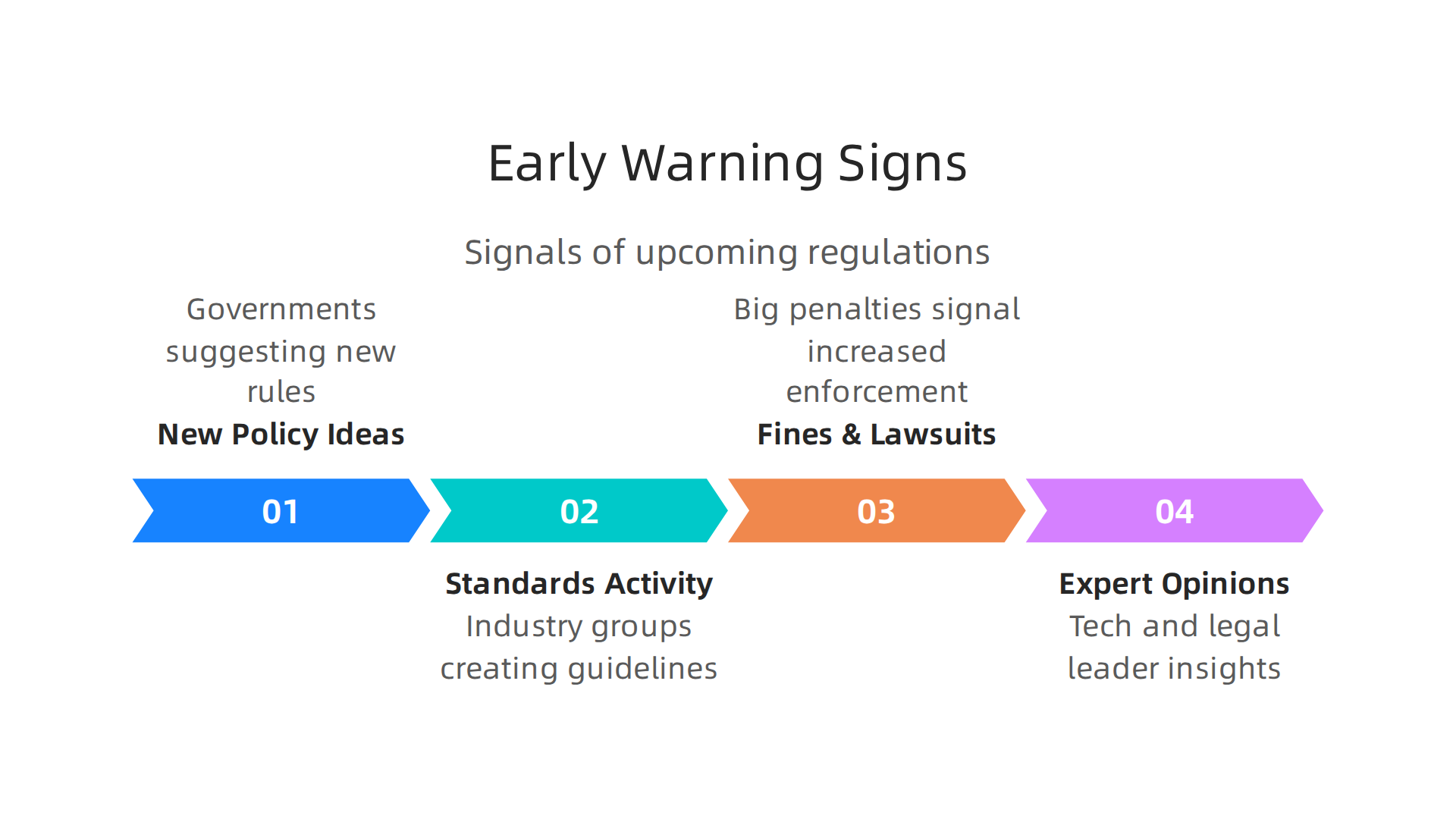
These are like small clues that big changes might be on the way. Here are some important ones to keep an eye on:
- New Policy Ideas: Are governments or big groups suggesting new rules about technology? This includes talking about how to manage things like nerd AI or data.
- Standards Activity: Are industry groups trying to create new "best practices" or guidelines for how tech should work safely and fairly? For example, strong supply chains and integrated risk management are key tech trends for 2026, showing how industries are adapting to new realities Tech Trends 2026 | Info-Tech Research Group.
- Big Fines or Lawsuits: Has a company been heavily fined or sued for not following tech rules? This often signals that regulators are getting serious about a certain issue.
- Expert Opinions: Listen to what leaders in tech and law are saying. Their insights, like those shared in the KPMG Global tech report 2026, can show where the future rules might lead.
Watching these signs closely helps businesses stay ready and avoid costly mistakes. It is all about being prepared for what comes next in the world of technology and its rules. For more insights on how to stay compliant, explore how to AI Regulation 2026: Navigate Compliance and Avoid Risks.
Summary
Future generation computer systems — including quantum machines, neuromorphic chips and specialized AI accelerators — are reshaping products, supply chains and national security thinking in 2026. This article explains how these architectures create new regulatory risks (especially export controls, data residency and secure compute requirements), why laws lag technology, and what that means for product teams, compliance officers, founders and investors. It outlines practical steps for building a compliance playbook: map tech to rules, identify risks early, set compliance milestones and bake safety into design. The piece highlights three compliance hotspots — hardware export controls, secure compute standards, and supply‑chain provenance — and shows how those issues affect procurement, vendor choice and product configuration. It also gives guidance for VCs on diligence, and recommends scenario planning and early‑warning indicators to stay ahead of shifting policies. After reading, leaders will know what risks to prioritize, how to align product and legal strategy, and where to look for credible regulatory signals.