

You have probably seen the scary headlines. Maybe you have asked a chatbot for help or watched a video that was made by AI. But lately, the question “why is ai bad” keeps popping up in your feed. It feels like every week there is a new warning about job loss, fake content, or hidden bias.
Here is the thing. AI is already baked into our everyday life. It helps us write emails, find directions, and even diagnose illnesses. But as AI gets more powerful, the risks are harder to ignore. Data from the OECD shows that people are genuinely worried about losing their jobs to automation. A 2026 study from Cambridge University confirms that these fears are real and widespread, with many workers now supporting policies that protect them from being replaced by machines.
The trouble is that the news can be confusing. Some stories hype AI as a miracle, while others scream that it is a monster. How do you separate real danger from media hype?

Take the example of “shadow ai.” That is when employees use AI tools without telling their boss. It can lead to data leaks, compliance headaches, and big fines. Meanwhile, an “artificial intelligence detector” might catch fake images, but it can also flag real content by accident. No wonder people feel lost.
This article is here to clear things up. In 2026, the most pressing AI risks are not science fiction. They are here today. We will look at job displacement, privacy issues, and the problem of ai without restrictions. We will use real evidence from reports by the OECD, the IMF, and the World Economic Forum. You will get a straight, no-hype look at what actually matters.
By the end, you will understand the real dangers and what you can do about them. Because staying informed is the first step to staying safe. If you are a business owner or a compliance professional, you already know that new rules are popping up fast. For a deeper dive into the regulations that affect your company, check out this practical guide on AI regulations 2026 compliance strategies for businesses.
Now let’s get into the details.
Bias and Discrimination in AI Systems
You might think AI is fair because it runs on math. But here is the scary truth. AI learns from human data, and that data carries our worst biases. This is a big part of why is ai bad for real people.
A well-known example is facial recognition. Studies show that commercial systems have an error rate as low as 0.8% for light-skinned men. But for darker-skinned women, the error rate shoots up to 34.7%. This isn’t a small glitch. As of March 2026, at least nine people in the U.S. were wrongfully arrested because of face recognition mistakes. That is real harm from ai without restrictions.
But the problem goes beyond cameras. Hiring algorithms have been shown to favor men over women for certain jobs.

Lending systems sometimes charge higher interest rates to people of color. Even courts use risk assessment tools that can unfairly predict someone is more likely to commit a crime based on race. These cases are not rare. You can explore a detailed list of 16 real-world examples of AI bias to see the full picture.

So what is being done? Regulators are starting to step in. Some countries now require companies to test their AI for bias before launch. But fixing bias is hard. The data itself is often the problem, and cleaning it takes massive effort. For businesses trying to keep up, understanding these rules is critical. Check out this guide on navigating artificial intelligence imaging regulations to see how bias rules apply to visual AI tools.
Bias in AI is not an accident. It is a predictable result of training machines on flawed human history. Until we fix the data, the discrimination will keep happening.
Case Studies of Algorithmic Bias
These case studies show why is ai bad when we don’t check the math. Amazon’s system learned from past resumes and penalized words like "women’s". This is a textbook case of ai without restrictions. Predictive policing tools are another problem. They use old crime data that already has bias, so they send police to the same neighborhoods over and over. This reinforces racial profiling. You already saw the facial recognition problem. As noted by researcher Joy Buolamwini and the Federation of American Scientists, these errors lead to wrongful arrests. Many companies do not even know these tools are running. Shadow AI makes bias easy to miss. For businesses trying to audit their tools, learning the rules is key. Check out this guide on navigating artificial intelligence imaging regulations to understand the standards.
Mitigation Strategies for Bias
So how do we stop these problems? Fixing bias takes work on three fronts.
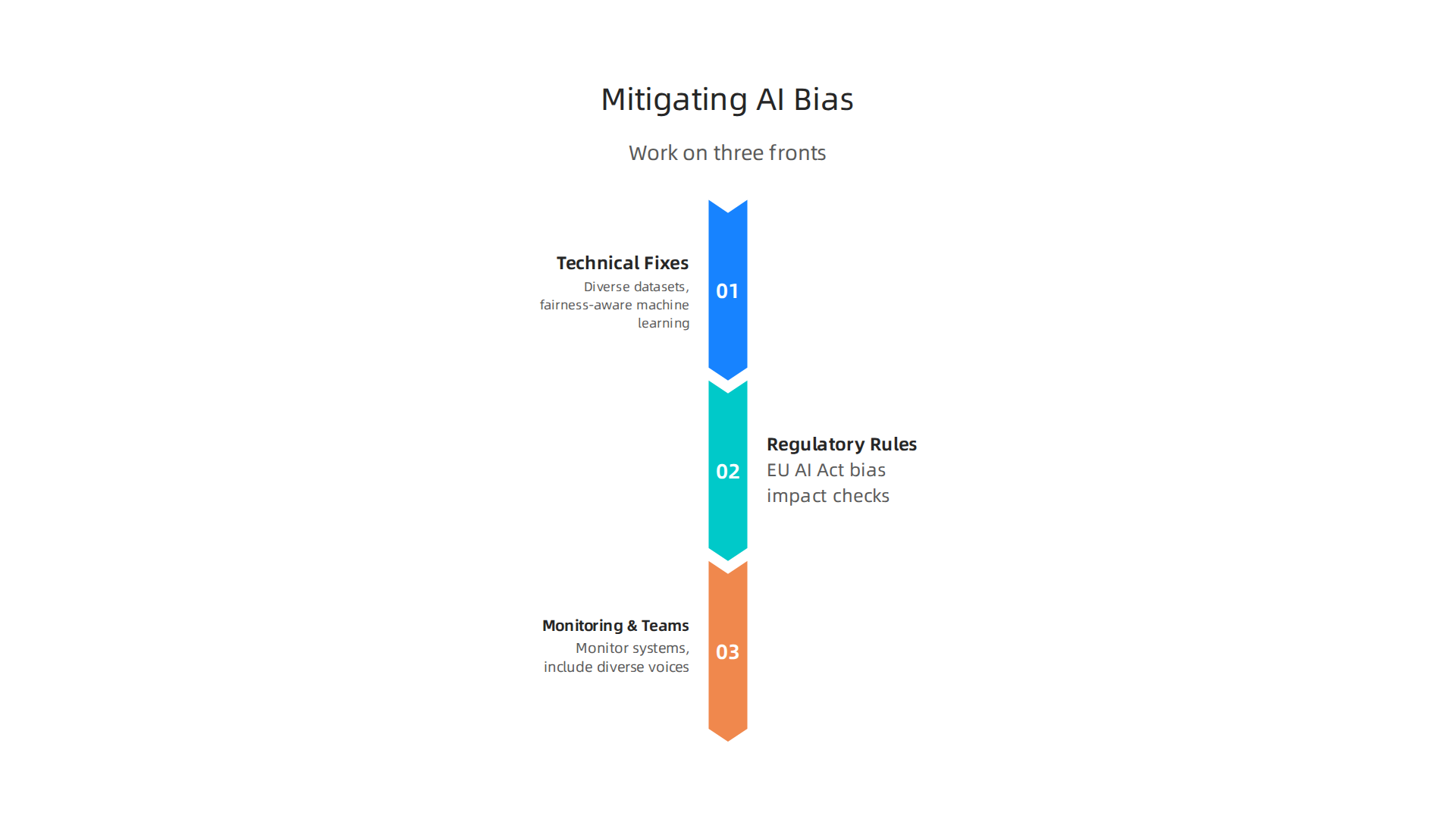
First, technical fixes like using diverse datasets and fairness-aware machine learning can reduce errors. Second, rules like the EU AI Act now require bias impact checks for high-risk tools. Third, teams need to keep monitoring their systems and include diverse voices in design. Without these steps, you are running ai without restrictions. For a deeper look at the rules shaping these efforts, read about AI regulations 2026 compliance strategies for businesses. As one guide on AI bias examples and mitigation explains, consistent testing and transparent reporting are key to building fairer systems.
Privacy Erosion and Surveillance Capitalism
Here is another big reason why is ai bad. AI powered surveillance is everywhere now. Cameras in public squares, sensors in office buildings, and tracking tools on websites all collect data about you.

Often this happens without real consent. You just walk into a store or log onto a site and an artificial intelligence detector starts watching.
This constant data harvesting fuels what experts call surveillance capitalism. Companies grab your face scans, voice prints, and location history to train their AI models. As research shows, AI can be both a threat to privacy through data exploitation and a tool for protection. But when systems run with ai without restrictions, the risks of abuse grow fast. Your personal information becomes a product.
Biometric data is especially sensitive. Unlike a password, you cannot change your face or your fingerprint once it leaks. The OHCHR has warned that the growing use of AI directly impacts the right to privacy around the world.
The good news? These abuses have sparked real change. New data privacy trends in 2026 show governments passing tougher laws that force companies to check how they use personal data.
Some businesses now conduct privacy impact assessments before launching AI tools. Others still rely on shadow ai tools that fly under compliance radar.
If you want to understand the rules that now govern these systems, read about navigating AI regulations 2026 for practical guidance. Staying informed is the first step to protecting your own privacy.
How AI Enhances Surveillance Capabilities
But how exactly does this happen? Modern AI turns cameras and sensors into smart watchers. An artificial intelligence detector can now run real-time facial recognition, gait analysis, and even emotion detection on crowds. These systems do not just watch one camera. They pull data from many sources at once. As a recent review explains, AI can be both a threat to privacy and a tool for protection through data exploitation. When companies combine CCTV feeds, social media posts, and financial records, they build complete profiles on you without your knowledge.
This does not end in public spaces. Private companies are using similar tools to monitor workers. They track keystrokes, screen time, and even body language to measure productivity. These practices raise serious ethical questions. If your workplace relies on shadow ai tools that no one reviewed, your personal data may already be in those profiles.
For businesses that want to avoid these risks, learning about AI regulations 2026 compliance strategies for businesses is a smart first step toward responsible use.
Regulatory Responses to Privacy Risks
That is part of why is ai bad when no rules exist. To prevent ai without restrictions, governments are creating new laws^1. The EU AI Act now treats biometric surveillance as high-risk. That means an artificial intelligence detector used for face scanning must meet strict standards. Several US states have limited government use of facial recognition as well. Global rules are also converging on data minimization and consent to fight shadow ai^2. These steps help protect your privacy. For more on staying compliant, see these AI regulations 2026 compliance strategies for businesses.
Job Displacement and Economic Inequality
Here is another big reason to ask "why is ai bad." When ai without restrictions runs wild, it can take over human jobs at a scary pace. We are not just talking about factory robots anymore. Think about customer service chatbots, self-checkout kiosks, and even software that writes legal documents. A recent study from the OECD found that more than 25% of jobs in member countries will be strongly affected by automation in the coming years. That includes roles in manufacturing, retail, transportation, and professional services like accounting and law.
The truth is, automation does not just destroy jobs. It also creates new ones. But here is the catch. Many workers cannot simply switch to a new role without extra training or education. An artificial intelligence detector might flag that a task can be done faster by a machine, but it does not help the person who loses their paycheck. That is why reskilling is so important right now. Programs that teach digital skills and critical thinking can help people move into new positions.
Still, the benefits of this productivity boost are not spread evenly. Company owners and shareholders often grab most of the gains. Meanwhile, regular workers face lower wages or fewer hours. This gap can make economic inequality worse. Already, entry-level workers feel the pressure. A World Economic Forum survey of over 9,000 young employees showed that many worry their first rung on the career ladder is disappearing.
If you want to understand how rules can protect workers during this shift, check out our guide on AI regulations 2026 compliance strategies for businesses. It explains what companies must do to treat employees fairly as they adopt new tech.
Sectors Most at Risk of Automation
Think about the last time you called customer service and a chatbot answered. That is a small taste of what is happening. Ai without restrictions is hitting sectors with predictable tasks the hardest.
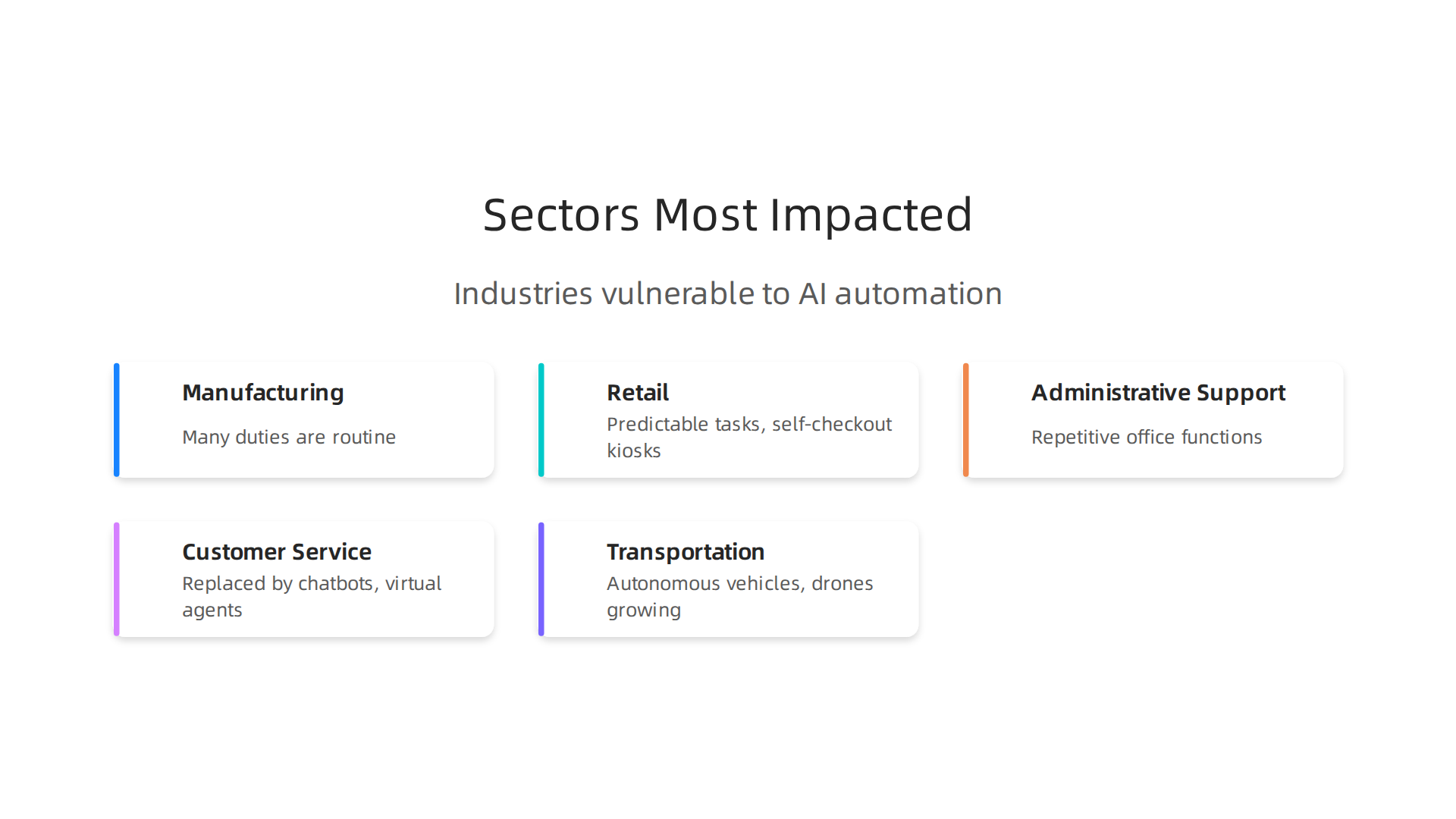
Manufacturing, retail, and administrative support top the list because many of their duties are routine. Customer service roles are rapidly being replaced by AI chatbots and virtual agents. Transportation and logistics also face a big shift as autonomous vehicles and drones grow. A recent report on London’s workforce exposure to generative AI shows how concentrated these risks are in certain job types.
For workers in the public sector, automation is reshaping roles too. If you work in government, check out our guide on Tyler Technologies compliance for government agencies in 2026 to see how rules are adapting.
Potential for Job Creation and Reskilling
But here is the good news. While many wonder why is ai bad for the workforce, it also creates demand for humans. New roles in data science, AI ethics, and system oversight are popping up. Think about running an artificial intelligence detector to catch biased algorithms or monitoring shadow ai tools that employees use without permission. These jobs need real people.
Reskilling programs are critical. The IMF estimates that demand for new skills in IT and AI is reshaping labor markets.

Without training, ai without restrictions can widen gaps. Public and private groups are teaming up to make courses accessible. If you want to prepare for a compliance role, check out our guide on AI regulations and compliance strategies for businesses in 2026. The shift is real, but there is a path forward.
Autonomous Weapons and Security Threats
Now we move from the hopeful side of reskilling to a much darker reality. This is a part of why is ai bad that keeps security experts awake at night.
Lethal autonomous weapons systems (LAWS) are machines that can select and engage targets without human input. Think of drones or robots that make kill decisions on their own. Who is responsible when something goes wrong? The Lieber Institute says this lack of clear accountability is a huge problem. It pushes commanders to monitor system performance closely and step in when risks appear.
At the same time, AI is powering cyber attacks. Hackers now use smart algorithms to launch faster and bigger attacks. A recent Security Council Report warns that AI-driven cyber threats pose growing risks to international peace. These tools can adapt in real time, making them hard to stop. We are talking about ai without restrictions in the digital battlefield. Security teams need new tools, like an artificial intelligence detector, to spot these malicious systems before they strike.
And then there is shadow ai in defense environments. Military staff might use unauthorized AI tools to speed up analysis or planning, creating blind spots for commanders. Without proper oversight, these hidden systems can cause serious mistakes.
So what is being done? The UN Secretary-General has called for new international laws to ban killer robots.
But so far, talks have stalled. The European External Action Service notes that governments are struggling to manage these risks. Instead of setting limits, major powers are racing to build better military AI. This raises the risk of a full AI arms race.
For those in compliance and policy roles, understanding how these threats connect to regulation is critical. If you work with government agencies, check out our guide on Tyler Technologies compliance for government agencies in 2026 to see how oversight can be strengthened in the face of autonomous security risks.
Lethal Autonomous Weapons Systems (LAWS)
Imagine a drone that decides on its own who to attack. That is what LAWS can do. They pick targets without any human say. This raises deep moral questions. Who is at fault if a mistake happens? The Lieber Institute warns that accountability is unclear. That is a big reason why many groups want a total ban. The UN Secretary-General has called for new laws to stop these killer robots. But major military powers keep building them anyway. A key challenge is that these systems struggle to tell soldiers from civilians, which raises the risk of terrible mistakes. This is a dark side of why is ai bad when used without limits. To learn how regulations aim to control such risks, see our guide on AI Regulations 2026: Compliance Strategies for Businesses.
AI in Cybersecurity: Offensive and Defensive
This same kind of danger shows up in online spaces too. Attackers now use AI to write phishing emails that feel real, create malware that changes shape to avoid detection, and trick people through smarter social engineering. On the other side, security teams use AI to spot threats fast, respond in real time, and predict weak spots before they get hit. But here is the hard truth: attackers often move faster. A recent report on autonomous agents warns that AI could create threats that defenses are not ready for. This is another reason why is ai bad when used without limits. And with shadow AI tools running inside companies without oversight, the risk grows even bigger. It is smart to look into an artificial intelligence detector to catch these hidden uses. To build a safer approach, check out our tips on Navigating AI Imaging Regulations in 2026.
Misinformation and Manipulation at Scale
Think about how easy it is to make a fake video or a believable news story today. With AI tools, anyone can create deepfakes or synthetic text in minutes. This is a huge part of why is ai bad when used without limits. In fact, a deepfake attempt happened every five minutes in 2024 alone, according to recent deepfake statistics. And less than one percent of all fact-checked misinformation during the 2024 elections was AI content at that time, but the numbers are growing fast now in 2026.
The real danger is how cheap and fast this has become. Bad actors can flood social media with fake videos that look real, fake audio of leaders saying things they never said, and fake news articles that spread before anyone can stop them. Social media algorithms then step in. They amplify the most divisive, shocking, or emotional content because it gets more clicks. That means false information spreads faster than the truth.
This erodes trust in everything we see online. When you cannot tell if a video is real, how do you make good decisions? The political and social consequences are huge. Some experts warn this is a direct threat to democracy itself.
The good news is that detection tools are getting better. You can now use an artificial intelligence detector to spot fake videos by looking for mismatched noise or color patterns. Governments are also stepping in with detection rules. But the fight feels like a game of catch up.
If you want to know how new regulations are trying to keep up with all this, take a look at the latest AI Regulations 2026 Compliance Strategies for Businesses. It gives you a clear picture of what is being done to fight misinformation at scale.
Deepfakes and Synthetic Media
Deepfake technology has advanced so fast that spotting fakes is harder than ever. This is another big reason why is ai bad when used without restrictions. These synthetic videos and audio clips are now used for political disinformation, financial fraud, and even non-consensual pornography. Detection tools look for mismatched noise patterns or color inconsistencies, but the fakes keep improving [source: WeForum on cognitive manipulation]. Regulators are fighting back with labeling requirements and new laws that criminalize malicious deepfakes. For a deeper look at how imaging rules are evolving, check out this guide on navigating AI imaging regulations in 2026.
Social Media Algorithms and Echo Chambers
Beyond deepfakes, AI algorithms quietly shape what you see online. These recommendation engines optimize for engagement, often pushing sensational or polarizing content your way. That is why is ai bad when deployed ai without restrictions. Echo chambers form, blocking out diverse viewpoints and sometimes radicalizing users. As cognitive manipulation becomes more sophisticated [source: WeForum], platforms face growing pressure to redesign algorithms for health and transparency. Businesses tracking these changes should explore compliance strategies for businesses to stay ahead.
Accountability Gaps: Who Is Liable When AI Harms?
Here is another big reason why is ai bad in practice. When an AI system makes a harmful decision, who do you blame? Right now, the answer is often nobody. Our legal systems were built for humans, not for machines that act on their own.
Think about it. A self-driving car hits a pedestrian. Did the manufacturer make a mistake? Did the software developer? Or did the AI learn bad behavior from its training data? Current laws in tort, product liability, and criminal law do not handle this well. When AI acts without direct human control, responsibility becomes a blurry mess.
That is why governments are rushing to catch up. In 2026, the proposed AI LEAD Act aims to create a clear federal liability framework in the US. This bill would let the Attorney General and state attorneys general take action when AI causes harm. At the same time, state laws like California’s AB 325 hold companies accountable if they force others to follow AI suggested prices. These changes show that ai without restrictions is not acceptable anymore.
Emerging proposals also push for strict liability for high risk AI systems and mandatory incident reporting. By August 2026, companies must meet specific transparency rules for certain types of AI. These rules help close the accountability gap by making sure someone is always responsible.
For businesses running risky AI tools, understanding these rules is not optional. You need a plan that covers compliance and risk management from day one. Our guide to navigating AI regulations in 2026 offers practical steps to protect your organization.
The bottom line is simple. If you build or use AI, the law is starting to treat you like the responsible party. Ignoring that fact could cost you everything.
Legal Frameworks for AI Liability
So how are lawmakers fixing this mess? New legal frameworks are popping up everywhere to make sure AI does not operate in a gray zone.
In Europe, the EU AI Liability Directive is a big deal. It pushes for strict liability on high risk AI systems. If your AI hurts someone, you are on the hook, no matter how careful you seemed. Companies have to follow strict transparency rules starting in August 2026.
The US approach is less unified right now. The AI LEAD Act tries to create one clear federal rule, but it is not final yet. Meanwhile, US courts borrow old product liability laws to cover new AI harms, and the results change from case to case. States like Colorado and California are moving faster with their own strict laws.
Around the world, the OECD AI Principles treat accountability as a must have. These values shape the new rules coming to life everywhere.
When the rules are this messy, "shadow ai" often sneaks in. Employees use tools they should not, and your company gets the blame. That is a huge reason why is ai bad for businesses that skip the planning step.
You do not have to guess. Our compliance strategies for businesses lays out a safe path forward.
Corporate Responsibility and Governance
Laws are one thing. But what happens inside your company is what really matters. Smart organizations are not waiting for the government to tell them what to do.
Here is what the best companies are doing right now in 2026.
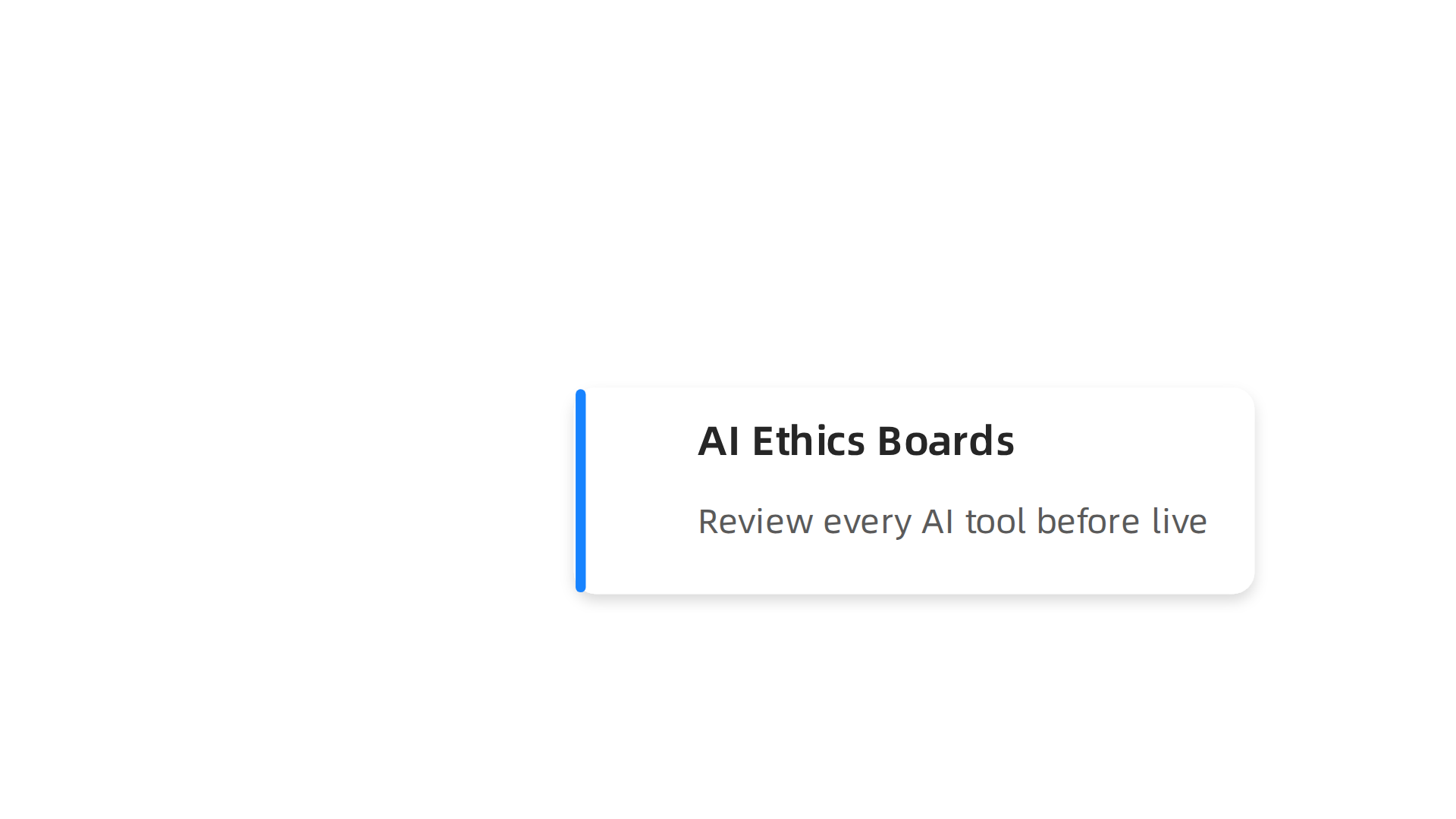
They build AI ethics boards. These are teams of people from legal, product, and compliance who review every AI tool before it goes live. No more letting engineers deploy any model they want. These boards catch problems early, like bias or privacy risks, before they become headlines.
They use transparency reporting. More companies now publish regular reports showing how their AI systems work. They share what data feeds the models, what safeguards are in place, and what went wrong. Third party audits are becoming the norm too. An outside check keeps everyone honest.
Stakeholders push for all of this. Your investors, your customers, and your employees all want to know your AI is safe. The pressure is real. A 2026 survey found that failing to show strong AI governance is now a top reason companies lose deals.
Bottom line? Rules from the outside only get you so far. Real safety comes from building the right internal habits. If you are unsure where to start, our compliance strategies for businesses walks you through the practical steps.
Environmental Costs of Large-Scale AI
Internal rules and ethics boards are a great start. But they do not solve every problem. There is a hidden side to AI that is harder to see. It is physical. It is growing fast. And it is hurting our planet.
Here is the thing. Training a single large model uses as much electricity as hundreds of homes do in a year. It also needs millions of liters of water to cool the servers. This is a huge reason why is ai bad for the environment. When we let ai without restrictions run wild, the carbon footprint explodes. An artificial intelligence detector can spot a fake image. But it cannot see the damage to the planet behind the screen. New rules in 2026 are starting to force companies to report this energy use. The new transparency requirements are a big step forward.
And there is another problem. Shadow ai makes this much worse. When teams inside a company use unauthorized AI tools, the energy waste goes up without anyone knowing. You cannot manage what you cannot see.
The good news? Companies are building green data centers and writing smarter code that uses less power. If you want to build a solid plan, our compliance strategies for businesses guide can help you measure and reduce your footprint. And creators using these tools should check out this compliance guide for creators to stay ahead of the rules.
Energy Consumption of Training Models
Here is the hard truth. Training one large AI model can emit as much carbon as five cars over their lifetimes. That is a big reason why is ai bad for the planet. Data centers use massive amounts of electricity and water for cooling. And the computing power needed for top AI models doubles every few months. This is ai without restrictions in action. An artificial intelligence detector can spot fake content. But it cannot see the energy waste. New 2026 AI laws are pushing companies to report this usage. The fight against shadow ai includes tracking energy costs too. To build a greener plan, check out our compliance strategies guide.
Sustainable AI Practices
Here is the silver lining. We do not have to accept ai without restrictions on energy use. New techniques can help a lot. Model pruning, quantization, and knowledge distillation shrink AI models without losing accuracy. Green data centers powered by renewable energy are also growing fast. And carbon-aware scheduling runs training jobs when clean electricity is available.
These practices directly fight the reasons why is ai bad for the environment. They also align with new transparency requirements in regulations like the Colorado AI Act, which takes effect in June 2026. An artificial intelligence detector can spot harmful outputs, but it cannot see energy waste. That is why human decisions matter. Even shadow ai projects in your company can go greener with smarter computing choices.
For a full plan on building responsible AI systems, view our compliance strategies guide.
Global Regulatory Approaches to AI Risks
Making AI greener helps the planet, but it does not solve every problem. The real worry for many people is still the same: why is ai bad when it runs without proper oversight? That question is driving a worldwide patchwork of new laws in 2026. And the answers are very different depending on where you live.
Some regions are strict. The EU AI Act is the most complete framework so far. It sorts AI systems by risk level and sets tough rules for high-risk uses. By August 2, 2026, companies must follow specific transparency rules for those systems [1]. Other places take a lighter touch. In the United States, the approach is mixed. The Trump administration has pushed for a federal liability framework through the AI LEAD Act [2]. At the same time, states like Colorado and California are moving faster with their own laws [3]. The Colorado AI Act takes effect in June 2026 [4]. California has new bills targeting AI liability and price-fixing risks [5].
This split creates a problem. International coordination is weak. When one country allows more ai without restrictions, companies can move operations there. That lets risky systems keep running. An artificial intelligence detector can catch harmful outputs, but it cannot stop regulatory gaps. Even shadow ai projects in your own business become harder to control when the rules are different everywhere.
The bottom line is clear: you need to watch all the rules, not just the ones in your backyard. For a complete look at how to stay ahead, check out our compliance strategies guide.
[1] WSGR, 2026 Year in Preview
[2] Latham & Watkins, Trump Administration Takes Major Steps
[3] Gunderson, 2026 AI Laws Update
[4] Baker Donelson, 2026 AI Legal Forecast
[5] KateGos, AI Liability 2026
EU AI Act and Other Frameworks
Let’s zoom in on the biggest frameworks shaping the answer to "why is ai bad" in 2026. The EU AI Act is the most complete system. It sorts AI tools by risk level.
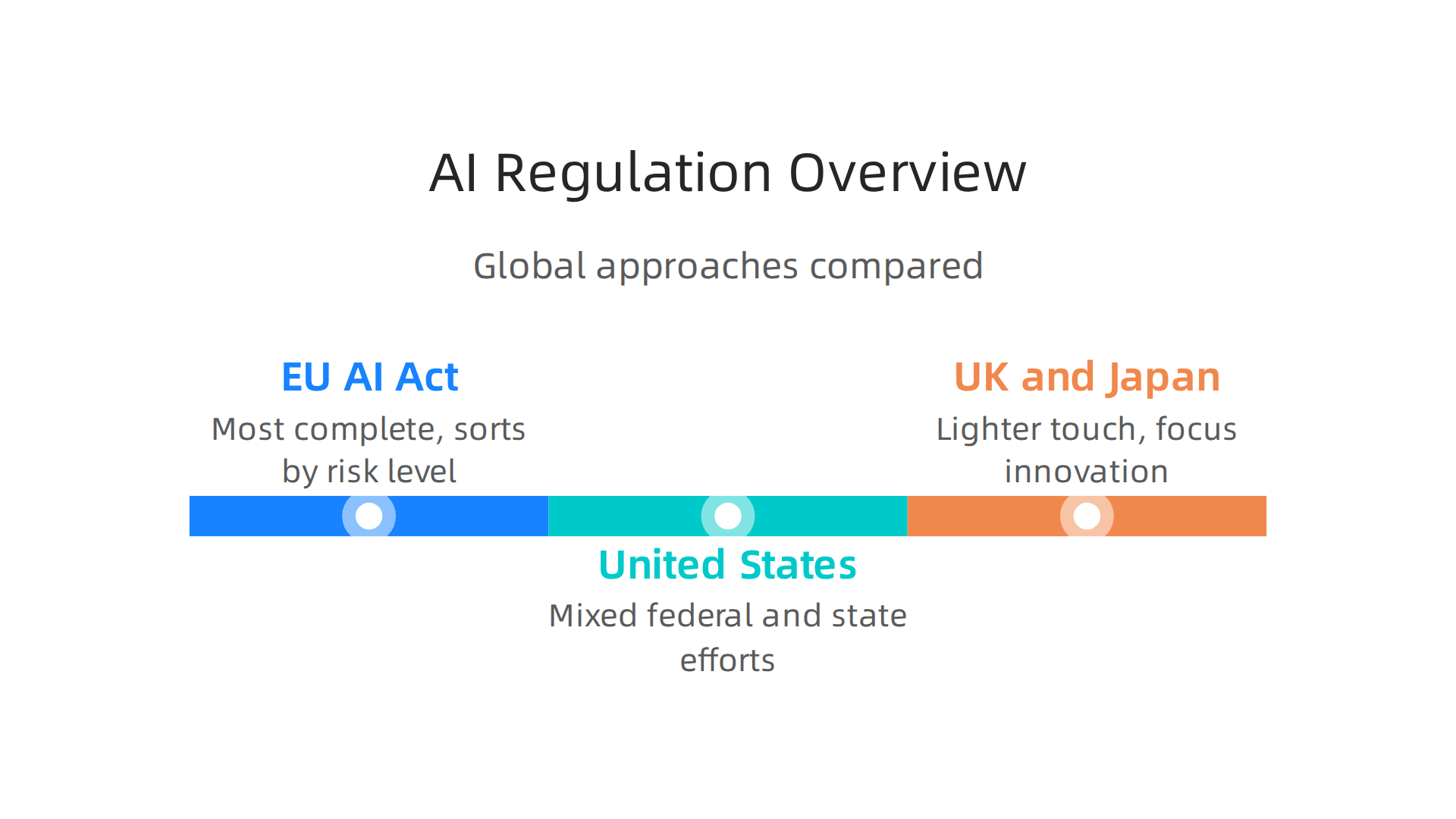
High-risk systems must follow strict transparency rules by August 2, 2026 [1]. This prevents ai without restrictions from causing harm in Europe.
Other regions take different paths. The United States mixes federal and state efforts. The federal AI LEAD Act creates a liability framework [2]. Meanwhile, states like Colorado and California push their own rules [3]. The Colorado AI Act starts in June 2026 [4]. California targets AI price fixing and liability risks [5].
The UK and Japan go lighter. They focus on encouraging innovation with fewer rules. This helps them grow their tech sectors faster. But it also makes shadow ai harder to catch when rules differ across borders.
For businesses, this patchwork is tough. You need a plan that works everywhere. Check out our compliance strategies guide to build one.
Challenges of International Cooperation
Getting countries to agree on AI rules is like getting a group of friends to pick a restaurant. Everyone has different tastes. Different values and economic goals make a global consensus on "why is ai bad" almost impossible.
Groups like the Global Partnership on AI (GPAI) and the OECD AI Principles create good discussion forums. But they cannot enforce any rules. That means they lack real power to stop ai without restrictions.
The result is a fragmented regulatory landscape. Companies face higher compliance costs because they must follow conflicting rules in every region. This also slows down global deployment of new tools. For a helpful next step, check out our compliance strategies guide to make sense of these challenges.
Conclusion: Navigating the AI Risk Landscape in 2026 and Beyond
So after everything we have covered, you might still be asking, "why is ai bad?" The honest answer is that AI is not all good or all bad. It is a powerful tool, and like any tool, the outcome depends on how we use it. The risks we explored in this article bias in hiring algorithms, privacy leaks from unchecked data collection, job displacement fears, and security flaws from shadow ai all require careful attention.
The good news is that we have more data than ever to guide us. Groups like the OECD and the IMF are tracking how AI affects jobs and skills. For example, the OECD reports that over 25% of jobs in member countries will be strongly affected by major policy shifts. This kind of evidence helps leaders decide where to focus their energy and money. Without a solid understanding of the actual risks, we might panic and push for ai without restrictions or, worse, shut down useful tools entirely.
Each risk needs its own solution. There is no one-size-fits-all answer. Bias needs better data audits. Privacy needs stronger encryption and consent rules. Job disruption needs retraining programs. And security needs improved artificial intelligence detector tools to catch shady models before they cause harm. For a practical look at one specific area, read our guide on navigating artificial intelligence imaging regulations. It shows how targeted rules protect patients while letting innovation grow.
But no single country, company, or expert can fix this alone. Real progress requires teamwork. Policymakers, technologists, and everyday citizens all have something to add. When we share knowledge and work together, we can steer AI toward outcomes that help everyone, not just a few.
The landscape will keep shifting in 2026 and beyond. Stay curious. Stay informed. And remember that asking "why is ai bad" is actually the first step toward making it better.
Summary
This article takes a clear, evidence-based look at why AI can be harmful when deployed without restrictions. It explains the concrete risks now visible in 2026 — from algorithmic bias that drives wrongful arrests to privacy erosion from biometric surveillance, job displacement, cybersecurity threats, and environmental costs of large models. Using studies and reports from groups like the OECD, IMF and World Economic Forum, the piece shows how these problems arise, who they hurt, and which sectors are most exposed. It also surveys regulatory responses (EU AI Act, state laws, proposed US frameworks) and practical mitigation: technical fixes, governance boards, transparency reporting, reskilling programs, and green computing. After reading, business leaders, compliance teams, and concerned citizens will understand the real dangers and concrete steps to reduce harm and stay compliant as rules evolve.