
Introduction
Here is a simple truth. Artificial intelligence imaging is no longer a futuristic concept. It is here, and it is reshaping entire industries right now. From helping doctors spot diseases earlier to powering self-driving cars, AI that can see and understand images is moving fast. In 2026 alone, the global AI in medical imaging market is valued at over $2.5 trillion, and the generative AI in computer vision space is growing at nearly 38% each year. These numbers are huge, and they keep climbing.
But here is the catch. This rapid adoption has sprinted far ahead of clear regulations. The rules around artificial intelligence imaging are still scattered, confusing, and often missing entirely.

For technology executives trying to build compliant products, investors weighing risk, compliance teams scrambling to keep up, and policy watchers trying to make sense of it all, the landscape feels fragmented.

The stakes of getting it wrong are enormous. Non-compliance can mean heavy fines, damaged reputations, or even having to pull products off the market.
This guide is built to help you cut through the noise. We will walk you through a structured overview of AI imaging technologies in 2026, the current regulatory environment, the biggest compliance challenges, and practical steps you can take to stay ahead.
If you want clear, daily updates on AI regulation without the hype, start here. Get Free Updates from The Deep View Newsletter and get straight-to-the-point insights that matter.
What Are AI Imaging Technologies? A 2026 Snapshot
Let’s start with a simple definition. Artificial intelligence imaging covers any technology where AI systems analyze, understand, or generate visual information. Think of it as giving computers the ability to see and interpret the world, or even create new images from scratch. In 2026, this field has exploded into several major categories, each with its own capabilities and regulatory headaches.
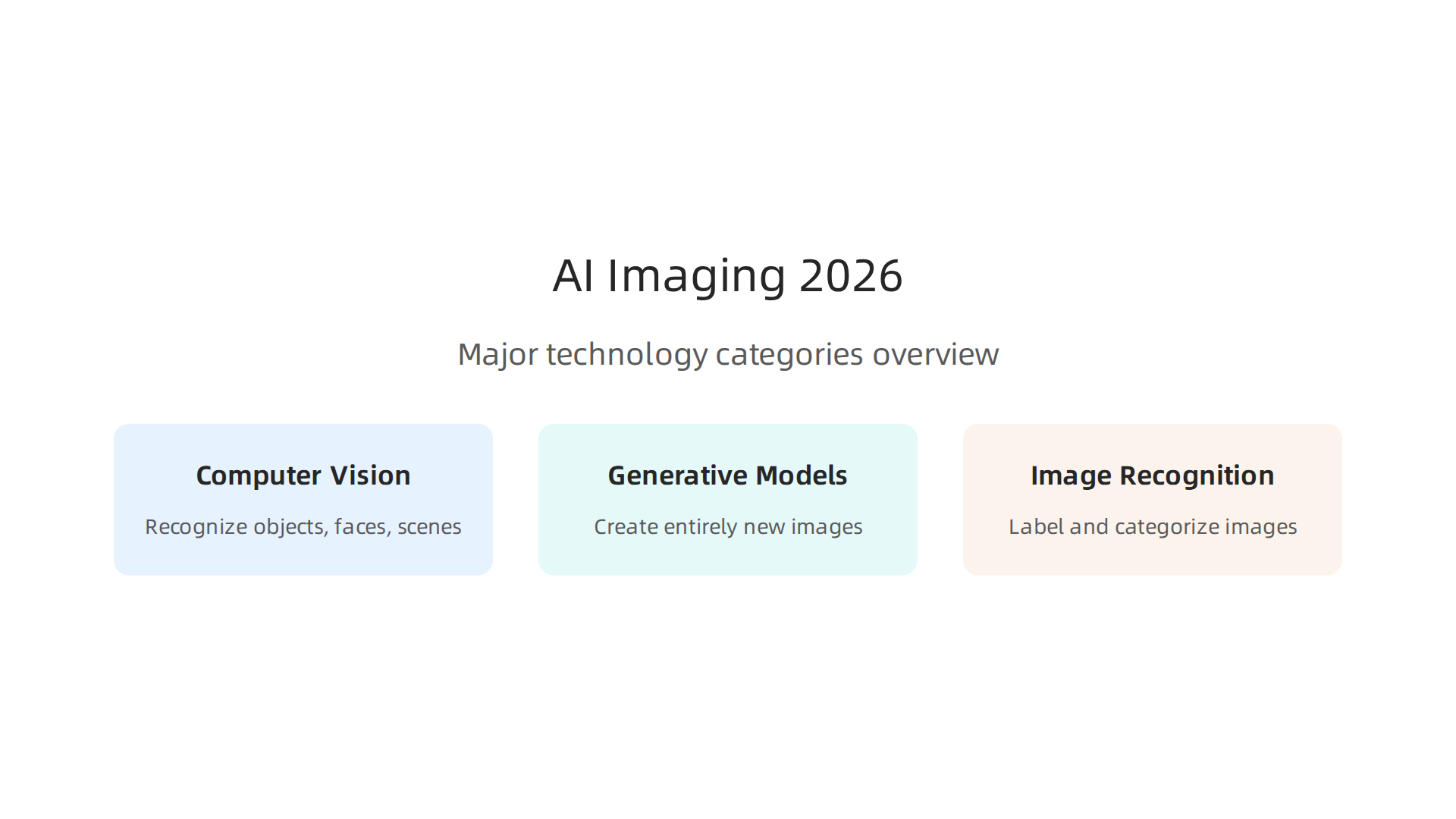
Computer vision is the oldest and most established piece. It lets machines recognize objects, faces, scenes, and activities in images and video. The AI in computer vision market is projected to reach $63.48 billion by 2030, growing at over 22% annually since 2025, according to a report by MarketsandMarkets. You see it every day in smartphone cameras, security systems, and autonomous vehicle perception systems.
Generative image models are the newer, flashier cousin. These systems create entirely new pictures of artificial intelligence from text prompts or existing images. The generative AI in computer vision space was valued at $14.84 billion in 2026 alone and could hit $53.15 billion by 2030, growing at a blistering 37.6% each year, per a 2026 market report from Research and Markets. These tools power content generation, design prototyping, and even synthetic data creation for training other models.
Image recognition and classification sits at the core of both categories. Whether it’s a medical scan or a photo on your phone, AI can label what it sees, sort it, and flag anomalies. The global AI in medical imaging market hit $2.57 trillion in 2026, as reported by Precedence Research, because diagnostic imaging analysis has become a standard tool in hospitals worldwide.
The technology stack behind all of this relies on neural networks, especially convolutional neural networks (CNNs) and transformers. These models need massive training datasets and can run either on local devices (edge deployment) or in the cloud. Each deployment choice brings different privacy and compliance risks.
A single picture on artificial intelligence can reveal sensitive information. A facial recognition scan can identify someone without consent. A generated image can spread misinformation. That is why understanding what you are working with is the first step toward staying compliant.
We will get into the regulatory details next. If you want to keep up with how these technologies are changing the rules every single day, here is a simple way to stay ahead. Subscribe Free to The Deep View Newsletter for clear, daily updates you can actually use.
The Global Regulatory Landscape for AI Imaging in 2026
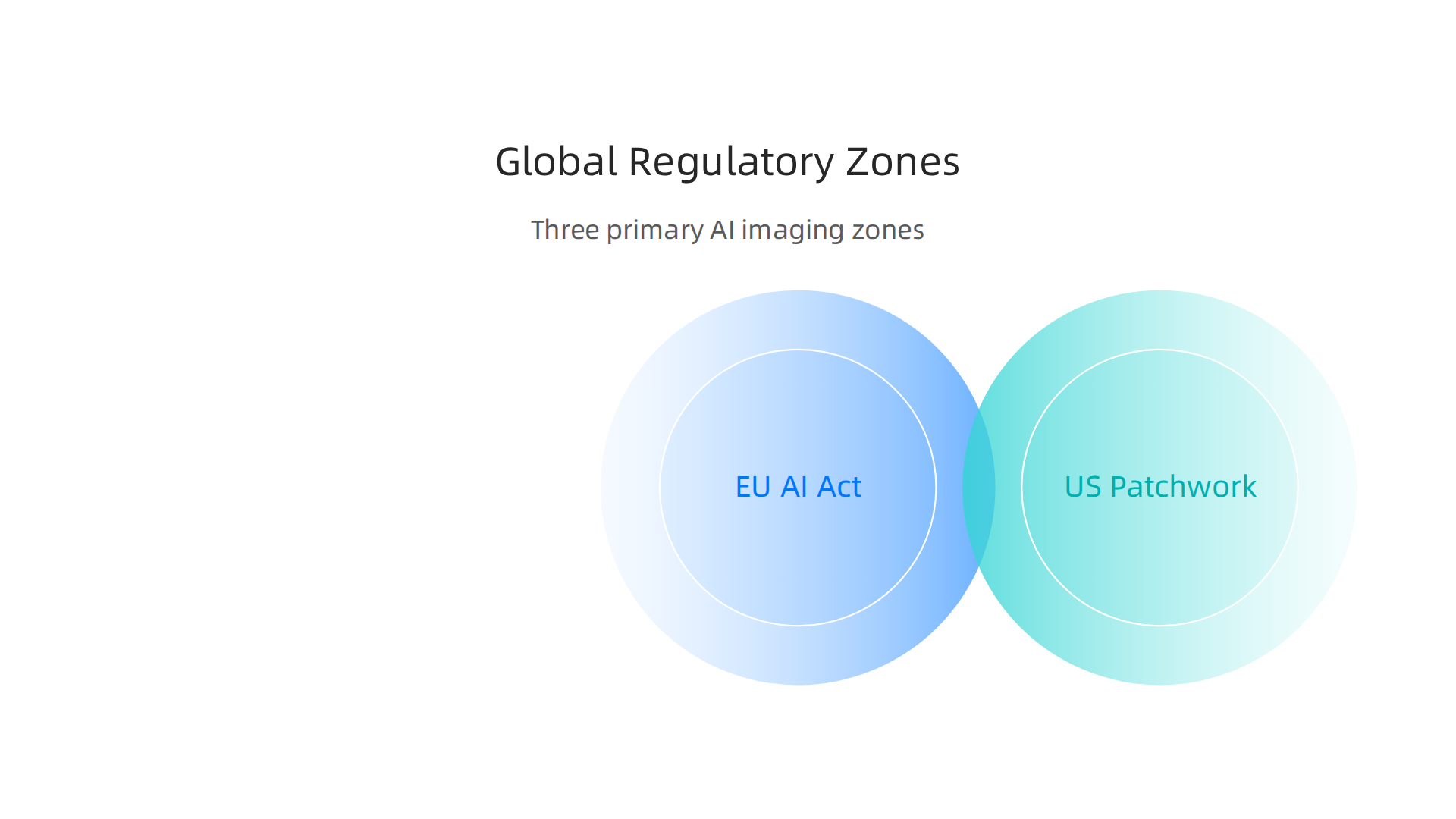
Now that you know what artificial intelligence imaging can do, here is the hard part. Every country is writing its own rulebook. And if you work with pictures of artificial intelligence in any capacity, you need to know which rules apply to you. The landscape is shifting fast, but three major regulatory zones matter most.
The EU AI Act Takes the Lead
Europe has the most complete framework anywhere in the world. The EU AI Act is the first comprehensive law for artificial intelligence, and it directly affects how you can use AI imaging systems.
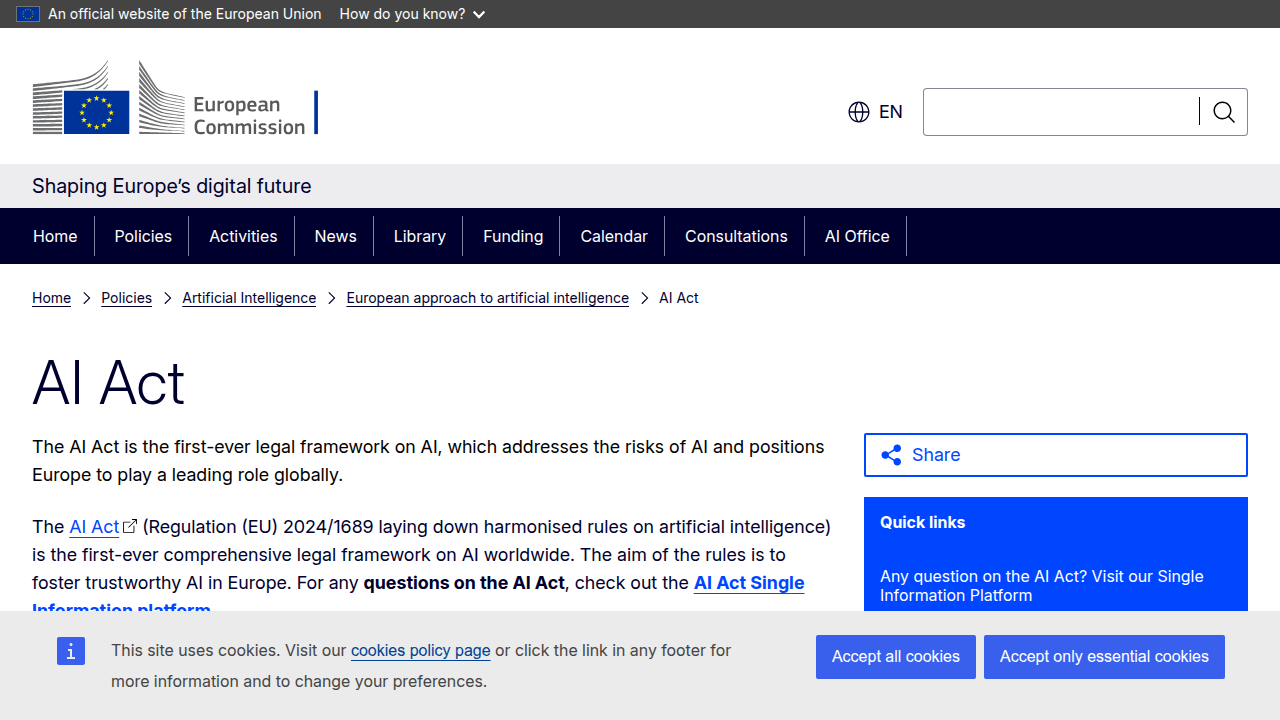
The law uses a risk-based approach. That means your picture on artificial intelligence gets classified based on how much harm it could cause. According to the official high-level summary, systems used as safety components or products covered by EU safety laws are considered high-risk.
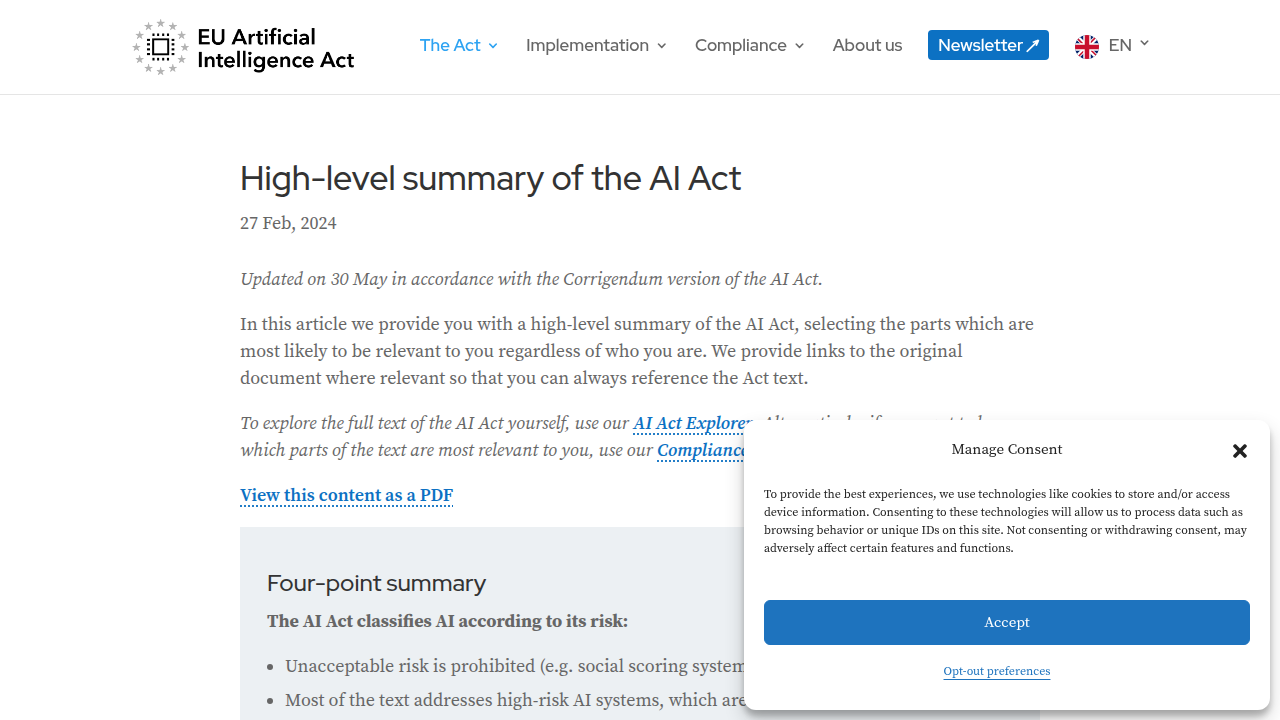
What does that mean for imaging? If you use AI to read medical scans, that is high-risk. If you use it for biometric identification in public spaces, that is also high-risk and faces stricter limits.
The AI Act definitions make it clear that any AI system operating with varying levels of autonomy falls under the law. Most modern imaging tools qualify. You need to document your system, assess the risk, and meet conformity requirements before you can sell or deploy it in Europe. Healthcare organizations especially need to pay attention, as the rules for medical AI systems are layered on top of existing medical device regulations.
The US Patchwork
Across the Atlantic, things are messier. The United States has no single AI law. Instead, you get a confusing mix of executive orders, state laws, and agency rules.
On the federal side, the White House has issued executive orders on AI safety and trustworthiness. But those carry less weight than a law passed by Congress. The FTC has stepped in to police deceptive AI claims. The FDA regulates AI in medical imaging. And the NHTSA handles AI in autonomous vehicles. Each agency looks at artificial intelligence imaging through its own lens.
At the state level, Illinois has the Biometric Information Privacy Act (BIPA), which directly impacts any system that uses facial recognition or other biometric imaging. California and other states are writing their own AI laws too. If you operate in the US, you need to check the rules in every state where you do business. A single picture on artificial intelligence that involves a person’s face could trigger a lawsuit in Illinois but be totally fine in Texas.
China Goes Its Own Way
China has taken a different approach entirely. The government requires all generative AI services to register their algorithms with the authorities. This includes any tool that creates or modifies images using AI. The deep synthesis regulations specifically target systems that can generate or alter pictures of artificial intelligence in ways that look real.
China also has strict rules around facial recognition and biometric data. Companies must get explicit consent and limit how long they keep the data. The government wants to encourage AI innovation, but it also wants tight control over what those systems can do and see.
What This Means for You
The global regulatory world is fragmented. But the trend is clear. Every major economy is writing rules for artificial intelligence imaging. Whether you are a developer, a compliance officer, or a business owner, you cannot afford to ignore any of these three zones.
The best way to stay ahead? Keep learning. Check out our guide to understanding AI compliance frameworks for a deeper look at how these rules overlap. And if you want simple daily updates that cut through the noise, here is a helpful next step.
Get Free Updates from The Deep View Newsletter to track these regulations as they evolve.
Core Compliance Challenges: Bias, Privacy, and Intellectual Property
Knowing who makes the rules is one thing. Living by them is another. When you work with artificial intelligence imaging, three tough challenges come up again and again. They are bias, privacy, and intellectual property.
Each one can trip you up if you are not careful. And each one is getting more attention from regulators every year.
Bias: When the Picture Is Wrong
Facial recognition is the most famous example. Studies have shown that some AI systems misidentify people with darker skin much more often than lighter skin. That is not just a technical problem. It is a fairness problem.

And it can break anti-discrimination laws in many countries.
Under the EU AI Act, systems that use pictures of artificial intelligence for biometric identification are considered high-risk. That means you have to test for bias, document your results, and make sure the system does not unfairly target certain groups. According to the high-level summary of the AI Act, high-risk systems must meet strict transparency and accuracy standards. If your AI regularly misidentifies people, you could face fines or be forced to stop using it.
The same goes for medical imaging. If an AI trained mostly on one group of patients misreads scans for another group, that is a bias issue too. Healthcare organizations using AI need to watch this closely because patient safety is on the line.
Privacy: Every Image Holds Data
A single picture on artificial intelligence might contain biometric data, location data, or other personal information. Laws like the GDPR in Europe and the CCPA in California treat that data with strict rules.
For example, if you use AI to sort people by age or gender from photos, that is what the EU AI Act calls a biometric categorization system. The ASIS article on the AI Act explains that these systems are often restricted or banned entirely, especially when used in public places. You cannot just snap pictures and run them through an AI without a clear legal basis.
Even during training, you have to be careful. If your dataset includes images of real people without their consent, you could be violating privacy laws. Always check where your data comes from. And always have a privacy policy that covers how you use artificial intelligence with images.
Intellectual Property: Who Owns the Output?
This might be the messiest challenge of all. When you train an AI on copyrighted images, you might be infringing on someone else’s rights. Several lawsuits are already fighting over this. And when the AI creates a new image, who owns it? The user? The developer? Nobody?
The EU AI Act’s definition of an AI system includes any system that operates with autonomy. That covers most generative imaging tools. But the Act does not fully answer the ownership question. National copyright laws still differ. Some countries say AI-generated work cannot be copyrighted at all. Others say the person who prompted the AI owns it.
Meanwhile, patent conflicts are growing. If your AI imaging tool invents a new method, you might want to patent it. But patent offices are still figuring out how to handle inventions created by AI.
Staying Ahead of These Challenges
Bias, privacy, and IP are not going away. They are becoming central to every compliance conversation. The best move is to stay informed as the rules evolve.
Get clear daily updates straight to your inbox. Subscribe Free to The Deep View Newsletter and never miss a shift in AI regulation.
Sector-Specific Regulatory Risks: Healthcare, Autonomous Vehicles, and Beyond
Bias, privacy, and IP challenges affect every industry. But the rules get even stricter depending on where you use your artificial intelligence imaging system. Let’s look at three sectors where the stakes are highest.
Healthcare: FDA and HIPAA Are Watching Closely
If your picture on artificial intelligence helps doctors diagnose diseases, guess what? It is now a medical device. In the U.S., the FDA treats AI-powered imaging software as Software as a Medical Device (SaMD). That means you likely need premarket review, often through the 510(k) pathway. According to the FDA’s overview of AI in medical devices, the agency has been updating its approach steadily. By 2026, the FDA had already cleared dozens of AI/ML SaMD applications, with new ones appearing every month. You can see the full list of FDA-authorized AI-enabled medical devices online.
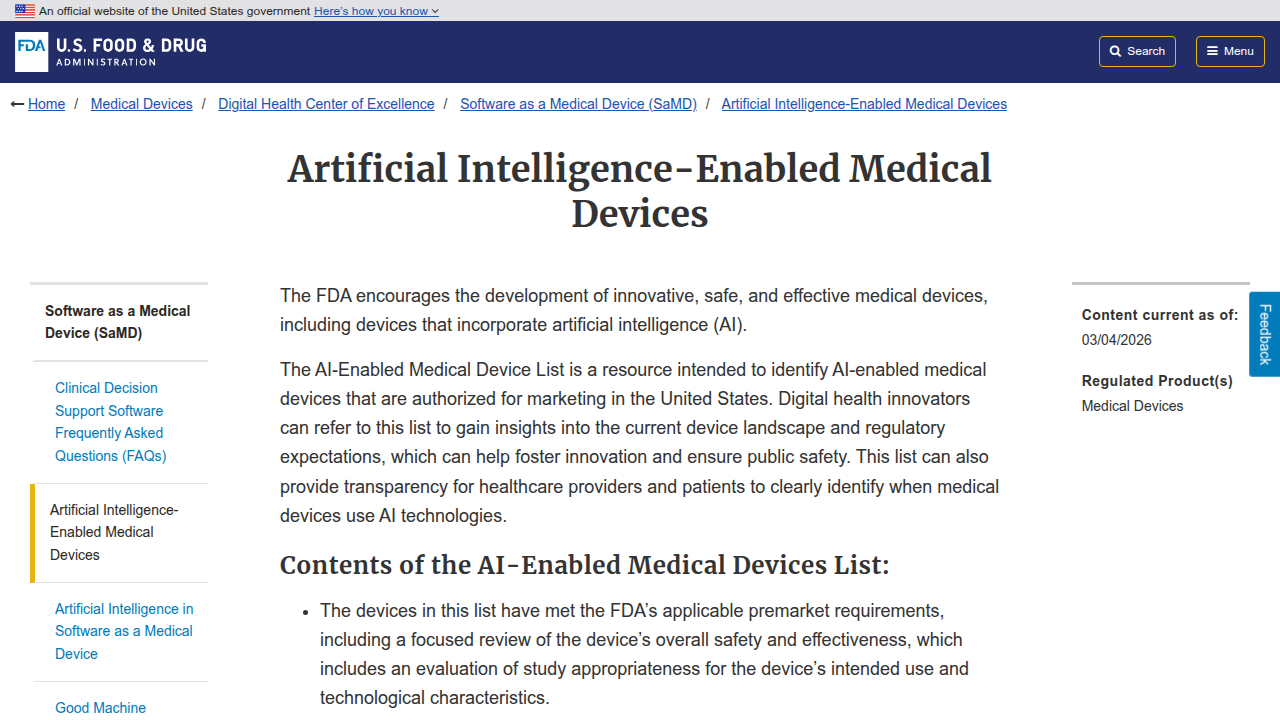
You also have to follow HIPAA if patient data is involved. That means getting consent, protecting data, and being transparent about how your AI works. A guide on FDA regulations for AI in SaMD explains that some low-risk systems are exempt, but most imaging tools need a full submission.
Autonomous Vehicles: Safety First, Liability Second
Self-driving cars rely heavily on artificial intelligence with images to see the road. Regulators are not taking chances. In Europe, UN Regulation R157 sets safety standards for automated lane keeping systems. In the U.S., NHTSA has its own guidelines. If your imaging system fails to spot a pedestrian, who is responsible? The manufacturer? The software developer? The car owner?
These liability questions are still being tested in courts. For now, the safest bet is to design your imaging AI with worst-case scenarios in mind. Over-test and over-document. That way, if something goes wrong, you can show regulators you did everything right.
Surveillance and Content Moderation: Human Rights in the Balance
This is where pictures of artificial intelligence get the most scrutiny. Governments and courts are watching surveillance AI very closely. Under the EU AI Act, real-time biometric identification in public spaces is banned for most uses. Export controls also apply. If your imaging tool could be used for mass surveillance, you might need special licenses to sell it in certain countries.
Content moderation is another hot zone. Platforms that use AI to scan user images for harmful content have to balance safety with free speech. If your AI flags too many innocent pictures, you get sued. If it misses dangerous ones, you get blamed.
Your Next Step
Every sector has its own rulebook. But one thing stays the same. You need to know what is coming next.
Get clear daily updates straight to your inbox. Subscribe Free to The Deep View Newsletter and never miss a shift in AI regulation.
Building a Proactive Compliance Strategy for AI Imaging
By now, you have seen how different sectors handle artificial intelligence imaging rules. The regulations keep changing. In March 2026 alone, the FDA cleared 24 AI/ML software applications. That is nearly one every 31 hours according to an analysis of March 2026 AI/ML SaMD clearances. So waiting to react is not an option. You need a plan that stays ahead of the rules.

Here is a simple three-step framework to build a proactive compliance strategy for your artificial intelligence imaging system.
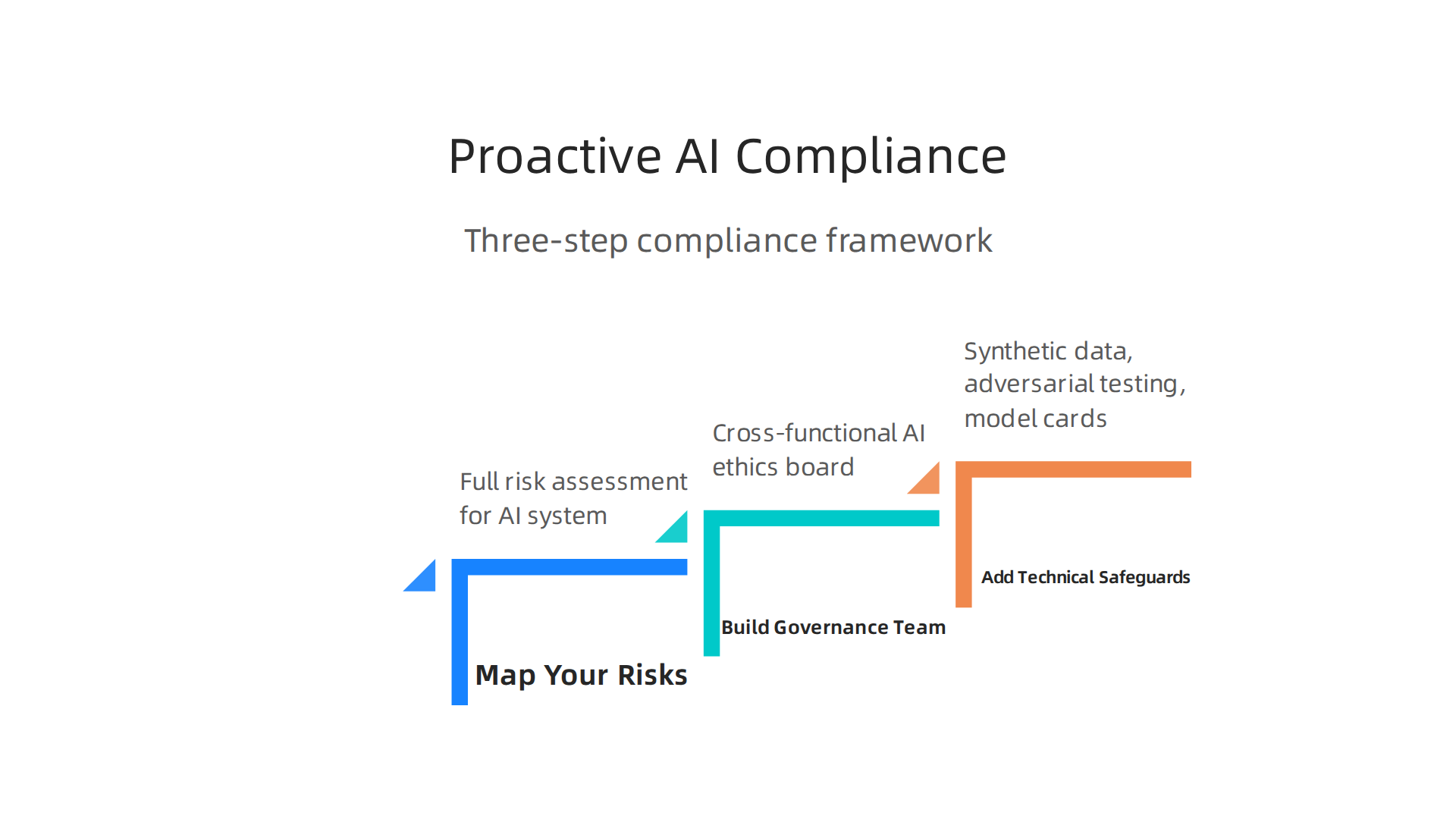
Step 1: Map Your Risks
Before you can fix problems, you need to find them. Start with a full risk assessment. Look at every way someone might use your picture on artificial intelligence system. Ask tough questions.
Does your tool handle patient data? You might need a Data Protection Impact Assessment. Could your AI favor one group over another? Run a bias audit. The NIST AI Risk Management Framework gives you a solid structure for this work. Experts recommend starting your mapping early because building a strong governance framework takes time. An AI risk assessment guide published in early 2026 walks through the steps to spot, prioritize, and fix security and bias risks before they become real problems.
The goal is simple. Know exactly which regulations apply to each use case. Then rank them by urgency.
Step 2: Build Your Governance Team
A single person cannot track every rule. You need a team. Set up a cross-functional AI ethics board that includes legal, engineering, compliance, and product leads.
This group should meet regularly to review your pictures of artificial intelligence systems. They should document everything. What data did you train your model on? How did you test it? What happens when it makes a mistake?
Keep a transparency report that explains how your AI works in plain language. If a regulator or customer asks questions, you have clear answers ready. A guide on responsible AI governance in 2026 recommends starting with a small team and clear decision guardrails, then scaling up as your AI program grows.
Step 3: Add Technical Safeguards
Now comes the hands-on part. Use technical controls to protect your system and your users.
- Synthetic data. When you train your AI on fake images instead of real patient photos, you reduce privacy risks. This is especially important in healthcare.
- Adversarial testing. Try to trick your own AI. Feed it altered images. See if it fails. Fix those weak spots before someone else finds them.
- Model cards. Create a short summary card for each model. List its strengths, known limits, and test results. This makes your artificial intelligence with images system easier to explain and audit.
These controls do not just keep you compliant. They build trust. And trust is the most valuable asset your AI imaging system can earn.
Stay Ahead with Daily Updates
The regulatory landscape moves fast. By 2026, staying informed is a full-time job. Let us help you keep up.
Get Free Updates from The Deep View Newsletter and get simple daily insights on AI regulation straight to your inbox.
Future Trends and How to Prepare for 2027 and Beyond
You have built a solid compliance strategy for today. But what about tomorrow? The rules around artificial intelligence imaging are shifting fast. By 2027 and beyond, the landscape will look very different. Here is what is coming and how you can get ready.
Emerging Regulations on the Horizon
The EU AI Act is already in effect. But Europe is also working on a potential AI liability directive. This would make it easier for people to sue when an AI system causes harm. In the United States, federal AI legislation is still being debated. Some experts predict a national law that sets clear rules for high-risk AI systems like medical imaging tools.
The big trend is global convergence. Countries are starting to align their rules. The AI regulations around the world map shows how different regions are moving toward similar standards. This means if you build your system to meet one set of rules, you might already be close to meeting others.
The AI Act from the European Union is the first comprehensive legal framework. Many other countries are using it as a model. Pay attention to these developments because they will shape how you design, test, and market your pictures of artificial intelligence products.
Technical Standards to Watch
Regulations are just one piece. Technical standards are also evolving. The IEEE P7000 series offers guidance on ethical design and transparency. ISO/IEC 23053 describes a framework for AI systems using machine learning. For imaging specifically, you will want to follow standards around datasheets for datasets. These documents force you to document your training data, its limitations, and any biases.
The AI risk management framework from NIST gives you a structure to manage these technical requirements. As the Cybersaint article on top governance frameworks for 2026 highlights, aligning your development process with recognized standards will make audits easier and build trust with regulators.
Getting Your Organization Ready
So how do you prepare for all this change? Here are three practical steps.
First, invest in regulatory intelligence. Do not wait for rules to hit your desk. Subscribe to services that track changes across jurisdictions. The Lowenstein client alert on AI risk assessments stresses that starting early is key because governance frameworks take time to build.
Second, engage with policymakers. Join industry groups like AdvaMed. The AI Policy Roadmap from AdvaMed offers recommendations for Congress. When you participate in the conversation, you help shape the rules that affect your artificial intelligence with images systems.
Third, build adaptable compliance systems. Design your processes so they can flex when new rules appear. Use modular documentation. Keep your risk assessments updated. The AI security and governance guide from AccuKnox explains how to secure your AI models and runtime environments in a way that scales with regulatory change.
Stay Ahead with Daily Insights
The future of artificial intelligence imaging regulation is complex. But you do not have to track it alone. We bring you the most important updates every day.
Subscribe Free to The Deep View Newsletter and get simple daily insights on AI regulation delivered to your inbox. Stay ready for 2027 and beyond.
Summary
This article explains the state of artificial intelligence imaging in 2026, why regulation matters, and how organizations should respond. It defines key technologies — computer vision, generative image models, and image classification — and outlines the technical stack and deployment choices that drive privacy and safety risks. The piece maps the fragmented global regulatory landscape with a focus on the EU AI Act, U.S. agency and state rules, and China’s registration and control measures. It highlights the three central compliance challenges of bias, privacy, and intellectual property, and shows how those risks play out in healthcare, autonomous vehicles, surveillance, and content moderation. The guide then gives a practical three-step compliance framework — risk mapping, governance team building, and technical safeguards — and points to standards and regulatory trends to watch for 2027. After reading, you’ll understand which rules likely apply to your use case and have concrete next steps to start a defensible compliance program.