Introduction
Government technology procurement has become a minefield. If you work in public sector IT, you already know this. One day you are evaluating a new software platform. The next day you find yourself buried in overlapping compliance requirements from local ordinances, state mandates, and federal guidelines.

Here is the thing: the demands keep growing faster than most teams can keep up.
That is where Tyler Technologies comes in. This company has built a reputation as a go to provider for integrated solutions that serve cities, counties, schools, and state agencies. From ERP systems to public safety software, their tools touch nearly every corner of government operations.
But here is the real question for decision makers: does Tyler Technologies help you stay compliant, or does it add another layer of complexity to manage?
The answer matters more now than ever. With new AI rules, data privacy laws, and cybersecurity requirements emerging almost weekly, procurement decisions carry serious weight. Choosing the wrong vendor or missing a compliance gap can cost millions and damage public trust.
This article gives you a strategic overview of Tyler Technologies and what it offers. We will walk through the current regulatory landscape that government buyers face. And we will share practical guidance to help you make informed decisions.
Whether you work with dc tech vendors, evaluate c2c innovative solutions, or manage computer systems technology stacks, this guide is built for you.
The regulatory world keeps shifting. But you do not have to navigate it alone. Get free updates on the latest tech regulation changes so your procurement strategy stays ahead of the curve.
The GovTech Landscape in 2026: Why Tyler Technologies Leads
You feel the pressure, right? Digital transformation mandates keep piling up. Cybersecurity threats are getting worse. And those legacy systems your team still runs? They are barely hanging on. That is the reality for most government agencies in 2026.
According to the latest 2026 State of Digital Government report, service delivery and trust are top priorities, but resources are stretched thin.
Local governments are losing talent in critical areas like AI, cloud, and cybersecurity. You need a partner that can help you move fast without breaking compliance.
That is where Tyler Technologies comes in. In 2023, they captured the top spot in the global state and local government software market with an 11.5% share. Today, they have over 45,000 successful installations across 15,000 locations in all 50 states, Canada, the Caribbean, and Australia. They were also named to the 2026 GovTech 100 list. Those numbers show real scale.
What gives Tyler an edge? Breadth. Their cloud solutions cover public administration, courts and justice, and public safety. They are recognized as a "Strong Performer" in industry analyst evaluations. And they work with multiple association partners to streamline processes for local governments. That kind of integration reduces the complexity you would face from stitching together a dozen vendors.
Another advantage: long term relationships. Tyler has been in this space for decades. They understand the unique compliance requirements of dc tech and c2c innovative solutions environments. They build for computer systems technology stacks that need to talk to each other. That means fewer integration headaches for your team.
When you choose a vendor, you are not just buying software. You are buying a compliance partner who has been through audits, certifications, and regulatory changes before.

Tyler checks that box.
Want to keep your procurement strategy ahead of the curve? Get free updates on the latest tech regulation changes delivered straight to your inbox.
Understanding Tyler Technologies’ Product Ecosystem and Regulatory Compliance
So what exactly do you get with Tyler Technologies? The answer goes beyond just one tool. Their product ecosystem covers three core areas that most local governments need: financial management, public safety, and citizen services.
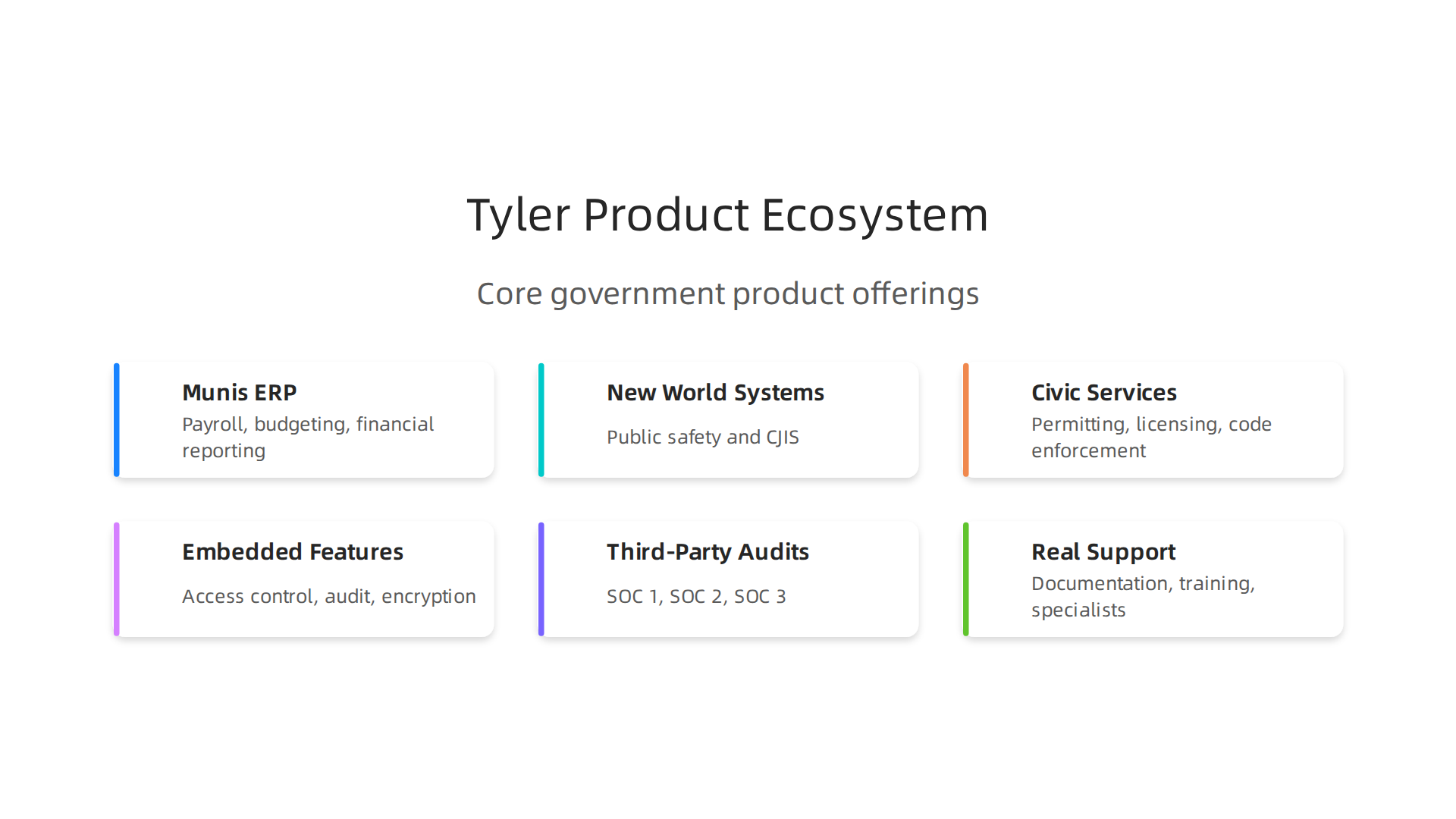
Munis is their flagship ERP system. It handles payroll, budgeting, procurement, and financial reporting. If your city or county runs on spreadsheets and disconnected databases, Munis brings everything into one platform. That means fewer errors and faster closeouts at the end of each fiscal quarter.
New World Systems focuses on public safety. Think dispatch, records management, jail management, and mobile field reporting. For agencies that must follow CJIS security requirements, this suite is built from the ground up with those rules in mind. CJIS compliance is not an afterthought here. It is part of the core architecture.
Civic Services covers permitting, licensing, code enforcement, and planning. If your citizens still fill out paper forms or wait in line to renew a business license, this module digitizes the whole process. It saves your staff time and makes residents happier.
But here is what matters most for your compliance team: every product in the Tyler ecosystem carries key certifications that make procurement easier.
Tyler Technologies holds FedRAMP authorization for several cloud services. FedRAMP is the gold standard for federal cloud security.
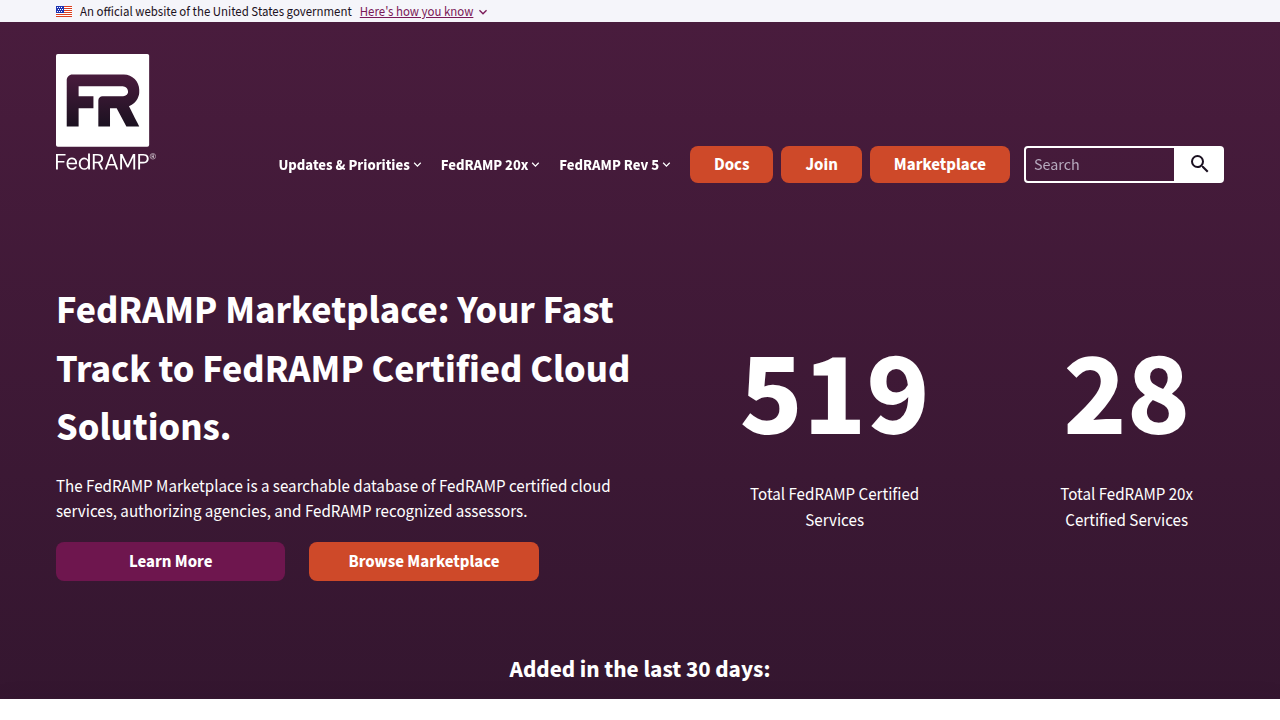
It means an independent assessor has verified that Tyler’s controls meet strict government requirements. On top of that, their platforms undergo SOC 2 Type II audits regularly. These audits check for security, availability, and confidentiality.
And because different states have different rules, Tyler also meets state-specific data residency requirements. If your state mandates that citizen data stays within its borders, Tyler can configure your instance to comply.
Their alignment with the NIST Cybersecurity Framework is another big win. As GovRAMP noted in their 2026 modernization update, framework harmonization across FedRAMP, CJIS, and state mandates is becoming the new normal. Tyler sits right at that intersection. They make it easier for your IT team to manage one set of security controls instead of juggling a dozen separate frameworks.
If your agency handles law enforcement data, you already know how strict CJIS requirements are. Tyler’s New World Systems was designed alongside these rules. That reduces your risk of non-compliance audits and keeps your data handling within legal boundaries.
Tyler also integrates into the broader dc tech and c2c innovative solutions ecosystem. Their APIs and middleware layers connect with other approved computer systems technology vendors. You are not locked into a walled garden. You can swap out modules as your needs change.
The bottom line: Tyler Technologies simplifies compliance because they have already done the heavy lifting for certifications you would otherwise pursue on your own.
Want to stay current on how regulatory shifts affect government software procurement? Subscribe Free to The Deep View Newsletter for clear daily updates on tech regulation.
Key Regulatory Pain Points for Government Tech Buyers
So we just covered how Tyler Technologies makes compliance easier. But before you get to that point, you need to understand what you are really up against. Buying tech for your city or county is not like shopping for a new CRM at a private company. The rules pile up fast.
Here is the truth: most government tech buyers struggle with three major headaches.
1. The Complexity of Multi-Tiered Regulations
You are not just following one set of rules. You are juggling federal, state, and local requirements all at once. And they do not always agree.
At the federal level, you have FedRAMP for cloud security. At the state level, you might have CJIS for law enforcement data plus specific data residency laws. And at the local level, your own city council might have passed ordinances about citizen privacy or procurement thresholds.
The White & Case 2026 regulatory outlook calls this a framework that "integrates grant compliance, procurement risk, ESG metrics and industrial strategy." For your team, that translates to one question: how do you make sure one vendor can satisfy all three layers at once?
Most software providers can handle federal OR state rules but not both. That is why the GovRAMP modernization update for 2026 focuses on framework harmonization. They are trying to make it easier for buyers like you to find tools that work across every level.
2. Information Fragmentation
Here is another problem. Even if you know the rules exist, finding the latest updates is a nightmare.
Procurement rules change constantly. The PilieroMazza March 2026 update shows that GSA Refresh #31 required contractors to submit comments by March 20, 2026. That is a tight window. If you missed it, your whole procurement timeline could slip.
Data privacy laws shift at different speeds in different states. Security standards from NIST get revised. And nobody sends you a single digest saying "here is everything that changed this month."
A Davidson report on local government tech challenges confirms that the journey toward digital transformation is "further hampered" by this fragmentation. Your team ends up chasing updates across dozens of sources instead of doing the actual work of evaluation.

That is why tools like Tyler Technologies are so valuable. They bundle compliance into the platform so you do not have to track each rule separately.
3. The Real Risk of Non-Compliance
Let’s be honest about the stakes. If you buy a system that is not fully compliant, you face serious consequences.
Financial penalties are the most obvious. The Fox Rothschild analysis of cyber supply chain requirements notes that contractors must now pass a cybersecurity compliance assessment within three years of every contract offer. Failing that assessment can stop payments cold.
Loss of federal funding is worse. If your grant compliance drops below standards, your city could lose millions in federal dollars. That affects roads, schools, and emergency services.
Reputational damage might hurt the most. Citizens trust you to protect their data. A breach or a compliance failure erodes that trust fast. The OECD warns that countries already face a crisis of trust. One misstep makes it worse.
And here is the thing: the penalties are getting stricter every year. The NASCIO 2026 Tech Forecast calls this an "intriguing year for the government IT community." That is a polite way of saying the pressure is on.
Your job is to pick vendors that reduce these risks instead of adding to them. Start with platforms that already carry FedRAMP, SOC 2, and CJIS certifications. That way, you are not starting from scratch.
Want to keep up with all these shifting rules without spending hours digging through government websites? Subscribe Free to The Deep View Newsletter for clear daily updates on tech regulation.
How Tyler Technologies Addresses Compliance and Risk
So now you know the headaches. The big question is: which vendor actually helps you solve them? Tyler Technologies has built its entire platform around making compliance feel less like a burden and more like a built-in feature.
Let’s walk through how they do it.
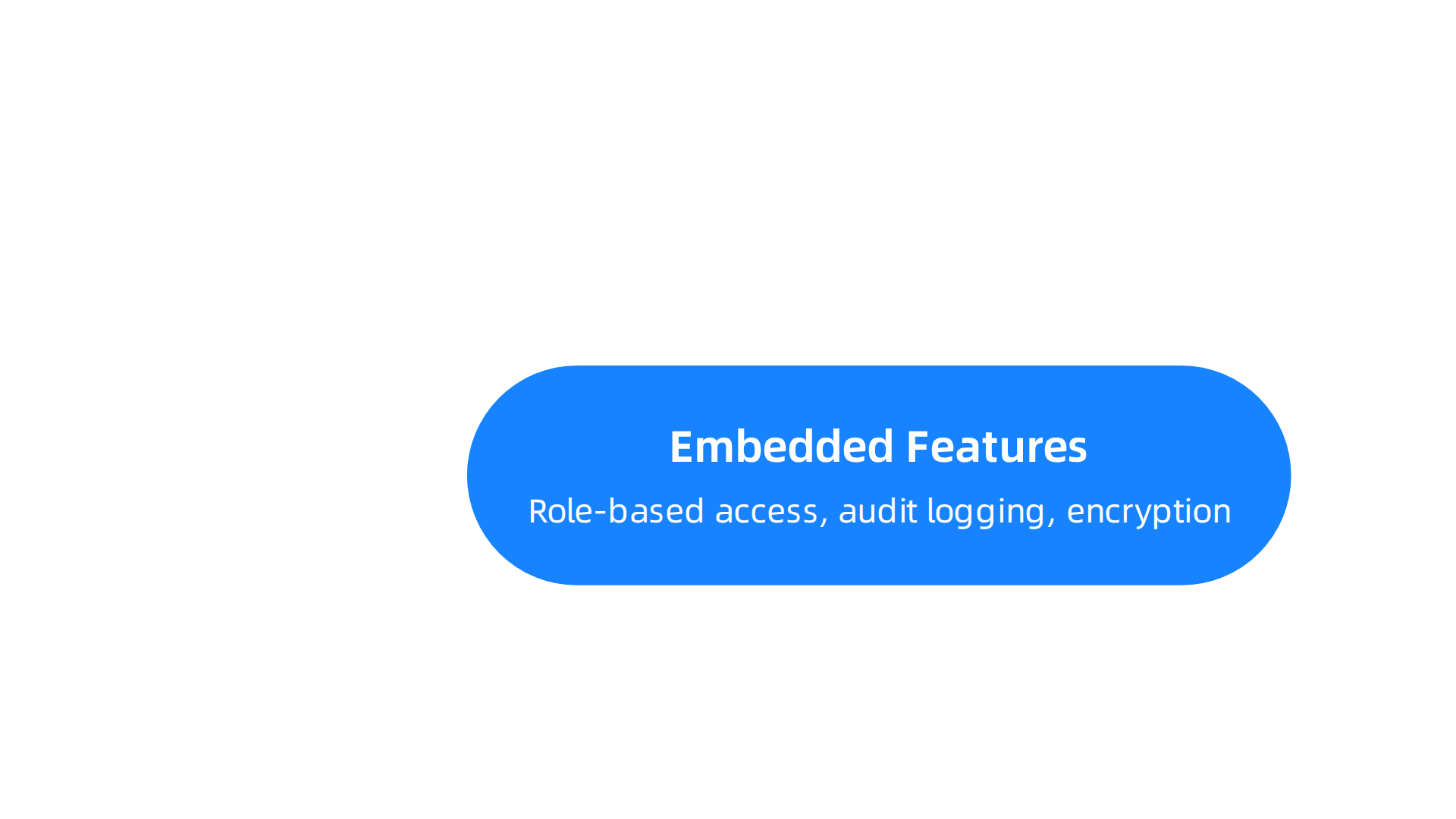
Embedded Compliance Features You Can Actually Use
Tyler does not just talk about security. They bake it into the software. Here are a few examples:
- Role-based access controls. You decide exactly who can see what. A clerk in the courthouse does not need access to police records, and Tyler makes that easy to set up.
- Audit logging. Every action gets logged. If someone views or changes a record, you know who did it and when. That is a lifesaver for investigations and compliance audits.
- Data encryption at rest and in transit. Your data is scrambled whether it is sitting on a server or moving between devices. This directly meets requirements from FedRAMP and other frameworks.
These features are not add-ons you have to buy separately. They come standard. Tyler’s Security & Compliance page shows how their regulatory solutions cover everything from workflow to reporting.
Third-Party Audits and Continuous Monitoring
Here is a big one. Tyler does not just claim to be secure. They prove it. They work with independent auditors to produce SOC 1, SOC 2, and SOC 3 reports. These are not easy to get. Tyler’s SOC compliance reports show exactly how they meet strict controls for security, availability, and confidentiality.
On top of that, Tyler runs continuous monitoring programs. They do not wait for a once-a-year check. They watch for threats and changes in compliance requirements all year long. Their platform is also listed on the FedRAMP Marketplace for the Tyler Data Platform, which means federal agencies trust it too.
Real Support for Your Team
Compliance is not just about software. Your people need help understanding the rules. Tyler offers:
- Compliance documentation. They provide ready-made reports and evidence you can hand to auditors.
- Training programs. Your staff can learn how to use the tools correctly, which prevents accidental violations.
- Dedicated regulatory specialists. You get a real person who knows the regulations and can answer your questions.
This support matters because regulations change fast. For example, Fox Rothschild notes that contractors must pass a cybersecurity assessment within three years of every contract offer. Tyler’s team helps you stay on top of updates like that.
And with new rules popping up every year, from AI to data privacy, having a partner who already understands the landscape is priceless. If you want to keep track of these shifts without spending hours reading government PDFs, the Deep View Newsletter delivers clear daily updates straight to your inbox. Subscribe Free and never miss a critical regulatory change again.
Case Studies: Tyler Technologies Implementations in Practice
So you have seen how Tyler turns compliance into a built-in feature. But does it actually work in the real world? Yes. Hundreds of government agencies already use Tyler, and the results speak for themselves. Tyler has more than 45,000 installations across 15,000 locations, serving clients in all 50 states and beyond. In fact, it holds the number one spot in the global state and local government software market with an 11.5% share. Let us look at three real-life examples that show how Tyler helps agencies stay compliant and efficient.
Example 1: Streamlined Permitting for a County Government
A mid-sized county in the Midwest needed a faster way to handle building permits. Their old system was paper-based. It took weeks to process a single application, and they kept running into state privacy law violations because records were not secure.
They switched to Tyler’s Civic Services platform. The result? Approval times dropped by more than half. The system uses role-based access controls so only the right people see sensitive data. And it automatically logs every change, which makes audits simple. Now the county meets state privacy laws without extra effort.

Tyler’s cloud solutions are designed for exactly this kind of work, whether in public administration or courts and justice.
Example 2: Mid-Sized City Achieves FedRAMP Compliance with Munis ERP
A city in the Pacific Northwest wanted to move its financial system to the cloud. But they had a big problem. They work with federal grants, which means they must follow strict FedRAMP requirements. Not every vendor can handle that.
The city deployed Tyler’s Munis ERP system. Tyler already had SOC 1, SOC 2, and SOC 3 reports and a spot on the FedRAMP Marketplace. So the city did not have to start from scratch. They moved their payroll, budgeting, and procurement to the cloud in months. Today their financial data is encrypted at rest and in transit, and they pass federal audits with confidence. Tyler was named a "Strong Performer" in a recent industry analyst evaluation for cloud solutions in the public sector.
Example 3: State-Wide Public Safety Upgrade Meets CJIS Standards
A southern state needed to upgrade its public safety systems. Police departments county by county were using disconnected tools. That created security gaps. And the state had to meet CJIS security requirements, which are strict for law enforcement data.
They chose Tyler’s New World Systems. The upgrade unified records management, dispatch, and jail management across the state. Now every action is logged and auditable. Encryption protects data whether it is being sent or stored. And because Tyler runs continuous monitoring, the state stays ahead of new threats. The 2026 Tyler Excellence Awards recognized agencies that have used these solutions to make a real difference in their communities.
Why These Examples Matter for You
These are not one-off success stories. They follow a pattern. Tyler builds compliance into the software from day one. So you do not have to worry about checking boxes after the fact.
Of course, regulations keep changing. In 2026, new rules around AI and data privacy are appearing fast. You need to stay informed. That is why we recommend following the videos on artificial intelligence regulations 2026 compliance guide for creators to keep your knowledge current.
And if you want a simple way to track every regulatory update without spending hours reading government PDFs, The Deep View Newsletter delivers clear daily insights straight to your inbox. Subscribe Free and never miss a critical change again.
Future Trends: AI, Data Privacy, and Procurement Reform
The government tech landscape is shifting fast in 2026. Three big trends are reshaping how agencies like yours use tools from providers such as tyler technologies.
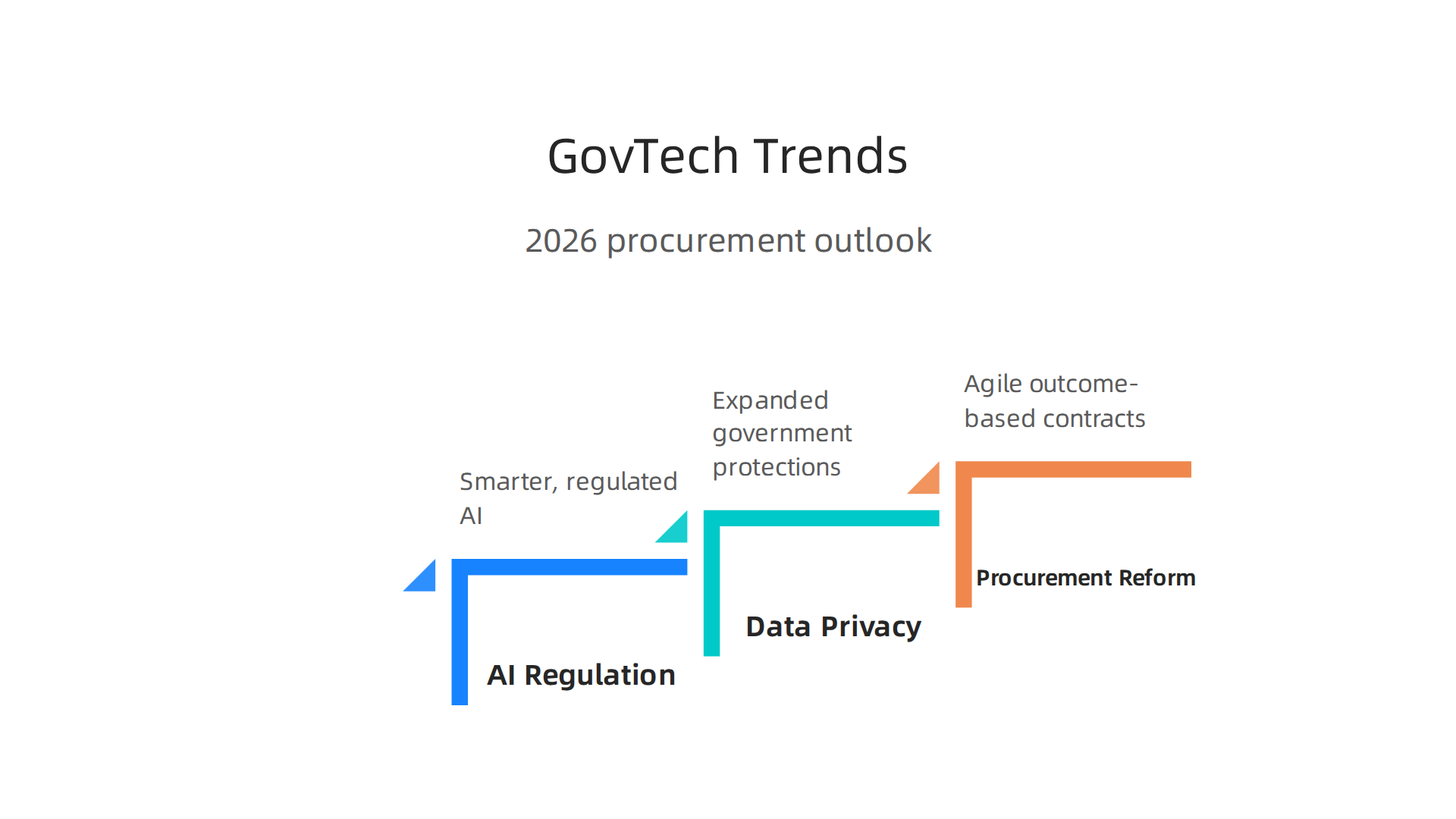
Here is what you need to know.
Artificial Intelligence Gets Smarter and More Regulated
AI is already helping with predictive analytics for public safety and AI-driven permitting. But new ethical rules are emerging fast. Governments are struggling to keep up, as the OECD has found that many public sector AI projects face real hurdles around governance and implementation. That is where dc tech and c2c innovative solutions come in, helping agencies build AI systems that are both powerful and responsible. To stay on top of these changes, check out our guide on navigating artificial intelligence imaging regulations in 2026.
Data Privacy Laws Expand to Cover Government Data
State-level consumer privacy laws like the California Privacy Rights Act (CPRA) and Virginia Consumer Data Protection Act (VCDPA) now apply to government data too. Agencies must protect citizen information with the same care as any private company. Tyler Technologies already holds SOC 1, SOC 2, and SOC 3 reports, which are third-party audits that show they meet strict security standards for privacy, availability, and confidentiality. This gives you a strong foundation without starting from scratch.
Procurement Modernization Picks Up Speed
Old procurement methods are giving way to agile approaches. Agencies now favor outcome-based contracts and hold vendors more accountable. This means you can choose tools that actually solve problems instead of just checking boxes. Platforms like tyler technologies are built for this shift, offering flexible solutions that adapt as rules change.
What This Means for You
These trends are not distant. They are happening right now in 2026. The best way to stay ahead is to track daily developments without getting overwhelmed. Subscribe Free to The Deep View Newsletter for clear, simple AI and tech regulation updates delivered straight to your inbox.
Summary
This article evaluates Tyler Technologies as a compliance-first provider for government IT procurement, explaining why large numbers of cities, counties, courts, and public safety agencies choose its solutions. It describes Tyler’s core suites—Munis (ERP), New World Systems (public safety), and Civic Services (permitting/licensing)—and highlights key certifications like FedRAMP, SOC 1/2/3, CJIS alignment, and NIST framework mapping that simplify audits and regulatory requirements. The piece lays out the main challenges government buyers face—multi‑tiered regulations, fragmented information sources, and steep penalties for non‑compliance—and shows how Tyler embeds role‑based access, encryption, audit logging, third‑party audits, continuous monitoring, and documentation to reduce those risks. Several case studies illustrate faster processing, successful FedRAMP migrations, and statewide CJIS-compliant rollouts. The article also previews 2026 trends in AI oversight, expanding data‑privacy obligations, and procurement modernization, and offers practical guidance on what buyers should check when evaluating vendors. After reading, procurement and IT leaders will know which controls and evidence to request, how Tyler addresses common gaps, and what steps to take before signing a contract.