

Introduction
If you work in business technology or follow the biggest AI companies, you have probably heard of Palantir Technologies. But understanding the rules that shape its growth can feel like a full time job.

That is because Palantir sits right at the crossroads of advanced data analytics, artificial intelligence, and government services. This position exposes the company to a thick web of regulations. From data privacy laws and export controls to AI governance rules, the compliance challenges keep piling up.
By early 2026, institutional ownership in Palantir climbed from 35% to over 60%. That jump shows real investor confidence. Yet the same report flags regulatory and geopolitical factors as major watchpoints. Meanwhile, Palantir’s U.S. revenue surged 104% year over year in Q1 2026, driven by demand for its AI platform. But with that rapid growth comes closer scrutiny. The risk regulatory landscape in 2026 is more fragmented than ever, forcing companies to adapt quickly or face serious consequences.
So what does this mean for executives, compliance teams, and investors? It means staying ahead of regulatory shifts is no longer optional. It is a competitive necessity. Even if you are exploring tech policy jobs or just trying to keep your own company compliant, understanding the forces shaping Palantir gives you a real edge.
This article breaks down the key regulatory domains that matter most for Palantir Technologies. We will look at current enforcement trends and practical strategies for managing risk. For a broader view on how AI rules affect all businesses, check out our guide on AI regulations 2026 compliance strategies to avoid million dollar fines.
Want to stay ahead of tech regulation changes without drowning in news overload? Get clear daily AI and policy updates from The Deep View Newsletter.
The Regulatory Landscape for Palantir: Key Jurisdictions and Frameworks
So where exactly does Palantir face the most pressure? The answer is everywhere. Palantir operates in countries all over the world. That means it must follow a different set of rules for each location. Think of it like driving a car across state lines. The rules change as soon as you cross a border. For one of the biggest AI companies, this creates a heavy compliance load.
Here are the main regulatory areas Palantir works through:
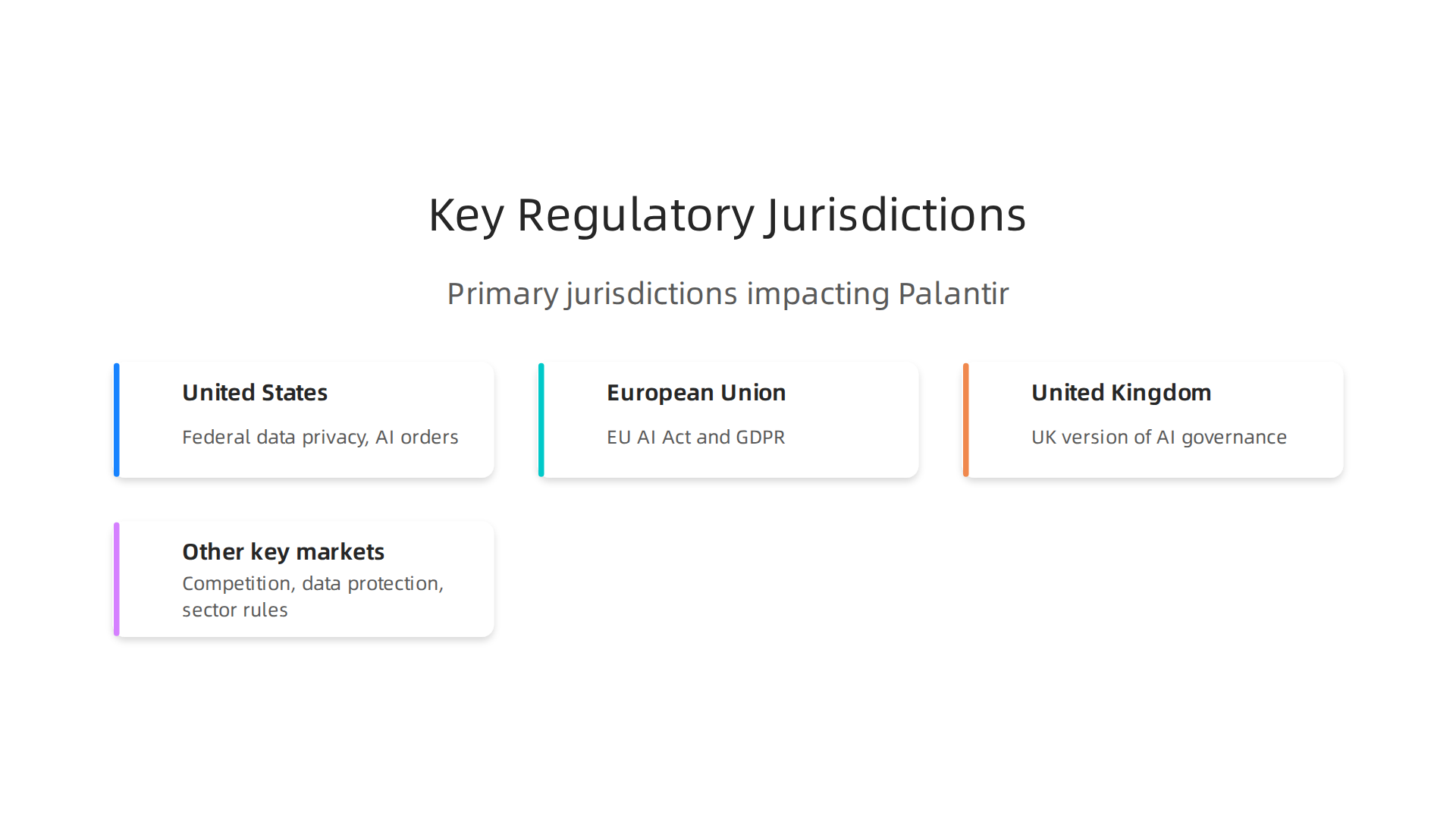
- United States: The company must follow federal data privacy laws, state laws like the CCPA, and specific AI executive orders. As a government contractor, it also faces strict security rules.
- European Union: The EU AI Act is a big one. It sets strict rules for high-risk AI systems. Palantir also must comply with the GDPR for data protection.
- United Kingdom: The UK has its own version of AI governance. The company needs to meet separate standards there too.
- Other key markets: Palantir works with governments and businesses in many other countries. Each one may have its own competition law, data protection rules, and sector-specific requirements.
All of these create overlapping compliance obligations. For example, a single data project might need to meet both U.S. government security rules and EU privacy standards at the same time. That is not easy.
By early 2026, institutional ownership in Palantir climbed from 35% to over 60%. That confidence comes partly from the company’s ability to navigate this complex web. But the risk regulatory landscape in 2026 is more fragmented than ever. New rules keep arriving.
For executives and compliance teams, the takeaway is clear. You cannot treat regulations as separate silos. They connect and overlap. If you want to stay safe, you need a unified strategy. Want to dig deeper into how AI rules affect your own work? Check out our guide on AI regulations 2026 compliance strategies to avoid million dollar fines.
If you track tech policy jobs or just want to stay ahead of these rapid changes, a daily update can help you spot risks early. Stay ahead of these fast-moving rules with The Deep View Newsletter. It gives you clear daily AI and policy updates so you never miss a shift.
AI Regulation and Its Impact on Palantir’s Foundry and Gotham Platforms
Here is where the rubber meets the road. Palantir’s two core platforms, Foundry and Gotham, are built on AI and machine learning. That puts them directly in the crosshairs of new AI rules. And the biggest one right now is the EU AI Act.
The EU AI Act classifies certain uses of AI as high-risk. Things like law enforcement, border control, and critical infrastructure all fall into that category. Palantir’s own team has acknowledged that its platforms likely qualify as high-risk AI systems under this law. That triggers tough new requirements. Think transparency reports, detailed documentation of how the AI makes decisions, and human oversight at every step.
The compliance deadline for most of these rules is August 2, 2026. That is just around the corner. Palantir must adapt its product features to meet these standards, especially in sensitive sectors like defense and law enforcement where Gotham is often deployed.
For one of the biggest AI companies in the world, this is not just a legal issue. It is a product design challenge. Palantir needs to build compliance directly into its software. That means adding audit trails, explainability features, and override controls for human operators.

And it has to do this across every market with its own rules.
If you are building business technology that relies on AI, Palantir’s journey is a useful map. The same pressures are coming for your tools too. The smart move is to start preparing now.
Want to stay ahead of these rapid changes? Get clear daily updates on AI rules and tech policy jobs with The Deep View Newsletter. It helps you spot compliance risks before they become problems.
Data Privacy Compliance: Navigating GDPR, CCPA, and Beyond
But AI rules are not the only legal challenge shaping palantir technologies in 2026. The company also processes massive amounts of personal and sensitive data every day. That puts data privacy compliance front and center for one of the biggest ai companies in the world.
The GDPR is still the global benchmark for privacy regulation. And in 2026, enforcement is hitting new highs. Since 2018, regulators have issued over 2,500 GDPR fines totaling more than 7 billion euros. Recent actions in 2026 are setting new rules for data protection impact assessments and cross border data transfers. For a company handling sensitive law enforcement and defense data, getting GDPR right is not optional. It is a must.
Across the Atlantic, the US presents a completely different puzzle. There is no single federal privacy law to follow. Instead, Palantir has to manage a fast growing patchwork of state laws.
The CCPA and CPRA in California. The VCDPA in Virginia. And new state laws are popping up all through 2026. Think about the complexity. A tool deployed in California must follow one set of rules. The exact same tool used in Virginia must follow another. Privacy enforcement is surging across every one of these jurisdictions. Palantir needs flexible, jurisdiction aware compliance mechanisms built directly into its platforms.
If you are building business technology today, Palantir’s struggle is a clear map of what is coming for your own tools. Your software stack needs to be ready for this patchwork of rules too. Check out our full guide on AI regulations 2026 compliance strategies to avoid million dollar fines to prepare your own systems ahead of time.
Staying ahead of privacy and AI enforcement is a full time job. You need a trusted source you can count on. Get clear daily updates with The Deep View Newsletter. It delivers the insights you need to navigate tech policy jobs and compliance landscapes confidently before risks turn into costly problems.
Government Contracts: Procurement Rules and Compliance
Privacy rules are only half the picture for palantir technologies. A huge chunk of revenue still comes from government deals. And that brings a whole different set of rules.
The Federal Acquisition Regulation (FAR) is the starting point. But there is more.
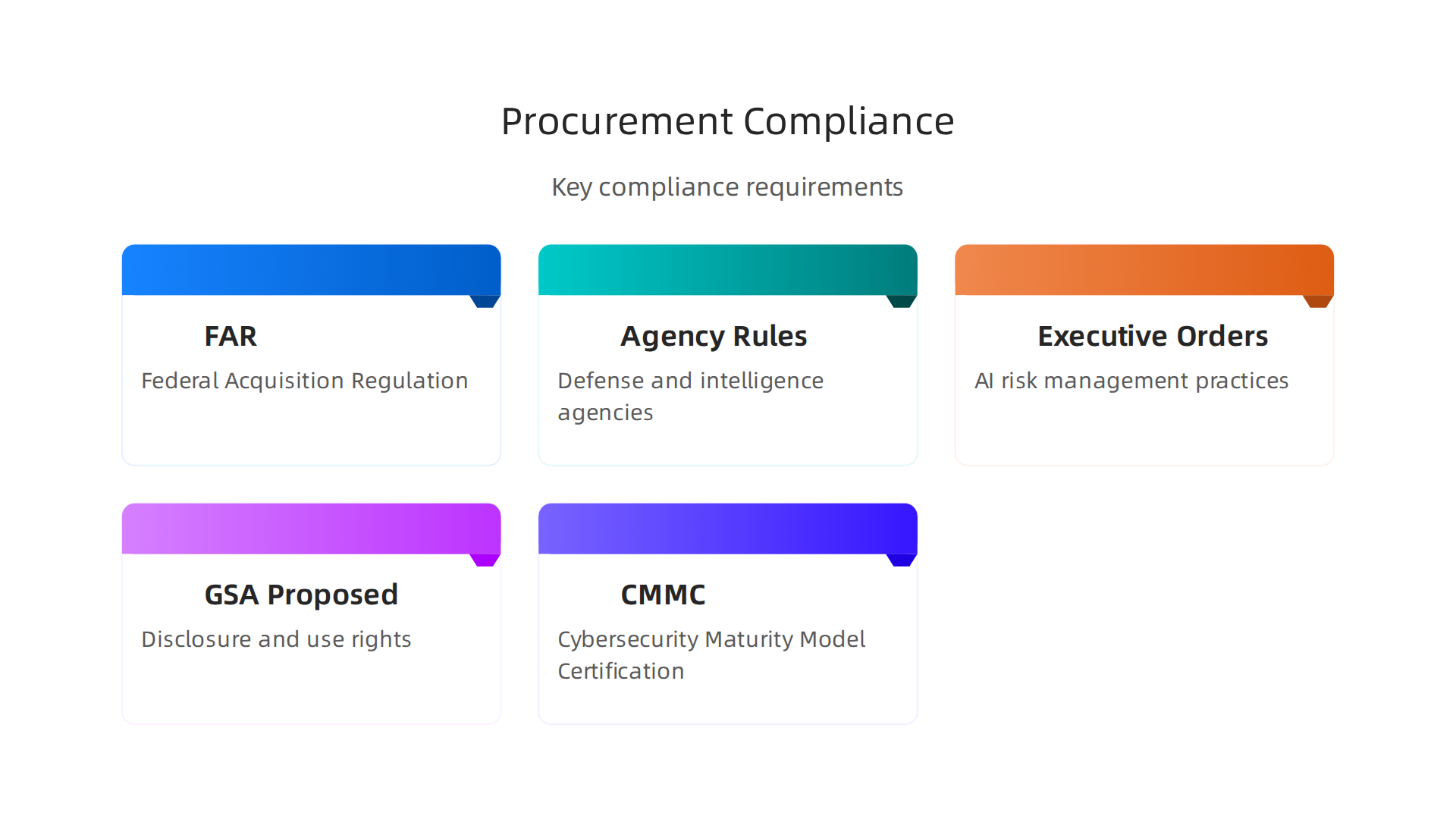
For a company that ranks among the biggest ai companies working with defense and intelligence agencies, agency-specific rules pile on fast. In 2026, the Department of Defense requested $13.4 billion for AI and autonomy, the largest single-year AI investment ever. That means more contracts and more compliance requirements for everyone involved.
New executive orders and guidance from the Office of Management and Budget now force federal contractors to adopt specific AI risk management practices. You also have to show supply chain security measures and diversity reporting. The General Services Administration (GSA) proposed new AI procurement rules in 2026 that introduce extra disclosure and use rights requirements. So companies like Palantir must prove their AI systems meet strict standards before winning new work.
Then there is the Cybersecurity Maturity Model Certification (CMMC). For any contractor touching sensitive government data, this framework is becoming mandatory. It is not optional anymore. You have to show you protect data at a certain level, or you cannot bid on contracts.
This matters for your own business technology too. If you sell products or services to the government, these same rules will reach you. The complexity is growing fast. You need a system to track it all.
Stay Ahead of the Compliance Curve
Keeping up with all these overlapping rules is a real challenge. You need daily updates you can trust. Get clear, actionable insights with The Deep View Newsletter. It helps you navigate the shifting landscape of tech policy jobs, procurement rules, and compliance without getting buried in noise.
Export Controls and International Trade Restrictions
So far, we have covered domestic rules. But Palantir Technologies does not just work inside the United States. Its software and services reach governments and companies all over the world. That brings a whole new layer of rules: export controls.

If you are one of the biggest ai companies selling defense and intelligence tools, you have to deal with the International Traffic in Arms Regulations (ITAR) and the Export Administration Regulations (EAR). These rules control what you can send, to whom, and where. For Palantir, that means its data analytics platforms may count as "defense articles" under ITAR. That alone triggers strict licensing requirements.
Here is the thing. In 2026, the U.S. government is pushing harder on these controls. Recent reforms focus directly on AI software, semiconductor-related tech, and certain data analytics capabilities. This expands the burden for every company in this space. You cannot just build a great product. You have to prove it stays out of the wrong hands.
Palantir must also run end-user screening for every international deal. And it has to track re-export restrictions. If a customer in one country tries to send Palantir software to a restricted market like China or Russia, that is a violation. The penalties can run into the millions.
This stuff gets complex fast. You need a system to catch changes before they turn into fines. Staying on top of export controls is not optional anymore.
Stay Ahead of the Compliance Curve
Keeping up with all these overlapping rules is a real challenge. You need daily updates you can trust. Get clear, actionable insights with The Deep View Newsletter. It helps you navigate the shifting landscape of tech policy jobs, procurement rules, and compliance without getting buried in noise.
Ethical AI and Bias Considerations
Beyond export controls, Palantir Technologies faces another big challenge: ethical AI and bias. Its software helps with predictive policing, immigration enforcement, and healthcare analytics. Those uses can affect people’s lives directly. If the AI has hidden bias, the results can be unfair, harmful, and illegal.
In 2026, this is no longer just a moral issue. It is a regulatory one. Standards from groups like NIST and the European Union now require strict testing for bias and fairness. The EU AI Act puts many of Palantir’s systems in the "high-risk" category. That means companies must run bias tests, document how the AI works, and be transparent about its limits. U.S. companies face a key deadline in August 2026 for these rules.
Getting this wrong costs more than money. Non-compliance can destroy your reputation, make you lose government contracts, and open the door to lawsuits. For one of the biggest ai companies, the risk is even higher because the public watches every move.
You need to treat ethical AI as a core part of your business technology strategy. It is not a box to check. It is a way to build trust and avoid disaster. Want to understand the real dangers of unchecked AI? Read why unrestricted AI is risky in 2026.
If you want to stay ahead of these fast-moving rules, get clear daily updates. The Deep View Newsletter delivers actionable insights on AI regulation, ethics, and compliance. It helps you track global changes without getting lost in jargon. Perfect for anyone in tech policy jobs or managing compliance risk.
Anticipating Future Regulatory Trends
You might feel like you just wrapped your head around today’s rules. But here is the thing. Lawmaking is speeding up fast. For palantir technologies and its customers, the next few years will bring even more change.
Think about what is coming next. The global privacy rulebook is splitting apart. One big trend is the possible creation of a U.S. federal data privacy law. Right now, companies follow a messy patchwork of state rules like the CCPA in California. A single national law would simplify things, but no one knows exactly what it will say.
At the same time, AI export controls are tightening. The ACE Computers analysis of 2026 predictions confirms that AI regulations tied to public safety and hiring are taking a major leap this year. That directly affects how the biggest ai companies deploy their tools across borders.
Another trend is global harmonization efforts. Groups like NIST and the EU keep updating their frameworks. The goal is to make rules more similar across countries. But the Freshfields data law trends report warns of an increasingly fractured global rulebook for data, cyber, and AI. So you cannot assume one standard will work everywhere.
Data localization is also growing. More countries want sensitive data stored inside their borders. That forces changes in cloud architecture and system design. For any business technology provider, this adds complexity.
How Palantir Can Stay Ahead
The smart play is proactive scenario planning.

Instead of reacting to new laws after they hit, you can track signals early. Regulatory intelligence tools and services help with this.
Companies that adapt early gain a real competitive advantage. They adjust their product roadmaps, update their compliance playbooks, and avoid last-minute scrambles. If you work in tech policy jobs, this type of forward thinking is exactly what makes you valuable.
Want a detailed look at how to navigate these fast-moving rules? Read this guide on AI regulations 2026 compliance strategies to avoid million dollar fines. It breaks down what is changing and how to prepare.
The rules will keep coming. The organizations that plan ahead will be the ones that thrive.
Building a Resilient Compliance Framework
So you have your eyes on the future trends. Good. Now you need a system that can actually handle what is coming. A resilient compliance framework does not just check boxes. It weaves privacy, AI rules, procurement rules, and export controls into one flexible structure.
Think about the numbers. Since 2018, regulators have issued over 2,500 GDPR fines totaling more than 7 billion euros. In 2026 alone, privacy enforcement is surging across the UK, EU, and U.S. The DLA Piper survey confirms a sustained high level of data enforcement activity. These fines hit real companies. If you work with palantir technologies or other biggest ai companies, the risk is real.
An integrated framework covers every regulatory corner. It connects data governance with AI ethics. It links procurement checks to export compliance. And it stays flexible so you can adapt when new rules drop next month.
What Your Framework Needs
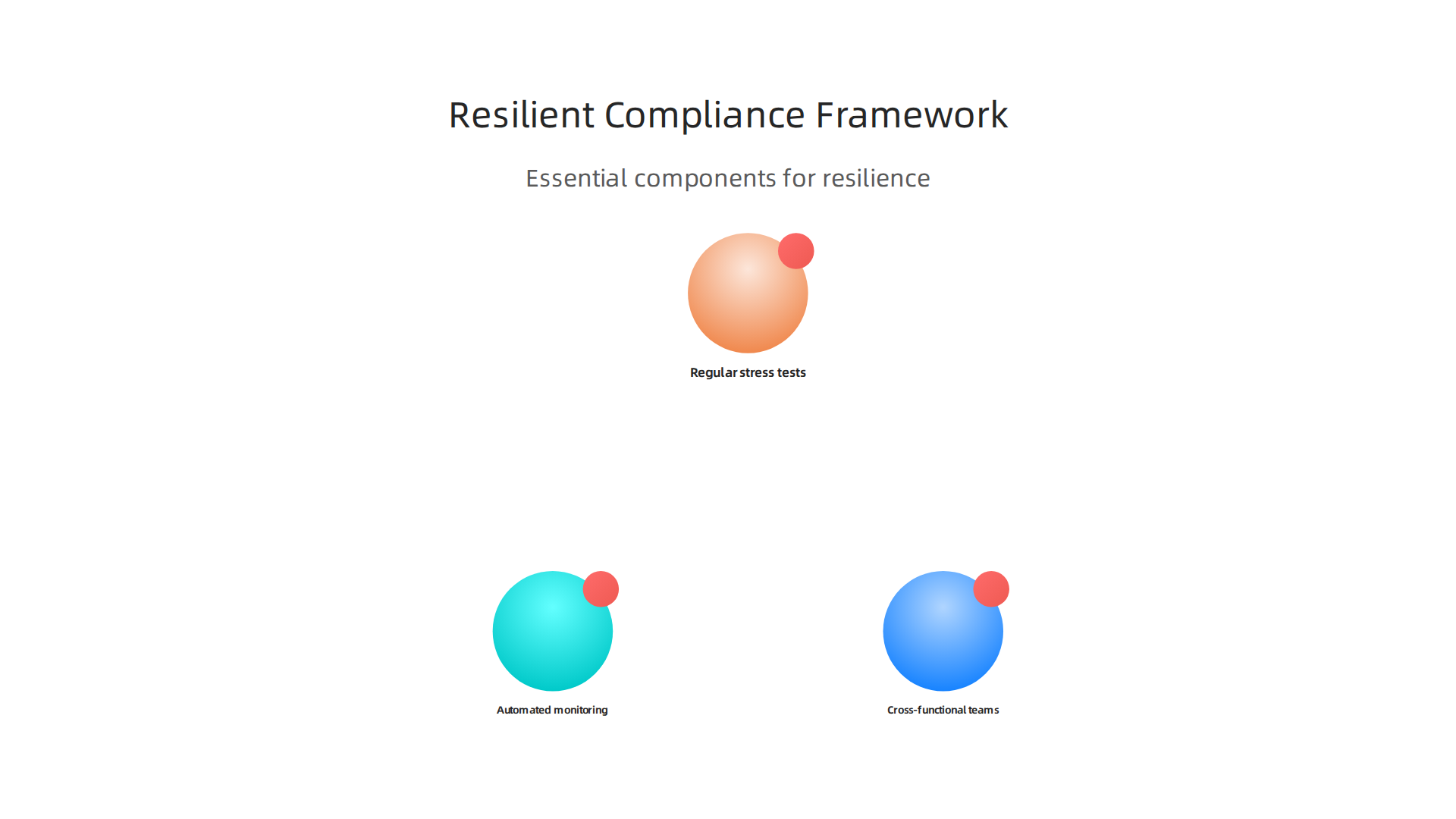
First, build cross-functional teams. Do not leave compliance to one legal person. Pull in engineering, product, and security. They all own a piece of the puzzle.
Second, use automated monitoring. RegTech tools can track regulatory changes in real time. They flag gaps before auditors do. This is especially important for any business technology provider handling sensitive data.
Third, run regular stress tests. Simulate an enforcement action. See where your system bends. Then fix it before a real fine hits.
Compliance as a Strategic Advantage
Here is the mindset shift. Stop treating compliance as a cost. It builds trust with customers and regulators. That trust translates into faster deals and fewer roadblocks. For anyone in tech policy jobs, this perspective makes you a key player in strategy.
If you want to go deeper on how to build these systems, check out this guide on AI regulations 2026 compliance strategies to avoid million dollar fines. It covers practical steps you can start today.
The truth is, a strong framework does not just protect you. It lets you move faster with confidence. And that is a competitive edge you cannot afford to skip.
Stay ahead of the changes. Get clear daily updates on tech regulation with The Deep View Newsletter. It delivers the insights you need to keep your compliance ready for whatever comes next.
Summary
This article explains the regulatory pressures shaping Palantir Technologies in 2026 and what executives, compliance teams, and investors need to know to stay ahead. It maps the most important jurisdictions — the U.S., EU, U.K., and other markets — and explains how overlapping rules (AI laws, privacy regimes, export controls and procurement rules) create practical product and governance challenges for platforms like Foundry and Gotham. The piece covers concrete risks from the EU AI Act, GDPR and state privacy laws, ITAR/EAR export controls, and government contracting rules including CMMC, and it highlights the growing importance of ethical-AI testing and bias mitigation. It argues that compliance must be built into product design through explainability, audit trails, and jurisdiction-aware features, and recommends cross-functional teams, automated regulatory monitoring, and stress testing as core practices. Readers will come away with a clear sense of priority areas, near-term deadlines, and actionable steps to design resilient compliance systems that turn regulatory work into a strategic advantage.