
Why understanding AI capabilities matters for tech leaders and investors
In 2026, artificial intelligence is changing the world at a very fast pace. This rapid change brings both big opportunities and important challenges for technology companies. Leaders in tech and smart investors need to really understand what AI can do.

If they don’t, they might miss out on new ways to grow or even face problems with new rules and laws.
Think about how fast new kinds of AI are being made. From powerful tools that help with writing to advanced systems that can make decisions on their own, the world of ai development is always moving forward. Knowing the different parts of an "ai brain" or how to create "realistic ai" systems is key. It’s not just about seeing AI as a magic box. It is about understanding its true power and its limits.
Actually, many groups are trying to map out exactly what AI can do. For example, the OECD has created special ways to measure AI skills and compare them to human skills Introducing the OECD AI Capability Indicators. Another view shows a full list of AI types and what they do in 2026 The Complete AI Systems Landscape — Interactive Chart (2026). This kind of knowledge helps leaders make smart choices.
This article will help you learn about the most important AI capabilities. We will look at how they are used in the real world, good ways to build AI, what risks come with using AI, and simple steps you can take. It will cover everything from how to use AI strategically to understanding important tech regulations 2026 global changes tech leaders must understand. Our goal is to give decision-makers a clear path in this exciting but complex field.
Stay updated on the fast-moving world of AI and regulation. Get clear daily AI updates from The AI Newsletter Worth Reading.
1. Core AI capabilities: perception, language, reasoning, planning, and generation
To truly get what AI can do, it helps to break it down into its main parts. Think of these as the key skills that make up an "ai brain." These core abilities are what drive modern ai development and allow AI systems to do amazing things. Experts often group these into a few big areas. Actually, understanding these helps leaders see how different AI systems work and where they fit in the bigger picture of technology, as explained in a document outlining A Unified Taxonomy of 19 AI System Types.
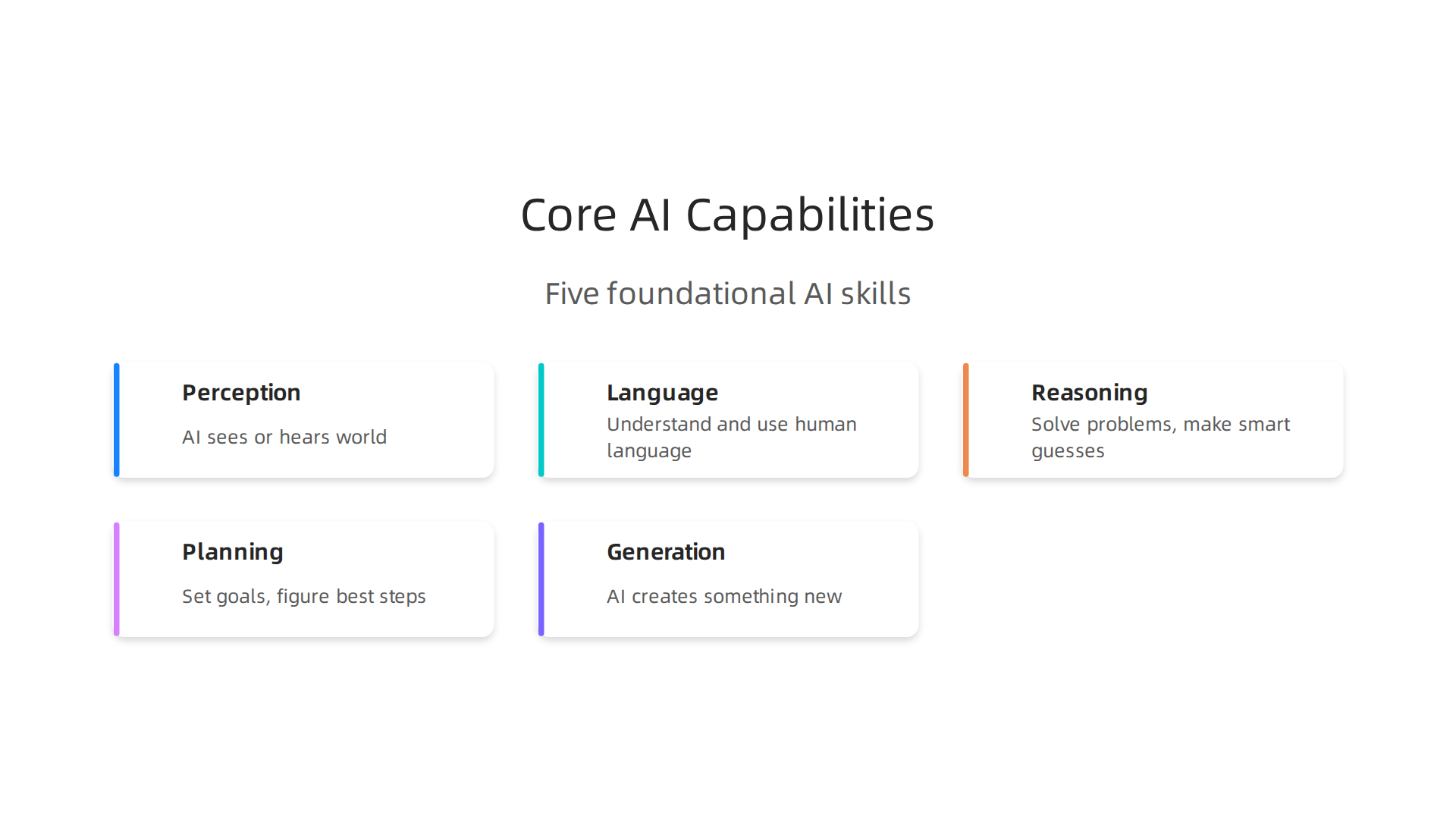
Here are the most important capabilities:
-
Perception: This is how AI "sees" or "hears" the world. Just like our senses, AI perception allows systems to understand information from pictures, videos, and sounds. For example, self-driving cars use perception to see traffic signs and other cars. Medical AI uses it to look at X-rays and help doctors find problems. This is about making AI aware of its surroundings.
-
Language: This capability lets AI understand and use human language. This means AI can read, write, speak, and translate. Think of chatbots that answer your questions or tools that turn speech into text. Big language models are a huge part of this, helping businesses with many tasks. To learn more about how these work, you can read about Mastering LLM AI developments 2026 for business success.
-
Reasoning: This is the AI’s ability to solve problems and make smart guesses. It’s like the thinking part of the "ai brain." Reasoning allows AI to look at facts, find patterns, and come to conclusions. For example, AI can suggest the best product for a customer or help find fraud by spotting unusual activities.
-
Planning: Once an AI can reason, it can also plan. This means it can set goals and figure out the best steps to reach them. For instance, a robot might use planning to decide the safest path across a room. This is a key part of what we call What is agentic AI and how it is changing business in 2026, where AI systems can act on their own to complete complex tasks.
-
Generation: This is when AI creates something new. It could be new text, images, music, or even designs for products. Tools that write marketing copy, make realistic pictures, or even compose songs are all using AI generation. This shows how AI is moving beyond just understanding and processing to truly creating.
These core skills don’t usually work alone. Most realistic AI systems use a mix of these capabilities. For instance, a smart assistant needs to use perception to hear your voice, language to understand your words, reasoning to figure out what you want, and planning to complete the task. Often, "seeing ai" in action means seeing these skills working together. This makes advanced ai development much more powerful and useful in the real world.
Different AI skills, like seeing or understanding language, are built using various kinds of "AI brains" or models. These models learn in different ways, which helps them do specific jobs. Think of them as different ways to train a smart puppy: some learn by being shown what to do, others by figuring things out on their own, and some by getting rewards for good behavior. The kind of training makes a big difference in what the AI can do for you.

To understand more about the different types of AI you’ll find in 2026, it’s helpful to know about these core model families.
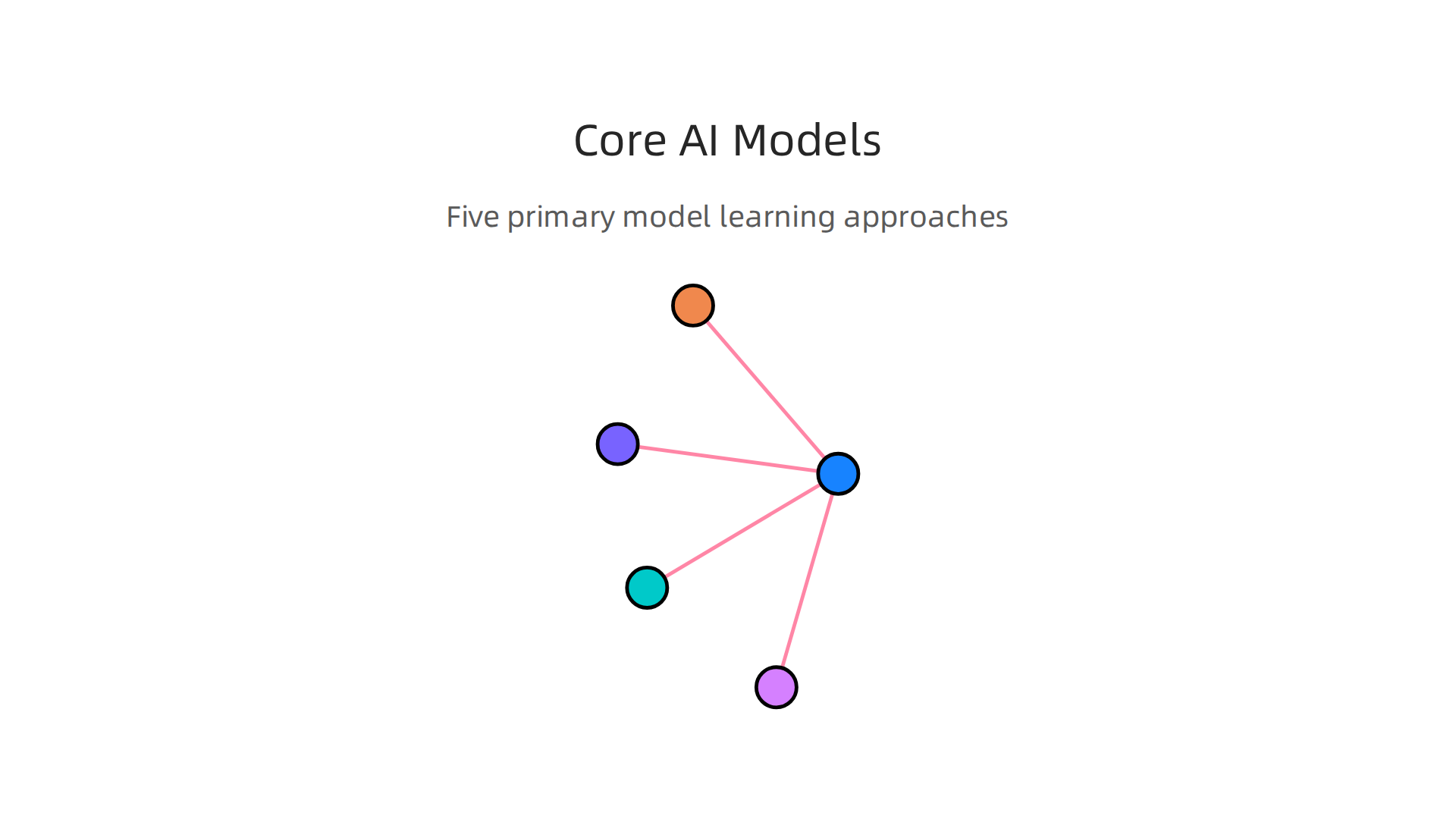
Here’s a look at the main ways AI models learn and work:
Supervised Learning
This is like teaching with flashcards. You give the AI many examples where you already know the right answer. For instance, if you want an AI to tell the difference between pictures of cats and dogs, you show it thousands of pictures of cats labeled "cat" and thousands of pictures of dogs labeled "dog." The AI learns by finding patterns in these labeled examples. Once it has learned enough, it can then correctly identify new pictures of cats and dogs on its own. This method is great for tasks like sorting emails or spotting spam.
Unsupervised Learning
With unsupervised learning, the AI doesn’t get any right answers. Instead, it looks at a lot of information and tries to find hidden patterns or groups all by itself. Imagine giving an AI a big pile of different colored beads and asking it to sort them without telling it what colors are. It would naturally group similar colors together. This is how AI can find new customer groups for businesses or discover strange activities that might be fraud. It’s all about letting the AI find order in chaos.
Self-Supervised Learning
This is a newer, very powerful way for AI to learn. Here, the AI creates its own learning tasks from the data it has. For example, if you give an AI a sentence with a missing word, it tries to guess the word based on the words around it. Then it checks its guess against the original sentence. This way, it trains itself without needing a human to label everything. Many big language models today learn this way, which helps them understand and create human-like text. You can learn more about how this works by watching an explanation of Future of AI is Foundation Models & Self-Supervised Learning from MIT.
Reinforcement Learning
This type of learning is all about trial and error, like teaching a robot to walk. The AI tries something, and if it does well, it gets a "reward." If it does poorly, it might get a "penalty." Over time, the AI learns which actions lead to the best rewards. This is how AI masters complex games like chess or Go, and it’s key for training robots to perform physical tasks. It allows the AI to develop its own strategies to reach a goal, making it a powerful tool for sophisticated ai development.
Foundation Models
Foundation models are a special type of AI that has gained a lot of attention in 2026. These are very large models, often trained using self-supervised learning, on huge amounts of general data from the internet. Because they learn from such broad information, they develop a wide range of basic skills. Think of them as a versatile "AI brain" that can then be adjusted or fine-tuned for many different specific tasks. For example, a foundation model might understand language well enough to then be easily taught to write marketing copy or summarize documents. These models are crucial for advancing realistic ai applications across various industries and are a cornerstone of modern ai development, as explained by IBM on What Are Foundation Models. They help with complex tasks by interpreting commands, understanding environments, and reasoning through problems, as noted in research on Foundation Models in Robotics.
These different model families often work together, especially in complex ai development projects. For example, a self-driving car might use supervised learning to identify traffic signs, reinforcement learning to navigate tricky situations, and rely on a foundation model for its general understanding of the world. Understanding these underlying training methods helps in knowing how to make an AI compliant with global regulations in 2026.
To keep up with the fast-moving world of AI, including the latest on models and regulations, consider staying informed.
Get clear daily AI updates from The AI Newsletter Worth Reading.
AI is changing how many big businesses and governments work in 2026. The different ways AI models learn, which we just talked about, allow them to do all sorts of useful tasks. This helps companies make more money, save time, and serve people better. But, using AI also means following different rules in each industry, especially when dealing with important information.
Let’s look at how AI is being used in different areas:
Finance
In banks and other money businesses, AI is a big deal. It helps find fraud, like when someone tries to use a stolen credit card. AI can also give people personalized advice about their money or help companies manage risks better. Because money is very sensitive, these AI systems need to be very safe and follow strict rules. In fact, many financial services companies are leading the way in using AI, with adoption levels likely over 70% to 80% in their operations by 2026, according to one report on Global AI Implementation in 2026. The careful ai development in this sector focuses on accuracy and security.
Healthcare
AI is also making a big difference in healthcare. It helps doctors find problems earlier by looking at scans, a process that can involve sophisticated seeing ai capabilities. AI also speeds up finding new medicines and helps hospitals give better care to patients. Because health information is so private, AI in healthcare has very strict rules about data protection and ethics. Healthcare and life sciences professionals are embracing AI, as shown in the State of AI Reports — 2026. This means a lot of focus on building realistic ai tools that are both helpful and compliant.
Retail
Stores and online shops use AI to make shopping better. AI can help customers online, recommend products they might like, and even manage what items are in stock. While not as sensitive as health or finance data, customer privacy is still important here. AI helps businesses understand what people want to buy and how to make their shopping experience smooth. About 40% of businesses have adopted AI across their company in 2026, and many are seeing benefits in customer service and IT operations from generative AI, according to The State of AI Adoption 2026 | Revrise.ai Research.
Government
Governments use AI to make public services better, manage smart cities, and improve security. For example, AI can help sort through lots of information to make government services faster and more fair. When AI handles citizen data, it needs to be very transparent and fair, following strict rules about how it makes decisions. Reports, like the 2026 AI in Professional Services Report, highlight AI usage and planning in government functions. Understanding how to ensure ai development follows rules is key for government agencies. You can learn more about specific rules for public sector technology by checking out information on Tyler Technologies compliance for government agencies in 2026.
Across all these industries, ai development brings both great value and tough challenges. The kind of data, how sensitive it is, and the specific rules change from one area to another. It’s really important for companies to know how to make an AI compliant with global regulations in 2026 to avoid big problems and costly fines. Learning about AI regulations 2026 compliance strategies to avoid million dollar fines is crucial for any business working with AI today.
As we have seen, the ways AI is used change a lot depending on the industry, and so do the rules. But how exactly do people create these AI systems? It’s not just one step. Building helpful and trustworthy AI takes a careful process, like following a recipe from start to finish. This process is called the AI development lifecycle. It makes sure that an AI system moves from a simple idea to a tool that works well in the real world and follows all the important rules.
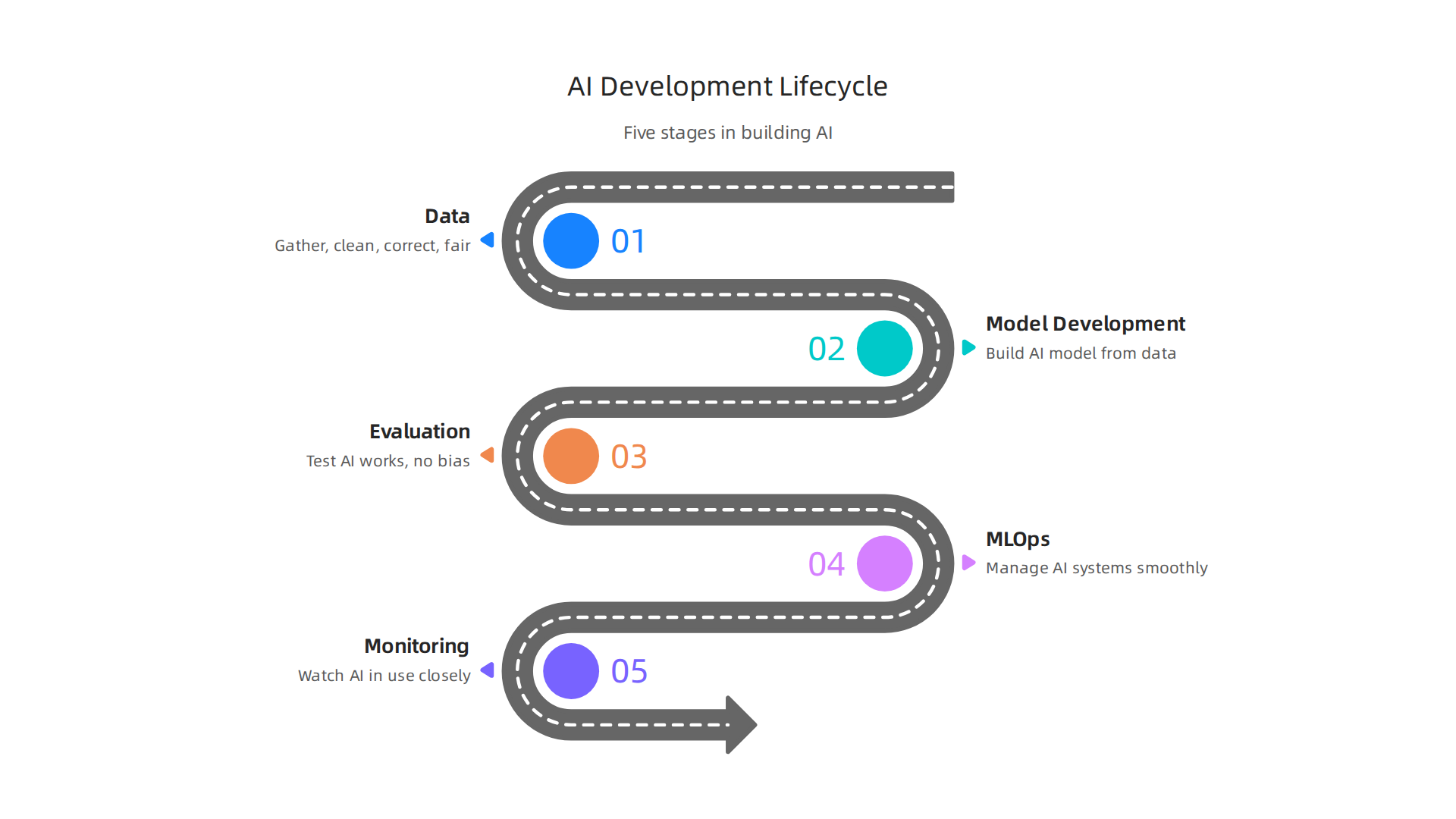
Let’s break down the main steps in making AI:
Data
Every good AI starts with good data. Think of data as the food that feeds the "ai brain." AI systems learn by looking at lots of information, like pictures, words, or numbers. For ai development, the first big step is to gather this data. But it’s not enough to just collect it. The data must be clean, correct, and fair. If the data has mistakes or shows unfair ideas, the AI will learn those bad things too. So, teams spend a lot of time getting the data ready. This careful preparation is key for building a realistic ai.
Model Development
After getting the data ready, the next step is to actually build the AI model. This is where the AI learns from the data. Many modern AI systems are built using "foundation models." These are like super-smart starting points for AI. They are trained on huge amounts of general data, which helps them understand many different tasks. You can think of them as a very basic, smart ai brain that can then be taught more specific things. For example, some models are good at interpreting commands and understanding environments. Researchers are finding new ways to make these models even smarter, sometimes using methods like self-supervised learning, as discussed in a MIT talk on the Future of AI. These foundation models then become the building blocks for special AI tools, helping AI engineers create what might be called seeing ai for things like image recognition, or AI that can understand and create language.
Evaluation
Once an AI model is built, it’s very important to test it. This step is called evaluation. It’s like checking your homework before turning it in. Teams need to make sure the AI works as it should, makes good decisions, and doesn’t have any hidden problems. This includes making sure the AI is fair and doesn’t show bias, which means treating some people or groups unfairly. Testing helps make sure the AI is truly a realistic ai that is ready for prime time.
MLOps
MLOps stands for Machine Learning Operations. This is all about how to manage AI systems once they are ready to be used. It’s like setting up a factory to make sure products are made correctly every time. MLOps helps teams smoothly move AI models from the testing stage to being used by real people. It includes tools for managing the data, keeping the models updated, and making sure everything runs without problems. This part of ai development is crucial for keeping AI systems reliable and safe.
Monitoring
Even after an AI system is working, the job isn’t done. Monitoring means watching the AI closely while it’s in use. This helps catch any new problems that might come up, like if the data changes or if the AI starts acting strangely. For example, a "position paper" highlights that even powerful "foundation models" might need continued fine-tuning, often using complex learning methods, to keep them working well after they are first built Position: RL Should Be Used to Adjust Foundation Models …. By keeping an eye on AI systems, teams can fix issues quickly and make sure the AI continues to follow all the rules and acts in a fair way. This ongoing check helps ensure the AI remains compliant and trustworthy over time.
To keep up with all the big changes in AI and its rules, you need trusted information.
The AI Newsletter Worth Reading offers clear daily AI updates.
By carefully going through these steps, from gathering data to keeping an eye on working AI, businesses can build AI systems that are powerful, ethical, and fully compliant with global rules. This detailed process is what makes modern ai development so important for today’s world. To learn more about setting up your company for these challenges, you might consider how to master artificial intelligence prerequisites for business and compliance.
The journey of ai development is exciting, but it also comes with important challenges. After building and testing AI systems, we must also think about the problems they might create and how to make sure they are used fairly and safely. This involves understanding the risks and setting up good rules for how AI is made and used.
What are the main risks with AI systems?
Just like any powerful tool, AI can have downsides if not managed well. Here are some of the key risks we think about in 2026:
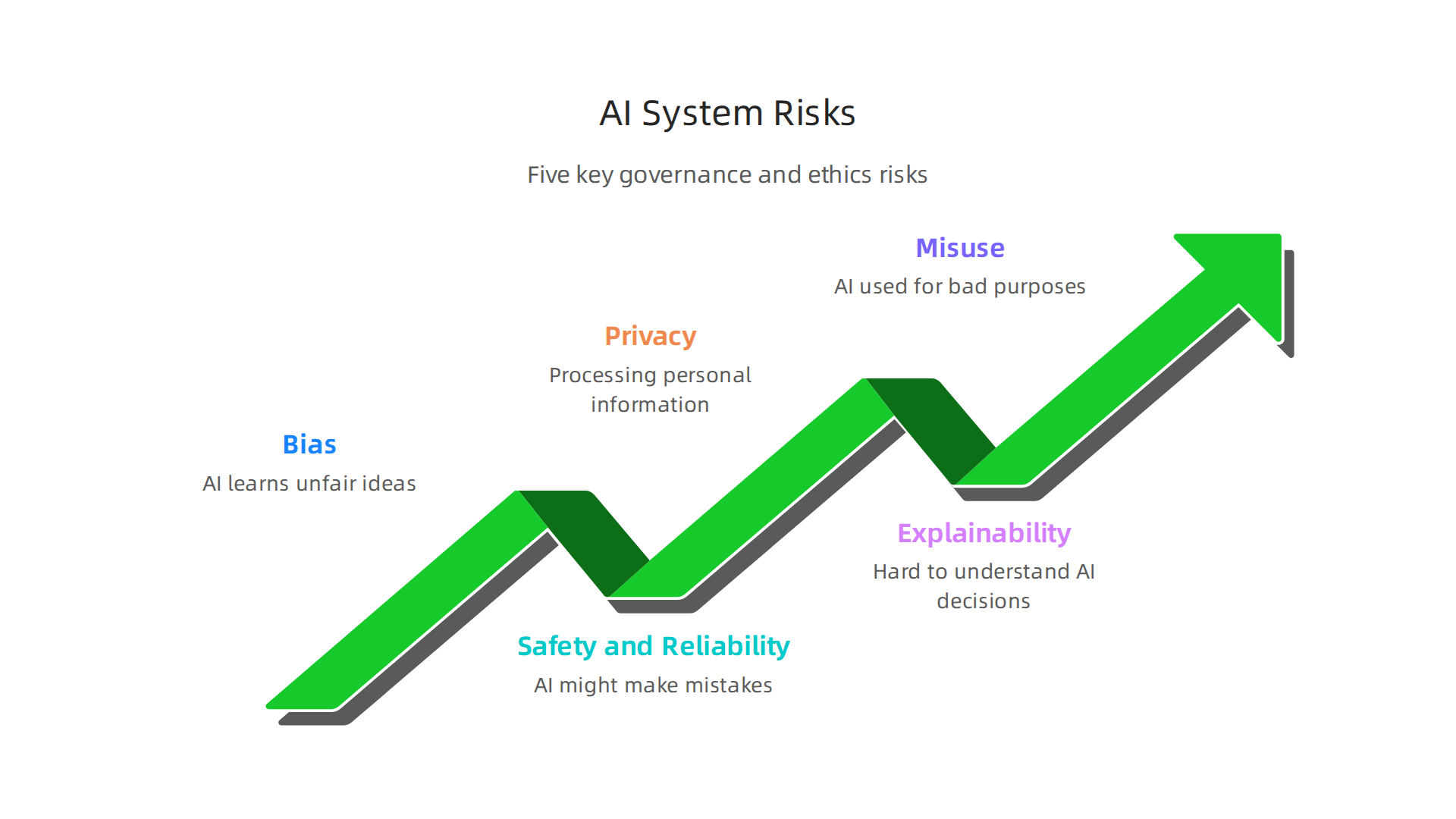
- Bias: AI learns from data. If the data used to train the
ai brainis unfair or has hidden biases, the AI will learn and repeat those biases. This means the AI might treat certain groups of people unfairly, which can be a big problem in areas like hiring or lending. Making sure the data is fair is a huge part of creating arealistic ai. - Safety and Reliability: An AI system might make mistakes, especially in complex situations. If an AI is controlling a car or helping doctors, a mistake could cause real harm. So, it’s very important to build AI that is reliable and fails safely.
- Privacy Concerns: AI often needs to process lots of personal information to work well. This raises questions about how that data is kept private and protected from being misused. Companies must be very careful with people’s information when doing
ai development. - Lack of Explainability: Sometimes, it’s hard to understand why an AI made a certain decision. This is especially true for complex AI models. If we don’t know how an AI reached its conclusion, it’s hard to trust it or fix it when it goes wrong. For an AI to be a truly
realistic ai, people need to understand how it works. - Misuse: Like any powerful technology, AI could be used for bad purposes, such as creating fake content, spreading misinformation, or even for harmful actions. It’s a big challenge to prevent AI from being used in ways that hurt society. To learn more about these concerns, you can read about Why is AI Bad: The Real Risks of Unrestricted Artificial Intelligence in 2026.
How do we manage these risks? AI Governance and Compliance
To handle these risks, organizations need strong rules and ways to check them. This is called AI governance. It’s about setting up a system to make sure AI is developed and used responsibly, ethically, and in line with laws. In 2026, many companies are looking at special guides and frameworks to help them with this.
- Established Frameworks: One key guide is the National Institute of Standards and Technology (NIST) AI Risk Management Framework (AI RMF).
This guide helps organizations manage AI risks throughout the entire AI development process. Another important standard is ISO/IEC 42001, which gives a way to manage AI systems properly. Many experts agree that combining these frameworks helps with AI Governance Framework: Regulatory Readiness Risk Management and Compliance in 2026.
- Building Trustworthy AI: The goal of good governance is to build "trustworthy AI." This means AI that is fair, safe, secure, transparent, and protects privacy. The NIST AI RMF provides a base for defining what a trustworthy AI system should look like, offering benchmarks for developers to aim for as they create a
seeing aior any other system. You can find more about these goals in guides like The Top Security, Risk, and AI Governance Frameworks for 2026. - Compliance Approaches: To make sure AI systems follow all the rules, organizations need clear plans. An AI governance framework is like a complete set of rules and practices that guides how AI systems behave, how risks are handled, and who is responsible for what. These frameworks cover everything from data handling to how models are managed and monitored. This structure helps ensure compliance across the whole AI lifecycle, as detailed in the AI Governance Framework: 2026 Enterprise Guide. For more on making sure your AI meets all the necessary standards, check out How to Make an AI Compliant with Global Regulations in 2026.
By taking these risks seriously and putting strong governance in place, companies can make sure their ai development leads to helpful, ethical, and rule-abiding AI systems that truly benefit everyone.
After making sure our AI systems are fair and safe, the next big step for executives is to get them out there, make them grow, and check how well they are doing. This is where ai development really comes to life in the real world. Many companies are now using AI, with about 72% of businesses having AI systems actively running in 2026, showing how important it is to get this part right AI Adoption Stats 2026: 72% in Production, $2.59T Global.
How to Deploy and Grow Your AI Systems
Deploying an AI system means putting it into action so people can use it. This can be done in different ways:
- Where to Run AI: You can run AI on computers in your own office (on-premise), on big computer networks over the internet (cloud), or right on devices like phones or smart sensors (edge). The best choice depends on what the AI does, how fast it needs to be, and how private its data must be.
- MLOps for Smooth Operations: To make sure AI systems work well all the time, companies use something called MLOps. This is like a set of best practices that helps teams build, test, and launch AI models without a hitch. It also helps them keep an eye on the models once they are running. MLOps is key for MLOps in 2026: Best Practices for Scalable ML Deployment and helps turn an idea into a working
realistic aisystem.
Keeping Track and Managing Costs
Once your AI is live, you need to know if it’s actually helping and if it’s worth the money.
- Measuring Performance: It’s important to set clear goals for what your AI should achieve. Then, you need to track how well it’s meeting those goals. This includes looking at things like how accurate its predictions are, how quickly it works, and if it’s still fair over time. For example, if your
ai brainis designed to help customers, you’d measure how happy customers are or how much time the AI saves your support team. - Controlling Costs: Running AI can get expensive. Executives need to watch the costs closely. This means choosing the right tools, making sure the AI uses computing power wisely, and being ready to update or even turn off AI systems that aren’t providing enough value.
- MLOps Maturity: Companies often follow a path to get better at MLOps. This path, known as an MLOps maturity model, helps them move from simple, manual ways of working with AI to more automatic and secure methods. Understanding this path helps leaders plan where to put their efforts to make their
seeing aitruly reliable The AI/MLOps Maturity Model for 2026: A Self-Assessment Framework.
Getting Your Company Ready and Deciding Where to Invest
For AI to really work, everyone in the company needs to be on board.
- Teamwork Makes the Dream Work: It’s not just about tech people. Teams need to include folks from different areas like business, legal, and IT. Everyone should understand what the AI is supposed to do and how it fits into the company’s big picture. To help your business grow with AI, you might find more guidance in From Pilot to Scale with AI for Business in 2026.
- Smart Investments: Executives should focus their money on a few key things:
- Good Data: High-quality data is the fuel for any AI.
- The Right Tools: Investing in strong MLOps platforms helps manage AI better.
- Talented People: Training your team and hiring experts who understand
ai developmentis crucial. - Building a Strategy: Having a clear plan for how AI will help the business is also important. If you’re looking for guidance on using AI strategically, consider exploring How to Use AI Strategically a Decision Makers Guide for 2026.
By focusing on these practical steps, executives can make sure their ai development efforts lead to real business benefits and help their companies thrive in 2026 and beyond.
Get clear daily AI updates from The AI Newsletter Worth Reading.
Summary
This article explains why tech leaders and investors must understand AI capabilities to make smarter strategic choices and stay compliant as rules evolve. It breaks AI down into practical skills—perception, language, reasoning, planning, and generation—and describes the main model families and training methods that produce those abilities. The piece reviews real-world industry use cases across finance, healthcare, retail, and government, highlighting different regulatory pressures and adoption stats. It walks through the AI development lifecycle from data and model building to evaluation, MLOps, and monitoring, and outlines the main risks such as bias, safety, privacy, and misuse. The article also covers governance approaches and standards leaders can use to build trustworthy AI and avoid fines. Readers will finish with concrete steps to evaluate, deploy, and scale AI responsibly and a roadmap to align investments with regulatory readiness.