

Introduction: The Intersection of ID Tech and Privacy Regulation
Think about the last time you unlocked your phone with your face or verified your identity for a bank app. That is identity technology, or id tech, in action.

And it is changing faster than ever. We now have biometrics like fingerprints and facial scans, disruptive technology like decentralized IDs that put you in control of your data, and ai platforms that can verify who you are in seconds. These are just a few examples of technology reshaping how we prove our identity online and in the real world.
But here’s the catch. Privacy regulations around the globe are getting much stricter. In 2026, laws like the European Union’s AI Act and updates to data protection rules are creating both new opportunities and serious compliance challenges for companies that build or use ID tech. The EU AI Act official framework sets clear rules for high-risk systems, including many biometric and AI-based identity tools. Companies that fail to follow these rules can face fines of up to 35 million euros or 7 percent of global annual turnover.
This article gives you a complete look at the current landscape. We’ll cover the key regulations that matter most in 2026 and share actionable strategies to keep your ID tech compliant without slowing down innovation. If you are just starting to think about compliance, check out this practical guide on making AI compliant with global regulations to understand the basics.
Staying ahead of regulatory changes is tough, but you do not have to do it alone. The AI Newsletter Worth Reading delivers clear daily updates on AI rules, privacy enforcement, and digital compliance straight to your inbox. It is a simple way to keep your finger on the pulse of what is changing.
Let’s dive into the world of id tech and see what privacy regulations mean for your business in 2026.
The Identity Tech Landscape in 2026
So what does the identity tech landscape actually look like in 2026? The short answer: it is everywhere, and it is growing fast. ID tech today covers much more than just fingerprint scanners and face unlocks. We are talking about digital identity wallets that hold your driver’s license and passport on your phone. We are talking about self-sovereign identity, where you control exactly who sees your personal data. And we are talking about ai platforms that verify your identity in real time using liveness detection and behavioral patterns.
These are powerful examples of technology that make life easier. But they also raise serious privacy and compliance questions. Let’s look at the numbers.
The global biometrics technology market is worth about $79.2 billion in 2026, according to the latest Biometrics Technology Market Trends and Forecast, 2026-2033. It is expected to grow at nearly 19% each year through 2033. That is huge. And it is not just about fingerprints anymore. Voice recognition, iris scans, and even gait analysis are becoming common.
Adoption is accelerating across three key sectors.
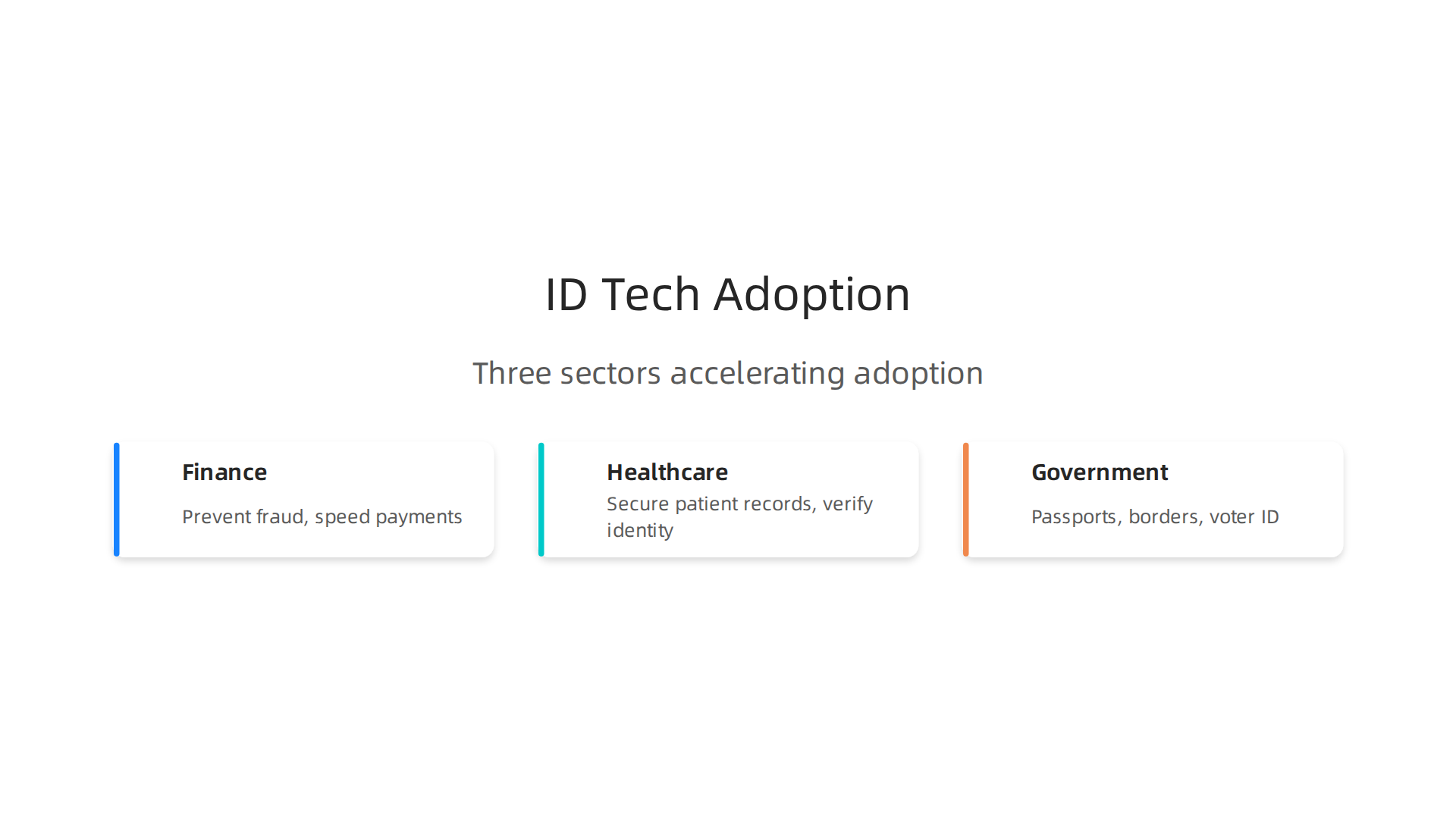
In finance, banks use biometrics to prevent fraud and speed up mobile payments. Over 60% of financial services companies now use some form of biometric authentication. In healthcare, patient record security and identity verification are driving adoption rates of 50% to 60%. And in government, 70% to 85% of agencies now use biometrics for passports, border control, and voter ID.
More than 80% of smartphones already have biometric features turned on. And 72% of people globally say they would rather use facial recognition than passwords. This is clear proof that disruptive technology is reshaping how we prove who we are.
But here is the challenge. Regulations were not designed for this pace of change. Laws like the EU AI Act treat many biometric systems as high-risk. That means companies must prove their ID tech is fair, transparent, and secure before they can deploy it. If you are building or using AI-powered verification tools, you need to understand how these rules affect your product. For example, if your system uses facial recognition, you should read up on navigating AI imaging regulations to avoid compliance pitfalls.
The bottom line: identity tech is booming, but the regulatory landscape is playing catch up. Staying informed is your best defense.
Key Privacy Regulations Shaping Identity Technology
So which privacy laws actually affect your ID tech in 2026?
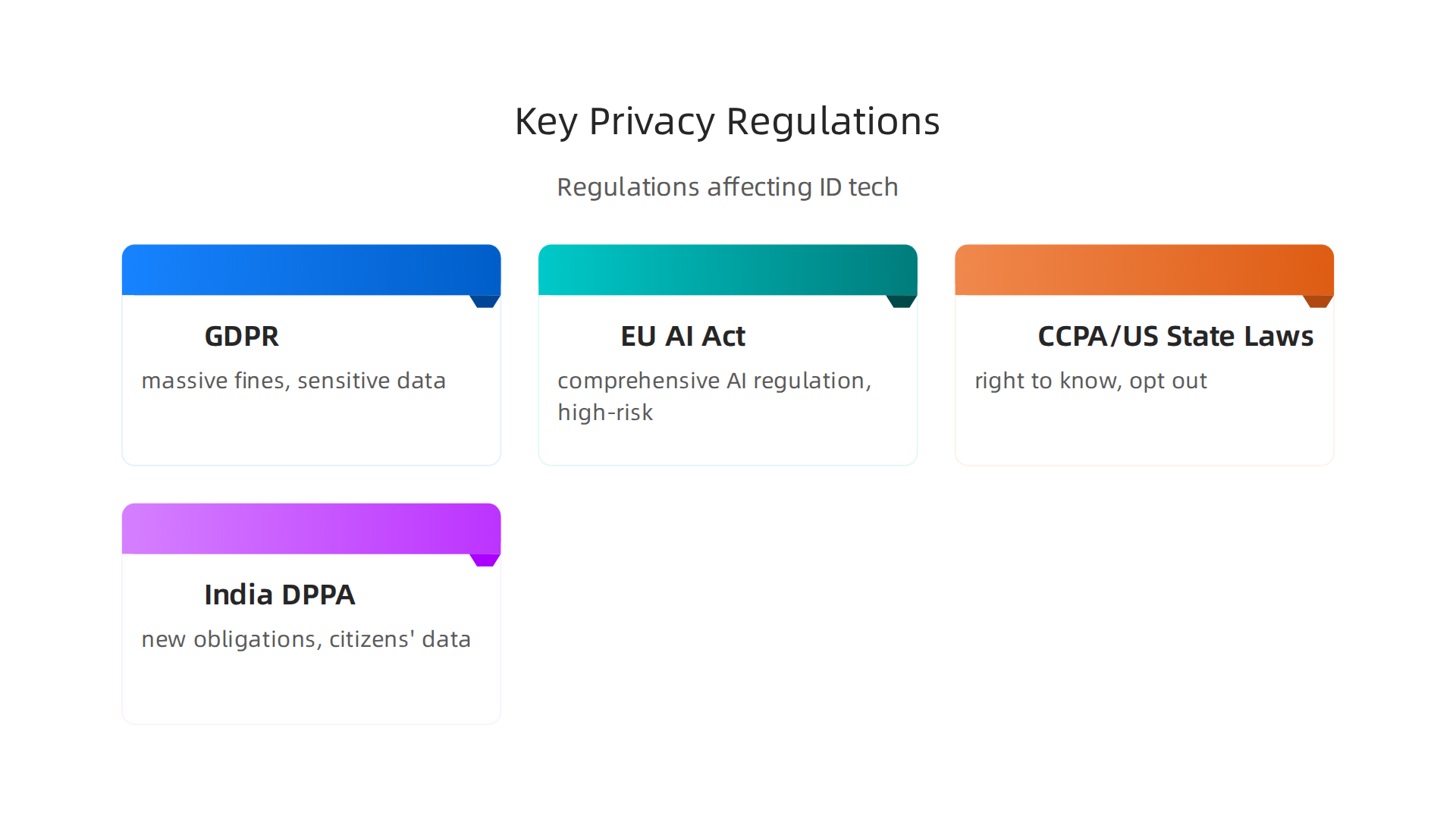
A lot more than most people realize. And they are not just European rules anymore. The landscape has become a patchwork of overlapping regulations that all target how you collect, store, and process biometric data.

Let’s start with the big one: the General Data Protection Regulation, or GDPR. You have probably heard of it. But here is what matters for ID tech. The GDPR applies to any company that processes the personal data of people inside the European Union, even if your business is based in the US. The fines are massive. Violations can cost up to €20 million or 4% of your global annual turnover, whichever is higher. And enforcement has been aggressive. By 2025, cumulative GDPR fines had already passed €5.88 billion. The law covers biometric data specifically, classifying it as sensitive personal data that needs extra protection. To get the full picture on GDPR, you can read this What is GDPR guide that breaks down the basics.
Next, the EU AI Act. This is the world’s first comprehensive AI regulation, and it has huge implications for identity technology. The act treats many biometric systems as high-risk. That means you need to do risk assessments, document your datasets, and ensure human oversight before you deploy. The compliance deadlines are staggered, with most rules kicking in on August 2, 2026, and some extending into 2027 and 2028. For a full breakdown of risk tiers and obligations, check the AI Act from the European Union. The EU AI Act and GDPR operate in parallel. A facial recognition system, for instance, has to meet both sets of rules at the same time.
In the United States, the California Consumer Privacy Act (CCPA) and its updates are the main drivers. The CCPA gives people the right to know what data is collected about them and to opt out of its sale. California regulators have been cracking down hard. In 2025, the largest CCPA settlement hit $1.55 million. And newer state laws in Colorado, Connecticut, and Texas add even more complexity. Unlike the EU AI Act, these state laws focus on how personal information is collected and shared. The CCPA and the EU AI Act comparison shows how the two frameworks differ. Meanwhile, India’s Digital Personal Data Protection Act came into force in 2023 and 2024, creating new obligations for any company processing Indian citizens’ biometric data.
The bottom line: enforcement is ramping up everywhere. GDPR fines alone have reached over €7.1 billion since 2018, with €1.2 billion issued in 2025 alone. The top penalties hit Meta, Amazon, and TikTok for data transfer and consent violations. If you are deploying any ID tech that touches user data, you need to know exactly which laws apply to you. Building compliance strategies to avoid million-dollar fines is no longer optional. It is a core part of running a responsible business.
Staying on top of all these moving parts is tough. That is why getting reliable daily updates matters. The AI Newsletter Worth Reading delivers clear, daily AI and tech regulation news straight to your inbox. It helps you track changes before they become problems.
Balancing Innovation and Compliance in ID Tech
So how do you balance the need to move fast with the risk of getting hit by a big fine? In 2026, the smartest teams in identity technology are not treating compliance as a blocker. They are using it as a strategic advantage. It turns out that building safety into your product from day one actually helps you move faster in the long run.
The key framework for this is Privacy by Design.
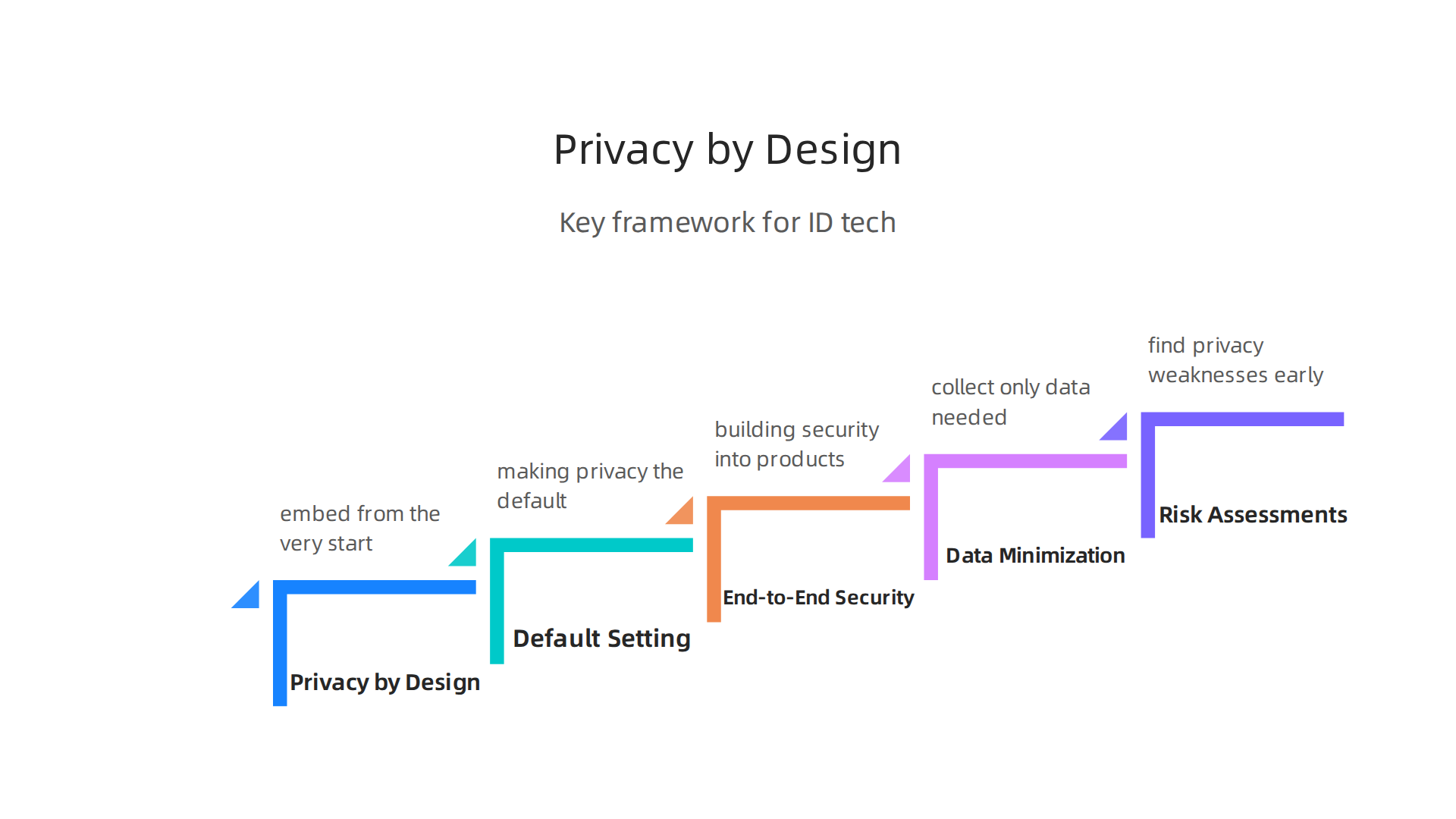
This approach means you do not slap privacy features on at the end. You embed them from the very start of the design process. Instead of reacting to problems, you prevent them. The seven core principles of Privacy by Design include making privacy the default setting and building end to end security. It is a proactive way to protect users. You can read more about the Mastering the 7 Principles of Privacy by Design for Compliance to see how these rules apply in practice.
A big piece of this is data minimization. Here is the simple rule. Only collect the data you absolutely need. If you do not have certain biometric information stored, you cannot lose it in a breach. This shrinks your legal risk overnight. Regulators love it, and users trust you more because you are not hoarding their personal details.
Risk assessments are another essential tool. Before you launch a new ID tech feature, run a Privacy Impact Assessment. This helps you find privacy weaknesses before they turn into regulatory disasters. The Data protection by design and by default guidance from the UK’s ICO shows how regular audits and strict access controls keep your system safe. A structured Six Steps for Implementing Privacy by Design at Your Organization guide can walk you through the process of setting up a dedicated privacy team and monitoring your progress.
For companies building disruptive technology like new AI platforms or facial recognition tools, these frameworks are vital. The teams that take compliance seriously build better products. They earn trust from investors who do not want to see million dollar fines. And they earn trust from users who want their data handled with care.
If you are working with biometric data or automated decision systems, learning how to build a technology strategy board for EU AI Act 2026 compliance is a smart next step. The companies that balance innovation with strong privacy practices are the ones that will lead the market in 2026.
Emerging Trends: Decentralized Identity, Biometrics, and AI
The world of id tech is moving fast in 2026. Three big trends are changing how we verify who we are online.

Let us look at each one and what they mean for compliance.
Decentralized Identity and Self-Sovereign Identity
Decentralized identity puts users in control. Instead of a company holding your ID data, you keep it on your own device. You choose what to share and with who. This is a big shift from the old way of doing things.
The market for decentralized identity is growing fast. Experts predict it could reach USD 5 billion in 2026 alone. That growth comes from new rules like eIDAS 2.0 in Europe, which requires digital identity wallets. You can read more about the decentralized identity market trends and forecasts to see how this space is evolving.
But here is the challenge. If users hold their own data, how do companies prove compliance? Regulators still want proof that identity checks are real. The answer lies in verifiable credentials and clear audit trails. These tools let you prove you checked someone’s ID without holding their data.
Biometric Authentication Goes Mainstream
Biometrics are everywhere in 2026. Fingerprint scans, facial recognition, and voice ID are part of daily life. Over 50% of US users use biometrics daily. As biometric statistics and trends for 2026 show, 81% of smartphones now have biometric features turned on.
Most people prefer biometrics over passwords. They are faster and harder to fake. But regulators are watching closely. Laws in Europe and parts of the US require clear consent before companies process biometric data. If you use facial recognition, you must tell users exactly what you collect and why.
AI Powered Identity Verification
AI is now at the heart of many id tech systems. It spots fake IDs, detects deepfakes, and verifies liveness in real time. But AI also brings new risks. If the training data has bias, the AI could treat certain groups unfairly. And if the system is a black box, regulators cannot check if it works right.
Transparency is the key. You need to document how your AI models make decisions. You also need to test them for bias before launch. The teams that build accountable AI for identity verification will earn the most trust from users and regulators alike.
If you are building or buying AI tools for identity, staying on top of the latest rules is critical. Learning about AI regulations in 2026 and compliance strategies can help you avoid costly fines.
These three trends are reshaping id tech. The companies that embrace them while staying compliant will lead the market. If you want to keep up with all the changes in AI and tech regulation, getting clear daily AI updates from The Deep View Newsletter is a smart way to stay informed.
Global Regulatory Divergence and Its Impact on ID Tech
Here is where things get tricky. The rules for id tech are not the same everywhere. In fact, they are heading in very different directions depending on the region. This global regulatory divergence is creating a major headache for companies that operate across borders.

The European Union leads the pack with the most strict rules in 2026. The EU AI Act and GDPR work together to set high bars for data privacy, consent, and risk management. Any AI system used in the EU must be classified by risk level. High-risk systems face rules that include risk assessments, human oversight, and full documentation. You can see the specifics in the comparison between the CCPA and the EU AI Act to understand how different the approaches are.
The United States, on the other hand, does not have a single national AI law yet. Instead, you see a patchwork of state laws. California has the CCPA and is working on rules for automated decision making. Other states are introducing their own privacy bills. There is no federal standard for id tech or AI. This means a company selling identity verification tools in the US must track multiple state requirements, while in Europe they only need to follow one set of rules.
China and India take yet another path. China requires strong government oversight and data localization. ID tech companies must store data on servers inside the country and share information with authorities when asked. India is building its own digital identity infrastructure, Aadhaar, and is now adding privacy protections that differ from both the EU and US models.
For a multinational id tech company, this is a compliance nightmare. A single product might need to follow the EU AI Act, GDPR, US state laws, and Chinese data rules all at once. That raises costs and slows down product launches. If you build a facial recognition tool, for example, it might be banned completely in some EU use cases but allowed under certain conditions in the US. You cannot take a one-size-fits-all approach anymore.
Many experts worry this divergence will lead to market fragmentation. Smaller id tech companies may choose to serve only one region to avoid complexity. That could limit competition and innovation. On the plus side, it creates opportunities for tools that simplify multi-jurisdiction compliance. For more on how technology is stepping in to bridge these gaps, check out how automated regulatory compliance across global jurisdictions is becoming a must have for any serious id tech business.
The bottom line is clear. In 2026, understanding the regulatory map is just as important as understanding the technology. If your id tech product cannot adapt to local rules, it will not survive in the global market.
Practical Strategies for ID Tech Compliance in 2026 and Beyond
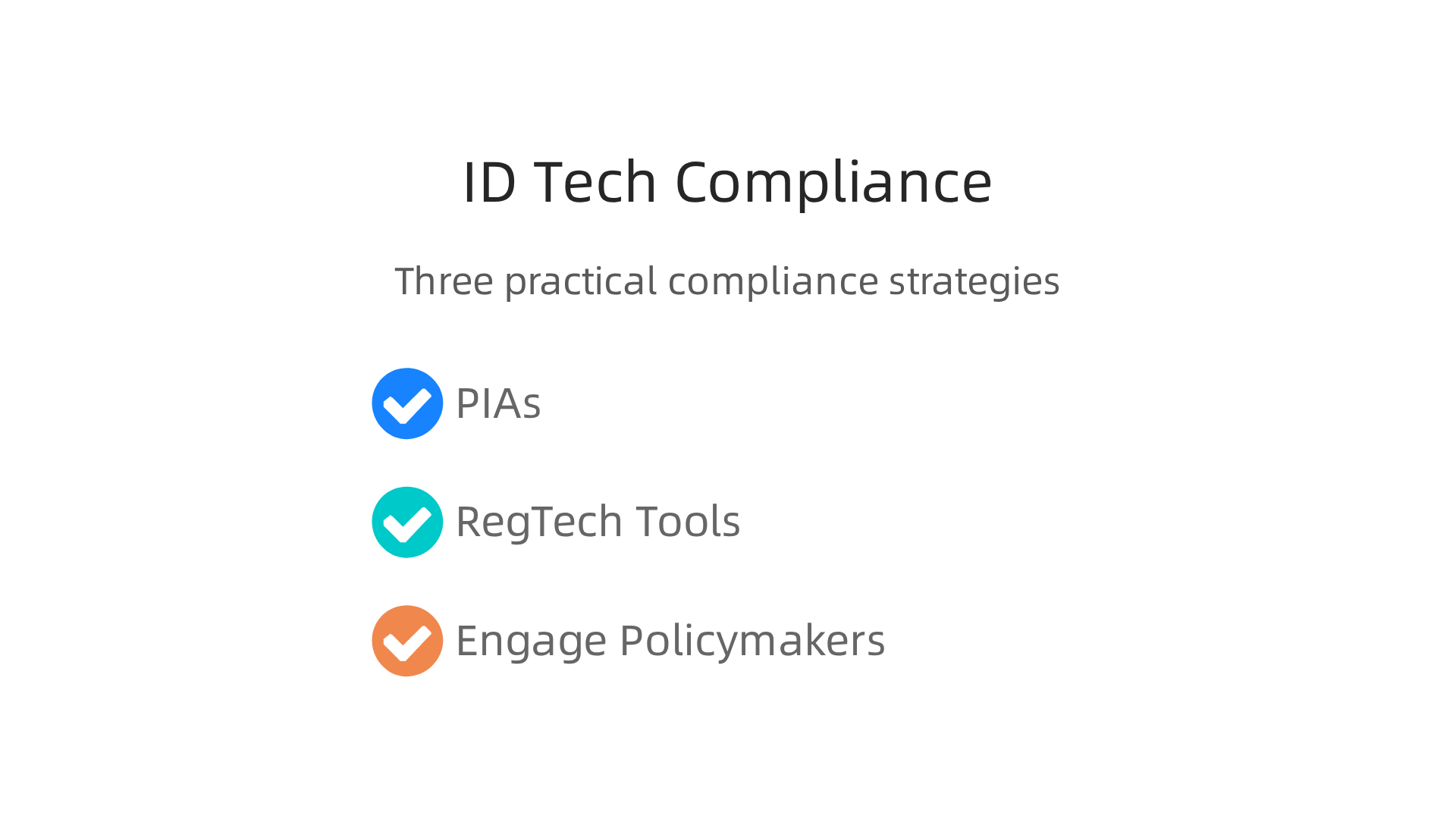
So how do you turn all that regulatory complexity into action? You cannot control every law, but you can build a strong compliance foundation. Here are three practical strategies that work in 2026.
Conduct Regular Privacy Impact Assessments and Data Mapping
Start by knowing exactly what data you collect, where it lives, and who can access it. A privacy impact assessment (PIA) helps you spot risks before they become fines. You should run a PIA for every new product feature, partner integration, or data flow. It is not a one-time thing. It needs to happen regularly. The UK Information Commissioner’s Office offers clear guidance on this in their data protection by design and by default guidelines. They recommend auditing your systems and involving different teams in the process. Data mapping is equally important. You need a real time map of data flows across your id tech systems. If you do not know where the data goes, you cannot protect it.
Leverage Regulatory Technology Tools
Manually tracking every new rule in every region is impossible. That is where RegTech tools come in. They automate compliance monitoring, flag changes, and help you adjust quickly. Think of them as a compliance co-pilot. For example, you can use tools that scan updates from the EU AI Act, GDPR, and US state laws in one dashboard. This saves time and reduces human error. If you are looking for a broader picture of how to stay ahead, check out these compliance strategies to avoid costly fines. They cover real world approaches that many id tech companies are adopting right now.
Engage with Policymakers and Industry Groups
Compliance is not just about following the rules. It is also about helping shape them. Join industry groups that talk to regulators. Attend public consultations. Share your technical expertise. When you engage early, you can highlight practical issues that might otherwise become bad regulations. This does not fix everything overnight, but it gives your company a seat at the table. To see where policy is heading, take a look at these AI predictions for tech hubs and how they are shaping safety and sovereign AI rules. The more you understand the direction, the better you can prepare.
Keeping up with all these changes is a full time job. That is exactly why many compliance professionals rely on daily updates. Get clear daily AI updates from The AI Newsletter Worth Reading so you never miss a critical regulatory shift.
Summary
Identity technology (id tech) — from biometrics and AI verification to decentralized digital identity wallets — is expanding rapidly in 2026, but stricter privacy and AI rules are raising the bar for compliance. This article maps the current landscape, explaining how core laws like GDPR, the EU AI Act, CCPA and regional rules in China and India affect biometric and AI-driven systems, and why many identity tools are now treated as high-risk. It lays out practical strategies you can use today — Privacy by Design, data minimization, regular privacy impact assessments, regulatory technology, and stakeholder engagement — so teams can innovate without incurring large fines or regulatory delays. You’ll also get a clear view of emerging trends (decentralized identity, mainstream biometrics, AI verification), how global regulatory divergence complicates scale, and concrete steps to build compliant, auditable identity products that earn user and regulator trust.