

Introduction: The Convergence of Building and Regulating AI
You might think building an AI is all about code, data, and clever algorithms. That was true a few years ago. But in 2026, the process of learning how to make an AI goes far beyond technical know-how. It is now deeply tied to governance, compliance, and risk management.
Every step of the AI development lifecycle now has a regulatory side. From data collection and model training to deployment and monitoring, you must also think about who is accountable, what risks exist, and how to document everything. According to a recent AI development lifecycle guide, the lifecycle includes a dedicated governance and compliance stage. Frameworks like the EU AI Act and NIST’s AI Risk Management Framework require companies to document, monitor, and control every phase.
This shift makes things more complex for everyone involved. Executives, investors, and compliance teams face an unfamiliar challenge.

You cannot just build a powerful model and launch it. You must also navigate an ever-changing legal landscape. The question "how to make an ai" now comes with a second question: "how to make it safely and by the rules."
This article is here to help. We will walk you through both sides of the coin. You will learn the core steps of AI creation and the governance structures that shape what is allowed. Whether you are leading a startup, overseeing risk at a large company, or advising on policy, this guide gives you a research-backed map of what it takes to build AI responsibly in 2026.
To stay ahead of these rapid changes, consider getting The AI Newsletter Worth Reading. It delivers clear daily updates on AI developments and regulatory shifts directly to your inbox. And for a deeper look at how businesses are handling these rules, check out our article on AI regulations 2026 compliance strategies.
The Lifecycle of AI Creation: Key Stages and Considerations
Now let’s get into the practical steps. When you ask "how to make an ai," you are really asking about a series of stages that go from idea to working system. The technical pipeline usually looks something like this: problem definition, data collection and preparation, model design and training, validation and testing, deployment, and ongoing monitoring.
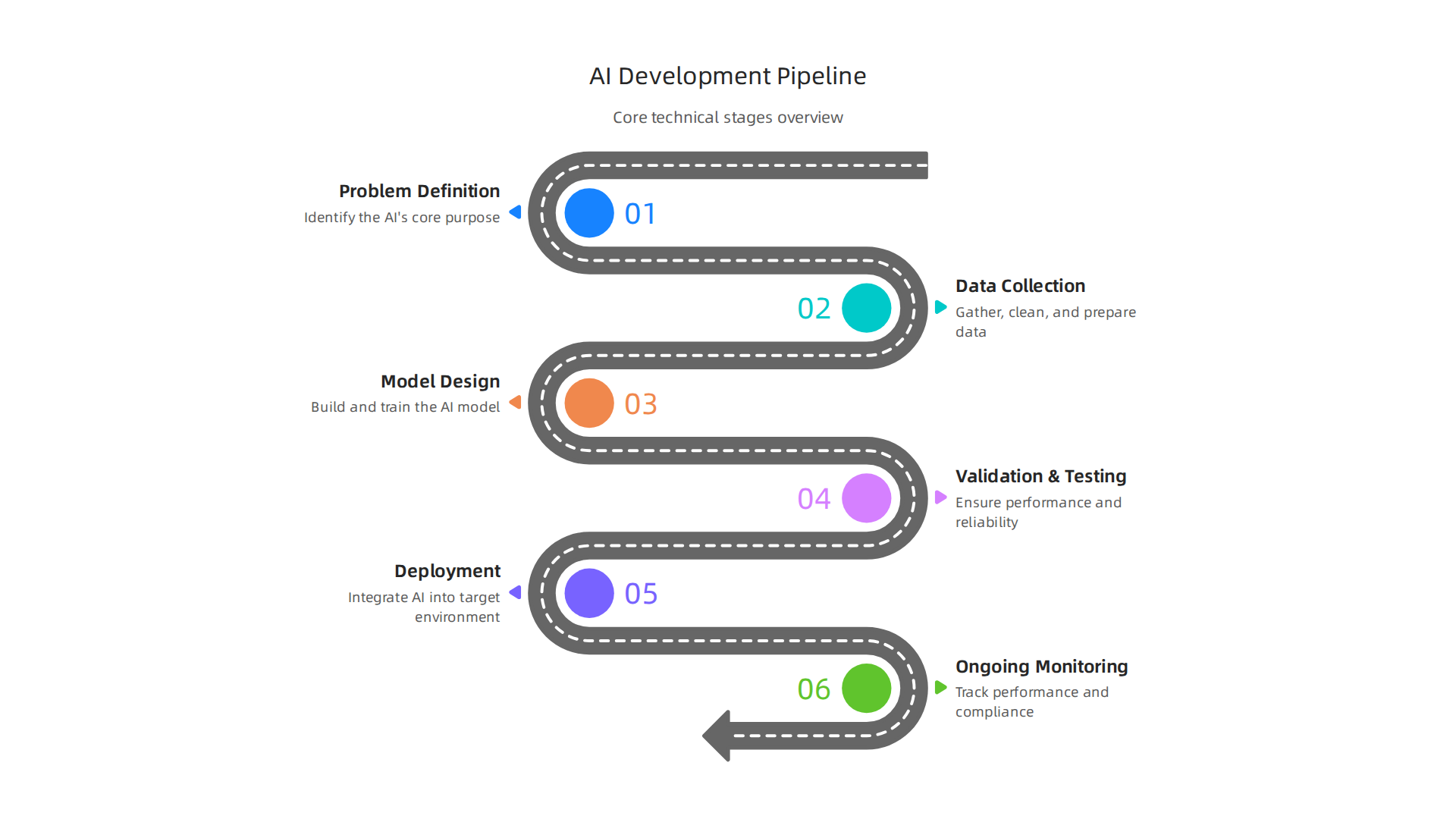
Here is the catch. Each of these stages now has a regulatory checkpoint attached to it. You cannot just gather data and start training without thinking about privacy, consent, and bias. The same goes for testing. You need to check for fairness, explainability, and safety before you release anything.
The Guidelines for secure AI system development from government agencies lay this out clearly. They split the lifecycle into four secure phases: design, development, deployment, and operation. Each phase comes with its own set of controls. For example, during design you must do threat modeling. During development you track supply chain risk. During deployment you protect the infrastructure. During operation you monitor for drift and anomalies.
This means your team needs a mix of skills that goes beyond coding.

You need data experts who understand where data comes from and if it is biased. You need modelers who can document training choices. You need compliance people who know what the EU AI Act or NIST framework requires at each step. Without that mix, your AI project could hit serious roadblocks.
Resource allocation matters more than you might think. If you put all your budget into the model and none into governance, you will face painful fixes after launch. Think of compliance as a built-in feature, not an afterthought. The earlier you embed checks like bias testing and explainability, the smoother your path to production.
For a closer look at how to structure your team and processes around these rules, read our guide on building a technology strategy board for EU AI Act 2026 compliance. It walks through the exact roles and workflows you need to stay ahead.
Governance Frameworks: Why Regulation Matters for AI Development
So you have mapped out the technical pipeline for how to make an AI. You have your data, your model design, your training plan. But here is the question nobody likes to ask early enough: who makes sure this thing behaves properly?
Governance is not an afterthought. It is a structural requirement for trustworthy AI.

Without it, you risk building a system that is unfair, unsafe, or legally noncompliant. And in 2026, that risk comes with real penalties.
The foundation for modern AI governance starts with the OECD AI Principles. These are the first intergovernmental standard for trustworthy AI, adopted by 47 countries including the United States. They rest on five core values: inclusive growth and sustainable well-being, human-centered values and fairness, transparency and explainability, robustness and security, and accountability.
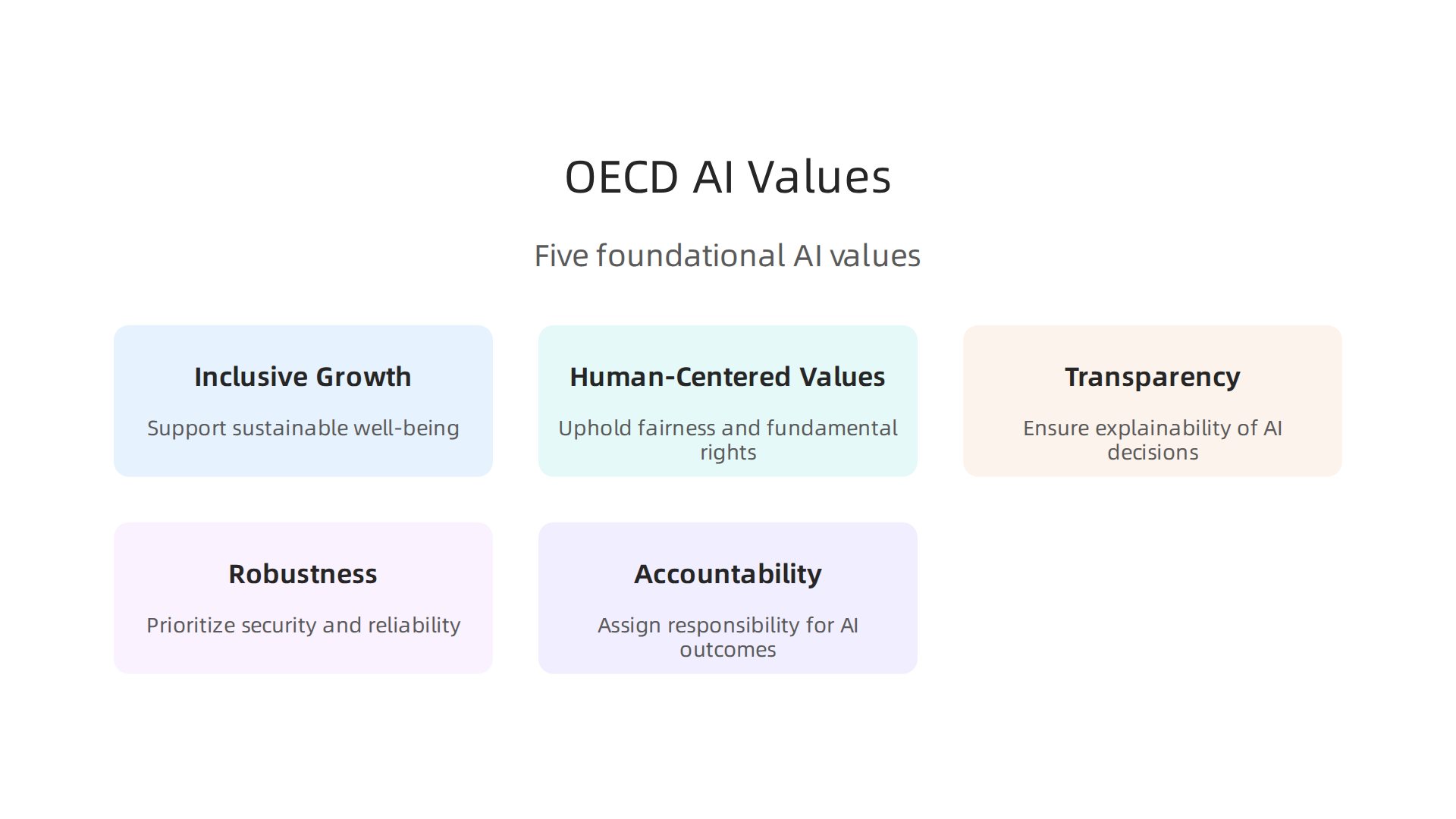
Each one translates into a practical requirement during development. For example, transparency means you must document how your model makes decisions. Accountability means you must be able to trace who built, trained, and deployed each component.
The EU AI Act takes a different regulatory philosophy. Instead of broad value statements, it uses a risk based approach. It splits AI systems into four categories: unacceptable risk (banned), high risk (strict rules), limited risk (transparency duties), and minimal risk (few obligations). High risk systems include those used in education, employment, biometric identification, and critical infrastructure. If your AI touches any of these areas, you need to meet requirements for risk management, data governance, technical documentation, human oversight, and logging. The deadlines are already here. Most transparency rules apply from August 2026, and penalties can reach €35 million or 7 percent of global annual turnover.
Understanding the definition of technology in a regulatory context helps you see why governance matters. It is not just about code. It covers data, infrastructure, deployment, and the people involved. Each piece carries compliance obligations.
The two main regulatory philosophies shaping 2026 are the EU’s binding risk based model and the US’s lighter touch approach that leans on sector specific rules. But both point in the same direction: you must embed governance from day one. Waiting until after launch leads to expensive fixes and potential fines.
Keeping up with these changing rules is a full time job. That is why thousands of professionals rely on The AI Newsletter Worth Reading to get clear daily updates on AI regulation and compliance. It helps you stay ahead without drowning in noise.
Global Regulatory Landscape: A Comparative Overview
So you have learned about governance frameworks. But here is the reality: there is no single rulebook for AI. Around the world, regulators are taking very different paths. And if you are building an AI system that works across borders, you need to know which rules apply where.
Three major regulatory models have emerged by 2026. Each one affects how you answer the question how to make an AI that is both innovative and compliant.
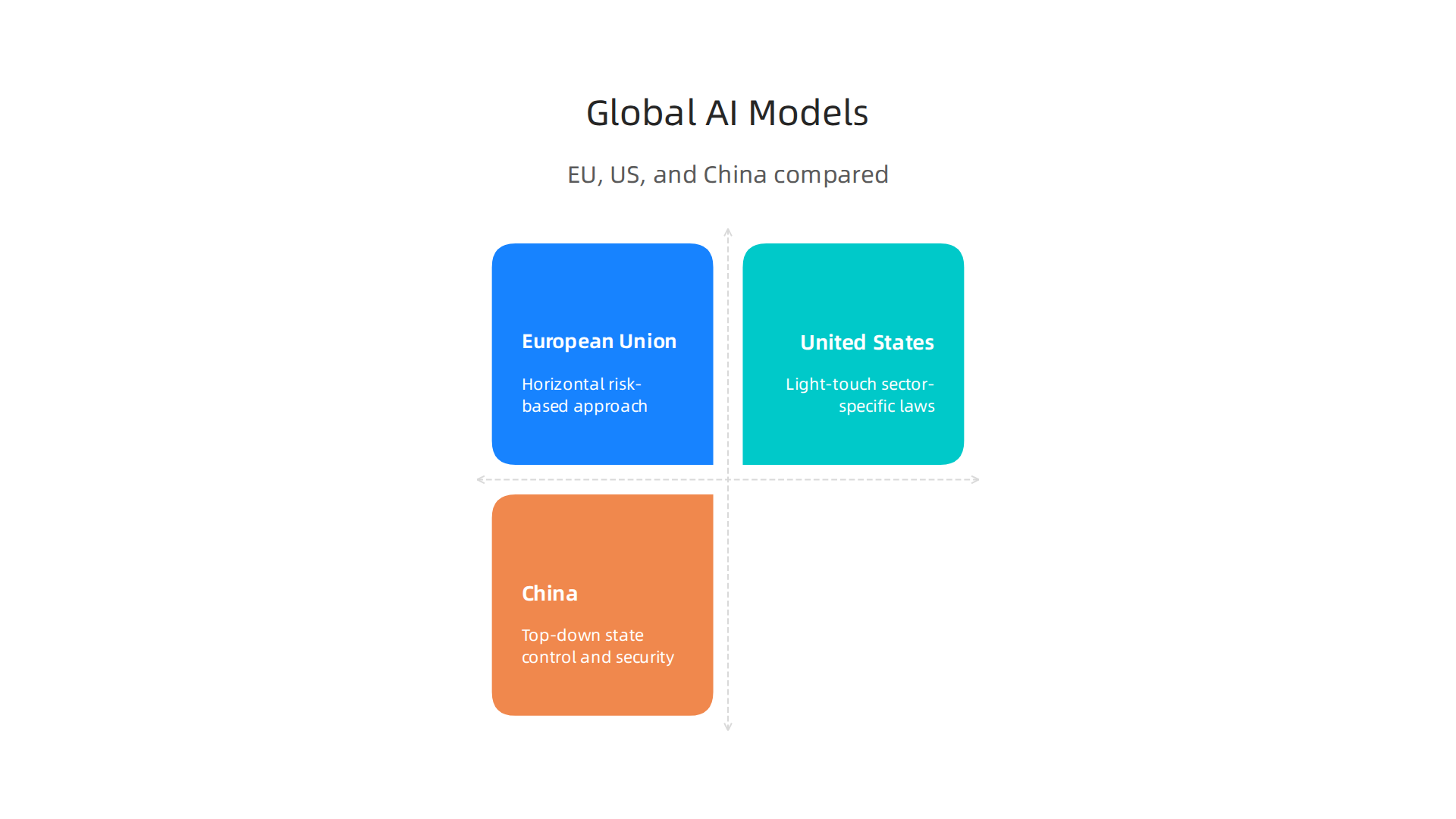
The European Union leads with the most complete and strictest system. The EU AI Act uses a horizontal, risk based approach. That means one single law covers all AI systems, regardless of industry. It classifies AI into four risk levels. Unacceptable risk systems are banned. High risk systems face strict rules for documentation, human oversight, and transparency. Limited risk systems have lighter duties. Minimal risk is basically unregulated. The Act applies directly in all 27 member states, and as of August 2026, most of its obligations are in effect. Penalties are huge. If you violate the rules, you can face fines up to €35 million or 7 percent of your global annual turnover. According to the AI Act implementation timeline, compliance deadlines for high risk systems have been slightly extended thanks to the "AI omnibus" deal reached in spring 2026, but the pressure is still on. The EU model is binding, extraterritorial, and detailed.
The United States takes a completely different route. The federal government favors a light touch approach. Instead of one comprehensive AI law, it relies on sector specific guidance from agencies like the FTC, FDA, and DOT. The White House has issued executive orders, but they focus on safety and voluntary standards rather than binding rules. What makes the US landscape tricky in 2026 is the patchwork of state laws. California, Colorado, and New York have all passed their own AI related legislation covering areas like algorithmic discrimination and disclosure. This creates real headaches for companies trying to follow one national standard. The federal government is pushing to preempt state laws, but that effort is still contested. As a result, US companies must navigate a mix of federal guidelines, state statutes, and agency rules.
China enforces top down rules with a strong focus on state control, security, and socialist core values. Beijing uses a centralized model where the government approves AI systems before they launch. For example, generative AI services like Chatbots must pass a security assessment and register with authorities. Content rules require AI outputs to align with state ideology. China’s approach is fast and authoritative. Rules come down from the top, and companies have little room to negotiate. This model makes for a clear compliance path, but it also limits freedom in product design.
These differences create real challenges for global AI deployments. A system built for the US market might violate EU rules on transparency or banned practices. A system designed for China cannot meet European standards on fundamental rights. You cannot use the same product everywhere without redesigning parts of it.
So when you ask what is computer systems technology in the context of global AI, you have to include the regulatory layer. The technology meaning expands beyond code and hardware. It includes the legal boundaries that define where and how your AI can run.
For example, the use of AI in education is classified as high risk under the EU AI Act. That means strict requirements for fairness and transparency. In the US, the same use might only face guidelines from the Department of Education. In China, the government may require alignment with national curriculum standards. Three different rules for the same technology.
Understanding these differences is critical for market entry and product design. If you plan to launch an AI tool in Europe, start with the EU AI Act risk classification. If you are targeting US customers, map out both federal and state requirements. And if you want to operate globally, build compliance checks into your development pipeline from the beginning. For more practical advice on navigating these overlapping rules, check out this guide on AI regulations 2026 compliance strategies for businesses. It breaks down exactly what you need to do for each major jurisdiction.
Regulation is not optional. It shapes every decision you make when learning how to make an AI that succeeds in the real world.
Compliance Strategies for AI Builders and Deployers
So you understand the global rules now. The EU AI Act, US state laws, and China’s top down controls all create a complex map. But knowing the rules is only half the work. The real challenge is building a system that actually follows them. That is what compliance means in practice.
When you ask how to make an AI that is both powerful and lawful, you need to shift your thinking. Compliance is not a final checkbox you tick before launch. It is a continuous process that starts on day one of development.
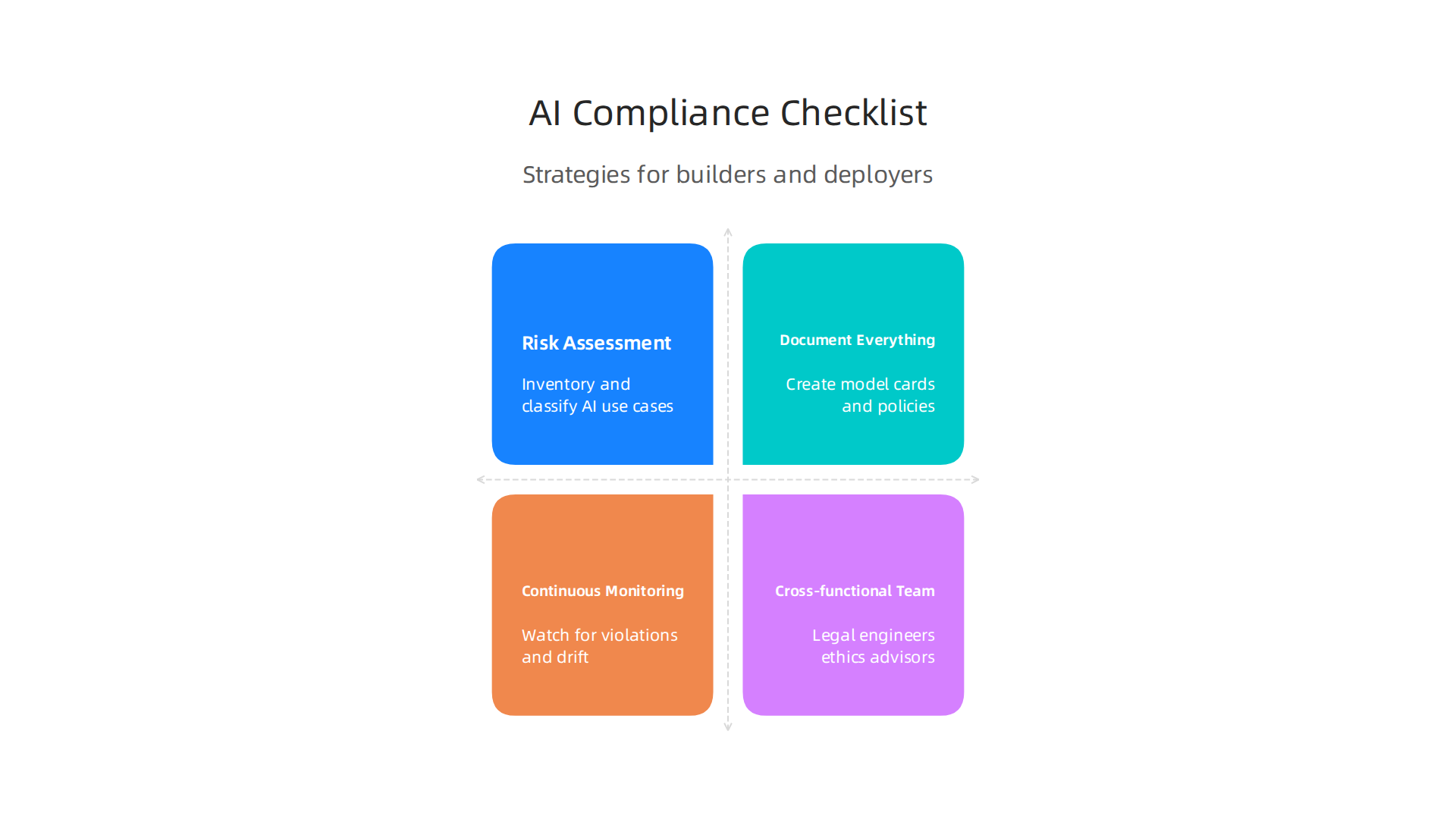
Start with a risk assessment for every AI system you build. You cannot manage what you have not identified. Begin by inventorying all your AI use cases. Classify each one according to the risk categories in your target market. For example, if you are deploying in Europe, determine whether your system is high risk, limited risk, or minimal risk. The AI Compliance Policy in the US: The 2026 Essential Guide recommends running a regulatory gap assessment on every AI system to map which rules apply.
Document everything. This is where model cards come in. A model card is a short document that describes how your AI works, what data it was trained on, what its limitations are, and how it should be used. Regulators expect this level of transparency. The AI Compliance Best Practices from SS&C Blue Prism emphasize that you need policies, procedures, and standardized documentation across all departments. Without clear records, you cannot prove compliance.
Set up continuous monitoring. Your AI system will change over time. Data drifts. User behavior shifts. New regulations appear. You need automated tools that watch for compliance violations and system drift. The 5 Best Practices to Ensure AI Compliance in 2026 from Quinnox highlight regular AI audits, transparency measures, and strong data governance as core practices. Monitoring is not optional. It is how you catch problems before they become fines.
You do not need a huge budget to get this right. Smaller organizations can use open source tools and frameworks to reduce the resource burden. For example, you can adopt the NIST AI Risk Management Framework as your control backbone. You can use open source libraries for bias detection, explainability, and documentation. These tools lower the cost of compliance without cutting corners.
But tools alone are not enough. You need a cross functional team. Compliance cannot live in a silo. You need legal experts who understand the regulatory text. You need engineers who can implement the technical controls. And you need ethics advisors who can spot the blind spots. The Meeting AI Compliance Requirements: The Definitive Guide from Mirantis stresses that cross functional collaboration between technical teams, legal, compliance, privacy, and business units is essential. Build that team early. For more on structuring that team, see our guide on building a technology strategy board for EU AI Act compliance.
Let us tie this back to the technology meaning we discussed earlier. When you understand what is computer systems technology in the context of AI, you realize that compliance is part of the system itself. It is not an add on. It is baked into the architecture. Similarly, what is computer simulation technology matters when you test your AI in simulated environments before real world deployment. Simulation helps you catch compliance issues early.
One clear example is the use of AI in education. Under the EU AI Act, this is a high risk category. That means you need strict documentation, bias testing, and human oversight before deploying a tutoring AI in a classroom. Without a compliance strategy, you cannot launch.
Finally, keep learning. Regulations are moving fast in 2026. You need a reliable source of updates. That is why we recommend The Deep View Newsletter. It delivers clear daily AI updates straight to your inbox. Staying informed is the simplest compliance strategy of all.
When you build compliance into every step of how to make an AI, you do more than avoid fines. You build trust. And trust is the one regulation you cannot afford to ignore.
Anticipating Future AI Regulation: Trends and Predictions
You have built your compliance strategy for today. But what about tomorrow? The rules are moving fast. In 2025 alone, US states introduced over 1,200 AI bills and passed nearly 150 of them into law. That pace is not slowing down in 2026. If you want to stay ahead, you need to know what is coming next.
Here are the key trends to watch.
Regulation will likely expand to cover foundation models, real-time monitoring, and liability for AI-generated content. The big frontier models that power many applications are getting special attention. California’s SB 53 already requires transparency reports for models trained above a certain computing threshold. Expect other states and countries to follow. Real-time monitoring rules will soon demand that you watch your AI systems constantly, not just at launch. And when an AI generates harmful content, who is liable? The developer, the deployer, or both? New laws are closing that gap. The 2026 AI Regulation Guide for Legal and Compliance Leaders notes that enforcement will deepen around generative AI systems producing public-facing content.
International convergence efforts may reduce fragmentation. Right now you face a patchwork of rules across the EU, US states, and Asia. That is expensive and confusing. But global bodies are working on alignment. The outcomes from summits like the Global AI Governance Summit could create shared standards. If that happens, you will have one set of rules to follow instead of dozens. That would lower compliance costs and open up markets. The AI Regulations around the World update for 2026 shows that countries are watching each other closely and borrowing ideas.
**Businesses that anticipate these trends can gain a real competitive advantage.

** Most companies react when a law passes. They scramble to comply. But if you plan for where regulation is heading, you move first. You build systems that are already compliant before the rules drop. That saves time, money, and risk. For example, if you know that liability for AI-generated content is coming, you can add watermarking and content logging now. That makes your product more trustworthy. And trust sells. For more on how to plan ahead, check out our guide on AI predictions for 2026 tech hubs and compliance.
When you learn how to make an AI that is future-proof, you build in flexibility for these coming regulations. You treat compliance not as a burden but as a feature. That is how you turn regulation into a competitive edge instead of a headache.
Summary
This article explains how building an AI in 2026 now requires equal attention to governance, compliance, and risk management alongside technical development. It walks through the full AI lifecycle—from problem definition and data collection to deployment and monitoring—and shows where regulatory checkpoints must be embedded. The piece compares major frameworks (OECD principles, EU AI Act, NIST) and highlights the EU’s risk‑based approach, the US sector‑and state‑led patchwork, and China’s top‑down controls, explaining why these differences matter for global products. It gives practical compliance steps: run risk inventories, create model cards and documentation, set up continuous monitoring, and form cross‑functional teams that include legal, privacy, and ethics experts. The guide also suggests low‑cost tools and frameworks to lower barriers for smaller organizations and points to future trends such as rules for foundation models and liability for AI outputs so readers can future‑proof their projects. After reading, you will understand how to design, build, and operate AI systems that meet current regulations and reduce legal and reputational risk.