

Introduction: The New Compliance Reality for Beta Technologies
Picture this: You are a founder of a promising beta technology startup. Your product is almost ready for launch. Your team is small but driven. Then you get a letter from a regulator. They want to know how you handle user data. Suddenly, your biggest risk is not your competitor. It is a compliance pitfall you did not see coming.

This is the new normal in 2026. Emerging tech companies, from small AI labs to growing platforms in the world of AI, face unprecedented regulatory scrutiny. 2026 is a turning point in U.S. privacy regulation. Multiple new comprehensive state laws have gone live, enforcement provisions have activated, and novel compliance mechanisms are now in place.
At the same time, European regulators are raising the stakes. The maximum fine for certain violations in the UK has jumped from 500,000 pounds to 17.5 million pounds or 4% of global turnover.
For companies building the next big thing, this landscape can feel like a minefield. You might be watching blacksky technology news to track satellite data rules or studying how renaissance technologies handles algorithmic trading compliance. The pressure is real. Whether you are a scrappy startup or a firm scaling up like zebra technologies, the rules are changing fast.
Here is the thing: understanding the regulatory landscape is not just about avoiding fines. It is about protecting your ability to innovate and grow. A single misstep can stall your product launch, damage your reputation, or freeze your funding.
This article is your guide. We will walk through the key regulations you need to know in 2026, look at real enforcement trends, and share actionable strategies to keep your beta technologies compliant and competitive. From GDPR penalties in Europe to new state-level data privacy laws in the U.S., we cover it all. You will learn how regulators calculate fines, what triggers investigations, and which violations get the most attention.
If you want to stay ahead of every regulatory shift, you need reliable daily intelligence. That is why we recommend The Deep View Newsletter. It delivers clear daily updates on AI and tech regulation so you never miss a critical change.

It is the edge every compliance-minded leader needs in 2026.
Ready to dig in? Let us start with the regulatory landscape itself, because knowing what you are up against is the first step to building a bulletproof compliance strategy.
1. The Global Data Privacy Patchwork: From GDPR to State-Level Laws
When you are building beta technologies, your focus is probably on product-market fit and speed. Data protection laws in multiple countries might feel like a distraction. But here is the truth: in 2026, ignoring geography is not an option.
Let us start with Europe. The GDPR is still the world’s strongest privacy baseline. And it is getting tougher every year. According to the latest enforcement data, regulators are calculating penalties more aggressively than ever. source In the UK specifically, the maximum fine for certain violations has jumped from 500,000 pounds to 17.5 million pounds or 4% of global turnover. source That is a massive leap.
But GDPR is no longer alone. Brazil’s LGPD and India’s DPDP Act are now fully active and enforced. These laws borrow GDPR-level consent rules and add their own local requirements. If your beta technology has users in São Paulo or Mumbai, you are already on the hook.
Now look at the United States. This is where things get truly messy. 2026 is a turning point in U.S. privacy regulation. Multiple new comprehensive state laws have gone live, enforcement provisions have activated, and novel compliance mechanisms are now in place. source
California, Virginia, Colorado, Connecticut, Utah. Each has its own rules. For example, the CCPA now has a critical 2026 clarification: when confirming sensitive personal information requests, businesses cannot disclose the actual sensitive data. source Meanwhile, the Rhode Island Data Transparency and Privacy Act now requires businesses to conduct Data Protection Assessments for certain processing activities that represent a "heightened risk." source
For a small startup building in the world of AI, this patchwork is brutal.

One day you are tracking blacksky technology news for satellite data rules. The next you are trying to comply with five different state laws at once. It is exhausting.
So what do you do? You need a strategy that scales. Privacy-by-design is not a buzzword anymore. It is a survival tool. And you need scalable data governance frameworks that handle jurisdiction-aware privacy configuration automatically. source
Companies like renaissance technologies and zebra technologies have invested heavily in automated compliance workflows. Your beta technology may not have their budget yet, but you can build smart foundations early. That means mapping your data flows, classifying data types, and setting up consent management from day one.
Here is a quick overview of the major frameworks affecting beta technologies in 2026:
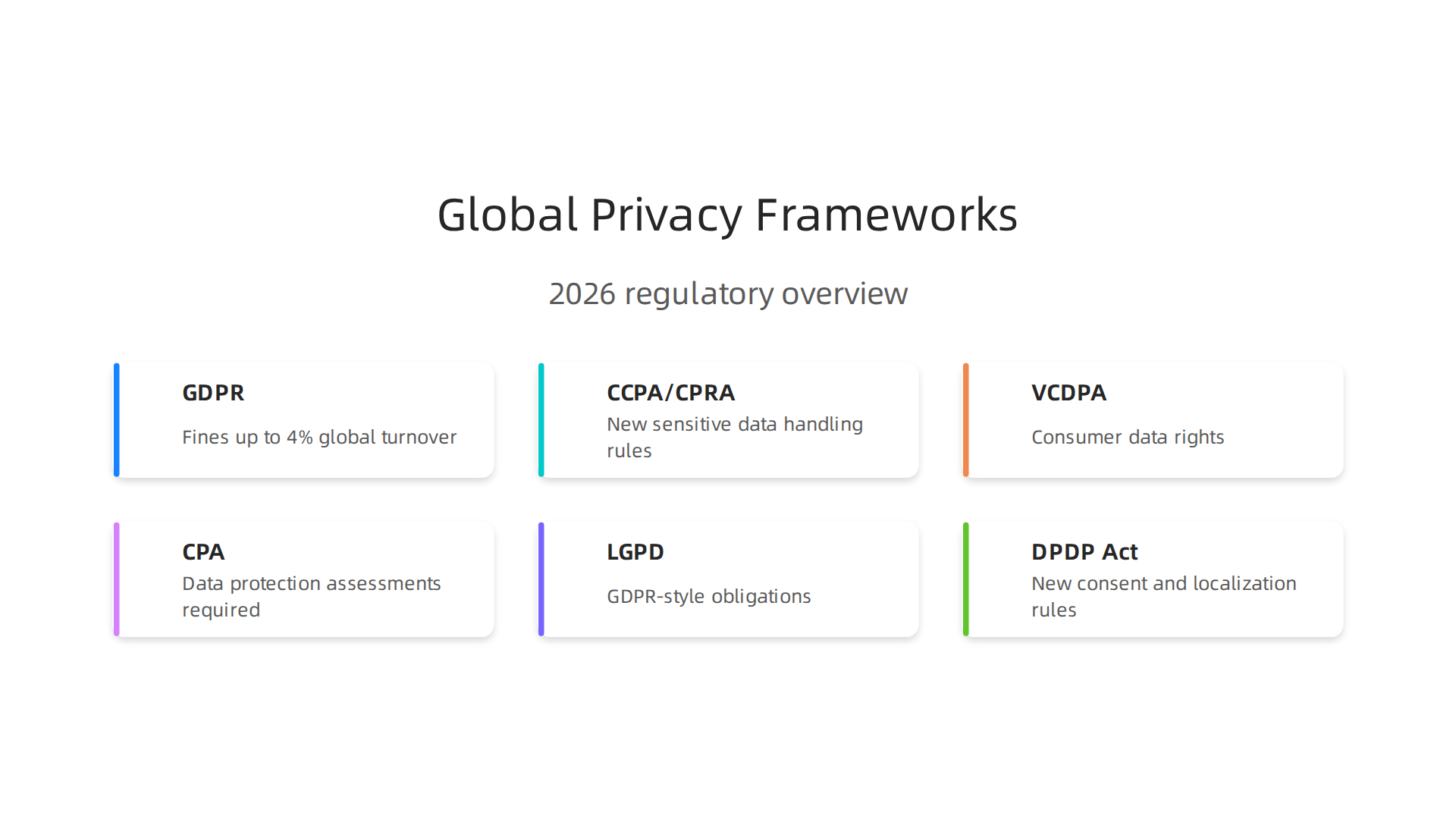
| Regulation | Region | Key Impact for Startups |
|---|---|---|
| GDPR | EU/UK | Fines up to 4% of global turnover |
| CCPA/CPRA | California | New sensitive data handling rules |
| VCDPA | Virginia | Consumer data rights |
| CPA | Colorado | Data protection assessments required |
| LGPD | Brazil | GDPR-style obligations |
| DPDP Act | India | New consent and localization rules |
Learning how larger players handle this complexity can give you a roadmap. Check out our deep dive on how Palantir approaches regulatory compliance in 2026 to see a real-world compliance strategy in action.
The regulatory landscape changes fast. If you want to stay ahead of every shift without drowning in news clutter, you need reliable daily intelligence. That is why we recommend The Deep View Newsletter. It delivers clear daily updates on AI and tech regulation so you never miss a critical change. It is the edge every compliance-minded leader needs in 2026.
2. AI Regulation Takes Center Stage: The EU AI Act and Beyond
If you are building beta technologies that use artificial intelligence, 2026 is the year the rules finally arrived. And they are strict.
The EU AI Act is now the world’s first complete legal framework for AI.

It went into full effect in phases, and by 2026 many of its key obligations are live. The law sorts AI systems by risk level: minimal, limited, high, and unacceptable. If your beta technology operates in sensitive areas like hiring, credit scoring, or healthcare, it almost certainly qualifies as "high-risk." For high-risk AI systems, the rules are intense. You must set up a continuous risk management system, maintain detailed technical documentation, ensure human oversight, and register your system in the EU database before you can sell it. source
Here is what that looks like in practice. Let’s say you are building an AI that screens job candidates. That is a high-risk use case under the EU AI Act because it impacts people’s careers. You need to perform a conformity assessment before launching. You also need a CE marking to prove compliance. source This is not a one-time checklist either. The EU AI Act demands continuous risk management, not just a single audit. source
Other parts of the world are not waiting. The United States is moving forward with its own AI governance frameworks at both federal and state levels. The UK is developing a pro-innovation approach. China has already published strict rules on algorithm recommendation systems and generative AI. The result is a complex international patchwork that beta technologies must navigate from day one. Companies like zebra technologies and renaissance technologies have spent years building automated compliance workflows for AI. Your startup may not have their budget, but you can learn from their approach.
The smartest move is to bake compliance into your product architecture now. That means documenting your training data, explaining how your model makes decisions, and testing for bias before launch.

It also means staying up to date with every new rule in the world of ai regulation.
To get a clearer picture of how these rules apply to your specific use case, check out our guide on AI regulations 2026: compliance strategies to avoid million-dollar fines. It breaks down the exact steps you need to take.
The regulatory landscape shifts weekly. If you want to keep your beta technology compliant without spending all day reading legal documents, we recommend the AI newsletter worth reading. It is called The Deep View Newsletter. It delivers clear daily updates on AI regulation and tech policy straight to your inbox. It is the edge every compliance-minded leader needs in 2026.
3. Enforcement Trends and the Cost of Non-Compliance
So you have your beta technologies ready. You think you understand the rules. But here is the real question for 2026: Are regulators actually enforcing these laws? The answer is a loud yes. And they are not messing around.
Let’s look at the numbers. GDPR fines have now passed €7.1 billion since 2018.
In 2025 alone, regulators handed out €1.2 billion in penalties. source The biggest single fine in 2025 was €530 million against TikTok for unlawful data transfers. source These are not small companies either. Regulators are going after the biggest names in tech.
But fines are just the start. Here is what else can happen when you break the rules:
- Your product can get banned from the EU market entirely
- Your reputation takes a hit that investors never forget
- Your customers lose trust and leave
- You face class-action lawsuits from users
The world of ai enforcement is heating up fast. Privacy enforcement is surging across the UK, EU, and US in 2026. source The Federal Trade Commission in the US has also been active, bringing cases against companies that misuse consumer data. source And these actions send a clear message: regulators are watching.
For startups building beta technologies, this creates a serious challenge. You probably do not have the legal budget of big players like zebra technologies or renaissance technologies. But the risks are the same. One compliance failure could end your business.
So what can you actually do? The smartest approach is to build compliance into your process from day one. Here are some practical steps:
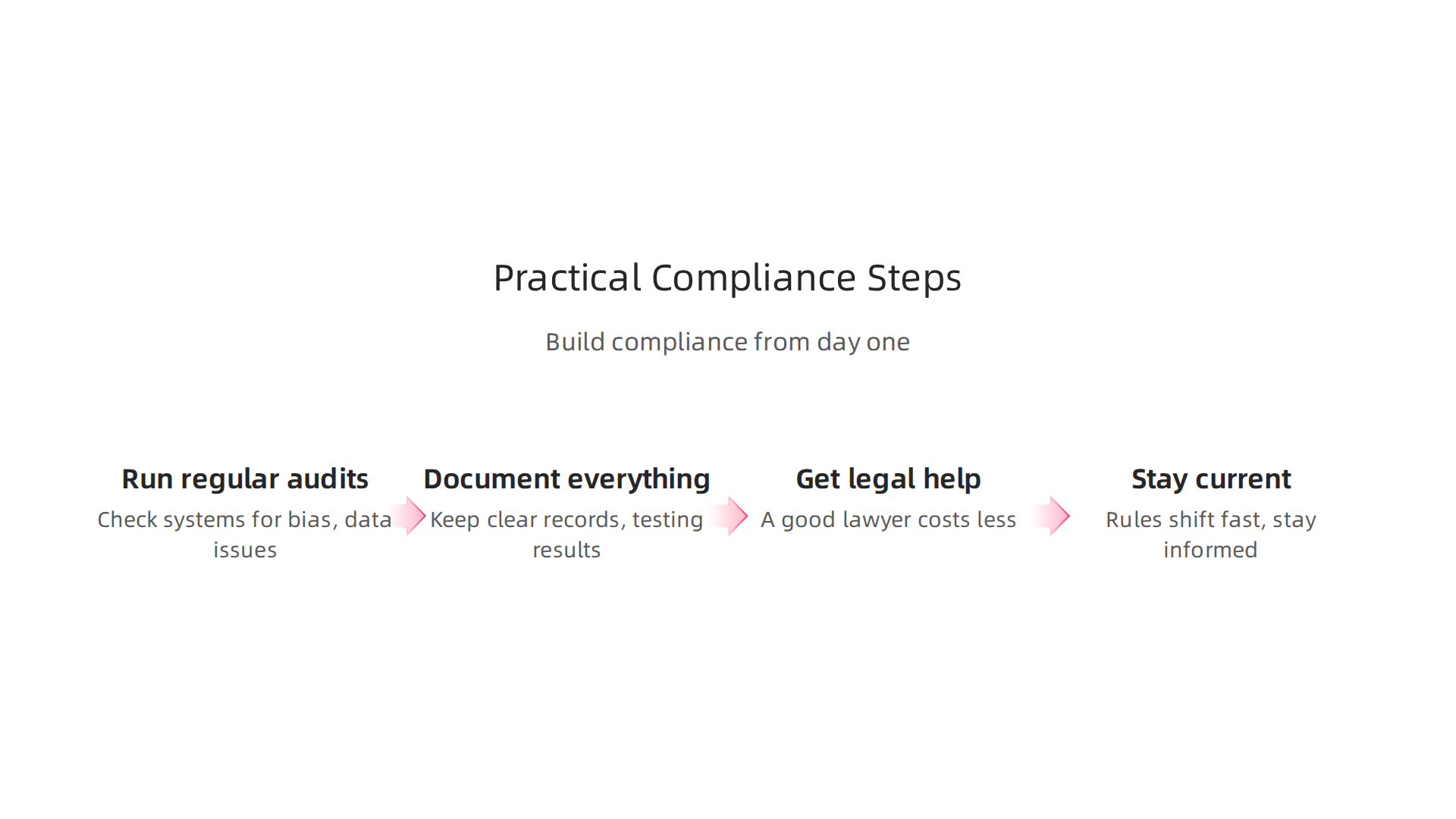
Run regular audits. Do not wait for a problem. Check your systems often for bias, data handling issues, and documentation gaps. The EU AI Act requires continuous risk management, not one-time checks. source
Document everything. Keep clear records of your training data, model decisions, and testing results. If a regulator asks questions, you need answers ready.
Get legal help early. A good compliance lawyer costs less than a fine. Period.
Stay current with changes. The rules shift fast. What was fine last month might be illegal today.
If you want a complete breakdown of how to protect your company from million-dollar penalties, check out our guide on AI regulations 2026: compliance strategies to avoid million-dollar fines. It walks you through the exact steps every business needs in 2026.
Here is the bottom line. The era of light-touch enforcement is over. Regulators have the laws, the staff, and the will to act. For beta technologies, the cost of ignoring compliance is simply too high.
The best way to stay ahead is to know what is happening before it happens. That is why we recommend The Deep View Newsletter. It delivers clear, daily updates on AI regulation and tech policy straight to your inbox. No fluff. Just the information you need to keep your technology compliant and your business safe.
4. Building a Scalable Compliance Program on a Startup Budget
The last section likely made you feel a bit nervous about enforcement. That is understandable. But here is the good news. You do not need a giant legal team or a million-dollar budget to build a solid compliance program. In fact, many of the best tools and strategies are free or very cheap.
The key is to start early. When you prioritize compliance from day one, you avoid expensive fixes later. You also look much better to investors. Smart money in 2026 wants to fund beta technologies that have governance built in, not bolted on after a problem.
So what does a low-cost compliance program actually look like? Let me break it down piece by piece.
Start with the Basics
You need a few core things in place, even if you are a team of two. Think of these as the foundation:
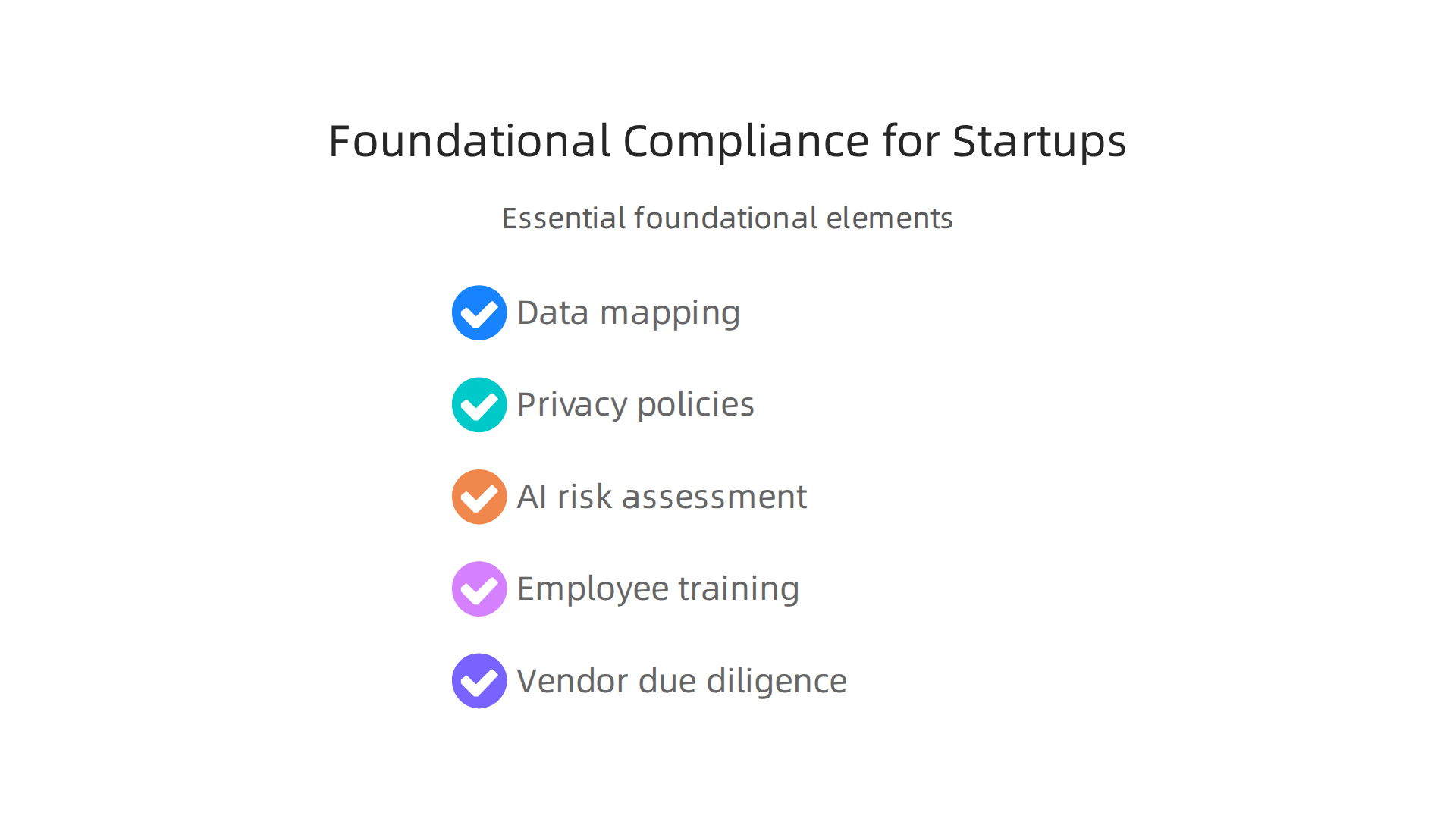
- Data mapping. Know what data you collect, where it lives, and who has access to it. Free tools like spreadsheets work fine at first.
- Privacy policies. Write clear, simple policies that explain how you handle user data. Do not copy and paste from another company. Make it your own.
- AI risk assessment. If your system qualifies as high-risk under the EU AI Act, you must establish a risk management system. The Act lays out requirements for providers of high-risk AI systems. source Even if you are not sure whether your system is high-risk, it is safer to run an assessment anyway. Article 6 of the AI Act lists which systems are always considered high-risk. source
- Employee training. Teach your team the basics of data privacy and AI ethics. Short online courses are often free.
- Vendor due diligence. When you use third-party tools or services, check that they also follow the rules. You are responsible for what your vendors do with data.
Use Free and Low-Cost Tools
You do not need expensive enterprise software. Many open-source and freemium tools can handle compliance tasks. For example, you can use automated compliance platforms that help with evidence collection and monitoring. Some of the best compliance automation tools in 2026 offer features like automated evidence collection and real-time monitoring. source These tools are designed for startups and scale as you grow.
Regulatory sandboxes are another great option. These are safe spaces where you can test your beta technologies under regulator supervision. You get feedback and guidance without the risk of fines. Many EU countries offer sandboxes for AI systems.
Build Compliance into Your Workflow
Do not treat compliance as a separate task. Integrate it into your everyday development process. For example, when you write code, include a step for bias testing. When you launch a new feature, run a quick privacy check first. The world of ai regulation moves fast, so staying proactive is your best defense.
If you want a full checklist with all the steps, check out our guide on AI regulations 2026: compliance strategies to avoid million-dollar fines. It covers everything from registration requirements to CE marking obligations. source
The Payoff
Building a scalable compliance program on a startup budget is completely doable. You save money, reduce stress, and make your company more attractive to investors. Plus, when a regulator comes knocking, you are ready.
Stay ahead of every rule change. The regulatory landscape shifts almost daily. That is why we recommend The Deep View Newsletter. It delivers clear, concise updates on AI regulation and tech policy straight to your inbox. No fluff, just the insights you need to keep your startup compliant and your business growing.
5. Anticipating the Next Wave: Future Regulatory Shifts
So you have built a compliance program that works today. But what about tomorrow? The regulatory landscape is not static. It is shifting fast, and the next wave is already forming. GDPR fines have now exceeded €7.1 billion since 2018, with €1.2 billion in fines issued in 2025 alone. source That trend is not slowing down.
Here is what experts expect in the near future:
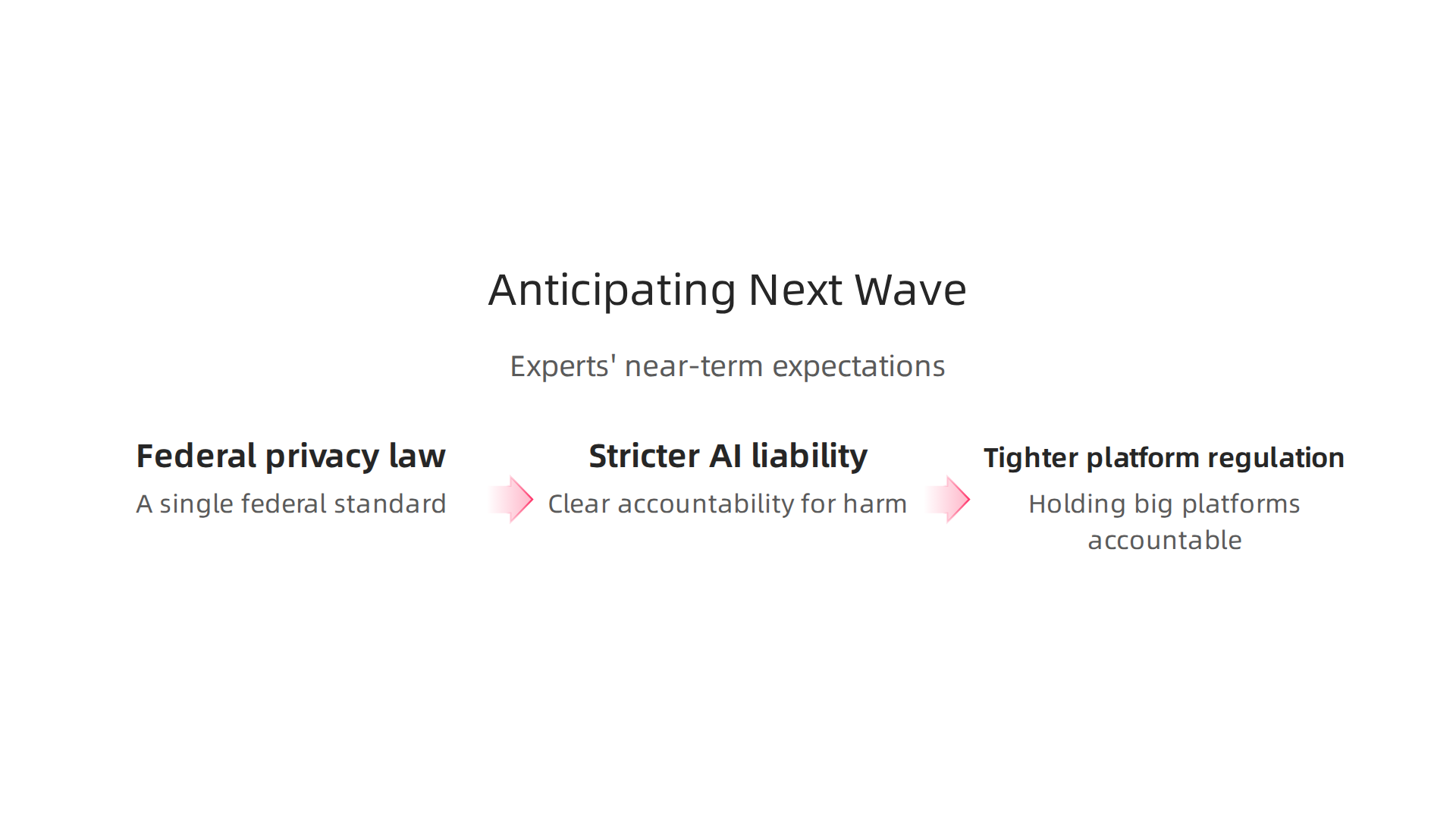
A comprehensive U.S. federal privacy law. Right now, the U.S. has a patchwork of state laws like the CCPA. A single federal standard would change everything for companies handling data across state lines. Privacy enforcement is accelerating in 2026 across the UK, EU, and U.S. source
Stricter AI liability rules. Regulators are looking at who is responsible when an AI system causes harm. The EU AI Act already sets rules for high-risk systems, but future rules may go further. The global privacy watchlist notes that GDPR enforcement is increasingly targeting AI, adtech, and children’s data. source
Tighter digital platform regulation. The EU Digital Services Act and Digital Markets Act are just the beginning. Other regions are crafting their own versions to hold big platforms accountable.
For startups building beta technologies, the smartest move is to monitor policy developments closely and even engage in advocacy. The world of ai regulation moves fast, and those who participate in shaping the rules often come out ahead.
The best defense is a flexible compliance infrastructure. Build your program so it can adapt quickly. That means using modular systems, staying on top of proposed rules, and running regular gap analyses. If you want a full roadmap for the year ahead, read our guide on AI regulations 2026: compliance strategies to avoid million-dollar fines.
Rules change almost daily. That is why you need a trusted source to keep you updated. Stay ahead of every rule change by subscribing to The Deep View Newsletter. It delivers clear, concise daily updates on AI regulation and tech policy. No fluff, just the insights you need to keep your startup compliant and your business growing.
6. Strategic Considerations for Founders and Investors
Regulatory compliance is no longer just a legal checklist item. In 2026, it has become a core factor in how investors value a startup.

Think about it. A strong compliance program can speed up funding rounds, reduce insurance costs, and open doors to enterprise customers. A weak one can kill a deal before it starts. This reality applies to all stages, from the earliest beta technologies all the way to established companies.
Why founders need to build compliance from day one
Too many startup founders treat compliance as something to worry about later. That is a mistake. When you design your product, you must think about data privacy, AI ethics, and industry specific rules from the start. Retrofitting compliance is much harder and more expensive. For example, in the world of ai, regulators are paying close attention to how models are trained and deployed. If you are building a new AI tool, you need to embed fairness and transparency into your code, not patch it on after launch.
The same goes for companies working in hardware, logistics, or satellite imagery. Even a company like BlackSky Technology News tracks how strict data sharing rules affect their operations. The lesson is simple: make compliance part of your product roadmap.
What investors should look for
Smart investors now treat regulatory risk like any other business risk. Before writing a check, they dig into a startup’s compliance posture. Questions include: Has the team done a data mapping exercise? Are there clear policies for handling customer data? Is there a plan for upcoming regulations like the EU AI Act?
Thorough due diligence can reveal hidden liabilities. A startup that looks cheap on paper might be carrying huge compliance debt. On the other hand, a startup that has invested in compliance automation tools, such as those highlighted in the Top 7 Automated Compliance Tools to Boost Your Business in 2026, can prove they are ready to scale safely.
Practical steps to take
The best approach is proactive. Here are three actions every founder and investor can take right now:
- Include a compliance section in every pitch deck. Show investors that you have mapped out the regulatory landscape and have a plan.
- Run regular audits, even before you are required to. Early gap analysis helps you spot problems before they become fines.
- Use platforms designed for startup compliance. Tools like Scytale help you collect evidence and prepare for audits automatically, so you can focus on building your product.
For a deeper look at how to avoid costly mistakes, read our guide on AI regulations 2026: compliance strategies to avoid million-dollar fines. It covers the specific rules that startups in the world of ai must follow to stay safe.
Companies like Zebra Technologies and Renaissance Technologies show that even large, successful firms must invest heavily in compliance. For founders, the time to start is now. For investors, the time to ask tough questions is before the term sheet is signed. Regulatory readiness is not a cost. It is a competitive advantage.
Summary
This article explains the 2026 regulatory reality for startups building beta technologies and AI, showing why privacy and AI rules are now central to product success rather than a legal afterthought. It maps the global patchwork—from GDPR and the EU AI Act to new U.S. state laws—and explains how enforcement, fines, and market restrictions can stop a launch or sink funding. You will learn which rules commonly apply (GDPR, CCPA/CPRA, VCDPA, Colorado/RI requirements, LGPD, India’s DPDP), how the EU AI Act treats high‑risk systems, and which enforcement trends to watch. The piece gives practical, low‑cost steps founders can take now: data mapping, privacy policies, risk assessments, vendor checks, audits, and basic automation. It also outlines how to embed compliance into development workflows, use sandboxes and tools, and present regulatory readiness to investors. Read this to build a scalable compliance plan that reduces enforcement risk and preserves your ability to innovate and raise capital.