

Introduction: The New Era of Android Intelligence
Your Android phone is getting much smarter in 2026. Not in small ways, but in ways that change how you work, communicate, and stay safe online. Google is weaving artificial intelligence directly into the Android operating system, making it more than just a phone OS. It is becoming a personal assistant that understands context, automates boring tasks, and even protects you from scams in real time.
This shift matters for everyone. Whether you use a phone for work, personal tasks, or both, the new AI features on Android are designed to save time and reduce hassle. According to a 2026 Google announcement, the company is launching feature that makes Android more proactive and helpful than ever before.
But these changes come with a catch. The regulatory environment for artificial intelligence is shifting fast in 2026, both in the US and around the world. Laws around data privacy, AI transparency, and platform accountability are creating new rules for companies that build or use AI. For developers, businesses, and even regular users, these rules can feel confusing.
That is why this article exists. We break down the key trends in Android intelligence, the regulations you need to know about, and what they mean for how you use your devices. If you want to stay ahead of the curve, understanding the current state of AI compliance is essential.
If you want clear daily AI updates, The Deep View Newsletter delivers them straight to your inbox.

It is a simple way to keep up with the fast-moving world of AI regulation without drowning in noise.
The Rise of On-Device AI: Gemini and Android Intelligence
The biggest shift in android intelligence in 2026 is happening right on your phone. No internet required. Google’s Gemini Nano now lets your device handle powerful tasks like summarizing long documents, generating smart replies, and even creating images without sending your data to the cloud.
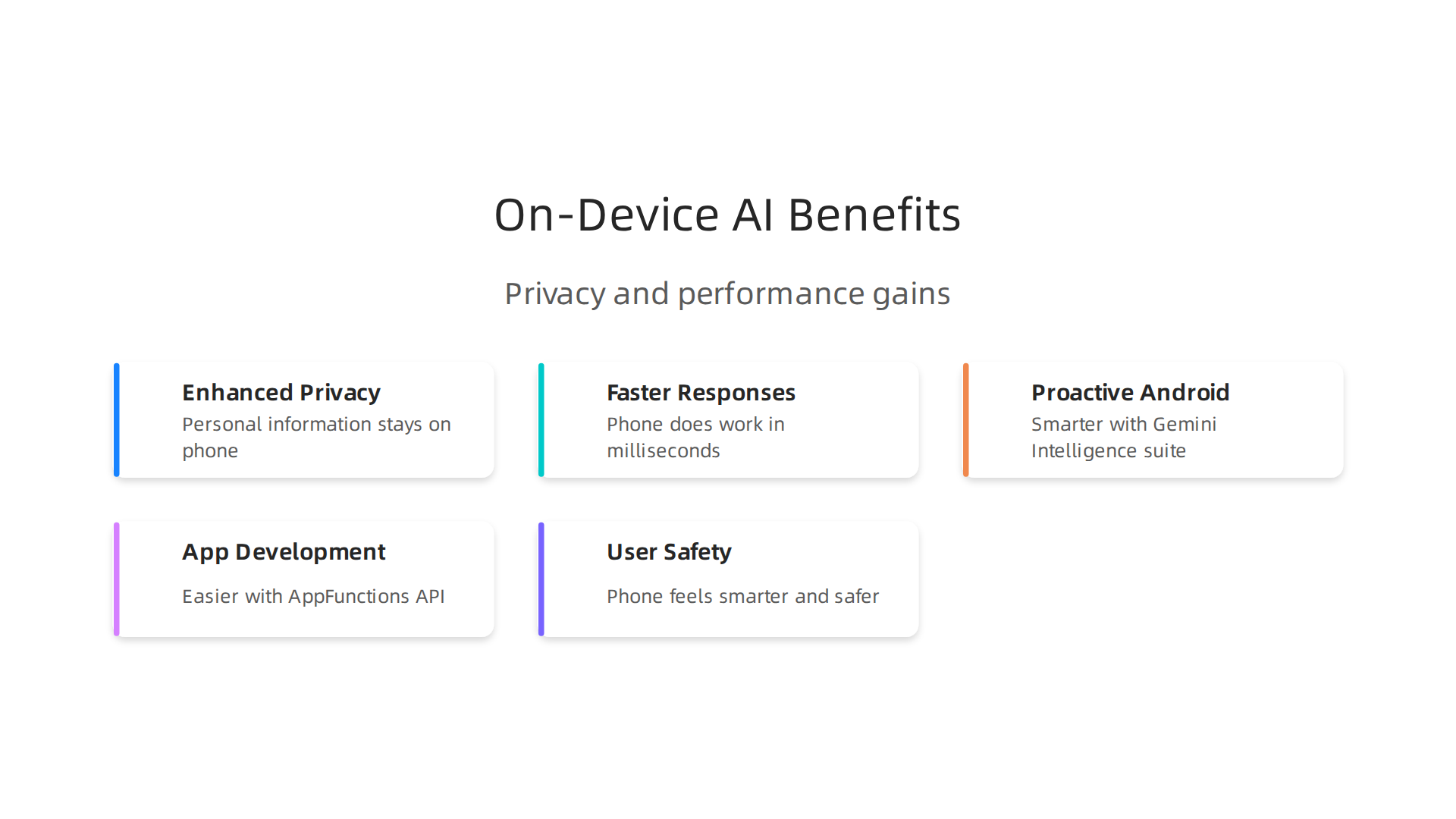
This is a big deal for privacy. When your personal information stays on your phone, it is much harder for third parties to access it. Your messages, photos, and documents never leave your device. That means faster responses too. Instead of waiting for a server to process your request, your phone does the work in milliseconds.
Google announced these features as part of a smarter, more proactive Android with Gemini Intelligence. The new suite includes tools like Rambler, which turns your messy voice notes into polished text, and custom widgets you can build just by describing what you want.
But on-device AI is not just about convenience. It also changes the rules for app developers and regulators. When AI runs locally, companies have less control over how it behaves. This creates new challenges for transparency and accountability. The silicon valley artificial intelligence community is watching closely to see how these changes affect data privacy laws. The push for an open future AI is gaining traction as regulators worldwide recognize that on-device processing can strengthen user privacy.
Adoption is happening fast. Most flagship Android phones in 2026, including the Pixel 10 and Galaxy S26, ship with dedicated AI hardware that makes on-device AI possible. If you want to understand what agentic AI means for work and compliance, our guide on what is agentic AI and how it is changing business in 2026 offers a clear overview.
For developers, tools like the new AppFunctions API and Gemini Nano 4 make it easier to build intelligent apps that respect user privacy. And for users, the result is a phone that feels smarter and safer without asking for constant internet access.
Staying informed about these rapid changes is tough. If you want clear daily updates on AI rules and trends, The AI Newsletter Worth Reading delivers them straight to your inbox.
Regulatory Landscape: EU AI Act, GDPR, and U.S. AI Laws in 2026
The EU AI Act hit full enforcement on August 2, 2026.
This matters for android intelligence because many AI features on your phone are now classified as high-risk. Chatbots, image generators, and voice assistants must tell you that you are interacting with AI. Content created by AI must carry a machine-readable label. These rules apply to any app available in the EU, no matter where the company is based.
According to the EU AI Act for Mobile Apps: Comply Before August 2026 guide, apps that use AI for things like credit scoring, hiring, education, or biometric identification face even stricter rules. They need a full conformity assessment, quality management system, and CE marking. Fines can reach 7% of global annual turnover.
The General Data Protection Regulation (GDPR) still runs alongside the AI Act. If your phone’s AI processes personal data, the GDPR applies too. Violations can cost up to 4% of worldwide revenue. This double layer of rules means every Android AI feature that touches user data must be carefully documented and logged.
In the United States, there is no single federal AI law yet. Instead, states are passing their own. Colorado’s AI Act requires risk assessments for high-risk systems. California’s proposed laws focus on transparency and safety testing. This patchwork creates a compliance headache for any Android app sold nationwide.

For help navigating these rules, check out our AI regulations 2026 compliance strategies for businesses. Staying ahead of the regulatory curve is key as both the EU and US move to shape the future of silicon valley artificial intelligence.
Google’s Antitrust Challenges and Their Impact on Android AI
While the EU and US work on new AI laws, Google faces another big problem. The U.S. Department of Justice is going after the company in a major antitrust case. The court could force Google to change how it runs Android. This includes how it gives out Play Services and licenses its AI tools to phone makers.
If the government wins, Google might have to stop favoring its own AI services on Android phones. Right now, features like Gemini come built in and get top billing. But new rules could require Google to give other AI assistants the same access. That would be a huge shift for android intelligence.
This case is about more than just search. Regulators are watching how Google uses its control over the Android ecosystem to push its own AI. They worry about self-preferencing. That means Google might show its own AI results first, even when a competitor’s tool is better. Data access is another concern. Google gets tons of user data from Android phones. It uses that data to train its AI models. Competitors argue that is unfair.
For app developers and phone makers, a court order could open up new options. They might get to choose which AI runs on their devices. That could lead to more innovation and lower costs. It also fits the idea of an open future ai, where no single company controls the smart features on your phone.
The outcome of this case will likely shape how silicon valley artificial intelligence companies operate for years to come.
If you want to stay ahead of these antitrust moves and other tech regulation news, get clear daily AI updates from The AI Newsletter Worth Reading. It helps you track changes that affect your business. And for deeper guidance on handling this new pressure, check out these compliance strategies to avoid fines.
Developer Compliance: Building AI Apps Under the New Rules
So what does all this mean for the people actually building apps? If you are a developer creating AI-powered Android apps, 2026 has brought big changes to how you work.

Google now requires clear labeling when your app uses AI. You must tell users how the AI generates content and what data it uses to make decisions. This push for transparency is reshaping android intelligence from the ground up.
Google Play has updated its Developer Program Policy to treat AI-generated content as a separate regulated area. The main rule is simple: your app must not be able to create harmful or offensive content. This includes misleading information, content that promotes self-harm, and anything involving child exploitation. And here is the key part. The responsibility falls on you, the developer, even if the harmful content comes from a user interacting with your AI model. According to the latest Google Play requirements for AI apps, developers must prevent problems before they happen, not just respond after someone complains. You also need to include in-app reporting features so users can flag content without leaving your app.
On top of that, the EU AI Act adds another layer for apps sold in Europe. If your Android app uses AI for medical diagnosis or credit scoring, it likely counts as a high-risk system. That means formal risk assessments, human oversight controls, and clear user documentation. Missing these steps can block your European market access entirely.
Google is tightening enforcement too. The company plans more automated AI-focused app reviews throughout 2026. Apps that fail quality, safety, or transparency standards face approval delays, ranking drops, or permanent removal from the Play Store. Developers must also target API 35 (Android 15) and keep their Data Safety form accurate. As silicon valley artificial intelligence companies push the boundaries of what AI can do, regulators are pushing back hard.
What happens if you ignore these rules? App removal, fines, and reputational damage are real risks. But there is good news. Developers who build compliance into their design process are earning user trust. People prefer apps that explain how AI works. That trust leads to better ratings and more downloads. In a world moving toward an open future ai, transparency is your competitive advantage.
For more guidance on how AI regulations affect specific app types, check out this overview of AI regulations for businesses using AI-generated visuals. It covers transparency rules and content safety standards you need to know.
AI Safety and Trust: Google’s Responsible AI Framework
Here is the thing about all these new rules. They are not just about avoiding punishment. They are about building something users actually trust. And in 2026, that trust is everything.
Think about it. When you download an Android app that uses AI, how do you know it is safe? How do you know the AI is not making biased decisions or misusing your personal data? That is where Google’s own responsible AI framework comes in. Google has been talking about its AI principles for years. But in 2026, those principles are finally turning into real tools developers can use.
Take the AI Test Kitchen as an example. It lets developers test how their AI features behave before releasing them to users. Then there is the Model Card Toolkit, which helps teams document exactly how an AI model works, what data it was trained on, and what its limits are. And the TensorFlow Privacy library gives developers a way to check if their AI leaks private information. These tools turn abstract promises into real safeguards.
But here is what is really changing the game. Third-party auditors are stepping in. More and more companies now hire outside experts to check their Android AI features for fairness, bias, and transparency. An auditor might test whether a loan approval AI discriminates against certain groups or whether an image generator handles sensitive topics safely. This is not just a nice-to-have anymore. It is becoming standard practice.
Why does this matter to you as a developer or a business leader? Because trustworthy AI is no longer just a compliance checkbox. It is a market differentiator. Users are paying attention. They want apps that explain how AI works and give them control over their data. Apps that do this earn better ratings and more downloads. Apps that do not risk losing users fast.
Google is enforcing these standards too. The company has made it clear that apps failing to meet safety and transparency expectations could be removed from the Play Store. You can read more about these upcoming penalties in this breakdown of Google’s Play Store compliance rules for AI apps.
Building trust takes time. But every step you take toward transparency makes your app stronger. If you want to understand the darker side of AI and why safety matters so much, take a look at this guide on the real risks of unrestricted AI. It shows what happens when developers ignore these responsibilities.
As the world moves toward an open future ai, the winners will be the ones who treat safety as a feature, not a burden. Silicon valley artificial intelligence companies that lead on trust will shape the next decade of mobile technology. And android intelligence built on transparency is android intelligence that lasts.
Want to keep up with the latest AI regulations and safety standards? Get clear daily AI updates from The Deep View Newsletter. It is a fast way to stay ahead of the rules that matter most.
Investor Considerations: Monetizing Android AI Amid Regulatory Pressure
Here is where the money gets complicated. You might have a brilliant idea for an Android app powered by artificial intelligence. You might even have a working prototype. But in 2026, investors are asking a lot more questions before they write a check.
The venture capital landscape has shifted hard. In Q1 2026 alone, AI startups captured 81 percent of all venture capital funding globally.

That is a staggering number. But here is the catch. Most of that money went to a small number of huge deals. Smaller Android AI startups are finding it much harder to raise money unless they can prove they are ready for regulation from day one.
What does that mean for you? It means regulatory risk scoring is now a standard part of investor due diligence. Venture firms want to see that your app has clear policies on data usage, algorithmic transparency, and user consent before they invest a single dollar. If your business plan talks about monetization through aggressive data collection or opaque ranking systems, investors will walk away. You can see the full picture in this detailed look at the State of VC investment in AI.
This is especially true in two sectors: health and finance. Android AI companies building tools for medical diagnosis, patient monitoring, or loan approvals face intense scrutiny. Regulators in the US and Europe are watching closely. A single compliance failure can wipe out months of progress and millions in valuation. Investors know this. They are pricing that risk into every deal.
So how do you monetize without running into trouble? The smartest strategy is to build compliance into your product from the start. Think of it as a feature, not a cost. Apps that offer clear explanations of how their AI makes decisions earn user trust. Trust leads to higher engagement. And higher engagement supports premium subscription models that do not rely on shady data practices.
Ad revenue models are also changing. Algorithmic ranking that favors paid content without clear disclosure is getting flagged by regulators. If your app uses ranking or recommendation algorithms, you need transparency baked in. Otherwise your ad revenue stream could dry up fast when enforcement actions hit.
For a deeper look at how to structure your business for the new compliance landscape, check out this guide on 2026 AI compliance strategies for businesses. It covers the specific rules that affect monetization models.
The bottom line? Silicon valley artificial intelligence investors are not afraid to fund Android AI. They are just more careful about who they back. If you can show that your business model works within the rules, you have a real shot at funding. If you try to cut corners, the market will punish you.
The winners in this open future ai landscape will be the ones who treat transparency as a revenue driver. Build that into your pitch deck. It might be the thing that gets you funded.
Cross-Industry Impact: Healthcare, Finance, and Automotive
So where does your Android AI app actually face the most regulatory heat? It depends on the industry you are targeting.
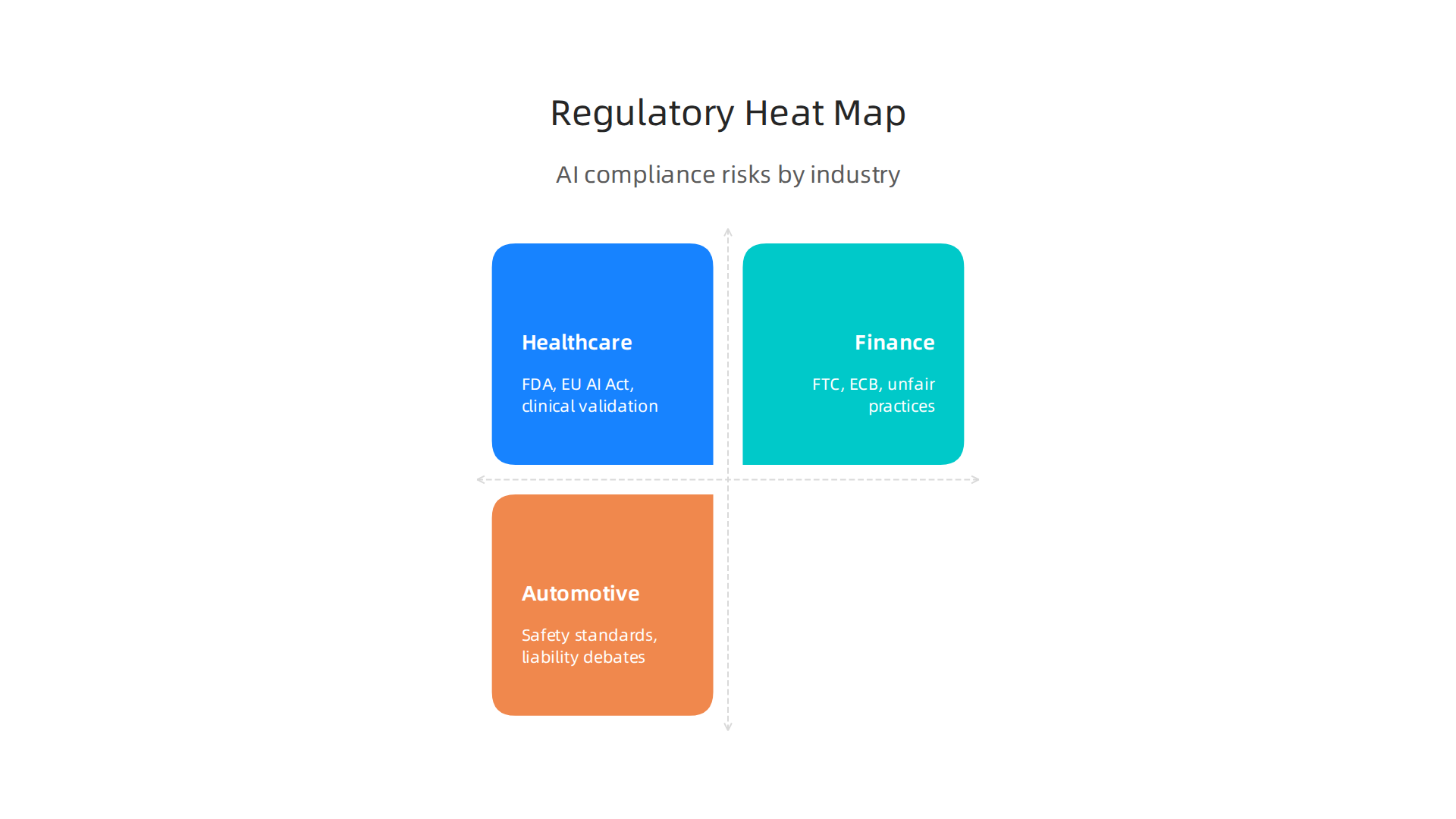
Each sector brings its own set of overlapping rules, and the stakes are getting higher by the month.
Take healthcare first. If you are building an Android app that helps doctors analyze medical images or suggest possible diagnoses, you are stepping into a compliance minefield. In the US, the FDA treats AI diagnostic tools as medical devices. That means clinical validation, quality control, and lengthy approval timelines. In Europe, the EU AI Act classifies these same tools as high-risk systems. You have to comply with both at the same time. This dual burden is expensive. It also slows down how fast you can get your product to market. If you are working in this space, you need to understand the full scope of the rules. A good starting point is this breakdown of artificial intelligence imaging regulations and what they mean for your development cycle.
Now consider finance. Fintech apps that use Android AI for fraud detection or credit scoring are under a different kind of microscope. The FTC watches for unfair or deceptive practices. The European Central Bank adds its own layer of scrutiny under financial services regulation. When AI decides who gets a loan or flags a transaction as suspicious, regulators want to know exactly how that decision was made. If your algorithm is a black box, you are inviting trouble. Investors already see this as a major red flag. The broader conversation about AI investment risks highlights how uncertainty around these rules is driving funding decisions.
Finally, there is the automotive sector. Android Auto integrations are getting smarter every year. AI assistants can now handle navigation, media, and even vehicle diagnostics. But what happens when an AI takes over a critical driving function? Who is liable if something goes wrong? These questions do not have clear answers yet. Regulators in the US and Europe are actively debating safety standards for AI in vehicles. If your app touches any driving-critical system, you need to follow how companies like Aurora are handling the evolving autonomous vehicle regulations of 2026.
Staying ahead of all these moving pieces is hard. That is why getting clear, daily updates on regulatory shifts is so valuable. We recommend The AI Newsletter Worth Reading to keep your team informed without the noise.
Preparing for 2027: Future AI Regulation and Android Updates
The rules are not done changing. In fact, some of the biggest shifts are still ahead.

If you are building Android AI apps today, you need to watch two major developments heading into 2027.
First, the European Union is working on an AI Liability Directive. This law would make it easier for people to sue companies when an AI system causes harm. For Android developers, that means your app’s AI decisions could come with real legal consequences. If your assistant recommends a wrong medical dose or your driving app fails to detect an obstacle, you could be held responsible. The rules are designed to close the gap between fast-moving AI and older liability laws.
Second, the United States is debating a bipartisan federal AI framework. Right now, no comprehensive national law exists. That could change soon. Prediction markets currently show a 45 percent chance that the US enacts an AI safety bill before 2027. You can track the latest on this US AI safety bill speculation to see how odds shift in real time. A federal law would create a single standard for transparency, risk reporting, and incident disclosure. That would make compliance simpler than dealing with a patchwork of state rules.
At the same time, Google is pushing deeper into on-device Android intelligence. Expect Gemini to handle more tasks locally on your phone without needing the cloud. This means faster responses and better privacy. But it also means regulators will look harder at what those on-device models can do. If your app uses generative AI or autonomous agents, you should understand how agentic AI is changing business in 2026 and how those changes will accelerate in 2027.
The bottom line? Businesses that build flexible compliance structures now will adapt faster when 2027 hits. Monitor policy updates monthly, build audit trails into your Android apps from day one, and keep your team educated on both US and EU trajectories. The ones who treat regulation as a design constraint rather than an afterthought will own the market.
Summary
Android intelligence in 2026 is shifting from cloud-first models to powerful on-device AI, driven by Gemini Nano and new Android tools that speed up tasks and keep data local. This article explains what on-device processing means for privacy, developer workflows, and regulatory compliance, covering major laws like the EU AI Act and GDPR alongside a fragmented U.S. state-level approach. It also examines Google’s antitrust risks, how Play Store rules and transparency requirements affect app approval, and practical developer steps for testing, labeling, and preventing harmful outputs. You’ll learn how regulators treat high-risk systems across healthcare, finance, and automotive sectors, what investors now expect for compliance, and which tools and audit practices build user trust. The piece finishes with a look at likely 2027 rule changes and concrete recommendations for teams that need to design compliance into products from day one.