Introduction
You just used an AI tool to create a stunning picture of your CEO shaking hands with a world leader. It looks real. Too real, actually. Now you are wondering: can you actually publish that? The answer in 2026 is complicated.
The truth is, the explosive growth of generative AI has made it possible for anyone to create hyper-realistic pictures of artificial intelligence at scale. Tools for artificial intelligence imaging, text to video artificial intelligence, and even voice swap technology are now cheap and easy to use. But this power comes with a major catch. Governments around the world are racing to pass new laws that control how you create, share, and profit from AI-generated visuals.
Right now, the regulatory landscape looks like a patchwork quilt. The EU AI Act is enforcing with real penalties. US states are splintering into different rules. The UK is taking a different approach, and China has its own strict system. As the AI Governance and Regulation 2026 guide explains, keeping up with all these moving parts is a full time job. For businesses and creators, one wrong move with a single AI generated image could lead to fines, lawsuits, or losing access to key markets.
That is why staying ahead of regulatory shifts is critical. Whether you are a startup founder using AI visuals in your ads, a content creator experimenting with text to video artificial intelligence, or a compliance officer trying to protect your brand, you need a clear picture of what is allowed and what is not.
This guide will walk you through the most important AI regulations in 2026, with a special focus on visual media. We will cover the EU AI Act, US state laws, UK copyright rules, and practical steps to stay compliant. For a deeper dive into how these rules apply specifically to AI generated images and videos, read our dedicated guide on navigating artificial intelligence imaging regulations in 2026.
The rules are changing fast. But with the right plan, you can use AI visuals confidently and avoid costly mistakes.
If you want to keep your finger on the pulse of AI regulation without spending hours reading legal documents, you need a daily shortcut. That is exactly why we recommend The Deep View Newsletter. It delivers clear, practical AI updates straight to your inbox every day. Simple enough to read in five minutes, smart enough to keep you compliant.
What Are AI-Generated Visual and Synthetic Media?
Remember that fake photo of your CEO with a world leader from the start? It looked real, but it was completely made by AI. That is exactly the kind of synthetic media we are talking about in 2026.
AI-generated visuals cover a broad range of content. This includes simple pictures of artificial intelligence created with common tools. It includes text to video artificial intelligence clips that turn a sentence into a movie scene. And it includes voice swap technology, which can make anyone sound exactly like someone else.
How does this work behind the scenes? Most artificial intelligence imaging tools learn from huge datasets. These datasets contain billions of images scraped from the internet. This is where the legal trouble starts. The landmark Andersen v. Stability AI case showed how artists’ copyrighted work was used to train these AI models without permission. A US judge ruled against the companies, sending a big wake-up call through the entire industry. And just recently, the Supreme Court said an AI system cannot be listed as the author of its own artwork.
So every picture on artificial intelligence you create could get you into legal trouble if you are not careful. The technology itself has a double edge. Yes, it unlocks amazing creativity for marketers, filmmakers, and small businesses. But it also makes deepfakes and misinformation easier to create than ever before.
Understanding this balance is the first step to using AI visuals safely. To learn the specific rules for images and videos, read our complete guide on navigating artificial intelligence imaging regulations in 2026.
The rules around text to video artificial intelligence and voice swap tools change almost weekly. You need a simple way to stay updated without spending hours reading legal documents. That is why we recommend The Deep View Newsletter. It gives you clear daily updates on AI law and tools, so you never get caught off guard by a new court ruling or regulation.
The Regulatory Landscape in 2026: A Global Overview
So the rules are different everywhere you look. But to keep your pictures of artificial intelligence safe, you need to know what is happening in each major region.
The Big Players
The EU AI Act is the most complete rulebook so far. It puts AI tools into risk levels. If your artificial intelligence imaging tool is high risk, you have strict rules to follow. The act started enforcing its first rules in early 2026, and it has a big reach. If you serve users in Europe, you have to follow it. A detailed comparison of the EU, US, UK, and China approaches shows how different each region really is.
In the United States, there is no single AI law yet. Instead, states are making their own rules. California, Colorado, and Texas all have laws that affect text to video artificial intelligence and voice swap tools. Some require clear labels on AI content. Others focus on deepfakes in political ads. This patchwork makes compliance tricky for any business using AI.
China goes a different way. It already has strict rules for algorithm use and AI-generated content. Any picture on artificial intelligence that you share must be clearly labeled as artificial. The government wants to control the narrative and stop misinformation at its source.
The United Kingdom leans toward being "pro-innovation." It is not passing a big AI law yet. Instead, it asks existing regulators to write rules for their areas. For example, the UK government is studying how copyright law affects AI training.
Disclosure Rules You Need to Know
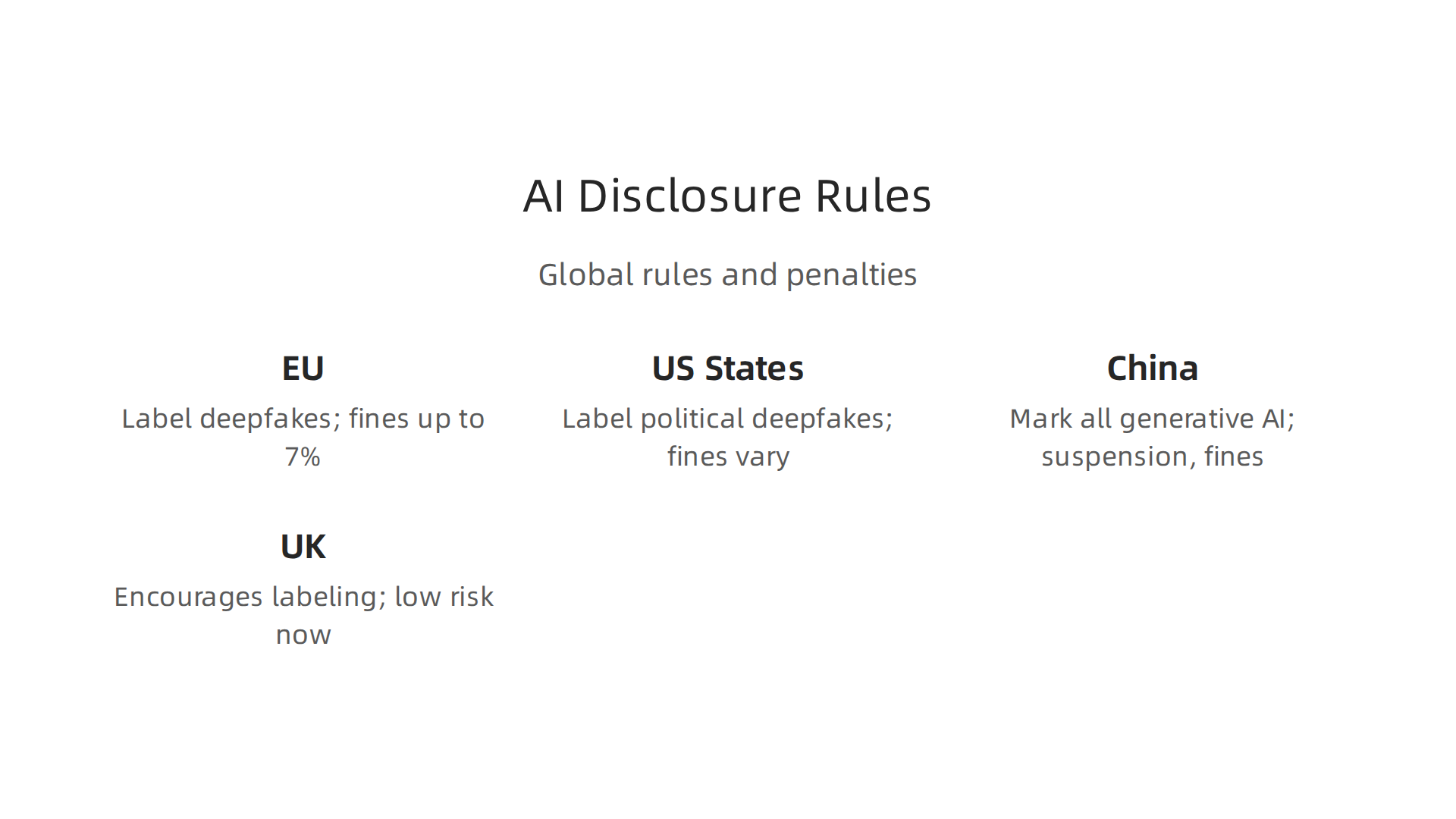
A big theme across all these regions is disclosure. You must tell people when content is AI-made.
The technical way to do this is through the C2PA (Coalition for Content Provenance and Authenticity) standard. It works like a digital nutrition label for every image, video, or audio file.
| Region | Disclosure Rule | Penalty for Breaking It |
|---|---|---|
| EU | Must label all deepfakes and some AI content | Up to 7% of global revenue |
| US (States) | Labeling required for political deepfakes | Varies by state, can include fines |
| China | Must mark all generative AI content | Suspension of service, fines |
| UK | Encourages labeling, not mandatory yet | Low risk for now |
Real Enforcement Is Here
Some companies have already been fined. A social media platform recently got a big penalty in Europe for not doing enough to stop AI-generated hate speech. And the first lawsuits over copyright in artificial intelligence imaging training data are moving through courts right now. The International AI Safety Report 2026 confirms we now have solid proof of the risks from AI-generated media.
How to Keep Up
Honestly, this is a lot to track. The rules change every week across different countries. You need a simple way to stay updated.
That is why we recommend The Deep View Newsletter. It gives you clear daily updates on AI law and tools, so you never get caught off guard by a new court ruling or regulation. It helps busy professionals cut through the noise.
If you want to dive deeper into the specific rules for images, check out our complete guide on navigating artificial intelligence imaging regulations in 2026.
Key Legal Frameworks Affecting AI-Generated Images and Video
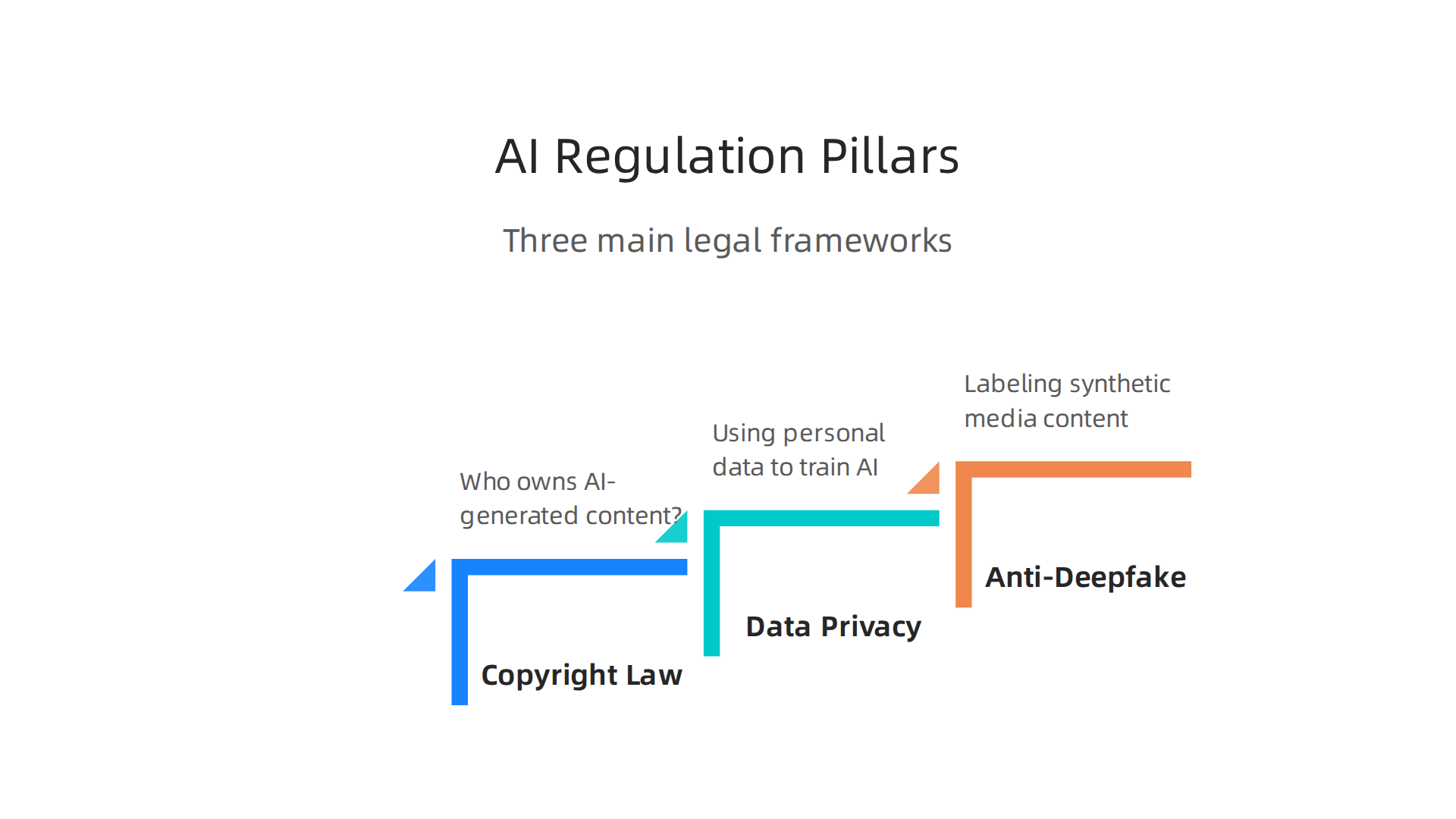
Now that you understand the global landscape, let us look at the specific laws that shape how you can create and share pictures of artificial intelligence. These rules are changing fast in 2026. Three main areas will affect you most: copyright, data privacy, and anti-deepfake laws.
Copyright Law: Who Owns a Picture on Artificial Intelligence?
Copyright is the biggest legal fight right now. The big question is simple: can a machine be an author? In March 2026, the US Supreme Court said no. It denied a copyright claim for a picture on artificial intelligence created by computer scientist Stephen Thaler. The Court ruled that only humans can own copyrights.
But the fights over training data are just as important. In a landmark case, artists sued Stability AI and other companies for scraping billions of images from the internet without permission.

A federal judge ruled that the companies were violating artists’ rights. This case, called Andersen v. Stability AI, focuses on the LAION dataset used to train many AI models. Artists won an early victory, but the case continues.
Then in February 2025, a Delaware federal court issued the first major decision on using copyrighted material to train AI. It sided with the plaintiff. These rulings make it risky to use artificial intelligence imaging tools without knowing what data they trained on.
Data Privacy Laws: Your Personal Data in the AI Mix
Your privacy also gets affected. Laws like the GDPR in Europe and the CCPA in California control how companies can use personal data to train AI. In 2026, new GDPR reforms are changing the rules. The French data protection authority, CNIL, released recommendations saying that training AI on user data is allowed only if you have the right legal basis. Consent matters a lot.
Data protection authorities from around the world even published a Joint Statement on AI-Generated Imagery in February 2026. They made it clear: you cannot generate realistic pictures of artificial intelligence using someone’s face or voice without their clear consent. This affects text to video artificial intelligence and voice swap tools directly.
Anti-Deepfake and Content Authenticity Laws
Many regions now have laws that specifically target deepfakes. The EU AI Act requires clear labeling of all synthetic media. Several US states require labels on political deepfakes. China demands all AI-generated content be marked. These laws work alongside technical standards like C2PA, which adds a digital "nutrition label" to files.
For a complete guide on how these rules apply to you, check out our article on navigating artificial intelligence imaging regulations in 2026.
Here is the thing: court rulings and privacy rules change almost every month. Staying current is hard work. That is why we recommend The Deep View Newsletter. It delivers daily updates on AI law, copyright cases, and privacy changes straight to your inbox. It helps you stay ahead without the overwhelm.
The EU AI Act and Synthetic Media: Deepfake Disclosure and Risk Management
While the global frameworks we just covered give you a broad view, the EU AI Act is the most detailed law yet for synthetic media. It directly affects how you create and share pictures of artificial intelligence, videos, and audio generated by tools like text to video artificial intelligence or voice swap apps.
The core of the law is Article 50. It sets clear transparency rules for all AI-generated content. Article 50 requires that AI providers watermark content at creation and that deployers (that means you, if you use the tools) disclose and detect deepfakes. This guide from the European Commission explains the transparency rules under Article 50 in plain language. The key point? Any picture on artificial intelligence you share publicly must be clearly labeled.
Mandatory Labeling by August 2, 2026
Here is the deadline you cannot miss. The obligations under Article 50 apply starting August 2, 2026. That is just a few months away. The European Union is introducing a binding requirement to label all AI-generated content. This includes images, video, audio, and text. A detailed overview of the AI labeling requirement shows what you must do. If you fail to label, you risk fines of up to €15 million or 3% of your total annual turnover. Penalties that size can crush a business.
The European Commission also published draft guidelines on May 8, 2026, to help companies comply. Legal firm Hogan Lovells provides a summary of those draft guidelines explaining that deployers must clearly label deepfakes and any text generated by AI that informs the public on matters of public interest.
Risk Management for Providers and Deployers
The EU AI Act classifies AI systems into four risk tiers. Most generative AI tools fall under the "limited risk" or "high risk" category. High risk systems require you to do a conformity assessment and register in an EU database. For example, if you use AI to create realistic pictures of artificial intelligence that could be mistaken for real people, you must assess the risks and put mitigation steps in place. This guide on the EU AI Act risk tiers breaks down what each tier means for your business.
For technology providers, the law demands transparency about training data and model capabilities. For deployers, it demands clear disclosure whenever synthetic content is shared. The European Commission also issued a Code of Practice for marking and labeling AI-generated content. This code gives practical steps to follow.
What You Need to Do Now
First, check if your AI tools comply. Do they add watermarks? Can you tell if an image was AI generated? If not, you need to update your workflow before August 2. Second, if you are a business leader overseeing AI adoption, you need a compliance plan. Our article on AI regulations 2026 compliance strategies for businesses offers a step by step approach.
The EU AI Act is complex and the deadline is real. Missing it could cost you more than money. It could destroy trust with your audience. That is why staying current matters so much. The The Deep View Newsletter delivers daily updates on AI law, including EU AI Act changes, straight to your inbox. It helps you stay ahead without the stress of tracking everything yourself.
U.S. State-Level Approaches: From California to New York
If you create pictures of artificial intelligence for your business and share them online, the rules you need to follow change based on where your audience lives. That is the messy reality of U.S. law in 2026. While Europe has one law for all member states, the United States has a growing patchwork of state laws. And it is growing fast.
California and New York Lead the Way
California was one of the first states to act. In 2019, it passed AB 730, which made it illegal to distribute deceptive audio or visual media of a candidate within 60 days of an election. The law applies to any artificial intelligence imaging that could trick voters. Since then, California has expanded its rules.
New York followed with S5958B, which requires clear disclosure on any political advertisement that uses synthetic media. If you use text to video artificial intelligence to create a campaign video, you must label it. The same goes for voice swap technology used in robocalls or endorsements.
The Patchwork Grows
As of early 2026, 45 states have enacted at least one law targeting AI-generated synthetic media, according to the Deepfake Laws 2026: 50-State Map of Penalties & Felonies. That means more than 239 deepfake-related statutes are now on the books nationwide. And the pace is not slowing. 15 more deepfake bills were enacted in just the first few months of 2026, as reported by Ballotpedia.
The laws are not the same everywhere. Some states require disclaimers on AI-generated political ads. Others ban deceptive synthetic media close to election day. A few states also target nonconsensual intimate images created with AI. The TAKE IT DOWN Act attempts to create a federal standard for platforms to remove such content, but it does not replace state laws.
This variety creates a real problem for businesses. A picture on artificial intelligence that is legal in Texas might violate the rules in Illinois.

The election deepfake laws spreading across the US ahead of the midterms show that the trend is accelerating. Meanwhile, a proposed Deepfake Federal Regulation Act would preempt state technical standards for digital watermarking, but that bill is still moving through Congress.
What This Means for You
You cannot rely on a single set of rules. Marketing teams, content creators, and compliance officers need to track laws in every state where their content reaches. That is a lot of work. The best strategy is to adopt the strictest labeling requirements as your baseline. If you label every picture of artificial intelligence clearly, you stay safe everywhere.
For a full step-by-step approach to staying compliant across multiple states, check our guide on AI regulations 2026 compliance strategies for businesses. And to keep up with new state laws as they pass, the The Deep View Newsletter delivers daily updates straight to your inbox so you never miss a change.
Compliance Strategies for Tech Firms and Content Creators
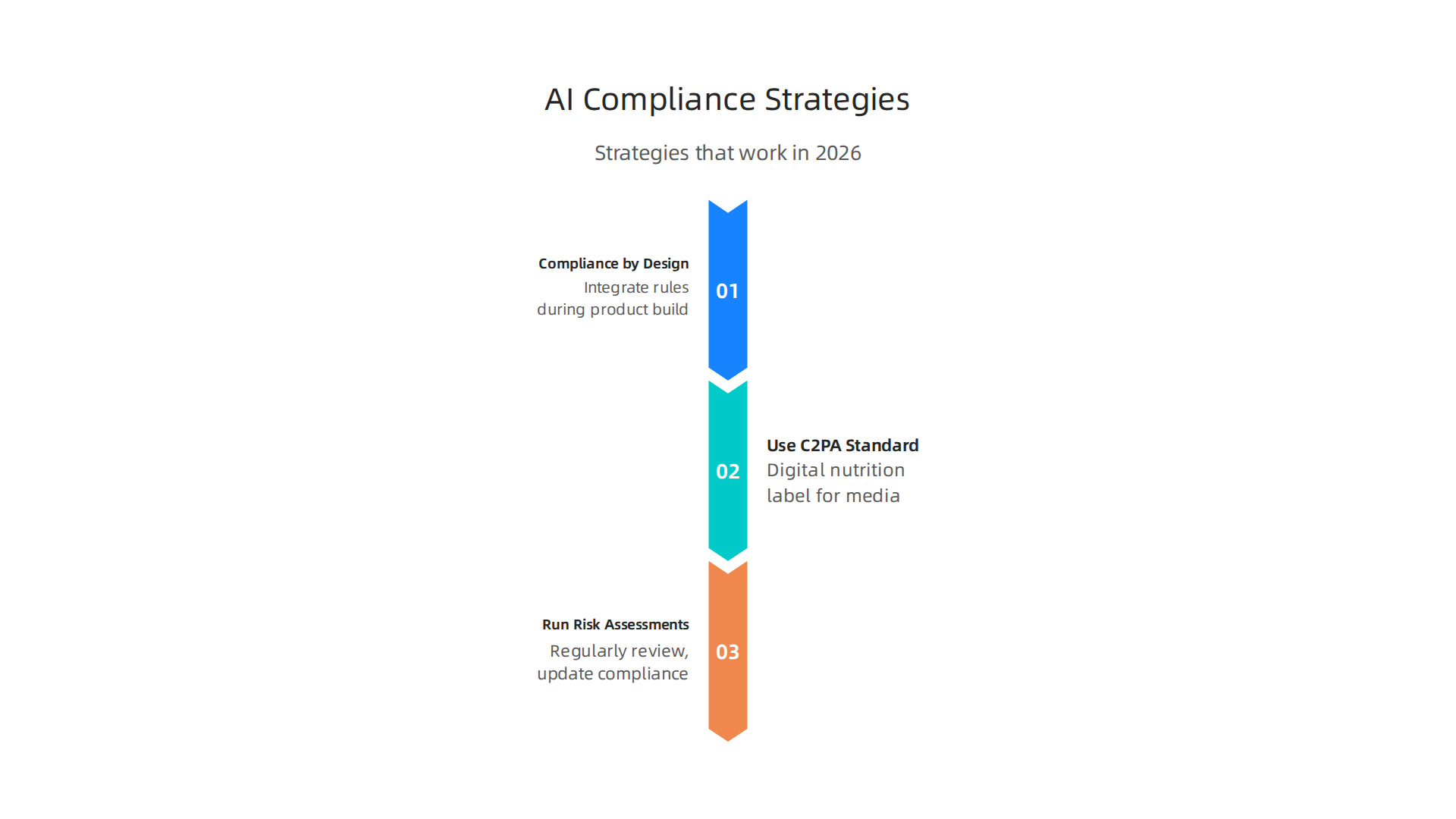
So what do you actually do about all these rules? Whether you build AI tools or just use them to make content, you need a solid plan. Here are the strategies that work in 2026.
Build Compliance Into Your Tools From Day One
The smartest approach is what experts call "compliance by design." That means you add rules and safeguards while you build your product, not after. If you create pictures of artificial intelligence for clients, your software should automatically add disclosures. No manual steps needed.
This matters a lot in the EU right now. Under Article 50 of the EU AI Act, both the people who make AI tools and the people who use them must label AI-generated content. The EU AI Act transparency rules guide explains that this applies to every business using generative AI. The deadline is August 2, 2026. And the fines can go up to €15 million or 3% of your annual revenue, as detailed in the AI Act update on deadlines.
If you run a tech firm, make sure your artificial intelligence imaging tools add watermarks at creation. If you are a content creator, check that the tools you buy do this already.
Use the C2PA Standard for Content Provenance
Here is the most practical solution available right now. The Coalition for Content Provenance and Authenticity (C2PA) created an open standard that tracks where a file came from and what changed it. Think of it like a nutrition label for digital media.
Major hardware and software companies have already adopted C2PA. Canon launched a C2PA-compliant imaging system in May 2026 that adds provenance data at the moment a photo is taken. Sony, Nikon, and Leica are doing the same. Adobe Creative Cloud supports it too. You can learn more about how C2PA content credentials work and why they matter.
If you publish any picture on artificial intelligence, attaching C2PA credentials proves it came from an AI tool. That builds trust with your audience and keeps you compliant. The State of Content Authenticity in 2026 report calls this a turning point for trust in AI-driven media.
Run Regular Risk Assessments
You cannot just set up compliance once and forget it. The laws change fast. You need to check your risks on a regular schedule.
Start by asking a few questions. Where does your content reach? Which states or countries have the strictest rules for text to video artificial intelligence or voice swap content? What happens if you miss a label?
A good risk mitigation plan includes these steps:
- Map every jurisdiction where your content appears
- Adopt the strictest labeling rule as your baseline
- Audit your tools to confirm they add metadata automatically
- Train your team on new requirements every quarter
For a deeper look at building these processes, check our guide on AI regulations 2026 compliance strategies for businesses.
The rules will keep shifting through 2026 and beyond. But if you build compliance into your tools, use C2PA standards, and run regular assessments, you stay ahead of the fines and earn your audience’s trust. To stay updated on every new rule as it passes, subscribe to The Deep View Newsletter for daily AI regulatory updates delivered straight to your inbox.
Future Outlook: What’s Next for AI Visual Media Regulation?
So where is all this heading? The rules around pictures of artificial intelligence are changing faster than most people realize. And the next few years will bring even bigger shifts.
The United States May Finally Get a Federal Law
Right now, the U.S. has a patchwork of state laws. As of early 2026, 45 states have enacted at least one law targeting AI-generated synthetic media, with more than 239 deepfake-related statutes across the country. That is a lot of different rules to follow.
But that might change soon. The Deepfake Federal Regulation Act 2026 is a proposed bill that would set one national standard for digital watermarking and content provenance. It would preempt state technical standards, which means one rule for everyone. That would make compliance much simpler for any company that creates artificial intelligence imaging tools or works with AI visual content.
We already have the TAKE IT DOWN Act on the books, which targets nonconsensual intimate images. More federal laws are expected soon, especially as the 2026 midterm elections approach and election deepfake laws spread across states.
Global Standards Are Starting to Converge
It is not just the U.S. Countries around the world are moving toward shared rules. The C2PA standard for content provenance that we talked about earlier is becoming the global baseline. Voluntary frameworks are also rising: companies promise to label all synthetic media even if local laws do not require it yet.
This convergence is good news. If you follow the strictest rules today, your business will be ready for tomorrow. For a deeper look at how these international trends affect your workflow, read our guide on navigating artificial intelligence imaging regulations in 2026.
Emerging Tech Will Push Regulations Even Further
Here is the challenge. New technologies are moving faster than the laws. Real-time deepfakes can alter video live during a video call. AI video avatars can mimic real people with scary accuracy. Voice swap tools can copy anyone’s voice in seconds.
Current laws struggle to handle these fast-moving threats. Expect new rules specifically targeting text to video artificial intelligence and real-time synthetic media. Lawmakers are already looking at 2025 and 2026 data, and more bills are coming. Since 2022, 170 laws have been enacted across the U.S. targeting deepfake technology. That number will keep climbing.
Stay Ahead of the Wave
The rules for every picture on artificial intelligence will keep shifting. New federal laws, international standards, and emerging tech threats mean you cannot set it and forget it.

You need to stay informed.
That is exactly why you should get clear, daily updates straight to your inbox. The Deep View Newsletter delivers the latest regulatory news in a quick, easy read. It helps busy professionals like you keep up without drowning in noise. Subscribe today and stay ahead of every change.
Summary
This article explains the fast-changing legal landscape for AI-generated images, video, and audio in 2026 and shows what creators and businesses must do to stay compliant. It surveys major regimes — the EU AI Act (including Article 50 and an August 2, 2026 labeling deadline), U.S. state-level deepfake laws, the UK’s sector-led approach, and China’s strict disclosure rules — and highlights active copyright and privacy cases that affect training data and authorship. The guide covers practical requirements like watermarking, C2PA provenance credentials, consent for using faces and voices, and risk-tier rules for providers and deployers. It also lays out operational steps: build compliance into tools, run regular risk assessments, adopt the strictest labeling as baseline, and track where content is distributed. Readers will finish able to identify immediate compliance gaps in their workflow, choose technical standards to prove provenance, and prioritize next steps to avoid fines or legal exposure.