

Introduction
You wake up to news that your AI tool just got flagged as high-risk under new rules.

Your compliance team is scrambling. Your customers are asking questions. And the fines for getting it wrong? They can hit millions.
That’s where we are in 2026.
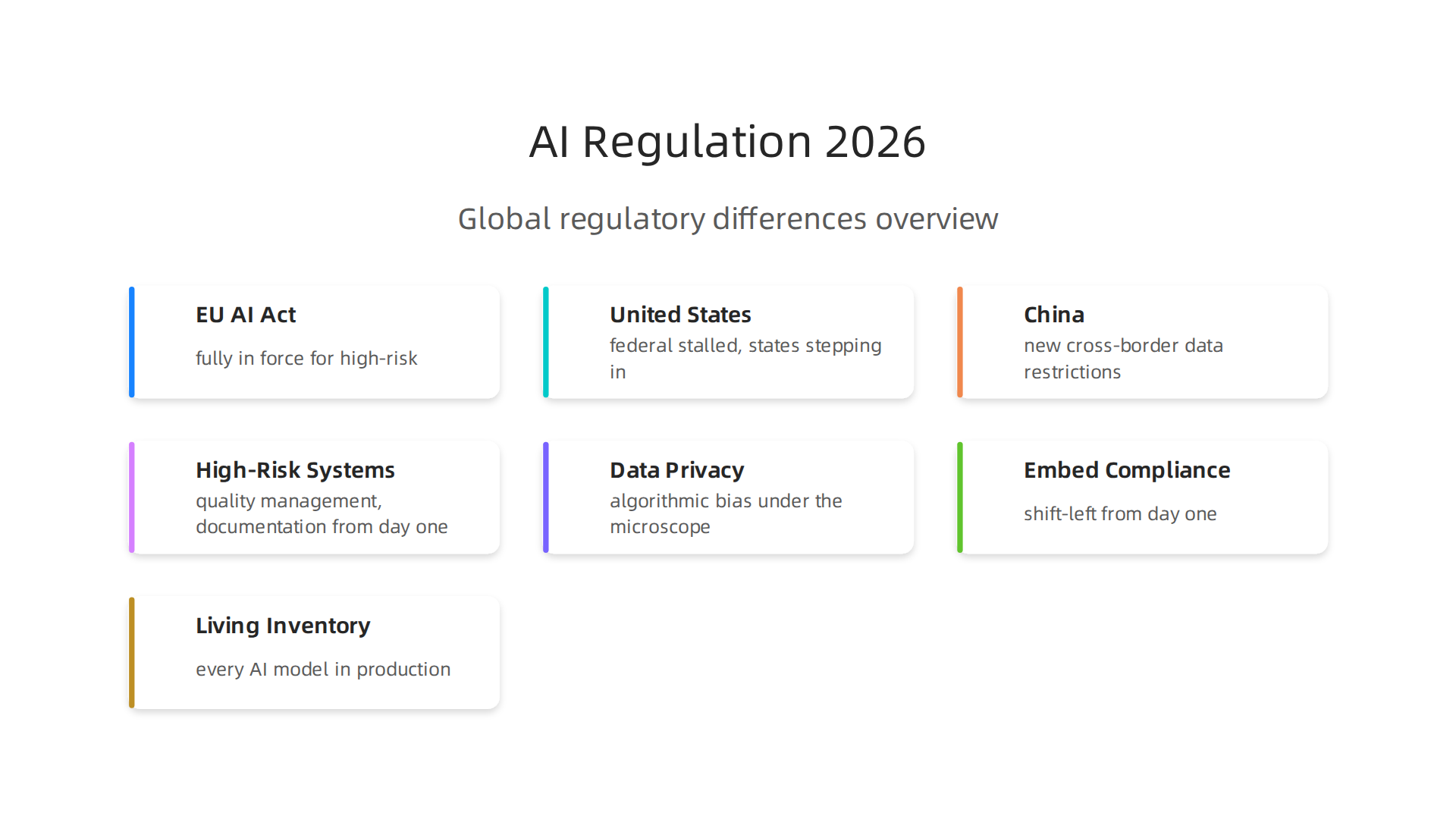
This year marks a turning point for AI tech companies worldwide. Major regulations are now taking effect, and the pressure is real. The European Commission recently published draft guidelines on how to classify AI systems as high-risk, and these rules have teeth. Under the EU AI Act, providers of high-risk systems must set up a quality management system and keep detailed technical documentation from day one.
And it’s not just Europe. GDPR enforcement has already piled on over €7.1 billion in penalties since 2018, with €1.2 billion issued in 2025 alone. The message is clear: regulators are serious.
For leaders at AI safety companies, startups founded by OpenAI founders, or anyone building at Anthropic AI and beyond, the challenge is the same. How do you keep innovating without running into compliance trouble?
This article gives you actionable insights drawn from current regulatory data and expert perspectives. You’ll learn what to watch, what to prepare, and how to stay ahead.
If you need a deeper look at how to build your compliance strategy, check out our guide on AI regulations compliance strategies for businesses.
And if you want to stay on top of these fast-moving changes every day, get clear daily AI updates from The Deep View Newsletter.
It’s the kind of briefing that turns regulatory noise into real understanding.
The 2026 Global AI Regulatory Landscape
The rules are no longer just proposals. They are here. And they look very different depending on where you build and sell your products.
Let’s start with Europe. The EU AI Act is now fully in force. If your company builds or uses AI systems that could affect people’s safety or rights, you likely fall into the high-risk category. On May 19, 2026, the European Commission published draft guidelines to help companies figure out exactly where their systems land. These guidelines include practical examples so the rules are easier to understand.
What does high-risk mean for ai tech companies? It means you need a quality management system that runs through your AI’s entire life. The EU requires providers to set up this system and keep detailed technical documentation before you even bring your product to market. Article 11 of the Act demands that documentation from day one. And deployers must check that the system is registered in the EU database before they start using it.
For ai safety companies and teams working on advanced models, the bar is even higher. The EU wants to see risk management systems that cover the full picture. That means thinking about risks from the start, not as an afterthought.
Now look at the United States. Federal AI regulation has stalled. Congress has not passed a comprehensive AI law. But that does not mean there are no rules. States are stepping in. Colorado passed its own AI law focused on protecting consumers from algorithmic discrimination. California is moving fast with its own set of requirements. The result is a patchwork. If you operate across multiple states, you must track different rules in different places. This is especially tricky for startups founded by OpenAI founders or teams building at Anthropic AI. You might have the strongest safety culture, but you still need to follow state-level rules that vary widely.
Then there is China. The Chinese government updated its AI regulations and added new restrictions on cross-border data transfers. If your ai tech company moves data in or out of China, you now face tighter controls. This affects everything from training data to model deployment.
The bottom line is this. You cannot treat compliance as one global checklist. The rules in Brussels, Sacramento, and Beijing are all different. And they are all changing fast.
If you want to dig deeper into how to build your compliance approach, check out our guide on AI regulations compliance strategies for businesses.
It covers the practical steps you can take right now. And to stay on top of these rapid shifts every day, get clear daily AI updates from The Deep View Newsletter. It turns regulatory noise into real understanding.
Top Compliance Challenges for AI Companies in 2026
So you have a handle on the global map of AI rules. Now comes the hard part: actually staying compliant day to day. In 2026, AI tech companies face three major challenges that keep compliance teams up at night.
Let’s break them down.
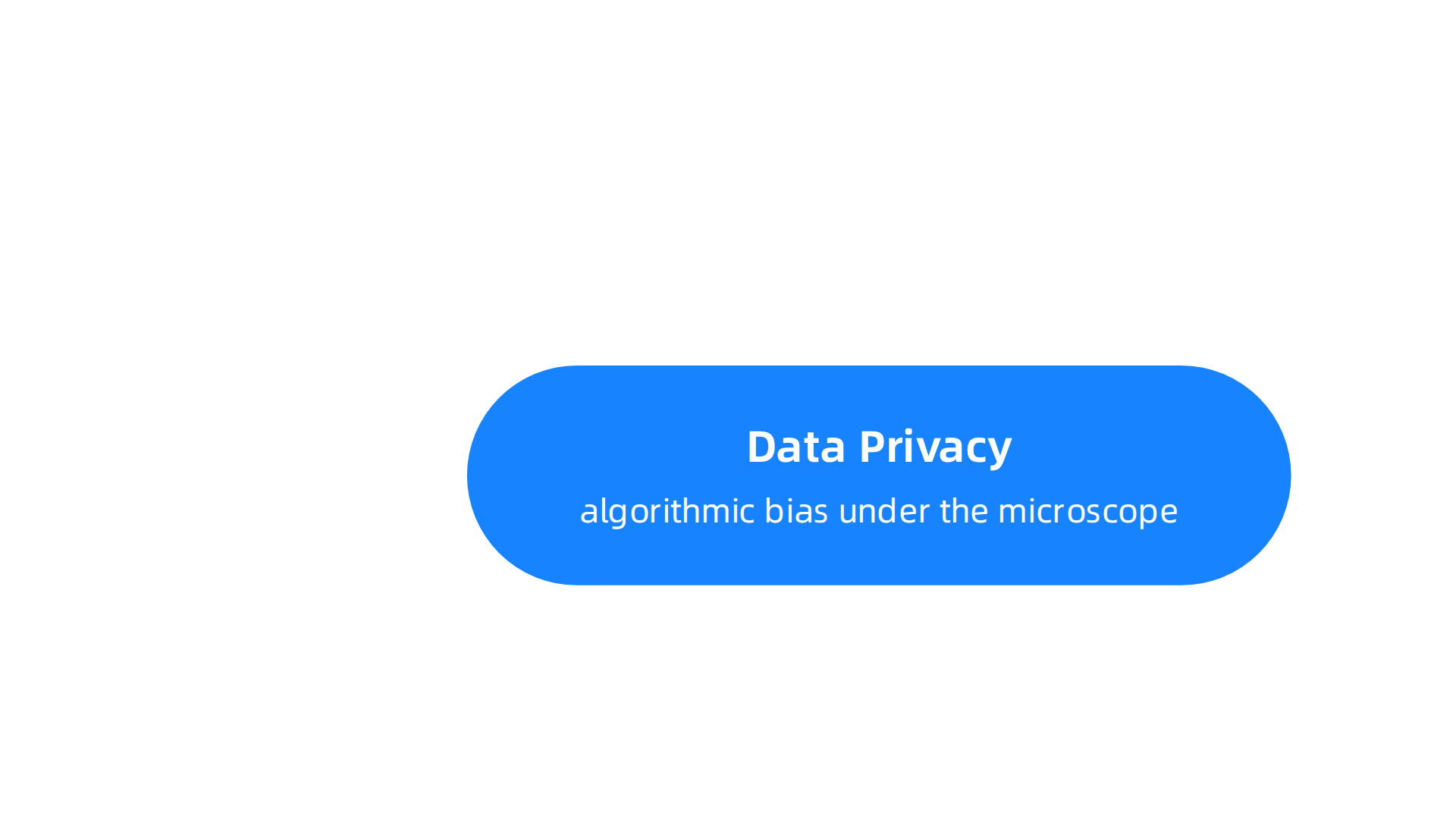
Data Privacy and Algorithmic Bias Are Under the Microscope
Regulators are laser-focused on two things: how you handle personal data and whether your algorithms treat people fairly. This is not just theory anymore. Enforcement is accelerating fast. In April 2026, a Morgan Lewis report showed that while federal policy stalls in the US, states are stepping in with their own enforcement actions.
Colorado and California are leading the charge, and even smaller states like Montana and Hawaii are using AI tools to flag compliance violations.
For AI safety companies and teams building models at Anthropic AI, this means you cannot just declare your system is fair. You need to prove it. That requires bias testing, audit trails, and clear documentation showing how you prevent discrimination. If you are an OpenAI founder or working with similar high profile teams, the scrutiny is even higher. The fines for getting this wrong are steep. Under the EU AI Act, breaches of high risk system rules can cost you up to EUR 15 million or 3% of your global annual turnover.
Many Companies Lack Proper Documentation and Risk Assessment
Here is the painful truth. A lot of AI tech companies still treat compliance paperwork as an afterthought. They build first and document later. That approach is dangerous in 2026.
The EU AI Act requires technical documentation from day one. You need a risk management system that covers the full lifecycle of your AI. Many companies simply do not have these processes in place. They do not know what counts as a high risk system. They do not have the audits ready. And that makes them an easy target for regulators.
If you want to avoid common mistakes, check out our guide on AI website builder compliance risks every leader should understand. It covers the documentation gaps that trip up most teams.
Cross Border Compliance Is a Growing Maze
You might think you are compliant in one region, but the rules in another region demand something completely different. This is the biggest headache for 2026.
The EU, US states, China, and other jurisdictions are diverging fast. Europe demands strict risk management for high risk AI. The US has a patchwork of state laws with different definitions and requirements. China has tightened cross border data rules. Even within regulated industries like healthcare, the FDA is sending signals about AI compliance enforcement in clinical settings.
For companies that operate globally, this creates a compliance nightmare. You cannot use one checklist for everywhere. You need a flexible system that adapts to each market.
The companies that survive in 2026 are the ones that build compliance frameworks before enforcement arrives. If you want to stay ahead of these rapid changes, get clear daily AI updates from The Deep View Newsletter. It turns regulatory noise into real understanding so you never miss a critical shift.
Leadership Strategies for Effective AI Governance
The challenges we just covered are real. But here is the good news. The companies that thrive in 2026 are not the ones with the most advanced models. They are the ones with the strongest governance. Leadership teams that treat compliance as a strategic advantage, not a burden, are pulling ahead. Let me share three strategies that top AI tech companies are using right now.
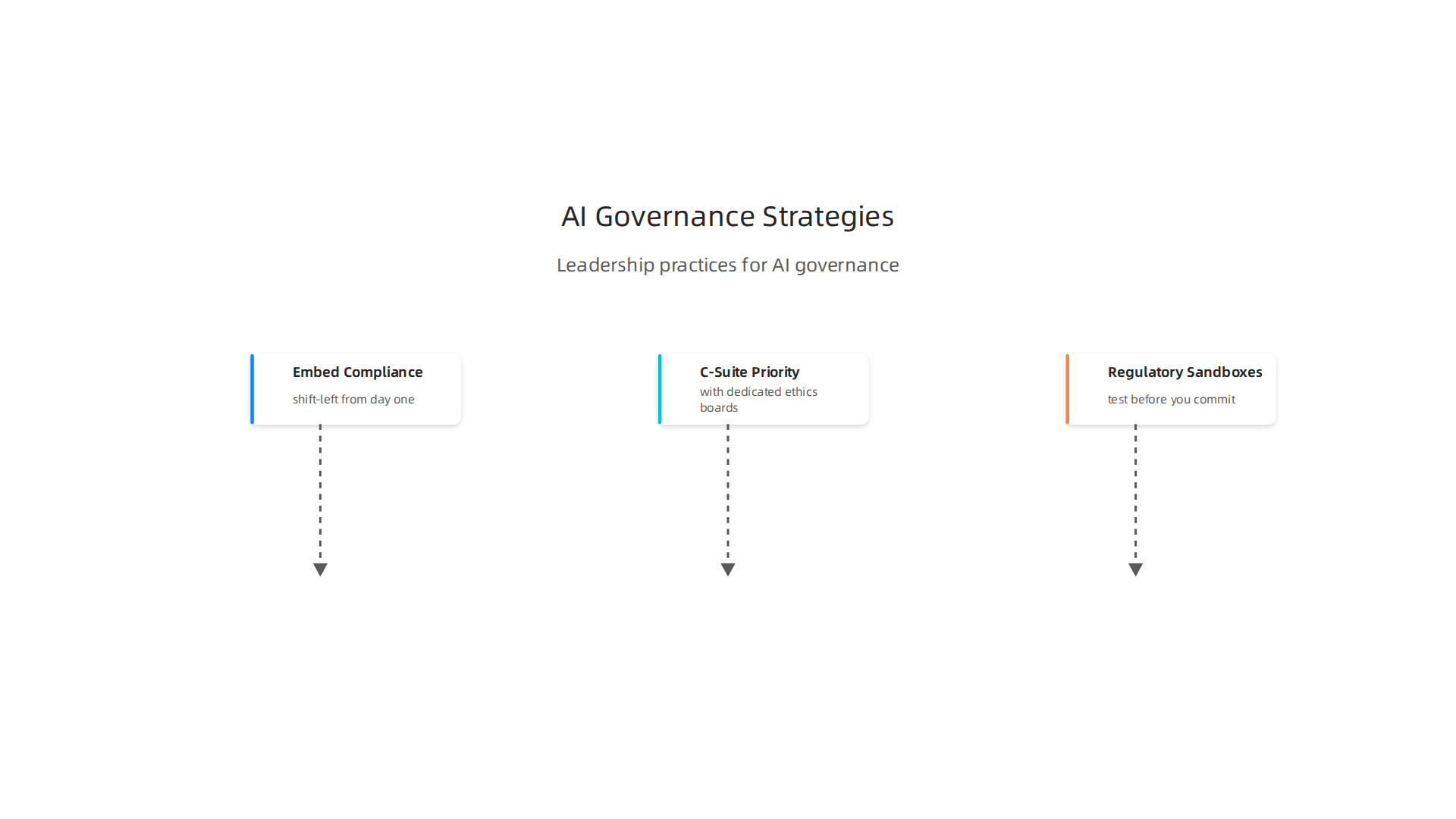
Embed Compliance from Day One (Shift-Left)
Here is the old way. Build the product. Launch it. Then ask a compliance team to check if everything is okay. In 2026, that approach is a fast track to fines and forced rollbacks.
The smarter approach is called shift-left. You move compliance checks to the very beginning of development. Think of it like building a house. Would you rather check the foundation while you pour it or after the roof is on?
Top AI safety companies now involve compliance teams in the design phase. They run bias testing before training is complete. They document data sources and model decisions as they go, not months later. According to the latest research on effective AI governance in 2026, organizations that embed ethical reviews into their development pipeline reduce costly rework and avoid regulatory surprises. The EU AI Act demands technical documentation from the start, so shift-left is not optional anymore. It is required.
For OpenAI founders and teams building at Anthropic AI, this means your engineering sprints need a compliance checkpoint at every stage. It slows down the first week. It saves you from disaster in month six.
Make It a C-Suite Priority with Dedicated Ethics Boards
AI governance cannot live only in the legal department. In 2026, it has to be a boardroom conversation. The Wharton School of Business makes a strong case that proactive AI governance directly protects brand value and reduces liability exposure. When leadership ignores governance, they invite enforcement.

The companies getting this right are doing two things. First, they assign a C-level executive to own AI governance. That could be a Chief AI Officer or a Chief Ethics Officer. Someone with budget and authority. Second, they create dedicated AI ethics boards that meet regularly, not just when something goes wrong.
These boards include people from legal, engineering, product, and even outside experts. Their job is to review new models, assess risks, and sign off before launch. It adds accountability. And when a regulator comes asking questions, you have a clear chain of decision makers who can answer.
Use Regulatory Sandboxes to Test Before You Commit
Do you want to know if your compliance approach actually works before a regulator audits you? Use a regulatory sandbox.
A sandbox is a controlled environment where you can test your AI system with real regulators watching, but without facing penalties if something goes wrong. More governments are offering these programs in 2026 because they want innovation to happen safely. The Deloitte 2026 State of AI in the Enterprise report shows that leading companies use sandboxes to validate their compliance frameworks before full deployment.
If you are moving an AI project from pilot to production, a sandbox gives you breathing room. You can prove your system is fair, your documentation is solid, and your risk management works. Then you launch with confidence instead of crossing your fingers.
Want to see how companies are successfully scaling their AI compliance efforts? Read our guide on moving from pilot to scale with AI for business in 2026.
Stay Ahead by Staying Informed
Here is the bottom line. Effective governance in 2026 requires leadership commitment, early integration, and smart testing. The companies that build these habits now will not just survive enforcement. They will earn trust from customers, investors, and regulators alike.
The regulatory landscape shifts fast. What works today might change tomorrow. That is why staying informed matters so much. Get clear daily AI updates from The Deep View Newsletter. It turns regulatory noise into real understanding so you never miss a critical shift.
Building a Proactive Risk Management Framework
Leadership commitment and sandbox testing get you started. But you need a solid framework to build your guardrails on. Here is how to build a risk management system that actually works in 2026.
Adopt Proven Standards
The smartest ai tech companies do not guess their way through compliance. They use established frameworks like the NIST AI Risk Management Framework (NIST AI RMF) and ISO 42001. These are blueprints for building trust.
Why does this matter? Because regulators are handing out huge fines. Under the EU AI Act, breaking high-risk system rules can cost you up to EUR 15 million or 3% of your global turnover. A structured framework helps you avoid those mistakes. If you are just starting, read our breakdown of AI regulations 2026 compliance strategies for businesses.
Monitor and Test Constantly
A framework is just paper until you use it. Leading ai safety companies treat monitoring like a core product feature. You must test for bias, safety, and robustness continuously. This is urgent because enforcement is ramping up fast.
According to a Morgan Lewis report from April 2026, federal policy has stalled in some areas, so states are stepping up their own AI enforcement. Agencies like the FDA are also acting. They sent two strong signals on AI compliance in just one month. The companies that survive are the ones that built their compliance frameworks before enforcement arrived. Regular testing is your best defense.
Integrate with What You Already Have
Here is a common mistake. Teams create a separate "AI Risk" track that sits alone. That approach fails because nobody owns it day to day.
The smarter move is to integrate AI risk management into your existing enterprise risk processes. Your company already handles data security, financial risk, and operational risk. Add AI risks to that same system. When AI risk becomes part of the regular business rhythm, adoption improves a lot. For openai founders and teams building at anthropic ai, this integration is critical. Your board expects AI governance to be part of the larger strategy, not a separate project.
Stay Ahead of the Curve
Here is your plan. Adopt a standard like NIST or ISO. Build continuous testing into your workflow. And integrate everything into the risk system you already use. This protects your company from fines, enforcement actions, and reputational damage.
The rules change fast. What works today might need updates tomorrow. Stay ahead of every shift with daily updates.
Get The Deep View Newsletter. It turns regulatory noise into understanding so you never miss a critical change.
Anticipating Future Regulatory Trends
Your risk framework is in place. Your testing routines are running. But here is the hard truth. The rules you follow today will not be the rules you follow next year. The smartest ai tech companies do not just react to regulations. They anticipate them.

Expect Convergence on High Risk Categories
Right now, different countries have different rules. That is changing fast. Experts predict a global convergence on how we classify high risk AI systems. The EU AI Act already defines high risk categories. Other regions are following that lead.
According to a Brookings analysis published in May 2026, AI adoption creates coordination challenges that push regulators toward shared standards. The OECD has been working on this for years. Their Expert Group on AI Futures is building frameworks to help policymakers anticipate what comes next.
What does this mean for you? If your AI product could cause harm to people’s safety or rights, expect it to face tighter rules soon. Plan for that now.
Watch These Three Hotspots
AI in hiring. Automated resume screeners and interview tools are already under scrutiny. New rules will likely require bias audits and transparency reports. If your company uses AI for hiring, start documenting your model’s decisions today.
AI in healthcare. The FDA is already active here. Diagnostic tools, patient monitoring systems, and treatment recommendation engines will face stricter validation requirements. This is especially urgent for ai safety companies working in medical applications.
Deepfakes and synthetic media. This area is exploding. The International AI Safety Report 2026 highlights the growing risks from AI generated content that mimics real people. New labeling requirements and consent rules are coming fast. If your business creates or distributes AI generated visuals, read our guide on AI regulations 2026 for businesses using AI generated visuals.
International Cooperation Is Building Baseline Standards
Here is the big picture. Countries are realizing they cannot regulate AI alone. Groups like the Global Partnership on AI (GPAI) and the OECD are pushing for baseline standards that every nation can adopt.
The Brookings piece on the coming AI backlash warns that public frustration with AI failures could accelerate regulation faster than anyone expects. That backlash is already shaping policy debates in 2026. For openai founders and teams building at anthropic ai, this means your internal safety culture will become your competitive advantage when global standards arrive.
Your Next Move
You cannot predict every rule change. But you can build a system that adapts. Watch these three areas. Prepare for convergence. And stay informed every single day because the landscape shifts that fast.
The best way to stay ahead? Let experts filter the noise for you.
Get The Deep View Newsletter. It delivers clear daily updates on regulatory shifts so you never miss a critical change.
Real-World Lessons from AI Compliance Successes and Failures
So what happens when companies actually ignore the rules? We are starting to find out. 2026 has already seen several high profile enforcement actions that should make every leader pay attention.
Regulators are done warning. They are now fining. In the United States, the FTC has hit companies with penalties for deceptive AI claims and biased algorithms. Across the Atlantic, EU regulators have issued record fines under the AI Act for failing to document high risk systems properly. The cost of non-compliance is no longer theoretical. It is real, public, and expensive.
But here is the flip side. Companies that invested early in compliance are not just avoiding fines. They are gaining real advantages. According to a Wharton analysis of proactive AI governance, businesses that built strong governance frameworks early saw faster customer trust, smoother product launches, and even better investor confidence. Compliance becomes a differentiator, not a drag.
The Three Key Lessons
After studying both the failures and the successes, three lessons stand out most clearly.
Transparency is everything. The worst enforcement cases share one pattern: the company could not explain how its AI made decisions. When regulators asked for documentation, the answer was a shrug. By contrast, leading ai tech companies now publish detailed model cards, data lineage reports, and impact assessments. They treat transparency as a feature of their product, not a burden.
Documentation is your shield. The Risk Management Magazine article on 2026 governance trends notes that organizations will need to demonstrate what models they use, what data they rely on, how decisions are made, and who is accountable. If you cannot produce that documentation in 24 hours, you are vulnerable. Companies that treat documentation as a core engineering practice sleep better at night.
Stakeholder engagement prevents blowback. The biggest failures often happened in isolation. Teams built AI without talking to the people affected by it. When those people complained, regulators had an open door. Successful companies, especially ai safety companies and teams founded by openai founders or working at anthropic ai, engage users, employees, and even critics early. They invite scrutiny before it becomes a crisis.
Your Compliance Checklist for 2026
Here is what the leaders do that the laggards skip:
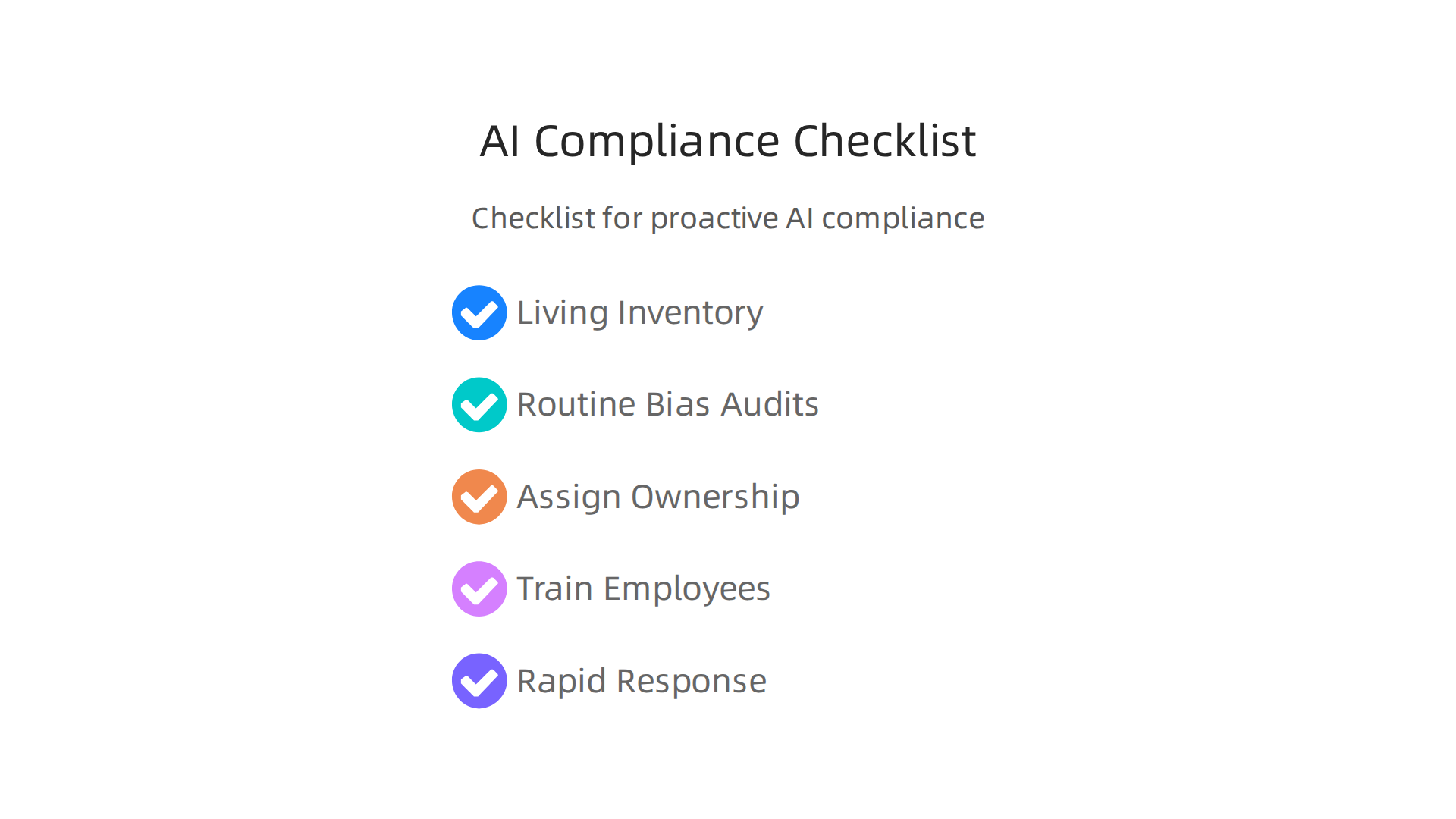
- Keep a living inventory of every AI model you use in production.
- Run routine bias audits and document the results.
- Assign clear ownership for each AI system.
- Train every employee who touches AI on basic compliance principles.
- Build a rapid response process for regulator inquiries.
The Deloitte State of AI in the Enterprise 2026 report found that organizations with mature governance practices report higher AI adoption success and fewer operational surprises. That is not a coincidence.
If you want a deeper look at building a full compliance strategy from scratch, read our practical guide on AI regulations 2026 compliance strategies for businesses. It walks you step by step through creating a framework that works today and scales tomorrow.
You cannot avoid every regulatory risk. But you can learn from the mistakes others already made. The leaders who win in 2026 are the ones who took compliance seriously before they had to.
Stay ahead without the noise.
Get The Deep View Newsletter for clear daily updates on enforcement actions and new rules.
Summary
This article explains how the AI regulatory landscape changed in 2026 and what AI companies must do to stay compliant and competitive. It walks through major regional differences—EU’s AI Act requirements, the U.S. patchwork of state laws, and China’s tightened cross-border rules—and why that divergence matters for builders and deployers. The piece outlines the top compliance challenges such as data privacy, algorithmic bias, missing documentation, and complex international obligations. It then gives leadership strategies (shift-left, C‑suite ownership, ethics boards, sandboxes) and practical steps for a working risk-management framework using standards like NIST and ISO. You’ll learn concrete actions—continuous testing, integrated risk processes, and a simple compliance checklist—that reduce enforcement risk and build trust with customers and regulators. The article also flags future hotspots (hiring tools, healthcare, deepfakes) so teams can anticipate rules before they arrive. Overall, readers will come away able to prioritize governance, implement repeatable controls, and prepare for fast-moving enforcement in multiple jurisdictions.