

Introduction
If you work with artificial intelligence in any way, you have probably felt the ground shifting beneath your feet. New rules are popping up fast. Governments all over the world are moving quickly to put guardrails on AI, and 2026 has become a major checkpoint. The EU AI Act is just one example. It entered into force back in August 2024, and now by August 2, 2026, most of its rules become fully enforceable. That is a hard deadline for many businesses.
This speed of change can feel overwhelming. But here is the thing. You do not need to panic. You just need a clear picture of what is happening. Understanding the AI regulatory landscape is not just about checking boxes. It is about protecting your business, making smart plans, and keeping the trust of your customers and partners.

In this article, we give you a solid, evidence-based AI overview that covers where things stand right now.
We look at current policy status, the biggest compliance challenges people face, and what trends are coming next. Whether you work in information technology, legal, or business leadership, this guide will help you navigate the road ahead.
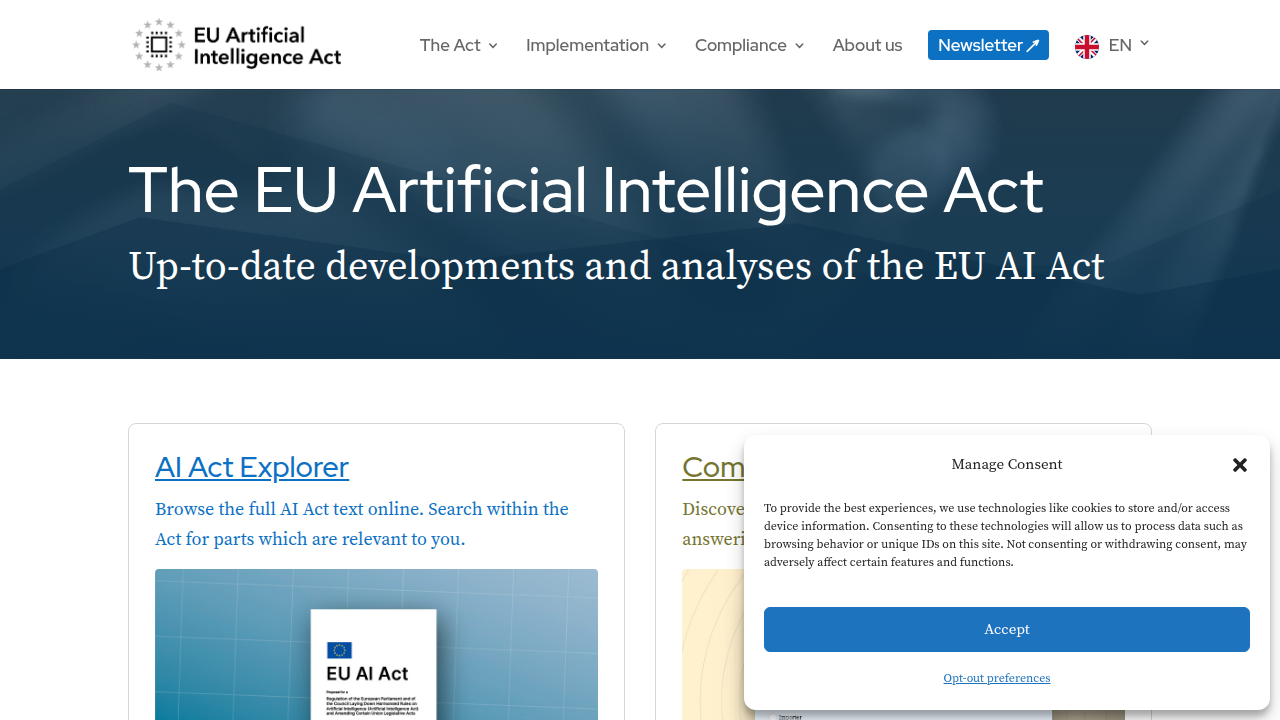
Our goal is simple. Help you discover artificial intelligence regulations in a way that makes sense. No jargon. No fluff. Just useful information you can act on. And along the way, we will share practical tips and related resources to help you stay ahead of the curve. Because when it comes to AI rules, being prepared is the best strategy you can have. The official EU AI Act timeline shows just how quickly these deadlines are approaching.
Businesses that wait may find themselves scrambling. But you do not have to be one of them.
The Global Landscape of AI Regulation in 2026
Let’s zoom out for a minute. AI rules aren’t just happening in one place. In 2026, more than 60 countries have introduced their own AI specific laws.
That is a big number. And the way they are doing it is very different depending on where you look.
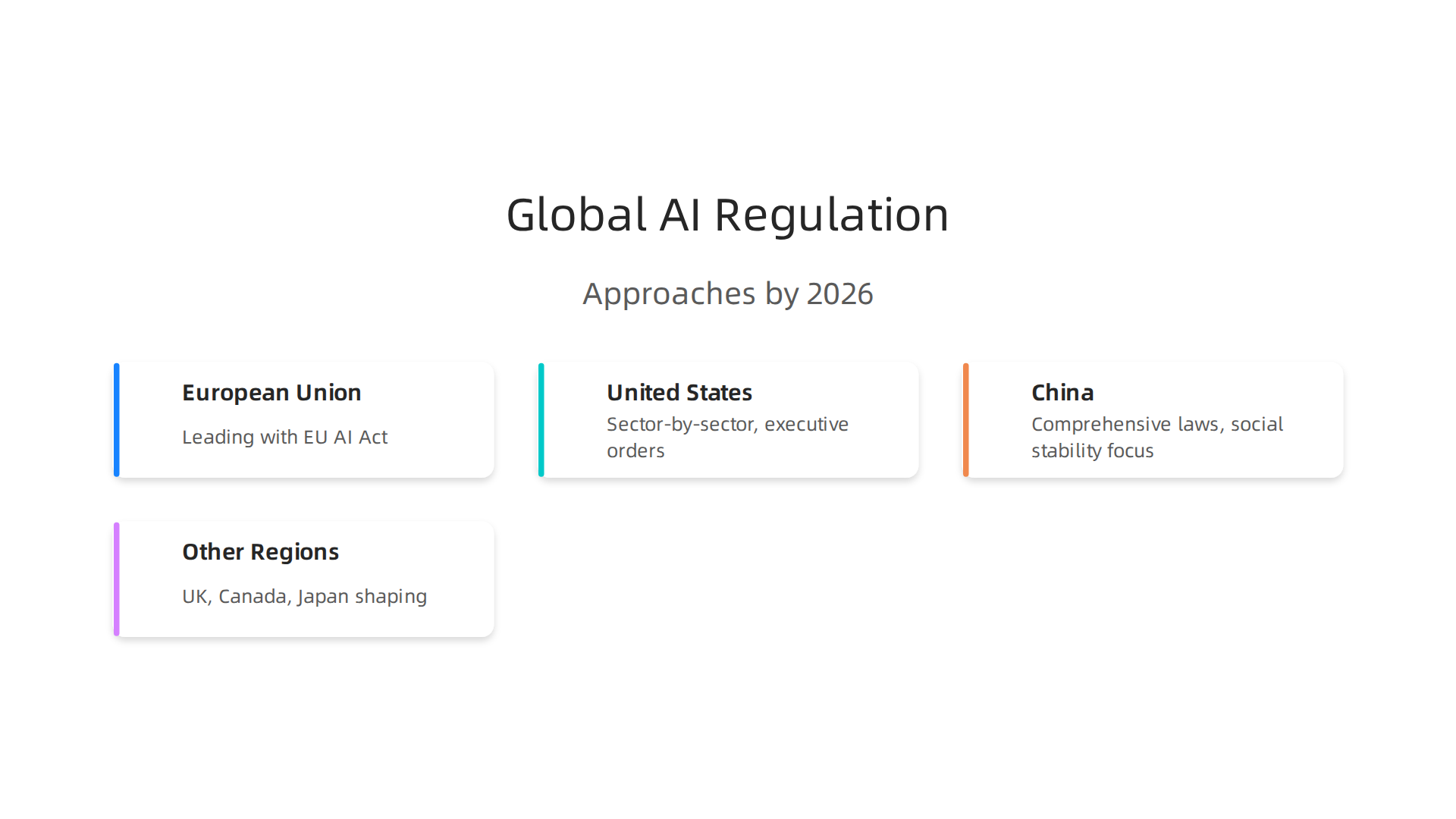
The European Union is leading the pack. The EU AI Act is probably the most well known example. It entered into force back in August 2024, and by August 2, 2026, most of its rules become fully enforceable. That means companies must have their conformity assessments done, technical documentation ready, and CE marking in place by that date. This official implementation timeline spells out every deadline. And it is not just a suggestion. If you do business in the EU or sell AI tools there, these rules apply to you.
But the EU is not alone. Across the Atlantic, the United States takes a very different path. Instead of one big federal AI law, the U.S. is using a sector by sector approach. That means executive orders from the White House and rules from agencies like the FTC and the FDA. You end up with different rules for healthcare AI, for financial AI, and so on. It can feel messy, but it also allows for more flexibility.
Then there is China. China has moved fast to put comprehensive AI laws in place. Their focus is on social stability, algorithmic transparency, and data security. They want to control how AI is used and make sure it aligns with their national goals. If you operate in China or serve Chinese users, you need to follow those strict rules.
So what does this mean for you? It means you cannot just focus on one region. You need to understand how these different approaches affect your business. A tool you build for the U.S. market might need changes to work in the EU or China.

That is why staying informed is so important. If you want to go deeper into how specific sectors are affected, check out this guide on navigating AI imaging regulations in 2026.
The key takeaway is simple. The world of AI regulation is not one size fits all. But with a clear AI overview of the global landscape, you can spot the patterns and plan ahead. And that is exactly what we will help you do in the next sections.
Core Regulatory Frameworks: From the EU AI Act to U.S. Executive Orders
So you know the global picture. Now let’s get into the nuts and bolts of the two biggest rulebooks that will shape your work in 2026. Understanding these core frameworks is the key to any solid AI overview you try to build.
Let’s start with the heavyweight. The EU AI Act is the world’s first comprehensive AI law. It entered into force back in August 2024, and by August 2, 2026, most of its rules become fully enforceable. That date is a big deal. By then, companies must have their conformity assessments finished, technical documentation ready, and CE marking in place. The official implementation timeline lays out every single deadline. If you sell high-risk AI tools in the EU, this deadline hits you hard. And the penalties are serious. We are talking fines of up to 7% of your global annual turnover. That gets your attention.
Now, how does this affect you? If you are building AI tools that touch European users, you need to start your compliance process now. The EU AI Act summary explains what providers and deployers must do. It is not just a suggestion. It is the law.
Now flip across the Atlantic. The United States takes a completely different path. Instead of one big law, the U.S. relies on a patchwork of rules. The White House issued executive orders, and agencies like the FTC and DOJ are writing sector-specific guidance. There is also the AI Bill of Rights blueprint, which is not a law but a set of principles. This decentralized approach can feel messy, but it also gives companies more room to innovate. The challenge? You have to track multiple rulebooks at once. If you use AI in healthcare, finance, or hiring, you will likely follow different rules for each area.
What about other key players? The UK is taking a pro-innovation stance with light-touch rules. Canada just passed its own AI law, the AIDA, which focuses on accountability. Japan is leaning into forward-looking soft guidelines. All three are shaping global standards, so they matter if you operate in those markets.
Here is the thing. No matter which framework applies to you, you can spot common threads: transparency, risk assessment, and human oversight. To stay ahead, you need to keep learning. Check out this guide on AI imaging regulations to see how these rules play out in a real use case.
As you discover artificial intelligence and its regulation in 2026, remember that the rules are still evolving. But with a clear AI overview of these core frameworks, you can make smarter AI predictions for your business. And that is the whole point of staying informed in this fast-moving world of information technology.
Key Compliance Challenges for AI Systems
So you have a good handle on the different rulebooks. Now let’s talk about the real headaches. The ones that keep compliance teams up at night in 2026.

Understanding the rules is one thing. Actually meeting them? That is where the hard work begins. If you are trying to build a reliable ai overview for your organization, you need to know where the biggest risks hide. Here are the top three compliance challenges facing AI systems right now.
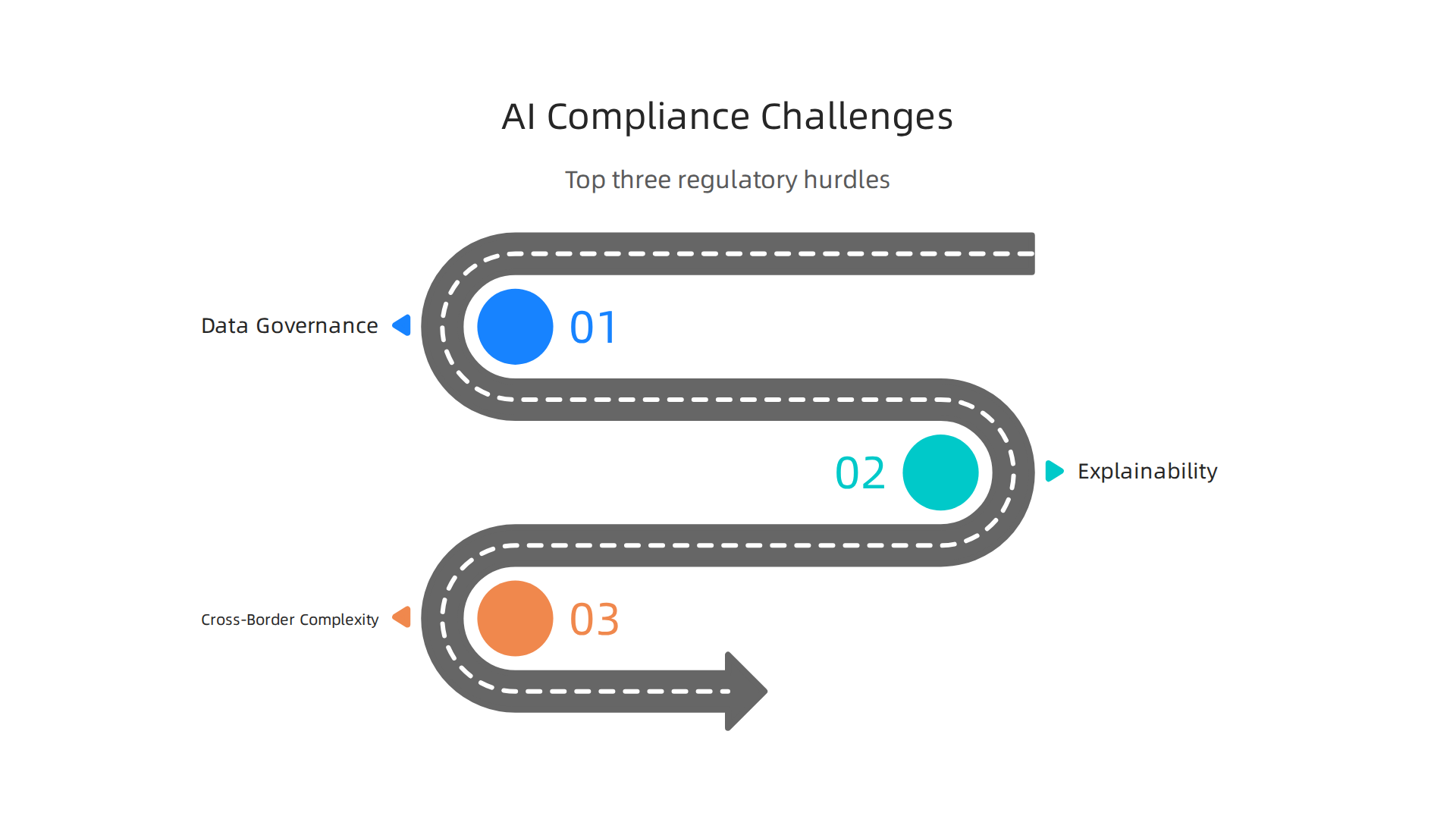
Data governance and bias are top concerns.
Your AI is only as good as its training data. But complex machine learning models often learn from messy, biased data. If your model makes a biased decision in hiring or lending, you could face serious penalties. The penalties for non-compliance can be steep, with fines reaching up to EUR 35 million or 7% of global annual turnover according to Article 99 of the AI Act. Regulators want proof that you are actively mitigating bias. You need clear data governance policies that track where your data comes from and how it is used. This is a core part of any modern information technology compliance plan.
Explainability is another major struggle.
Many deep learning systems are black boxes. Even the engineers who build them sometimes cannot explain exactly why they made a specific decision. But regulators demand transparency. You must be able to explain how your AI reaches its conclusions, especially in high-risk areas like healthcare or criminal justice. The European Commission’s AI Act framework clearly states that users need to know when they are interacting with AI.
If you are a content creator or deployer, you need to pay close attention to these transparency rules. Check out our guide on AI regulation compliance for creators to see what transparency looks like in practice.
Cross-border complexity adds operational drag.
If you operate in multiple countries, you face a headache. The EU AI Act is strict. The US has a patchwork of state and federal rules. The UK, Canada, and Japan all have their own approaches. Navigating this fragmentation is tough. You end up spending more time and money just to stay compliant. A single AI system might need different documentation for different regions. This is where a solid global strategy helps. You can discover artificial intelligence governance models that work across borders using updated, modern AI compliance guides. For example, regulations in specific fields like medical imaging show how complex this gets. See our breakdown of AI imaging regulations for a closer look.
Bottom line: These challenges are tough but not impossible. With the right ai predictions and proactive planning, you can build AI systems that are both innovative and compliant. And that is the sweet spot everyone is looking for in 2026.
Sector-Specific AI Regulations: Healthcare, Finance, and Beyond
Now that you know the general compliance headaches, let’s zoom in. Different industries face very different rulebooks in 2026.

If you are building an ai overview for your organization, you cannot use a one-size-fits-all approach. Each sector has its own regulators, its own timelines, and its own must-do steps.
Let’s start with healthcare. This is arguably the most regulated space for AI right now.
Healthcare: The FDA sets the bar high.
If your AI touches patient care, the FDA wants to see proof. Real proof. The agency has built a detailed AI/ML framework over the past 18 months. It covers everything from designing your model to updating it after launch. The FDA’s AI-Enabled Medical Device List tracks every authorized AI medical device on the US market. Getting on that list is not easy.
Here is what the FDA expects from you:
- Rigorous clinical validation. You need to show your AI performs safely and accurately before it reaches any patient. The ADLM supports the FDA’s push for a validation process that characterizes AI tool performance before clinical use.
- Real-world performance monitoring. Your work does not stop after approval. The FDA wants ongoing tracking of how your AI behaves once it is actually helping doctors and patients. Recent FDA guidance on device software functions spells out lifecycle management expectations.
- A tight timeline. Most high-risk AI obligations take effect in August 2026, with full compliance for medical device AI required by August 2027, according to the intuitionlabs analysis.
The bottom line for healthcare? If you skip the validation step, you cannot market your AI. Period. And for a deeper look at how medical imaging AI fits into these rules, check out our guide on AI imaging regulations.
Finance: A web of overlapping watchdogs.
Financial services face a different kind of challenge. You have multiple regulators watching the same AI systems. The SEC is looking at algorithmic trading for market manipulation. The OCC has strict guidance on credit models that use AI. And in Europe, ESMA is laser-focused on AI risk in trading and investment advice.
All three want to discover artificial intelligence risks in your models before they cause harm. You need to document everything: training data, decision logic, performance metrics, and audit trails. If you are using AI to approve loans or detect fraud, expect regulators to ask tough questions about bias and fairness. This is where your information technology governance becomes a competitive advantage, not just a box to check.
Other sectors: Automotive, hiring, and education.
These sectors are not far behind. Self-driving car rules are emerging fast. Hiring algorithms now face bias audits in several US states. And AI tutoring tools in education must prove they do not widen learning gaps. Regulators everywhere are moving from guidance to enforcement.
Here is the thing: no matter your sector, the ai predictions for 2026 are clear. More rules are coming. The smartest move you can make is to study your specific sector’s regulations now and build compliance into your product from day one. It is much harder to retrofit later. If your organization works with government agencies, you might also find our piece on Tyler Technologies compliance for government agencies helpful.
The Role of International Cooperation and Standards
When you try to build an ai overview of the global regulatory landscape, one thing becomes clear fast: every country has its own rules. That is a nightmare if you want to sell your AI product across borders. So, how do you make sense of it all? International standards and cooperation are stepping in to help.
ISO/IEC 42001: Your new best friend.
The most important development here is ISO/IEC 42001. This is the world’s first international standard for AI management systems.
Think of it as a blueprint that helps any organization set up, run, and improve how it manages AI responsibly. The ISO itself explains it clearly as a framework for continuous improvement.
The great part? It is designed to work alongside multiple regulations, from the EU AI Act to sector-specific rules in healthcare and finance. A KPMG analysis notes that as regulations evolve, ISO 42001 serves as a steady foundation.
If you want to get certified, a clear implementation roadmap can guide you through the steps. The standard covers everything from risk assessment to data governance. It is not just a checkbox. It helps you discover artificial intelligence risks early and fix them before they become problems.
Beyond a single standard: Principles and partnerships.
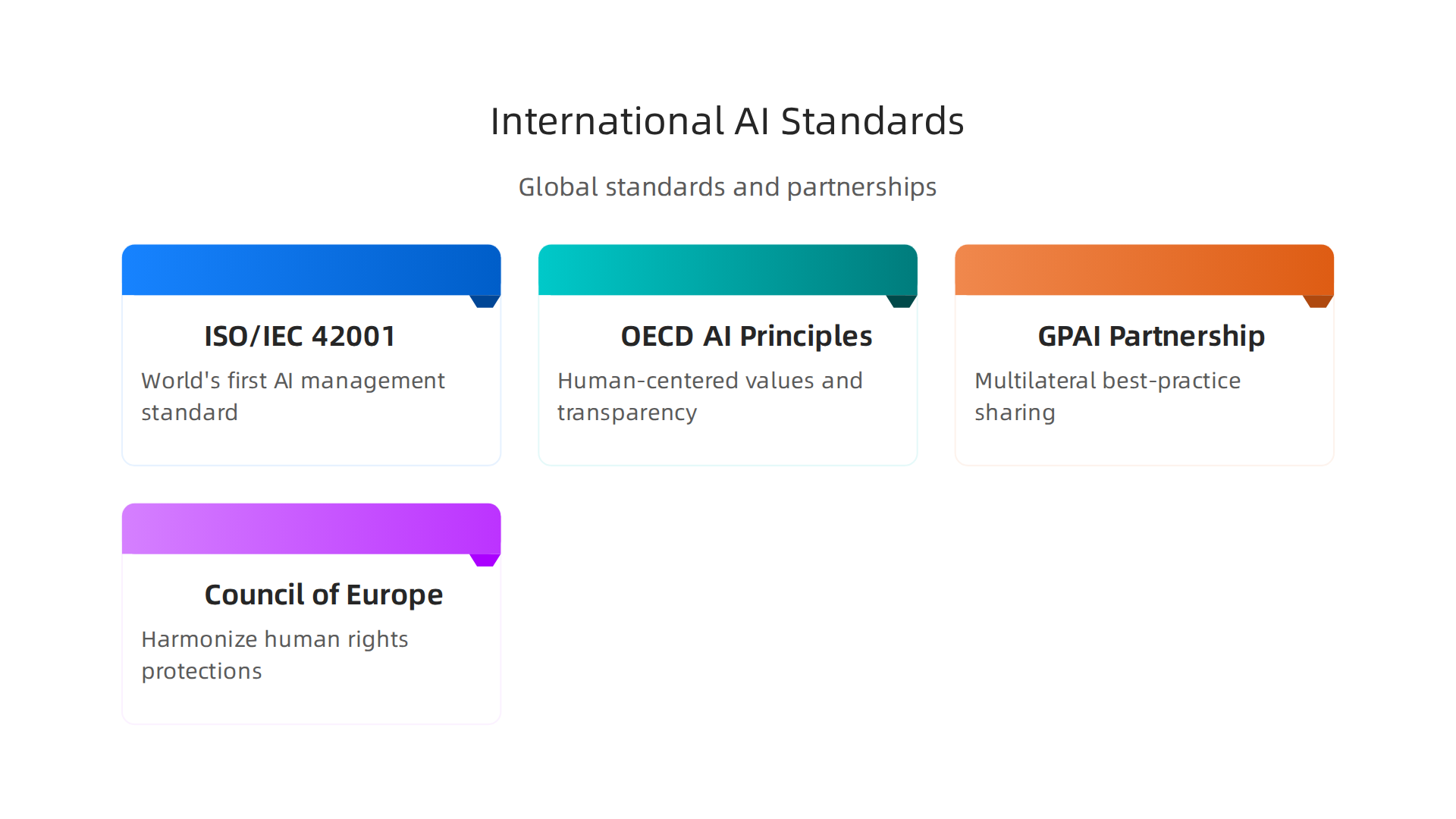
ISO 42001 is big, but it is not alone. The OECD AI Principles have been adopted by over 40 countries. These principles focus on human-centered values, transparency, and accountability. Many nations now base their national AI action plans on them.
Meanwhile, multilateral efforts like the Global Partnership on AI (GPAI) bring together experts from government, industry, and academia to share best practices. The Council of Europe is also working on a broad AI convention that aims to harmonize human rights protections across borders.
What does this mean for your business?
These standards and partnerships are not just academic. They give you a single playbook that works in many places. Instead of building separate compliance systems for the US, Europe, and Japan, you can align with ISO 42001 and the OECD Principles. That saves time, money, and headaches.
The ai predictions for 2026 and beyond point to more harmonization, not less. Smart organizations start now. If you want to see these standards in action for content creation, check out our compliance guide for creators on video. It shows how international norms translate into everyday practice.
Remember, standards are only useful if you actually use them. So pick one, ISO 42001 is a strong bet, and start integrating it into your information technology governance today.
Practical Steps for Building an AI Compliance Program
So you have international standards like ISO 42001 as your guide. You know the principles. But the real work starts when you sit down to build an actual compliance program. Where do you even start?
This is the part that keeps compliance teams up at night. The EU AI Act is already enforcing most obligations as of August 2, 2026. Fines for prohibited AI practices can reach up to €35 million or 7% of global annual turnover. That is not a small risk. You need a program that works in practice, not just on paper.
Here are the concrete steps you can take right now.
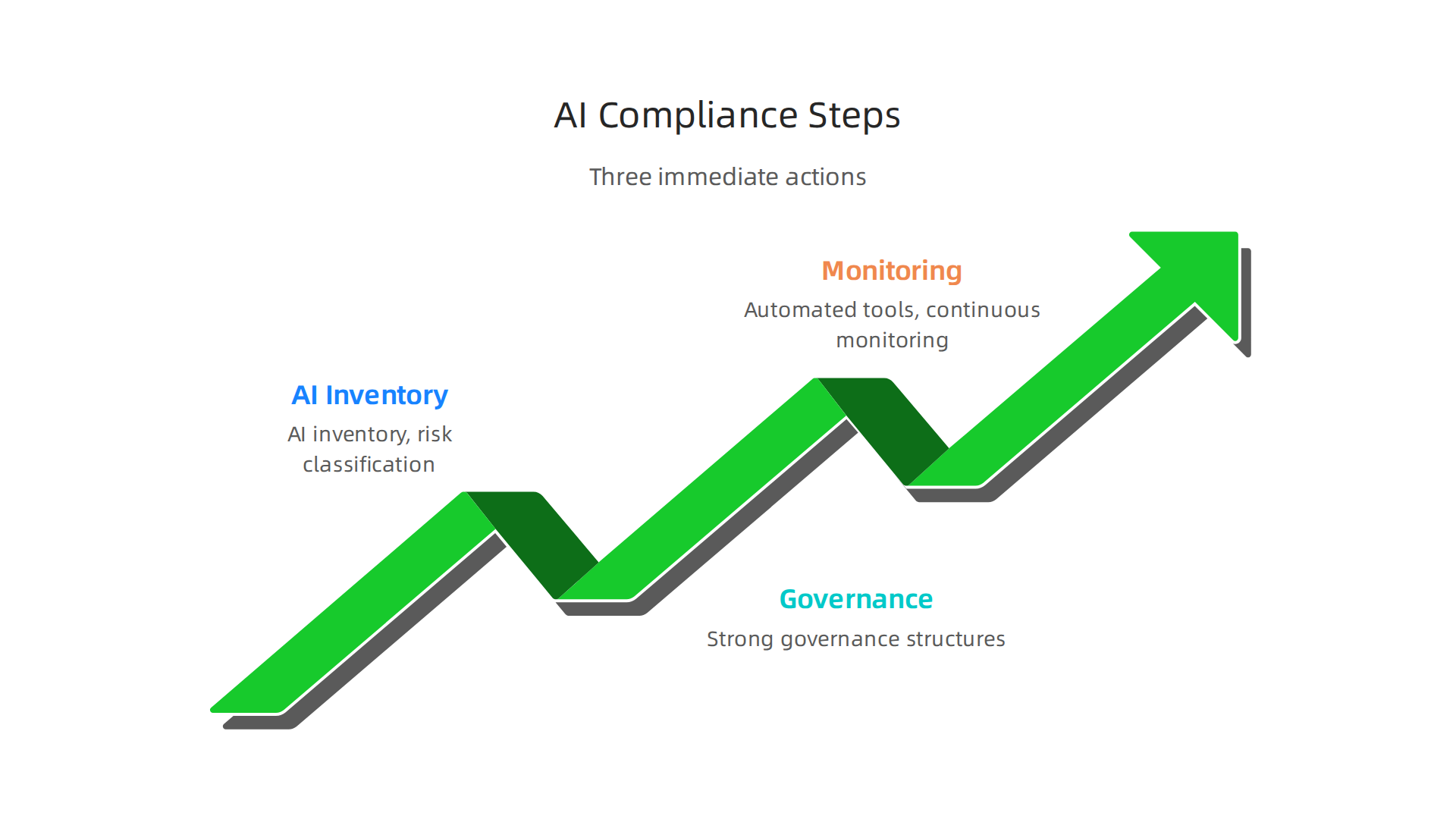
Step 1: Start with a full AI inventory and risk classification.
You cannot manage what you do not know about. First, you need to discover artificial intelligence systems across your entire organization. That means every chatbot, every recommendation engine, every automated decision tool. Do not forget the ones that teams built on their own.
For each system, classify the risk level. Is it high risk under the EU AI Act? Is it a prohibited practice? Map each system to the relevant regulatory requirements. This gives you an ai overview of your compliance gaps. A structured inventory is the foundation for everything else. Without it, you are flying blind.
Step 2: Put strong governance structures in place.
Inventory alone is not enough. You need people and processes to act on it. Set up an AI ethics board or a dedicated governance committee. Make sure there is clear accountability for compliance. Someone must own the risk of each AI system.
Your governance should include documented policies for data governance, bias testing, transparency, and human oversight. Check out our guide on navigating artificial intelligence imaging regulations for a great example of how sector-specific rules lock into your broader governance framework. The key is to make compliance part of everyday decision making, not a once a year audit.
Step 3: Leverage automated tools and continuous monitoring.
Manual compliance is impossible at scale. The rules change too fast. Use automated compliance platforms to track regulatory updates, log AI activity, and run ongoing audits. Tools like the ones covered in the AI Compliance Guide 2026 help you stay aligned with the EU AI Act, US state laws, and NIST frameworks.
Set up continuous monitoring for model drift, data quality issues, and new legal requirements. Log every prompt and response for incident investigation. This is not optional. The DOJ expects you to show that your compliance program works in practice, not just on slides.
What about the future?
AI predictions for 2026 point to even more regulatory activity. The EU AI Act is just the beginning. US states are passing their own laws, and the FDA is tightening rules for AI medical devices. Your compliance program must be flexible enough to evolve. Start with these three steps, and you will have a solid foundation to build on.
Remember, building the program is hard. But the cost of not building it is much higher.
Summary
This article provides a practical AI overview of the regulatory landscape entering 2026, showing why the year is a major compliance checkpoint—especially because most of the EU AI Act becomes enforceable by August 2, 2026. It compares the EU’s comprehensive law with the US’s sector-by-sector approach and China’s strict controls, and explains how different jurisdictions can affect the same product. The guide highlights the top compliance challenges—data governance and bias, explainability, and cross-border complexity—and explains sector-specific demands in healthcare, finance, and other fields. It also covers international coordination through standards like ISO/IEC 42001 and offers concrete steps to build an effective compliance program: inventory systems, set governance, and automate monitoring. Readers will learn what to prioritize now, practical actions to reduce enforcement risk, and where to find deeper, sector-specific resources to implement compliant AI systems.