
Introduction: The Promise and Peril of AI-Generated Educational Content
Imagine you are a teacher or a content creator. You want to make engaging videos on artificial intelligence to help students learn faster.

With AI tools, you can now create those videos in minutes instead of weeks. You can personalize lessons for each learner. You can scale your content across classrooms, platforms, or even whole countries. That is the promise.
But here is the thing. The rules around AI-generated media are changing fast. And they are far from clear. In 2026, the regulatory landscape for these tools is fragmented and evolving. For example, the EU AI Act is now coming into full effect. High-risk obligations became enforceable on 2 August 2026, as explained in this technical readiness guide by McKenna Consultants.

Systems that generate or modify educational content could easily fall under high-risk classification, depending on how they are used. The European Commission released draft guidelines on high-risk AI just last month, on May 19, 2026 per Hunton law firm.
And the rules for classifying these systems, spelled out in Article 6 of the AI Act here, are complex.
The result? Organizations that use videos on artificial intelligence for training, assessment, or outreach face real compliance risks. If you are not careful, you could break rules you did not even know existed.
This article gives you a simple, structured framework. We will walk through the current regulations, help you assess your own risk, and show you how to build a proactive compliance strategy. Whether you are creating videos on artificial intelligence, using artificial intelligence images in lessons, or just figuring out how to learn ai yourself, you need a plan. For more on how imaging rules intersect with education, check out our guide on navigating artificial intelligence imaging regulations in 2026.
Stay ahead of the curve. The rules are moving fast, but you do not have to navigate them alone. Subscribe Free to get clear daily AI updates from The Deep View Newsletter.
The Global Regulatory Patchwork for AI-Generated Educational Videos
So by now you know that the rules are not simple. But to really get your videos on artificial intelligence right, you need to understand the big three regulatory zones.
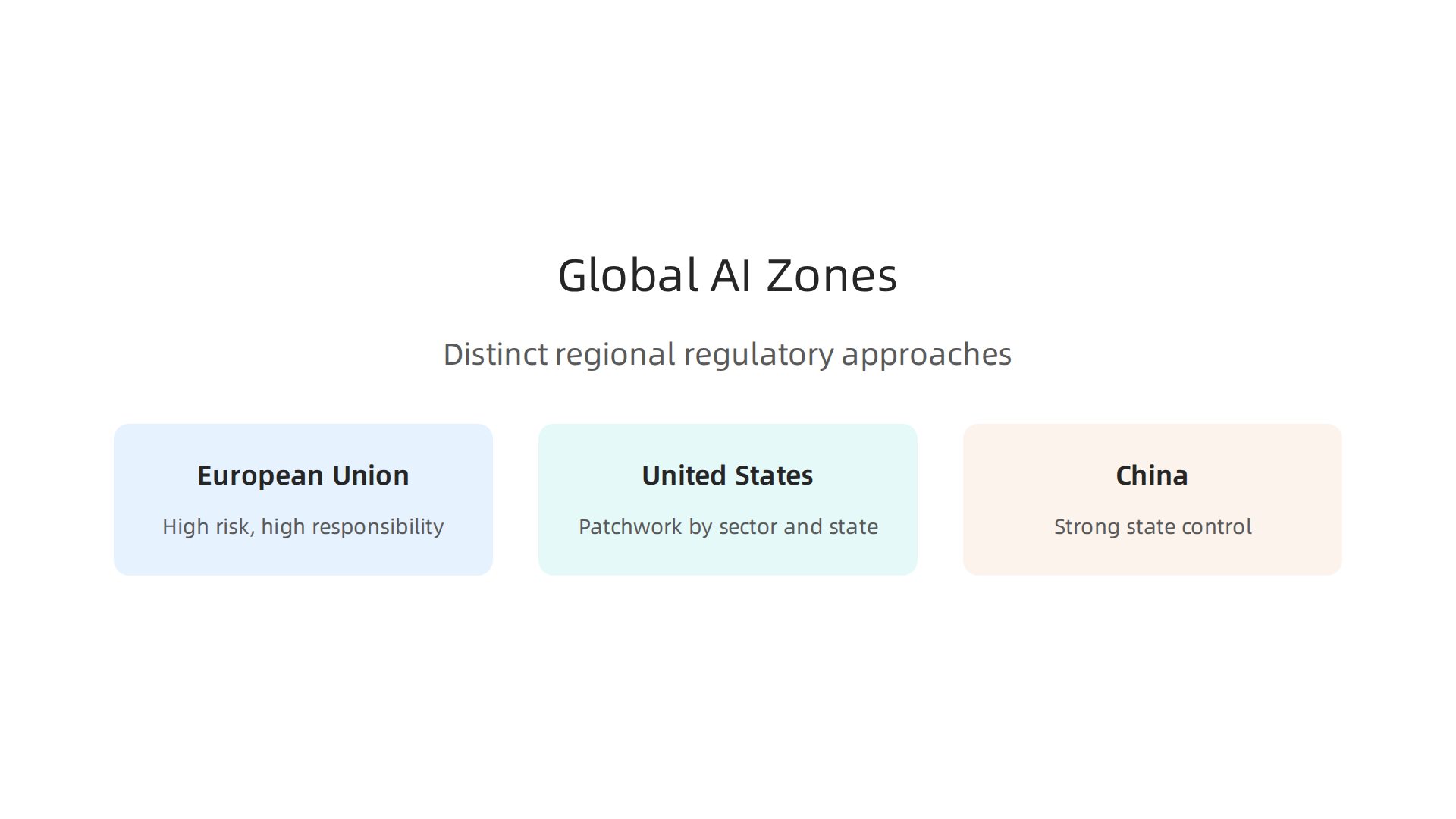
Each one takes a different approach. And if your content reaches students in more than one region, you have to follow all of them at once.
Let us break down the main players.
The European Union: High risk, high responsibility
The EU AI Act is the most ambitious law of its kind. It uses a risk based system. If your AI tool is used in education, it will likely be classified as high risk. That matters because high risk systems come with strict rules.
As of August 2, 2026, the high risk obligations are fully enforceable. According to Pinsent Masons, providers and deployers must meet requirements around transparency, data governance, and human oversight. The European Commission draft guidelines on high risk AI, released May 19, 2026, give more detail on what counts and what you must do.
So if you create videos on artificial intelligence for classroom use, you need to document your training data, make sure a human can review the output, and tell users they are interacting with AI. The EU’s approach is clear: put safety and rights first.
The United States: A patchwork by sector and state
Across the Atlantic, the picture is less centralized. The federal government has not passed a single AI law like the EU. Instead, agencies like the FTC and the Department of Education have issued guidance on AI in education. They focus on fairness, transparency, and preventing harm.
But the real action is at the state level. California, Colorado, and others have passed privacy laws that affect how you collect and use student data. If your videos on artificial intelligence rely on personal information, you need to check the rules in every state where your viewers live. This can get messy fast.
China: Strong state control
China takes a direct approach. The government requires content reviews before AI generated material goes live. You must label any AI created video clearly. And if you run an educational platform, you have to file details about your algorithms with the authorities.
This means that if you plan to use artificial intelligence images or videos on artificial intelligence in Chinese classrooms, you need a local team that understands the approval process. The rules are strict and they change often.
What this means for you
You cannot just build one video and share it everywhere. Each region demands different compliance steps. Your best move is to map out where your audience is and then match your processes to each jurisdiction.
Need more context on how imaging rules fit in? Read our guide on navigating artificial intelligence imaging regulations in 2026.
Staying on top of all these changes is hard work. But you do not have to do it alone. Subscribe Free to get clear daily AI updates from The Deep View Newsletter. We make sense of the mess so you can focus on creating great content.
Core Compliance Areas: Data Privacy, Copyright, and Transparency
You now know that the rules change depending on where your audience lives. But no matter which region you deal with, three big compliance areas come up again and again.

Let’s break them down one at a time.
Data Privacy: Get Consent Before You Collect
Data privacy laws are the most common hurdle you will face. If your videos on artificial intelligence use any personal information from students or viewers, you need to follow strict rules.
The two biggest laws are the GDPR in Europe and the CCPA in California. The GDPR covers what happens to personal data and focuses on privacy rights. The EU AI Act works alongside the GDPR, but they are different laws. According to the California Lawyers Association, the GDPR is more about privacy rights while the AI Act focuses on the safety of the AI system itself.

For the CCPA, things are a bit different. Study.com notes that unlike GDPR, CCPA does not address automated decision-making directly. But its disclosure rules still affect how you use AI with personal data.
So what does this mean for your videos? You must get clear, informed consent before collecting any student data to train or improve your AI models. That includes names, email addresses, and even viewing habits. If you cannot get that consent, you cannot use the data. Captain Compliance warns that AI systems cannot safely process what you cannot account for. So vet your AI tools carefully and make sure they follow these privacy laws.
Copyright: Watch What You Feed the AI
Copyright issues are trickier. When you train an AI model, the data you give it matters a lot. If your training set includes copyrighted educational materials without permission, you could be breaking the law. And if your videos on artificial intelligence end up looking too much like someone else’s work, you could face a lawsuit.
The same goes for artificial intelligence images you use in your videos. If an image generator was trained on copyrighted photos or artwork, the images it creates might still be tied to those original works. Always check the terms of the AI tools you use. Some companies claim they own the output. Others leave the risk with you.
Transparency: Tell People It’s AI
Finally, you must be honest about what is artificial. Transparency rules say you need to clearly label any content that is AI generated. This includes videos on artificial intelligence themselves. A small "AI generated" tag might not be enough. The label must be clear and not misleading.
In the EU, the AI Act requires you to tell users they are interacting with AI. If your content is used in classrooms, that rule is even stricter. You also need to make sure your labels can be verified. That means keeping records of how the video was made and what AI tools were used.
These three areas data privacy, copyright, and transparency form the backbone of any good compliance plan. If you want to go deeper on how imaging rules fit in, check our guide on navigating artificial intelligence imaging regulations in 2026.
Get Free Updates from The Deep View Newsletter to stay ahead of every new rule. Subscribe now for daily, easy to understand AI regulation news.
The Cost of Non-Compliance: Fines, Legal Actions, and Reputational Damage
Following the rules we just covered is not optional. If you ignore data privacy, copyright, or transparency requirements, the penalties can be severe.
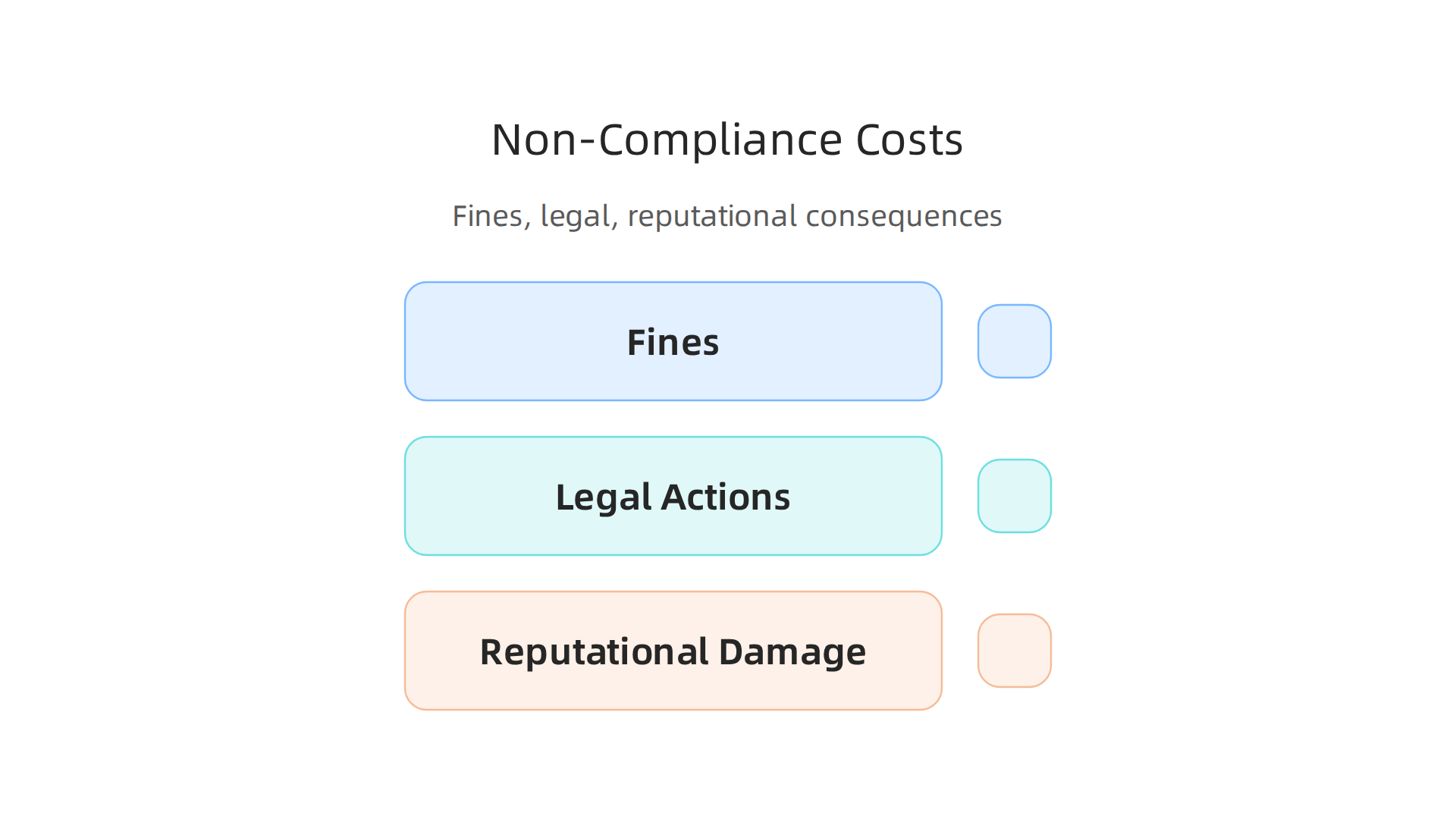
And these penalties hit your wallet, your legal standing, and your reputation all at once.
Let’s look at the financial side first. The EU AI Act, which becomes fully enforceable on August 2, 2026, sets the bar high. If you violate prohibited AI practices, you could face a fine of up to €35 million or 7% of your global annual turnover, whichever is larger (see Article 99 of the EU AI Act). That is a massive amount for any creator of videos on artificial intelligence. Even smaller violations, like failing to meet transparency obligations, can bring fines up to €15 million or 3% of turnover, according to Spektr.
But fines are just the start. Class-action lawsuits are on the rise. If your AI tools produce biased educational content that harms students, or if you suffer a data breach that exposes personal information, you could face a lawsuit from hundreds or thousands of affected people. These lawsuits are expensive and time-consuming. They drain your resources and force you to spend money on lawyers instead of making better content.
Then comes the reputational damage. This one is harder to measure but just as dangerous. Parents, teachers, and schools trust you with sensitive information. If they find out you mishandled data or hid the fact that you used AI, that trust disappears fast. A single news story about a compliance failure can make your channel or platform look risky. And once trust is broken, it is very hard to rebuild.
Think about it: would you send your own child to a learning platform that got caught using artificial intelligence images without permission? Probably not.
The best way to avoid these costs is to stay informed. Rules are changing quickly, and what is acceptable today might not be tomorrow. To keep up without spending hours reading legal documents, consider a trusted source that delivers updates straight to your inbox.
Get Free Updates from The Deep View Newsletter and stay ahead of every new rule. Subscribe now for daily, easy to understand AI regulation news.
Impact on Innovation and Business Strategy: Pivots, Product Redesigns, and Market Access
The fines and reputation damage we just covered hit hard. But for many creators working with videos on artificial intelligence, the real daily struggle is different. It is about how new rules force you to change your product, delay your launch, and rethink your entire business strategy.

Let me walk through the three biggest ways compliance is reshaping innovation right now.
1. Redesigning AI Models to Meet Fairness Rules
If your AI tool generates artificial intelligence images, produces educational content, or creates training materials for students, regulators may classify your system as high-risk. Under the EU AI Act, a system is high-risk if it affects safety, education access, or fundamental rights. The official classification rules in Article 6 explain how this works.
Once your system is high-risk, you must add fairness audits and explainability features. That is not a quick patch. Your AI needs to show why it made a specific output. It needs to prove it does not discriminate against certain groups of people. For a startup that built a lean video generator, adding these features often means rewriting the core model from scratch.
This is especially challenging if your models work with artificial general intelligence images or other complex outputs. You cannot just add a checkbox and call it done. You must retrain your data sets, run bias tests, and document everything.
Many teams are now moving to "compliance by design." They build fairness checks and transparency features from day one. It costs more upfront, but it saves massive redesigns later. If you are working with AI in education, learning how to navigate these imaging rules early will save you pain down the road. For a deeper look, check out this guide on navigating artificial intelligence imaging regulations in 2026.
2. Market Access Delays: The EU and China Challenge
Want to sell your AI product in Europe? Get ready for a longer timeline. The EU AI Act becomes fully enforceable on August 2, 2026. For companies outside the EU, entering the European market now requires upfront compliance investment. This can delay product launches by 6 to 12 months.
The same is true for China, which has its own strict AI governance rules. You cannot just launch and fix problems later. You must prove compliance before you enter.
A recent survey from ACT online found that 44 percent of developers in the United States report launch delays tied to regulation. Most describe the delays as moderate, but they are real. This shifts business strategy from "move fast and break things" to "move carefully and verify everything." That is a big cultural shift for many startups.
If your team needs to understand these new requirements quickly, knowing how to learn AI compliance frameworks is becoming a critical skill. The teams that invest in training now will launch faster than those who wait.
3. Compliance as a Competitive Advantage
Here is the upside. Enterprise customers increasingly demand compliance certifications before they buy. Schools, hospitals, and large companies want proof that your AI is safe, fair, and transparent.
If you have the certifications and your competitor does not, you win the deal. Regulatory adherence becomes a competitive differentiator. It is not just a cost anymore. It is a selling point. When you can tell a customer, "Our AI has passed fairness audits and meets EU standards," you build trust instantly.
For teams that want to stay ahead of these changes without getting buried in legal documents, there is a simpler way.
Subscribe Free to The Deep View Newsletter and get clear daily AI updates delivered to your inbox. Focus on building better products while we track the regulations for you.
Practical Steps for Compliance Teams: Building a Proactive Framework
You have seen how regulation can force product pivots, delay launches, or become a competitive advantage. The difference between playing defense and offense comes down to one thing: having a proactive compliance framework before the rules hit.
Here is the thing. Waiting until regulators knock is expensive. Building compliance into your workflow from day one is cheaper, faster, and smarter. Let me walk you through three concrete steps your team can take starting today.
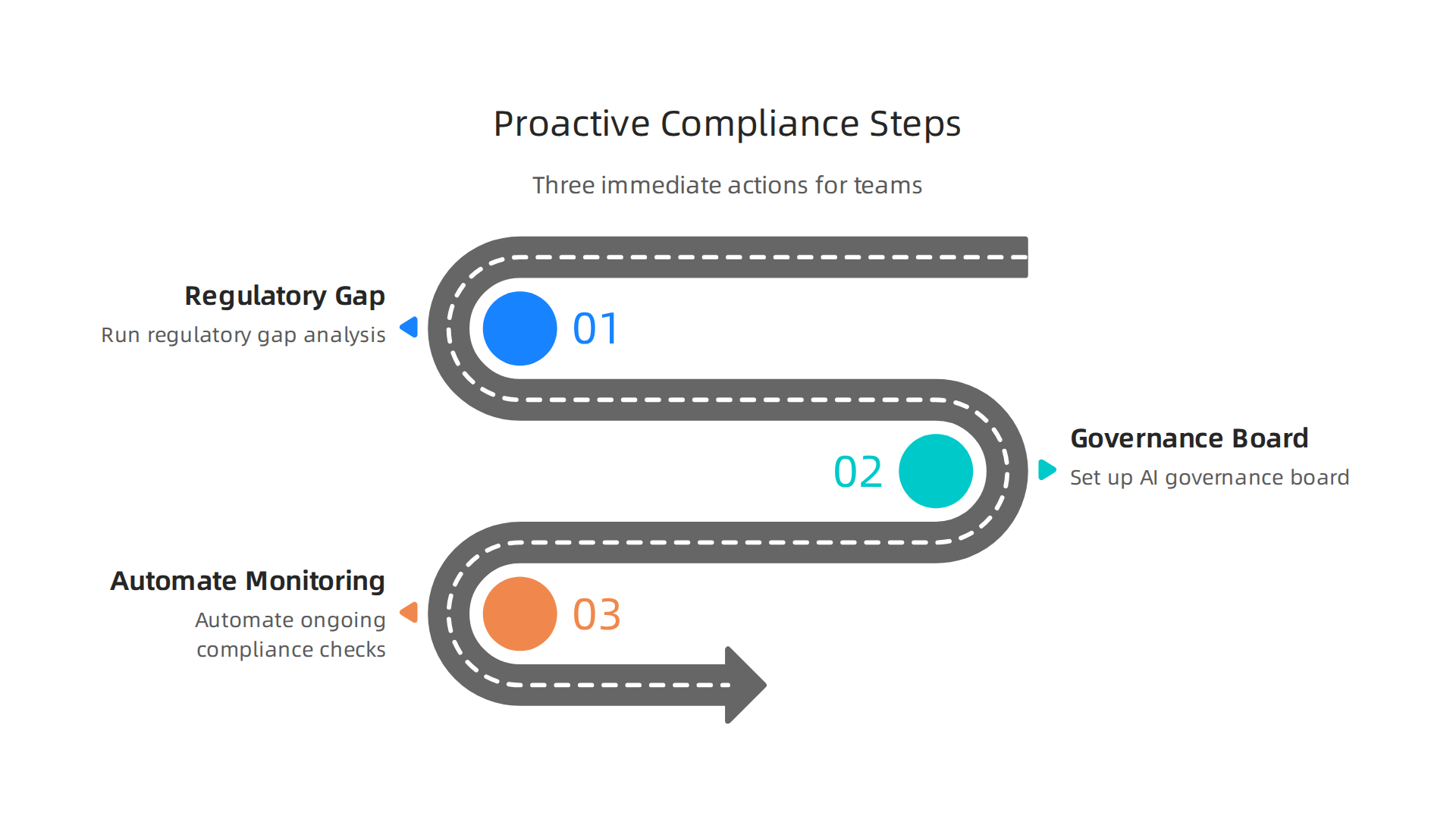
Step 1: Run a Regulatory Gap Analysis
You cannot fix what you have not mapped. A regulatory gap analysis means listing every AI use case you have, especially those that involve creating videos on artificial intelligence, and then checking which laws apply in every place you operate.
For example, if your tool generates educational content for students, it may be classified as high-risk under the EU AI Act. You also need to look at data privacy laws. The GDPR covers how you process personal information, while the CCPA has its own disclosure rules that affect AI systems indirectly. Understanding the differences between these laws is critical. The EU AI Act complements the GDPR by adding AI-specific obligations, but you need to comply with both at the same time.
Gap analysis is not just about Europe. The United States is seeing more state-level AI laws, which raises compliance complexity. A detailed guide on navigating artificial intelligence imaging regulations in 2026 can help you identify what gaps might exist for image and video generation tools.
If you find gaps, you then plan the fixes: retrain models, add fairness audits, or update your privacy notices. Do this now, not in August 2026.
Step 2: Set Up an AI Governance Board
No one person can track every regulation. You need a team. An AI governance board brings together people from legal, data privacy, product development, and ethics. They meet regularly to review new rules, approve AI models before launch, and monitor incidents.
This board does not just react. It creates policies for how your team builds and uses AI. For example, it can require that any AI system generating artificial general intelligence images or other outputs goes through a bias test before release. It also decides how to document decisions so you can prove compliance later.
A good governance framework defines who makes decisions and what evidence those decisions need. Without a board, you risk missing something important.
If your organization is new to this, you may need to learn how to learn AI compliance frameworks as a group. Invest in training for your board members. The teams that understand the rules early will launch products faster than those who learn by getting fined.
Step 3: Automate Compliance Monitoring and Integrate It Into Your CI/CD Pipeline
Manual compliance checks do not scale. If you release AI updates every week, you cannot have a human reviewing every change against every law. You need automation.
Set up tools that watch for regulatory updates in all your operating jurisdictions. When a new law passes or a regulator issues guidance, you want a notification in your system. Then, integrate compliance checks directly into your continuous integration and continuous delivery pipeline. Before any AI model or update goes live, the pipeline should run automated fairness tests, privacy impact assessments, and documentation checks.
The EU AI Act’s high-risk provisions take full effect on August 2, 2026. Many companies that placed systems on the market before that date still need to comply. Waiting until July is too late. Start building your CI/CD compliance checks now.
Automation also helps you prove compliance to enterprise customers. When a school or hospital asks for proof that your AI is safe, you can show them the automated audit trail. That builds trust and wins deals.
Stay Ahead Without Getting Buried
These three steps gap analysis, governance board, and automated monitoring form the foundation of a proactive compliance framework. It takes work upfront, but it saves you from costly redesigns and fines later.
You do not have to track every regulatory update alone. Get clear, daily AI updates delivered to your inbox.
Subscribe Free to The Deep View Newsletter and focus on building better products while staying ahead of the rules.
Anticipating Future Trends: What’s Next for AI-Generated Educational Media Regulation?
You have built your compliance framework for today. But what about tomorrow? The rules for AI-generated educational media are not standing still. Here is what is coming down the pipeline and how you can prepare.
The EU AI Act Gets More Specific
The General-Purpose AI Code of Practice is already reshaping how foundation models work. This voluntary tool, published by the European Commission, helps providers like you comply with obligations on safety, transparency, and copyright. The EU’s General Purpose AI Code of Practice is expected to become a de facto benchmark, even for companies outside Europe.
Why does this matter for educational media? If your AI model generates videos on artificial intelligence for classrooms, it may be classified as high-risk. The Code of Practice then requires you to document training data, test for bias, and be transparent about limitations. The final version of the Code of Practice gives you a clear roadmap for meeting these rules.
US Federal Legislation Is Coming
The United States is moving fast. Nearly half of US developers already report launch delays due to regulation, according to a recent industry survey. State-level AI enforcement is also increasing, which raises compliance complexity for any tool that creates artificial general intelligence images or educational videos.
But the biggest shift may be federal. Lawmakers have introduced bills like COPPA 2.0, which would impose stricter rules on AI systems that interact with children. If your educational media targets students under 13, you need to watch these developments closely. The Senate Democrats’ AI regulation bills signal that federal oversight is no longer a maybe. It is a when.
International Standards Become Compliance Benchmarks
You may already know the ISO/IEC standards for AI transparency and bias measurement. These are not laws themselves. But regulators are starting to use them as evidence of compliance. If you can prove your AI meets ISO/IEC benchmarks, you have a much stronger case when a regulator asks questions.
This is especially important for how to learn AI compliance. The teams that invest in understanding these standards early will launch products faster than those who scramble after the rules change.
What This Means for You
The regulatory window is closing fast. The EU AI Act’s high-risk provisions take full effect on August 2, 2026.

US federal bills could pass within the next 12 months. And international standards are already shaping what "good enough" looks like.
You do not have to track every update alone. Let us do the heavy lifting.
Subscribe Free to The Deep View Newsletter and get clear daily AI insights that help you stay ahead of the rules.
Summary
This article explains how rapidly changing laws affect creators of AI-generated educational videos and images, and gives a clear, practical framework to manage those risks. It maps the global regulatory patchwork — highlighting the EU AI Act’s high-risk rules, the United States’ sector- and state-driven approach, and China’s strict approval and labeling regime — and explains why data privacy, copyright, and transparency are the three compliance priorities. The piece outlines the financial and reputational costs of non-compliance, shows how regulation is reshaping product and market strategy, and gives three concrete steps teams can take now: run a gap analysis, set up an AI governance board, and automate compliance checks in CI/CD. Finally, it previews likely future developments so teams can turn compliance into a competitive advantage.