
Why ‘website ai maker’ tools matter now a concise briefing for execs, investors, and legal teams
In 2026, the world of building websites has changed a lot. Before, creating a website meant hiring many people or spending months learning how to code. Now, special tools called website ai maker tools are making it much faster and easier. These tools use artificial intelligence to help you design, write content, and even set up your whole website with just a few clicks. It’s like having a team of experts at your fingertips, making professional websites in a fraction of the time.
Businesses are quickly adopting website ai maker tools because they save time and money. Imagine being able to launch a new product website in days instead of weeks, or updating your company’s online look without a huge budget. This speed means businesses can react faster to market changes and try out new ideas more often. This quick adoption, though exciting, brings new challenges for companies.
Thinking about using a website ai maker for your business? You’ll need to consider a few important things:
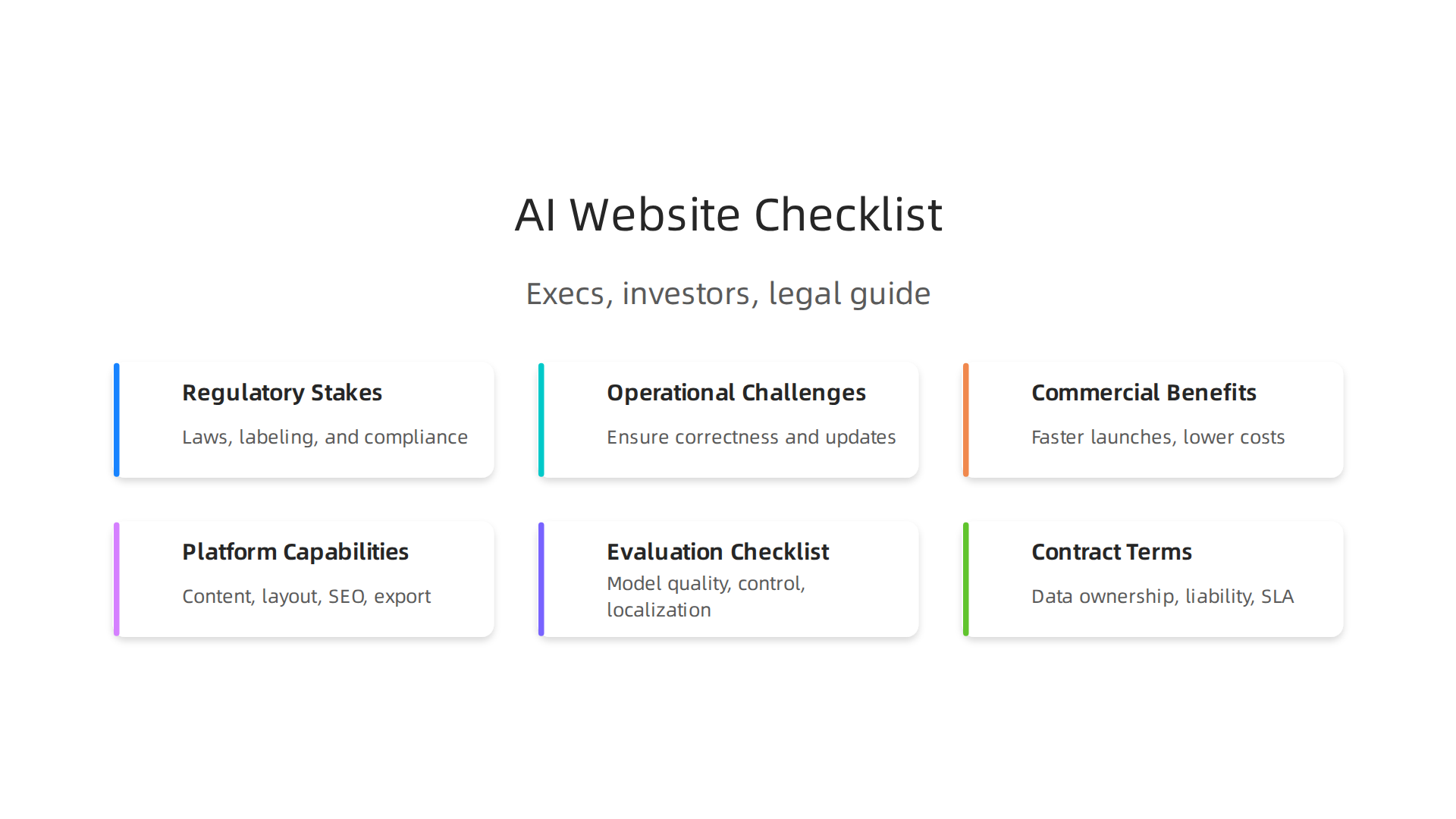
- Regulatory Stakes: Laws around AI are growing fast. Countries like the United States have introduced laws such as the TAKE IT DOWN Act, which addresses AI-generated content, especially deepfakes, signed in May 2025 AI Laws and Regulation in the United States (2026). Also, the European Union has its AI Act, which means that AI-generated content must be clearly labeled and identifiable AI Act | Shaping Europe’s digital future. Rules in places like India and China also require strict labeling and sometimes quick removal of AI-generated content that breaks the rules India’s Bold Crackdown on Deepfakes: New IT Rules 2025 and China Releases New Labeling Requirements for AI-Generated Content. Businesses must follow these rules to avoid big fines and legal problems.
- Operational Challenges: How will these AI tools fit into your daily work? You need to think about how you will manage the content they create, make sure it’s correct, and update it.
- Commercial Benefits: Even with the challenges, the benefits can be huge. Faster launches, less spending, and the ability to test many ideas can help your business grow.
Understanding these points is key for executives, investors, and legal teams who want to use these new tools wisely.

It’s about finding the right balance between moving fast and staying safe. To learn more about the potential pitfalls, check out these AI website builder compliance risks every leader should understand.
Stay informed about the latest developments in AI and technology regulation. Get clear daily AI updates from The AI Newsletter Worth Reading.
Market Overview: What ‘Website AI Maker’ Platforms Can Do Today
After understanding the important things to think about when using AI for websites, let’s look at what these amazing tools can actually do. In 2026, website ai maker platforms are packed with features that help businesses big and small create a strong online presence faster than ever.
These tools are not just for basic websites anymore. They offer a full set of helpful powers:
- Content Generation: Many
website ai makertools can write text for you. This means they can create blog posts, product descriptions, or headlines. Some can even help with more creative content, like suggestions you might get from a tool likeCreatify AI. They can also offer services like a voice over generator or even specialcharacter voice text to speechoptions to make your site’s videos or audio guides stand out. - Layout Automation: This is where AI really shines. Instead of moving blocks around for hours, the AI can suggest and build full page layouts. You just tell it what kind of site you need, and it puts together a professional design. Tools like Wix AI and Framer AI are known for helping with quick designs and responsive layouts that look good on any device, as seen in lists of best AI website builders in 2026.
- SEO Optimization: Getting found on Google is very important.
Website ai makertools help with this by suggesting keywords, writing good meta descriptions, and checking your site’s health for search engines. This makes it easier for potential customers to find your business online. - Multi-Format Export: Once your website is ready, some AI builders let you export your content or design in different ways. This can be useful if you need to use parts of your website in another program or system. This feature adds flexibility for businesses.
Who Uses These Tools and How?
Different types of businesses use website ai maker tools in their own ways:
- Small Businesses (SMBs): For smaller companies, these tools are a game-changer. They can build a professional online store or service site quickly and without needing to hire many experts. They might use an AI
website ai makerto launch a new product campaign in just a few days or create a simple landing page for an event. The focus here is on speed, low cost, and ease of use. Many of the top AI website builders for 2026 offer features perfect for small businesses. - Larger Companies (Enterprise): Bigger businesses use these tools too, but often for different reasons. They might use them to quickly test new ideas, create temporary sites for special projects, or even help manage large amounts of content. An AI assistant, like an advanced
Evie AItype tool, might help content teams organize and publish information across many different sites, ensuring everything stays consistent and follows company rules. They can also integrate these AI tools into their existing systems, like connecting them to sales or marketing software.
These tools truly help businesses make smart choices about their online presence. To keep learning how AI can help your company grow wisely, consider reading about AI website making strategic choices for 2026 success.
How to evaluate website ai maker tools: features, data needs, and customization
Now that we know what a website ai maker can do, how do you pick the right one for your business? It’s like choosing the best tool for a job; you need to look closely at its features, what information it needs, and how much you can change what it makes. Here’s a simple guide to help you choose wisely in 2026.
Checklist for Quality, Control, and Localization
When looking at a website ai maker tool, keep these things in mind:
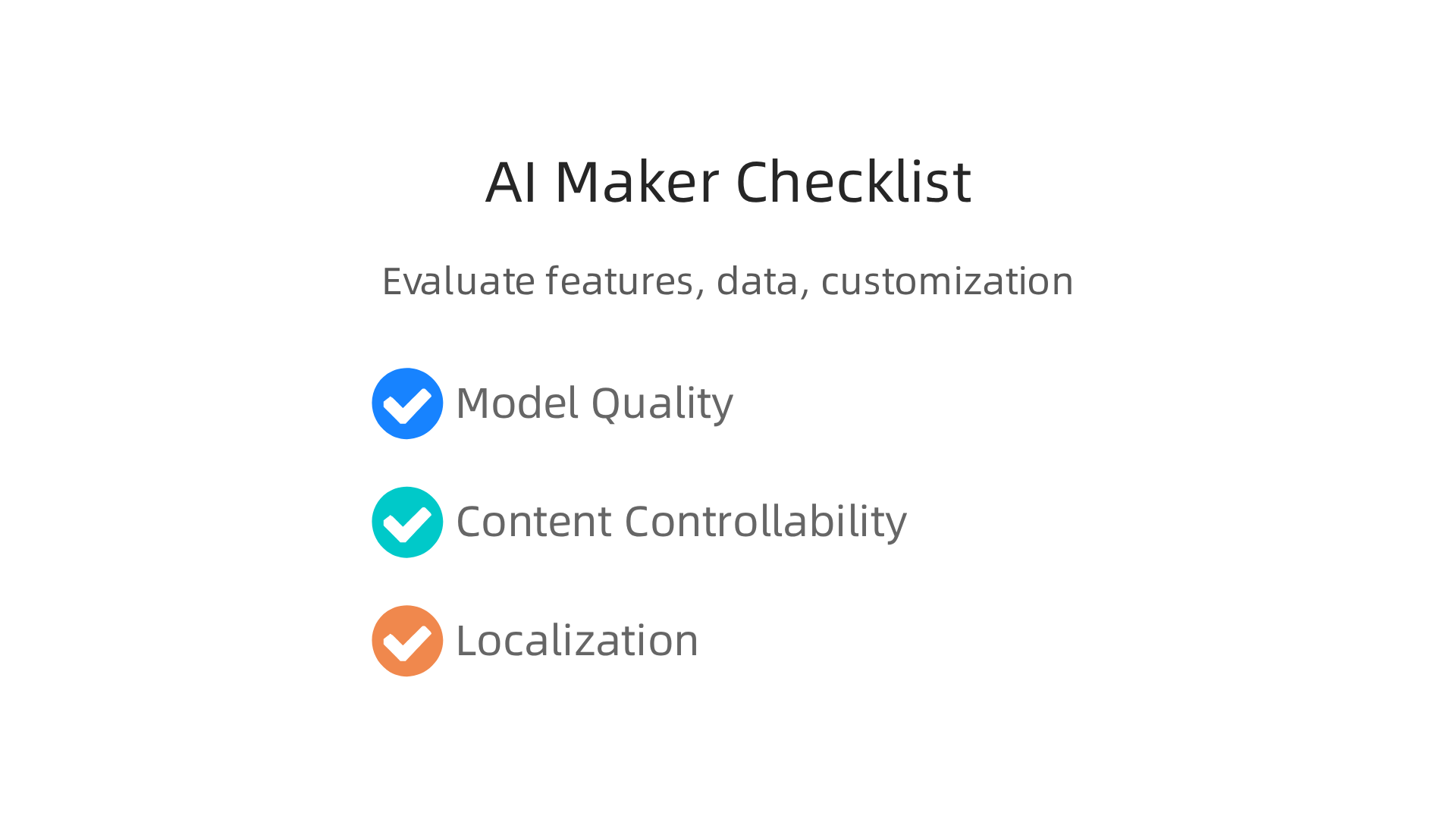
- Model Quality: How good is the AI at creating content?
- Content Quality: Does the text it writes sound natural and correct? Is it free of mistakes? For example, if it’s generating product descriptions, are they clear and persuasive? Some tools, like those that offer
creatify aifeatures, might promise very creative and engaging content. Make sure the quality meets your brand’s standards. - Layout Quality: Does the website design look professional and modern? Does it work well on phones and tablets? Good AI builders, such as those found in an AI Website Builder Comparison, offer strong design features.
- Content Quality: Does the text it writes sound natural and correct? Is it free of mistakes? For example, if it’s generating product descriptions, are they clear and persuasive? Some tools, like those that offer
- Content Controllability: Can you easily change what the AI makes?
- Editing: After the AI creates a page or text, can you go in and change words, pictures, or layouts without trouble? You need to be able to fine-tune things to make them perfect for your business.
- Brand Voice: Can you guide the AI to write in your company’s unique style? If you want a playful tone or a very serious one, the AI should be able to learn and adapt.
- Localization: If your business serves people in different countries or who speak different languages, this is key.
- Language Support: Can the
website ai makercreate content in multiple languages? - Cultural Fit: Does the AI understand cultural differences? For example, images or phrases that work well in one country might not in another. Tools that can offer specific
character voice text to speechor a voice over generator might have better localization features for multimedia content.
- Language Support: Can the
Data Requirements, Retraining, and Content Ownership
Next, think about the technical side:
- Data Requirements: What information does the AI need from you to do its job?
- Starting Point: Some tools might ask for a few sentences about your business, while others might want links to your social media or existing content. More data usually means the AI can create a more accurate first draft.
- Retraining Options: Can you make the AI smarter over time?
- Learning: The best
website ai makertools let you give feedback. If you often correct certain things, the AI should learn from those corrections and get better at predicting what you want. This is how the AI improves and becomes more like a helpful team member, like anEvie AItype assistant.
- Learning: The best
- Content Ownership: Who actually owns the words and designs the AI creates for your website?
- Your Rights: It’s super important to know if you fully own the content generated by the AI. Check the terms of service. You want to be sure you have all the rights to use, change, and publish your website’s content without issues. Also, consider the AI website builder compliance risks to ensure everything is above board.
By checking these points, you can pick a website ai maker that not only builds a great site but also works well for your business’s needs now and in the future.
For professionals trying to keep up with the fast-changing world of AI and its rules, there’s always more to learn. Stay informed daily with valuable insights.
The AI Newsletter Worth Reading
After you have looked at all the features and what kind of data an AI website maker needs, the next important step is to actually test it out.

You want to make sure the tool performs well and fits your business goals. Think of it like test driving a car before you buy it.
Testing Your Website AI Maker: Quality, Bias, and SEO
Here is how you can practically check a website ai maker tool:
- Test for Quality:
- Content and Design: Have the AI create a few different pages for your business. Read the words carefully. Do they sound like your brand? Are there any silly mistakes? Look at the design. Does it look professional? Does it work on phones and tablets easily? Many tools, like those mentioned in the Best AI Website Builder 2026: 12 Tools Tested review, are evaluated on these exact points. If the AI tool has features like
creatify ai, check if its creative content is truly helpful and fits your message. - User Experience: Ask a few people to try using the website the AI made. Can they find what they are looking for? Is it easy to navigate?
- Content and Design: Have the AI create a few different pages for your business. Read the words carefully. Do they sound like your brand? Are there any silly mistakes? Look at the design. Does it look professional? Does it work on phones and tablets easily? Many tools, like those mentioned in the Best AI Website Builder 2026: 12 Tools Tested review, are evaluated on these exact points. If the AI tool has features like
- Check for Bias and Hallucination Risk:
- Bias: AI can sometimes learn bad habits from the data it was trained on. This might mean it creates content that is unfair or does not represent all your customers. Look closely for any signs of this in the words or images it suggests.
- Hallucination: This is when the AI makes up facts or information that is not true. Make sure any important details, like prices, dates, or product features, are correct. Always double-check information generated by the AI, especially for key business details.
- SEO Impact:
- Getting Found Online: A great website is not much good if nobody can find it. Check if the
website ai makercreates sites that are easy for search engines like Google to understand. Does it make proper headings? Are the pages loading quickly? A good AI tool should help your website rank well in search results. Understanding the strategic AI content creation risks workflows and business growth is key here.
- Getting Found Online: A great website is not much good if nobody can find it. Check if the
Setting Up KPIs and Guardrails for Your Website
Once you are happy with a website ai maker tool, you need to set up ways to keep checking it over time.
- Key Performance Indicators (KPIs): These are like scores that tell you how well your website is doing. For example, you might track:
- How many people visit your website each day.
- How long people stay on your pages.
- How many visitors sign up for your newsletter or buy something.
- These numbers help you know if the AI-built site is helping your business grow.
- Guardrails for Production Rollouts: These are rules or limits you put in place to make sure the AI always behaves how you want it to, especially when the website is live for everyone to see.
- Safety Checks: You might set up automatic checks that flag any content the AI makes that seems wrong or out of line with your brand.
- Approval Steps: For important pages or content, you might want a person to approve it before it goes live. This helps avoid mistakes and keeps your brand looking good.
- Companies use detailed guides, like an AI Vendor Evaluation Checklist & Comparison Criteria, to set these rules and measures in place.
By carefully testing and setting up these checks, you can use a website ai maker to build a strong online presence that works for you. Staying on top of AI regulation 2026 navigate compliance and avoid risks will also help ensure your AI-powered website remains compliant and trustworthy.
Even after you have a good handle on how to test a website ai maker and set up goals for it, there’s another very important thing to think about: the law. Using AI tools for your website can bring up some tricky legal questions, especially around who owns the content, how you handle personal information, and new rules about AI.
Legal risks: copyright, data privacy, and regulatory compliance
When you use a website ai maker, it creates words, pictures, or even sounds for your site. But who actually owns these creations? And what rules do you need to follow?
Who owns AI-generated content?
This is a big question right now. In many places, like the U.S. and the European Union, copyright law usually says that only people can own the rights to creative works. If an AI tool makes content all by itself, without much help from a human, it might not be protected by copyright at all. This means someone else could use it without your permission. However, if a person plays a big part in guiding the AI, making choices, and editing the final output, then that human might own the copyright. The U.S. Copyright Office is looking closely at these issues, saying that AI-generated works can be protected by copyright only when a human has made enough creative choices. It is like the human’s "touch" makes the content truly their own U.S. Copyright Office NewsNet Issue 1060.
Keeping user data private
Your website often collects information from visitors, like their names, emails, or what they click on. When a website ai maker or other AI tools help manage your site, you need to be very careful about how this data is handled. Different countries have different rules about data privacy. For example, some rules affect how data can move from one country to another. You need to make sure your website ai maker and any other AI tools you use follow these rules. This is called cross-border data flow, and it means checking where your data is stored and processed to make sure it is safe and legal. Understanding these rules is important to avoid problems.
Following new AI rules and laws
Governments around the world are quickly making new laws about AI. Many of these laws focus on making sure people know when content is created by AI. For example, in 2026, many places have new rules about labeling AI-generated content.
- Labeling AI content: The European Union, India, China, and even the U.S. are pushing for clear labels on content made by AI, especially for things like "deepfakes" or information meant to inform the public AI Act Shaping Europe’s digital future, Government Strengthens Framework to Counter AI-Generated … – PIB, China Releases New Labeling Requirements for AI-Generated …. Some places, like Spain, are even planning big fines if companies do not label AI-generated content correctly Spain to impose massive fines for not labelling AI …. The U.S. has even passed laws like the TAKE IT DOWN Act to deal with harmful AI content AI Laws and Regulation in the United States (2026).
- Avoiding risks: If your
website ai makercreates a virtual assistant with acharacter voice text to speechfeature, or usesvoice over generatortechnology, you might need to disclose that it’s an AI. Ignoring these new rules can lead to big fines or harm your business’s reputation. It is critical to stay up-to-date on how to make your AI tools compliant with global rules.
Making sure your website ai maker meets these legal standards is just as important as making sure it builds a good-looking site. You need to understand the rules to protect your business and your customers. To stay on top of these fast-changing rules, it can be helpful to get regular updates.
Get clear daily AI updates from The AI Newsletter Worth Reading. This is vital for any business using AI, including tools like creatify ai or evie ai, to ensure they are compliant and avoid risks. Also, exploring resources on AI regulation 2026 build AI systems compliantly can help you understand the broader legal landscape.
After carefully looking at the legal rules for using AI, the next step is to think about how you will actually run your website ai maker day-to-day. This means making sure your AI tools work well with your existing website systems and that you have a clear plan for managing everything. It is all about smooth operations.
Making sure your AI website runs smoothly
When you use a website ai maker to create content, you need good ways to put that content on your site safely. You also need to watch it closely and make changes when needed. This is like setting up a special path for your AI-generated content to follow before it reaches your visitors.
Safe ways to put AI content online
Imagine you have a new AI tool, maybe like creatify ai, that creates text or images for your website. You wouldn’t want it to post things directly without anyone checking, right? Here are some ways to keep things safe:
- Staging areas: This means having a "test" version of your website where new AI-generated content can go first. You can look at it there, make sure it looks good, and check for any mistakes before it goes live on your real website. This helps you catch problems early.
- Human checks: Even the smartest AI needs a human touch. Having people review AI-made content before it goes public is super important. This "human-in-the-loop" review ensures the content fits your brand, is correct, and avoids any awkward or wrong information.
- Keeping an eye on things: Once AI content is on your site, you need to watch how it performs. Are people reading it? Is it helping your website goals? Tools can help you monitor this, so you know if your
website ai makeris doing a good job.
These steps help you put AI-generated content on your site in a safe, controlled way. It’s much like how you would test any other new feature for your website to make sure it works well before everyone sees it. For more on ensuring AI systems work as they should, learn how to build robust AI design, test, and monitor compliant AI systems in 2026.
Costs, upkeep, and keeping track of changes
Using a website ai maker also means thinking about money and maintenance. AI tools aren’t usually a one-time cost.
- Operational costs: These are the ongoing costs of running your AI tools. This could be for the tool itself, like an
evie aiservice, or for the computing power it uses. It also includes the cost of people who manage and check the AI’s work. When choosing an AI tool, it’s important to understand all these costs clearly, as detailed in various procurement checklists for AI vendors The procurement checklist for AI vendors. - Maintenance needs: AI tools need updates and sometimes new training to keep working well. You might also need to fine-tune your
character voice text to speechorvoice over generatorif you use these features to make sure the output stays high quality. - Versioning strategies: Over time, your
website ai makermight create many versions of content. Having a way to keep track of these versions is key. This helps you go back to older versions if needed, or see how content has changed. Thinking about how your AI tools will fit into your existing business is part of making smart choices for your company Step 4: Test Integration Fit….
Planning for these operational details helps you get the most out of your website ai maker while avoiding unexpected problems and costs.
When picking a website ai maker, it is really important to understand how much it will cost and what kind of deal you are getting. This goes beyond just the monthly fee. You need to look at common ways AI tools are priced and what things you can talk about to get the best deal for your business.
Vendor selection, pricing models, and negotiating commercial terms
Choosing the right website ai maker means looking closely at who provides the tool, how they charge, and what important details are in the contract.
How AI tools are usually priced
There are a few main ways that companies like creatify ai or evie ai price their services. Understanding these helps you plan your budget better.
- Subscription plans: This is like paying a set fee every month or year. You often get a certain amount of features or usage for that price. This is common for many
website ai makertools because it helps you know what your costs will be ahead of time. However, you should check if there are hidden costs for going over a certain usage, as this can affect your budget predictability significantly, according to experts on AI vendor evaluation checklists Step 4: Test Integration Fit…. - Per-generation or usage-based pricing: With this model, you pay for what you use. For example, if you use a
character voice text to speechtool, you might pay for each minute of audio it makes. Or, if you use avoice over generator, you might pay per word or per file created. This can be great if you do not use the tool much, but costs can add up quickly if your usage grows. Always look for spending caps to avoid surprises, as highlighted in warnings about AI vendor contract red flags AI Vendor Contract Red Flags 2026. - Enterprise or per-seat pricing: This model often has a flat rate per user or team, giving everyone access to the tool’s features. It’s often for bigger companies and might include more support or special features.
When looking at these pricing models, make sure to ask about all possible costs. This includes extra fees for data storage, getting support, or using special features. Thinking about how much you expect to use the tool can help you pick the best pricing model, as experts suggest mapping pricing to usage patterns to calculate monthly costs accurately The procurement checklist for AI vendors. For a deeper dive into making smart choices for your AI website, consider learning more about AI website making strategic choices for 2026 success.
Important things to negotiate in your contract
When you are ready to sign a contract with an AI vendor, there are some very important things you need to talk about.
These points help protect your business and make sure you get what you pay for.
- Who owns the data: This is a big one. You need to know who owns the data that goes into the AI tool and the content that comes out of it. Does the
website ai makervendor have the right to use your data to train their AI? Make sure the contract clearly states that your company owns its content and data. - Responsibility for problems (liability): What happens if the AI creates something wrong or harmful? Who is responsible? The contract should explain who takes the blame if something goes wrong with the AI’s output.
- How well the service works (SLA): An SLA, or Service Level Agreement, sets clear rules for how well the AI tool should work. For example, it might say how often the service will be available or how quickly they will fix problems. This helps make sure your
website ai makeris reliable. - Checking how the AI uses data (audit rights): You might want the right to check how the AI vendor uses your data and how their system works, especially if it handles sensitive information. This gives you peace of mind that they are following the rules. Procurement checklists for AI vendors often include these points as essential for protecting your business The Enterprise AI Procurement Checklist 2026.
Getting these details right in your contract is key to a good and safe partnership with any website ai maker. It is all about protecting your business for the long run.
Keep informed about the latest changes in AI tools and regulations to make the best decisions. Discover clear, daily AI updates. Get The AI Newsletter Worth Reading.
After understanding the costs and important contract details for a website ai maker, let’s look at how real businesses are using these tools. We will see what great results they are getting and what they have learned along the way in 2026.
Adoption stories and ROI: mini case studies and lessons learned
Many companies are already seeing big wins by using website ai maker tools. These are not just small gains. They often lead to a high return on investment (ROI), which means the money they put in comes back to them many times over.

How AI tools help businesses
Here are a few examples of how companies are finding success:
-
Boosting Marketing Efforts: Imagine a new company that needs to get the word out fast. A software startup used a
website ai makerto quickly create many different landing pages. They tested 12 versions, while a human team might only manage 2. This effort paid off big time, improving how many people signed up from 8.2% to 18.7%. That’s a huge jump in success for finding the right message AI Website Case Studies 2026: Real ROI, Traffic &… | NxCode. Also, using AI for content like articles can give you 3.2 times your money back on average. This shows how powerful AI can be in marketing. -
Saving Money in Development: Building a website from scratch can cost a lot of money, sometimes tens of thousands of dollars. But
website ai makertools can help cut these costs way down. Some businesses spend just $0-500 using AI builders, compared to $15,000-50,000 or more for old ways. This means huge savings for many companies, allowing them to do more with less. -
Improving Customer Support: AI isn’t just for building sites. It can also make customer service much better. For example, AI tools can help answer common questions, sort emails, or manage appointments automatically. Businesses that use AI for customer service can see annual savings between $50,000 and $200,000, often getting their investment back in just one to four months Enterprise AI Adoption in 2026: The Framework That Scales.
Lessons for scaling and measuring ROI
Moving from a small test (a pilot program) to using AI tools widely can have its own challenges. It’s important to have a clear plan for how to grow your use of AI. Companies must learn to properly measure the benefits across different parts of their business, like marketing, product development, and customer support. Many businesses that carefully track their AI spending are reporting big returns. Some have even seen a 333% return on their investment over three years, turning an initial investment into much more The real economics of enterprise AI, featuring Forrester and New ….
To truly get the most out of your website ai maker, you need a strategy for growing its use. This means setting clear goals and watching how the tool helps you reach them. Learning how to move your AI projects from small tests to big successes is key. You can find more helpful advice on how to plan this growth by reading about From pilot to scale with AI for business in 2026.
Staying updated on these stories and the overall trends in AI is crucial for making smart choices. Get The AI Newsletter Worth Reading to stay informed.
Summary
This briefing explains why "website AI maker" tools matter for executives, investors, and legal teams in 2026 and walks through what those tools do, how to evaluate them, and the operational and legal risks to manage. It reviews core capabilities—content generation, layout automation, SEO help, and export options—and shows how small businesses and enterprises use AI builders differently. The article gives a practical evaluation checklist covering model quality, controllability, localization, data needs, retraining, and who owns the output. It also outlines step‑by‑step testing for quality, bias, hallucinations, and SEO, plus how to set KPIs and production guardrails. The legal section summarizes copyright uncertainty, cross‑border data privacy, and emerging labeling laws that can create liability. Finally, it covers vendor selection, pricing models, contract negotiation points, operational costs, and examples of ROI so teams can pick, test, and run AI website tools safely and strategically.