

Why ‘shadow tech’ matters now: a strategic primer for executives, investors, and compliance teams
Imagine your employees using tools for work that your company’s IT team doesn’t know about or hasn’t approved.

That’s what we call "shadow tech." It’s any software, cloud service, or device that helps people do their jobs but flies under the radar of official company systems. In 2026, this hidden technology is more common than ever, making it a big deal for everyone from company leaders to those who make sure rules are followed.
Shadow tech isn’t new, but it has changed a lot. In the past, it might have been an employee using a personal flash drive. Today, it includes all kinds of unapproved tools, like cloud storage, mobile apps, and especially new AI programs that workers use to get tasks done faster. These tools often slip past IT because employees might sign up for free versions, use their company credit cards for small subscriptions, or simply use personal devices for work tasks without thinking about it. Actually, about 45% of companies allow employees to get and use software without IT saying yes first, according to expert analysis on Shadow It Statistics (2026): Expert Analysis.
This rise of invisible technologies creates both problems and chances for businesses.
Strategic Risks of Shadow Tech
- Security Holes: When IT doesn’t know about a tool, they can’t protect it.
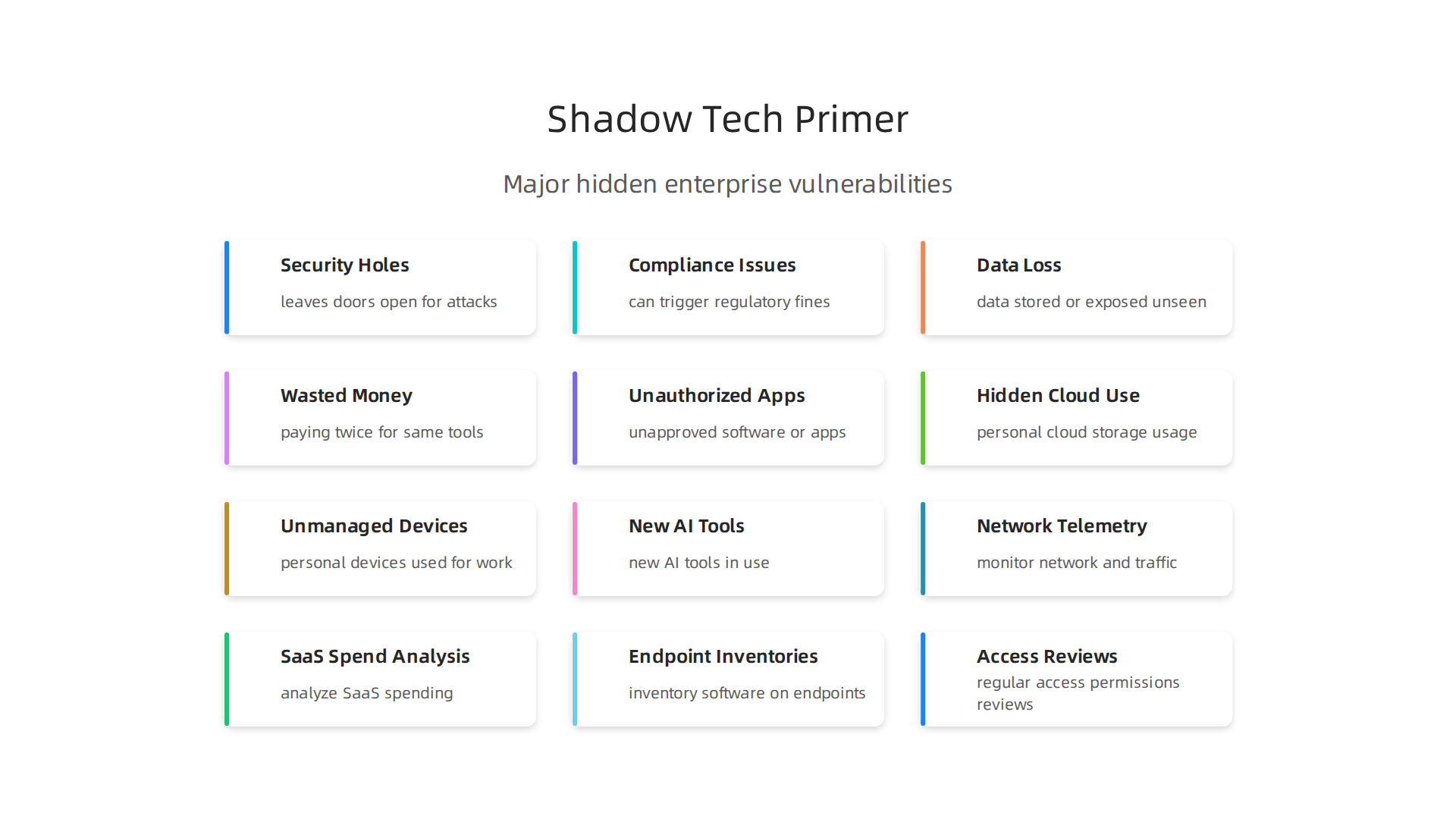
This leaves doors open for cyber attacks and makes company data less safe. It’s like having secret back entrances to your building that only some people know about.
- Compliance Issues: Many industries have strict rules about how data must be handled. Shadow tech can easily break these rules, leading to big fines and legal troubles.
- Data Loss: Important company information might end up stored in places IT can’t see or control. If an employee leaves, that data could go with them or be lost forever.
- Wasted Money: Companies might be paying for many different tools that do the same thing, or for services that aren’t secure or efficient.
Strategic Opportunities of Shadow Tech
- Finding New Tools: Sometimes, shadow tech shows IT what tools employees really need to be productive. It can highlight gaps in approved software.
- Innovation: Employees might find clever new ways to use technology to improve their work, sparking new ideas for the whole company.
However, the risks often outweigh the benefits if shadow tech isn’t managed well. It’s vital to understand how these invisible tools affect your business. To learn more about how regulation impacts these hidden technologies, you might find our article on invisible technologies regulation redefines 2026 business compliance very helpful.
Dealing with shadow tech means understanding why people use it and finding ways to bring it into the light, so it can be managed safely. This balance is key for any company looking to stay secure and compliant in 2026.
Get clear daily AI updates from The AI Newsletter Worth Reading.
Dealing with shadow tech means understanding why people use it and finding ways to bring it into the light, so it can be managed safely. This balance is key for any company looking to stay secure and compliant in 2026.
What Exactly is Shadow Tech — Types, Drivers, and Enterprise Examples
So, what exactly is this "shadow tech" we’ve been talking about? Simply put, shadow tech is any kind of technology that employees use for work without the company’s IT department knowing or giving a clear "yes." It could be software, cloud services, special AI tools, or even hardware that isn’t officially approved. In 2026, this definition has grown quite a bit beyond just a hidden app. It now covers things like unapproved AI programs and personal devices workers use for company tasks, all without IT oversight. This makes it harder for companies to keep track of their technology landscape, according to experts in Shadow IT Discovery & Management: A 2026 Guide for IT.
Different Kinds of Shadow Tech
Shadow tech comes in many forms. Here are some common types you might find in companies today:
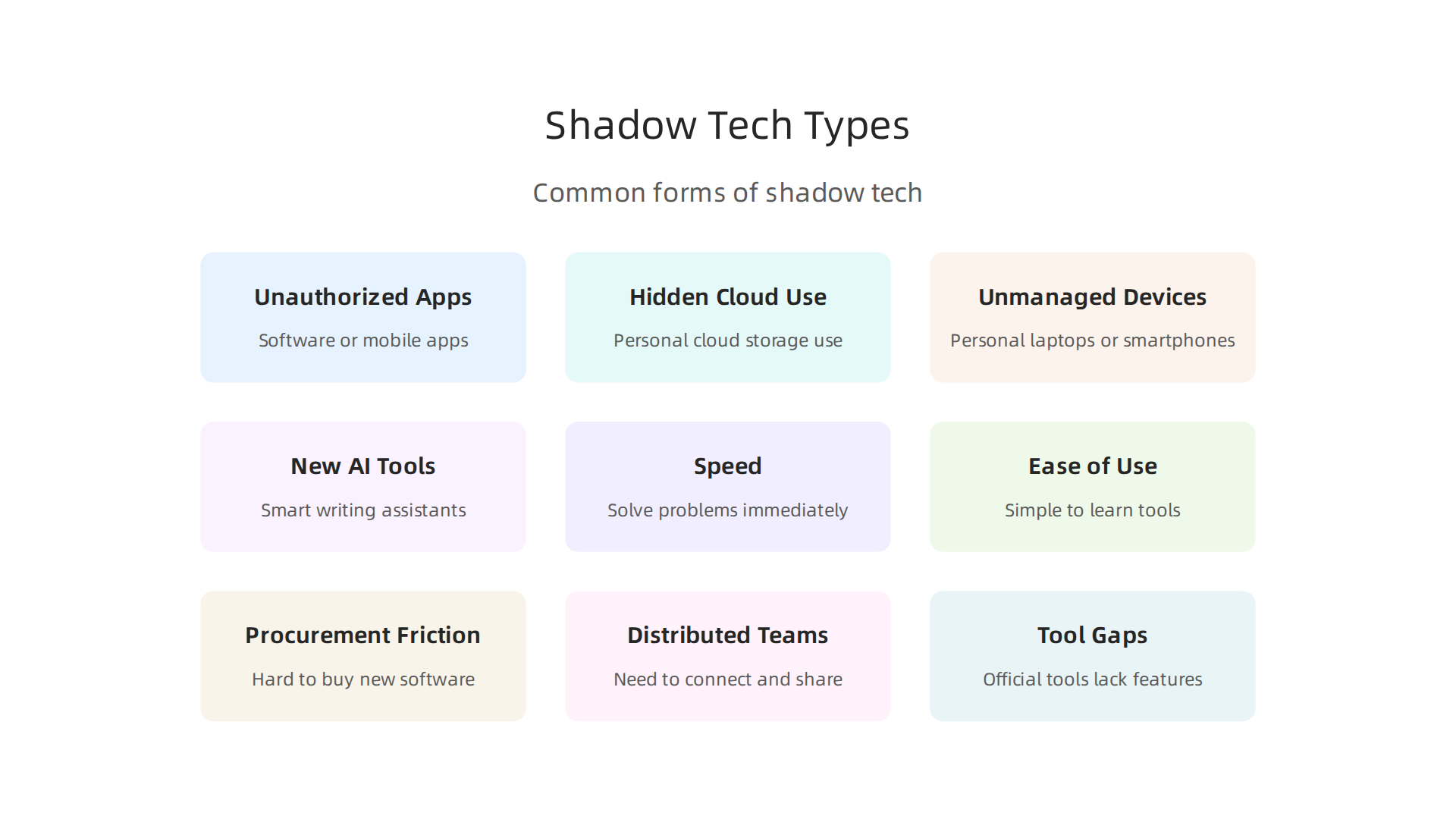
- Unauthorized Apps: These are software programs or mobile apps that employees download and use on their work computers or phones without asking IT first. Think of a free project management app or a new messaging service.
- Hidden Cloud Use: This happens when employees use cloud storage services like personal Google Drive or Dropbox accounts to share company files. IT can’t see or control what data is stored there.
- Unmanaged Devices: Sometimes, workers use their own laptops, tablets, or smartphones for work. These devices are "unmanaged" because the company’s security rules and software aren’t installed on them.
- New AI Tools: With so many new AI programs coming out, employees often try them to make their jobs easier. These AI tools can be anything from smart writing assistants to tools that help with "ai prompting jobs" and can quickly slip into use without IT approval.
Why Employees Use Shadow Tech
People don’t use shadow tech to be tricky. Actually, it often comes from a good place: wanting to do work better and faster.
Here are the main reasons employees turn to unapproved tools:
- Speed: Employees often need to solve problems right away. If getting a new tool approved takes too long through official channels, they might just find one themselves.
- Ease-of-Use: Many unofficial tools are very simple to learn and use. If the official company software is clunky or hard to figure out, workers will look for something easier. This reflects the idea that "all tech is human" in its design and how people interact with it.
- Procurement Friction: This is just a fancy way of saying it’s tough to buy new software. If the company’s process for getting new tools is slow or has too many steps, employees will try to get around it. Things like using a company credit card for a small, free-tier upgrade of a service can make it hard to track, as noted in a guide about Shadow IT in 2026: why it is harder to track.
- Distributed Teams: When teams work from different places, like home or different offices, they need ways to connect and share information easily. If the company doesn’t offer good tools for this, people will find their own solutions.
- Gaps in Official Tools: Sometimes, the company just doesn’t have the right tools for a specific task. Employees then go out and find what they need to get their job done.
Understanding these drivers is the first step to managing shadow tech. It’s about seeing what your employees truly need and finding ways to support them safely. To learn more about how companies manage AI tools and compliance, you might find our article on master global work AI your 2026 guide to strategy and compliance very useful.
Regulatory blind spots are like hidden dangers that make it hard for companies to follow the rules, especially when shadow tech is involved.

Different countries and different types of businesses have their own sets of rules. When employees use unapproved tools, these "blind spots" can turn into big problems.
Where Regulations Get Tricky
It’s tough for companies that work all over the world. What’s okay in one country might be a big problem in another. This is especially true with new technologies like AI. For example, in Europe, there are strict rules about how companies handle personal information (like GDPR) and how they use AI (like the EU AI Act). If a company’s workers use shadow tech that collects customer data or uses AI without the IT department knowing, the company could face big fines.
Here are some key regulatory areas that can become blind spots:
- Data Privacy Laws: Rules like Europe’s GDPR mean companies must protect personal data. If shadow tech handles this data without proper security, it’s a huge risk. Unsanctioned SaaS tools can break GDPR rules if they process personal data without a signed agreement, leading to compliance exposure for European organizations Shadow IT in 2026: Risks, detection, and how to manage it.
- AI Regulations: The EU AI Act, for instance, sets clear rules for AI systems, especially those considered "high-risk." Starting August 2, 2026, companies must keep a full list of all AI tools they use. If employees are using AI tools for things like ai prompting jobs without IT knowing, the company might not even know it’s breaking the law Shadow AI Apps: The Enterprise Attack Surface That …. Fines can be very large.
- Cybersecurity Rules (NIS2, DORA): These rules aim to make companies safer from cyberattacks. Shadow tech can open up new ways for attackers to get in, making companies less secure and breaking these rules. Financial entities, for example, need to register all their tech under DORA Shadow IT in 2026: Risks, detection, and how to manage it.
Sectors Most Exposed to Shadow Tech Risks
Some types of businesses are more at risk from shadow tech and its regulatory blind spots than others. This is because they handle very sensitive information or critical services:
- Healthcare: This sector deals with highly private health information. If shadow tech is used to share or store patient data, it can easily lead to privacy rule violations. In fact, healthcare faces the most serious shadow AI exposure in 2026 Shadow AI stats for 2026: The hidden adoption gap ….
- Financial Services: Banks and other financial companies manage money and personal financial details. They also face a tricky regulatory landscape Shadow AI stats for 2026: The hidden adoption gap …. Any shadow tech could lead to data breaches or fraud, causing huge legal trouble and financial losses.
- Critical Infrastructure: This includes things like power grids and communication networks. If shadow tech is used in these areas, it could even affect public safety. Research shows a simmering threat to security in critical infrastructure A Simmering Threat to Assurance and Security in Critical Infrastructure.
Staying on top of these different rules and risks means always knowing what technology is being used. It’s not just about stopping shadow tech, but about making sure all tech use is safe and compliant. To better understand how to build AI systems that meet these strict rules, read our guide on AI regulation 2026 navigate compliance and avoid risks.
Understanding these complex rules can be a full-time job. For clear, daily insights into AI and technology regulations, consider subscribing to The AI Newsletter Worth Reading.
Knowing which technologies are in use is just the first step. The real challenge comes from understanding the many dangers that shadow tech can bring. These hidden tools can cause big problems for companies in terms of following rules, keeping data safe, protecting privacy, and even ethical behavior.
Compliance Risks
Shadow tech creates huge compliance risks. When employees use apps or services that IT doesn’t know about, it’s hard to make sure those tools follow the law. For example, if workers send personal information through unapproved apps, it can break important data protection laws like GDPR in Europe or HIPAA in the US. In fact, uncovering shadow IT can show daily violations of GDPR and HIPAA because of these unsanctioned tools Shadow IT in 2026: What Employees Really Use – DataFence.
It also makes it hard to keep good records. Rules often say companies must track all their tech and how data is handled. With shadow tech, companies might not even know what data is being collected or where it’s stored. More than half of all organizations, 52% actually, struggle to properly sort their shadow IT data for compliance reasons Shadow It Statistics (2026): Expert Analysis – Gitnux. This lack of oversight extends to vendors too. If an unknown service is used, the company can’t properly check the vendor to make sure they’re safe and reliable. These problems can lead to big fines and legal trouble. To learn more about how to manage these risks, check out our guide on mastering oversight of classified and sensitive technologies for 2026 compliance.
Security Risks
Shadow tech is a major threat to a company’s technical security.

Unapproved software or devices often don’t get the same security checks as approved tools. This means they can have weak spots that hackers can use to break into the company’s systems. If one employee uses a risky app, it can open a door for cyberattacks across the whole company. The danger of cyber threats is always changing, and reports like the ENISA Threat Landscape 2025 highlight these ongoing risks.
Beyond direct attacks, there’s also the risk to a company’s reputation. If a data breach happens because of shadow tech, customers might lose trust. This can cause long-term damage to the business, even after the technical issues are fixed.
Privacy and Ethical Risks
Shadow tech also puts people’s privacy at risk. When personal data is handled by unknown systems, there’s no guarantee it’s being protected correctly. This can lead to sensitive information about customers or employees being leaked or misused.
Ethical concerns also come into play, especially with shadow AI tools. If employees use AI for things like ai prompting jobs or decision-making without proper checks, these tools might act unfairly or in ways that go against the company’s values. For instance, an AI tool that hasn’t been properly reviewed might make biased decisions, leading to unfair treatment. It’s important to remember that all tech is human in its creation and impact, meaning we must be careful how it’s used. Making sure all tech is visible and properly managed helps companies avoid these serious compliance, security, privacy, and ethical problems. If you want to understand how to keep your AI systems in line with global rules, read our guide on how to control AI effectively business strategies for global compliance.
After understanding the dangers of shadow tech, the next big step is figuring out how to find and keep track of it. You can’t fix a problem you don’t know you have. Detecting shadow tech means using smart tools and methods to see what’s really happening on your company’s networks and devices.
Detecting Shadow Tech: Tools and Telemetry
Finding shadow tech usually needs more than one approach. No single tool can catch everything.
Think of it like a detective using many clues to solve a mystery.
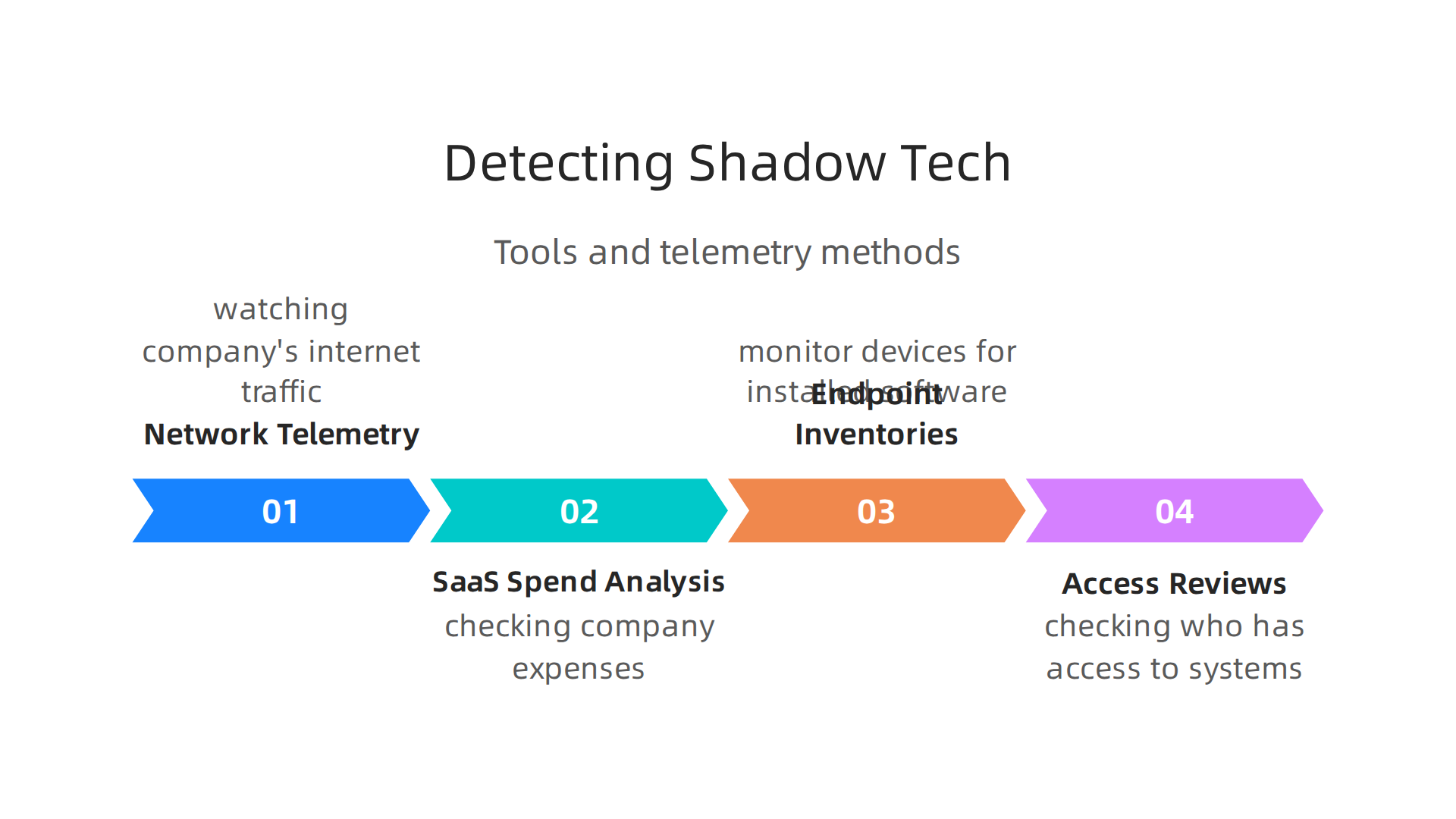
Here are some common ways to spot shadow tech:
- Network Telemetry: This involves watching your company’s internet traffic. When employees use unapproved apps, these tools send data through your network. By looking at this traffic, you can see which services are being accessed, even if IT didn’t set them up. This is often the first step in finding shadow IT, offering the broadest view of what’s out there Shadow IT Discovery: Find, Assess & Govern the Risk.
- SaaS Spend Analysis: Many shadow tools are cloud-based software-as-a-service (SaaS). By checking company expenses and payment records, you can often find subscriptions to services that IT hasn’t approved. Building a list of all purchased software licenses and comparing it to what’s actually being used can highlight hidden apps Shadow IT in 2026: How to Detect, Govern, and Reduce ….
- Endpoint Inventories and Monitoring: "Endpoints" are devices like employee laptops, phones, and tablets. Tools that monitor these devices can see what software is installed or what browser extensions are running. This is extra important for finding shadow AI tools, as many AI services are used through web browsers or desktop apps.
- Access Reviews: Regularly checking who has access to different company systems and data can also uncover shadow tech. If an employee has created an account for an unapproved service using company email, this can sometimes be flagged during access checks.
Many experts agree that the best way to detect shadow tech is by combining these methods. For instance, using a mix of network monitoring, endpoint detection, and checking expense data helps you get a full picture. To understand how better visibility helps, you can read more about how invisible technologies regulation redefines 2026 business compliance.
Practical Metrics and KPIs
Simply finding shadow tech isn’t enough; you also need to measure how much of it there is and how well you’re managing it. Here are some key ways to track your progress:
- Total Applications Discovered: How many unapproved apps or services have you found?
- New Shadow Applications Discovered Per Month: Is this number going down over time? A lower number means your detection and prevention efforts are working Shadow IT Discovery and Management Enterprise Guide 2026: CASB,….
- Time to Remediation: How long does it take from when a shadow tech tool is found to when it’s either approved, replaced, or removed?
- Shadow AI Ratio: For companies using AI, this measures the percentage of AI tools that are not officially approved versus those that are.
- Reduction in Unapproved SaaS Usage: This shows if fewer employees are using unauthorized cloud software.
By watching these numbers, businesses can see if their plans to control shadow tech are truly working. This helps ensure your company stays safe and follows the rules in 2026 and beyond.
Get clear daily AI updates and understand how regulations impact your business with The AI Newsletter Worth Reading.
Keeping track of shadow tech is more important than ever, especially in 2026, as governments around the world are getting serious about tech rules. Regulators are focusing heavily on how companies use AI, manage their data, and keep their systems safe. This means businesses have new responsibilities to make sure all their technology, even the hidden stuff, follows the law.
Policy and enforcement trends to watch in 2026: what regulators are focusing on
Many countries are pushing forward with new rules for technology. For example, in the European Union, policymakers are working hard to put the AI Act into action. This law sets strict rules for "high-risk" AI systems. If a company uses unapproved AI tools, or "shadow AI," that fall under these high-risk categories, they could face big fines. For instance, the EU AI Act starts its full enforcement for high-risk AI systems on August 2, 2026, and not having a clear list of all your AI systems could lead to serious legal problems, with penalties up to €15 million or 3% of a company’s total yearly sales Shadow AI Apps: The Enterprise Attack Surface That …. Businesses need to make sure their enterprise AI governance in 2026 keeps up with how employees actually use these tools.
Beyond AI, general data privacy laws like GDPR also play a big role in shadow tech. If employees use unapproved cloud software (SaaS) that handles personal information without proper agreements, it’s a violation Shadow IT in 2026: Risks, detection, and how to manage it – Passwork. The US Department of Defense, for example, has new cybersecurity rules that tie contract eligibility to how strong a company’s cybersecurity is Cybersecurity & Privacy 2026: Enforcement & Regulatory …. This shows a global trend where companies need to actively prove they are secure and compliant. To learn more about how US regulations are changing, you can read about US Tech Regulations 2026.
These stricter rules mean new duties for businesses and tech providers. Companies must now show real control over their technology. This includes having clear policies for AI use and training employees on what tools are allowed Shadow AI in government: Why unsanctioned tools demand a …. It’s no longer enough to just have a policy; businesses need to constantly earn trust by demonstrating good governance Understanding IT Compliance: Key Regulations for 2026. This shift highlights the need to integrate regulatory compliance into your corporate AI strategy to avoid big problems down the road. This also impacts emerging roles like those in AI prompting jobs, where employee use of AI tools must align with company policies and legal requirements.
The tougher rules mean businesses need clear plans to manage all their technology, even the hidden stuff. It’s about setting up smart ways to control tech while still letting new ideas grow. This is where a good governance plan comes in handy.
Practical governance strategies: policies, vendor controls, and balanced innovation
To truly get a handle on shadow tech in 2026, companies need a playbook. This playbook should cover clear rules, smart ways to buy new tech, and how to deal with special cases.
First, update your company rules. Make sure everyone knows what technology is approved and what is not. This means talking about all kinds of tools, from simple apps to complex AI systems. It’s not enough to just write rules; you need to teach employees why these rules are important. When employees understand the risks, they’re more likely to follow the guidelines. This also helps with roles involved in managing advanced tools, such as those in AI agent engineer what the role entails and why it is critical in 2026.
Next, control how you buy and approve new technology. Create a clear process for bringing in new software or tools. This helps you keep track of everything your company uses. One key step is to build a master list of all software, including who owns it and how much it’s used Shadow IT in 2026: How to Detect, Govern, and Reduce …. For complex areas like AI, a solid strategy helps you master global work AI your 2026 guide to strategy and compliance.
Then, think about risk-based exception paths. This means sometimes letting teams use new tools, even if they’re not on the "approved" list yet, as long as the risks are managed. This helps innovation happen without creating unsafe shadow tech. To do this well, you need ways to find and watch these tools. No single method works perfectly, so it’s smart to use many ways to find hidden tech, like checking network traffic, looking at activity on devices, and even asking employees Shadow IT Discovery: Find, Assess & Govern the Risk. You can also look at how apps connect to your systems, known as OAuth tokens, especially for AI tools Shadow AI and the Enterprise Visibility Crisis.
The goal is to align your governance with your innovation goals. When IT teams can quickly review and approve new tools, employees are less likely to use unapproved shadow tech. If it’s too hard or slow to get new tech approved, people will find their own ways, which leads to more hidden risks. Measuring how quickly new tech requests are handled can show if your process is working Shadow IT risks: How to detect and reduce them in 2026.
Staying on top of these changes and finding practical solutions can be a lot. For daily updates and in-depth analysis on AI and technology rules, consider subscribing.
The AI Newsletter Worth Reading
When companies look to buy or invest in another business, they need to check everything carefully. This is called due diligence.

In 2026, one big thing they look for is hidden technology, often called shadow tech. This hidden tech can change how much a company is worth and how hard it will be to merge two companies together.
Shadow Tech as a Hidden Problem
Imagine buying a house, only to find out later that some rooms were built without proper permits or have hidden problems. That’s a bit like what shadow tech is for investors. During due diligence, unknown software or tools can create big problems. These issues can include security holes, difficulties with access, and challenges when trying to move systems over to the new company’s setup M&A due diligence in 2026: process, requirements, and AI. Sometimes, companies miss these hidden tech issues entirely, which can lead to unpleasant surprises after a deal is done Due Diligence Blind Spots: What Buyers Miss in IT Audits.
These hidden items can also affect how much money a company spends each month, known as its "burn rate." If a company is secretly using many unapproved tools, the costs can add up fast. After a deal, the new owner might have to spend a lot to make these systems safe, compliant, or to replace them entirely. This is especially true with certain types of advanced tools, where the risks of shadow AI in business deals can be quite high The risks of shadow AI in M&A transactions. For investors, figuring out these hidden costs is a key part of their strategy, along with understanding other emerging risks. To learn more about how executives and investors approach these challenges, you might read about AI Singularity: Executive Investor Compliance Strategy for Emerging Risks.
Shadow Tech: Both a Risk and a Clue
Shadow tech isn’t always bad. Sometimes, employees use unapproved tools because the main company tools don’t meet their needs. This can show that employees are being creative and finding ways to get work done, hinting at good "product-market fit" for those creative solutions. It might even point to areas where the company’s official IT systems are lagging, showing "technical debt." This means the company’s core technology isn’t keeping up, and teams are looking for quicker fixes.
However, even if it points to innovation, shadow tech is still a liability. It can cause problems with security, following rules, and lead to extra costs down the road. For example, systems built with "edge intelligence" or specific hardware like RFID technology might be powerful but also create new blind spots if not managed properly. The key is for buyers to understand that "all tech is human" and comes with risks and opportunities. They need to dig deep to find these hidden parts of a business to truly understand its value and future challenges.
Summary
This article explains what