

In 2026, it’s clear that artificial intelligence, or AI, is changing how we work everywhere. This isn’t just about computers doing tasks faster. It’s about a big shift in how companies think about jobs, talent, and even where they do business around the world.

We call this idea "global work AI." It means that AI tools are now part of our everyday work, no matter where we are or what kind of global business jobs we have.
AI is reshaping how businesses organize their teams and how work gets done across different countries. For example, AI can help companies find the best talent from anywhere, not just locally. It also helps companies offer new products and services in global markets more quickly. Many organizations are now redesigning work to use AI alongside human workers, aiming for more innovation and teamwork across borders, according to a report from the World Economic Forum Proof over Promise: Insights on Real-World AI Adoption from 2025 MINDS Organizations.
This big change brings a tricky problem for company leaders and investors. They want to use AI to grow and invent new things, which is exciting. However, they also need to be very careful. There are new rules and laws about AI popping up all the time, called regulations, and companies must follow them to avoid problems. These rules cover things like privacy, fairness, and how AI affects jobs. The goal is to balance getting ahead with AI while making sure everything is safe and compliant, and that workers are supported. A study from the Federal Reserve Bank of Atlanta shows that while AI generally boosts productivity, its full effects on the workforce are still unfolding Artificial Intelligence, Productivity, and the Workforce.
Understanding these basic ideas about how AI works is key for business leaders today. To learn more about how AI is defined and its core functions, check out our guide to Artificial Intelligence Basics: A Non-Technical Introduction for Leaders. Navigating the world of global work AI means keeping up with fast changes in technology and rules.
Staying informed about these rapid changes in technology and regulation is crucial for every professional. Get clear daily AI updates from The AI Newsletter Worth Reading.
Executive summary: What AI means for global work today
So, what does this all mean right now, in 2026, for businesses around the world? Simply put, AI is making big waves in how we work across countries. It’s not just a future idea; it’s here, changing things quickly for jobs, teams that work together from different places, and how companies operate globally.
One of the biggest changes is how AI impacts jobs. Many worry AI will take all jobs, but that’s not exactly what’s happening. Instead, AI is reshaping the kinds of skills employers need most. Reports show that human skills like good judgment, creativity, and leadership are becoming even more important. Companies that use AI well are actually hiring faster than others. This suggests AI often helps workers do their jobs better, rather than replacing them completely, though entry-level jobs might see more changes. This means learning new skills is key for workers. For more information on how jobs are changing, you can read the AI reshapes global labour market into two distinct paths report by PwC.
For cross-border teams, global work AI makes it easier for people to work together no matter where they are. AI tools can help different teams understand each other better, translate things instantly, and manage projects across many time zones. This helps companies hire the best talent from anywhere and brings new products to global markets faster. This is especially important for global business jobs that rely on international cooperation and shared information. Businesses are also looking into how AI can help with specialized tasks like language translation to grow in new markets, a trend highlighted in the AI Localization Market Size to Reach $ 31.2 Bn by 2035 forecast.
For company leaders and investors, the main takeaway is simple: AI offers huge chances for growth and new ideas. But it also comes with new risks. Leaders need a clear plan for how they will use AI, make sure it follows all the new rules, and train their teams.

This careful planning helps avoid problems and ensures that AI is used in a good way, supporting both profit and things like business and sustainability jobs by improving operations in eco-friendly ways. This balance of innovation and careful management is becoming a core skill for businesses. Many experts, like those at the Bruce M. Bartels Management and Governance Center, are studying how to best guide companies through these changes.
Strategic planning for AI means thinking about:
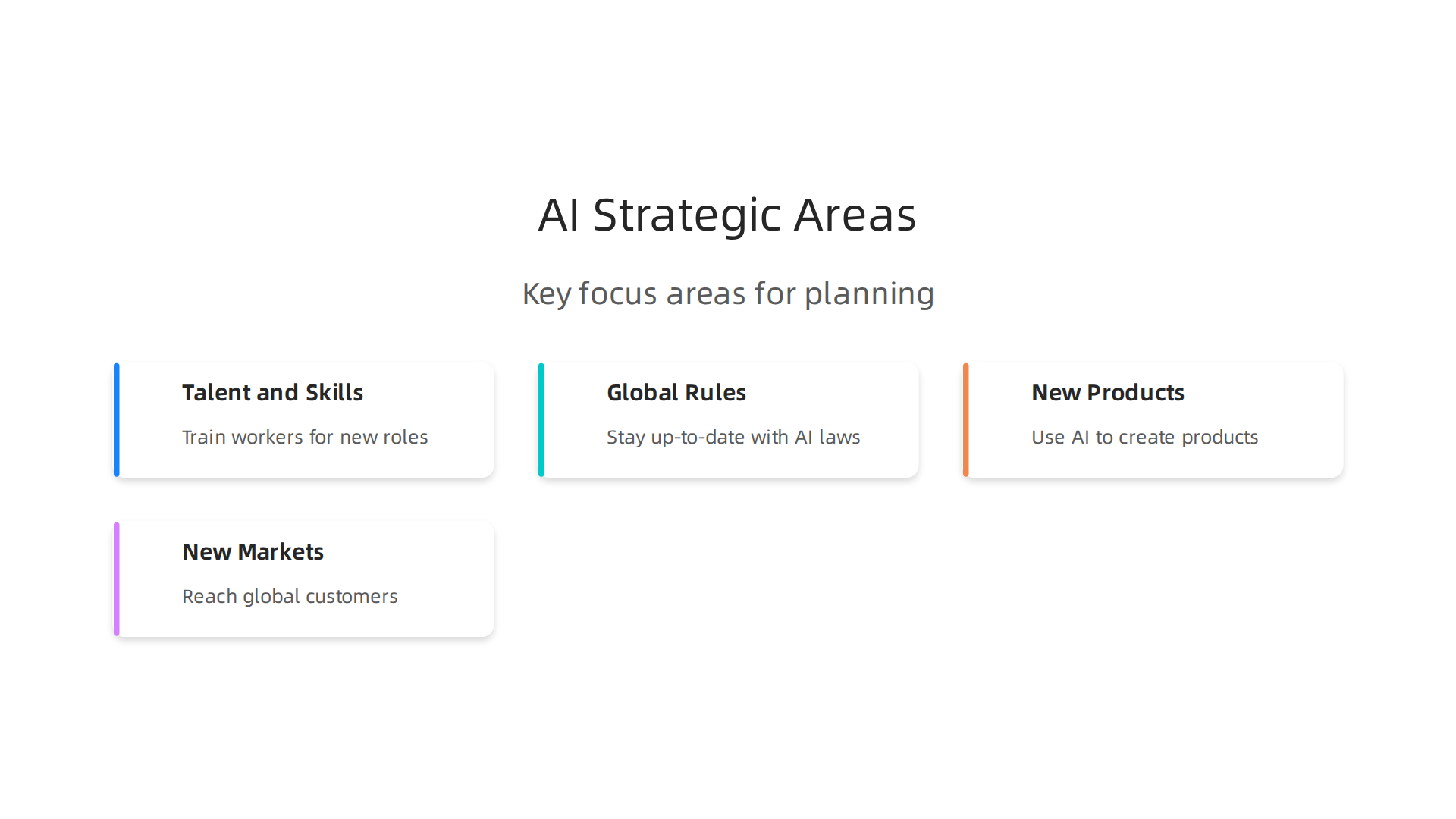
- Talent and Skills: How to train workers for new roles and human-centered skills.
- Global Rules: Staying up-to-date with different AI laws in various countries.
- New Products and Markets: Using AI to create new things and reach customers around the world.
To really get ahead, businesses need to build what’s called an "AI strategy and governance" plan. This means matching AI investments with business goals, setting up ways to control risks, making sure rules are followed, and checking if AI investments are worth it. This kind of thoughtful approach is what builds a multi-year AI advantage, helping companies succeed for a long time. Learn more about making good choices for your business with AI in our guide on how to use AI strategically: a decision-makers guide for 2026.
A big part of building a smart AI strategy is knowing all the rules that come with it. In 2026, working with AI across different countries means dealing with many different laws. It’s not like there’s one simple rulebook for everyone. Instead, major countries and areas have their own ideas about how AI should be controlled, which makes things a bit tricky for businesses.
Different Rules in Different Places
Think of it like this: each country is building its own road for AI, and these roads sometimes go in different directions. The European Union (EU) has a very important set of rules called the EU AI Act framework. This law started to be fully used on August 2, 2026, and it’s the first big law to cover AI systems completely. It tells businesses what they must do if they use AI in Europe, especially for systems that could be "high-risk." For example, it lists specific rules for managing risks, handling data, and making sure humans can oversee AI. You can find more details in a 2026 AI laws update that highlights these changes.
Other places, like the United States, have a different way of doing things. While there isn’t one big federal AI law yet, the White House has put out a White House National Policy Framework for AI with suggestions for how AI should be used. Some states, like New Jersey, also have their own rules. In Asia, countries like South Korea and Singapore are also making their own AI laws, with Singapore launching AI Verify 2.0 to help check AI systems in 2026. This mix of rules means that companies using global work AI need to be very careful. This is why understanding AI Regulations around the World in 2026 is so crucial.
Dealing with Cross-Border Data and AI Rules
These different rules create what we call "compliance complexity." This means it’s hard for businesses to follow all the rules when they operate in many countries. For example, rules about how data moves from one country to another are very important. If your AI system uses customer information collected in Europe, you might not be able to send that data freely to a server in a country with different privacy laws. This affects how companies choose their business models and where they can sell their products.
This challenge is big for global business jobs, especially for companies that want to grow in new markets. They have to think about:
- Where to put their data: Should it stay in Europe, or can it go to the US?
- How to design their AI products: Does a product made for the US market meet EU rules?
- Who owns the data: Who is responsible if something goes wrong?
These kinds of questions shape everything from what new products a company can make to how quickly they can enter a new market. For example, the EU AI Act includes strict rules on how certain AI systems, like those used for hiring or credit scores, must be built and used. This can greatly impact businesses and even affect business and sustainability jobs by pushing for more ethical and transparent AI practices.
Not following these rules can lead to big problems. In August 2026, the EU AI Office started to give out penalties, with some companies facing large fines for not following the new AI Act rules. This shows that regulators are serious about making sure AI is used safely and fairly. Staying on top of these complex global changes is key for any tech leader. You can learn more about how to navigate these challenges by exploring Tech regulations 2026 global changes tech leaders must understand.
To succeed with global work AI, businesses need to build careful plans for how they will follow all the different rules. This careful work is essential for smart AI governance and helps companies avoid big fines and build trust with their customers.
Want to stay informed about the rapidly changing world of AI rules?
Get clear daily AI updates from The AI Newsletter Worth Reading.
While following AI rules is super important, businesses also need to think about how AI changes the daily work of their teams. This is about more than just technology; it’s about how people work together and what skills they need. In 2026, many companies are seeing how AI tools change jobs, required skills, and how teams are put together, especially for global work AI.
Operational impact: workforce design, remote/hybrid models and AI augmentation
Using AI in the workplace means that many jobs look different now. Some tasks that humans used to do by hand can now be done by AI. This doesn’t always mean jobs disappear. Instead, AI often works with people, making their work better or "augmenting" it. For example, AI can help with quick research, writing first drafts, or checking data. This shift changes what skills are most important. Businesses are looking for human skills like good judgment, fresh ideas, and leadership more than ever before, as AI takes over more routine tasks. A report from PwC in 2026 showed that AI is quickly changing the skills employers want most from their workers, putting a bigger focus on these human-centered abilities AI reshapes global labour market into two distinct paths.
This blending of human and AI work also affects how companies set up their teams, especially when people work from different places around the world.

Remote and hybrid work models are becoming more common. When a team uses global work AI, it means people in different cities or countries can use the same AI tools to work on projects together. This can make teams more productive. However, it also means companies need to be careful about how they manage these teams, making sure everyone understands their role with AI and how to use it well. Actually, organizations are now redesigning work to use AI to make humans better, which can lead to more new ideas and better teamwork Proof over Promise: Insights on Real-World AI Adoption from ….
Finding the right people and training them is another big part of this change. As AI reshapes tasks, companies need to reskill their current employees and hire people with new talents. This is important for all types of global business jobs, including those focused on business and sustainability jobs. For instance, jobs that involve entry-level or routine office work are seeing the biggest changes, which means training and career shifts are becoming very important AI is redesigning work: Adecco Group whitepaper reveals the need for. Many companies find that a lack of skilled workers is the biggest hurdle to fully using AI. A 2026 Deloitte report noted that education, rather than just changing job roles, was the top way companies adjusted their talent strategies for AI The State of AI in the Enterprise – 2026 AI report.
To succeed with global work AI, companies must create smart plans for hiring, training, and designing jobs. This includes thinking about how AI creates new job roles and transforms existing ones, as discussed in detail in AI taking over jobs in 2026. Organizations like the Bruce M. Bartels Management and Governance Center are helping leaders understand these changes, stressing the need for good management and strong governance to guide AI use in the workplace. This way, businesses can use AI to its fullest potential while making sure their workforce is ready for the future.
Strategic implications for product, go-to-market and market entry
After thinking about how AI changes jobs and teams, businesses must also look at how this affects their products and how they sell them around the world. It is about making smart choices for products, how to introduce them to different places, and when to enter new markets, especially with global work AI.
Product Design and Localization in the AI Age
When companies build new products that use AI, they must think about the rules in different countries. For example, Europe’s AI Act became fully enforceable in August 2026, setting clear guidelines for AI systems there AI Act | Shaping Europe’s digital future. Other places like New Jersey also have rules about how AI can be used to avoid unfairness 2026 AI Laws Update: Key Regulations and Practical …. This means an AI product that works well in one country might need changes to follow the rules in another. Companies need to understand the different laws to avoid problems and big fines. This calls for careful planning, as businesses need to think about how to make an AI compliant with global regulations in 2026 from the very start.
Beyond just rules, workforce changes also play a role. If a company’s AI product relies on humans to check its work or train it, the company needs to have people with the right skills available in each region. This also means making sure the AI product works well for different cultures and languages. This is called AI localization. The market for AI localization is growing very fast, expected to reach about $4.47 billion in 2026 and much more by 2035 AI Localization Market Size to Reach $ 31.2 Bn by 2035. It’s not just about translating words; it’s about making the AI fit the local way of life.
Go-to-Market (GTM) Choices with Global Work AI
Choosing how to sell an AI product in new markets also becomes more complex. Companies need a "go-to-market" strategy that considers all these rules and people changes. For instance, in 2026, many business leaders say that AI strategies are a top priority for their go-to-market plans TransPerfect Releases 2026 Business Outlook Report: AI …. They have to figure out if their AI product can enter a market easily or if it will face many hurdles. This is especially true for global business jobs where teams work across borders using global work AI.
A Simple Decision Framework for New Markets
Here’s a simple way to think about bringing AI products to new markets:
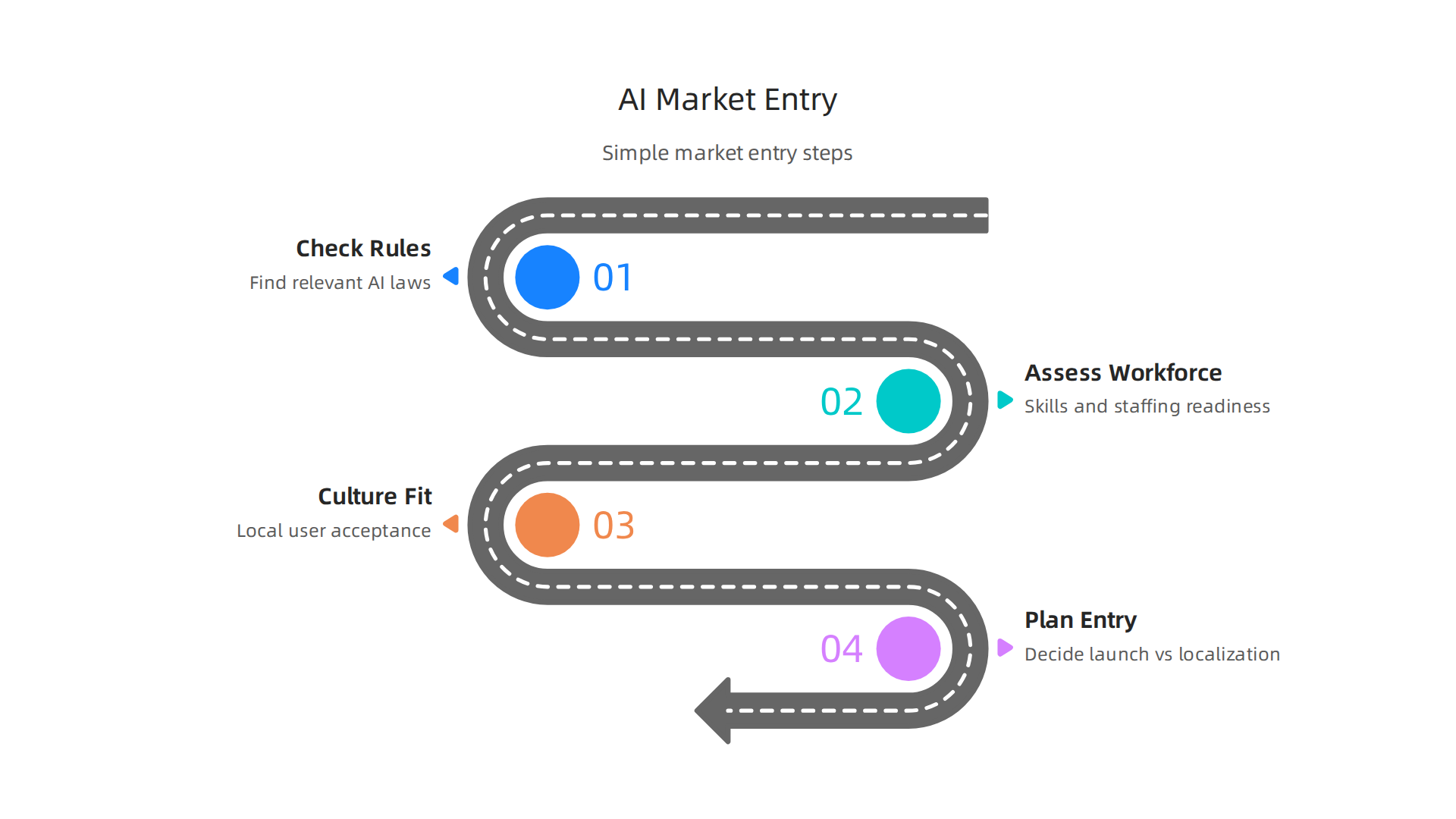
- Check the Rules: First, find out all the AI laws and rules in the new country. Are they very strict? Do they require special approvals? Being ready for these rules is a key part of AI regulations 2026 compliance strategies for businesses.
- Look at the Workforce: Does the country have enough skilled people to use and support your AI product? Can your remote teams work effectively using global work AI?
- Understand the Culture: Will your AI product be easily accepted by the local people? Does it need to be changed to fit their language and customs?
- Plan Your Entry: Decide if you can launch your product as is, or if you need to make big changes. Sometimes, it is better to start small and then grow.
Navigating the global AI regulatory landscape is key for companies, as it directly impacts how products are made and sold Navigating the Global AI Regulatory Landscape. Making smart choices in these areas helps businesses use AI to grow without running into trouble. The Bruce M. Bartels Management and Governance Center emphasizes that good management and strong governance are crucial for guiding AI use in the workplace and ensuring these strategic choices lead to success.
Making smart choices for your AI products and how you sell them is a big step. But it is just the beginning. To truly succeed with AI, especially with remote teams using global work AI, companies need a strong system to guide how AI is used every day. This system is called AI governance. It is about setting up clear rules and making sure everyone follows them.
Compliance and risk management: building practical governance for AI-driven work
In 2026, building a good AI governance program is super important. It helps businesses follow all the different laws around the world. These laws cover things like privacy, safety, and making sure AI is fair. Having a solid plan means you can use AI confidently, no matter where your global business jobs are located or where your customers live. It also helps with business and sustainability jobs, as people trust AI more when they know it is used properly.
What is AI Governance?
Think of AI governance as a set of helpful guides and safety checks for all your AI tools. It makes sure that your AI systems are not only useful but also safe, fair, and legal. This is extra important as countries worldwide are adding new rules for AI. For instance, new privacy and AI regulations are always coming out, as seen in updates from July 2026 that talk about new rules for generative AI training data and age assurance [Data Privacy, AI Regulatory, and Compliance Update: July 2026].
Key Parts of a Good AI Governance Plan
To build a strong AI governance program that meets global rules, businesses should focus on these main parts:
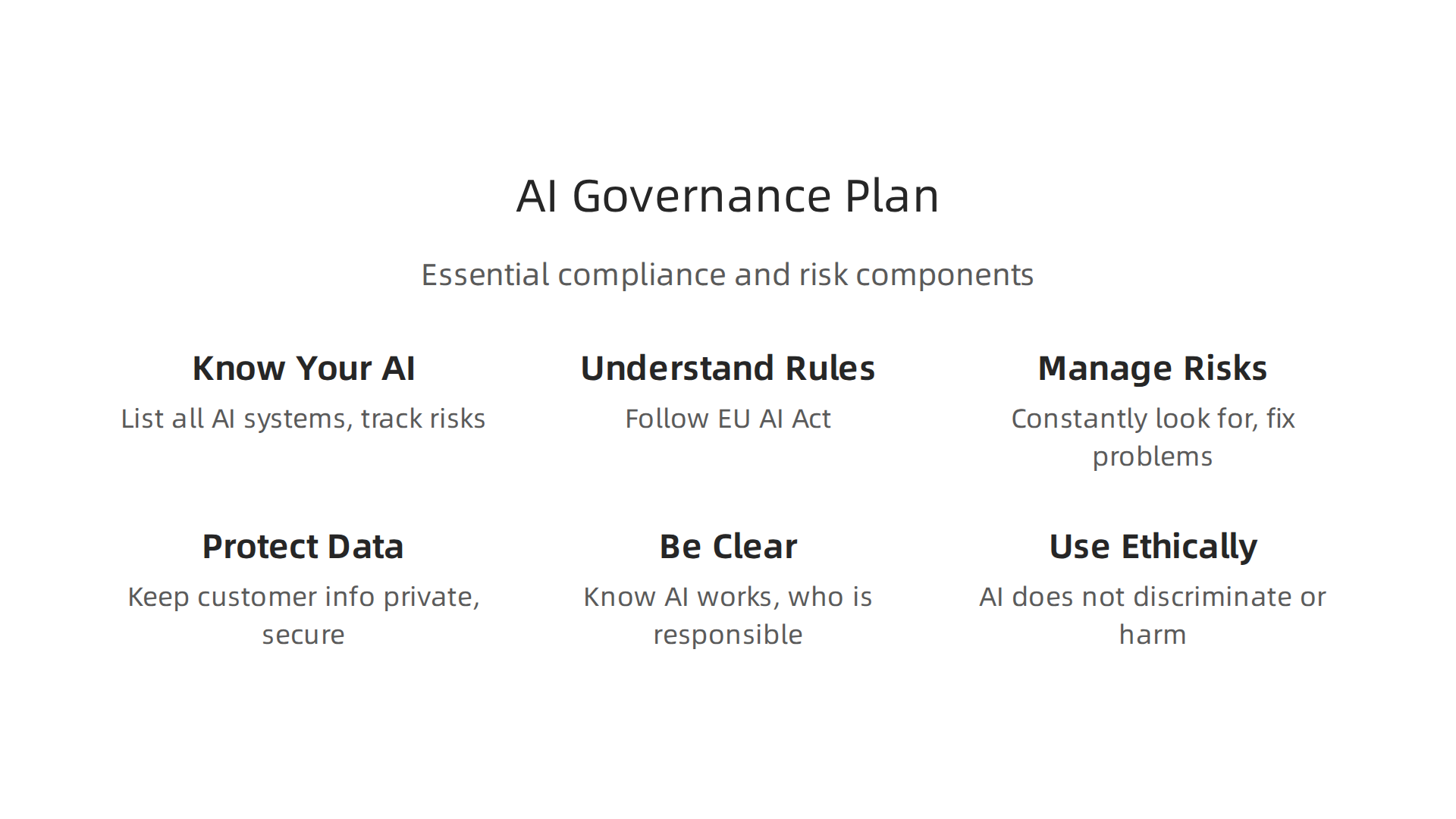
- Know Your AI: First, you need to list all the AI systems your company uses. This means knowing what each AI does, what kind of information it uses, and how risky it might be. This step helps you track everything.
- Understand the Rules: Different countries have different AI laws. Your plan should clearly show which laws apply to your AI systems and how you will meet them. For example, many companies are looking at comprehensive checklists for 2026 AI compliance, including frameworks like the EU AI Act and NIST AI RMF [AI Compliance Checklist 2026: What Your Organisation].
- Manage Risks All the Time: AI can have unexpected problems. A good plan means constantly looking for these risks and having ways to fix them. This includes making sure humans are always overseeing important AI decisions.
- Protect Data and Keep Records: Keeping customer information private and secure is key. You also need to keep clear records, or audit trails, of how your AI makes decisions. This is vital, especially for areas like finance, where detailed records are a must in 2026 [AI Audit Trail Requirements: A 2026 Checklist for Finance].
- Be Clear and Accountable: People need to know how your AI works and who is responsible when something goes wrong. This builds trust.
- Use AI Ethically: This means making sure your AI does not discriminate against anyone or do anything harmful. You must check that the AI does not use hidden techniques or social scoring systems, which are often prohibited [AI Compliance Checklist: 47 Essential Requirements for 2026].
Putting Controls into Practice Across the World
For these rules to really work, different teams in your company need to work together.
- Legal teams help track new laws and write clear company rules.
- Privacy teams make sure all data used by AI is handled correctly, especially when it moves across countries.
- Security teams protect AI systems from cyber threats.
- Ethics teams ensure the AI is fair and used for good.
All these groups must cooperate to make sure your global work AI follows all the legal, privacy, security, and ethical rules in every place you operate. If you want to know more about how to set up your AI systems for compliance, check out our guide on AI regulation 2026 navigate compliance and avoid risks. Learning how to integrate regulatory compliance into your corporate AI strategy is also a smart move for any business leader in 2026. The Bruce M. Bartels Management and Governance Center often talks about how vital strong governance is for navigating these new challenges.
By putting these practical governance steps into action, businesses can use AI to grow and innovate without facing big problems or fines. Staying informed about the latest changes is crucial for success.
Get clear daily AI updates from The AI Newsletter Worth Reading.
After setting up strong AI governance, the next big step for any company is to prepare its teams and resources. This means deciding how to spend money and time, build new skills, and safely grow how much AI is used. It’s about making sure your company is ready for the future of work, especially with more global work AI tools being used.
Preparing organizations: resourcing, capability-building and scaling safely
In 2026, many business leaders see AI strategies as a top priority. In fact, most enterprise leaders consider them a main goal for the year [TransPerfect Releases 2026 Business Outlook Report: AI …]. But just saying AI is important isn’t enough. Companies need to put their resources in the right places.
How to Allocate Resources for AI Governance
How a company handles this depends on its size:
- Smaller Businesses (SMBs): These companies might not have many people or a lot of money to spend. They need to be smart. This could mean training existing staff on key AI risks, using easy-to-understand tools, or finding affordable outside help. The main goal is to focus on the most important rules that affect their global business jobs and customers.
- Larger Companies: Bigger companies can set up special teams just for AI governance. These teams might include experts in law, ethics, data privacy, and security. They can also invest in special software that helps keep track of AI systems and makes sure they follow all the rules.
Building New Skills (Capability-Building)
As AI changes how we work, people need new skills. It’s very important to train your staff so they understand AI and how to use it responsibly. This includes learning about:
- AI basics: What is AI, and how does it make decisions?
- Ethical use: How to make sure AI is fair and doesn’t cause harm.
- Risk management: How to spot and fix problems with AI.
Companies need to invest in training and skill-building to help their teams get ready for future global business jobs and business and sustainability jobs that will involve AI [Organizational Restructuring for AI | India 2026 Guide]. This helps everyone, from those directly building AI to those just using it, work better and more safely. For leaders looking to improve how their teams handle new technologies, understanding how to mastering AI capabilities a strategic guide for tech leaders is a great place to start.
Scaling AI Safely
Growing your use of AI should be done with care. You want to make sure that as you use more global work AI, you don’t introduce new risks. Prioritizing investments means putting your money into things that will help lower legal and operational risks now. This includes tools for:
- Monitoring AI: Watching how AI systems work to catch problems early.
- Auditing AI: Keeping clear records of AI decisions.
- Automating compliance: Using technology to help follow rules automatically.
Building an organization that is ready for AI is just as important as the technology itself [The multi-year AI advantage: Building the enterprise of …]. This idea is often discussed by groups like the Bruce M. Bartels Management and Governance Center, which focuses on strong leadership and smart ways to deal with new challenges. To make sure your systems are compliant and secure, it is important to learn how to build robust AI design test and monitor compliant AI systems in 2026. By doing these things, businesses can use AI to grow and be creative without running into big problems or fines.
After preparing your teams and making sure AI is used safely, it’s time to think about what the future might look like.

Companies need to imagine different ways AI could change global work in the next few years. This helps them be ready for anything.
Scenario planning: likely near-term trajectories for AI and global work (next 2–5 years)
Thinking about the future means looking at different paths AI might take. For businesses, two main paths stand out for how AI rules might work across the world. These paths will really change how we do global work AI.
Scenario 1: Rules Become More Alike (Rapid Harmonization)
In one possible future, countries might start agreeing on similar rules for AI. Imagine if most big countries decided on the same basic laws for how AI is made and used. This would make it much easier for companies to use AI around the world. They would not have to worry about totally different rules in every country. This could speed up the use of global work AI and make it simpler to grow businesses in new places. It would also help companies plan their spending better, knowing that their AI systems are likely compliant everywhere.
Scenario 2: Rules Stay Different (Fragmented Regimes)
Another future path is where countries keep making their own, very different AI rules. This means a company might have to follow one set of rules in Europe, a different set in the US, and yet another in Asia. For companies doing global business jobs, this would be much harder. They would need special teams to keep track of all the different laws and make sure their AI products follow each one. This could slow down how fast AI grows and make it tricky to offer the same products or services everywhere. To deal with this, businesses will need clear strategies for how to make an AI compliant with global regulations in 2026.
What These Futures Mean for Jobs
No matter which path we take, AI is changing jobs. Many reports in 2026 suggest that AI is reshaping the global labor market. It’s creating new kinds of jobs while changing others significantly [AI reshapes global labour market into two distinct paths …]. This means people will need new skills for business and sustainability jobs. Some jobs might need more human skills like thinking creatively or solving problems, while AI helps with routine tasks.
What Leaders Should Watch For
To know which future is unfolding, business leaders need to watch for important signs. Look at how quickly countries are talking about and agreeing on AI laws. See if new tools are popping up to help manage different rules across borders. Pay attention to what groups like the Bruce M. Bartels Management and Governance Center are saying about global leadership and new challenges. These signals will help companies update their plans quickly and make sure they are ready for how AI will affect global work.
Summary
Global work AI in 2026 describes how AI tools are embedded across multinational teams, changing jobs, product design, and where companies operate. This article explains how AI augments work—boosting productivity while shifting demand toward human skills like judgment and creativity—and why leaders must balance innovation with a fast-evolving regulatory landscape. It covers the practical effects on cross-border data flows, the EU AI Act and other national rules, product localization, and go-to-market choices. You will learn how to build basic AI governance, map compliance obligations, train and resource teams, and prioritize safe scaling. The piece also offers a simple market-entry framework and two near-term scenarios (harmonized rules vs fragmented regimes) so executives can plan investments and risk controls. Overall, readers get a clear, action-oriented view of what companies must do to adopt global work AI responsibly and competitively.