

Why a clear ‘definition of technology’ matters now
In 2026, technology is everywhere. From the phones in our pockets to the cars we drive, it helps us do so many things. But have you ever stopped to think about the exact definition of technology? It might seem like a simple question, but not having a clear answer can cause big problems for companies, investors, and even everyday people.

When we talk about new and complex areas like deep learning artificial intelligence, it’s easy for ideas to get blurry. What counts as AI technology? What doesn’t? When rules are unclear because the basic definition of technology isn’t solid, it creates confusion. This confusion can lead to major risks for tech companies and those who put money into them. They might struggle to follow new laws, or their business plans might not work out as expected. Experts agree that understanding how technology spreads and changes is super important, especially now, as highlighted in the World Intellectual Property Report 2026: Technology on the Move.
This article will help you understand the core ideas behind the definition of technology. We’ll explain why having clear definitions is crucial for following rules and making smart business choices. You’ll learn how a solid understanding can help you avoid trouble and plan better for the future. For example, knowing the exact scope of "technology" helps businesses craft strong AI regulations 2026 compliance strategies for businesses. We’ll also give you easy-to-follow steps to make sense of this important topic.
Ready to cut through the confusion and get a clear picture of technology and its rules? Stay informed with crucial daily updates.
Get clear daily AI updates from The AI Newsletter Worth Reading.
Now that we know why a clear understanding of the definition of technology is so important, let’s look at how experts and official groups define it. Scholars and those who set standards try to give us a clear picture of what technology really is.
When you look at different books and studies about technology, you’ll find some common ideas. Most academic definitions of technology point to a few key things:
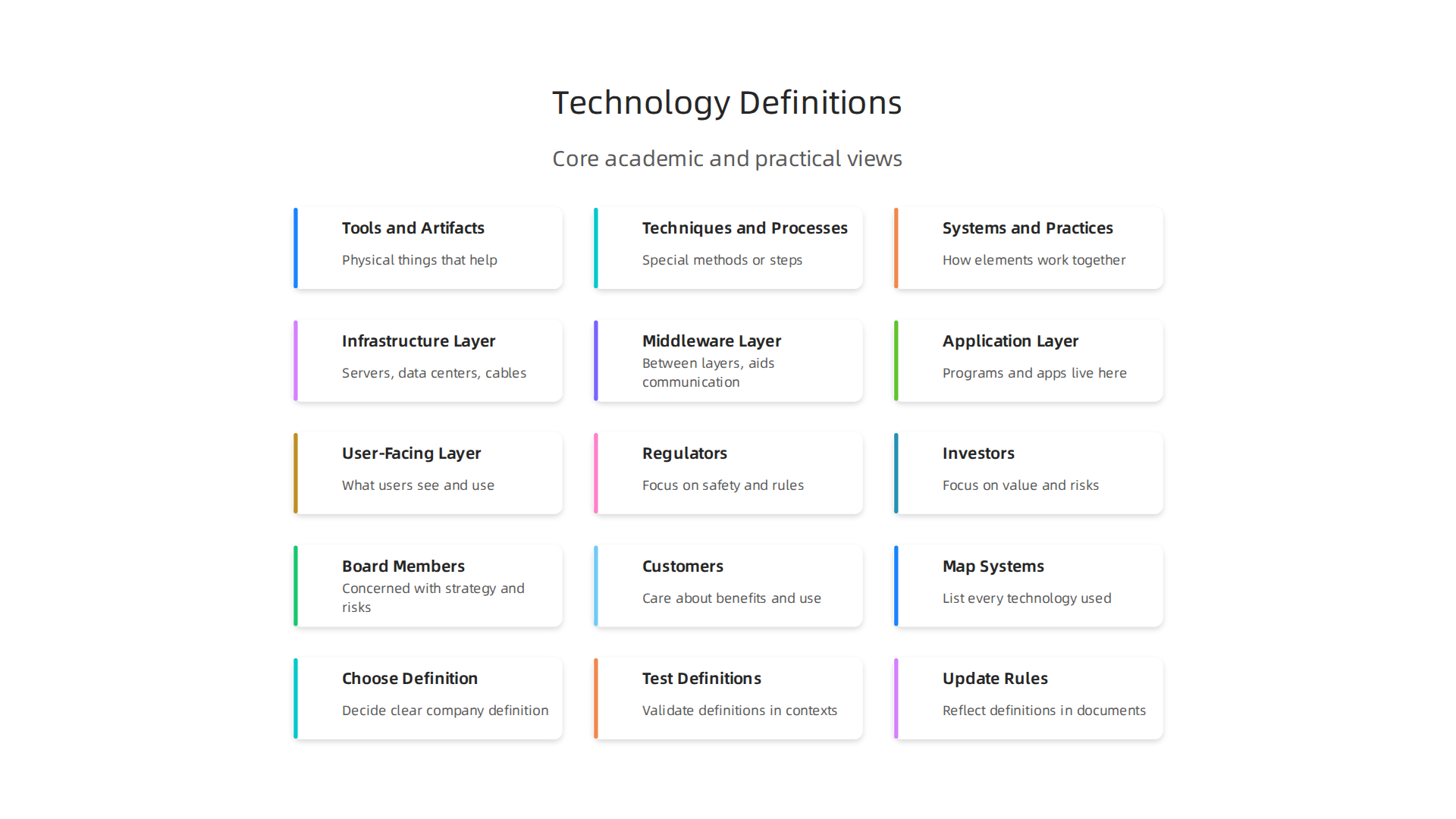
- Tools and Artifacts: These are the physical things we create to help us. Think of a simple hammer, a complex computer, or even specialized items like RFID technology for tracking things. These are all part of technology.
- Techniques and Processes: Technology isn’t just the tools themselves. It’s also about the special ways we use them or the steps we follow to make something happen. For example, how a factory builds a car is a technique, and how a deep learning artificial intelligence system figures out problems is a process.
- Systems and Practices: This is about how everything works together. It includes the tools, the techniques, and even the people who use them, along with the rules they follow. These are sometimes called "sociotechnical systems," meaning people and technology linked together.
Formal definitions, like those you might find in a science textbook or from a group that sets industry rules, often focus on what technology does. They emphasize its function or purpose. For example, the focus might be on how technology helps society or changes the economy, as discussed in reports like Science, technology and innovation in the age of artificial intelligence.
Even with new and exciting areas like deep learning artificial intelligence, these core ideas help us define what we’re talking about. Whether we’re thinking about the technology background of ancient tools or the latest AI, the definition of technology helps us understand its parts. It makes it easier to figure out what’s new and what’s a deeper part of how technology has always been. Knowing these detailed definitions helps companies avoid big problems and stay on the right side of new rules. It’s especially helpful when thinking about important topics like AI Regulations 2026 Compliance Strategies to Avoid Million Dollar Fines.
Understanding the broad definition of technology helps us sort it into smaller, easier-to-understand groups. Think of it like organizing your toys. You might sort them by type, like cars or action figures. In the world of technology, we use special ways to classify and organize things. These ways are called taxonomies.
Common Ways to Group Technology
There are many ways to break down technology into different categories.
Here are some simple ones:
- Hardware vs. Software: This is one of the most basic ways.
- Hardware is the physical stuff you can touch. This includes computers, phones, servers, and all the wires and chips inside them. This is the solid part of any technology background.
- Software is the instructions that tell the hardware what to do. It’s the programs and apps you use, like a game on your phone or the word processor on your computer.
- Platforms vs. Applications:
- A platform is a base that other things are built on. For example, a phone’s operating system (like iOS or Android) is a platform. It provides the core services.
- An application (or app) is a program that runs on top of a platform. Your favorite social media app or a navigation app are examples.
- Enabling vs. Applied Technology:
- Enabling technology is the basic science or tool that makes other technologies possible. Think of how deep learning artificial intelligence is a powerful method that helps solve many complex problems.
- Applied technology uses that enabling tech to create something specific. An AI system that helps doctors find diseases is an applied technology, built using deep learning methods.
Layers of Technology
Beyond just types, we can also think of technology in layers, like a cake. Each layer supports the one above it. This way of looking at technology is super important for businesses, especially when they need to check for risks and follow rules.
Here are common layers you might find:
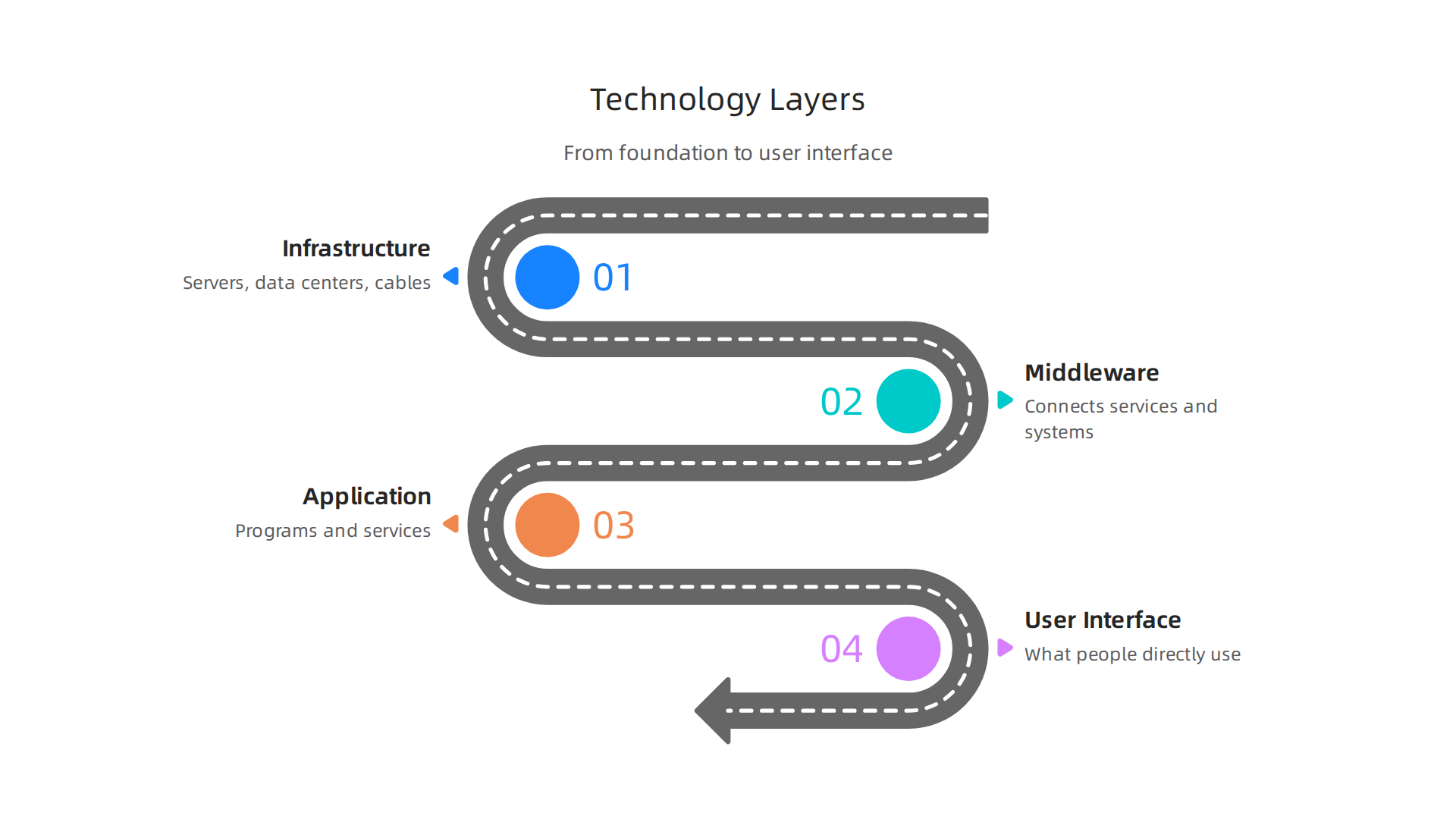
- Infrastructure Layer: This is the very bottom, the foundation. It includes things like physical servers, data centers, and network cables. These are the basic things that make all other technology work.
- Middleware Layer: This layer sits between the infrastructure and the applications. It helps different parts of the technology talk to each other. It’s like a translator that connects different systems.
- Application Layer: This is where the actual programs and apps live. These are the tools that users interact with directly, like your email program or a company’s sales software.
- User-Facing Layer: This is what you see and use. It’s the website, the mobile app interface, or the controls on a smart device.
Understanding these different parts and layers of technology helps companies map out where problems might happen. It’s crucial for managing risks and making sure everything follows the rules in 2026. Knowing where a piece of deep learning artificial intelligence fits in this structure helps identify who is responsible for different parts of its safety and fairness. This careful classification of technology is vital for putting in place strong AI Regulations 2026 Compliance Strategies for Businesses and staying out of trouble.
While sorting technology into types and layers is helpful, the very idea of what counts as "technology" can be different depending on who you ask. Businesses and governments often see the definition of technology in their own ways. These different views can sometimes cause problems, especially when it comes to following rules.
Industry’s View of Technology
For businesses, the definition of technology often centers on what it can do for them or their customers. They look at technology as a tool to create new products, offer better services, make things more efficient, or earn money. When a company thinks about its technology background, they often consider how it helps them innovate and compete. For example, a company might see a new smartphone or a powerful cloud service as technology that brings value to the market. Their focus is often on the practical use and market success.
Regulators’ View of Technology
Governments and lawmakers, on the other hand, often define technology by its potential effects. They care about how technology might impact people, society, the economy, or even national security. Regulators look closely at things like privacy, fairness, safety, and whether a technology could be used for harm. This is especially true for advanced systems like deep learning artificial intelligence.
For example, while a company might see a new AI facial recognition system as an efficient security tool, a regulator might see it as a technology with risks for privacy and potential bias. Legal and regulatory considerations are very important for them, as highlighted in reports like the William Fry Technology Report 2026: A new era of.
Where Their Views Diverge
The trouble starts when these two viewpoints don’t match up.

What a business thinks is a simple product improvement, a regulator might see as a complex system needing strict oversight. This difference in the definition of technology creates a challenge for companies trying to follow the rules. They might be innovating fast, but regulators are trying to protect the public from unknown risks, leading to a gap in understanding.
Different Rules in Different Places
To make things even more complicated, the way technology is defined and regulated can change a lot from one country or region to another. What’s allowed and understood in one place might be restricted or completely different somewhere else.
For example, a state in the US might have certain rules for AI, while the European Union has its own set of laws for deep learning artificial intelligence. This means businesses that work across different parts of the world have to deal with many different sets of rules and definitions. Staying on top of these varied requirements is key for avoiding problems. If you want to dive deeper into how companies are tackling this, you can learn more about AI Regulations 2026 Compliance Strategies for Businesses.
It’s clear that different groups see technology in different ways. But why does this really matter? Why should businesses care so much about the exact definition of technology if they’re just trying to make cool new products?
The truth is, how technology is defined has huge impacts on how companies must act, what rules they need to follow, and the risks they face.
How Definitions Drive Rules and Risks
First, the way a technology is defined directly shapes the rules that apply to it. If a new tool is seen as just a simple gadget, it might have few rules. But if it’s defined as "deep learning artificial intelligence" that can make big decisions, then many strict laws about privacy, fairness, and safety will kick in.
This definition of technology tells companies what they must do to comply. It sets their duties and obligations. For example, if your new product uses AI, you might need to show how it avoids being unfair or biased. Not following these rules can lead to big problems, like heavy fines or having to stop selling your product. Staying on top of what’s expected for IT compliance is super important in 2026, especially with new rules for emerging tech like AI. You can read more in this guide to Understanding IT Compliance: Key Regulations for 2026.
Big Impact on Business Strategy
Beyond just following rules, the understanding of technology shapes a company’s whole plan.
- Product Design: If a technology’s definition is unclear, companies might not know what features they can build or how to build them safely. This can slow down product creation or make designers rethink everything.
- Getting to Market: Imagine you’ve made an amazing new app, but because its core technology background isn’t clearly defined, you can’t get it approved to sell. This kind of delay can cost a lot of money and effort.
- Investor Interest: People who invest money in companies also care a lot about these definitions. If a technology’s future is cloudy because of unclear rules, investors might see it as too risky. They do careful checks, called investor diligence, to make sure their money is safe.
In short, getting the definition of technology wrong can lead to costly legal troubles and stop a company from growing. It’s not just about what a technology is, but what it means for everyone involved. To help avoid big legal problems, it’s wise to understand the AI Regulations 2026 Compliance Strategies to Avoid Million Dollar Fines.
Staying informed about these fast-changing rules and definitions is a full-time job. Get clear daily AI updates from The AI Newsletter Worth Reading.
It’s clear that different groups see technology in different ways. But why does this really matter? Why should businesses care so much about the exact definition of technology if they’re just trying to make cool new products?
The truth is, how technology is defined has huge impacts on how companies must act, what rules they need to follow, and the risks they face.
Explaining technology definitions to stakeholders: practical language and templates
Since the definition of technology has such a big impact, it’s super important to explain what your technology does in a clear way to different people. You can’t talk to a customer the same way you talk to a lawyer or someone who invests money. Each group cares about different things, and you need to tailor your message. This is often called communicating technical concepts to non-technical audiences, which is a key skill for leaders today.
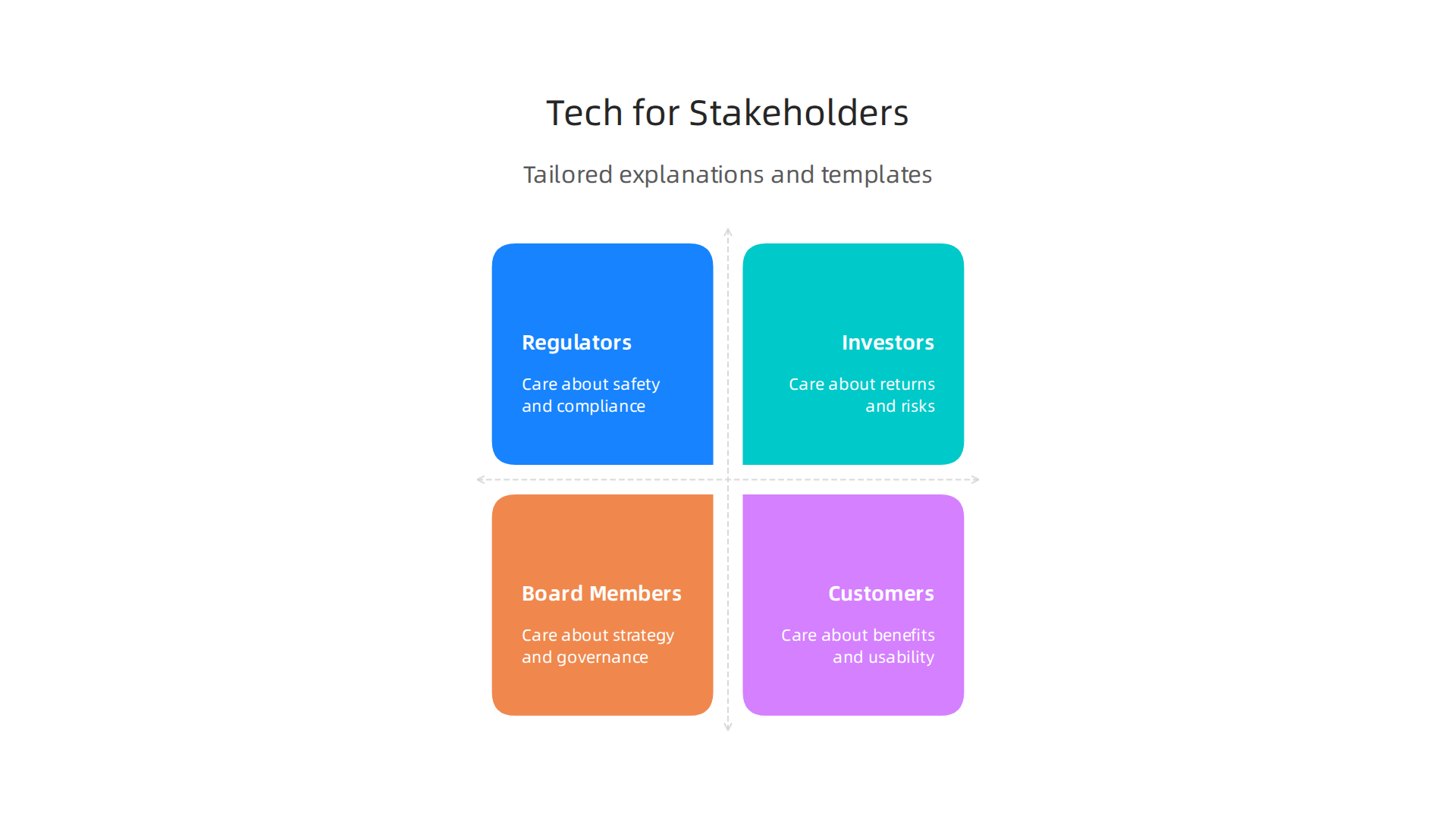
Here’s how to think about talking to different groups:
-
For Regulators (Lawmakers and Government Agencies): These people care about safety, fairness, and following the rules. Your definition needs to be clear about how your technology works and what it impacts.
- Example for Regulators: "Our new system uses deep learning artificial intelligence to help medical staff quickly find important information. It uses special steps to make sure patient data stays private and that the information it gives is fair and correct for everyone, following all the health data rules of 2026." You might also need to share how you assess risks with your technology, as outlined in guides like the Science & Technology (S&T) Risk Matrix [2026 revision].
-
For Investors (People who give you money): Investors want to know how your technology will make money, what makes it special, and what the risks are. They like clear ideas about growth and how you’re protecting your inventions.
- Example for Investors: "We have developed cutting-edge rfid technology that helps warehouses track items in real time, cutting costs by 30%. This unique technology background has strong patents, giving us a big lead in the market. We’re ready for fast growth." Understanding intellectual property is key, as highlighted in the World Intellectual Property Report 2026: Technology on the Move.
-
For Board Members (Company Leaders): Board members need to understand the big picture. How does this technology fit with the company’s goals? What are the main chances and dangers?
- Example for Board Members: "This new technology is a key part of our plan to become the leader in smart homes. It will help us make products that are much smarter and easier to use. We have a plan to deal with any risks related to data privacy, as detailed in the Cisco 2026 Data and Privacy Benchmark Study, and we believe it will greatly boost our market share."
-
For Customers (The people who buy and use your product): Customers simply want to know what the technology does for them. Focus on benefits and how it makes their life better, without using fancy words.
- Example for Customers: "Our new phone uses smart technology to learn what you like, making it easier to take great photos and stay connected with friends. It’s designed to be super simple and safe for you to use every day."
By using plain language and thinking about what each group cares about, you can make sure everyone understands your technology. This makes it easier to get approval, funding, and happy customers. It’s all about how you frame the definition of technology for the right audience.
Knowing how important it is to explain your technology clearly to different groups, the next step is to put those ideas into action. Teams need a step-by-step plan to truly understand, define, and manage their technologies. This helps them follow rules and avoid problems.
Practical next steps: how teams should assess and document technology definitions
For any company, big or small, having a clear way to assess and write down the definition of technology for all your systems is key. This helps make sure everyone inside and outside the company is on the same page. Here’s a simple checklist to guide your team:
- Map Out All Your Systems: Start by listing every piece of technology your company uses or is building. This includes everything from simple software tools to complex systems that use deep learning artificial intelligence or special rfid technology. For each one, understand its basic function and technology background.
- Choose a Clear Working Definition: For each system, decide on the best way to define it. Think about its purpose, what data it uses, and how it interacts with people or other systems. This definition should be simple but thorough enough to be useful for various stakeholders, as we discussed earlier.
- Test Definitions Across Different Places: The meaning and rules for technology can change depending on where you operate. Make sure your chosen definitions hold up in different countries or states where your technology is used. This is especially true for new tech like AI, where regulations are still growing in 2026.
- Update Company Rules and Papers: Once you have clear definitions, make sure all your company documents reflect them. This includes privacy policies, terms of service, and internal guidelines. Regularly update these "policy artifacts" to match how your technology grows and how rules change. This is a core part of good IT governance.
Risk Assessment and Governance for Smaller Teams
Even small teams or companies without lots of resources need to take technology definitions seriously. Here are some simple ways to manage risks:
- Ask Key Questions: For any new technology, ask:
- What problem does this technology solve?
- What kind of data does it use, and how sensitive is that data?
- Who will be affected by this technology, and how?
- What could go wrong if this technology doesn’t work right or is used unfairly?
- Keep it Simple: Don’t try to create overly complex systems. Focus on the most important risks. For example, if you’re using AI, an AI governance checklist can help you cover the main bases like privacy and fairness.
- Assign Clear Roles: Even if it’s just two people, make sure someone is responsible for thinking about the definition of technology and its risks. Who will keep an eye on new rules? Who will make sure customer information is safe?
- Use Templates: Look for ready-made templates for risk assessments or privacy policies. Many free resources exist online to help you get started without hiring expensive experts. This helps ensure you’re addressing crucial points like compliance and accountability, which are key for IT governance professionals in 2026.
By following these practical steps, your team can build a strong foundation for managing technology responsibly, no matter its complexity. Staying informed about the rapid changes in AI and technology regulations is crucial. Get clear daily AI updates from The AI Newsletter Worth Reading.
Summary
This article argues that having a clear definition of "technology" is essential today because blurry definitions create legal, commercial, and operational risks for companies and investors. It explains core concepts—tools, techniques, systems—and common ways to classify technology, like hardware vs software, platforms vs applications, and enabling vs applied tech. The piece also maps technology into layers (infrastructure, middleware, application, user-facing) to help teams spot responsibility and risk. It contrasts how businesses emphasize utility and market value while regulators focus on effects like privacy and safety, and shows why those different views can cause compliance gaps. The article offers practical guidance on how to explain your technology to different stakeholders and gives a step-by-step checklist for assessing and documenting definitions across jurisdictions. Readers will finish knowing how to classify their systems, communicate clearly, and set simple governance steps to reduce legal and market risk.