

Imagine a world where powerful new tools are created, but many people are unsure about using them. That’s a bit like where we are with artificial intelligence, or AI, in 2026.

AI has been around for quite some time, actually, developing quietly for many years. But now, it’s everywhere, and how the public feels about it really matters.
For leaders in technology companies, investors, legal teams, and even those making new laws, understanding public opinion about AI is super important. Why? Because what people think directly affects big decisions. If people don’t trust AI, it can slow down how fast new products are bought. It can also lead to more rules and laws from the government, which affects how tech companies can build and use AI systems. No company wants a bad name, and public perception plays a huge part in how a company is seen.
Today, many people are using AI. For example, almost half of all adults in the US now use AI chatbots, a big jump from past years, according to a 2026 study by Pew Research Center Pew: Half of Americans Now Use AI Chatbots in 2026.
Yet, public feelings are still a mix of excitement and worry. Many people are still asking big questions, like what jobs will AI replace, or how can we be sure AI is safe? Research from 2026 shows that while more people see benefits from AI products and services, a growing number also feel nervous about them Public Opinion | The 2026 AI Index Report | Stanford HAI.

This mix of feelings is why understanding public acceptance is key.
This is where the technology acceptance model (TAM) comes in handy. It’s a way to figure out why people choose to use a new technology or not. Simply put, TAM suggests that two main ideas guide whether someone will accept a new tool:
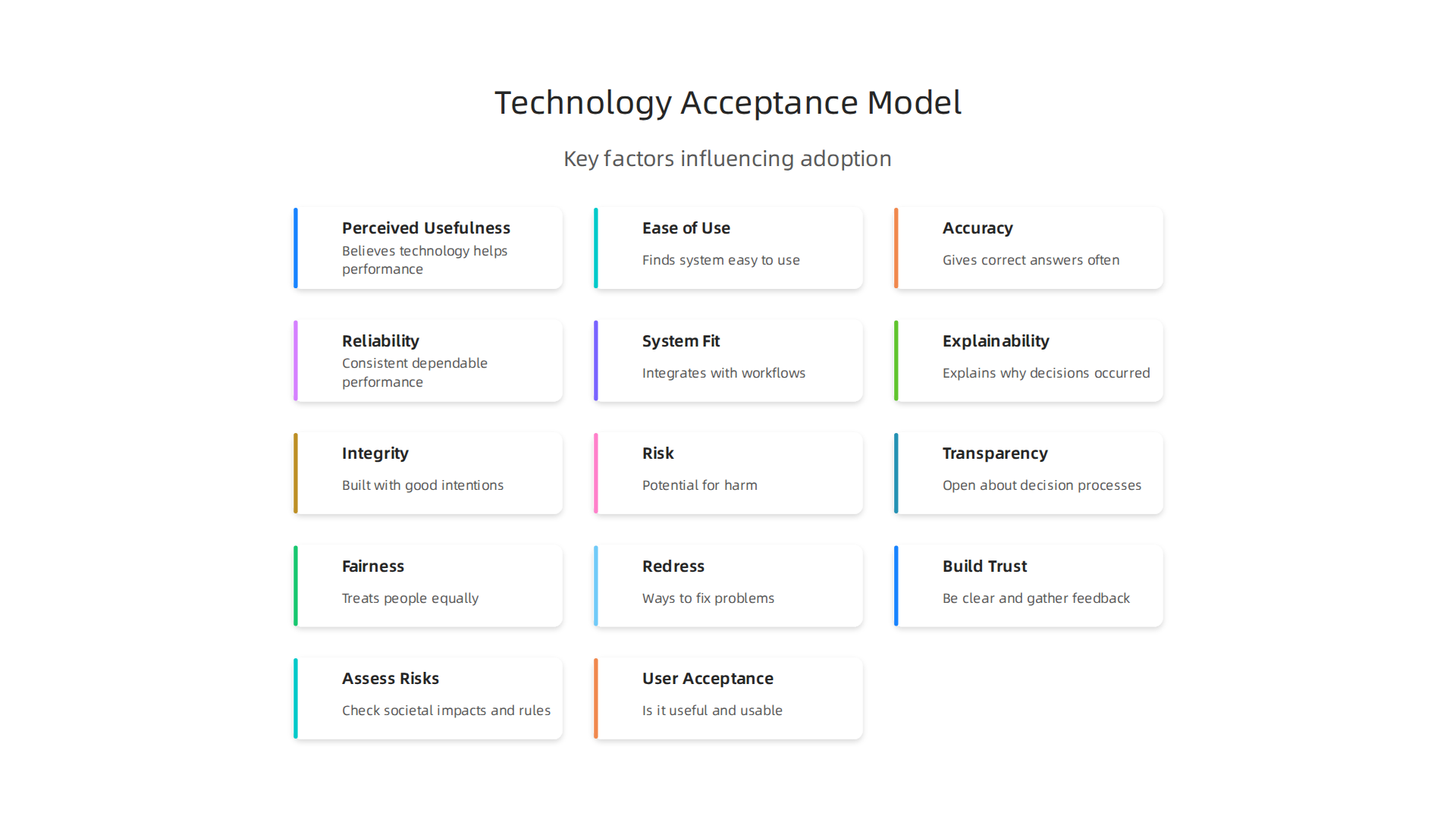
- Perceived Usefulness: Does the person believe the technology will help them do things better or faster?
- Perceived Ease of Use: Does the person think the technology will be easy to learn and use without much effort?
When people are "seeing AI" in their daily lives, their answers to these two questions shape whether they will adopt it. If a new AI tool feels useful and easy, people are more likely to try it and keep using it. But if it feels hard to use, or if they don’t see how it helps them, they might avoid it. These feelings then ripple out, affecting everything from how new AI products are sold to the kinds of rules governments create.
Staying on top of these shifting public views is crucial for anyone involved with technology. It helps companies plan better, reduces business risks, and helps shape a future where AI benefits everyone. For more detailed insights on how to stay informed about the fast-changing world of AI and its regulations, consider subscribing.
Get clear daily AI updates from The AI Newsletter Worth Reading.
The feelings people have about new technology, especially AI, do much more than just decide if they will use a new app. These feelings actually shape big decisions made by governments and businesses. When we talk about public perception, we are really talking about two very important things for how AI is used around the world.
Public Opinion Guides Government Rules
First, how people feel about AI strongly affects what lawmakers and governments decide to do.

If many people are worried about AI, for example, about issues like what jobs will AI replace or how safe it is, politicians listen. This can lead to stricter laws and rules about how AI can be made and used. A study in 2026 showed that as more people learn about AI, concerns about its risks are actually increasing, while the number seeing it as only a benefit is going down As AI Becomes Mainstream, Public Opinion Shifts.
Governments might put in place rules to control how AI uses personal data or to make sure AI systems are fair. They might also make rules to prevent AI from being used in ways that could harm people. This is especially true when people are "seeing AI" doing things that make them nervous. For companies, this means they must pay close attention to what the public thinks. Ignoring these concerns can lead to harsh regulations, big fines, and a lot of extra work to change their AI systems later. Understanding these global shifts in opinion is key for any tech leader who wants to make an AI compliant with global regulations in 2026.
Consumer Trust Boosts or Hurts Products
Second, the level of trust people have in AI directly affects how well AI products sell and how long people keep using them. Think back to the technology acceptance model we talked about earlier. If people don’t believe an AI tool is useful or easy to use, they won’t adopt it. But even if it seems useful and easy, a lack of trust can stop people from trying it.
For example, many people are still unsure about the safety and security of AI, even as more people use it daily Trust, attitudes and use of artificial intelligence. This nervousness can make them shy away from new AI products. If a company’s AI system gets a bad name because of privacy issues or unfairness, it can be very hard to get that trust back. This harms how many people use their product and can hurt the company’s entire brand. On the other hand, companies that build AI tools people trust and find helpful will see more success. These businesses understand that public feelings are not just "soft" issues but are at the heart of how products are accepted and how a brand grows.
Overview: Technology Acceptance Model (TAM) and its relevance to AI
And a big part of understanding these public feelings is looking at something called the technology acceptance model (TAM). This model helps us figure out why people choose to use new technology or not. It was first introduced by Fred Davis many years ago, and it is still very useful today for understanding how people react to new tools, even advanced ones like AI.
What the Technology Acceptance Model Teaches Us
The technology acceptance model (TAM) says that two main things help decide if someone will use a new system. These are "perceived usefulness" and "perceived ease of use" Technology acceptance model.
- Perceived usefulness means how much a person believes that using a certain technology will make their job better, faster, or easier. For example, if you think an AI writing tool will truly help you finish reports quicker, you’ll see it as useful Technology Acceptance Model (TAM).
- Perceived ease of use means how simple or hard the technology seems to use. If a new AI program looks too tricky or takes too much time to learn, people might not want to try it, even if it could be very helpful.
When people see a technology as both useful and easy to use, they are more likely to have a "behavioral intention" to use it. This means they form a plan or a desire to actually start using that technology THE TECHNOLOGY ACCEPTANCE MODEL: ITS PAST AND …. Simply put, if it feels good and works well, people will use it.
How TAM Fits and Falls Short with AI
Over the years, people have used the technology acceptance model to study many kinds of new tools. It has helped us understand how we adopted early computers, the internet, and mobile phones. It’s been a strong way to guess if a new piece of tech would catch on.
However, when we look at AI in 2026, some new questions come up. AI is different from older technologies in important ways. While we might ask "how long has AI been around" in its simplest forms, today’s advanced AI systems bring new kinds of worries. For example, AI can learn and change over time. This can make it hard to always know how it works or why it makes certain choices. So, the idea of "perceived ease of use" gets more complex. Is it truly easy to use if its actions are sometimes a mystery?
Also, people have deeper worries about things like fairness, privacy, and safety when it comes to AI. These feelings can change how much they trust an AI, even if they think it’s useful and simple enough to operate. The original technology acceptance model didn’t fully account for these deep feelings about trust and ethics. These new worries make it harder to predict if people will fully accept AI, even if it appears easy and helpful at first glance. Understanding these challenges is key for anyone trying to build or use AI successfully. If you want to dive deeper into how AI works and what rules are coming, you’ll find a lot of helpful information. To truly understand these new challenges and make sure your AI systems are ready for the future, you need to stay updated. For more on the basics of AI and how to be ready for new rules, consider checking out this Virtual Intelligence Your 2026 Guide to AI Fundamentals and Regulatory Readiness.
If you want to keep up with the latest insights on AI and how it’s being regulated, you’ll find a clear path forward. Get clear daily AI updates from The Deep View Newsletter.
Key factors shaping AI acceptance: perceived usefulness and ease of use
Because AI is so different from older technologies, we need to think more deeply about what "perceived usefulness" and "perceived ease of use" really mean for it in 2026. It is not always as simple as it sounds.
What Makes AI Useful and Easy to Use?
When we talk about an AI system being "useful," we are thinking about several things. First, how accurate is it? Does it give the right answers or do the right tasks most of the time?
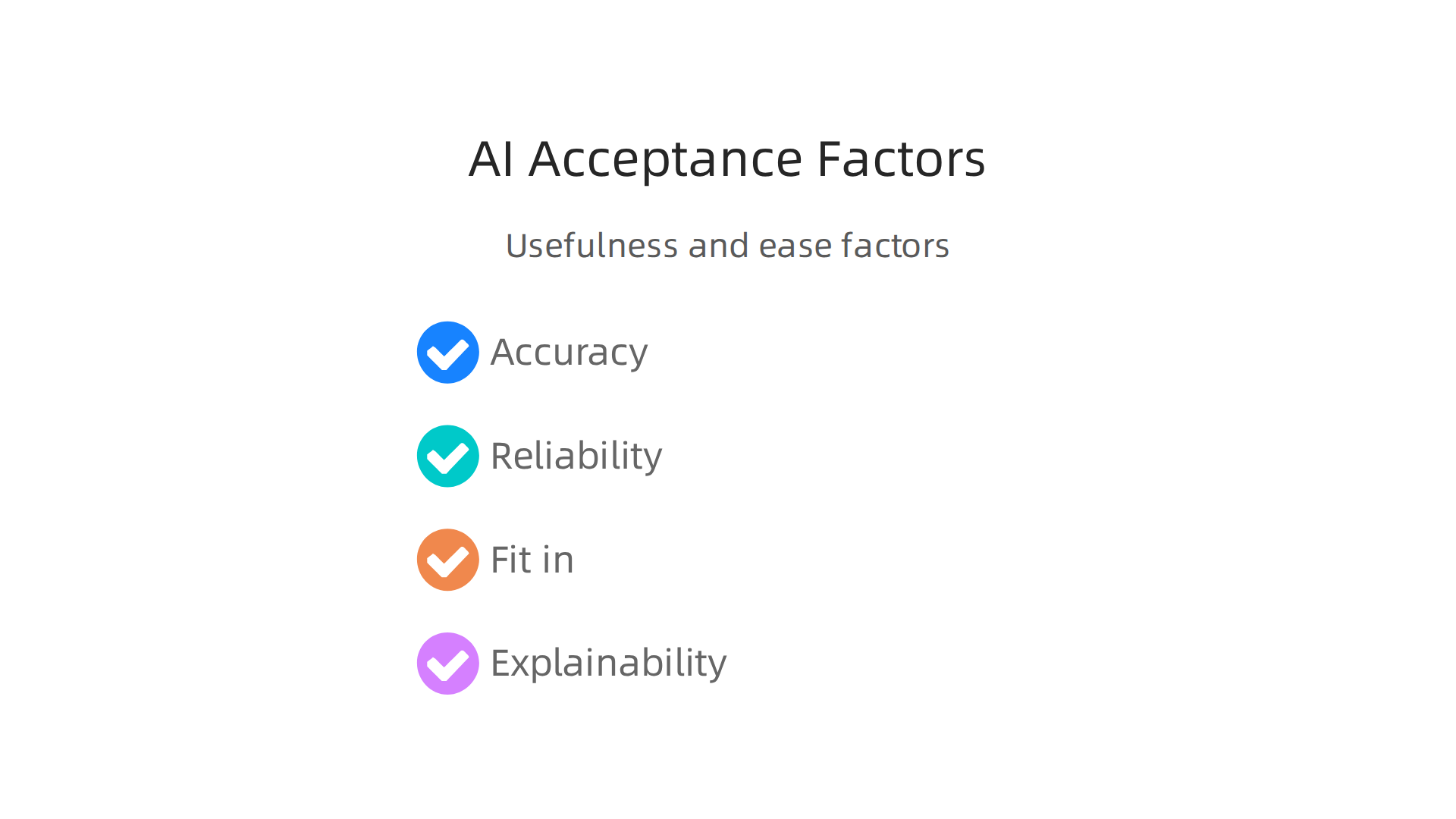
Second, how reliable is it? Can you count on it to work well every time you use it, or does it sometimes act strangely? Third, how well does it fit in with the tools you already use? If an AI program is hard to connect with your current work systems, it might not feel very useful, even if it has cool features. For example, businesses often ask, "will AI take over jobs?" The true usefulness of AI often comes from how it helps people do their jobs better and faster, not just replacing them. Understanding these changes is important for leaders. If you want to learn more about this, check out AI taking over jobs in 2026.
Then there is "perceived ease of use." For AI, this means more than just having buttons that are easy to click. It also means how simple it is to learn and control the AI. A big part of this for AI is explainability. Can you understand why the AI made a certain decision or gave a specific output? If the AI is like a black box where you cannot see how it works, it might not feel easy or trustworthy, even if it does its job well. This idea of "seeing AI" in action and understanding its logic is key to people feeling comfortable using it. Many studies show that how useful and easy technology feels plays a big part in if people will use it 10 Things to Know about the Technology Acceptance Model.
How People, Places, and Jobs Change AI Acceptance
The way people see AI’s usefulness and ease of use can also change a lot based on who they are, where they live, and what kind of work they do. These are called "moderating factors."
- Who you are (Demographics): Think about age. Someone who grew up with smartphones and computers might find a new AI tool easier to pick up than someone who is not as used to new tech. Your background and how much you have used technology before can really affect how you feel about new AI.
- Where you live (Culture): Different cultures might have different views on privacy or what tasks they are comfortable letting AI handle. What seems useful and easy in one part of the world might not in another.
- What you do (Domain-Specific): A doctor using AI for medical scans will have very different needs and concerns than a marketing person using AI to write ad copy. In important areas like healthcare, trust in the AI’s accuracy and reliability is super important. People need to feel confident in the AI’s choices, especially when human lives are involved. This is why many experts agree that trust, not just technology itself, determines AI adoption. For people to truly accept AI, they must have faith in its purpose and how it operates.
So, while the basic ideas of the technology acceptance model are still helpful, applying them to AI in 2026 means looking at more details and human feelings than ever before. For leaders looking to use AI in their work, understanding these deep human factors is vital for success. You can find more helpful information on how to lead with AI in a smart way. For a deeper understanding of planning and using AI, consider this strategic guide for tech leaders.
When we talk about people accepting AI, just thinking about how useful or easy it feels, like with the basic technology acceptance model, is often not enough. For AI, deeper feelings like trust, being open, and being fair play a very big role.
These are important social parts of how people see and use AI.
Trust: More Than Just Working Well
Trust in AI is different from trusting a simple tool. It means believing that the AI will act correctly, safely, and in a way that is good for you, even if you do not fully understand every step it takes.

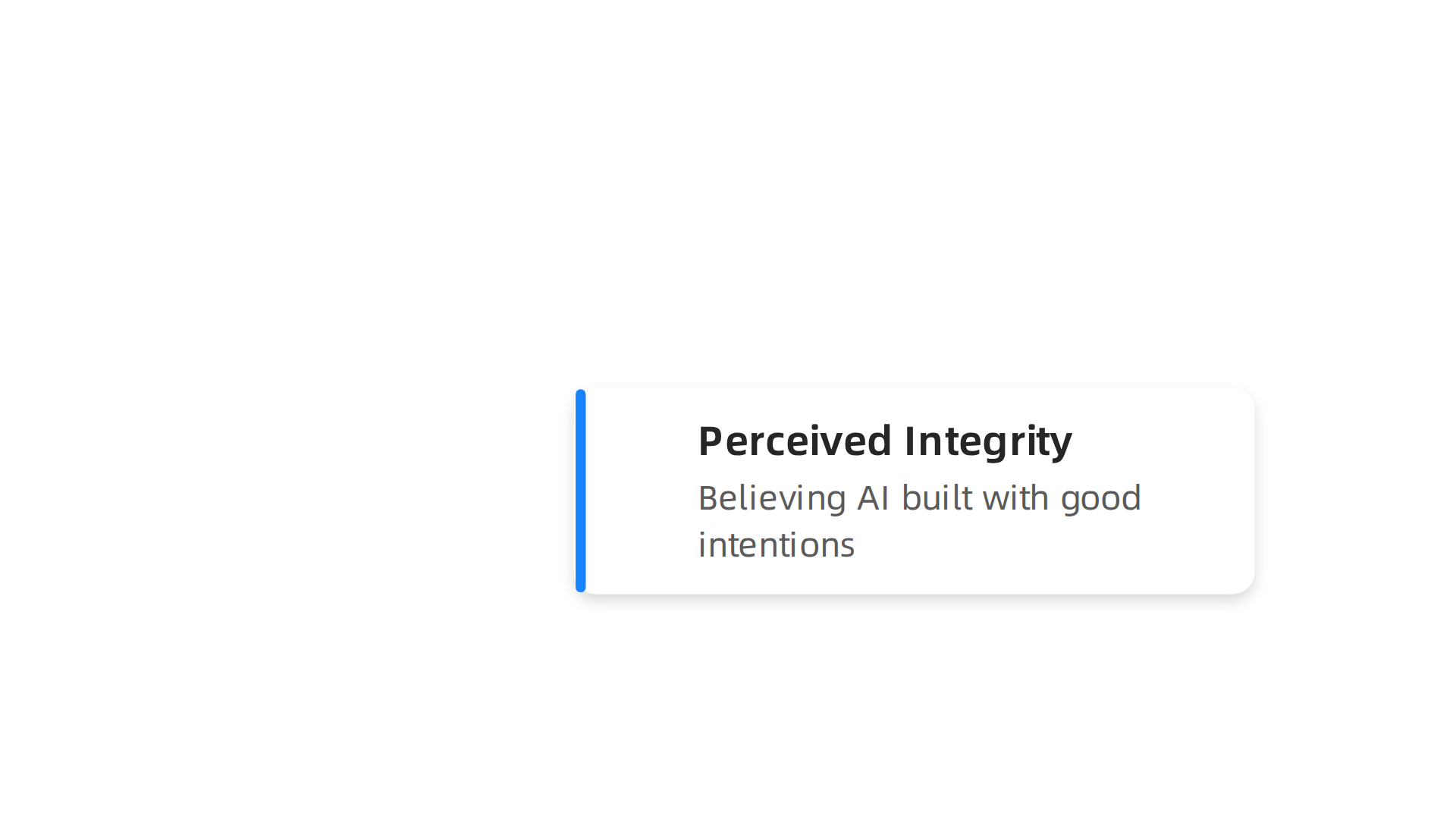
It is about "perceived integrity" and "perceived risk."
- Perceived Integrity: This is about believing the AI will do what is right. Does it seem like the AI system was built with good intentions? Will it stick to ethical rules?
- Perceived Risk: This looks at how much harm or trouble the AI might cause. If people feel using an AI is too risky, they will not trust it.
Many studies show that trust is a strong predictor of if people will actually use new technology, sometimes even more than just how useful it is Dis/Trust and data-driven technologies.
Building this kind of trust involves more than the usual ideas found in the technology acceptance model. It needs us to think about how people feel about safety and honesty when AI is involved. For example, some research looks closely at what makes people trust a specific technology and its parts Trust in a specific technology: An investigation of its ….
Transparency and Explainability: Seeing How AI Works
For people to trust AI, they often need to understand it. This is where transparency and explainability come in.
- Transparency: This means being open about how an AI system was made, what data it uses, and what its limits are. It is about letting people "see AI" without hiding things.
- Explainability: This means the AI can tell you why it made a certain choice. If an AI tells a doctor a diagnosis, the doctor needs to know how the AI got to that answer. If the AI is a "black box" that nobody can understand, it becomes very hard to trust, no matter how good the answer seems. This is a big challenge, but efforts are being made to develop new ways to measure human trust in AI, like new scales for understanding this complex relationship Towards an empirically developed scale for measuring trust.
When AI systems are more transparent and can explain themselves, people feel more comfortable using them. This is especially true for important areas like healthcare or finance.
Fairness and Redress: When AI Makes Mistakes
Another big part of social acceptance for AI is fairness. AI systems learn from data, and if that data has unfair biases, the AI can make unfair decisions.
- Fairness: This means the AI treats everyone equally and does not favor certain groups or individuals. For example, an AI used to decide who gets a loan should not unfairly reject people based on their gender or race. Studies show that when there are gaps in fairness, it greatly affects if users will accept AI decisions Review of Applied Science and Technology.
- Redress Mechanisms: What happens when an AI makes a mistake? There needs to be a way for people to fix the problem, complain, or get an explanation. This "right to appeal" or "right to explanation" is key for people to feel secure. If an AI system negatively impacts someone’s life, there must be a clear path to fix it. This helps build a "social license" for AI, meaning society accepts its use because safeguards are in place.
To make sure AI is fair and trustworthy, many organizations are now doing AI Impact Assessments. These assessments look at how an AI system might affect people and society before it is even used. They check for things like bias, privacy concerns, and overall ethical impacts How To Conduct an AI Impact Assessment. This helps to build AI systems that are not just useful and easy to use, but also honest, fair, and open.
Navigating all these different aspects of AI acceptance and regulation can be tricky. Staying updated on the latest changes and best practices is very important for anyone working with AI in 2026. For daily, in-depth AI and technology regulatory insights, you can The AI Newsletter Worth Reading. You might also want to explore how to create AI systems that are compliant with global standards, which is a major step toward ensuring trust and fairness. Discover how to make an AI compliant with global regulations in 2026 and avoid potential problems.
Making sure AI is used in a good way also needs strong rules and laws. This is what we call policy, regulation, and enforcement. These rules act like a guide, showing companies how to build AI and helping people feel safer about using it. Without clear rules, it is harder for people to truly accept AI, even if they understand how useful it can be or how it might make their work easier. It is a step beyond just the basic ideas of the technology acceptance model.
Rules and Public Trust
When governments set clear rules for AI, it signals to everyone that AI systems must be safe and fair. For example, laws like the EU AI Act have been in place since early 2025, and their rules for dangerous AI systems are becoming fully enforceable in August 2026. These rules help build trust because they demand that AI systems are made with care and checked for problems EU AI Act Enforcement Actions Tracker 2026.
Enforcement is also key. This means that if companies break the rules, they face penalties. In the US, agencies like the Federal Trade Commission (FTC) are actively going after companies that make false claims about AI or use it unfairly AI Enforcement Accelerates as Federal Policy Stalls and …. The Department of Justice also has an AI Litigation Task Force set up in January 2026 to handle AI-related legal issues Global AI Regulations Roundup: Top Stories of January 2026. When people see that there are real consequences for bad AI behavior, their trust in AI grows. This helps people feel more comfortable with the idea of seeing AI in different parts of their lives.
How Rules Change What Companies Do
These rules directly impact how companies make their AI products. Companies now have to think about "AI compliance" from the very start. They must ensure their AI systems are transparent, fair, and have ways for people to complain if something goes wrong. This pushes them to build AI that respects people’s rights and avoids issues like bias. Many companies are now focusing on strategies to manage these rules, which you can learn more about by exploring how to mastering global AI regulations 2026 for wave AI compliance.
In 2026, companies are carefully checking what AI laws affect them. They need to understand what is required to avoid big fines. For instance, the state of California has new laws for big AI models that took effect in January 2026 Midyear Review of U.S. AI Regulation, Enforcement & Policy …, and Colorado’s AI Act enforcement starts in June 2026 The AI Regulation Wave: What’s Actually Coming in 2026- …. This means businesses must constantly update their plans.
Different Rules in Different Places
One tricky part is that different countries and regions have their own sets of AI rules.
- The European Union has the EU AI Act, which is a big set of rules for how AI can be used.
- In the United States, federal rules are still forming, but many states like New York and California have already passed their own AI laws AI Policy and Regulation Tracker 2026 – Presenc AI.
- Even countries like South Korea have their Basic AI Act coming into force in January 2026 Where AI Regulation is Heading in 2026: A Global Outlook | Blog.
For companies that want to sell their AI products all over the world, this means they have to follow many different rules at once. This is called "cross-border expectations." They need smart plans to deal with these different laws, making sure their AI works everywhere without causing problems. This complex landscape shows that simply focusing on the usefulness of AI, as per the basic technology acceptance model, is no longer enough. Businesses also need to understand tech regulations 2026 global changes tech leaders must understand to succeed.
Ultimately, clear policies, strong rules, and active enforcement make people feel safer about AI. This pushes companies to build better, more responsible AI. This framework of governance is crucial for AI to be widely accepted and trusted in society. It also helps address bigger questions about the impact of AI, like what jobs will AI replace and how society will adapt to these changes.
To really understand if people trust AI, we need to ask them directly. This is where measuring public attitudes comes in. We use special surveys and gather information from different places to see how people feel about AI. It helps us know if they are moving towards the technology acceptance model, or if there are still big worries.
How We Measure What People Think
Many groups do surveys to find out what people think about AI. These groups include universities, research centers, and big data companies.
- Pew Research Center often asks Americans and people around the world about their views on AI, checking for changes over time Key findings about how Americans view artificial intelligence. Their studies in 2026 show that almost half of adults in the US now use AI chatbots, which is a big jump from past years Pew: Half of Americans Now Use AI Chatbots in 2026.
- Stanford HAI puts out a yearly AI Index Report that includes a section on public opinion, showing how many people think AI has more good than bad parts Public Opinion | The 2026 AI Index Report | Stanford HAI.
- Companies like Ipsos also survey many countries to get a global picture of how people feel about AI in 2026 Ipsos AI Monitor 2026. They found that one in four Americans use AI tools "often."
- Other groups like Data for Progress and NORC also study how different kinds of people, like those of certain ages or genders, feel about AI Public Opinion on Artificial Intelligence Varies Widely by Age, …. These surveys often use "nationally representative samples," which means they try to ask a little bit of everyone to get a good overall idea.
These studies show a mix of excitement and worry. For example, many people are concerned about the impacts of AI on society, even as they see AI delivering benefits globally AI Public Perception Statistics 2026 — Trust, Hope & Concern. People are thinking about things like what jobs will AI replace and how AI might change their daily lives.
Problems with Measuring Public Feelings
Even with all these surveys, it is not always easy to get a perfect picture. There are a few challenges:
- Who gets asked (sampling bias): Sometimes, the people who answer surveys might not be like everyone else. If a survey only asks people who are very good with technology, their answers about "seeing AI" might be different from someone who rarely uses a computer.
- How questions are asked (question framing): The way a question is written can change the answer. If a question makes AI sound scary, people might say they are more worried. If it makes AI sound helpful, they might say they are more positive.
- How fast things change (temporal volatility): Public opinion about AI can change very quickly. What people thought last year, or even last month, might be different today. As AI gets more common, and people see it more, their views keep shifting. It is hard to keep up with how long AI has been around and how much it is changing.
Because of these challenges, it is important to look at many different studies and not just one. This helps us get a clearer view of how people truly feel about AI and how these feelings relate to things like the technology acceptance model. Staying informed about these changes is key for anyone involved with technology. For up-to-date insights, you can subscribe to The AI Newsletter Worth Reading. This helps in making better predictions about how AI will be used and accepted in the future. If you want to dive deeper into what experts are thinking about upcoming trends, exploring AI predictions 2026 for tech hubs safety sovereign AI and compliance can offer valuable perspectives.
Getting a clear view of how people feel about AI is super important. Even though surveys can be tricky, smart companies and compliance teams use these insights to make better decisions. They blend what they learn from public opinion with proven ways to check how new tech is being accepted. This helps them guide their AI projects from start to finish.
Practical Frameworks for Executives and Compliance Teams to Assess Societal Impact
For leaders and teams whose job it is to make sure rules are followed, it’s not enough to just know what people think. They need a clear plan to use that information.

This means looking at how people accept new technology, building trust, and making sure all the rules are met. It also means thinking about the bigger picture of how AI affects society.
Here’s a simple checklist combining ideas from the technology acceptance model (TAM) with how to check for trust and risks:
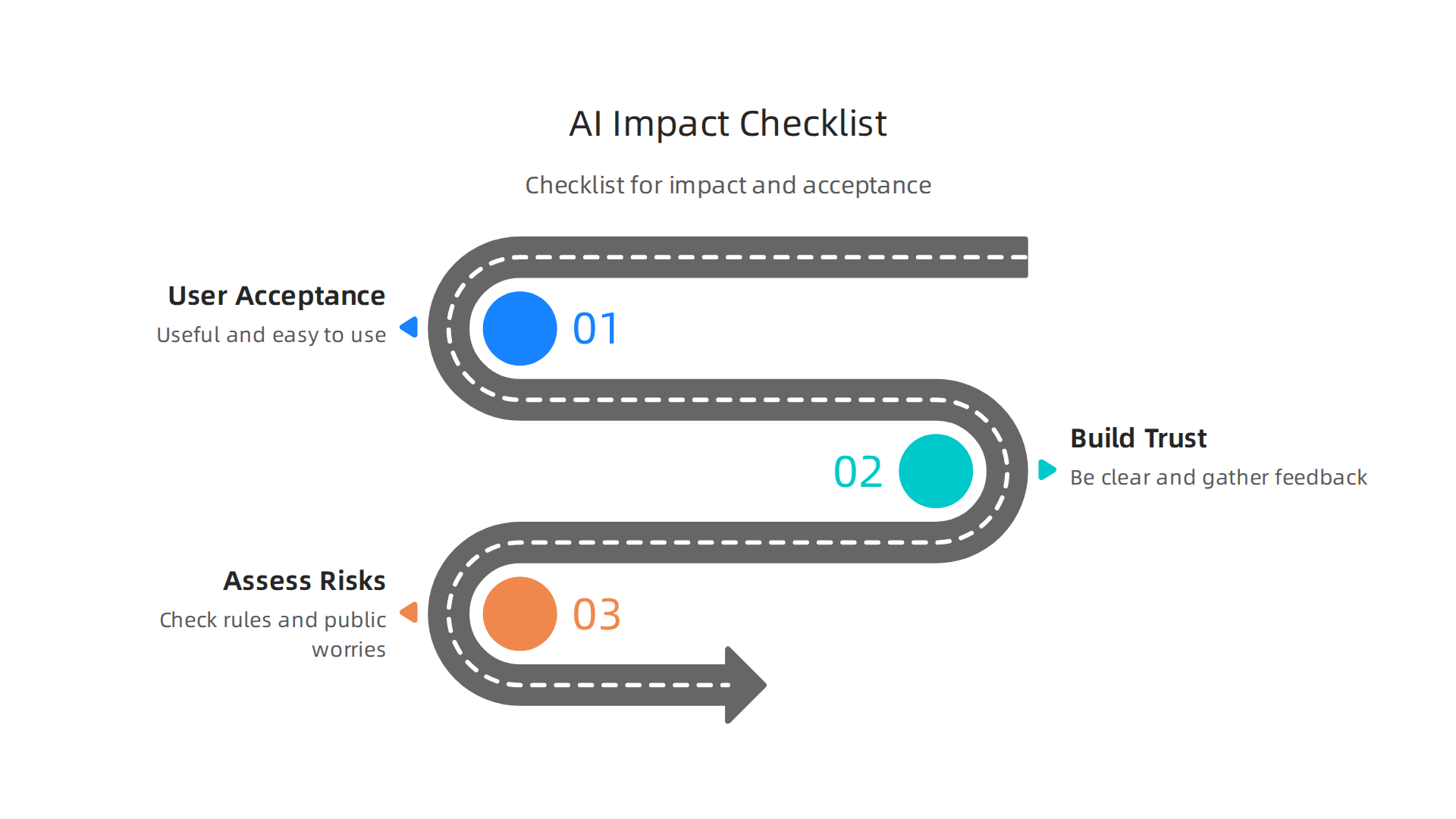
AI Impact Assessment Checklist for Teams
-
Understand User Acceptance (TAM focus):
- Is it useful? Will people find this AI helpful in their daily work or life? If they don’t see the benefit, they won’t use it.
- Is it easy to use? Can people learn to use it quickly without a lot of trouble? The easier it is, the more likely they are to accept it.
- What are their feelings? Are users excited, worried, or unsure about this AI? Their feelings directly impact if they will adopt it. Remember, trust in a specific technology can predict its acceptance Theory of Trust and Acceptance of Artificial Intelligence … – PMC.
-
Build and Measure Trust:
- Be clear about what the AI does. Explain how it works and what its limits are. People trust what they understand.
- Show its good side. Highlight how the AI helps people or solves problems fairly. Some studies show that trust, not just the technology itself, often decides if AI gets adopted Why Trust, Not Technology, Determines AI Adoption.
- Gather feedback. Regularly ask users if they trust the AI and why. This helps you improve. Research has even helped create ways to measure trust in human-computer interactions Towards an empirically developed scale for measuring trust.
-
Assess Societal and Regulatory Risks:
- Think about wider impacts. Will this AI change jobs? (e.g., will it affect what jobs will AI replace in your industry?) Could it cause unfairness? These are big questions that need answers.
- Check the rules. In 2026, there are many rules about AI. Does your AI follow them all? You need to make sure your AI regulation build AI systems compliantly in 2026.
- Look at public worries. If people are worried about a certain part of AI, address those worries. For instance, if people are concerned about "seeing AI" in places they don’t expect, you might need to make its presence clearer.
Putting Insights into Action
Companies integrate these findings into their daily work in a few important ways:
- Product Roadmaps: When planning new AI products or updates, teams use public opinion data to decide what features to build. If surveys show people want more privacy, new features will focus on that.
- Risk Registers: This is like a list of all possible problems. If public opinion shows a big worry about AI’s impact on certain groups, that becomes a new risk to manage. Compliance teams can also look at specific guides like how to make an AI compliant with global regulations in 2026 to update their risk assessments.
- Stakeholder Engagement: This means talking to all the different people who care about your AI, like users, partners, and even government bodies. Sharing how you are addressing their concerns based on public perception builds better relationships.
By using these frameworks, executives can make sure their AI products are not just smart, but also trusted, accepted, and fully compliant with the rules of 2026 and beyond. This approach ensures that even as we learn how long has AI been around and watch it grow, we are building it in a way that truly serves society. Organizations like ISO even provide guidance for conducting AI system impact assessments to help understand effects on individuals and society.
Summary
This article explains why public opinion is central to how AI is adopted, regulated, and trusted in 2026. It walks through the Technology Acceptance Model (TAM)—perceived usefulness and perceived ease of use—and shows how those ideas still matter but must be expanded for modern AI to include trust, explainability, fairness, and redress. The piece describes how public feelings shape government rules and enforcement, and how regulation in regions like the EU and several U.S. states is changing company behavior. It outlines the key drivers of user acceptance (accuracy, reliability, integration), the moderating effects of demographics and domain, and practical ways to measure attitudes with surveys while avoiding bias. For executives and compliance teams it offers an actionable AI impact assessment checklist and shows how to fold public-opinion insight into product roadmaps, risk registers, and stakeholder engagement. Readers will come away able to apply TAM-informed thinking to design more acceptable AI and to prepare their organizations for current global regulatory expectations.