

The world of technology is moving fast, and some of the biggest changes are happening in secret. We are talking about classified technologies. These used to mean just defense and military tools. But in 2026, the picture is much bigger.
Now, classified technologies cover artificial intelligence, quantum computing, and even advanced biotechnology. This shift creates a new kind of pressure for businesses. One day, a company might be working on civilian AI. The next day, that same technology could be pulled into a classified defense program. And the rules change just as fast.
Take the Pentagon for example. In May 2026, the Department of Defense made deals with eight major AI companies.

These include OpenAI, Google, Microsoft, and others. They can now use their AI on classified networks for military operations. This is a huge move. If you want to know the details, you can read about the Pentagon AI classified deals. This is just one example of how fast the landscape is shifting.
When rules change this quickly, companies and investors face real uncertainty.

One new executive order can rewrite the rules for entire industries. A company might invest millions in a new product, only to find out it now needs a special license to sell overseas. That is why a proactive regulatory strategy is not optional anymore. It is a must.
If you do not track these changes, you risk fines and lost market access. The smartest move is to stay ahead. Start by understanding what applies to your industry. For a deeper look at how to prepare, check out this guide on AI regulations 2026 compliance strategies to avoid million-dollar fines.
The world of classified technologies will only get more complex. Staying informed every day is the best way to protect your business. For daily updates on these fast-moving changes, consider subscribing to The AI Newsletter Worth Reading. It helps you keep up without the noise.
The Expanding Definition of Classified Technologies
Ten years ago, classified technologies mostly meant fighter jets, missile systems, and nuclear secrets. In 2026, that definition has grown to include things you cannot touch.
Advanced semiconductors, AI algorithms, and even data itself are now treated as classified assets. The reason is simple: these technologies are just as powerful as any weapon.
Take advanced semiconductors. A single chip design can now determine who leads in military computing, quantum research, and encrypted communications. That is why governments are classifying chip blueprints and manufacturing processes. A similar shift is happening with AI models. The Pentagon recently cleared eight AI companies to work on its most sensitive networks. These models are now subject to a new classified AI model benchmarking process that determines which systems count as "covered frontier models." This software classification is a major change from the past.
The old system classified hardware. A satellite was classified. A tank was classified. But software and data move differently. They can be copied, shared, or hidden in milliseconds. That creates new headaches for regulators. Now, multiple agencies must agree on what gets classified.

The Pentagon, the NSA, the Treasury, and Homeland Security all have a say. International coordination is also growing, because a classified algorithm developed in the United States could be rebuilt by researchers in another country.
This expansion matters for your business. If your company works with AI, advanced chips, or sensitive data, you need to know whether your technology falls under new classification rules. The old hardware-only mindset does not apply anymore. For a deeper look at how changing definitions affect your compliance strategy, check out this guide on the definition of technology.
The rules are still being written. But one thing is clear: classified technologies now cover far more than most people realize. Staying ahead means understanding that a line of code can be just as sensitive as a piece of military hardware.
Key Regulatory Frameworks Governing Classified Technologies
If your company works with classified technologies, you need to know which rules apply. In the United States, two main frameworks control the export of sensitive tech: the International Traffic in Arms Regulations (ITAR) and the Export Administration Regulations (EAR).
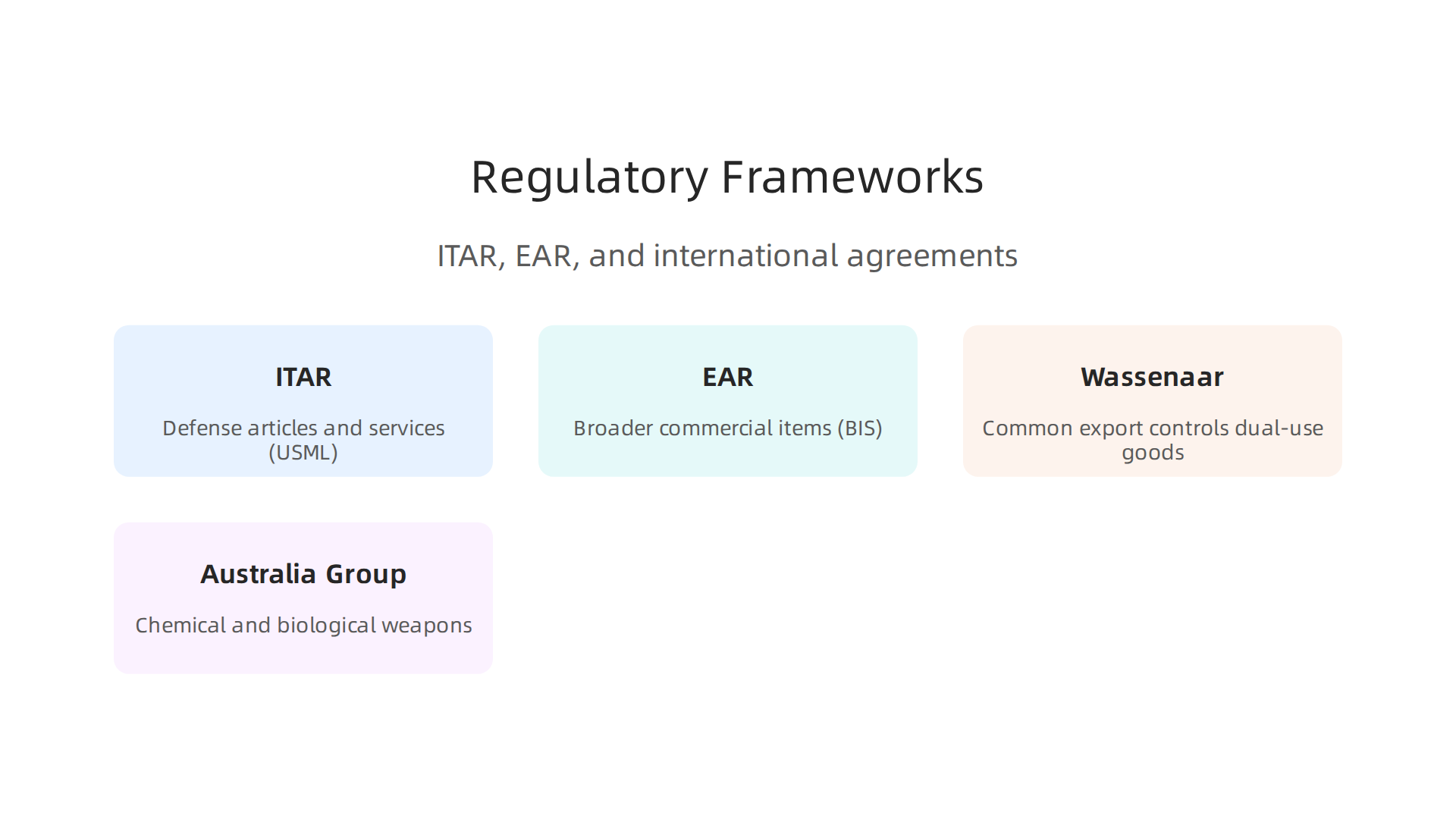
ITAR is the stricter one. It covers defense articles and services listed on the United States Munitions List (USML). The rules change often. For example, recent USML revisions moved some items out of ITAR and into EAR control, while adding newer technologies like parts for the F-47 fighter jet. You can review the latest ITAR compliance updates to stay on top of these shifts.
EAR covers a broader range of commercial items that could have military uses. The Bureau of Industry and Security (BIS) manages these rules. They use Export Control Classification Numbers (ECCNs) to sort technologies. Recent updates added controls on semiconductor tools, quantum computing items, and additive manufacturing equipment. The ECTI rule tracker keeps a running list of these changes.
But it is not just U.S. rules. Multilateral agreements also shape how classified technologies move around the world. The Wassenaar Arrangement sets common export controls for conventional arms and dual-use goods. The Australia Group focuses on chemical and biological weapons. These groups influence what gets classified and how countries share information. The BIS Emerging Technology Division works closely with these international partners to identify critical tech areas like advanced computing and artificial intelligence.
Here is the hard part. These frameworks overlap and sometimes conflict. A technology that falls under ITAR in the U.S. might be treated differently by a partner country under Wassenaar. Your compliance team must track multiple sets of rules at once. That can feel like a full-time job.
If you are responsible for keeping your business compliant with export controls, you need a reliable way to stay updated on regulatory changes. That is why many professionals turn to resources that simplify the noise. For example, our guide on navigating Palantir regulatory compliance offers a deeper look at how one company handles overlapping frameworks.
And if you want clear daily updates on AI and tech regulations, consider subscribing to The AI Newsletter Worth Reading. It delivers the latest developments straight to your inbox so you never miss a critical change.
Export Controls: ITAR and EAR
Let’s zoom in on the practical side of making these frameworks work for your business. The rules for classified technologies shift often, and three areas demand your constant attention right now: tighter controls on specific tech, the Entity List, and license exceptions.
Recent rules have tightened controls on microelectronics, AI software, and quantum sensors. The Bureau of Industry and Security (BIS) now treats these as critical technology areas.
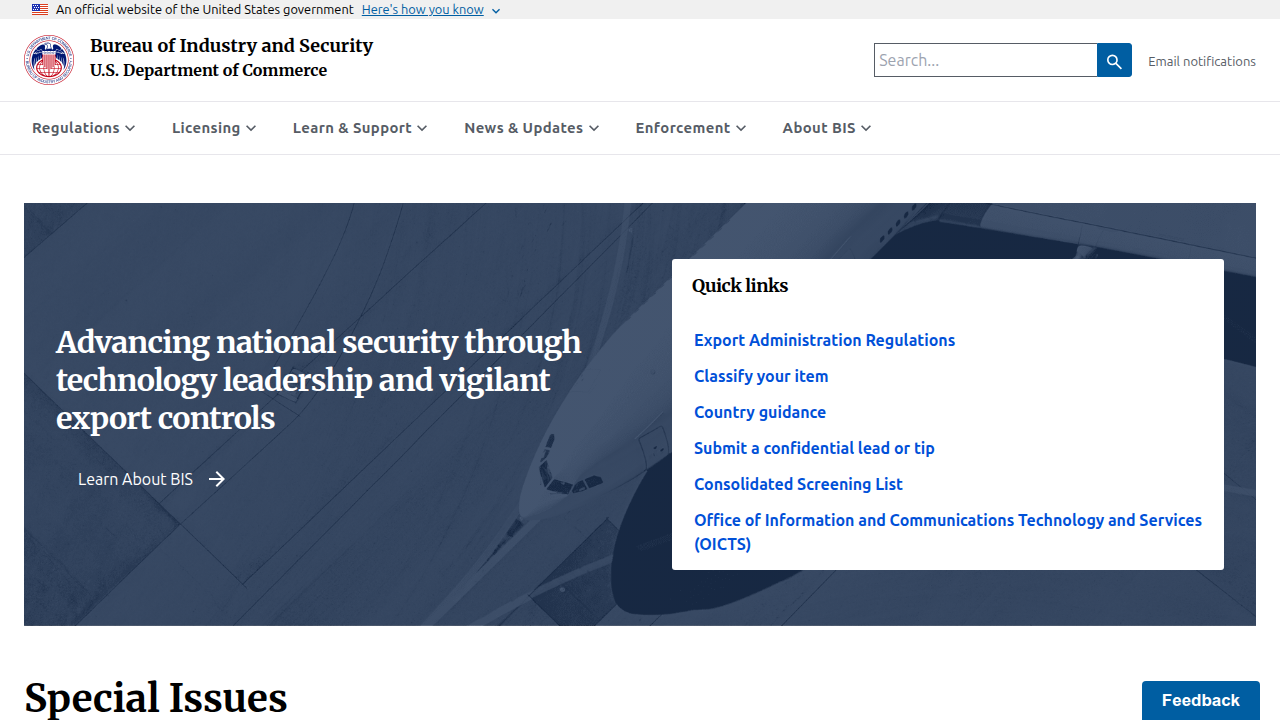
The Emerging Technology Division overview lists advanced computing, artificial intelligence, and quantum information as priorities for national security. That means if your company develops or exports AI models, quantum sensors, or advanced chips, you face extra scrutiny. For example, in March 2026, BIS launched the American AI Exports Program to manage how full-stack AI technology packages leave the U.S. You can read the March 2026 export controls update for details.
The Entity List is another big piece of the puzzle. BIS uses this list to block exports to foreign companies and individuals that threaten U.S. security. If a buyer or partner appears on the list, you cannot ship controlled items to them without a special license. That is why you must screen every potential customer, especially when dealing with dual-use goods. The export control classifications guide explains how to use ECCNs and USML categories properly and warns that penalties for a mistake can reach over $300,000 per violation. Ignoring the Entity List can also land you in criminal trouble.
License exceptions offer some relief, but they require careful tracking. For instance, certain space-related activities now have new license exemptions under ITAR. But these exceptions only apply if you meet very specific conditions. The rules change frequently, and a missed update could turn a lawful export into a violation. That is why compliance teams must monitor the Federal Register and DDTC announcements weekly.
Staying on top of ITAR and EAR updates is a full-time commitment.

If you want a practical roadmap for building a compliance program that covers these overlapping rules, check out our guide on AI regulations 2026 compliance strategies. It walks you through the steps to avoid costly mistakes.
International Technology Transfer Regimes
U.S. export controls like ITAR and EAR are just one piece of the puzzle. Global technology transfer regimes add another layer of rules that companies must follow. Three major multilateral agreements set the norms for controlling sensitive tech: the Wassenaar Arrangement, the Australia Group, and the Missile Technology Control Regime (MTCR).
The Wassenaar Arrangement focuses on conventional arms and dual-use goods. In 2022, it added controls on electronic computer-aided design software for advanced chips, as shown in Recent Developments in Export Controls. The Australia Group targets chemical and biological weapons materials. The MTCR controls missile systems that could deliver weapons of mass destruction.
Together, these regimes shape how nations regulate classified technologies like quantum sensors and advanced AI. But they only set the baseline. Many allied nations add their own stricter rules. For example, the European Union enforces its own dual-use regulation that often goes beyond Wassenaar. Japan and South Korea have tightened controls on semiconductor manufacturing equipment and quantum computing parts.
That means if your company works with ai companies in multiple countries or follows quantum computing news today, you face a web of overlapping requirements. A part that is freely exported to Germany might need a license to go to China under both U.S. and EU rules. Harmonization between regimes remains slow. Each country interprets the guidelines differently, and updates come at different times.
For businesses operating globally, this fragmentation increases compliance costs and the risk of mistakes. You need a system that tracks rules across jurisdictions, not just in the United States. One way to stay ahead is to understand how different regions are approaching tech regulation. Our guide on global privacy and AI regulation landscape can help you map these overlapping layers.
Keeping up with all these changes manually is almost impossible. That is why a daily digest of the latest regulatory shifts is so valuable. Sign up for The AI Newsletter Worth Reading to get clear, actionable updates on international tech transfer rules delivered to your inbox every day.
Compliance Challenges in Practice
The international regimes we just covered set the high level rules. But turning those rules into daily habits inside a company is where things get messy. Three common problems keep compliance teams up at night.
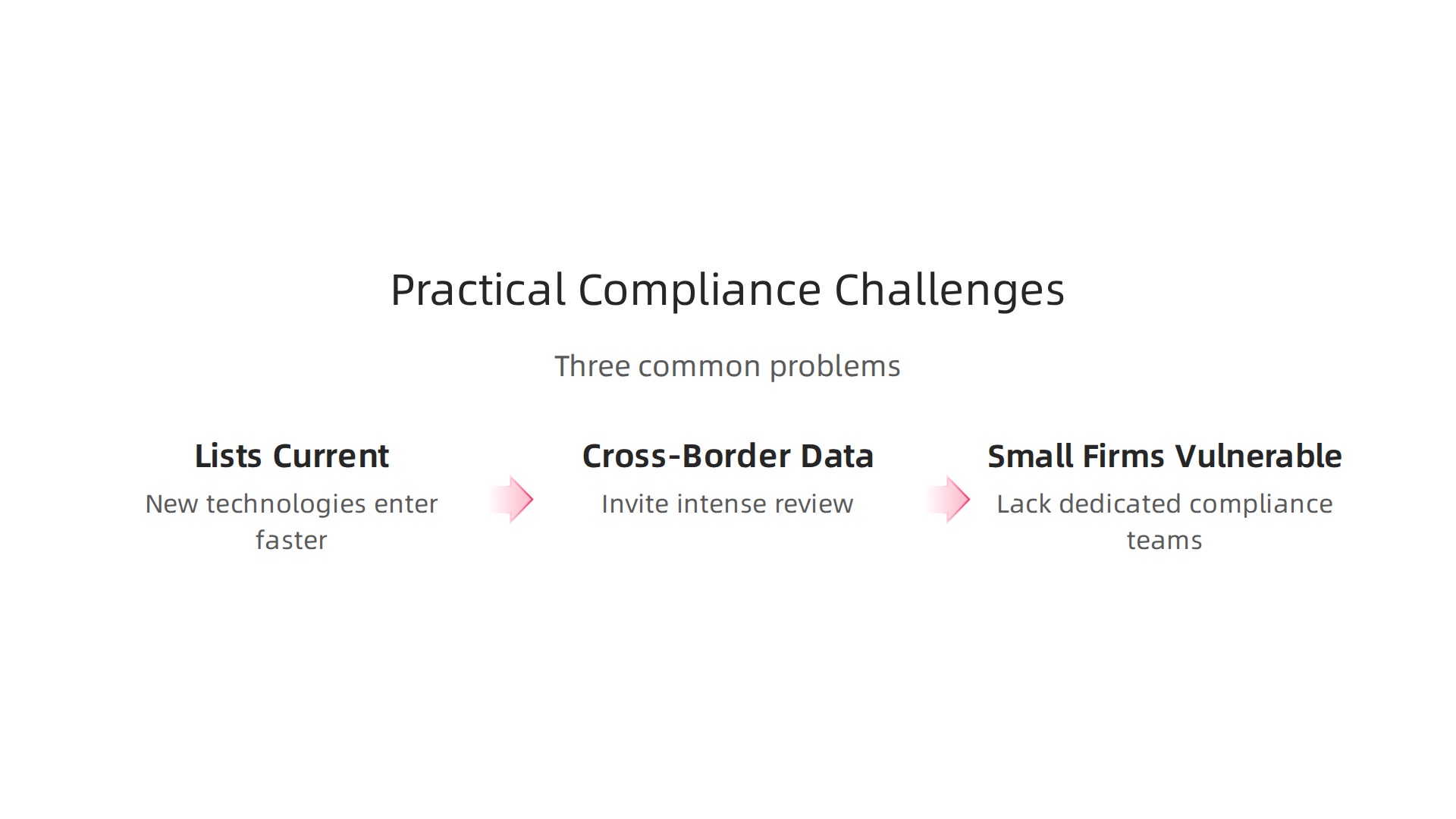
Keeping classification lists current is nearly impossible.
New classified technologies enter the market faster than regulators can add them to control lists. If you track quantum computing news today, you know a breakthrough can turn a general-purpose chip into a restricted item almost overnight. Companies working with ai companies face this same whiplash when a new model triggers export controls. Your internal database of controlled items needs constant updates, or you risk sending something sensitive without a license.
Cross-border data flows invite intense review.
Regulators no longer focus only on physical hardware. They also watch software updates, cloud access, and remote troubleshooting. Sharing technical data with a foreign partner can now trigger a license requirement. This scrutiny directly affects supply chains, from the latest foxconn news about factory tech transfers to everyday SaaS subscriptions. Understanding where your data travels is a full time job. The relationship between technology in society and these control mechanisms is shifting faster than most policies can adapt.
Small and mid sized firms are especially vulnerable.
Giant corporations have teams of lawyers. But smaller tech firms often lack dedicated compliance teams. The CEO might be handling export rules between product launches. This is risky. One wrong click or unclassified file can lead to fines or export bans. Building a solid program from scratch is daunting, but resources exist. A great starting point is this guide on developing an effective export compliance program.
To make things worse, many teams do not even realize that simple mismatches between technical language and legal definitions cause most classification errors. Learning how to bridge that gap is essential. Our detailed guide on the definition of technology and business compliance explains exactly how to get your internal labels right.
Building Effective Internal Compliance Programs
Fixing how you classify your products is a great start. But maintaining those classifications manually across thousands of parts and software versions is nearly impossible in 2026. Automated screening tools are no longer a luxury. They are a necessity. These platforms can screen restricted party lists and update export classifications in real time. The best systems also keep audit trails so you can prove your decisions to regulators. An effortless strategy to master export control regulations starts with choosing the right technology stack. Pairing that with the best AI tools for business productivity helps you scale your compliance efforts without adding headcount.
Technology is only half the equation though. The human side of compliance is where most programs break down.
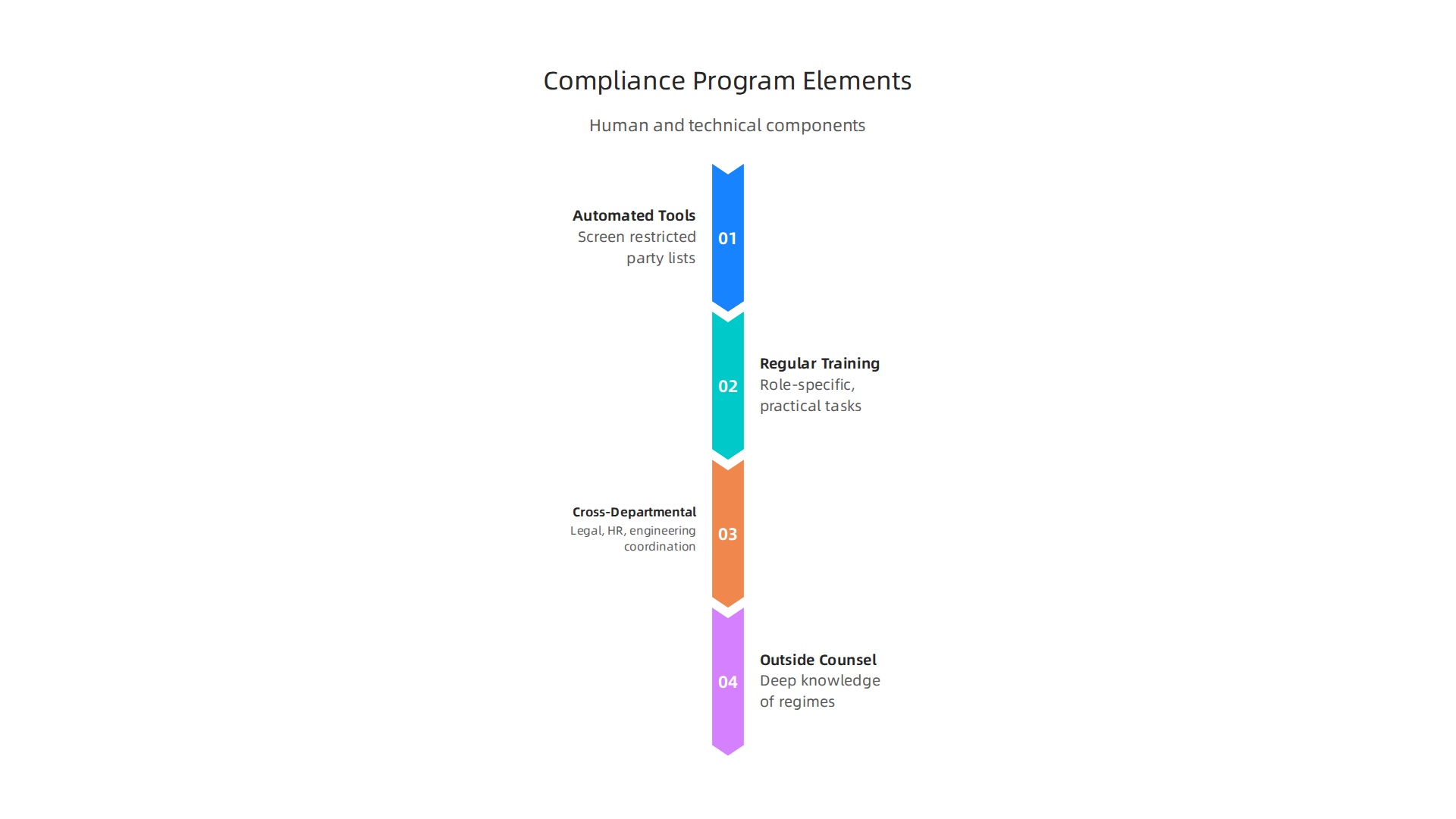
Your engineering team might share code with a foreign partner without realizing it triggers a deemed export rule. Your sales team might upload a controlled specification to a cloud server based overseas. This is why regular, role-specific training matters so much. Many ai companies struggle here because their teams are distributed globally. Cross-departmental coordination between legal, HR, and engineering is critical. The best advice for preparing your team for export control regulations is to make compliance training practical and tied to daily tasks, not just a boring annual slideshow.
For specialized regimes covering classified technologies or emerging fields like quantum, internal teams often hit a knowledge ceiling. The pace of quantum computing news today means regulations shift monthly. Even dedicated compliance officers can struggle to keep up with new restrictions on specific hardware or algorithms. This is where outside counsel and consultants add real value. They bring deep knowledge of narrow regimes that internal teams simply do not have time to master. You can tap into these best practices for export compliance leaders to fill your knowledge gaps fast. And if you work with high risk partners, our deep dive on Palantir regulatory compliance 2026 offers a practical case study on managing data and export controls together.
Building a strong program is not a one time project. It requires constant vigilance and iteration. Staying on top of these changes can feel like a full time job. If you want clear daily updates on AI and tech regulation, The Deep View Newsletter delivers exactly what you need to your inbox every morning.
Managing Dual-Use Dilemmas
Even with a solid program in place, you will run into a gray area called dual-use. Many of the technologies you work with every day, especially in AI and biotech, have both civilian and military applications. A machine learning model that helps doctors spot tumors could also be used to find military targets. A gene-editing tool designed for crops could be weaponized. This is the dual-use dilemma.
The first step is to conduct a thorough technology assessment. You need to classify every product, software module, and technical data set under the EAR or ITAR. This is especially hard for emerging fields like quantum computing. The pace of quantum computing news today means regulations shift almost monthly. What was unrestricted last quarter might now require a license. Your team needs to stay on top of these changes to avoid accidental violations.
Technology assessments are not just for physical goods. In 2026, open-source contributions are heavily scrutinized. When your engineers share code on public repositories, that act can be considered an export. Even uploading a white paper that describes a controlled algorithm could trigger a deemed export rule. This is why many ai companies now restrict access to their core repositories and require foreign nationals to sign technology control agreements before contributing.
Strategic partnerships also require extra caution. For example, recent foxconn news shows how manufacturing partners in sensitive regions can raise compliance red flags. You cannot rely on a contract alone. You need to screen every partner and monitor how your technology is being used downstream. The best approach is to integrate end-use checks into your partner onboarding process, just as you would for denied party screening.
The dual-use challenge touches every part of your business. From R&D to sales to open-source communities, everyone needs to understand the risks. If you are still unsure about how to classify your AI applications, start by reading about making AI compliant with global regulations. And for a broader view of where trade enforcement is heading, the 2026 Global Trade Compliance Trends for Compliance Leaders report offers practical guidance on end-use and end-user risk scoring. Stay vigilant, because the line between civilian and military use is thinner than ever.
Investor and Strategic Implications
The dual-use dilemma we just covered does not just affect your compliance team. It has direct consequences for your company’s value and your investors’ confidence. In 2026, the way regulators classify your technology can make or break your business.
Regulatory classification directly shapes market access. When a technology gets labeled as a classified technology, everything changes. Export restrictions can shut down sales to key regions overnight. This is not a hypothetical risk. One study found that export controls caused affected U.S. suppliers to lose about $130 billion in total market capitalization.

That is an enormous hit to any company. You can read more about the cost of export controls on U.S. suppliers in the New York Fed report on export control costs.
Investors now demand thorough due diligence on export control exposure.

Before funding a startup or buying stock in a tech company, smart investors check whether the core products are controlled under U.S. law. They also look at who the customers are and whether future restrictions could block revenue streams. One law firm explains that addressing these issues early can turn compliance from a burden into a competitive advantage. That is a key takeaway from the white paper on Export Controls for Startups: From Overlooked Risk To Competitive Advantage.
Strategic pivots may be necessary when your technology becomes restricted in a major market. If your product relies on components or customers in a sensitive region, you might need to redesign your supply chain or find new buyers. This is especially true in sectors like semiconductor manufacturing and quantum computing. The pace of quantum computing news today means new export rules can appear with little warning. Even manufacturing partners like Foxconn can become compliance risks if they operate in countries under trade restrictions. The way export controls shape technology in society is a growing concern for regulators balancing national security against innovation.
For a deeper look at how one major company handles these challenges, check out the article on Palantir regulatory compliance and export controls. It shows how even the most advanced ai companies build compliance into their core strategy.
Staying ahead of these changes requires constant attention. The regulatory landscape shifts fast, and missing a single update can cost millions. That is why many leaders subscribe to The AI Newsletter Worth Reading. It delivers clear daily updates on AI regulations and trade controls straight to your inbox. It helps you spot risks before they hurt your valuation.
Future Regulatory Trends
So where is all of this heading? The rules around classified technologies are not frozen in time. They are changing fast, and a few big shifts are on the horizon.
First, expect the definition of classified technologies to grow. Right now, export controls mostly cover hardware like advanced chips. But in the near future, foundation AI models and synthetic biology will likely face similar restrictions. The White House is already working on this. In June 2026, an executive order started creating a process to classify frontier AI models based on their national security risk.

You can read more in the Promoting Advanced Artificial Intelligence Innovation and Security executive order. This means ai companies developing the next generation of powerful models could soon be dealing with a whole new layer of compliance.
Second, countries are splitting into two camps. The United States and its allies are getting more aligned on what counts as a classified technology. They want common rules to share tech safely and keep competitors from accessing sensitive items. This is a big theme in the U.S. Chamber Technology Priorities 2026. But the gap with China and Russia is getting wider. That divergence affects everything from quantum computing news today to supply chain decisions. Even a partner like Foxconn might end up in a risky spot if trade restrictions tighten further. Staying on top of foxconn news can give you early signals about supply chain exposure.
Third, lawmakers are pushing for a single, unified U.S. technology security framework. Instead of a patchwork of different rules from different agencies, they want one clear set of standards. The goal is to make compliance simpler and to align technology in society with national security interests without stifling innovation. Groups like the James Madison Institute are calling for a national privacy law and a streamlined approach to AI regulation. You can see their full list of recommendations in the Ten for Tech in 2026 report.
All of these trends point in one direction: more regulation, not less. And more complexity. If you want to stay ahead, you need to build compliance thinking into your business now. For a deeper look at how to plan for these changes, check out our guide on AI predictions 2026 for tech hubs, safety, sovereign AI, and compliance.
Summary
Classified technologies have expanded far beyond traditional weapons to include AI models, quantum devices, advanced semiconductors, and sensitive data, forcing companies to rethink compliance. This article explains how the classification shift changes who must follow export controls and why ITAR, EAR, multilateral regimes and national policies now intersect in complex ways. You will learn which regulatory frameworks matter, how overlapping rules and the Entity List create practical risks, and why software and data can trigger export or deemed-export requirements. The piece walks through common compliance failures—outdated classification lists, unchecked cross-border data flows, and weak partner screening—and shows how automated screening, role-specific training, and outside counsel can close gaps. It also covers investor and strategic consequences, including how sudden reclassification can shut markets and change valuations. Finally, the article outlines future trends such as expanding AI and biotech controls and growing international alignment, and it points to concrete next steps companies should take to stay ahead.