

Introduction
Running a hotel in 2026 means dealing with a lot of rules.

Data privacy laws, payment security standards, and new AI regulations are all part of the picture. For hospitality technology companies, keeping up with these rules is a major challenge.
Canary Technologies sits right in the middle of this shift. The company builds cloud-based software for hotels, handling everything from digital check-ins to guest messaging and payments. According to their company profile, they are recognized as the hospitality industry’s leading technology solutions provider. Thousands of hotels around the world use their platform.
What makes Canary Technologies worth watching is how they handle regulation. As rules around guest data and AI use keep changing, the company has to adapt fast. This makes them a useful case study for anyone in the hospitality tech space. For a broader look at the regulatory landscape, our guide to navigating data privacy and AI governance covers the key issues affecting tech companies today.
We wrote this article for tech executives, investors, and compliance teams who want to understand how a top hospitality tech company navigates today’s regulatory environment. We cover the company’s profile, the specific regulations that affect them, and what their approach means for the wider industry.
Staying on top of tech regulation takes work. For daily updates on AI rules and digital compliance, check out The AI Newsletter Worth Reading.
Company Overview: Canary Technologies’ Mission and Market Position
Now let’s take a closer look at the company behind that technology. Canary Technologies was built to modernize how hotels operate. Instead of relying on paper forms and clunky old systems, the company offers a cloud-based Guest Management System that handles check-ins, messaging, upsells, and payments from one dashboard. The Canary Technologies LinkedIn profile describes them as a leader in hospitality technology that provides hoteliers with simple and secure solutions.
The company’s mission, as stated on their official site, is to help hoteliers thrive by creating the most innovative software.
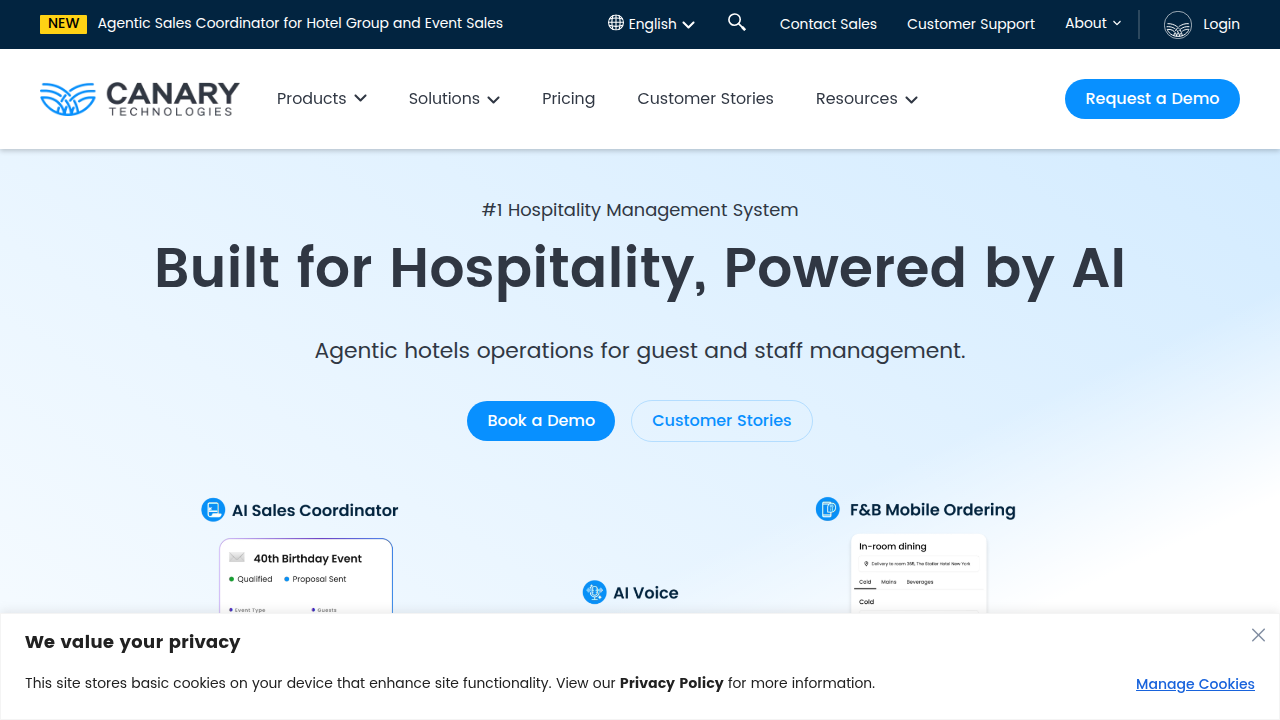
They focus on one thing only: hospitality. That narrow focus shows. Their Canary Technologies company mission page explains that every product they build is designed to solve real problems for hotel staff.
This focus on simplicity has helped them grow fast. Today, over 20,000 hotels in more than 125 countries use the platform. The Canary Technologies hospitality management system page lists major brands like Ace Hotel Group, Four Seasons, and Wyndham among their customers.
That kind of growth catches the attention of investors. Canary raised significant venture funding from top firms, including Y Combinator. The Canary Technologies Y Combinator profile highlights how they are modernizing the entire hospitality tech stack.
What makes Canary stand out is its use of AI. The platform uses machine learning to automate guest messaging, personalize offers, and streamline front desk tasks. If you want to understand how this type of technology is reshaping business, check out our breakdown of agentic AI in business in 2026.
By making hotel operations more efficient, Canary helps properties boost revenue while giving guests a smoother experience.

That combination explains why industry awards keep coming. In 2026, Canary was named the top solution across nine hospitality tech categories by over 25,000 hoteliers, as reported in the Canary Technologies named top guest experience system press release.
For anyone tracking how hospitality tech companies evolve under regulation, understanding Canary’s foundation is the first step.
The Regulatory Environment Facing Hospitality Technology Providers
Speaking of regulation, let’s talk about what hospitality tech companies like Canary have to deal with. The rules are not simple. They are a patchwork of different laws that change depending on where a hotel operates.
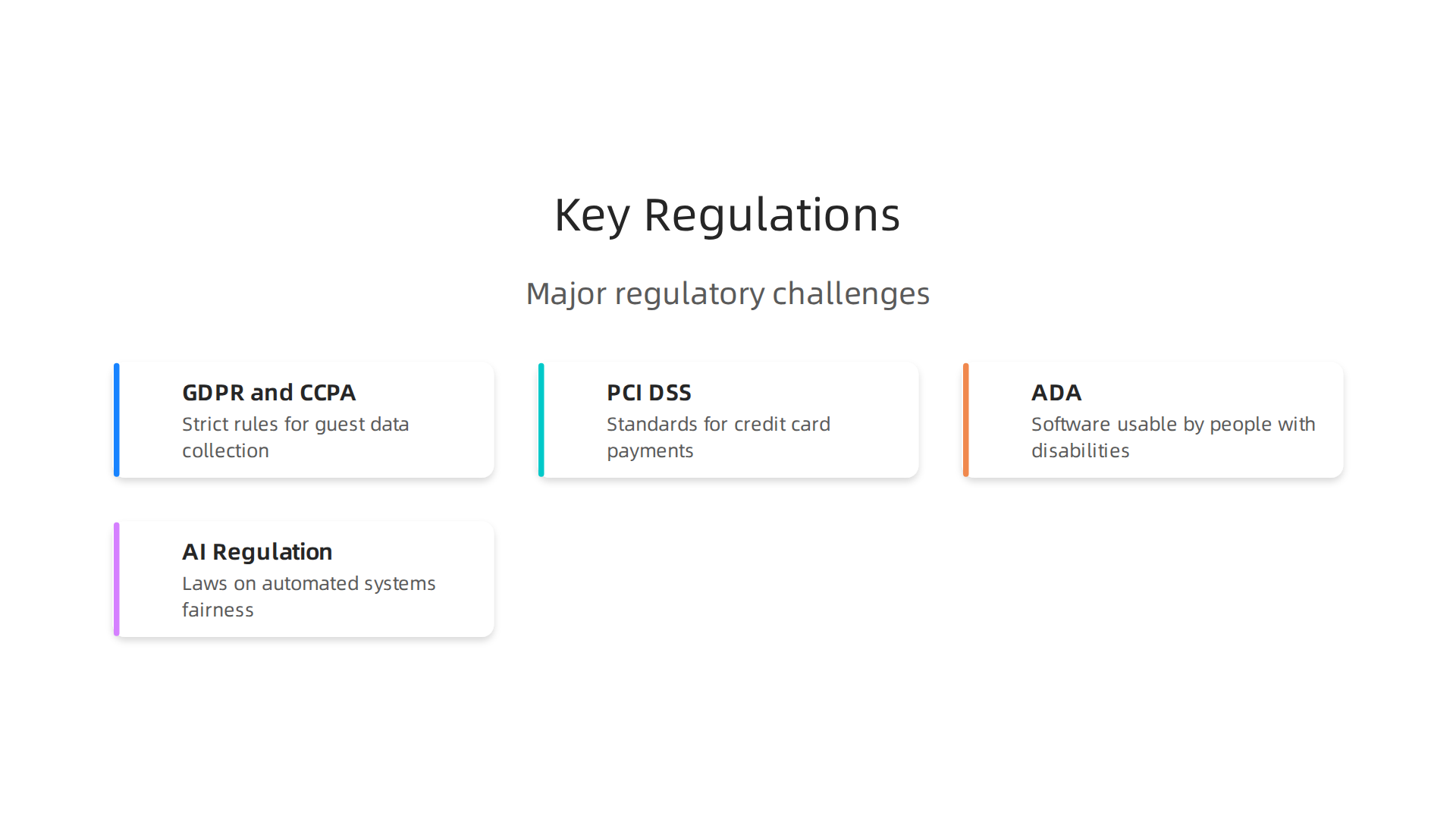
Here are the big ones every provider must handle:
-
GDPR and CCPA for data privacy. The European Union’s GDPR and California’s CCPA set strict rules for how guest data can be collected, stored, and used. As described in a guide on how to protect hotel guest data privacy, hotels must get clear consent from guests before using their personal information. And in 2026, compliance is getting even tougher. Multiple new state privacy laws are taking effect across the U.S., as noted in an overview of US privacy laws for 2026.
-
PCI DSS for payment data. Any system that processes credit card payments must follow Payment Card Industry Data Security Standards. This means encrypting card data and running regular security checks.
-
ADA for accessibility. Hotel software must be usable by people with disabilities. That covers everything from booking forms to mobile check-in screens.
But the newest challenge is AI regulation. Laws like the EU AI Act and new state-level bills in the U.S. are starting to place requirements on automated systems. If a hotel uses AI to set room prices, personalize offers, or automatically message guests, those systems may need to be audited for fairness and transparency. This shift is part of a broader trend toward stricter AI regulations 2026 compliance strategies that every tech provider should be tracking.
The cost of getting this wrong is high. Fines for violating GDPR can reach millions of euros. Lawsuits over data breaches can drag on for years. And perhaps worst of all, guests lose trust. Once someone’s personal data gets mishandled, they rarely come back.
That is why smart hospitality tech companies treat compliance as a strategic priority, not just a legal checkbox. They build privacy and security into their products from day one.
Want to stay on top of all these fast moving regulatory changes without spending hours reading legal documents every morning? Subscribe to The AI Newsletter Worth Reading from The Deep View for clear, daily updates on AI rules, privacy enforcement, and global compliance trends.
Canary Technologies’ Compliance Framework and Strategies
So how does Canary Technologies actually handle all these rules in practice?
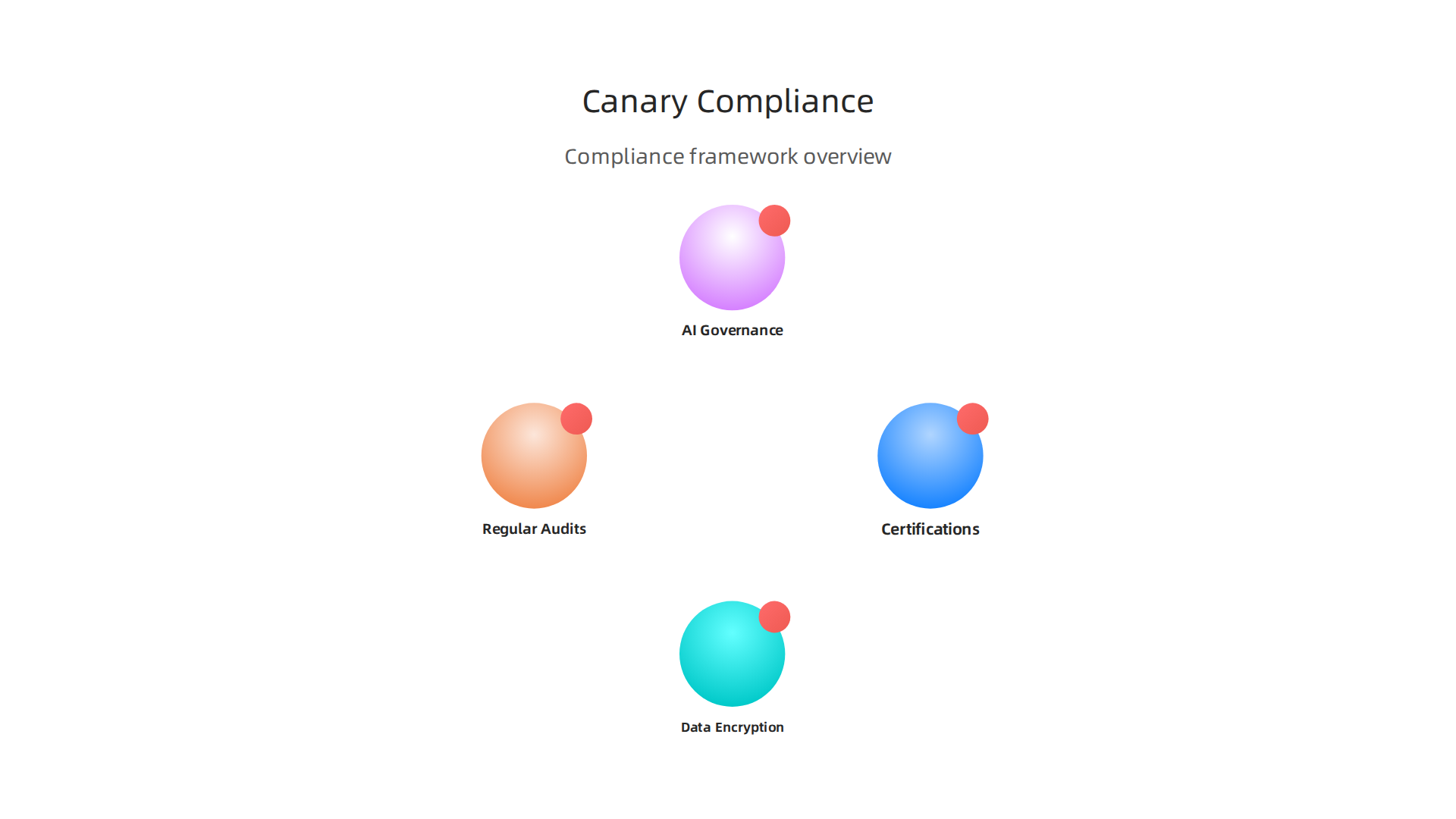
The company has built a compliance program that goes far beyond the basic checklist. And in 2026, that makes a real difference for the hotels using their systems.
Certifications that build trust. Canary holds two big security certifications that hotel operators should know about. The first is SOC 2, which means an outside auditor has verified that the company follows strict security controls for handling customer data. The second is PCI DSS Level 1, the highest level of payment security certification. Getting to Level 1 requires passing tough annual audits and proving that credit card data stays encrypted at every step. These certifications are not easy to earn. They signal to hotels that Canary takes data protection as seriously as the hotels themselves do. According to a practical guide on IT Security Compliance in Hospitality, aligning SOC 2 criteria with PCI requirements is one of the smartest moves a hospitality tech provider can make.
Data encryption and access controls. Canary encrypts guest data both when it is stored on servers (at rest) and when it moves between systems (in transit). This means even if someone managed to intercept the data stream, they would see only scrambled nonsense. The company also controls who can access what inside its own systems. Not every employee can see guest profiles or payment details. Only specific team members with a genuine need get access, and every login attempt gets logged and reviewed.
Regular third-party audits. Canary does not just set up security rules and hope for the best. Outside firms come in on a regular schedule to test the systems, check for weak spots, and confirm that the certifications stay valid. These audits help catch problems before they turn into data breaches. And in a world where US tech regulations for 2026 are getting stricter by the month, that proactive approach matters more than ever.
AI governance for smart hotel features. Here is where things get interesting in 2026. Canary uses AI for things like chatbot pricing and automated guest messaging. But those AI tools now face new rules under laws like the EU AI Act and emerging state-level bills. Canary is building transparent governance policies to stay ahead. The company is working on ways to audit how its AI systems make decisions, document those decisions clearly, and give hotels the controls they need to stay compliant. This is not just about avoiding fines. It is about making sure guests feel safe when an AI system suggests a room upgrade or sends a check-in message. As more ID tech privacy regulations take effect in 2026, having strong AI governance will separate the trusted providers from the rest.
Regulatory Risks and Opportunities for Investors in Canary Technologies
For investors looking at Canary Technologies, the compliance picture matters a lot. It creates both serious risks and real opportunities. In 2026, regulatory pressure across the tech and hospitality sectors is growing fast. Companies that handle guest data are especially in the spotlight. So how should a potential investor think about this?
The risks are real. The biggest danger is financial penalties. If Canary ever falls short on data privacy rules like the EU AI Act or state-level laws in places like California, fines could stack up fast. Those fines hit revenue directly. Another risk is market access. Some countries now require that guest data stays stored inside their borders. That is called data localization. If Canary cannot offer compliant local storage, hotels in those regions might have to choose a different provider. Scaling compliance also costs money. As Canary grows into more markets, the legal and engineering teams needed to keep up get bigger. That cuts into profits. According to a report on PropTech investment trends for 2026, 23 percent of property tech startups face compliance challenges that slow down growth. Canary is not immune to that pattern.
But strong compliance is also a huge opportunity. Here is the thing. Most hotels would rather work with a vendor that already has its security house in order. That saves them time and reduces their own risk. When Canary holds certifications like SOC 2 and PCI DSS Level 1, it sends a clear signal. Enterprise clients, especially big hotel chains, are more likely to sign long-term contracts with a provider they trust. That trust can lead to higher valuations when Canary raises its next round or considers an acquisition. In fact, the hospitality tech investment landscape shows that investors pay a premium for companies with strong governance built into their platforms from the start.
Key areas for due diligence. If you are evaluating Canary as an investment, here is what to look at closely:
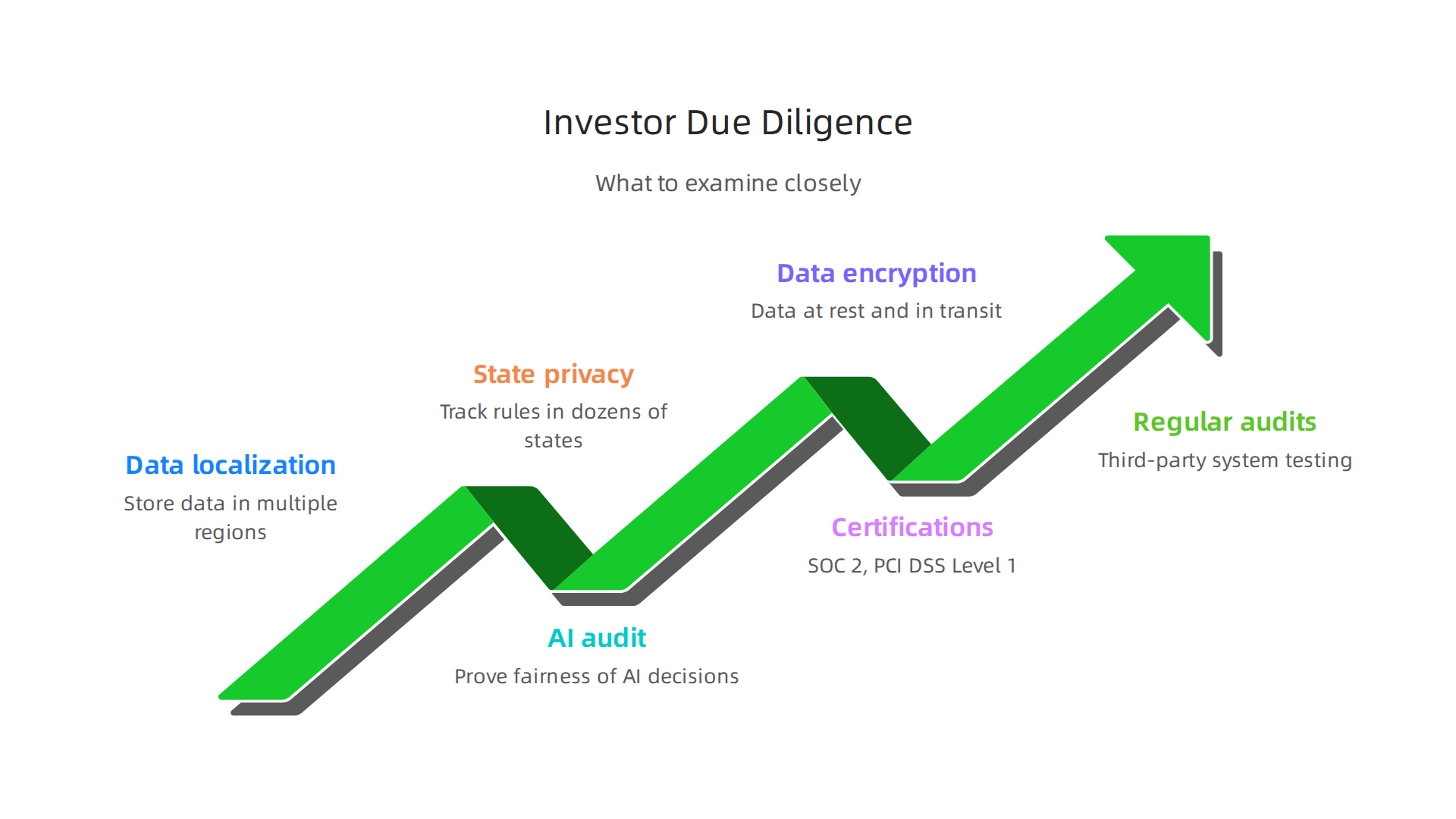
- Data localization readiness. Can the company store and process data in multiple regions without breaking local laws?
- AI audit capability. With tools like the Genie AI chatbot, can Canary show exactly how decisions are made and prove fairness? Regulators are starting to ask for this.
- State-level privacy exposure. The US does not have one federal privacy law. That means Canary must track rules in dozens of states. Missing one could be costly.
Staying on top of these topics is not easy. That is why many investors and compliance teams rely on daily updates to catch regulatory shifts early. If you want a clear, no-fluff briefing on AI rules and tech regulation, check out The AI Newsletter Worth Reading. It helps you spot both the risks and the opportunities before they make headlines.
In the end, Canary Technologies has built a strong compliance foundation. For investors, the question is whether the company can keep scaling that foundation as fast as the rules change. That will separate the winners from the rest.
Comparing Canary Technologies’ Regulatory Approach to Competitors
How does Canary Technologies stack up against other hotel tech platforms when it comes to compliance?

The answer matters for hotels choosing a partner and for investors sizing up the market. Direct competitors like Oracle Hospitality, Mews, and Duetto all offer property management tools, digital check-in, or revenue optimization. But they do not all handle regulation the same way.
Canary puts AI transparency and layered security at the center of its approach. The Genie AI chatbot, for example, is built to show how it makes recommendations. That kind of explainability is still rare across the industry. Many competitors rely on older systems where data flows are harder to trace. That difference becomes a big advantage as regulators demand more visibility into automated decisions.
So where do the real gaps show up? Three areas stand out when you compare Canary to other top hospitality tech companies:
-
Certification depth. Canary holds SOC 2 and PCI DSS Level 1 certifications. Some competitors carry only basic PCI compliance without the broader security audit. That extra layer of certification tells large hotel chains that Canary has passed strict third-party checks. According to a 2026 comparison of top hospitality tech companies, companies with multiple certifications tend to close enterprise deals faster.
-
Incident response practices. How fast can a vendor spot a breach and tell the hotel? Canary has built automated alert systems that flag unusual activity in real time. A few competitors still rely on manual review cycles that can take days. In 2026, the speed of response is becoming a regulatory requirement in places like the EU under NIS2.
-
Data residency support. Canary offers flexible data storage options so hotels in different countries can keep guest information inside local borders. Not every platform gives that choice. Some competitors store everything in one central data center, which creates problems when local laws demand regional storage.
Fixing these gaps is not cheap for the companies that are behind. That is one reason why investors pay attention to compliance maturity when picking winners. If you want to understand how the broader regulatory landscape is shifting for all tech companies, this guide on US tech regulations for 2026 covers the key rules that affect platforms like Canary and its rivals.
At the end of the day, Canary’s compliance-first design gives it a real edge. But the race is not over. Competitors are investing hard in their own security upgrades and AI governance teams. The company that stays ahead on certifications and data control will likely win the most hotel contracts in the next few years.
Future Regulatory Trends and Their Implications for Canary Technologies
The compliance game is not standing still. In fact, the rules are getting tougher every year. For canary technologies, understanding where regulation is headed is just as important as where it stands today. Three big trends will shape the next few years for hotel tech platforms.
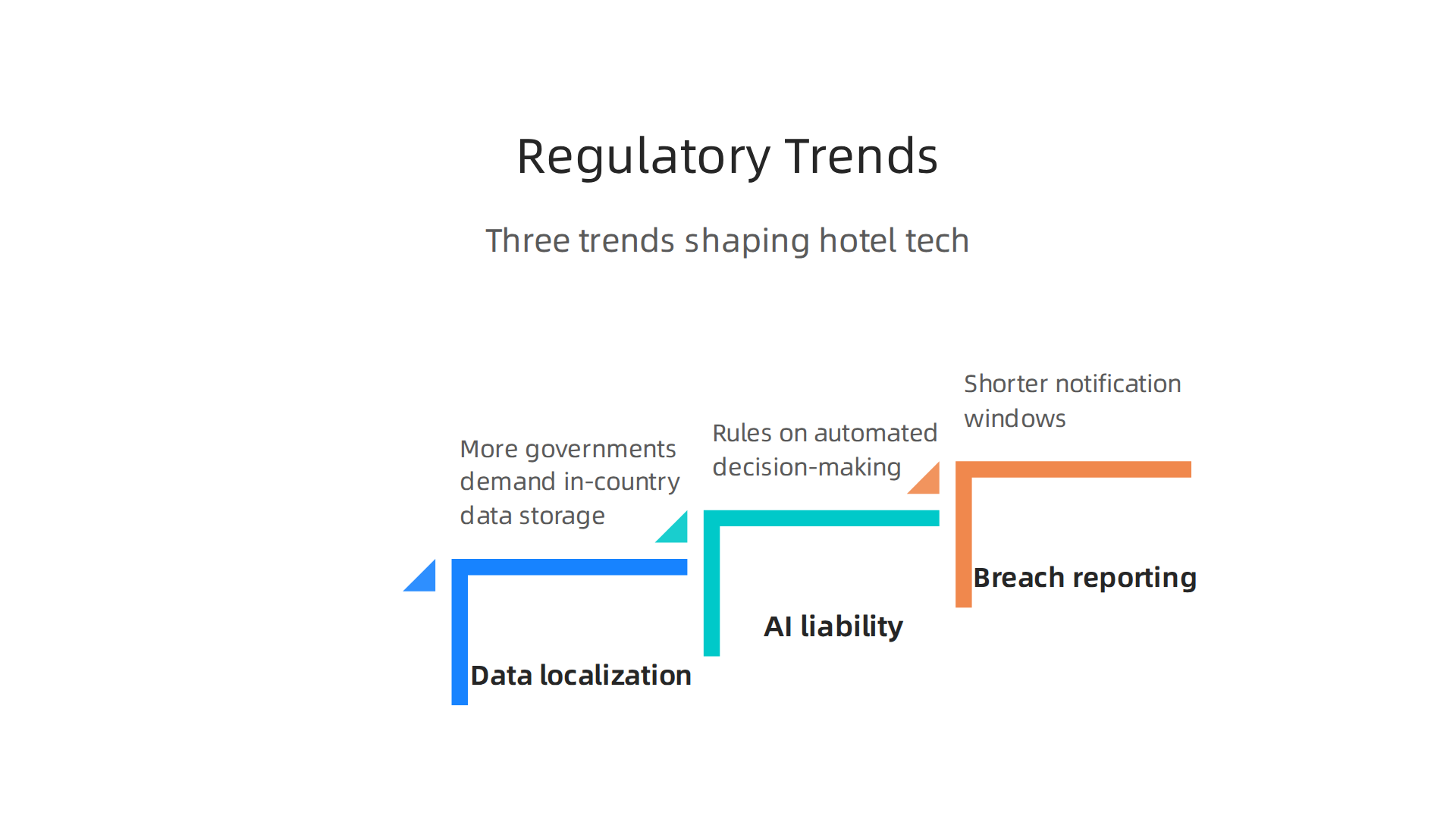
Stricter data localization rules. More governments now demand that guest information stays inside their borders. The EU already enforces this under GDPR, and the US is catching up fast. In 2026 alone, three new state privacy laws took effect across Kentucky, Indiana, and Rhode Island. This breakdown of state privacy laws expanding in 2026 shows how the patchwork is growing. Canary already offers flexible data storage options, which gives it a real advantage. But as more states and countries pass localization laws, the company must keep adding regional data centers to stay compliant.
Broader AI liability and transparency rules. Regulators are zeroing in on how artificial intelligence systems make decisions that affect people. California updated its CCPA rules in 2026 to include specific requirements for automated decision-making technology and cybersecurity audits. This guide on California’s updated privacy regulations covers the new obligations that kicked off in January. For Canary’s Genie AI chatbot, this means the bar for explainability keeps rising. The company must keep proving that its AI recommendations are fair, transparent, and free from bias. That is exactly where its transparency-first design philosophy becomes a long-term competitive moat.
Faster breach reporting mandates. Governments everywhere are shortening the window for notifying authorities about data breaches. Some now require reporting within 72 hours. Hotels that use platforms like canary technologies need confidence that their vendor can detect and report incidents that quickly. Manual review cycles simply will not work anymore. Companies that automate their response systems will avoid the biggest fines. For any business trying to stay compliant across multiple regions, these AI regulations and compliance strategies for 2026 offer practical steps to avoid penalties.
So what does all this mean for Canary’s roadmap? The company will need to invest more in cross-functional compliance teams that connect engineering, legal, and product departments. It should also look into regulatory technology tools that automatically track changing laws across every market where it operates. Manual compliance reviews will not scale as the rules multiply.
The bottom line is this. Hotel tech companies that treat compliance as a core feature, not an afterthought, will earn the most trust from hotel operators and their guests. Canary has built a strong foundation. But the regulatory pace is only accelerating, and the companies that adapt fastest will win the most contracts.
Get clear daily AI updates from the AI Newsletter Worth Reading to stay ahead of regulatory changes that affect your business.
Summary
This article examines how Canary Technologies, a leading cloud-based guest management provider for hotels, handles the fast-changing regulatory landscape of 2026. It profiles the company, outlines the main legal requirements affecting hospitality tech—GDPR, CCPA, PCI DSS, accessibility rules, and new AI laws—and explains Canary’s practical compliance program, including SOC 2 and PCI DSS Level 1 certifications, encryption, access controls, third‑party audits, and AI governance. The piece also explores regulatory risks and upside for investors, highlights how Canary compares to competitors on certification depth and incident response, and maps likely future trends such as stricter data localization, faster breach reporting, and rising AI transparency obligations. Readers will come away with clear, actionable checkpoints for assessing vendors or investments and a sense of what hotel platforms must do to stay compliant and competitive as rules tighten.