

Why transparency in blackbox AI matters now
Imagine you have a smart helper that does amazing things, but you don’t know how it makes its choices. That’s a bit like "blackbox AI." It’s a way to describe artificial intelligence (AI) systems that work well, but their inner workings are hidden. You put information in, and you get answers out, but the steps in between are a mystery.
This can be a big problem, especially for businesses in 2026. When you use a "blackbox ai website" or any kind of advanced "website generator ai," it’s exciting to see what it creates. But if something goes wrong, like if the AI makes a bad decision or creates content that isn’t fair, it’s hard to find out why. You can’t just open it up and see the elements of AI inside.
This lack of understanding brings many worries:
- Operational Problems: If your AI makes a mistake, how do you fix it if you don’t know why it happened? It’s like trying to fix a car without knowing how its engine works.

- Legal Questions: New rules about AI are appearing in 2026. Companies need to show that their AI systems are fair and don’t cause harm. If an AI’s decisions are hidden, it’s hard to prove it follows the rules. In fact, many experts agree that good documentation for AI is key to building trust and showing how these systems function
[@aibuzz.blog]. - Strategic Uncertainty: Leaders need to plan for the future. If they don’t truly understand how their AI helps them, it’s hard to make smart choices about where to go next.
This article will help you understand all about blackbox AI. We will look at what it means, what the new rules expect, and how technology leaders and their teams can make sure their AI is clear and trustworthy. You’ll learn practical steps to handle these complex systems and stay ahead of the curve.
To get daily, clear updates on AI and technology rules, you should check out The AI Newsletter Worth Reading.
What ‘blackbox AI’ means: technical and practical definitions
So, what exactly makes an AI a "blackbox"? It’s more than just not knowing what’s inside. It points to three main issues that make it hard to understand how these smart systems work, especially with a "blackbox ai website" or a "website generator ai."
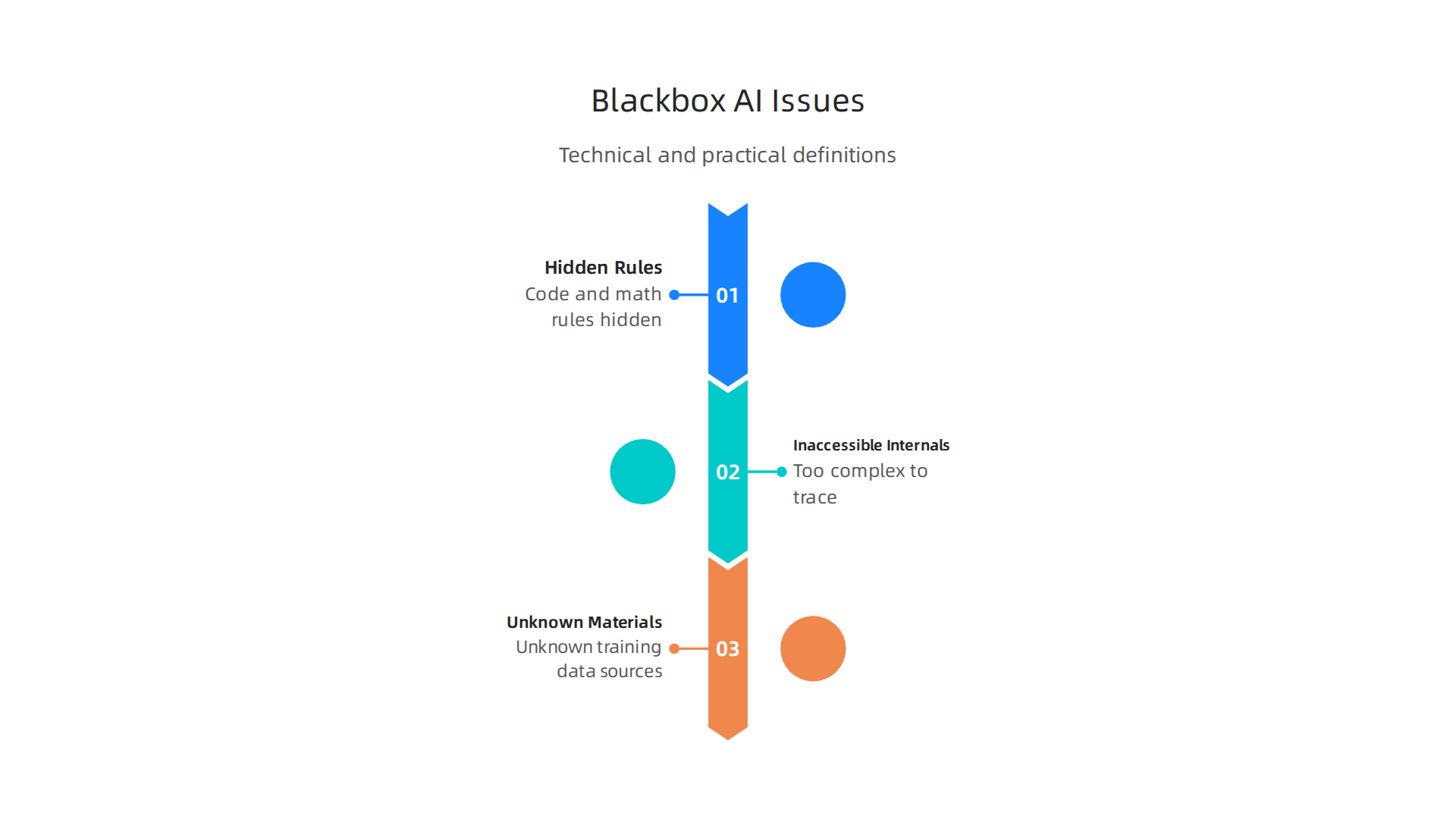
1. Hidden Rules and Steps (Algorithmic Opacity)
This is the most common idea of a blackbox. It means that the computer code and the special math rules (algorithms) that the AI uses to make decisions are hidden. Imagine a chef who always makes a perfect cake, but they never share their recipe or how they bake it. You only see the ingredients go in and the cake come out.
With blackbox AI, you feed it information, and it gives you an answer or takes an action. But the steps it took in between are secret. You don’t know which data points were most important, or how different pieces of information were weighed against each other. For example, if you use a "wix ai website builder" to create a site, you see the final product, but the AI’s internal process for picking layouts, colors, or text is often not clear.
2. Can’t See Inside the Brain (Inaccessible Model Internals)
Many modern AI systems, like those used for complex tasks, are built from many layers of digital "neurons" that work together. This is called a neural network. These networks can have millions or even billions of connections. Even the people who build them often can’t point to one specific part and say, "This is where it learned to spot a cat," or "This is why it chose this ad."
It’s like looking at a human brain and trying to pinpoint the exact moment or place where a thought forms. It’s too complex. This makes it very hard for engineers to understand why an AI made a certain choice, leading to problems with:
- Explainability: Can you get the AI to tell you why it did what it did? It’s tough when you can’t see its internal steps. This is a big challenge for showing the quality of an explanation. Research looks at how well explanations actually reflect the AI’s reasoning, focusing on things like faithfulness, robustness, and how believable they are to humans [PDF] Francisco Pereira1 and Filipe Azevedo2 1Polytechnic Institute of ….
- Reproducibility: Can you run the AI again with the same information and get the exact same result, and know why? If you don’t understand its inner workings, it’s hard to make sure it will always behave consistently.
3. Unknown Learning Materials (Undeclared Training Data and Processing)
AI systems learn by looking at huge amounts of data. For a blackbox AI, you might not know what information it was trained on or how that information was changed before the AI used it.
- Was the data fair and balanced?
- Did it contain old biases?
- Was any personal data used in ways that aren’t allowed?
Not knowing these things causes issues for legal teams who need to make sure the AI follows privacy rules and avoids unfairness. It also impacts auditability, which means being able to check the AI’s decisions step by step, like following a paper trail. While many businesses track what their AI systems produce, fewer have good records or proof to show how those results were created, making audits difficult [KPMG Global AI in Finance 2026]. This lack of transparency can become a major compliance risk, especially for companies offering any kind of AI website builder compliance risks every leader should understand services.
Using AI systems that hide their inner workings can lead to many problems for businesses. It’s not just about what the AI does, but also about how it does it. When an AI is a "blackbox," companies face serious risks that can hurt their money, their standing, and how much people trust them.
Regulatory and Legal Risks
Governments around the world are making new rules for AI. In 2026, these rules are becoming stricter, especially for AI systems that make important decisions. If an AI system, like a website generator ai, can’t explain how it came to a certain conclusion, businesses can get into trouble.
Imagine an AI used to approve loans or hire people. If this blackbox AI makes unfair choices, and the company can’t show why those choices were made, it could lead to big fines and legal battles. For instance, new laws in 2026 demand that companies can explain how their AI makes decisions to protect people’s rights. Not being able to do this puts companies at risk of non-compliance. To avoid these issues, businesses need clear AI regulation 2026 navigate compliance and avoid risks.
Financial and Operational Impact
When an AI system is a blackbox, it’s hard to fix it when things go wrong. If a blackbox ai website starts making errors, like showing the wrong prices or giving bad advice, it can cost a business a lot of money. Without understanding how the AI works, finding the problem can be like searching in the dark. This can cause delays, waste resources, and lead to lost sales or poor customer service.
For example, if a company uses a wix ai website builder to create many sites quickly, but then finds out the AI made bad design choices due to hidden biases in its training data, fixing all those websites can be very expensive. Being transparent about the AI’s internal processes and data sources helps prevent these costly mistakes.
Reputational Damage and Loss of Trust
Maybe the biggest risk for companies using blackbox AI is losing customer trust. People want to know that AI systems are fair and reliable. When an AI’s decisions are a mystery, it’s hard for people to trust it. This is especially true for important tasks in areas like healthcare or finance, where trust is key

Making AI Make Sense: Explainable AI for Trustworthy AI Deployment.
Research shows that when AI systems can explain themselves, people trust them more Is Trust Correlated with Explainability In AI? A Meta-Analysis. If a company can’t explain why its AI made a certain choice, customers may stop using their products or services. A lack of transparency can quickly damage a company’s reputation, which is very hard to fix.
How Transparency Helps Businesses
Being open about how AI works can turn risks into opportunities.
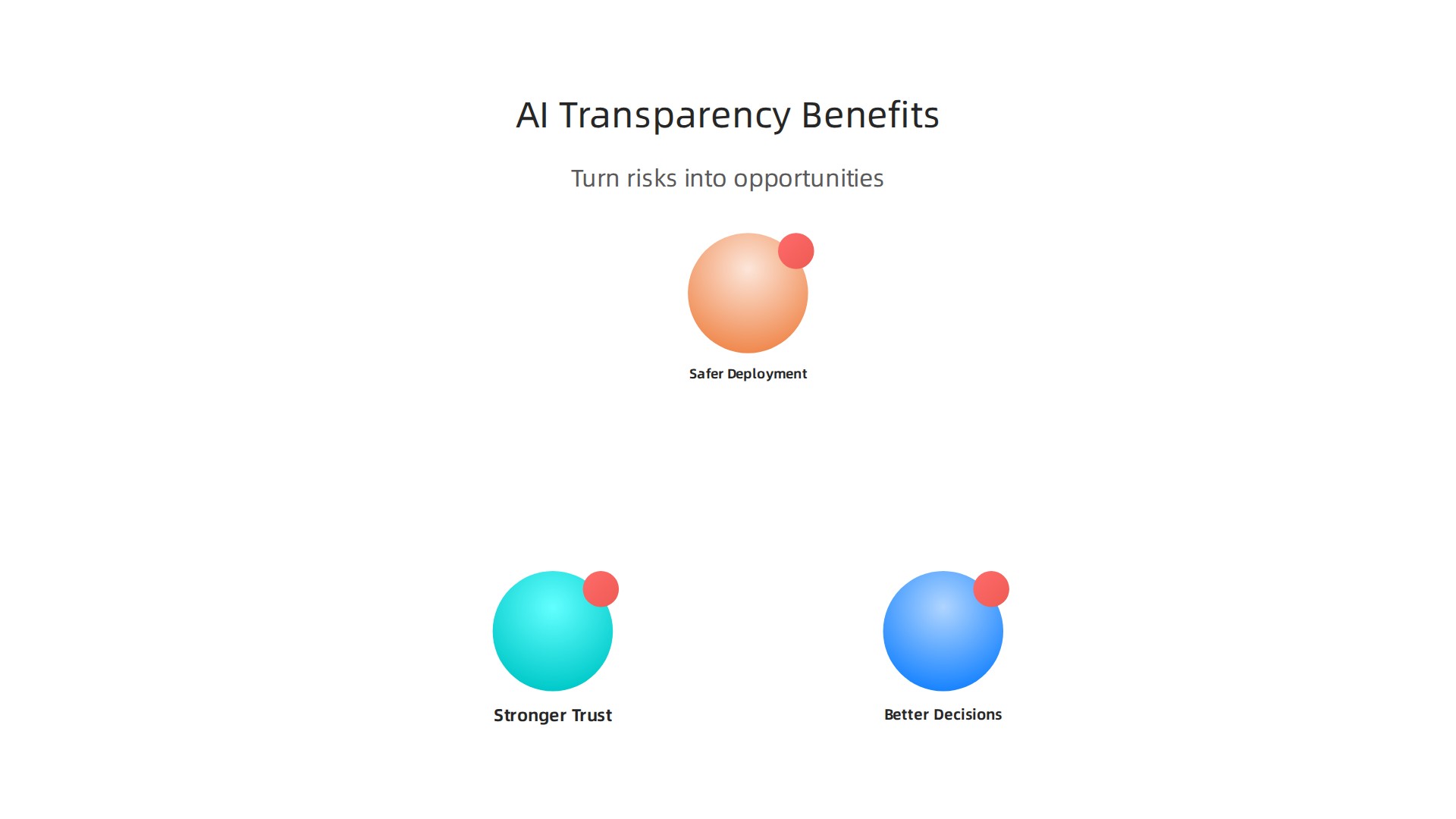
- Better Decisions: When you understand the "elements of ai" that drive its choices, you can make sure the AI aligns with your business goals and values. This leads to better, more informed decisions.
- Stronger Trust: Transparency builds trust with customers, regulators, and the public. When people understand an AI, they are more likely to accept it and feel good about using it. Studies confirm that explainable AI helps build trust Preliminary Quantitative Study on Explainability and Trust.
- Safer Deployment: Knowing how your AI works helps you spot and fix problems early. This makes the AI safer to use and deploy in more important situations. It also makes it easier to meet compliance rules, which is crucial for modern businesses. You can explore more about explainable AI for 2026 compliance and executive trust.
In short, transparency is not just a nice-to-have; it’s essential for any business using AI in 2026. It protects against risks and builds a stronger foundation for the future.
To stay up-to-date on all critical AI developments and regulatory changes, be sure to subscribe.
The AI Newsletter Worth Reading
While transparency helps businesses turn risks into opportunities, it’s also becoming a requirement. In 2026, governments and official bodies worldwide are making new rules to make sure AI systems are not "blackboxes."

These rules focus on key areas like being able to explain AI decisions, keeping good records, and allowing checks or audits.
Global Push for Explainable AI
The main goal of these new rules is to ensure AI systems are not mysterious. Businesses need to understand the "elements of ai" that lead to its decisions, especially when those decisions impact people.
The European Union’s AI Act
The EU is leading the way with its AI Act, a big set of rules that affect many AI systems. A very important part of this Act is the transparency obligations, which started to apply on August 2, 2026. These rules demand that companies provide clear information about their AI systems, especially those considered "high-risk" Guidelines on transparency obligations for providers and deployers of AI systems. If a high-risk AI system, like one used for hiring or granting loans, cannot explain its choices, companies could face big fines. The European Commission has even published special guidelines to help businesses understand and follow these new transparency rules European Commission adopts final Guidelines on AI Act transparency obligations.
These guidelines require that:
- AI systems are designed to tell users when AI is involved.
- Companies have proper documentation standards for their AI models, showing how they were made and what data was used.
- There are auditability requirements, meaning that outsiders can check how the AI works to ensure fairness and correctness. This is very important, especially for a complex system like a blackbox ai website.
United States Guidance
In the US, the approach is also moving towards greater transparency, especially for federal agencies. The Office of Management and Budget (OMB) has released guidelines for federal agencies using AI. These guidelines state that agencies must check AI systems for possible unfairness before using them and keep records of their findings OMB Memorandum M-26-04: Increasing Public Trust in AI Through. They also stress the need for documentation that describes how AI systems are made to avoid discriminatory results. This ensures that even if you’re using a website generator ai, you can explain its underlying processes.
Other Regions
Other countries, like Australia, also have guidance that emphasizes transparency and explainability. They suggest maintaining reliable and auditable records of decisions, testing, and data used in an AI system to allow for both internal and external scrutiny Guidance 7. Transparency and explainability. This shows a global trend towards requiring more openness from AI systems.
Sector-Specific Versus Broad AI Rules
It’s important to know that AI transparency rules aren’t always "one size fits all."
- Cross-Cutting Frameworks: The EU AI Act is an example of a broad, cross-cutting framework. It applies to many different types of AI systems across various industries, especially those labeled as "high-risk."
- Sector-Specific Rules: On the other hand, some rules focus on specific industries. For example, in finance, regulations like GDPR and SR 26-2 have added strict documentation and auditability rules for AI AI explainability in finance: auditable models, GenAI, and. This is because AI in finance can have a huge impact on people’s money. Similarly, in healthcare, there are growing calls for transparency to ensure patient safety and trust, especially as AI adoption increases in areas like clinical documentation and risk assessment 2026 Physician Survey on Augmented Intelligence.
These different approaches mean businesses must keep an eye on both general AI laws and specific rules for their industry. Whether you’re building a simple website with a wix ai website builder or creating complex financial models, understanding these rules is key to staying out of trouble. Ensuring that your AI models have a clear AI Model Audit Trail Documentation Requirements is becoming a must, not just a suggestion. Businesses need to integrate regulatory compliance into their overall AI strategy. To learn more about how to do this, check out our guide on how to integrate regulatory compliance into your corporate AI strategy.
The bottom line is that in 2026, the age of blackbox AI is fading fast. Companies that embrace transparency will not only meet legal requirements but also build stronger trust with their customers and partners.
To make AI systems less like a blackbox, experts use special tools and methods. These help us understand the "elements of ai" that lead to its decisions. This is really important to build trust, especially when AI is used in areas that affect people’s lives, like loan applications or job hiring.
Technical approaches to transparency and explainability
When we talk about making AI transparent, we’re talking about specific technical ways to peek inside the blackbox. These methods help us understand how an AI system comes to a conclusion, instead of just seeing the final answer.
Methods for Explaining AI Decisions
There are a few main ways to explain what an AI model is doing:
-
Feature Attribution: Imagine an AI decides to give someone a loan. Feature attribution methods can tell us why that decision was made. They highlight which pieces of information, or "features," were most important. For example, they might show that a person’s credit score was a very strong factor, much more than their job title. Two popular methods here are called SHAP and LIME, which are widely used for explaining complex AI models eXplainable Artificial Intelligence (XAI): A Systematic Review. This helps remove the mystery from what might otherwise feel like a secret AI system. You can even use these methods to understand the choices made by a website generator ai or other digital tools.
-
Surrogate Models: Sometimes, an AI system is just too complex to understand directly. In these cases, experts might build a simpler, easier-to-understand model that tries to act just like the complex one. This simpler model, called a surrogate, can then be studied to get insights into how the complex AI works. It’s like using a simple map to understand a very detailed, hard-to-read atlas.
-
Counterfactual Explanations: These explanations answer "what if" questions. For example, if an AI denied a loan, a counterfactual explanation might say, "If your income was $5,000 higher, the AI would have approved your loan." This helps people understand what they could change to get a different outcome from the AI. This approach is very useful for showing how sensitive the AI’s decision is to certain inputs, shedding light on the internal workings of what might seem like a blackbox ai website.
Each of these methods has its own strengths and weaknesses. Some are better at explaining a single decision, while others are better at showing how the AI behaves overall. Picking the right method depends on what you need to understand.
How We Measure Explainability
It’s one thing to create explanations, but how do we know if they are good explanations? This is where measuring explainability comes in. Experts use different ways to check the quality of an explanation, often looking at factors like:
- Faithfulness: Does the explanation truly reflect how the AI system made its decision, or is it just a guess?
- Robustness: If you make a tiny change to the input, does the explanation change in a logical way, or does it become completely different?
- Plausibility: Does the explanation make sense to a human? Is it easy to understand and believe?
However, measuring these things perfectly is hard, especially for very complex AI models. Research shows that widely used ways to measure how faithful an explanation is can sometimes give different or even opposite results 4 Results. This means that even with good methods, it’s a challenge to be 100% sure an explanation is accurate and helpful. Tools like ExplainBench are being developed to help compare and test different explanation methods in a standard way ExplainBench: Unified XAI Benchmark.
The goal of all these technical approaches is to move away from blackbox AI and create systems that are open and understandable. This effort helps build more trustworthy AI, which is key for businesses and customers in 2026. If you want to dive deeper into making AI systems clear and dependable, our guide on explainable AI for 2026 compliance and executive trust offers more insights.
Staying informed about these fast-changing technical and regulatory landscapes is crucial.
Get clear daily AI updates from The AI Newsletter Worth Reading.
Making AI systems understandable isn’t just about technical tools. It also needs good rules and ways of working inside a company. This is called organizational governance. It’s about how companies manage their AI to make sure it’s fair, clear, and trustworthy.
Documentation for Transparency: Model Cards and Data Sheets
One of the most important steps to avoid a "blackbox ai website" or any blackbox AI system is to write things down. Companies use special documents for this.
-
Model Cards: Imagine a report card for an AI. A model card explains what an AI model is, what it’s made for, how well it works, and where it might have limits AI Model Cards Explained: Document AI for Trust (2026). It’s like a user manual that tells you all about the AI. For example, if you use a website generator ai, its model card would tell you how it creates websites and any specific rules it follows. These cards are key for helping people inside and outside the company understand the AI AI Governance Documentation: Guide for 2026.
-
Data Sheets: Every AI learns from data. A data sheet tells us about the data used to train the AI. It explains where the data came from, what’s in it, and any problems it might have. Knowing about the data helps us understand the "elements of ai" that shape its behavior. Good data governance is crucial for responsible AI use in 2026, as it helps manage risks related to how AI learns and makes decisions AI Data Governance in 2026: Documentation Standards, Risk ….
These documents help people see inside the AI, much like looking at the blueprints of a house. They are important for anyone trying to figure out how to make an AI compliant with global rules how to make an ai compliant with global regulations in 2026.
Auditing AI Systems
Just like businesses have money audits, they also need to audit their AI systems. This means checking them regularly to make sure they are working as expected and following all the rules.
-
Internal Audits: Companies have their own teams check their AI systems. They look at the documentation, test the AI, and make sure decisions are logged. This helps keep track of what the AI does and why. Experts say companies should keep good records of every AI decision, including what information was used and which version of the AI made the choice How do we document AI decision-making for auditability?. This way, if there’s a problem, they can trace it back. An audit trail helps show who did what and what data was used 2026 Volume 9 The AI Audit Trail From AI Policy to AI Proof – ISACA.
-
Third-Party Assessments: Sometimes, outside experts are called in to check an AI system. They give an unbiased look to make sure the AI is fair, safe, and transparent. This is especially important for AI that makes big decisions, like in healthcare or finance.
Who is in Charge? Roles and Collaboration
For AI to be transparent, people in the company need to know who is responsible for what.
- AI Owners: Specific people or teams within an organization are often named as "AI owners." They are in charge of making sure the AI works well and follows all rules for fairness and transparency.
- Teamwork: Making AI understandable requires many different people to work together. This includes the technical experts who build the AI, legal teams who understand the laws, and business leaders who decide how the AI is used. They all work as a team to make sure the AI is not a blackbox. They also need to stay on top of all the new AI regulations in 2026 to avoid problems ai regulation 2026 navigate compliance and avoid risks.
By having clear documents, regular checks, and defined roles, companies can manage their AI better. This moves them closer to making AI that everyone can trust and understand.
Building a transparency strategy for product and compliance teams means creating a clear path for companies to show how their AI works. This helps everyone, from the people building the AI to the customers using it, trust the system. It also helps companies follow important rules, especially with new laws coming out in 2026.
Here is a step-by-step plan for product and compliance teams:
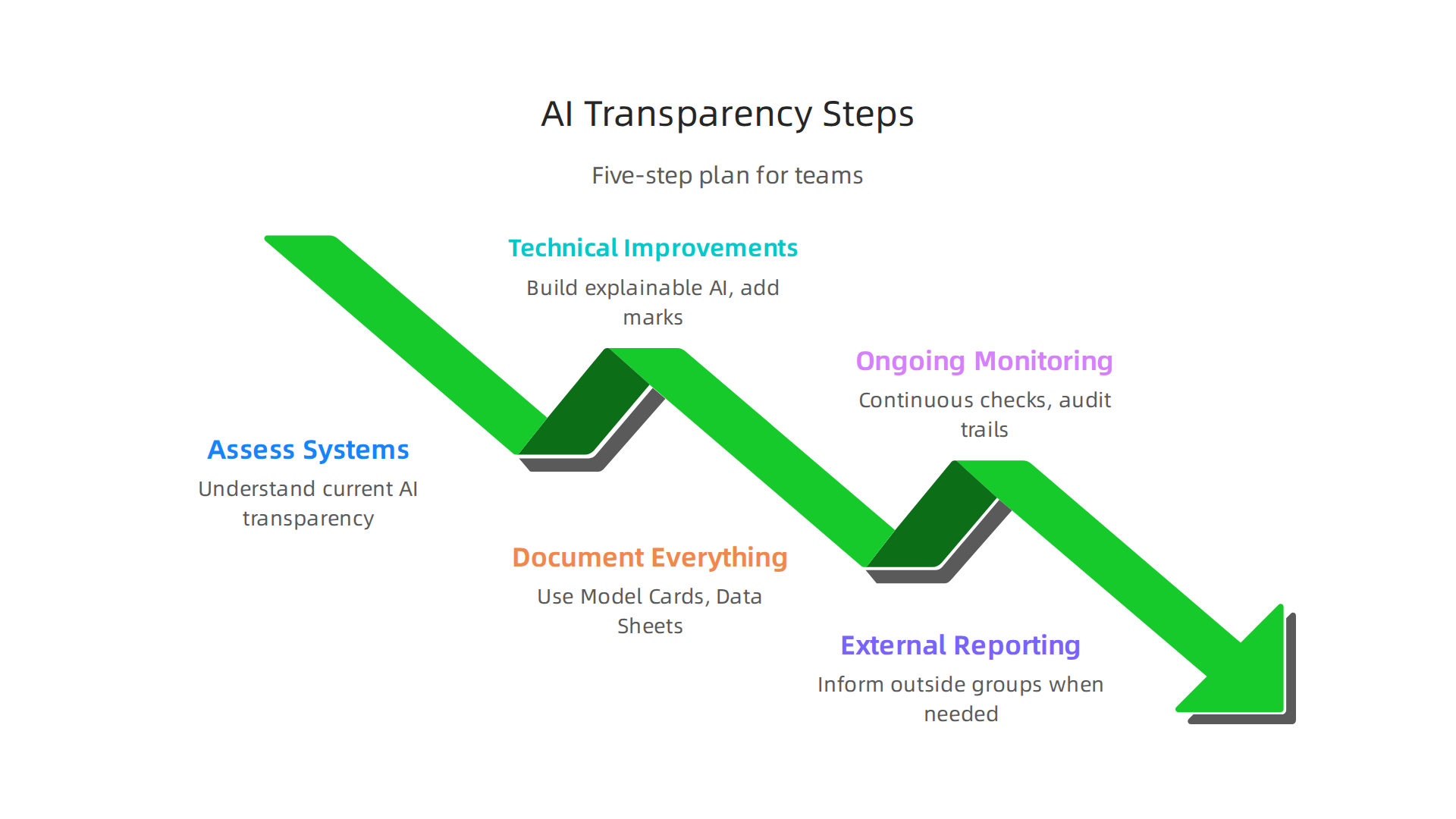
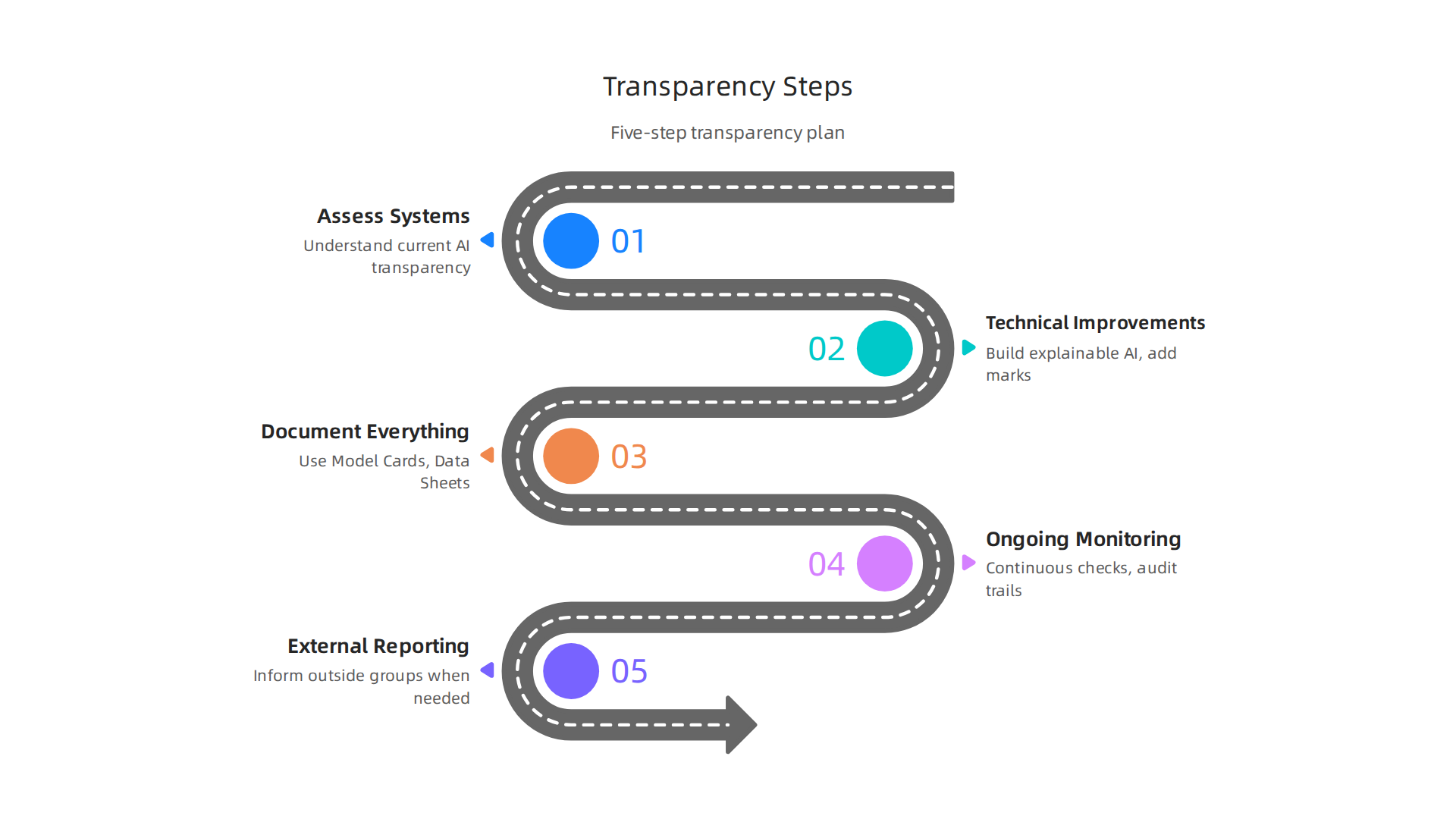
1. Assess Your AI Systems
First, you need to look closely at all your AI tools. Figure out which ones are like a "blackbox ai website" where it’s hard to see how they make decisions. This first step is about understanding how transparent your current AI really is. Think about any AI that could make important choices, or if you use a website generator ai that creates content. You need to know if you can explain why it does what it does.
2. Make Technical Improvements
After you know where your AI systems are not clear enough, you can make them better.
- Explainable AI: This means building AI so that it can show its "work" or explain its choices. Instead of just giving an answer, it can also say why it came up with that answer. This is a big part of dealing with a blackbox AI system. For example, some tools can show which parts of the data were most important for a decision.
- Machine-readable Marks: For AI that creates content, like images or text, companies can add special hidden marks. These marks help others know if the content was made by AI or a person. This is important for showing transparency, as outlined in new guidelines on AI systems Guidelines on transparency obligations for providers and deployers.
3. Document Everything
Even with technical improvements, good paperwork is still key. You already know about Model Cards and Data Sheets from the last section. These are essential for explaining the "elements of ai" and ensuring everyone understands the AI’s purpose, limits, and the data it learned from. Keeping good records of how an AI works and why it makes certain choices is vital for compliance Documentation | ICO.
4. Ongoing Monitoring and Auditing
Transparency isn’t a one-time fix. You need to keep checking your AI systems regularly. This means:
- Continuous Checks: Watch how the AI acts over time. Does it keep making fair choices? Does it still follow all the rules?
- Audit Trails: Keep a clear record of every decision the AI makes, what data it used, and which version of the AI made the choice. This helps if you ever need to go back and understand a problem. Building systems with good AI model audit trail documentation requirements can help a lot.
5. External Reporting
Sometimes, companies need to tell outside groups about their AI. This could be to regulators, customers, or partners. New rules like the EU AI Act, which has transparency obligations starting in August 2026, make this even more important AI Act | Shaping Europe’s digital future. Companies need to design their AI systems so they can properly inform users when AI is being used. Staying up to date on these changes is crucial for businesses using AI to avoid problems and huge fines AI regulations 2026 compliance strategies for businesses.
When to Redesign vs. Add Transparency Layers
When you find an AI system that’s a blackbox, you have a choice:
- Redesign the AI Model: If the AI is making very important decisions, like in healthcare or finance, and you can’t truly explain its core workings, it might be safer to rebuild it. This means making a new AI model from scratch that is designed to be clear from the start. This is often needed for "high-risk" AI.
- Add Transparency Layers or Controls: For less critical AI systems, you might not need a full redesign. Instead, you can add tools that sit on top of the AI. These tools can help explain the AI’s outputs after it has already made a decision. Think of them as special viewers that help you see into the blackbox, without actually changing the box itself. This method can help meet explainable AI for 2026 compliance and executive trust without a complete overhaul.
By following these steps, companies can make their AI systems more understandable and trustworthy. It’s about being proactive and ready for the future of AI.
Want to keep up with the fast-changing world of AI rules and how they affect your business?
The AI Newsletter Worth Reading delivers clear daily AI updates to your inbox.
Summary
This article explains why transparency matters for "blackbox" AI systems and how businesses should respond in 2026. It defines blackbox AI and the three core causes of opacity — hidden algorithms, inaccessible model internals, and undeclared training data — then lays out the practical risks these cause, from legal fines under new rules to operational failures and loss of trust. The piece reviews global regulatory trends, including the EU AI Act and US guidance, and surveys technical tools for explainability such as feature attribution (SHAP/LIME), surrogate models, and counterfactuals. It also covers governance and documentation best practices like model cards and data sheets, plus audit and monitoring requirements. Finally, the article gives a clear, step-by-step plan for product and compliance teams to assess, improve, document, and report AI systems, and when to redesign versus adding transparency layers so organizations can stay compliant and retain stakeholder trust.