
Why AI voice generation matters now (and what leaders must know)
Imagine voices that sound just like a person, but are made by a computer. This is what AI voice generation and text-to-speech (TTS) can do in 2026. These clever tools turn written words into spoken audio that sounds very natural. Businesses are finding many ways to use these voices. For example, a company might use a scottish accent text to speech tool for a global ad campaign, or a character ai voice generator to bring digital helpers to life. From helping customers to reading audiobooks and making educational content, AI voices are changing many products and services.
But here’s the thing: using these synthetic voices also comes with big risks for businesses. It’s especially tricky when the AI voice sounds like a famous person, even if it’s not meant to be that exact person. Think about a distinctive voice, like what many would recognize as a stephen hawking voice generator might produce. Even if you don’t use their real voice directly, creating one that sounds very similar can cause big problems.
Governments around the world are making new rules about using AI voices. There are laws about "right of publicity" which means people have a right to control how their voice and likeness are used. This area of law is quickly changing in 2026. Companies that use synthetic media and voice cloning face new Synthetic Media & Voice Cloning: Right of Publicity Risks for 2026. Not following these rules can lead to huge fines and hurt a company’s good name. It’s not just about the technical side, it’s about being fair and legal. This means that knowing about the rules for AI is more important than ever for everyone.
This article will give clear, helpful advice for business leaders, investors, legal and compliance teams, and anyone watching policy changes.

We will help you understand the current rules in different places and how to use AI voices wisely. To keep up with all the fast changes in tech laws, make sure you Get clear daily AI updates from The Deep View Newsletter.
How AI Voice Generation Works: Models, Datasets, and TTS Pipelines
So, how do computers make voices that sound so real? It all comes down to clever technology called Text-to-Speech (TTS). In 2026, the way these voices are made is very advanced, moving far beyond older, simpler methods.
At the heart of it are different ways to build these voices:
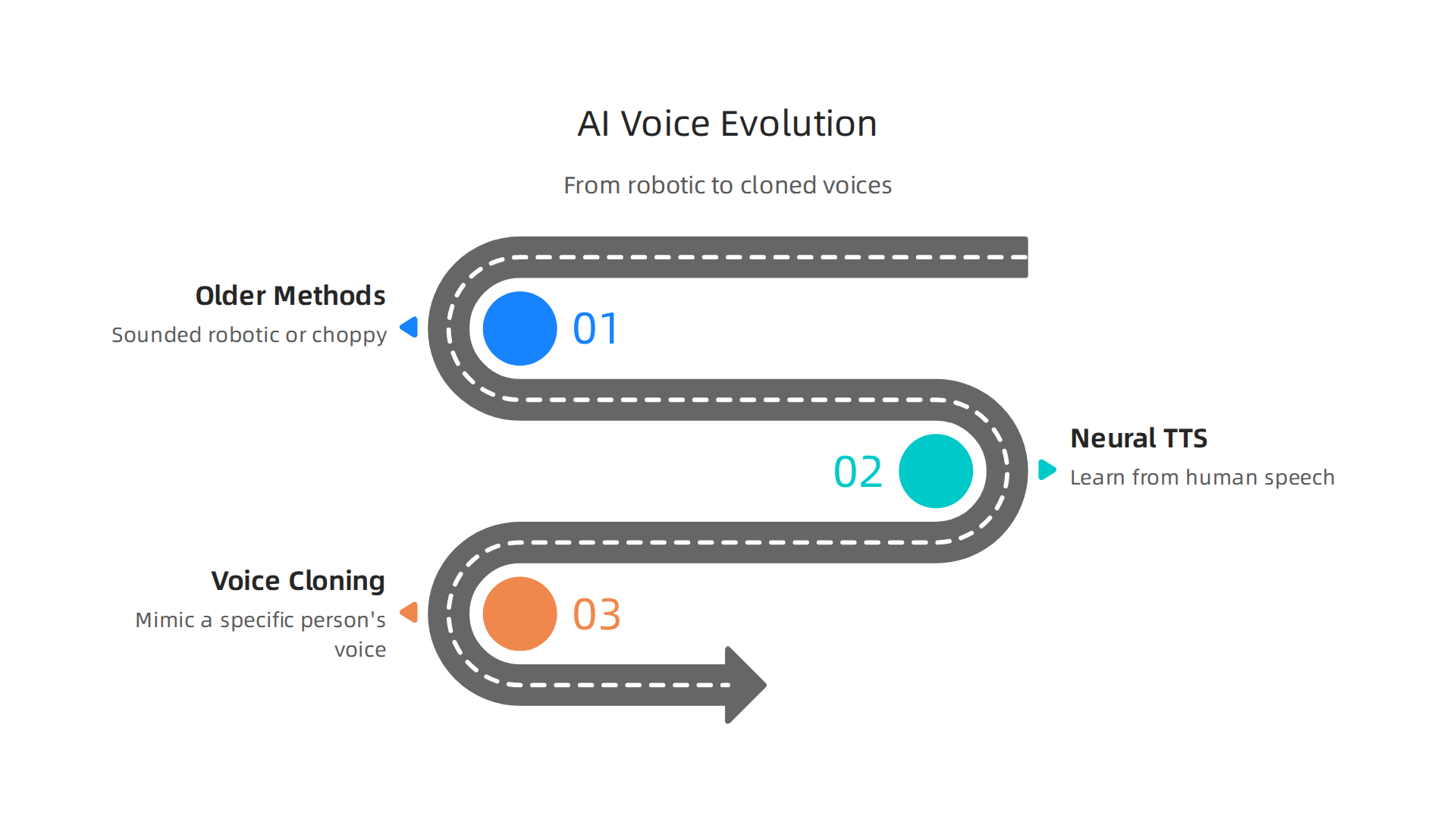
- Older Methods (Concatenative and Parametric TTS): Imagine cutting up tiny pieces of recorded human speech and sticking them together like a puzzle. That’s a bit like concatenative TTS. Parametric TTS used rules and math to change a basic voice model. While these worked, they often sounded robotic or choppy.
- Neural TTS (The Modern Way): Today, most high-quality AI voices use "neural networks." These are like smart computer brains that learn from a lot of real human speech. They learn how sounds, words, and feelings connect. This lets them create new speech from scratch that sounds very natural, complete with the right rhythm and emotion. A survey of AI-generated voices highlights that neural TTS models changed the game, making better voice cloning possible with less data A survey of AI-generated voices and their detection.
- Voice Cloning: This is when AI tries to mimic a specific person’s voice. It’s not just making a generic voice sound like a scottish accent text to speech, but truly sounding like a known individual. To do this, models analyze things like "speaker embeddings" (the unique traits of a voice) and "prosody modeling" (the melody and rhythm of speech). This allows them to copy the unique sound and style of a voice, even for a distinctive speaker like what you might imagine from a stephen hawking voice generator. This field is growing quickly, with detailed surveys on voice cloning algorithms available Voice Cloning: Comprehensive Survey.
The Role of Data and Smart Tricks
For AI voices to sound good, they need lots of training data. This means hours and hours of recorded human speech, often from professional voice actors behind the original recordings. The better and cleaner this data, the better the AI voice will be.
However, researchers are also finding ways to make voices with less data. This is called "transfer learning" or "zero-shot voice synthesis." It means the AI learns from a lot of different voices first, then can copy a new voice using only a few seconds of audio. This is a big step forward, making it easier to create unique voices like a character ai voice generator might use for a game character, without needing a huge amount of custom recordings for every single voice Neural Voice Cloning with a Few Samples. Research even explores the minimal data needed for convincing clones Replicating Voices Using AI: Analyzing Minimal Data Needs and ….
Balancing Quality, Control, and Being Found Out
Creating AI voices involves some important trade-offs:
- Quality: The best AI voices today are incredibly natural. They can capture emotions and sound almost exactly like a real person.
- Controllability: Sometimes, you want to easily change the emotion, speaking speed, or accent of an AI voice. More complex models can offer this control, but they might need more data or computing power.
- Detectability: As AI voices get better, it’s harder to tell them apart from real human voices. This raises concerns about deepfakes and misinformation. Scientists are working on ways to embed secret signals or "watermarks" into AI-generated audio to help identify them as artificial GENMARK: AN EMBEDDED WATERMARKING SCHEME. This is a crucial area as we navigate the risks of AI. You can learn more about detection methods and authentication technologies in a review of Tools and Technologies to Combat Deepfakes.
Understanding these technical foundations helps businesses make smart choices about using AI voices responsibly.

Understanding these technical foundations helps businesses make smart choices about using AI voices responsibly. But beyond the technical side, there’s a big legal picture to think about. In 2026, the laws around AI voices are still catching up, making it a tricky area for many.
Global Legal Landscape: Rights of Publicity, Copyright, and Emerging Voice-Specific Laws
When we talk about AI making voices, we have to look at several important legal ideas.
These laws help decide who owns a voice, who can use it, and what happens if it’s used without permission.
Existing Laws and How They Apply
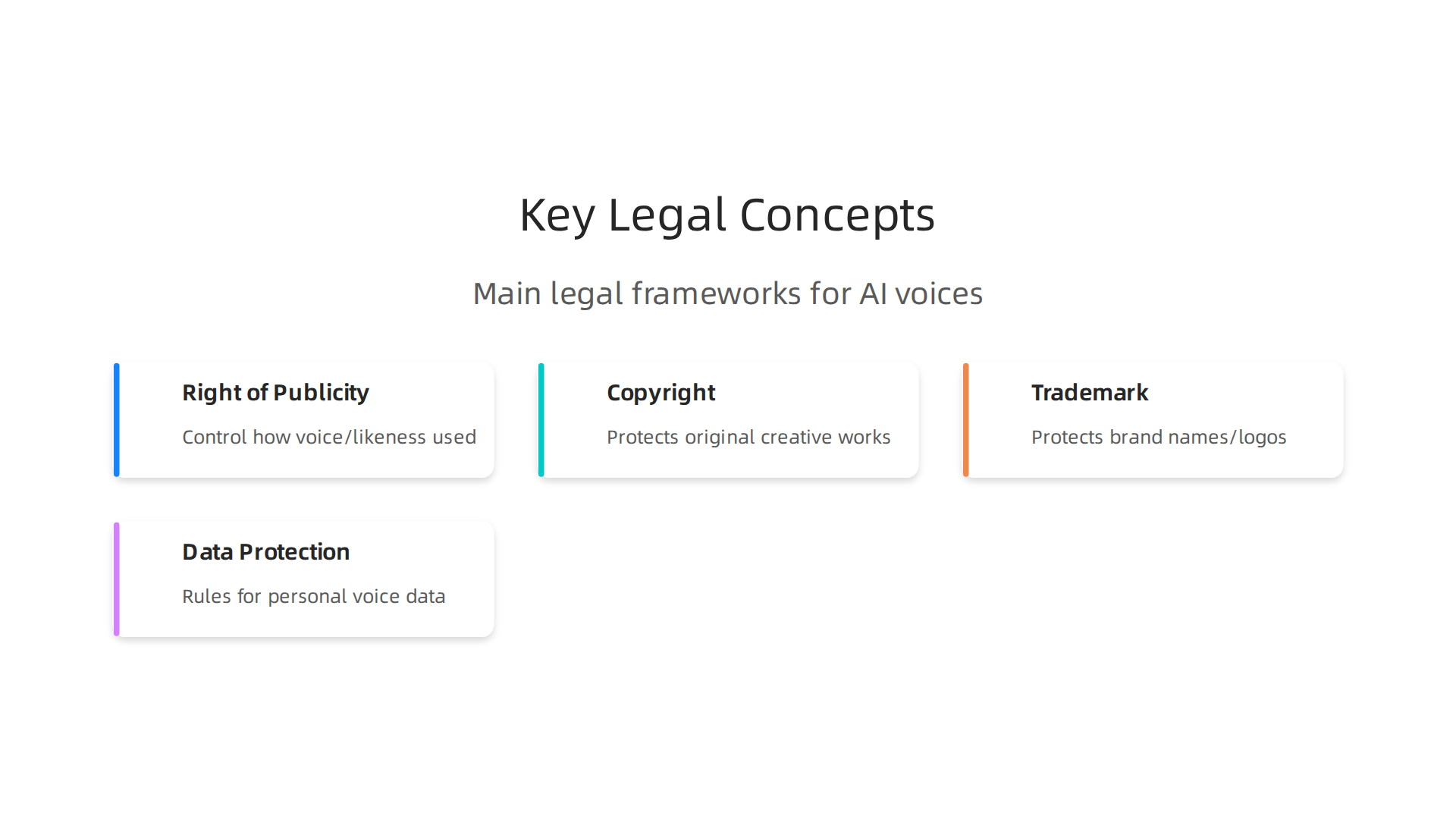
- Right of Publicity: This is about a person’s right to control how their name, image, and voice are used for money. If an AI voice sounds like a famous person, like a stephen hawking voice generator might sound like Stephen Hawking, it can create big problems. This right protects people from having their unique traits used to sell things without their say-so. In 2026, synthetic media and voice cloning are pushing this area of law to change quickly, especially regarding how talent is compensated Synthetic Media & Voice Cloning: Right of Publicity Risks for 2026.
- Copyright: This law protects original creative works. A big question is whether an AI-generated voice can be copyrighted. Also, if an AI is trained on the voices of specific voice actors behind famous characters, does that use infringe on existing copyrights? The U.S. Copyright Office has looked into digital replicas and how they connect with copyright law Copyright and Artificial Intelligence, Part 1 Digital Replicas Report. Generally, AI-generated content might not be copyrighted if there’s no human creativity involved, but rules are still forming Are AI Voices Copyrighted? Legal Guide for Creators & Businesses.
- Trademark and Data Protection: Trademarks protect brand names and logos. If an AI voice is used in a way that tricks people into thinking it’s endorsed by a famous brand or person, that could be a trademark issue. Data protection laws, like GDPR in Europe, also come into play if personal voice data is used to train or create AI voices.
Different Rules Around the World
One of the biggest challenges for companies using AI voices is that laws are not the same everywhere. What’s okay in one country might be illegal in another. For example, some places have stronger "right of publicity" laws than others. This means a company using an AI to create a scottish accent text to speech for a global advertisement needs to understand the rules in every country where the ad will be shown. The global rules for deepfakes, voice cloning, and AI impersonation are already here, and they often disagree Deepfakes, Voice Cloning, and AI Impersonation: The Global Rules are Already Here and They Don’t Agree. This is why businesses need smart legal plans for each country they operate in. Learning about these differences is key for any business trying to navigate the global privacy and AI regulation landscape, much like how Beta Technologies Compliance 2026 Navigate the Global Privacy and AI Regulation Landscape would.
New Voice-Specific Laws
Because AI voices have become so advanced, new laws are being proposed and put in place just for them. For example, in the United States, there’s talk of federal laws like the NO FAKES Act. This act aims to provide a clear federal right of publicity for voice and likeness, meaning people would have more control over their digital copies What Legal Issues Do Voice Cloning and AI Audio Technologies …. These emerging laws are designed to address the unique problems that voice cloning and synthesized voices of public figures bring. These rules are important for anyone creating a character ai voice generator or other synthetic media tools.
Keeping up with these fast-changing legal rules is crucial for anyone working with AI voice technology. To get clear daily AI updates and understand how these regulations affect your business, consider subscribing to The AI Newsletter Worth Reading.
While legal frameworks provide the rules, ethical thinking guides us on what is right and fair, especially when dealing with AI voices. In 2026, creating and using AI voices raises many moral questions that go beyond just what the law allows. It’s about respecting people and their unique voices, whether they are famous, private, or even no longer with us.
Moral Questions About Cloning Voices
When AI can make a voice sound like anyone, we have to think about who we are cloning.
- Public Figures: Imagine using an AI to create a stephen hawking voice generator to narrate a commercial. Even if it’s legally allowed in some places, is it right to use their voice without clear permission, especially if they can no longer speak for themselves? This can harm their public image or legacy.
- Private Individuals: For everyday people, having their voice cloned without permission can feel like a deep invasion of privacy. Their voice is a part of who they are.
- Deceased Persons: Cloning the voice of someone who has passed away brings up strong emotional and ethical issues. While some might find comfort in hearing a loved one’s voice again through AI, others might feel it disrespects their memory or is used in ways they never would have agreed to AI Voice Cloning After Death: Ethics, Risks & Safer Memorials. Companies must weigh the potential for emotional distress against any business gain. Businesses face big reputational risks if they are seen as insensitive or exploitative.
Getting Proper Consent for Voice Use
Consent is key to using AI voices ethically. It means getting clear, informed permission from the person whose voice is being used.
- What Demonstrable Consent Looks Like: It’s not enough to just say someone agreed. You need to show it.
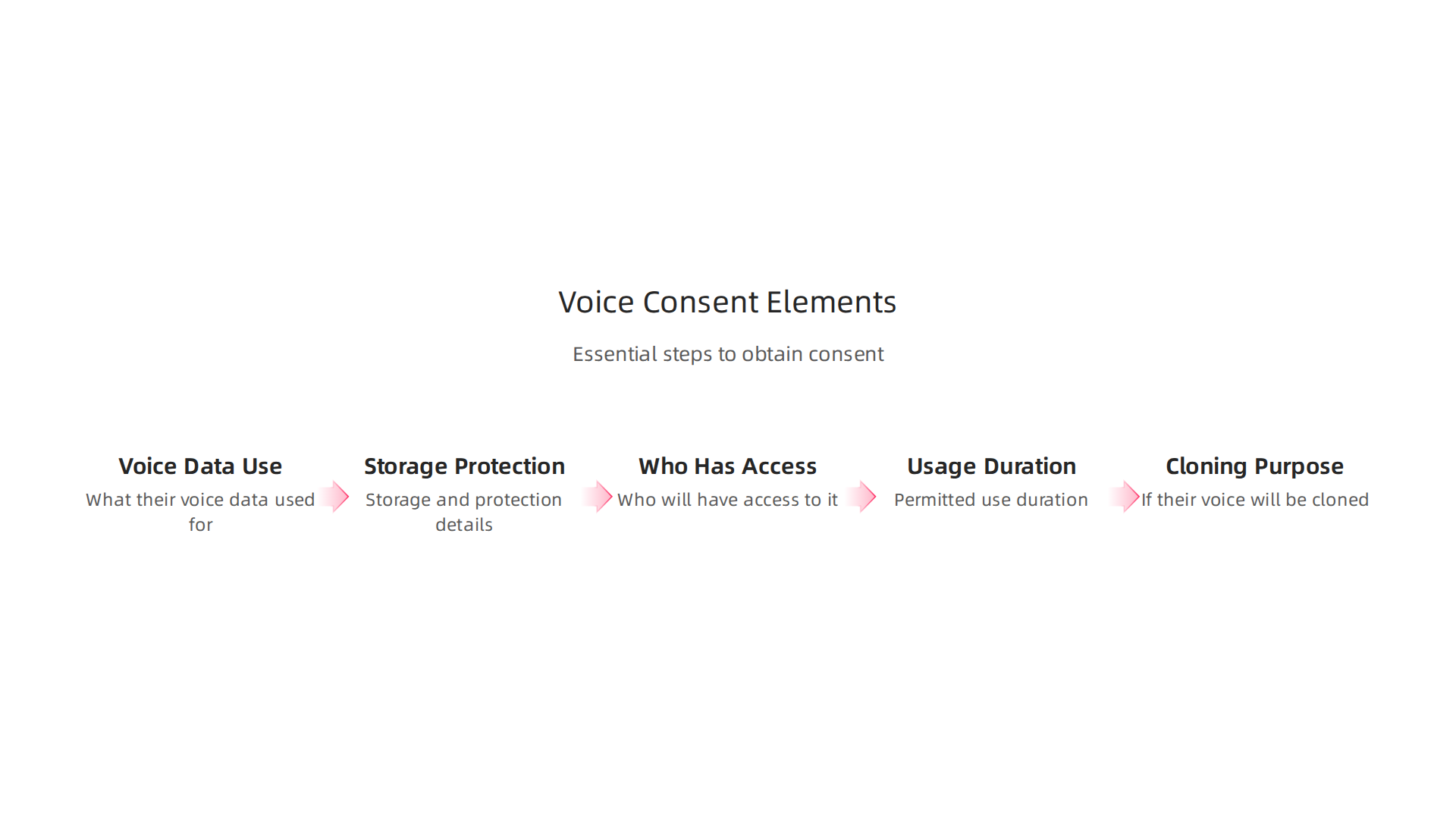
This often means getting written agreements that clearly state:
* What their voice data will be used for.
* How it will be stored and protected.
* Who will have access to it.
* For how long it will be used.
* If their voice will be cloned, and for what purposes.
The goal is full transparency so the person truly understands what they are agreeing to Voice Cloning Ethics, Consent and Deepfakes – CAMB.AI.
- Documenting Consent: Keeping good records of this consent is vital. This helps protect both the individual and the business. Clear records show that a company has acted responsibly and ethically. This is especially true for projects that involve a character ai voice generator or using the voices of voice actors behind famous roles.
Special Considerations for Certain Voices
Some voices need extra care and thought.
- Vulnerable Populations: Children, elderly individuals, or people with mental health challenges might not fully grasp what they are consenting to. Special safeguards are needed to make sure their voices are used ethically.
- Culturally Sensitive Voices: Some accents, languages, or vocal styles are deeply tied to cultural identity. Using a scottish accent text to speech for a commercial, for example, might be seen as disrespectful if not handled with cultural understanding and permission from relevant communities. Businesses need to think about the wider impact of their AI voice choices. Understanding the potential downsides of unchecked AI use is crucial for all businesses today, especially when thinking about Why is AI Bad: The Real Risks of Unrestricted Artificial Intelligence in 2026.
Understanding the potential downsides of unchecked AI use is crucial for all businesses today. This is where strong company rules and ways to check on partners become very important. To handle AI voices well, businesses need good plans, smart vendor choices, and clear contracts.
Building Smart Internal Rules for AI Voices
Even with good intentions, using AI voices without clear rules can lead to problems. Businesses need to set up their own internal policies. These rules help everyone know what is okay and what is not for synthetic voice projects.
- Acceptable Use: What kinds of AI voices can we make? For what purposes? Companies must decide if using a
stephen hawking voice generatorfor an ad is allowed, or if they only use AI voices for internal training. These rules should cover how voices are made, used, and shared. - Approval Steps: Before any AI voice project goes live, who needs to say "yes"? Having clear approval steps makes sure that sensitive projects, like those using voices that sound like real people or
voice actors behindfamous characters, get checked by the right experts. This helps prevent mistakes and keeps everyone on the same page. - What to do if there’s a problem: What happens if someone thinks an AI voice is being misused, or if a project runs into ethical trouble? Having a clear path for reporting and solving these issues is key. This is called an escalation plan. Strong policies can help avoid problems with synthetic media and voice cloning, which can create new publicity risks Synthetic Media & Voice Cloning: Right of Publicity Risks for 2026.
Checking Your AI Voice Partners Carefully
Many companies get their AI voice technology from other businesses. This means you need to be very careful about who you work with. This process is called vendor risk management or due diligence.
- Asking the Right Questions: When looking at voice-cloning companies or text-to-speech providers, ask them about:
- Data Sources: Where do they get the voices they use to train their AI? Do they have clear permission for all of it?
- Security: How do they protect this sensitive voice data from being stolen or misused?
- Usage Rules: What are their rules for how their AI voices can be used? Do they have guidelines for things like cultural sensitivity, such as when using a
scottish accent text to speech? - Third-Party Data: If they use data from other companies, have they checked those sources too?
- Why it Matters: Checking your vendors helps you avoid problems down the road, like legal issues or bad public opinion. It’s a big part of handling AI supply chain risks well AI Supply Chain Risk: The New Vendor Due Diligence – TrustArc.
Important Parts of Contracts for AI Voices
When you work with another company for AI voice services, your contract is like your rulebook.
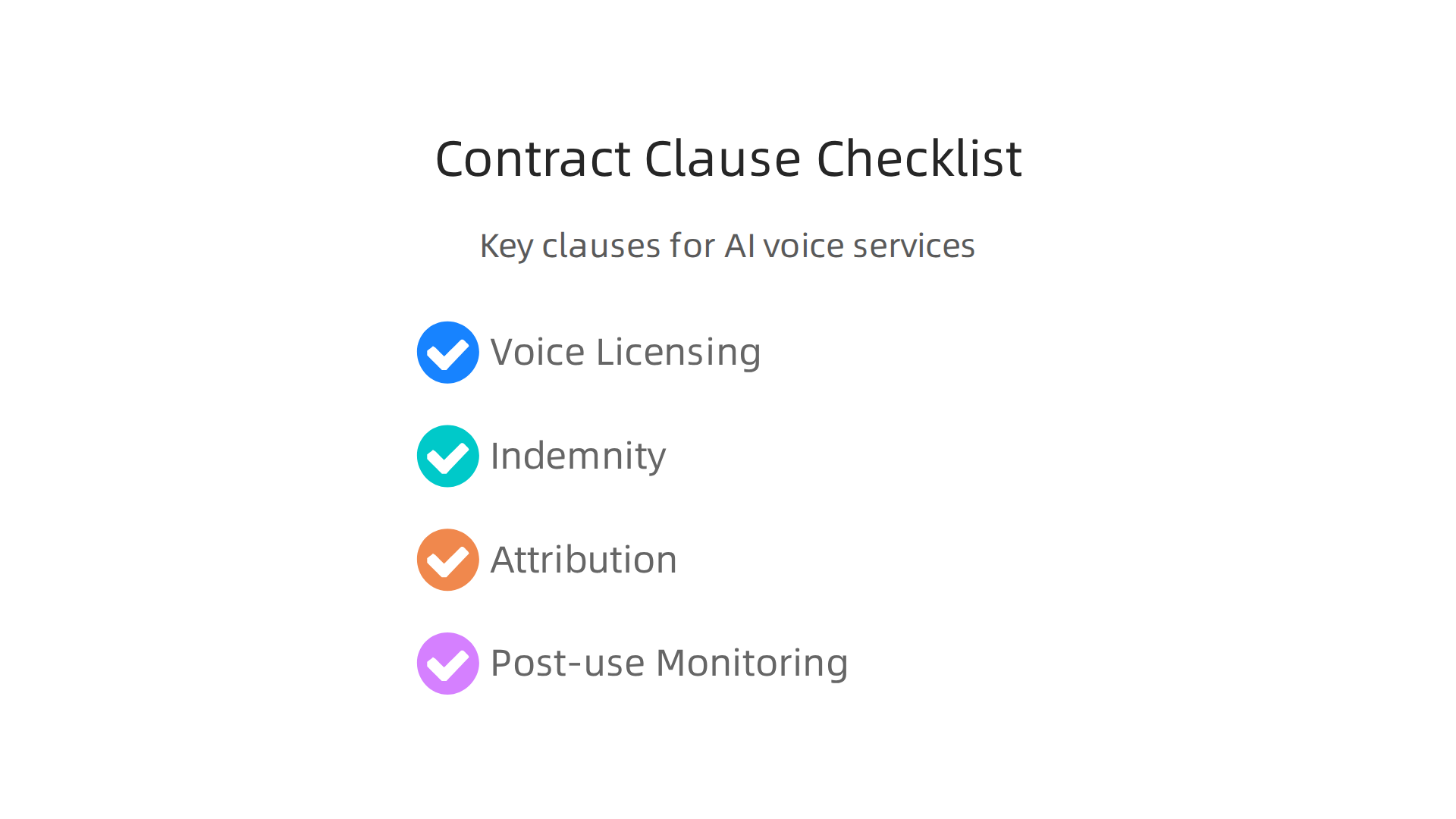
It needs to protect everyone involved. In 2026, contracts for AI technology need special attention.
- Licensing Voice Data: Who owns the rights to the voice data used, and for how long? Make sure the contract clearly states how you can use the AI-generated voice and that you have all the necessary permissions. This is especially true if you are creating a
character ai voice generator. - Indemnity: This part says who is responsible if something goes wrong. If a cloned voice causes a lawsuit or a big problem, who pays? Your contract should clearly state if the AI vendor will cover costs or take responsibility.
- Attribution: Sometimes, you might need to say that a voice is AI-generated, or mention the original voice actor. The contract should clarify when and how to do this.
- Monitoring After Use: How will you check that the AI voice is used correctly even after your project is finished? The contract should include ways to monitor use and make sure it stays within ethical and legal limits.
Adding these clear points to your contracts helps protect your business from risks AI Vendor Contracts: Key Clauses to Demand in 2026 | MN Legal. Learning about general AI Regulations 2026 Compliance Strategies for Businesses can also help you make good choices.
Staying up-to-date on AI rules and regulations can feel like a full-time job. The AI Newsletter Worth Reading can help. Get clear daily AI updates from The Deep View Newsletter.
Knowing the rules is a great first step, but what happens when things go wrong? Businesses must think about all the possible problems that can come up with AI voices.

This is called a risk assessment. It helps you understand what troubles might appear, how likely they are, and how much harm they could cause. We look at three main types of risks: problems with your name (reputational), legal issues, and how you do your daily work (operational).
How to Map Risks for AI Voices
Imagine a map where you mark all the bad things that could happen. For each possible problem, you ask two questions:
- How likely is it to happen? Is it very likely, maybe, or almost impossible?
- How bad would it be if it did happen? Would it be a small headache, a big problem, or a disaster for the business?
Let’s say a business uses an AI voice that sounds like a famous person, like a stephen hawking voice generator, without permission.
- Reputational Risk: People might get angry and talk badly about your company online. This could make customers not trust you.
- Legal Risk: The famous person or their family could sue your company, leading to expensive court battles and fines.
- Operational Risk: You might have to stop your ad campaign, take down products, and spend a lot of time fixing the mistake.
By mapping these risks, businesses can see where they need to be most careful. For example, fraud using AI voice cloning is a serious and growing concern for businesses in 2026, leading to high financial losses and reputational damage for those affected AI Voice Cloning Fraud Statistics 2026: Alarming Trends.
Running Small Tests for New AI Voice Products
Before launching something big, it’s smart to do small tests. These are called "scenario analyses." For new products that use AI voices, you can play out different "what if" situations.
- What if our new
character ai voice generatoris used to spread false information? - What if a
scottish accent text to speechvoice is misunderstood in a different culture? - What if a
voice actors behinda popular character gets upset because our AI voice sounds too much like them?
By thinking through these scenarios, you can find weak spots in your plan before they become real problems. This helps you get ready and make changes early. Understanding different types of AI is key to this process, and you can learn more about it with resources on Artificial Intelligence and Machine Learning Explained for 2026 Business Leaders.
Protecting Your Business: Insurance and Emergency Plans
Even with the best plans, risks can still happen. So, having a safety net is very important:
- Insurance: Just like you insure your car or house, some businesses are now looking into special insurance for AI risks. This can help cover legal costs or fines if an AI voice project runs into trouble.
- Incident Response Plan: This is like a step-by-step guide for what to do when a problem occurs. Who should be told? What actions need to be taken right away? This helps your team act fast and correctly.
- Escalation Playbooks: This tells you who to talk to if a problem gets bigger and bigger. It’s about knowing when to bring in senior leaders or legal experts.
Having these plans ready helps your business handle issues calmly and reduce the overall harm. This focus on strong planning for contracts and risks is echoed in expert discussions on Commercial Contracts in 2026 | AI, Data Protection & Technology Risk. These steps help you not just react, but also recover quickly from any AI voice challenges.
Even with the best plans, technology itself can help prevent problems. Businesses in 2026 can use special technical tools to make sure AI voices are real and used correctly. These tools help find fake voices or track where a voice came from.
Smart Ways to Detect AI Voices
Think of these tools as digital detectives for sound. They help you know if an AI voice is what it seems.
- Audio Watermarking: Imagine a secret stamp that is put into an AI voice. You can’t hear it, but a special computer program can find it. This stamp can show who made the AI voice or if it has been changed. For example, if you use a
stephen hawking voice generatorfor an advertisement, a watermark could prove your company created it. This way, if someone tries to copy your voice or use it wrongly, the hidden mark helps you track it down GenMark: An Embedded Watermarking Scheme. - Provenance Metadata: This is like a digital history book for an AI voice. It records information about the voice, such as when it was made, by whom, and what computer programs were used. If you have a
character ai voice generatormaking unique voices, this metadata helps you keep a clear record of its origin. This record is important for showing that your AI voice is real and not stolen. - Signer Authentication and Forensic Signals: These are ways to check if an AI voice is truly artificial or if it was recorded from a real person. Experts look for tiny clues in the sound itself that tell them if it was made by a computer. This is often used to spot "deepfakes" or fake audio made to sound like someone else. A survey of tools used to fight deepfakes highlights these methods for detecting altered media A Review of Tools and Technologies to Combat Deepfakes.
Challenges with AI Voice Detection
While these tools are helpful, they are not perfect.
- False Positives and Negatives: Sometimes, a detection tool might say a real voice is fake (a false positive) or a fake voice is real (a false negative). This can cause confusion.
- The Arms Race: AI voice technology is always getting better at sounding real. This means the tools that detect fake voices must also get better, quickly. It’s like a race between making AI voices and finding them. This ongoing challenge is discussed in surveys about AI-generated voices and how to detect them A survey of AI-generated voices and their detection.
How Businesses Use Detection Tools
Businesses need to actively use these tools to protect themselves.
- Monitoring: Companies should constantly check for AI voices that sound like theirs or like their
voice actors behindpopular characters. This helps catch problems early. - Labeling: When businesses use AI voices, they can add clear labels saying "This is an AI-generated voice." This helps users know what they are hearing.
- User Transparency: Giving users ways to check if a voice is real or AI-generated builds trust. This is very important if you are using a
scottish accent text to speechfor a customer service bot, for example. People appreciate knowing they are talking to a machine.
Staying on top of AI regulations and compliance is critical to avoid costly mistakes and legal issues. If you want to understand more about these rules and how to avoid big fines, check out AI Regulations 2026 Compliance Strategies To Avoid Million Dollar Fines.
To stay informed about the latest developments in AI and technology regulation, make sure to get clear daily AI updates.
The AI Newsletter Worth Reading
It’s clear that understanding AI voices is vital for building trust. But what happens when things go wrong? Looking at real-world examples helps us see the serious problems that can come from AI voice technology. In 2026, we’ve seen many public cases where using or misusing AI voices led to big troubles, from legal issues to losing public trust.
Public Incidents and Their Consequences
Voice cloning has caused some tricky situations. For example, there have been cases of fraud where criminals used AI voices to trick people into sending money. They might use a cloned voice that sounds like a family member or a business leader. Data shows that AI Voice Cloning Fraud Statistics 2026: Alarming Trends highlight a rise in such scams, costing people and companies a lot.
Sometimes, the issue is about a person’s identity. Imagine a famous actor whose voice is used in an advertisement without their permission, even if it’s not a stephen hawking voice generator but just a general synthetic voice. This raises questions about the rights of voice actors behind those familiar sounds. This is a big deal in entertainment law, where the "right of publicity" protects how people’s names and likenesses are used. Experts are seeing a big shift in these rules because of AI voice cloning and synthetic media Synthetic Media & Voice Cloning: Right of Publicity Risks for 2026.
Even for a character ai voice generator, companies face problems if they don’t get proper consent. If a company uses a scottish accent text to speech for a character without clear agreements, they could face legal action and bad press. These incidents teach us that permission and transparency are key.
Lessons Learned and Policy Adaptations
When these problems pop up, companies learn fast. What usually works is having very clear contracts and making sure everyone agrees to how a voice will be used. What fails is trying to use AI voices secretly or without asking.
Businesses have had to quickly change their rules. They now often need to get written permission for any voice cloning, explaining exactly how the voice will be used and for how long. They also invest more in tools to detect fake voices. For more on the bigger picture of AI risks, you might find this guide helpful: Why Is AI Bad The Real Risks Of Unrestricted Artificial Intelligence In 2026.
Informing Investor and Executive Decisions
These real-world cases make investors and company leaders think carefully. Before putting money into a new AI voice project or company, investors now do much deeper checks. They want to know how a company handles consent, data privacy, and the risk of fraud. This process is called AI due diligence. It helps them spot potential problems before they become costly. Getting good information on how to check these things is very important in 2026 for any company working with AI AI Due Diligence in 2026. Company leaders must also make sure their teams are aware of the rules and risks to protect their brand and avoid legal issues.
When companies face problems with AI voices, it often pushes governments to think about new rules. In 2026, we expect to see more and more talk about laws for AI voices and other synthetic media. This is because AI can make very real-sounding voices, which can cause confusion or even harm.
Anticipated Policy Directions and Triggers
Leaders are looking closely at how AI voices are used, especially in big events like elections. Reports show that regulators are busy dealing with AI deepfakes, which are fake images or voices, as they affect the 2026 midterms Regulators Scramble as AI Deepfakes Flood the 2026 Midterms. This kind of misuse often makes new laws necessary. Also, there’s growing worry about things like the right of voice actors behind these AI creations. If a character ai voice generator is used, people want to know how the original voice owner is protected. Laws are likely to focus on making sure people know when they are hearing an AI voice and making it harder for bad actors to trick others. Experts are looking at how different places are handling AI laws in their 2026 Outlook: Artificial Intelligence.
Practical Roadmap: Near-Term Actions and Strategic Changes
For companies and leaders, it’s smart to get ready now. In the short term, this means checking on vendors that provide AI voice tools. Make sure they have clear rules about how voices are used and how they get permission. It also means looking at your own company’s rules. Do you need a new policy for using a scottish accent text to speech for marketing, or for how you handle a voice that sounds like a famous person, even if it’s not a stephen hawking voice generator but just a very good copy?
For the medium term, companies should set up teams to keep an eye on new AI voice rules. This means having people from different parts of the company work together. They can share information and make sure everyone understands the risks and new rules. Being open with customers and partners about how you use AI voices is also key.
Maintaining Flexibility and Monitoring
The world of AI is always changing. So, it’s important for leaders to stay flexible. This means having plans in place to quickly adjust to new laws or new AI tools.
Always keep learning and talking with others in the industry. Knowing what’s happening helps you avoid problems and use AI voices responsibly. For more details on how businesses can manage these changes, you can explore guides on AI Regulations 2026 Compliance Strategies for Businesses.
To stay on top of the rapidly changing world of AI regulation, especially for topics like AI voices, it’s helpful to get regular, expert insights.
Get clear daily AI updates from The AI Newsletter Worth Reading.
Summary
AI voice generation (text-to-speech and voice cloning) now produces highly natural, human-like audio and is being adopted across marketing, customer service, entertainment, and accessibility. This article explains the technology behind modern neural TTS and low-data cloning, and it frames the fast-evolving legal landscape—right of publicity, copyright, trademarks and divergent international rules—that businesses must navigate. It highlights ethical issues around public figures, private individuals and the deceased, and explains why clear, documented consent and special safeguards for vulnerable groups are essential. The guide gives practical governance steps: internal policies, vendor due diligence, contract clauses (licensing, indemnity, attribution, monitoring), and incident playbooks. It also covers technical controls (audio watermarking, provenance metadata, forensic detection) and their limits, shows how to map reputational, legal and operational risks, and uses real incidents to motivate stronger controls. Readers will come away able to assess vendor risk, draft basic contractual protections, set policy and approval gates, and build a detection-plus-response plan to reduce legal, ethical and reputational exposure when using AI voices.