

Why evaluating tech packs and AI solutions matters now
In 2026, businesses everywhere are using more and more smart tools, especially those powered by Artificial Intelligence, or AI. These tools help with many tasks, from making websites faster to handling customer questions with chatbots like ChatSonic AI. When a company buys a new software or AI tool from another company, it’s a big deal. You need to know exactly what you are getting. This is where a "tech pack" comes in.
A tech pack is like a detailed instruction manual or a blueprint for a product. For AI and software products, it includes all the technical information about how the system works. Think of it as a special kind of documentation. It’s crucial for different groups in a company. For example, when choosing a new tool, the tech pack helps with vendor selection. It shows what the vendor is offering. It’s also very important for making sure everything follows the rules and laws, which is known as regulatory context.
Many new rules, like the EU AI Act, now require very detailed technical documents for AI systems. These documents, which are part of the tech pack, must show how the AI was built, what it’s supposed to do, and how it was tested. They might even include things like Model cards and datasheets for datasets that explain the AI model and the data it uses. According to the EU AI Act Article 11, companies must provide this technical documentation. For instance, Annex IV of the EU AI Act outlines what needs to be in this documentation, such as a general description of the AI system and details about its development process.
Not looking closely at these tech packs can lead to big problems for everyone involved.
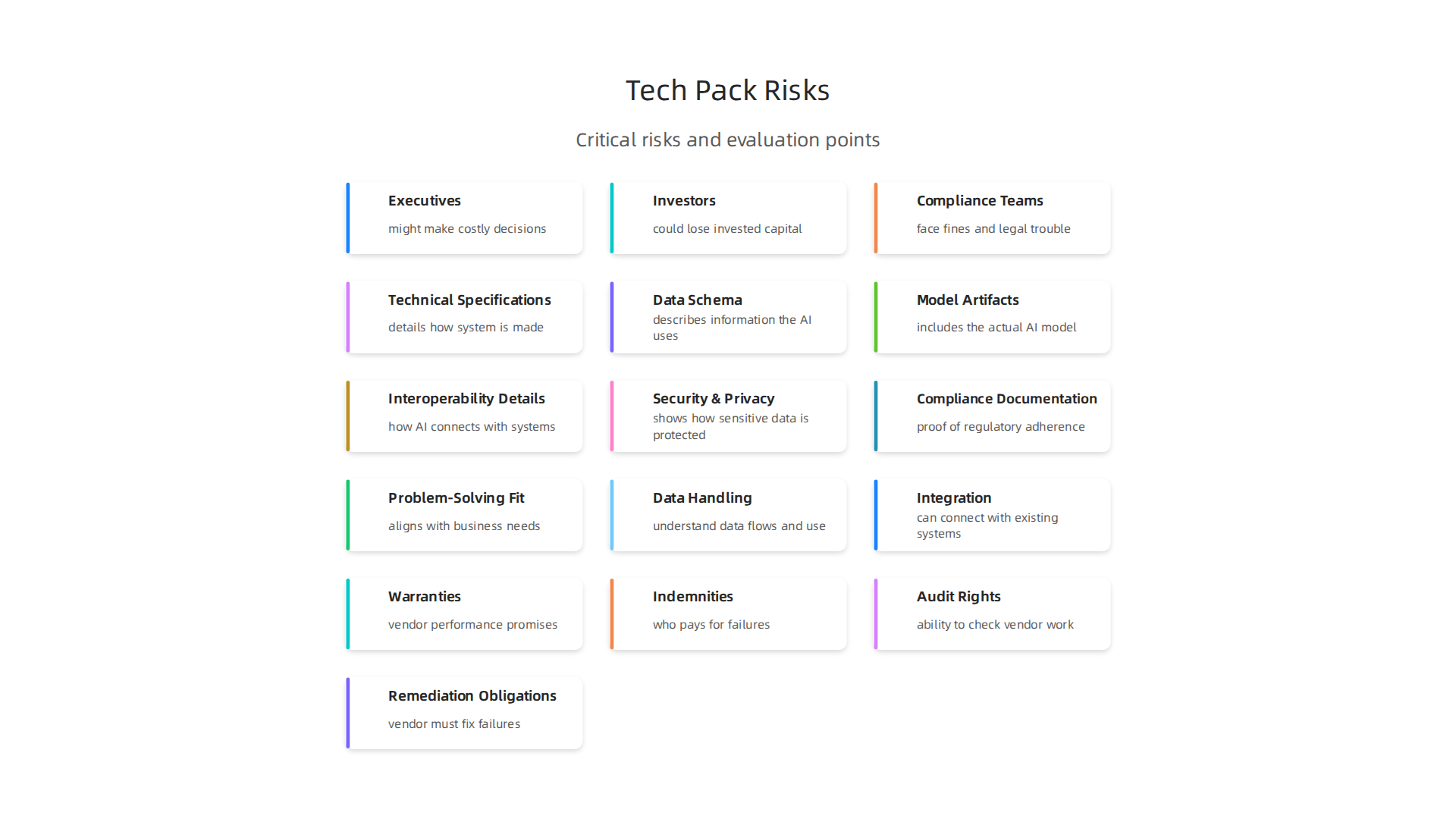
- Executives might make bad choices that cost the company money or hurt its good name.

- Investors could put their money into companies that aren’t following the rules, which means their investment might not be safe.
- Compliance teams could face huge fines and legal troubles if the AI solutions aren’t compliant.
Whether you’re using a simple website builder AI or a complex durable AI website builder for your business, understanding its tech pack is key. It helps you see the true risks and benefits. If you want to know more about how to stay safe, learning how to navigate AI regulation for 2026 compliance is a great step.
This article will give you a clear and simple way to check these vendor tech packs. We’ll show you how to do a deep dive into the technical details and what to look for to make sure you meet all the rules.
Stay informed on the fast-changing world of AI and its rules.
The AI Newsletter Worth Reading
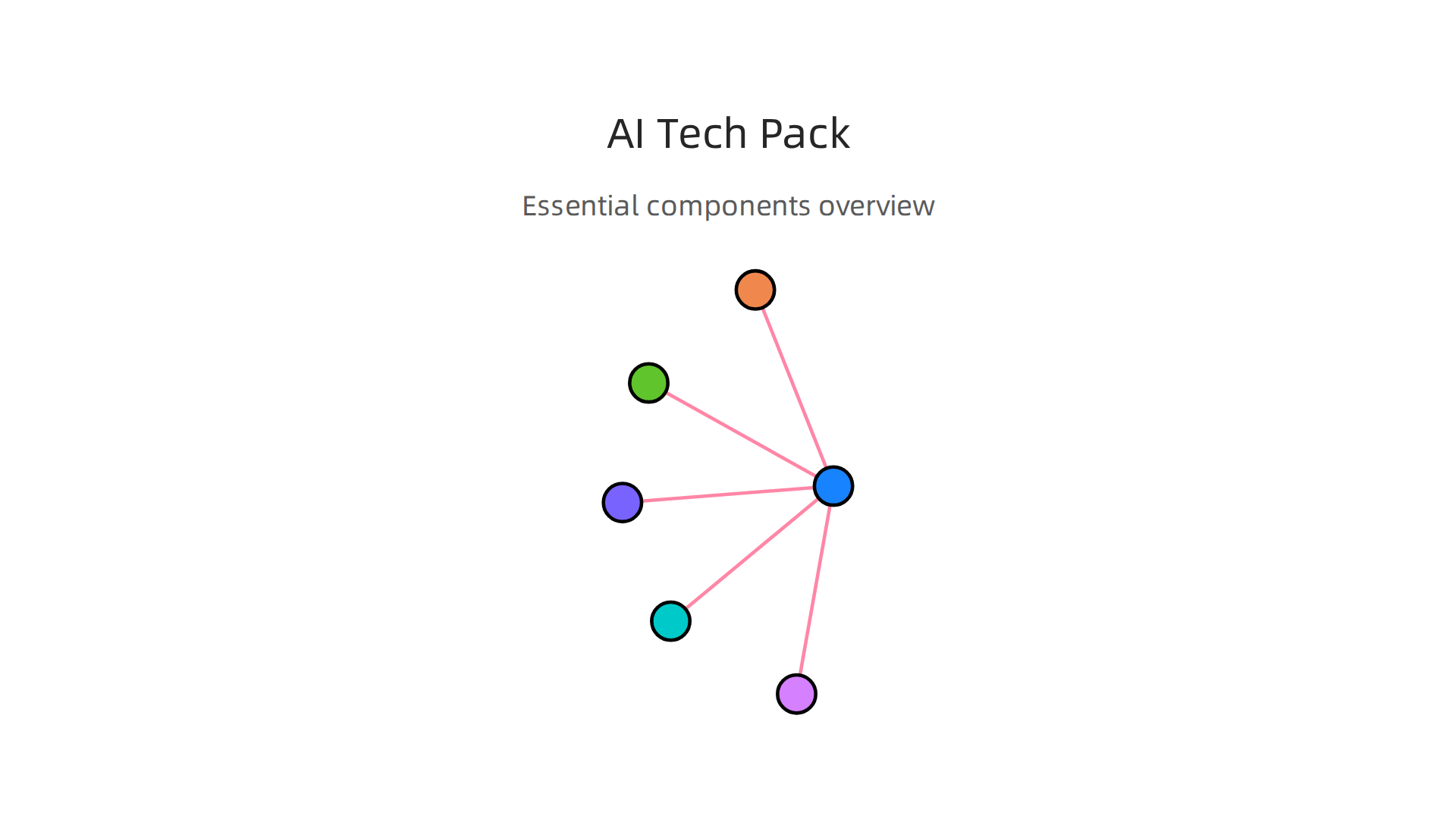
A tech pack is a key document for any AI or software product. It’s like a detailed map that shows how the product was built and how it works. When you’re looking at a new tool, like a new AI website builder or a chatbot like ChatSonic AI, the tech pack tells you exactly what’s inside.
Here are the important parts that usually belong in a tech pack:
Technical Specifications
This part is all about the nuts and bolts. It details how the AI system is made and what it needs to run. This includes the programming languages used, the computer power it requires, and how it handles different kinds of tasks. It’s like the instruction book for how to build and operate the AI. Guidelines from groups like ETSI TR 104 119 V1.1.1 (2025-09) – iTeh Standards can help explain what to put in.
- Why it matters: The Chief Technology Officer (CTO) needs this to make sure the new AI will work well with the company’s existing systems. They want to know it can run smoothly and be updated easily.
Data Schema
The data schema describes all the information the AI uses. It explains what kind of data it takes in, how that data is set up, and where it comes from. For example, if an AI helps you manage customer info, the data schema would show how customer names, addresses, and purchase history are stored. It’s important to have clear Documentation, Metadata and Interoperability – AI-ready Research for data.
- Why it matters: The Chief Technology Officer and compliance teams need to know if the data is handled correctly and safely. This helps them meet privacy rules.
Model Artifacts
This part includes the actual AI model itself and how it was trained. It might have details on the code, the learning methods, and even "model cards" or "datasheets" that explain the AI’s abilities and limitations. Think of these as report cards for the AI model and its training data. For example, specific templates exist for AI Act Annex IV Technical Documentation Guide that cover these details.
- Why it matters: Engineers and researchers look at this to understand how the AI makes decisions. This helps ensure it’s fair and accurate.
Interoperability Details
This explains how the AI product can connect and work with other software and systems. For example, if you use a durable AI website builder, you want to know if it can easily link to your existing customer service tools or payment systems.
- Why it matters: The CTO cares about this because it affects how well the new AI fits into the company’s digital setup.
Security and Privacy Controls
This section shows how the AI system protects sensitive information and keeps it safe from hackers. It explains the security measures in place, like how data is encrypted and who can access it. Strong security is a must in 2026.
- Why it matters: The General Counsel (GC) and compliance teams must ensure that the AI follows all laws about data protection and security. This prevents fines and keeps customer trust.
Compliance Documentation
This is proof that the AI product follows all the rules and laws. It includes reports from tests, risk assessments, and explanations of how the AI meets specific regulations, like those found in the EU AI Act. The EU AI Act Technical Documentation (Article 11) Guide details these needs. It might also include information about the AI’s development process, as outlined in Annex XI: Technical Documentation Referred to in Article. To learn more about how to make sure your AI follows all the rules, check out this guide on how to make an AI compliant with global regulations in 2026.
- Why it matters: The compliance officer and investors need this to avoid legal problems and make sure their investment is safe. A well-documented compliance process shows that the company is serious about following rules. Having good AI Documentation Practices – etami open guidebook is vital.
Understanding each part of the tech pack helps everyone in your company, from the tech experts to the legal team, make smart decisions about using AI and software. It’s how you ensure that any new tool, whether it’s a simple website builder AI or a complex AI solution, is safe, works as promised, and follows the law.
Understanding what goes into a tech pack is only the first step. The next is to use that knowledge to pick the best AI tools for your business. When you’re looking at different vendors for something like a durable AI website builder or a chatbot like ChatSonic AI, a good evaluation process helps you make smart choices. This is especially true for companies that want to make sure their new tools follow all the rules and regulations.
A Step-by-Step Vendor Evaluation Checklist for Tech Packs
Evaluating AI vendors means looking closely at their tech pack and checking if their claims are true.

Here’s a simple checklist to guide you, focusing on what you absolutely need versus what would be nice to have.
Prioritized Checklist: Must-Haves vs. Nice-to-Haves
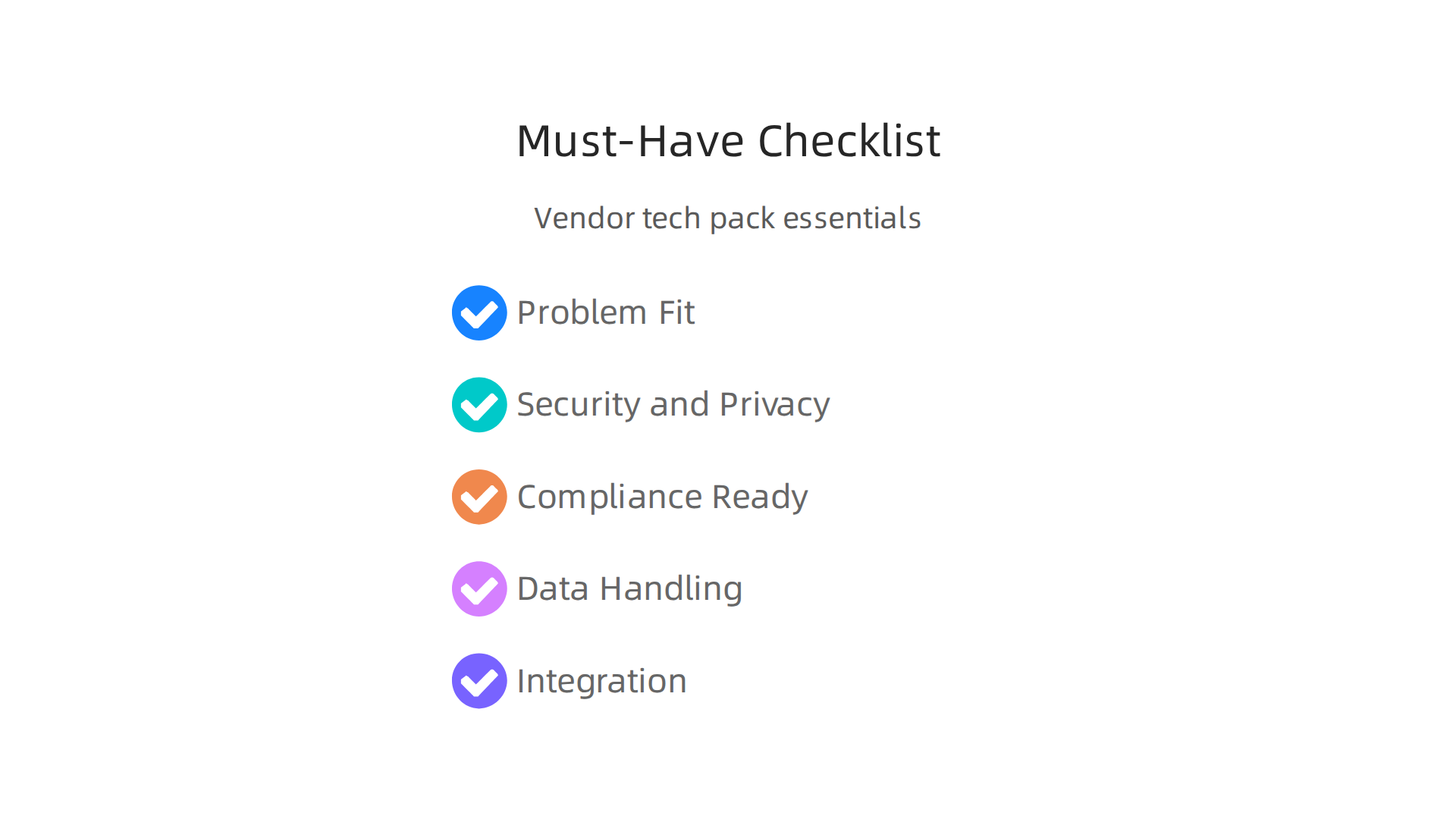
First, figure out what you cannot live without. These are your "must-haves."
Then, list the "nice-to-haves" that would make the product even better.
Must-Have Items:
- Problem-Solving Fit: Does the AI truly solve your specific problem? The vendor should be able to clearly show how their solution fits your needs, not just list features. As experts suggest, focus on how the solution addresses your actual problem instead of just what features it has The 10-Point AI Vendor Due Diligence Checklist Procurement.
- Security and Privacy: The tech pack must show strong security controls. Look for details on data protection, encryption, and who can access sensitive information. Good security means the vendor has thought about keeping your data safe. Many checklists highlight assessing security and privacy AI Vendor Evaluation Checklist & Comparison Criteria.
- Compliance Ready: Your AI tools must follow laws and regulations. The tech pack should provide clear proof of how the AI meets rules like the EU AI Act or other local laws. This helps avoid big problems later. A complete AI Vendor Assessment Checklist usually covers compliance.
- Data Handling: Understand where your data goes and how it’s used. The vendor should clearly explain their data retention policies and how they handle your information.
- Integration with Your Systems: Can the new AI easily connect with your current software and systems? This is key for smooth operations. Vendors should show how their tool works with your existing data setup How to Evaluate an AI Vendor: A Procurement Checklist for Enterprise.
Nice-to-Have Items:
- Model Transparency: Can the vendor explain how their AI makes decisions? This is important for trust and understanding the AI’s limits.
- Ease of Use: How simple is the AI to set up and use? A user-friendly interface can save time and training costs.
- Support and Updates: What kind of support does the vendor offer? How often do they update their software, and do these updates come with good documentation?
How to Validate Claims in a Tech Pack
Once you have your checklist, you need to verify what the vendor says.
- Documentation Review: Read the tech pack carefully. Look for details that match your "must-have" list. Do their claims about security, compliance, and data handling make sense? Pay attention to things like data processing agreements (DPAs) and security certifications AI Vendor & Tool Approval Checklist 2026.
- Artifact Access: Ask to see the actual AI model details or code if possible. This helps your technical team understand how it truly works.
- Sandbox Testing: This is like a trial run. Can you test the AI in a safe, controlled environment to see how it performs with your data? This is very important for checking how robust the AI is and looking for any weaknesses The New AI Vendor Checklist: Drift Controls, Red-Team Testing. You can also test for issues like prompt injection and data leakage.
- Reference Checks: Talk to other companies that use the vendor’s AI. Ask about their experience with the product, support, and how well the vendor lives up to their promises. This can provide real-world insights. A thorough AI Vendor Evaluation: Enterprise Procurement Checklist always recommends these steps.
By following these steps, you can confidently choose AI products, whether it’s for a website builder AI or a more complex solution, knowing they meet your needs and regulatory demands. Staying on top of what’s new in AI and its rules is crucial.
Get clear daily AI updates and never miss a beat in the fast-changing world of technology. The AI Newsletter Worth Reading
After you have a good list of "must-haves" and "nice-to-haves" for an AI vendor, the next big step is to deeply check their promises about following the rules. This means looking closely at the tech pack to make sure the AI product, like a durable AI website builder or a ChatSonic AI solution, meets all legal standards and doesn’t create big risks for your business.
Assessing Regulatory Compliance and Legal Risk in Tech Packs
Checking for legal compliance is super important. It means looking beyond just features and focusing on how the AI handles sensitive things like data and privacy. Your legal team should carefully review the tech pack for specific details that show the vendor understands and follows the rules.
Here are key compliance items to look for in a tech pack:
- Data Lineage: This shows where the data came from, how it was gathered, and how it changed over time. Knowing this helps you make sure the data used by the AI is legal and proper. Think of it like a birth certificate for your data. The technical documentation for an AI system often includes a detailed description of its elements and development process EU AI Act Technical Documentation (Article 11) Guide.
- Consent and Legal Basis: For any personal data, the tech pack should explain how the vendor got permission to use it. Or, it should show what other legal reason they have for using it. This is a big deal for privacy laws.
- Cross-Border Data Transfer Details: If your AI will move data across different countries, the tech pack needs to say how it keeps that data safe and follows international transfer rules. Different countries have different rules for this.
- Audit Logs: These are records of everything the AI does. If something goes wrong, or if you need to prove the AI acted fairly, audit logs are your proof. They show when and how the AI made a decision.
- Redress Mechanisms: What happens if the AI makes a mistake that harms someone? The tech pack should explain how people can complain or ask for the decision to be reviewed. This is about making sure there’s a way to fix problems.
How Different Rules Affect AI Evaluation
One big challenge is that rules for AI change from place to place. What’s okay in one country might not be okay in another. This is called jurisdictional variability.
For example, the rules in the European Union, like the EU AI Act, are very strict about what a tech pack needs to include. These rules often require detailed information about how an AI system works and what its limits are Annex IV: Technical Documentation Referred to in Article …. Other places might have different standards.
Your legal team needs to be very careful here. They should flag anything in the tech pack that doesn’t clearly meet the laws of all the places where you plan to use the AI. Whether you’re building a simple website builder AI or using more complex systems, understanding these differences is vital to avoid big fines and legal trouble.
To make sure your business is safe and follows all the complex rules, it’s smart to plan ahead. You can learn more about how to integrate regulatory compliance into your corporate AI strategy to help prevent future problems.
After checking that an AI vendor’s tech pack promises to follow all the rules, you still need to look deeper. It’s not enough for the paperwork to be in order. You must also check the actual technology to make sure it works as expected and is safe to use. This means doing technical due diligence, which is like giving the AI a thorough health checkup.
This part of your review focuses on the AI model itself, the data it uses, and how secure it is.

Whether you’re considering a smart solution like a ChatSonic AI or a practical tool such as a durable AI website builder, you need concrete proof that the technology behind it is sound.
Concrete Technical Tests for AI Systems
Here are the key technical checks you should perform:
- Dataset Audits: This involves looking closely at the data used to train and test the AI. You need to verify where the data came from, how it was collected, and if it’s fair and accurate. Make sure the vendor can prove they legally acquired all training data, including any user consent records or licensing agreements for outside datasets AI M&A Due Diligence Checklist for Acquirers (2026). This check helps prevent hidden biases or legal problems down the road.
- Model Evaluation: You need to test how well the AI model actually performs. This means looking at its accuracy, how fast it responds, and if it’s robust (meaning it doesn’t break easily). It’s also important to check for bias to make sure the AI doesn’t treat certain groups unfairly. An AI audit checklist (updated 2026) can help you examine the training data and verify data sources.
- Reproducibility Checks: Can the vendor get the same results if they run the AI again with the same settings? This is important for trust and for fixing problems. If the results are not reproducible, it’s hard to know why the AI made a certain decision. This is a key part of AI and machine learning due diligence.
- Security Vulnerability Scans: Like any software, AI systems can have weaknesses that hackers could exploit. Running security scans helps find these problems before they become bigger issues for your business.
Requesting Key Evidence from Vendors
To do these checks, you’ll need the vendor to provide specific documents and tools. Think of these as the AI’s medical records:
- Model Cards: These are like a summary of the AI model. They should explain its purpose, how it was trained, what data it used, and any known limits or biases. Many rules in 2026, like the EU AI Act, require these AI Model Cards in 2026: What Regulators Now… · AI Policy Desk.
- Datasheets: These provide more detailed information about the datasets used, including their features and how they were prepared.
- Test Harnesses: These are tools or setups that allow you to test the AI yourself. They let you check how the AI behaves in different situations and confirm its performance.
By asking for these artifacts and doing these technical tests, you can get a clearer picture of the AI’s actual capabilities and risks, making sure that your chosen website builder AI or other solution is truly dependable. To learn more about how AI systems are built compliantly, consider reading about AI regulation to build AI systems compliantly in 2026.
After checking how an AI works deep down, you also need to think about how it will run every day. This means looking at how you will keep watching it, how it gets updated, and who is in charge of it all. This ongoing care is super important for any AI tool, whether it’s a smart ChatSonic AI or a helpful durable AI website builder. Your tech pack should clearly list all these daily needs.
Operational and integration considerations: observability, updates, and governance
Making sure an AI system stays dependable over time means planning for its daily life and future changes. This part of your review looks at three key areas: how you monitor the AI, how it gets updated, and the rules for managing it.
Keeping an Eye on Your AI: Monitoring and Observability
Think of monitoring as keeping a constant watch on your AI system. This is called "AI observability." It means you can see exactly what the AI is doing, how well it’s performing, and if anything unexpected happens. You need to make sure the vendor has tools and plans for this.
Key things to look for include:
- Model Drift: AI models learn from data. But the real world changes. When the data an AI sees in daily use starts to look different from the data it was trained on, it’s called "model drift." This can make the AI less accurate over time. Your tech pack should include plans for how the vendor will detect and fix this. Service Level Agreements (SLAs) should spell out how quickly they will deal with drift problems Production Monitoring: Drift, Regression & Alerting for Models.
- Data Quality: The AI needs good data to work well. If the data it uses becomes faulty or incomplete, the AI’s performance will suffer. Monitoring for data quality issues is a must.
- Performance Metrics: You need to know if the AI is still meeting its goals for speed and accuracy. An effective AI observability strategy helps you keep track of all these important details What Is AI Observability? Enterprise Stack & Guide for 2026.
Staying Up-to-Date: Retraining and Rollback Plans
AI models aren’t set it and forget it. They often need updates and new training to stay sharp.
- Retraining Policies: Ask the vendor how often the AI model will be retrained with new data. Will this happen automatically? What triggers a retraining? This is important for keeping the AI smart and fair.
- Rollback Procedures: What happens if an update or retraining goes wrong? You need a clear plan to "roll back" to an older, working version of the AI. This is like having an undo button for your AI system. It prevents big problems if a new version causes issues.
Looking to the Future: Product Roadmap and Governance
Beyond the daily operations, you need to understand the vendor’s long-term vision and how the AI will be managed overall.
- Vendor’s Product Roadmap: What are the vendor’s plans for the AI solution? How often do they release updates? Will the website builder AI you choose today still be supported and improved next year? A clear roadmap shows they are committed to its future.
- AI Governance: This refers to the rules and systems for making sure the AI is used safely, ethically, and effectively within your company. It covers who makes decisions, how problems are handled, and how new rules are followed. Integrating these rules into your overall business strategy is key. To learn more about how to set up these controls, read about how to Integrate regulatory compliance into your corporate AI strategy.
After looking at how an AI works and how it will run every day, the next big step is to put all those important details into a clear agreement. This means translating what you’ve learned about the AI’s technical side and its daily needs into commercial terms and contracts. This is how you make sure everyone knows their part and how risks are shared.
Commercial terms, contracts, and allocating regulatory risk
When you choose an AI vendor, you’re not just buying a tool; you’re entering into a long-term partnership.

The contract is like a rulebook that protects both you and the vendor. It covers how the AI will work, who is responsible for what, and how to handle problems. Your tech pack findings are super helpful here because they give you a strong base for what to ask for in the contract.
Key Things to Look for in Your AI Contract
A good contract makes sure the AI solution you pick, like a ChatSonic AI or a durable AI website builder, delivers what it promises.
Here are some important parts:
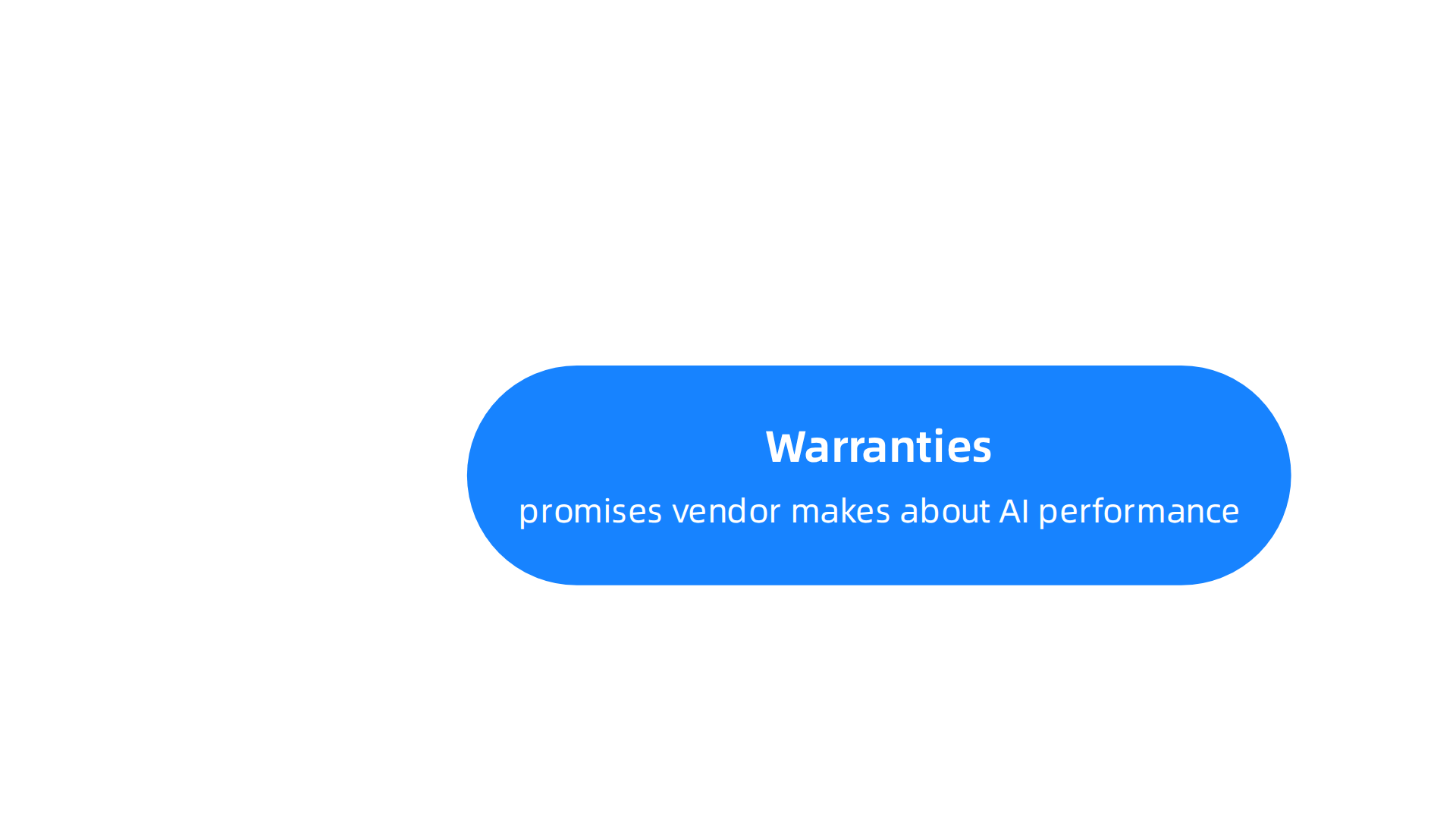
- Warranties: These are like promises the vendor makes about how the AI will perform. For example, they might promise that the AI will be accurate a certain percentage of the time or that it won’t break any laws. You need to make sure these promises cover the important points you found during your technical checks. A good checklist for evaluating AI vendors often highlights the need to understand model behavior and documented controls before signing AI Vendor Evaluation Checklist & Comparison Criteria.
- Indemnities: This part says who will pay if something goes wrong. For example, if the AI causes a legal issue or a data breach, the indemnity clause decides if the vendor or your company is responsible for the costs. This helps share the "regulatory risk" that comes with using new AI tools.
- Audit Rights: These rights allow you to check the vendor’s work. You might want to look at their systems or data to make sure they are following the rules and meeting their promises. This is especially important for compliance. Many expert checklists recommend checking the vendor’s security architecture and compliance framework alignment Enterprise AI Solutions Vendor Checklist for Regulated Industries.
- Remediation Obligations: This means what the vendor must do if the AI doesn’t work as promised. Will they fix it quickly? Will they offer a refund? Having clear steps written down helps when problems pop up. You can also read more about how to make sure your AI systems follow rules in 2026 with a guide on AI regulations 2026 compliance strategies for businesses.
How AI Pricing Connects to Costs and Rules
The way you pay for AI services also matters.
- Usage-Based Pricing: You pay based on how much you use the AI. For example, if you use a website builder AI to create many pages, you pay more. This model means your compliance costs, like monitoring data quality, might go up with usage.
- Outcome-Based Pricing: You pay based on the results the AI delivers. For instance, if the AI helps you save money, you might pay a percentage of those savings. This can align the vendor’s goals with yours, but you still need clear ways to measure those outcomes and make sure they meet ethical and legal standards.
Making sure your contract covers these areas carefully helps your company use AI tools responsibly and avoid unexpected costs or regulatory problems in 2026.
Stay on top of the fast-changing world of AI and regulation.
The AI Newsletter Worth Reading
Even after you have a good contract in place, your work is not done. The world of AI changes very quickly. This means you need ways to keep an eye on new rules and make sure your AI tools and vendors are always doing what they should. This is how you "future-proof" your company.
Future-proofing: monitoring regulatory change and vendor governance
Think of it like tending a garden. You plant seeds (your AI contract), but you still need to water and check for weeds (monitor changes and issues). If you use an AI tool like a ChatSonic AI or a durable AI website builder, you’ll want to make sure it keeps working well and follows all the rules, especially as those rules change.
Keep Up with Changing Laws
New AI laws and standards are popping up all the time in 2026. For example, the EU AI Act has been put into place in different steps, with full rules for high-risk AI starting in August 2026. Other places like California, Colorado, and Texas also have new rules for how AI is used, especially about being clear and fair with automated tools 2026 Data Security and Privacy Compliance Checklist: Key US State ….
Your tech pack, which is like your AI’s instruction manual, needs to be updated often. It must reflect these new rules. Regularly checking the laws and how they might affect your business helps you prepare and avoid problems. It’s smart to have a plan to constantly track these changes to ensure your company stays safe and compliant. You can learn more about how to navigate these challenges by exploring a guide on AI regulation 2026 navigate compliance and avoid risks.
Watch How Your AI Works (Monitoring)
After you start using an AI, it’s really important to keep watching it closely. AI models can change over time, which is called "model drift." This happens when the information the AI gets changes from the information it learned from. This can make the AI less accurate or cause it to act in unexpected ways Model Observability: Detect Drift & Failures in Prod.
To keep things running smoothly, companies use special tools to monitor their AI. They set up "Service Level Indicators" (SLIs) and "Service Level Objectives" (SLOs). These are like health checks for your AI. For instance, an SLI might measure how quickly an AI answers a question, and an SLO would be a goal, like "99.9% of answers must be given within 200 milliseconds" Production Monitoring: Drift, Regression & Alerting for Models. If the AI isn’t meeting these goals, it’s a sign that something might be wrong, and you need to look into it. This is true whether you’re using a simple website builder AI or a more complex system.
Working with Your Vendors
Your AI vendor should be a true partner. This means they should be open and honest about how their AI works. You should expect them to:
- Allow Audits: Let you or an independent third party check their systems to make sure they are following the rules and best practices. Many checklists for AI governance ask if vendors maintain an AI risk management plan and conduct risk assessments EU AI Act Audit Checklist 2026 – MyAnatomy.
- Be Transparent: Explain clearly how their AI makes decisions, especially for important tasks.
- Have Clear Ways to Fix Problems: If something goes wrong with the AI, there should be a plan for how the vendor will fix it and tell you about it. This includes clear "escalation paths," which means knowing who to talk to when a problem needs urgent attention. For example, issues with sensitive data should have a clear path for review.
By keeping these points in mind, you can make sure your company uses AI safely and correctly, even as the world around it changes.
Summary
This article explains why reviewing vendor tech packs for AI and software matters now and shows a practical way to evaluate them. It defines a tech pack as the technical blueprint for an AI product and walks through its key parts—technical specs, data schema, model artifacts, interoperability, security, and compliance—so teams understand what to look for. The guide gives a prioritized vendor checklist (must-haves vs nice-to-haves), step-by-step validation methods (documentation review, sandbox tests, artifact access, reference checks) and concrete technical tests like dataset audits, reproducibility checks and vulnerability scans. It also covers how to assess regulatory risk—data lineage, consent, cross-border transfer, audit logs and redress—and how jurisdictional differences affect evaluation. Finally, the article outlines operational needs (observability, retraining, rollback), contract points (warranties, indemnities, audit rights) and strategies to future-proof your program against changing AI rules. After reading, you’ll know what to demand from vendors, how to verify claims, and how to translate technical findings into contracts and ongoing governance.