

Why explainable AI matters for compliance teams and executives
Imagine using a tool that makes big decisions, but you don’t know why or how it chose its answer.

That’s often how Artificial Intelligence (AI) can feel to many businesses. In 2026, AI is everywhere, helping with everything from deciding who gets a loan to finding patterns in data. But with all this power comes a big need for trust and clarity. This is especially true for the people in charge of following rules and making sure the company stays out of trouble: your compliance teams and executives.
The world of AI is changing fast. Governments around the globe are making new rules for how companies can use AI. For example, the European Union’s AI Act will fully start on August 2, 2026, bringing big fines for companies that don’t follow the rules. This means that if your AI makes a bad decision, and you can’t explain how it got there, your company could face major risks, including huge financial penalties and damage to its good name. This is where explainable AI comes in.
What is explainable AI?
Explainable AI, or XAI, means that an AI system can show its work. It’s about making sure that when an AI makes a prediction, a recommendation, or a decision, you can understand why it did what it did. Think of it like a student who can not only give the right answer to a math problem but can also explain all the steps they took to get there.
The goal of explainable AI is to make these smart computer programs less like a "black box" where you only see the input and the output. Instead, XAI helps the AI tell you the reasons behind its actions. This is key for things like audits, proving accountability, and making sure the AI acts fairly and without bias. For instance, the National Institute of Standards and Technology (NIST) talks about four important principles for explainable AI systems, like providing clear reasons and explanations that make sense to people
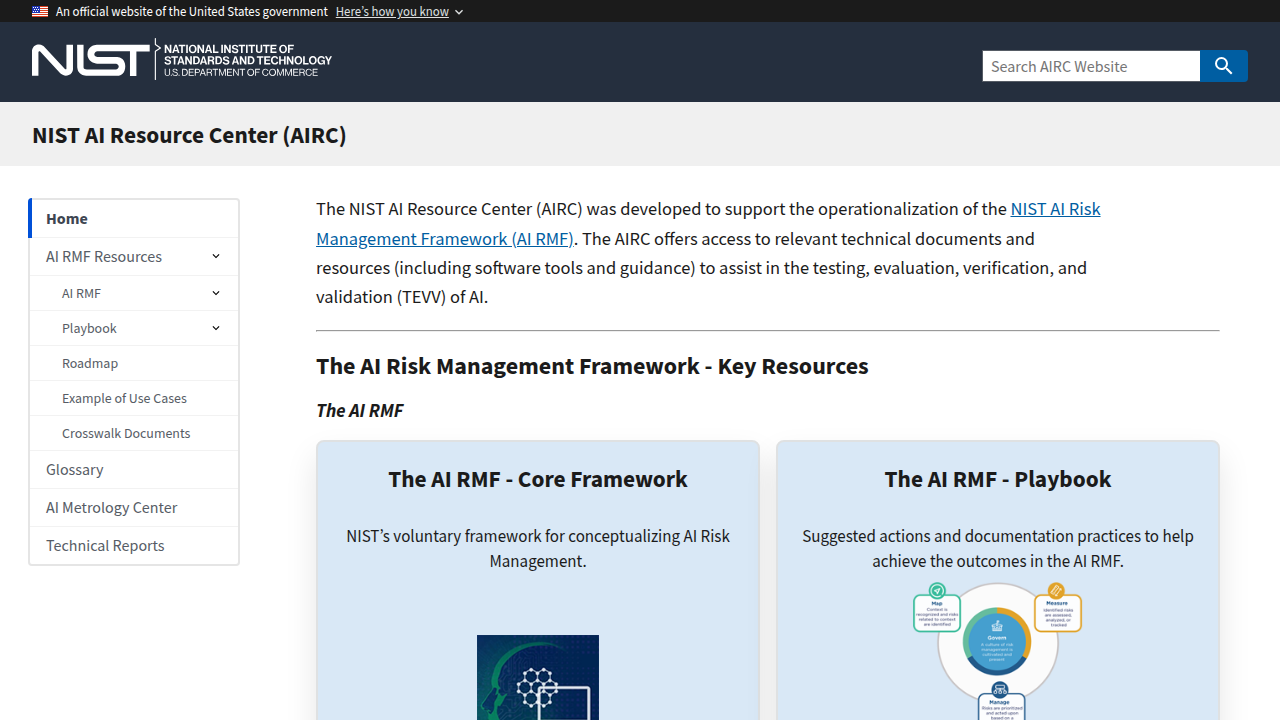
Four Principles of Explainable Artificial Intelligence. This helps build trust in AI systems AI Risks and Trustworthiness.
Whether you’re using simple AI tools, powerful generative AI that creates new content, or complex agentic AI that can act on its own, understanding their decisions is very important. This is not just a technical problem for computer science experts. It’s a critical business issue for everyone from the product team building the AI to the executives who stand behind its use.
In the next parts of this article, we will dig deeper into practical principles and offer a checklist to help your compliance, legal, and product teams make sure your AI systems are not only smart but also understandable and compliant with the rules of 2026.
Stay up-to-date on all the latest AI regulation news and insights. Get clear daily AI updates from The Deep View Newsletter.
Understanding what explainable AI (XAI) is, and why it matters, is just the start. Actually putting it into practice means we need to get clear on some key words. Terms like "interpretability," "explainability," and "transparency" often get used in similar ways, but they mean different things in the world of Artificial Intelligence.
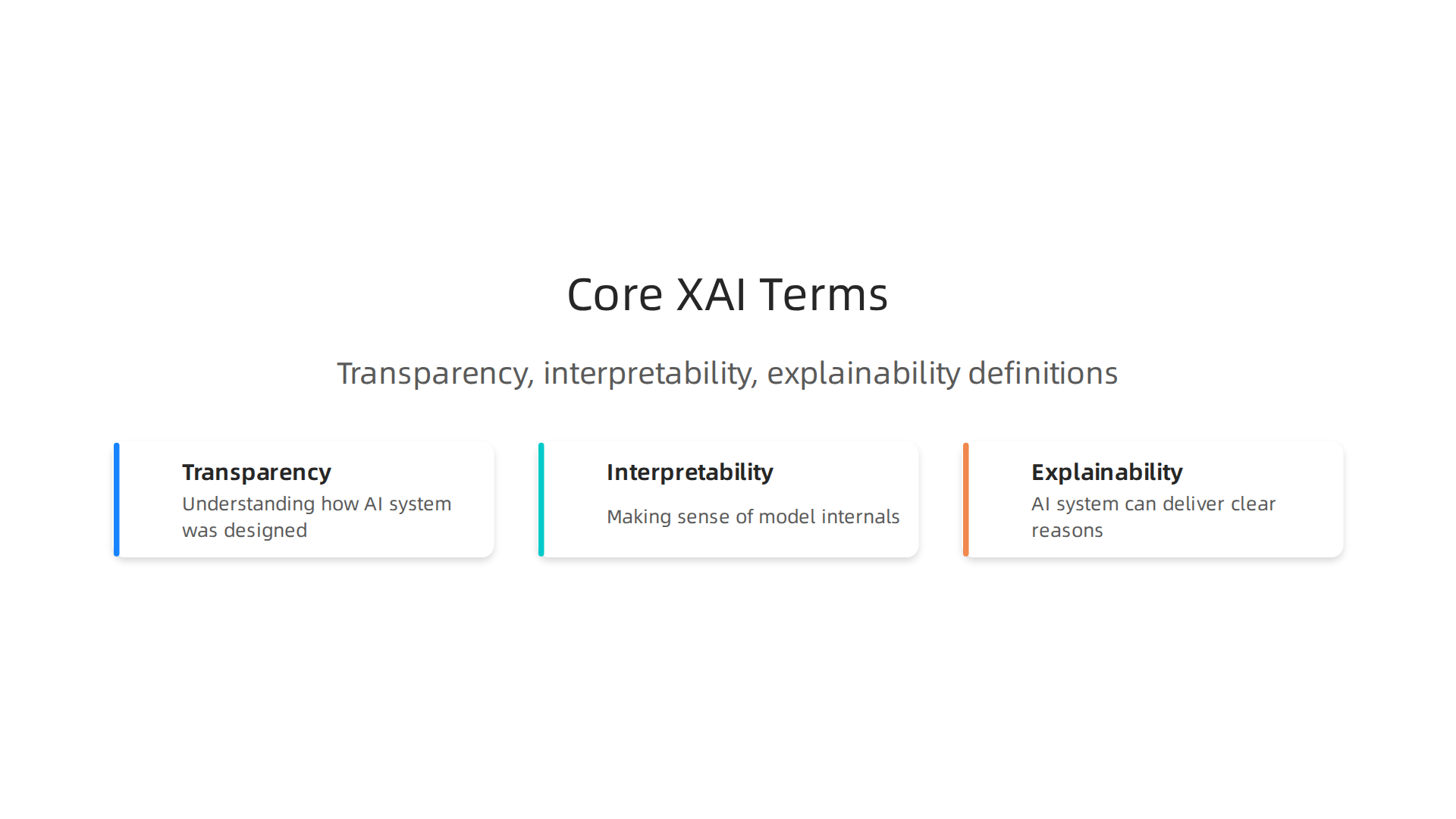
For compliance teams and business leaders in 2026, knowing these differences is super important.

It helps you meet new rules and make sure your AI systems are truly trustworthy.
Core concepts: interpretability, explainability, transparency
Imagine you’re trying to understand how an AI works. You might want to know what it’s doing, how it does it, and why it made a certain choice. These three questions point to the core ideas of transparency, explainability, and interpretability.
Transparency
Transparency in AI is about knowing the "what." It means understanding how an AI system was designed, what data it used, and its overall purpose. Think of it as having a clear view of the AI’s blueprint and ingredients. When an AI system is transparent, you can see its structure and understand its intended function. The National Institute of Standards and Technology (NIST) describes transparency as helping answer "what happened" in an AI system AI RMF PLAYBOOK. This helps build trust and makes sure the system is used correctly.
Interpretability
Interpretability helps us understand the "why" behind an AI’s output in the context of its goals. It focuses on making sense of an AI model’s internal workings or its predictions in a way that humans can easily grasp. For example, if an AI predicts you’ll get a loan, an interpretable model might show you that your good credit score and stable job were the main reasons. It’s about how well a person can understand why an AI made a certain decision or prediction A global taxonomy of interpretable AI: unifying the terminology …. Simple AI models are often more interpretable than very complex ones, meaning it’s easier to see how they got to their answers.
Explainability
Explainability, or XAI, gives us the "how." It’s about making sure an AI system can deliver clear reasons or evidence for its decisions and processes. While interpretability lets you see why a decision makes sense, explainability provides a detailed account of how the AI got there. It translates the AI’s internal reasoning into something humanly understandable Evaluating Explainability: A Framework for Systematic …. For instance, if an AI approves a loan, an explanation might show the specific data points it used and the steps in its logic, rather than just the final factors. Explainable AI is a growing field in computer science for artificial intelligence, dedicated to making these systems less like a "black box."
These three concepts work together. A transparent AI system sets the stage. An interpretable AI lets you understand its direct outputs. And an explainable AI tells you the detailed story of its decision-making.
Why Precise Definitions Matter for Compliance
For compliance teams, these clear definitions are vital. Knowing the difference helps you:
- Identify specific risks: If an AI isn’t transparent, you might not know its purpose. If it’s not interpretable, you can’t tell if its decisions are fair. If it’s not explainable, you can’t prove how it reached a decision in an audit.
- Meet legal requirements: Many new AI regulations, like those coming in 2026, demand different levels of transparency, interpretability, and explainability depending on how risky the AI is.
- Communicate clearly: When discussing AI with legal, product, or executive teams, using precise terms avoids confusion and ensures everyone is on the same page about what needs to be achieved for compliance.
How Concepts Apply to Different AI Types
The level of transparency, interpretability, and explainability needed can change a lot depending on the kind of AI system you’re using.
- Simple Models: For straightforward AI tools, achieving high interpretability and transparency might be relatively easy.
- Generative AI: Systems that create new content (like text or images) may need explanations for why certain content was generated or what data influenced its creation.
- Agentic AI: These are advanced AI systems that can act on their own to achieve goals. Understanding their decision processes and making sure they are explainable is crucial, especially in high-stakes situations. You can learn more about this complex AI type in our guide on What is Agentic AI and how it is changing business in 2026. The requirements for explainability in agentic AI vs generative AI can differ quite a bit due to their different levels of autonomy and impact.
Measurable Properties for Compliance Teams
To make sure your AI systems are compliant, your teams need to track specific measurable properties. This helps turn fuzzy ideas into concrete actions.
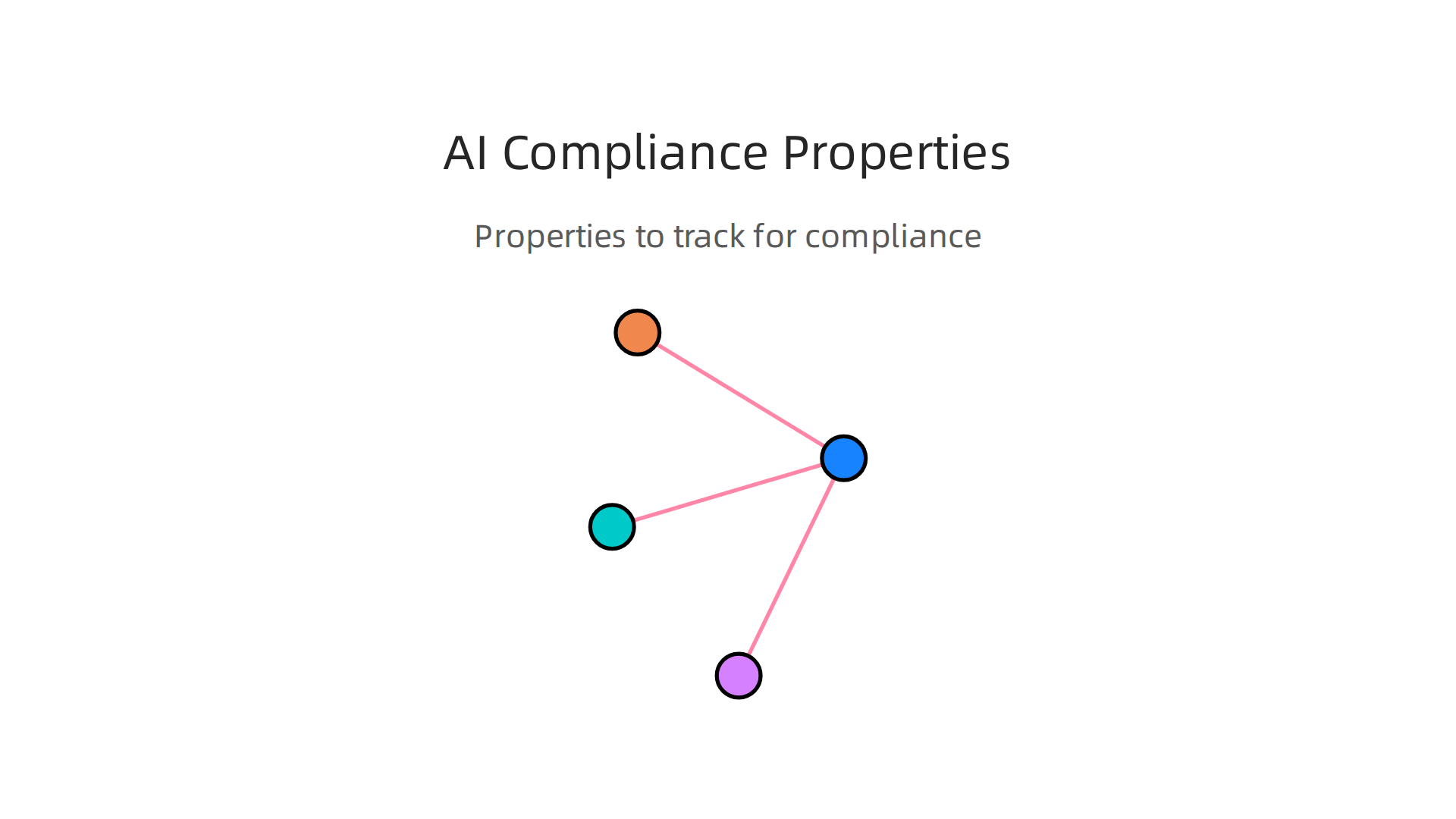
Compliance, legal, and product teams should look at:
- Inputs: What data goes into the AI? Is it fair, unbiased, and properly documented?
- Features: What parts of the data did the AI focus on? Were these features relevant and appropriate for the decision?
- Decision Logic: How did the AI connect the inputs and features to its output? Can you trace the steps it took?
- Explanations: Can the AI provide clear, understandable reasons for its decisions? Are these explanations accurate and helpful to a human reviewer?
Keeping detailed records, like audit trails and metadata for all data and model versions, is key. This helps provide documented evidence that your AI meets governance standards Explainable AI: The Complete Enterprise Guide for 2026. Building AI that can explain its own reasoning from the start is an important step in 2026 for building trusted and compliant systems.

Now that we understand what explainability means, the next step is to actually build it into our AI products. This means thinking about explainable AI from the very start, not just adding it later.

By making explainability a core part of product design, companies can create trustworthy AI systems that meet important rules and give users clear answers.
Principles for building explainability into product design
To properly build explainable AI, we need to think about it at every step of making an AI product. This is called integrating explainability into the product lifecycle.
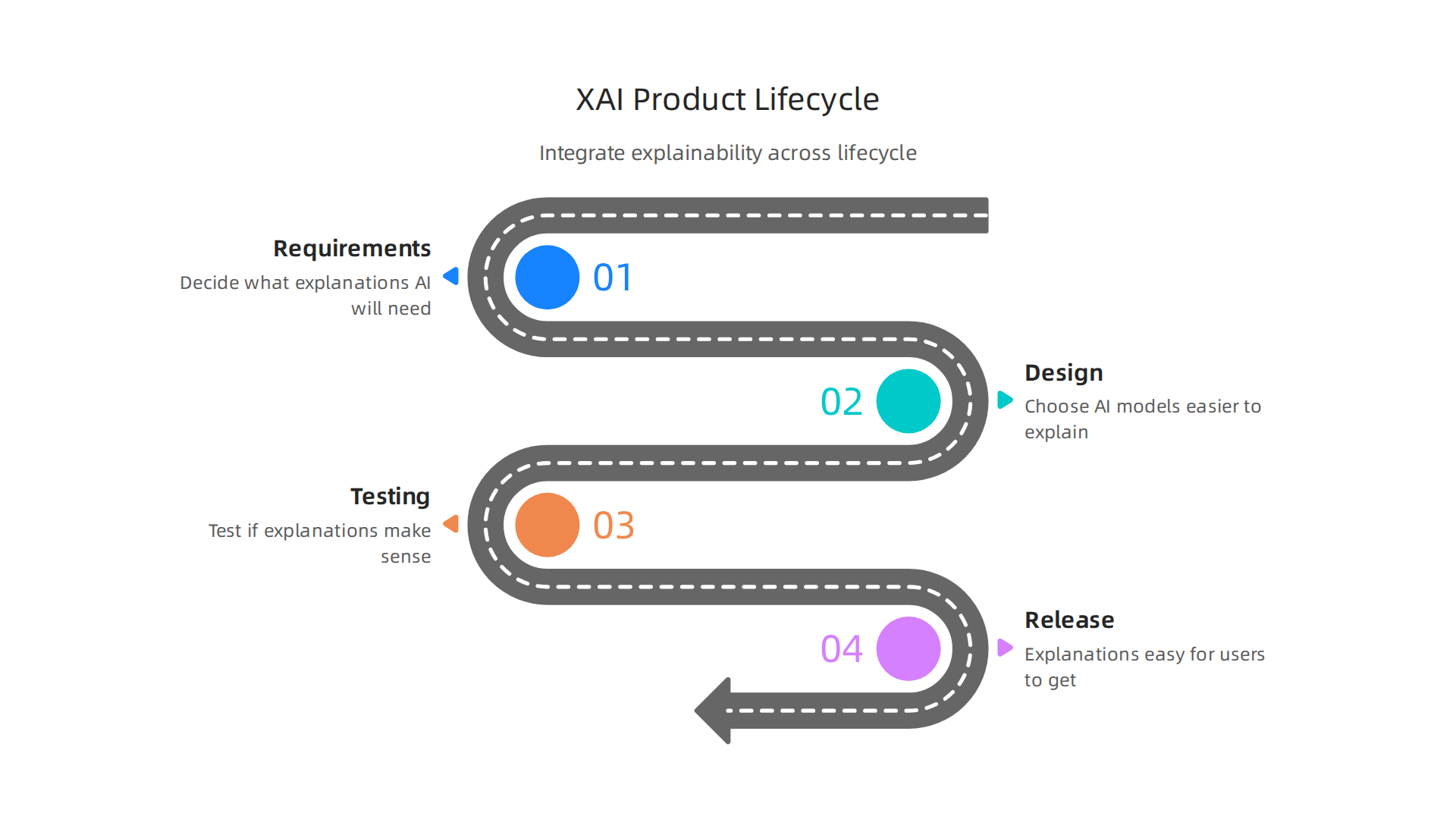
- Requirements: Even before you start building, decide what kinds of explanations your AI will need. How deep should these explanations go? Who needs to understand them (a user, a lawyer, an auditor)? Defining these needs early helps shape the whole project.
- Design: During the design phase, choose AI models that are easier to explain if possible. If you must use complex models, plan how you will get explanations from them. For example, some techniques in computer science for artificial intelligence are made to help explain complex "black box" AI.
- Testing: Test not just if your AI works well, but also if its explanations make sense and are accurate. Do they truly reflect how the AI made its decision?
- Release: When the product is ready, make sure the explanations are easy for users to get and understand. Also, provide clear ways for people to give feedback on these explanations.
Making explainability a priority from the beginning helps avoid problems later.
Technical and organizational controls for clarity
To make sure you can always explain your AI’s decisions, you need good systems in place. These are called technical and organizational controls:
- Logging: Keep a detailed record of everything your AI does. This means logging the data it uses, the specific version of the AI model that made a decision, and the outputs it gave. These records help you look back and see exactly what happened if there’s a question. This is especially true for different AI types like agentic AI vs generative AI, where logging can differ.
- Versioning: Always know which version of your AI model is running at any time. When you make changes or updates, keep track of them. This allows you to link a specific decision to the exact model version that made it.
- Model Cards: Think of model cards as detailed reports for your AI models. They should describe the model’s purpose, how it was built, what data it used, how it performs, and any known limitations or biases. This documentation provides valuable context for anyone reviewing the AI. Such documentation also helps provide proof that a model meets the required AI governance standards Explainable AI: The Complete Enterprise Guide for 2026.
By keeping good records, you create a clear audit trail. This means you can show step-by-step how an AI decision was made, which is super important for legal checks and building trust. Building AI that can explain its own reasoning from the start is a key step in 2026. You can find out more about building AI systems compliantly by reading our guide on how to make an AI compliant with global regulations in 2026.
Balancing performance and understanding
Sometimes, making an AI model more explainable might mean it doesn’t perform quite as well. For example, a simpler AI model is often easier to understand but might not be as accurate as a very complex one. This is a common trade-off between model performance and interpretability.
When building AI products, teams often have to decide where to draw the line. It’s important to document these decisions carefully. You should write down:
- Why a certain type of AI model was chosen.
- What steps were taken to make it as explainable as possible.
- Any choices made where explainability was prioritized over a small gain in performance, or vice-versa, and the reasons why.
This clear documentation helps compliance teams review your AI systems. It shows that thought was given to explainability and that choices were made responsibly. In 2026, with new regulations taking effect, this detailed record-keeping is more important than ever.
Staying on top of the latest AI rules and best practices can be tricky.
Get clear daily AI updates by subscribing to The AI Newsletter Worth Reading.
Now that we’ve talked about balancing how well AI works with how easy it is to understand, let’s look at how companies actually put explainable AI into practice every day. In 2026, it’s not enough to just have explainable AI; you also need clear ways to show that your AI is working as it should, especially for important checks and rules. This means building good processes for handling questions, looking into problems, and getting ready for official audits.
Handling Requests and Investigations
To truly operationalize explainable AI, businesses need clear steps for what happens when someone asks for an explanation. This includes:
- Explanation Requests: Imagine a user asks why an AI made a certain decision. There should be a fast, clear way to get that explanation. This might mean having a special team or tools ready to pull up the AI’s reasoning. This helps with different AI types, like if you’re explaining a decision from an agentic AI versus a generative AI.
- Incident Investigations: If an AI makes a mistake or does something unexpected, you need a process to find out why. This involves looking at the AI’s logs, the data it used, and the model version. It’s like being a detective for your AI, using all the records you’ve kept to trace back its steps.
- Regulatory Audits: Governments and other groups will want to see proof that your AI is fair and explainable. You need a system to gather all the required information quickly and show that your AI follows the rules. This is crucial for navigating compliance and avoiding risks. You can learn more about this by exploring resources on AI regulation 2026 navigate compliance and avoid risks.
Defining Roles and Responsibilities
For explainable AI to work well, everyone needs to know their part. Different teams within a company play a role:
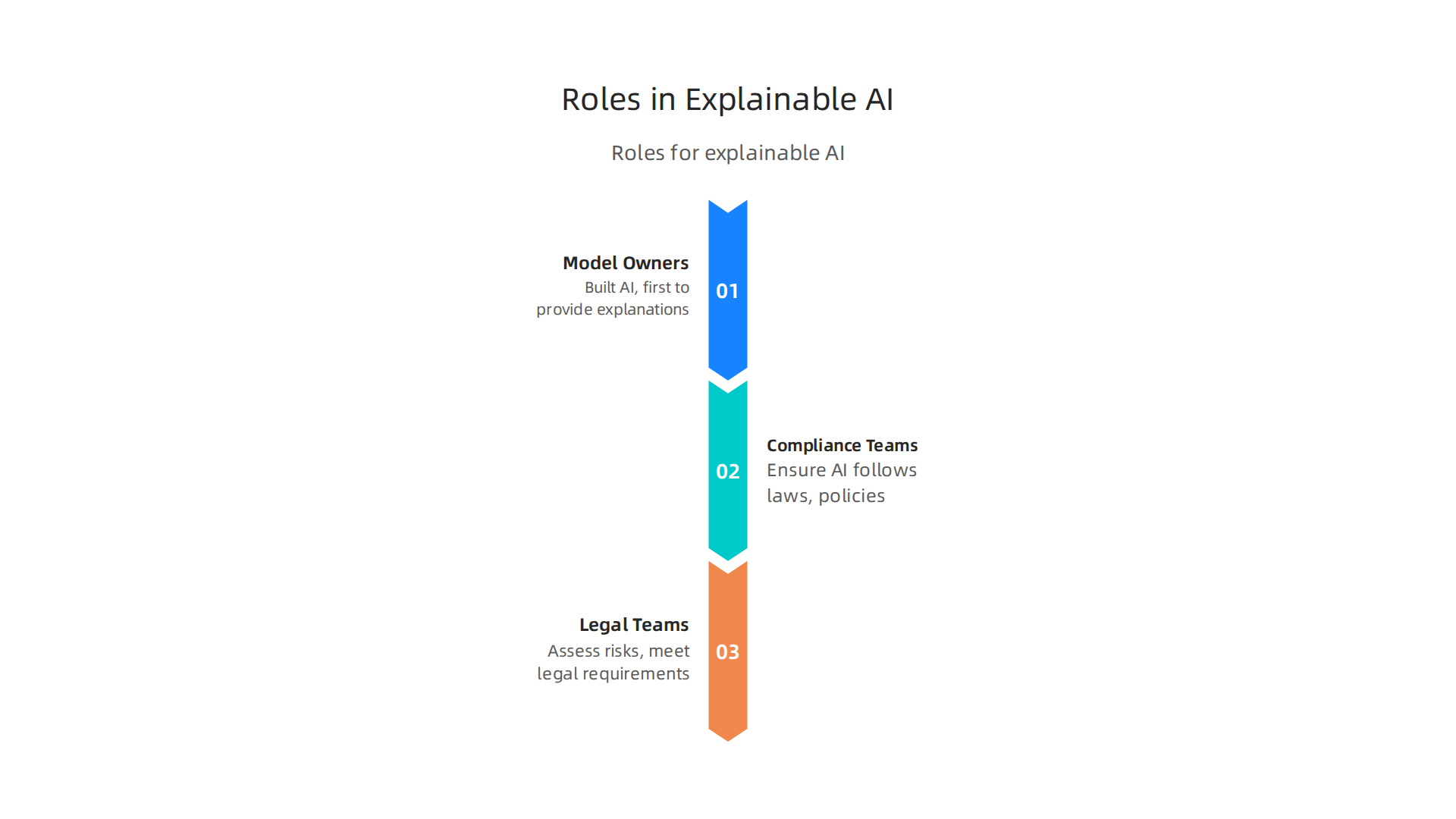
- Model Owners: These are the people who built the AI. They understand how it works and are usually the first to provide technical explanations. They make sure the AI is built to be explainable from the start, often using techniques from computer science for artificial intelligence that help with transparency.
- Compliance Teams: These experts make sure the AI follows all the laws and company policies. They help translate technical explanations into language that regulators can understand.
- Legal Teams: They look at the legal risks and ensure that explanations meet legal requirements, especially if an AI’s decision is challenged.
Having clear rules for who does what, and how these teams share information, is key. This helps make sure explanations are consistent and correct.
Key Evidence for Audits
When an audit happens, you need solid proof. This isn’t just about saying your AI is explainable; it’s about showing it.

Here are some important things to prepare:
- Reproducibility: Can you show how the AI came to the same decision again if you give it the same inputs? This proves the AI acts consistently.
- Provenance: This means knowing exactly where all the data came from and how it was used to train the AI. It also means tracking every step the AI took to make a decision. A strong audit trail needs to capture many details for every AI-influenced decision, including timestamps, unique decision IDs, and the specific AI system and model versions used
AI Audit Trail Requirements: A 2026 Checklist for Finance.
- Explanation Quality: The explanations given must be clear, correct, and useful to the people who need them. An auditor will check if these explanations truly help understand the AI’s behavior, not just hide it.
By having these processes, roles, and evidence ready, companies in 2026 can confidently show that their explainable AI systems are trustworthy and compliant with all the new regulations.
Now that we’ve talked about balancing how well AI works with how easy it is to understand, let’s look at how companies actually put explainable AI into practice every day. In 2026, it’s not enough to just have explainable AI; you also need clear ways to show that your AI is working as it should, especially for important checks and rules. This means building good processes for handling questions, looking into problems, and getting ready for official audits.
Handling Requests and Investigations
To truly operationalize explainable AI, businesses need clear steps for what happens when someone asks for an explanation. This includes:
- Explanation Requests: Imagine a user asks why an AI made a certain decision. There should be a fast, clear way to get that explanation. This might mean having a special team or tools ready to pull up the AI’s reasoning. This helps with different AI types, like if you’re explaining a decision from an agentic AI versus a generative AI.
- Incident Investigations: If an AI makes a mistake or does something unexpected, you need a process to find out why. This involves looking at the AI’s logs, the data it used, and the model version. It’s like being a detective for your AI, using all the records you’ve kept to trace back its steps.
- Regulatory Audits: Governments and other groups will want to see proof that your AI is fair and explainable. You need a system to gather all the required information quickly and show that your AI follows the rules. This is crucial for navigating compliance and avoiding risks. You can learn more about this by exploring resources on AI regulation 2026 navigate compliance and avoid risks.
Defining Roles and Responsibilities
For explainable AI to work well, everyone needs to know their part. Different teams within a company play a role:
- Model Owners: These are the people who built the AI. They understand how it works and are usually the first to provide technical explanations. They make sure the AI is built to be explainable from the start, often using techniques from computer science for artificial intelligence that help with transparency.
- Compliance Teams: These experts make sure the AI follows all the laws and company policies. They help translate technical explanations into language that regulators can understand.
- Legal Teams: They look at the legal risks and ensure that explanations meet legal requirements, especially if an AI’s decision is challenged.
Having clear rules for who does what, and how these teams share information, is key. This helps make sure explanations are consistent and correct.
Key Evidence for Audits
When an audit happens, you need solid proof. This isn’t just about saying your AI is explainable; it’s about showing it. Here are some important things to prepare:
- Reproducibility: Can you show how the AI came to the same decision again if you give it the same inputs? This proves the AI acts consistently.
- Provenance: This means knowing exactly where all the data came from and how it was used to train the AI. It also means tracking every step the AI took to make a decision. A strong audit trail needs to capture many details for every AI-influenced decision, including timestamps, unique decision IDs, and the specific AI system and model versions used AI Audit Trail Requirements: A 2026 Checklist for Finance.
- Explanation Quality: The explanations given must be clear, correct, and useful to the people who need them. An auditor will check if these explanations truly help understand the AI’s behavior, not just hide it.
By having these processes, roles, and evidence ready, companies in 2026 can confidently show that their explainable AI systems are trustworthy and compliant with all the new regulations.
Technical Approaches: Ante-Hoc, Post-Hoc, and Hybrid Explanations
When we talk about how to make AI explainable, there are a few main technical ways to do it. These methods help us understand how different AI tools make their choices. Researchers often put these into groups like "ante-hoc" or "post-hoc," which just means "before" or "after" the AI model is built or used.
Ante-Hoc Explanations: Explaining from the Start
Ante-hoc methods are all about building AI models that are clear and easy to understand from the very beginning. Think of it like a glass box where you can always see inside. These are called "inherently interpretable models" because they are designed to be transparent. Simple models like decision trees (which work like a flowchart of yes/no questions) or linear regression (which shows how different factors add up) are good examples.
- Strengths: Because these models are clear by design, it’s easier to trust their decisions, especially in important areas like finance or healthcare. They are great for regulatory contexts where you need solid proof of why a decision was made. Experts say that explainable AI needs to tell the difference between these kinds of models and explanations given after the fact, especially for high-risk situations Making AI Make Sense: Explainable AI for Trustworthy Intelligence.
- Limitations: Sometimes, these simple models aren’t as good at solving very complex problems as more advanced AI. They might not be the best choice if you need super-high accuracy for a tough task.
Post-Hoc Explanations: Explaining After the Fact
Post-hoc methods come into play after a complex AI model has already been built and is making decisions. These are like trying to peek into a "black box" AI. Since many powerful AI models, especially those built using advanced computer science for artificial intelligence, are very complicated, we need special tools to explain them.
Here are a few common types:
-
Feature Attribution: These tools figure out which parts of the input data (the "features") were most important for the AI’s decision. For example, if an AI decides to approve a loan, feature attribution might show that your credit score and income were the biggest reasons why. Popular methods include SHAP and LIME AI Explainability 2026: SHAP, LIME, CoT Guide. You can even watch a video explaining these post-hoc methods in explainable AI What Are Post-hoc Explanation Methods In Explainable AI.
-
Surrogate Models: This is where you build a simpler, explainable model (like a decision tree) to mimic the behavior of the complex AI. The simple model then gives the explanation.
-
Counterfactual Explanations: These tell you what small change to the input would have changed the AI’s decision. For instance, if your loan was denied, a counterfactual explanation might say, "If your income was $5,000 higher, your loan would have been approved." This helps you understand what needed to be different.
-
Strengths: Post-hoc methods let us use very powerful AI models that can solve hard problems, and then still get some kind of explanation. This means businesses don’t have to give up accuracy for transparency.
-
Limitations: The explanations from post-hoc methods aren’t always perfect. They might not show the true inner workings of the complex AI, and sometimes, the quality of these explanations can vary a lot A Cross-Domain Benchmark of Intrinsic and Post Hoc Explainability. This can be a challenge in regulatory settings where exact proof is needed.
Hybrid Explanations
Sometimes, companies use a mix of both ante-hoc and post-hoc methods. They might start with a somewhat transparent model and then use post-hoc tools to give more detailed explanations for specific decisions. This way, they can try to get the best of both worlds: good accuracy and helpful explanations.
Choosing the Right Approach for Your Business
Picking the right technical approach for explainable AI depends on a few things:
- Risk Profile: How risky are the AI’s decisions? For very high-risk areas, like medical diagnoses or self-driving cars, ante-hoc methods or very robust post-hoc explanations might be required. Less critical tasks might allow for more flexible post-hoc tools.
- Data Constraints: What kind of data do you have? And how much of it? The data can sometimes guide which models and explanation methods work best.
- Stakeholder Needs: Who needs the explanation, and what do they need it for? A data scientist might want a technical explanation, while a customer or a regulator needs a simple, clear answer.
By carefully thinking about these points, businesses can choose the best way to make their different AI systems explainable and trustworthy. To make sure your overall AI strategy includes these important compliance steps, consider how to integrate regulatory compliance into your corporate AI strategy.
Want to stay on top of the latest AI rules and trends?
The world of AI is changing fast, and keeping up with new regulations can be tough. Get clear daily AI updates directly to your inbox so you can stay informed and make smart choices for your business.
The AI Newsletter Worth Reading
After understanding the different ways to build explainable AI systems, the next step is to make sure these explanations actually work. It’s not enough to just have explanations; we need to know if they are clear, correct, and helpful. In 2026, measuring the quality and usefulness of explainable AI is crucial for both trusting the AI and meeting new rules.
Measuring Explanation Quality and Effectiveness
To really check how well an AI’s explanation performs, we use different kinds of measurements. These help us understand if the explanation truly helps someone understand why the AI made a decision.
How We Measure Explanation Quality
We can look at explanation quality in two main ways: with numbers (quantitative) and with human feedback (qualitative).
- Fidelity: This asks, "How closely does the explanation match what the AI actually did?" A good explanation should truly reflect the AI’s inner workings, not just a simplified story. If an explanation has high fidelity, it means it is a truthful picture of the AI’s behavior.
- Consistency: This means that if an AI makes a similar decision in similar situations, its explanations should also be similar. If the explanations are all over the place for identical cases, they aren’t consistent.
- Human Interpretability Tests: This is where we bring in real people. We ask them to read an explanation and see if they can understand it. Do they learn why the AI decided what it did? Can they predict what the AI might do next? This helps us know if the explanation is easy for humans to grasp. Sometimes, simpler models designed from the start to be transparent (ante-hoc models) are easier to interpret than explanations created after a complex AI makes a choice (post-hoc models). Research even looks at how to find the right method for evaluating and ranking how well different explainable AI methods work Finding the Right XAI Method—A Guide for the Evaluation and Ranking of Explainable AI Methods in Climate Science.
Designing User-Centric Evaluation
For explainable AI to be truly effective, the explanations must be useful to the people who need them. This is especially true for compliance teams and others affected by AI decisions.
- Who Needs the Explanation? A software engineer working with computer science for artificial intelligence might need very technical details. But a customer whose loan application was denied needs a simple, clear reason they can act on.
- Testing with Stakeholders: Compliance teams should work with real users to test explanations. This means watching how people interact with the explanations and asking for their feedback. Do they feel like the explanation is fair? Do they understand what they can do next? A good framework is important for evaluating how helpful explanations are, especially for local decisions made by complex models A Framework for Evaluating Post-Hoc Local Explanation Methods. This direct feedback is key to making explainable AI practical and trustworthy. The goal is for people to accept and trust the AI, which is a major part of the technology acceptance model guides AI acceptance and public trust.
Common Pitfalls and Reproducible Evidence
Even with the best intentions, measuring explanation quality can be tricky. There are some common mistakes to avoid:
- Measuring the Wrong Thing: Sometimes, companies focus on metrics that are easy to get but don’t actually show if the explanation is useful to a human. For example, an explanation might be very "faithful" to the AI’s math but still not make sense to a person.
- Lack of Standards: Because explainable AI is still growing, there aren’t always clear, agreed-upon ways to measure explanation quality across all industries. This can make it hard to compare different AI systems or show proof to regulators. It means that, as of 2026, the quality of explanations can still vary quite a bit across different methods and areas where AI is used.
- Creating Reproducible Evidence: For audits and legal checks, you need to be able to show exactly how you measured the explanation quality. This means keeping clear records of all tests, the data used, and the results. It’s like having a step-by-step guide so anyone can redo your evaluation and get the same results. This kind of clear evidence is essential to build AI systems compliantly in 2026. Some experts even suggest that current explainable AI policies don’t do enough to check explanations given after a decision is made, especially in high-risk areas Explainable AI Policy: It Is Time to Challenge Post Hoc Explanations.
By carefully measuring, testing with real users, and keeping good records, businesses can prove their explainable AI systems are not only technically sound but also truly helpful and compliant.
After we check how well explainable AI works, the next big step is to understand that the rules for AI are different all over the world. It is not enough for an explanation to be clear and correct; it also needs to follow the laws in every place your AI is used. In 2026, companies need to look at these different rules to make sure their explainable AI systems meet all required standards.
Cross-Jurisdictional Considerations and Policy Trends (2026 Outlook)
The world of AI rules is like a big puzzle with many different pieces. What one country expects from explainable AI might be different from another. Businesses that use AI across many countries, or even sell products to different regions, must pay close attention to these varying expectations.
How Explainability Expectations Change by Region
Different parts of the world have their own ideas about how AI should be explained.
- The European Union (EU): The EU is a leader in setting strong rules for AI. Their AI Act, which will be fully enforced by August 2, 2026, has strict demands for explainable AI, especially for systems that are considered "high-risk." This means companies must show clear explanations for how their AI makes decisions. Businesses selling to the EU need to follow this Act, no matter where they are based in the world, as detailed in guides for 2026 Global AI Regulations.
- The United States (US): The US has a different approach. Instead of one big federal law, many states are creating their own rules. The US tends to lean more towards guidance and voluntary agreements, but this is changing with new state laws coming out in 2026.
- Asia-Pacific: This region often favors rules that focus on specific industries or types of AI. They might have strong rules for how generative AI is used, but perhaps less strict rules for other kinds of AI.
Because of these differences, AI governance in 2026 is seeing a mix of mandatory rules, government policies, and industry standards Global Fragmentation of AI Governance and Regulation.
Taking the Highest-Common-Denominator Approach
For companies working globally, trying to meet every single different rule can be very hard. That is why it is often best to follow a "highest-common-denominator" approach. This means you aim to meet the strictest rules from any region you operate in. If you meet the strictest rules, you will likely meet all the less strict ones too. This helps simplify compliance and reduces the risk of making mistakes in different places.
Emerging Policy Trends and Enforcement Priorities
As of 2026, some clear trends are showing up in AI policy around the world:
- Transparency: Many new rules push for more openness about how AI works. This means AI systems, including those using advanced different AI models or agentic AI vs generative AI, will need to be more clear about their data and decision-making steps.
- Risk-Based Rules: Regulators are focusing more on AI systems that could cause serious harm, like those used in healthcare, hiring, or critical infrastructure. These high-risk systems will face the most demanding explainability rules.
- Audits and Accountability: Governments want companies to be able to show proof that their AI systems are fair, safe, and explainable. This means regular checks and strong records are becoming more important.
Practical Steps to Align Global Programs
Compliance teams can take a few key steps to handle these global rules:
- Policy Mapping: Create a map of all the AI laws and guidelines that apply to your business in every country you operate in. This helps you see where the rules are similar and where they are different.
- Prioritization: Figure out which rules are the most important or the most strict for your business. Focus your efforts there first.
- Standardized Templates: Use the same types of documents and processes for explainability and compliance across all your regions. This makes it easier to keep track of everything and show your work if an audit happens. Learning how to build a technology strategy board for EU AI Act 2026 compliance can be a great starting point for this.
By carefully planning and working across different teams, businesses can make sure their explainable AI systems are compliant everywhere. This also makes sure that everyone using the AI, whether they are a computer science for artificial intelligence expert or a regular customer, can trust its decisions.
To stay on top of all these fast-changing rules and keep your AI strategies compliant, it helps to have reliable updates.
Get clear daily AI updates from The AI Newsletter Worth Reading.
Summary
This article explains why explainable AI (XAI) is essential for compliance teams and executives in 2026, when new rules like the EU AI Act increase legal and reputational risk. It defines core concepts—transparency, interpretability, and explainability—and shows how they differ and work together to make AI decisions understandable. The piece outlines practical product-design principles and organizational controls (logging, versioning, model cards) to build explainability from the start. It compares technical approaches—ante‑hoc, post‑hoc, and hybrid—so teams can balance performance with clarity. The article also covers how to measure explanation quality, run investigations, prepare audit evidence, and map global regulatory expectations. Readers will learn concrete steps to operationalize XAI, document choices for auditors, and align programs across jurisdictions to reduce risk. The goal is to enable compliance, legal, and product teams to demonstrate trustworthy, auditable AI in a rapidly changing regulatory landscape.