

Why a focused artificial intelligence series matters now
In 2026, it feels like everyone is talking about artificial intelligence, or AI. You might see news about new AI tools every day. But with so much information, it’s easy to get lost. Many businesses and their leaders are finding it hard to understand what AI means for them.

The learning materials about AI are everywhere, but they aren’t always put together in a way that truly helps. This can lead to a lot of confusion and make it tough for companies to keep up.
This problem is bigger than just knowing what AI is. It’s about knowing how to use it safely and correctly.
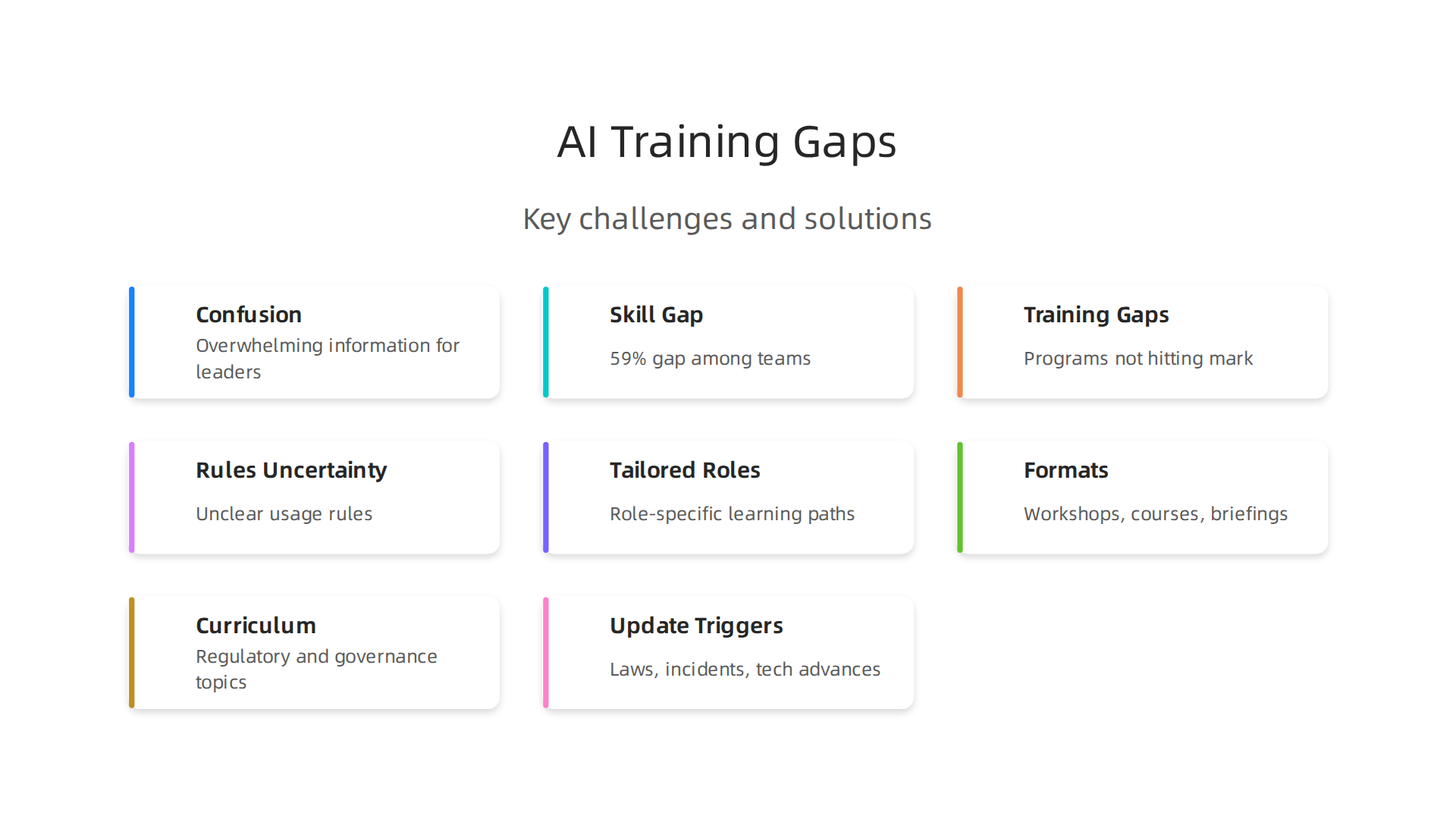
Right now, there’s a lot of uncertainty about the rules for AI. Governments are still figuring out the best ways to control how AI is used. This means businesses have to guess sometimes, and that can be risky. For example, a 2026 survey found that even though 82% of leaders say their company offers some AI training, 59% still feel there’s a big gap in AI skills among their teams Why Traditional AI Training Isn’t Working in 2026.
This shows that the training available isn’t always hitting the mark. Another report from 2026 highlighted that 87% of companies see skill gaps in AI for their staff AI Corporate Training Statistics 2026.
It’s clear that many organizations are investing in AI training, but they’re still struggling to define what real AI understanding looks like for different jobs within their company. Executives need to know how AI changes strategy. Compliance teams need to understand the new rules. Investors need to see where the real value and risks are.
That’s why a clear, focused artificial intelligence series is so important right now. This series will give you a simple, step-by-step way to understand AI, from basic ideas to how it affects rules and money. We want to help you cut through the noise and get to what really matters. You’ll find a structured guide for choosing the right AI education, seeing if it really works, and building learning plans that fit specific needs. This means you can find answers for your executives, compliance experts, and investors. Our goal is to make sure you know how to use AI strategically and effectively.
Throughout this artificial intelligence series, we will break down big ideas into easy parts. We will cover important things like AI regulation 2026 so you can keep your business safe. This way, you and your team can navigate the world of AI with confidence, make smart choices, and avoid problems.
To get even more helpful, up-to-date information on AI and technology rules delivered right to your inbox, be sure to sign up.
The AI Newsletter Worth Reading
Who should run or commission an artificial intelligence series and why it matters
To truly make smart choices and navigate the world of AI with confidence, different people in a company need to learn specific things. An effective artificial intelligence series is not a one-size-fits-all training program. Instead, it must be tailored to meet the unique needs of various teams and leaders.
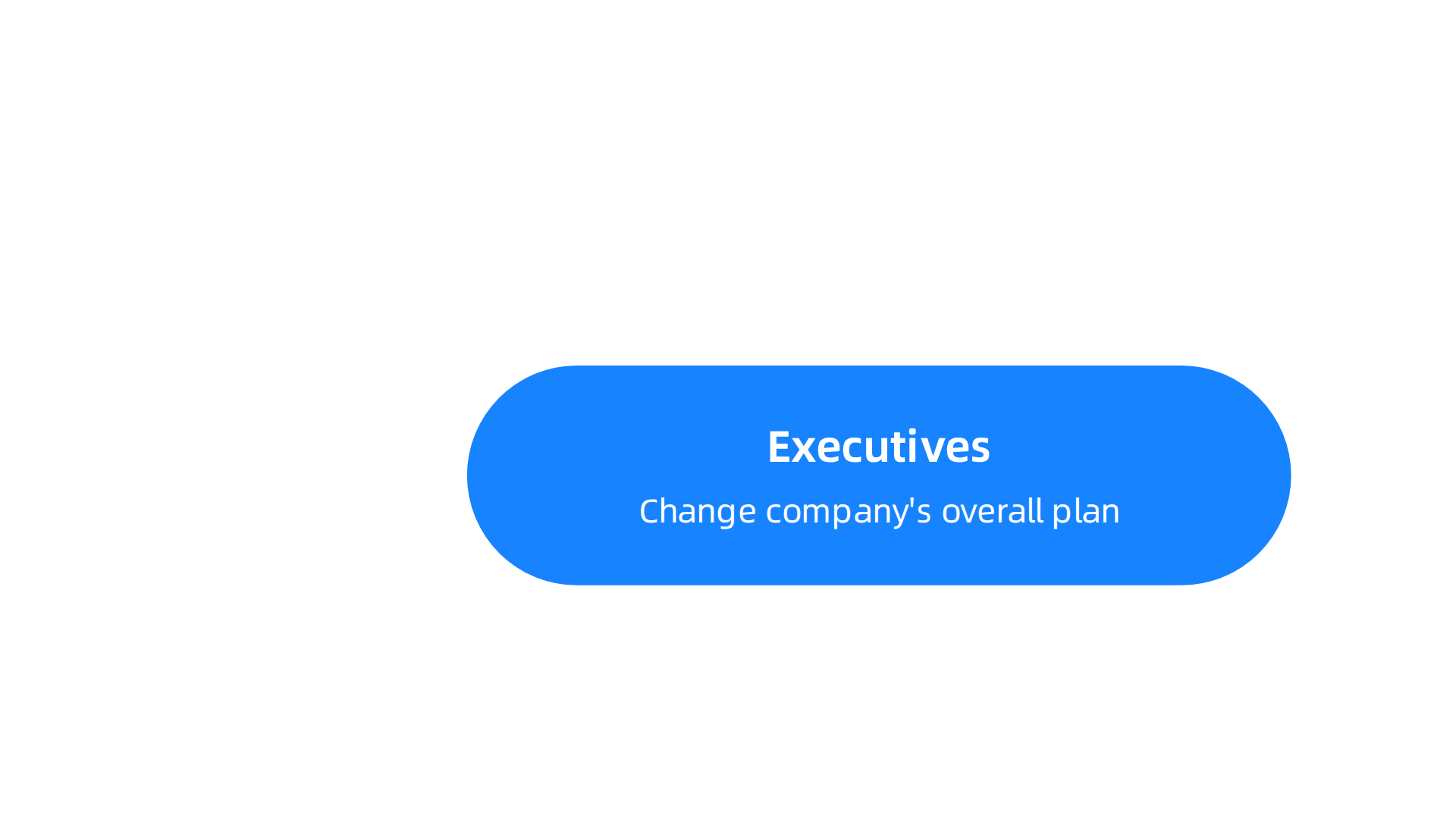
This focus helps everyone understand their role in using AI wisely.
Executives and Senior Leaders
Executives and senior leaders are the main drivers for any artificial intelligence series. They need to understand how AI can change their company’s overall plan and how it affects big decisions. In 2026, many business leaders are still using AI for simpler tasks, even if they feel confident in their own skills Business Leaders Still Primarily Use AI for Simple Tasks. This shows a gap in using AI for bigger, more important goals. An AI series helps them see the bigger picture, weigh the risks, and find new chances to grow the business. It teaches them how to guide their teams through AI changes. For more insights on this, consider exploring our guide on mastering AI capabilities for tech leaders.
Investors and Financial Stakeholders
Investors need to know where their money is going and what new things might affect it. An artificial intelligence series can help them understand the real value and possible dangers of AI investments. They learn how AI affects a company’s future growth and how to measure if an AI project is truly worth it. This helps them make smart choices about where to put their money.
Compliance and Legal Teams
These teams are crucial because they deal with rules and laws. As AI technology grows, so do the rules about how it can be used. A good artificial intelligence series will teach compliance and legal teams about new laws and how to avoid legal problems. This includes understanding things like privacy, data use, and fairness in AI. Actually, a 2026 report found that only 18% of organizations are truly ready for the AI changes coming their way The AI Readiness Gap 2026 Enterprise Survey Findings.
Making sure these teams are well-trained helps the company stay out of trouble and protects its good name. Learning to integrate regulatory compliance into your corporate AI strategy is key.
Product Development and Engineering Teams
These are the teams that build the AI tools and products. They need to understand not just how to make AI work, but also how to make it safe, fair, and useful for customers. An artificial intelligence series for these teams focuses on best practices, ethical design, and avoiding unintended problems. This helps them create better products that people trust.
By having different parts of the company go through a focused artificial intelligence series, businesses can achieve important goals. They can lower the chance of breaking rules, design better products that people love, and make smarter investment decisions. This helps everyone, from the top leaders to the teams building the tools, work together more smoothly in the new world of AI. It helps companies like youlearn ai to ensure their training truly prepares their staff for the future.
When planning an artificial intelligence series, it’s not just about who needs to learn, but also how they will learn.
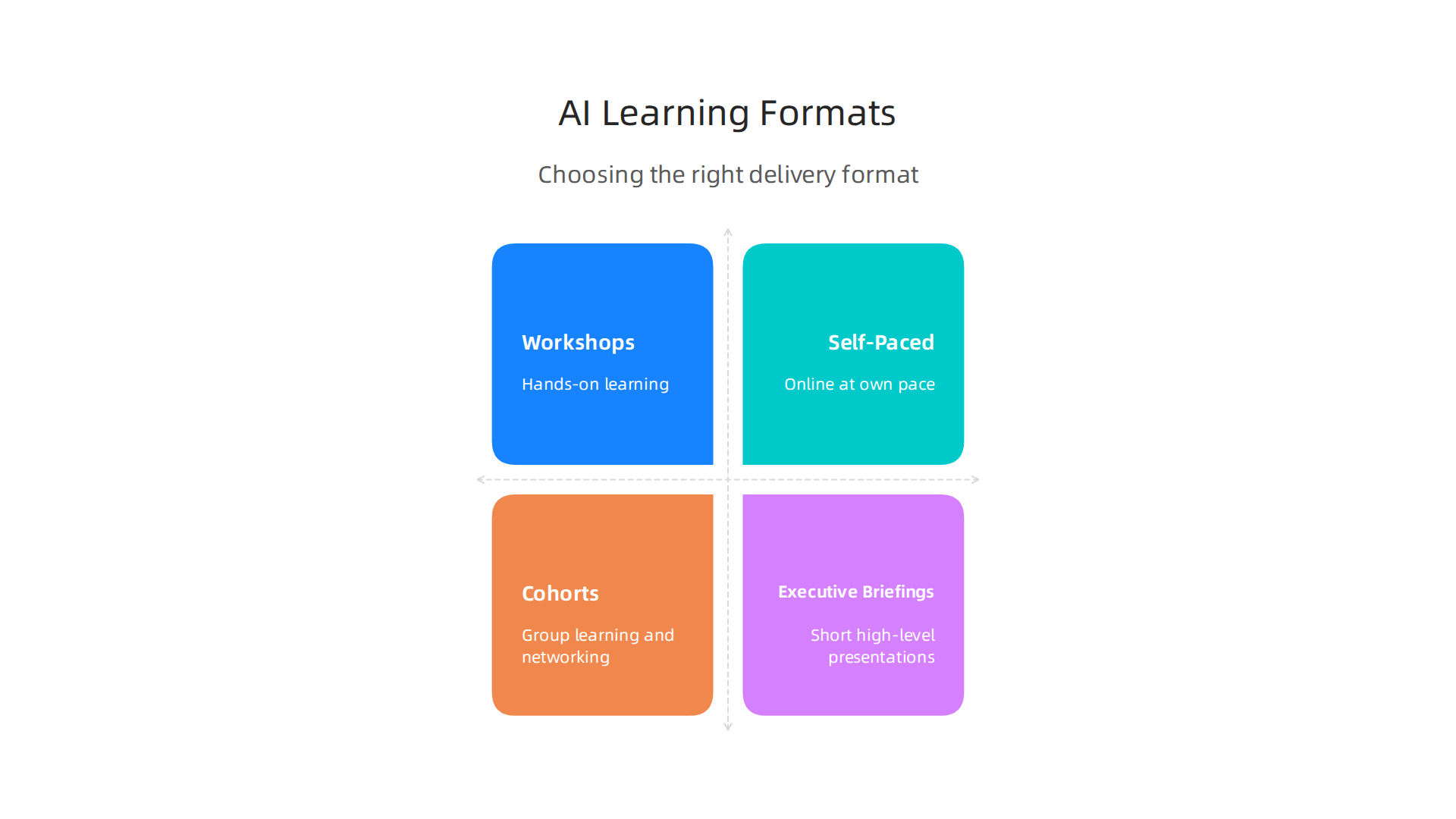
Different ways of teaching work best for different groups and goals. Let’s look at the common formats and how they compare.
Live Workshops
Live workshops bring people together for hands-on learning. These are great for deep dives into a specific AI topic, like how to use a new AI tool. People can ask questions right away and practice new skills with a guide. Workshops often lead to better learning and behavior changes, as they are very interactive and practical Continuing education meetings and workshops: effects.
- Good for: Teams that need to learn specific new skills, like product developers or engineers.
- Trade-offs: They can be costly because an expert needs to be there, and it’s harder to train many people at once.
Self-Paced Courses and Micro-credentials
These are online courses that people can do at their own speed. They often come with a small certificate or "micro-credential" once completed. This format is perfect for busy professionals who need flexible learning options. For a good start, many choose to master artificial intelligence a modern approach prerequisites for business and compliance.
- Good for: Training many people across different locations without too much extra cost.
- Trade-offs: Learners need to be very motivated because there isn’t always someone there to push them. The learning might not be as deep as in a live workshop.
Cohort Programs
Cohort programs bring a small group of learners together to go through a course over several weeks or months. They often combine online learning with live sessions. This allows people to learn from each other and build a network. For example, some leadership groups use a cohort model to help CEOs grow their skills over several months CEO Leadership Cohort.
- Good for: Leaders and managers who benefit from peer support and deeper discussions.
- Trade-offs: They take more time and commitment, and the group size is usually small.
Executive Briefings
Executive briefings are short, high-level presentations for top leaders. They focus on the big picture, like new AI trends or important policy changes, without getting too technical. These sessions help executives make smart decisions quickly. In 2026, the market for executive education programs is very large and still growing, showing how much leaders value these types of focused learning experiences Executive Education Program Market Size & Forecast, 2033. For a good overview, consider reading about artificial intelligence and machine learning explained for 2026 business leaders.
- Good for: Executives who need quick, strategic insights into AI’s impact on their business.
- Trade-offs: They offer less detail and hands-on practice.
Making the Right Choice
When picking a format for your artificial intelligence series, think about:
- Depth vs. Speed: Do you need a lot of detail and hands-on practice, or just a quick overview?
- Cost vs. Scalability: How many people need training, and what is your budget?
- Signaling: Do participants need a formal certificate (micro-credential) for their career, or is internal recognition enough?
By carefully choosing the right format, a company can make sure its artificial intelligence series truly helps everyone learn what they need, from the basics of AI to advanced topics.
Get clear daily AI updates from The Deep View Newsletter. The AI Newsletter Worth Reading
When putting together an artificial intelligence series, picking the right topics is just as important as choosing the right way to teach. Especially in 2026, with new rules always coming out, companies need to make sure their teams understand how to use AI the right way. This means teaching them about laws and how to be responsible.
Many companies are giving AI training, but about 59% still feel there’s a big gap in skills, even with 82% of leaders saying their company offers some kind of AI learning in 2026 Why Traditional AI Training Isn’t Working in 2026. This shows we need to be very clear about what should be in an AI training plan.
Essential AI Curriculum Topics
To get ready for rules and keep things fair, an artificial intelligence series should cover these key areas:
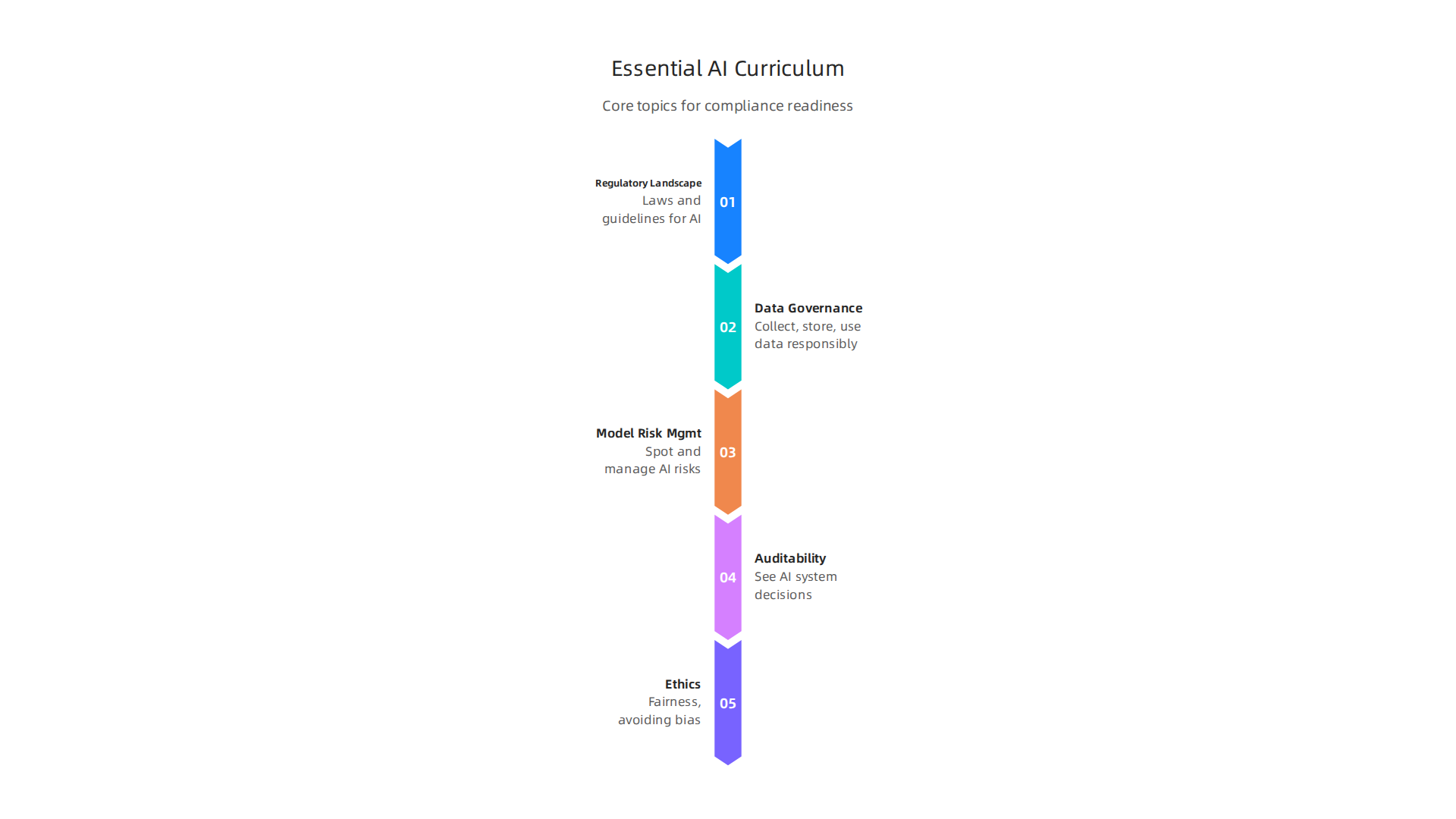
- Understanding the Rules (Regulatory Landscape): This module teaches about the main laws and guidelines for AI around the world, like the EU AI Act. It helps everyone know what they can and cannot do with AI tools. Learning about these rules is key to staying out of trouble and avoiding big fines. You can also learn more about AI regulation 2026 to navigate compliance and avoid risks.
- Managing AI Data (Data Governance): AI works with lots of data. This part of the training teaches how to collect, store, and use data responsibly. It covers how to keep data private and make sure it is good quality. Proper data handling is a top practice for AI governance in 2026 AI Governance: Data Best Practice and Solutions in 2026. This helps prevent unfair results or leaks of private information.
- Handling AI Risks (Model Risk Management): AI models can make mistakes or be unfair. This module shows how to spot these risks and manage them. It’s about testing AI tools to make sure they work as they should and don’t cause harm.
- Checking AI Work (Auditability and Transparency): People need to trust AI. This means being able to see how an AI system makes its decisions. This part of the series teaches how to make AI systems clear and explainable, so experts can check their work. Transparency and accountability are foundational ethical guidelines for smart AI governance Smart AI Governance in 2026.
- Doing the Right Thing (Ethics and Responsible AI): This module focuses on the moral side of AI. It talks about fairness, avoiding bias, and making sure AI helps people without causing harm. It’s about using AI in a way that aligns with human values.
Tailoring Learning for Different Roles
Not everyone needs to learn the same things in the same amount of detail. A smart artificial intelligence series changes its content for different people:
- For Executives and Leaders: They need to know the big picture. Training should focus on the impact of AI on the business, new laws, and how to set up overall AI rules. They might learn about the AI Readiness Gap in 2026 to understand challenges. They don’t need to learn how to code, but they must grasp strategy and risk.
- For Engineers and Developers: These are the people building AI. Their training needs to be very hands-on. They learn about secure coding, testing for bias, and making sure AI models can be easily checked. They learn how to actually build AI systems compliantly in 2026.
- For Legal and Compliance Teams: These teams need deep dives into the laws. They learn how to write policies, handle data rules, and respond to any problems that come up with AI. They would focus on things like AI governance best practices for enterprises and how to put them into action.
By picking the right topics and shaping them for each group, a company’s artificial intelligence series can truly help everyone, from top leaders to technical experts. This makes sure that AI is used safely and correctly, following all the rules.
After deciding what each team needs to learn about AI, the next big step is to make sure the training itself is top-notch. A well-designed artificial intelligence series isn’t just about covering the right topics. It also needs to be taught by good instructors, use reliable materials, and check what people have learned in a clear way.

Choosing Good Teachers and Materials
When looking at AI training programs, ask yourself these questions:
- Instructor Credentials: Who is teaching? Do they really know about AI and its rules? Look for teachers who have real-world experience and good backgrounds. For example, some top programs feature "world-class faculty" to teach important skills like leadership development Executive Program. You want experts who can explain complex AI topics simply.
- Curriculum Sourcing: Where do the lessons come from? Is the course content fresh and updated for 2026? The best compliance training today moves away from old, general lessons. Instead, it offers content that is specific, timely, and easy to update when new AI rules come out Future planning for compliance training: 5 content trends to ….
Make sure the training helps you master artificial intelligence a modern approach prerequisites for business and compliance.
- Alignment with Industry Standards: Does the training teach what the industry actually expects for using AI safely and correctly? The program should help your company meet current laws and best practices. This way, you can properly integrate regulatory compliance into your corporate AI strategy.
Checking What You’ve Learned
It is important to check if the training actually works and if people remember what they learned.
- Different Ways to Assess:
- Formative Assessment: These are small checks during the course, like quick quizzes or group tasks. They help teachers see if you learn AI concepts as you go.
- Summative Assessment: These are bigger tests or projects at the end of the training. They show how much you have learned overall. Studies show that people often get better scores after completing a training program Evaluation of the Impact of an Education Program on Self ….
- Practical Exercises: Hands-on tasks are super important for AI training. They let you use what you learned in real situations. This helps make sure you can actually apply the knowledge, not just remember facts.
- Verification for Compliance Records: For many companies, showing proof of AI training is a must for following rules. Some high-risk AI systems now need mandatory risk checks and controls starting in 2026 AI Data Governance Enforcement 2026: Compliance Guide. So, the training should give clear records of completion. It needs to show you know how to make an AI compliant with global regulations in 2026. Being able to monitor risks and compliance in real-time is also key for IT compliance in 2026 Understanding IT Compliance: Key Regulations for 2026.
Making sure an artificial intelligence series has great instructors, solid content, and good ways to check learning will help your team navigate the world of AI with confidence.
Keeping up with fast-changing AI rules can be hard. For clear daily updates and deep insights, consider subscribing to The AI Newsletter Worth Reading.
After making sure an artificial intelligence series has great instructors, solid content, and good ways to check learning, the next challenge is to build these efforts into your company’s everyday life. This means making learning about AI a normal part of how everyone works. You want to grow a culture where learning about AI never stops.

Building Internal Programs and Scaling a Learning Culture
To make AI learning last, companies need both their own training plans and smart ways to use outside learning.
- Internal Learning Paths: You can create special learning paths for different jobs inside your company. For example, your legal team will need to learn AI rules, while your tech team might focus on building safe AI tools. These paths should be clear steps for how each person can grow their AI knowledge.
- Curating External Series: Sometimes, outside training is best. Look for trusted groups that offer good artificial intelligence series or special certifications. These can bring new ideas and skills into your company. For example, some certifications in 2026 help show that you know about AI governance and rules AI Governance Certifications: Which Are Worth It in 2026?. When you learn AI this way, you make sure your team has the best knowledge available.
Keeping the Learning Going
Keeping up the energy for learning takes ongoing effort. Here are ways to make sure everyone stays on track:
- AI Governance: This is about setting up clear rules for how your company uses AI. It includes having a plan for who makes decisions about AI and how to check if those decisions are good. Building an AI governance program helps make sure that learning efforts match what the company needs to follow the rules How to Build an AI Governance Program in 2026. Good AI governance also means having executive support and people watching over AI decisions to keep everything fair and safe AI Governance Best Practices for Enterprises (2026 Guide). To do this well, you might want to learn how to build a technology strategy board for EU AI Act 2026 compliance.
- Incentives: People learn more when there’s a good reason. This could be helping them get new skills for their career or offering special awards for finishing an artificial intelligence series. It’s about showing that learning AI matters for their future.
- Measurement: It is important to check if the learning culture is actually working. This means looking at how many people finish courses, how well they do on tests, and if they are using their new AI skills in their work. This helps you understand if your team is truly mastering AI capabilities.
- Cross-Functional Collaboration: Different teams need to talk to each other about AI. When people from different parts of the company work together, they share ideas and solve problems faster. This also helps everyone understand why it’s important to navigate AI regulation 2026 to avoid risks.
Keeping content current: updating your series for the 2026 regulatory landscape
Just like AI technology keeps changing, so do the rules about it. This means that any learning program, especially an artificial intelligence series, needs to be updated often. You can’t just teach something once and be done with it. To stay safe and compliant in 2026, companies must have a clear plan for keeping their AI learning materials fresh and relevant.
Plan for Regular Updates
Imagine your artificial intelligence series as a living document. It needs regular check-ups. You should set up a schedule to review and update your training content. This "update cadence" means you decide how often you’ll look for new laws, official actions, and big changes in AI technology.
For example, some experts say that good compliance training needs to move away from old, general lessons to content that is timely and easy to update when things change Future planning for compliance training: 5 content trends to ….
This helps everyone, from beginners who want to learn AI basics to advanced teams building complex systems, always have the right information.
Who Watches and What Triggers Updates?
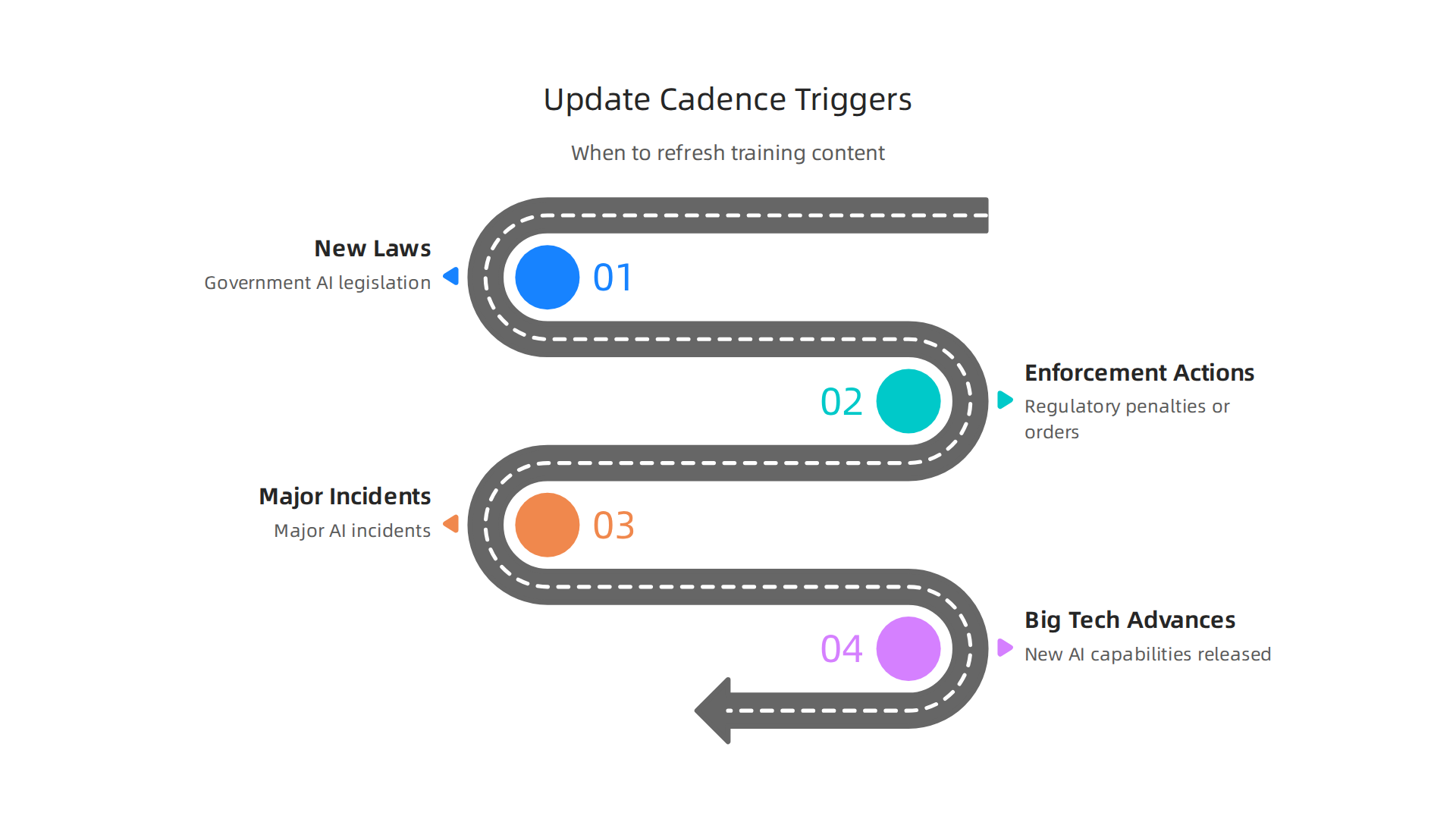
It’s important to have people whose job it is to watch for changes in AI rules. These roles often belong to legal teams, compliance officers, or specific AI governance groups. They act like watchdogs, looking for "triggers" that tell you it’s time to update your training.
What kinds of triggers are we talking about?
- New Laws: Governments around the world are putting out new AI laws. For example, in the US, different states like Colorado and California have new AI laws for 2026 US AI regulations 2026: the state laws you must comply with. Also, global rules like the EU AI Act are big changes.
- Enforcement Actions: When a company breaks an AI rule, and there’s a penalty, that’s a signal to everyone else to check their practices. These real-world examples show what not to do. You can even find videos that explain how AI rules are changing and what that means for compliance AI Rules Are Changing: Key Regulatory Updates for 2025 & 2026 | Compliance & Risks.
- Major Incidents: Sometimes, an AI system might cause a problem, like making unfair decisions or having security issues. These events force a closer look at how AI is being used and what training is needed.
- Big Tech Advances: New AI tools and breakthroughs, sometimes inspired by ideas from thinkers like Stephen Hawking on artificial intelligence, can also change how we need to think about rules and safety.
Keeping an eye on these things helps your company avoid risks and ensures your artificial intelligence series stays useful. After all, compliance training, especially for AI, is a top concern for companies in 2026. For a deeper dive into preparing for regulatory changes, check out how to navigate AI regulation 2026 to avoid risks.
Staying on top of this fast-moving world requires constant vigilance. For busy professionals, getting quick, reliable updates is key.
Get clear daily AI updates from The AI Newsletter Worth Reading.
Summary
This article explains why a focused artificial intelligence series is essential for businesses in 2026, when AI tools and rules are changing fast. It shows which roles should lead or benefit from tailored training—executives, investors, compliance teams, product engineers—and why a one-size-fits-all approach fails. The piece compares delivery formats (live workshops, self-paced courses, cohorts, executive briefings), outlines a practical curriculum (regulation, data governance, model risk, transparency, ethics), and explains how to choose instructors and assessments that prove real learning. It also covers how to embed AI learning into company culture, scale programs, and set a cadence for regular content updates tied to legal and incident triggers. Readers will finish knowing how to design, run, and maintain an AI training series that reduces risk, improves product safety, and aligns teams with evolving regulations.