
Why Eightfold AI Matters Now: a Strategic Primer
In 2026, companies everywhere are looking for the best ways to find and keep talented workers. This is where artificial intelligence (AI) comes in, changing how businesses handle hiring and employee growth. Among the many list of AI tools that help with this, Eightfold AI stands out.
It uses advanced AI to make talent acquisition and HR tech smarter and more fair.
Eightfold AI started in 2016 with a clear goal: to help everyone find the right career path in the world. Its founders, Ashutosh Garg and Varun Kacholia, who came from big tech companies, used their knowledge in machine learning and deep learning to build powerful AI systems for talent. The company has grown a lot since then, getting over $391 million in funding according to reports in 2026 Eightfold AI — Funding, Revenue & Investors (2026) | Inc42.
This special look at Eightfold AI will help important readers like company leaders, investors, and teams that check for rules.

You will learn about how Eightfold AI works, where it fits in the market, and how it handles important rules for AI. By reading this, you can be more sure about your plans and less worried about new rules that might come up. Understanding companies like Eightfold AI is key to handling the changing world of AI and business.
Want to stay on top of the fast-changing world of AI and its rules?
The AI Newsletter Worth Reading delivers clear daily updates from The Deep View Newsletter, helping you navigate new developments.
Company overview and strategic positioning
Eightfold AI was founded in 2016 by Ashutosh Garg and Varun Kacholia. These founders brought deep experience from leading tech companies like Google and Facebook. They started the company with a simple but powerful idea: to help every person in the world find the right career path for them Eightfold Leadership.
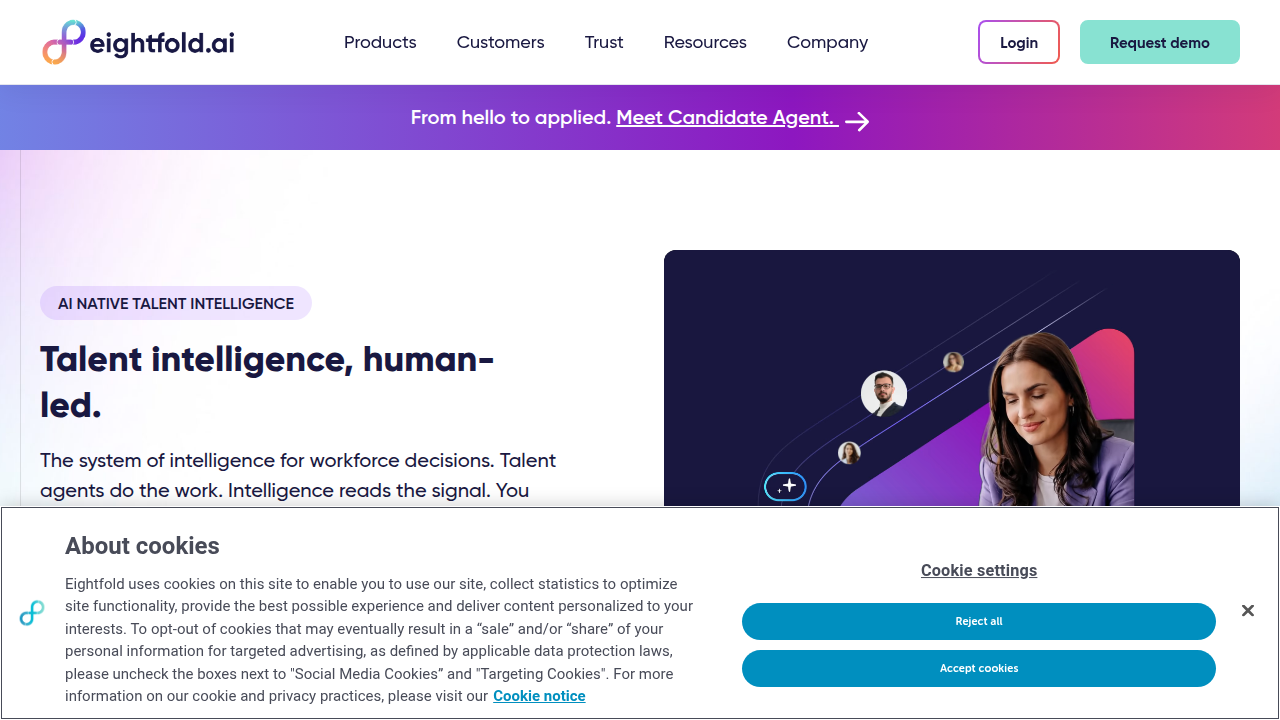
This mission drives Eightfold AI to change how companies find, hire, and keep great employees.

The main focus of eightfold ai is its Talent Intelligence Platform. This special tool uses artificial intelligence to make smart decisions about a company’s workforce. It helps businesses look beyond old ways of hiring to discover the true skills and potential of people. This means companies can find the best workers, keep them happy, and help them grow in their jobs. Eightfold AI aims to close the gap between the workers companies need and the people who are looking for work, turning talent management into a strong advantage Eightfold AI – Company Profile.
Since it started, eightfold ai has grown a lot. The company has raised more than $391 million in funding. Important investors have seen the value in Eightfold AI’s approach. These investors include big names like SoftBank Vision Fund 2, C4 Ventures, Cathay Innovation, DFJ, f7 Ventures, Foundation Capital, and Lightspeed Ventures, which led an early funding round Eightfold AI: Funding, Team & Investors. This strong financial backing has helped Eightfold AI become a leader in HR AI technology.
Eightfold AI works with many different types of companies, from small businesses to large ones. It helps them solve tough problems in getting new talent and managing their current teams. The platform helps companies manage all their people data in one place, which makes it easier to make fair and smart hiring choices. This focus on using AI to understand and develop talent puts Eightfold AI at the forefront of the industry. It’s especially useful for companies looking to ethically navigate the complexities of finding and engaging top artificial intelligence experts in 2026.
The core of Eightfold AI’s offering is its Talent Intelligence Platform. This platform is not just one tool, but a set of smart AI systems that work together. These systems help companies with different parts of managing their workforce.
Core Product Modules
Eightfold AI offers several important parts to its platform:
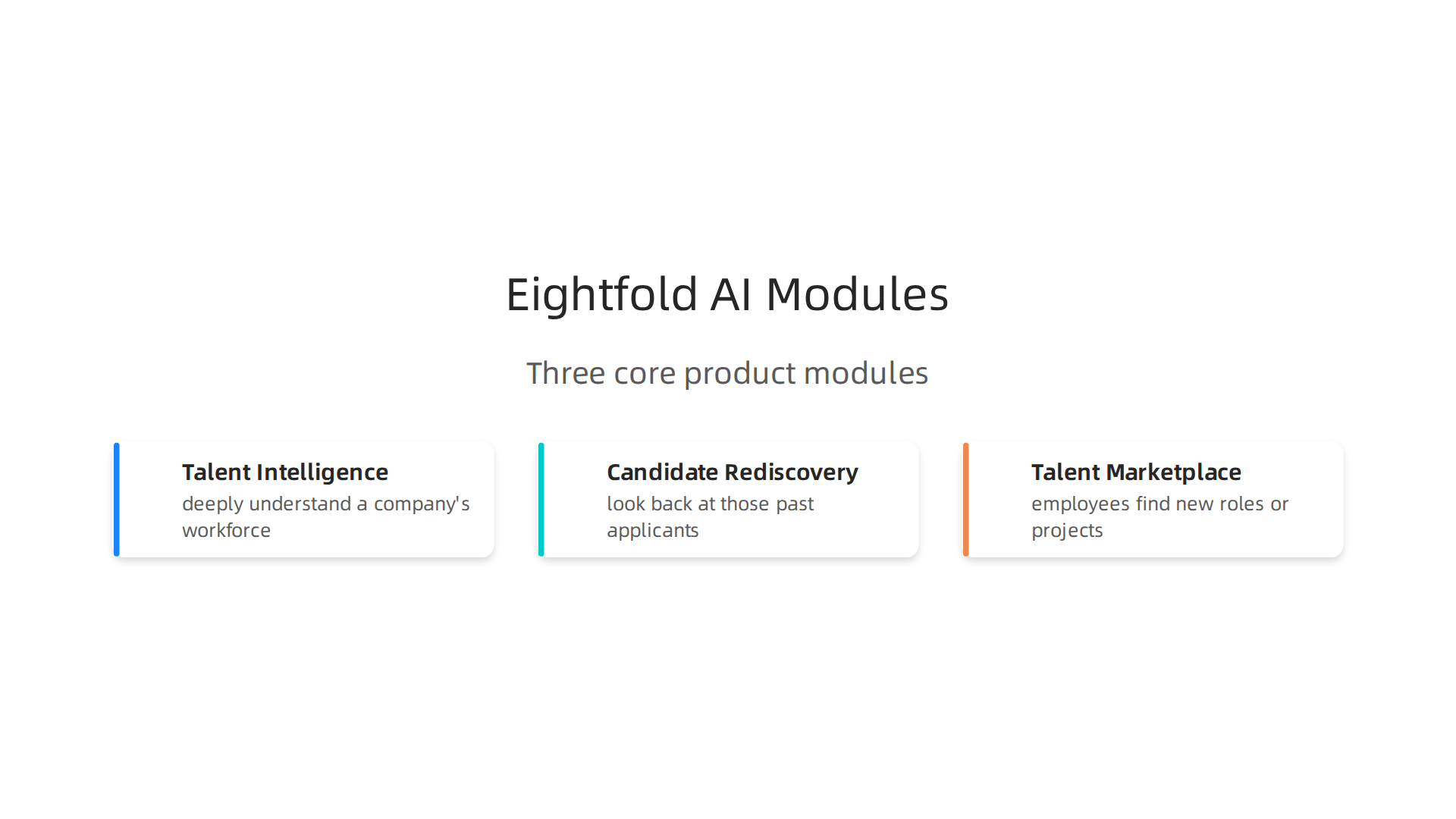
- Talent Intelligence: This main module uses AI to deeply understand a company’s workforce. It looks at people’s skills and potential, not just their past job titles. This helps companies see who they have and what they can do. It makes sure that businesses can match the right person to the right job, both for new hires and current employees.
- Candidate Rediscovery: Imagine having thousands of old job applications. This module helps companies look back at those past applicants to find new talent. It uses AI to spot people who might be a great fit now, even if they weren’t before. This saves time and money by finding good candidates already in the system.
- Talent Marketplace: This part of the platform helps employees inside a company find new roles or projects that fit their skills. It also helps managers find people with the right skills for their teams. This makes it easier for employees to grow and for the company to use its talent well.
These product parts fit smoothly into a company’s existing HR software. They act like a smart layer on top, making old systems much more powerful and fair. This means businesses don’t have to throw away their current tools to get the benefits of eightfold ai.
Technical Foundations and Unique AI
Eightfold AI’s technology is built on strong foundations. It uses many different sources of data, like job descriptions, resumes, and career paths, to build a full picture of the world of work. This big collection of information helps their AI systems learn and make smart guesses about people’s skills and potential.
The company uses advanced AI, like deep learning, to power its platform. This type of artificial intelligence is very good at finding patterns in large amounts of data. One special thing about eightfold ai is its focus on fairness. The company aims to make sure its AI helps remove unfairness in hiring and career choices, not create it. This commitment to ethical AI is key in 2026 as companies navigate new rules for artificial intelligence systems AI Regulation Build AI Systems Compliantly in 2026.
Eightfold AI also holds several important patents for its unique AI solutions. These patents cover things like predicting which job candidates will be most successful and how to create job descriptions based on skills Eightfold Patents. This means their technology has special features that other companies do not have. They even have a patent for systems that remove unwanted bias when looking at who is a good fit for a role Apparatus for Determining Role Fitness While Eliminating …. These patents show how unique and advanced their AI systems are in the market today.
The company’s approach allows for a lot of personalization. This means the AI can understand the specific needs of each company and each person, offering tailored advice and matches. This is what makes Eightfold AI a leader among the list of ai tools for human resources.
To keep up with all the fast changes in AI and technology regulations, it’s helpful to get expert insights. For daily updates on AI and technology rules, consider subscribing to The AI Newsletter Worth Reading.
Eightfold AI truly stands out as a top player among the many list of ai tools in the human resources world. In 2026, it holds a strong position in the market. The company is known for its special focus on talent intelligence, which helps businesses understand their people better.
Market Presence and Customers
Eightfold AI has made a big name for itself. It commands about 15% of the global market share for independent talent intelligence platforms, serving more than 2,500 big company clients Platform Economics, Data Supply Chains, and the Race … – OVI. As of 2026, about 172 verified companies use eightfold ai’s solutions. Most of these companies are in the United States and are often large organizations with many employees and high revenue Companies using eightfold.ai in 2026 – GTM Intelligence.
These customers come from many different industries. For example, big names like Alstom, Aviva, BP, HSBC, Novartis, PwC, Rolls-Royce, Shell, and Vodafone trust Eightfold AI. These are huge companies that need smart ai systems to manage their large workforces and find the best talent. These companies rely on Eightfold AI to help them with hiring, growth inside the company, and keeping their best people.
Competitive Landscape
The market for HR technology is full of many different tools. While Eightfold AI is a leader in talent intelligence, it also faces competition in other areas, such as the broader "talent marketplace" category. For instance, in the talent marketplace, companies like Upwork have a much larger market share Eightfold.ai – Market Share, Competitor Insights in Talent ….
Other competitors in the talent intelligence space include companies like SeekOut, which holds about 13% of the market share and is strong in technical talent and diversity hiring.
What makes Eightfold AI stand out is its specific focus on deep AI that looks at skills and potential. It uses its unique AI to give a full picture of each person. This helps companies make fair and smart decisions. Also, well-known groups like Gartner and Forrester have recognized Eightfold AI for its vision and leadership. Gartner named Eightfold a "Visionary" in its 2026 Magic Quadrant Eightfold named a Visionary in the 2026 Gartner® Magic …. Forrester also highlighted Eightfold in its 2026 report on "The Skills Intelligence Solutions Landscape" Forrester The Skills Intelligence Solutions Landscape, Q1 …. These reports show that experts see Eightfold AI as a key player that helps businesses make better hiring and career choices. Its strong positioning encourages many large businesses to choose Eightfold AI for their talent needs.
While tools like Eightfold AI offer many benefits, it’s also important to remember the rules and laws that come with using such advanced technology.

In 2026, companies using talent AI platforms must be very careful about new regulations, especially around privacy and fairness.
Regulatory, privacy, and compliance risks for talent-AI platforms
Using powerful AI systems for hiring and managing people comes with important rules. Companies like Eightfold AI need to make sure their tools follow laws about how data is used, how fair the AI is, and general employment practices. If they don’t, there can be big problems.
Here are the main areas where companies need to be careful:
- Data Privacy: AI tools collect a lot of personal information. This data needs to be kept safe and used only in ways that people agree to. Laws like California’s privacy regulations are becoming stricter, affecting how AI systems handle personal data The Rise of AI Legislation in the U.S. – A 2026 Labor ….
- Algorithmic Bias: This is a big one. AI systems learn from data. If the data has unfair patterns from the past, the AI might accidentally pick people who are similar to past hires and overlook others. This means the AI could lead to unfair decisions based on things like race, gender, or age. Laws are being put in place to stop this. For instance, in 2026, many states and cities require companies to check their AI tools for bias Patchwork AI Hiring Laws Create Rising Compliance Risks ….

- Employment Law and Discrimination Claims: Existing laws against discrimination still apply when using AI. Employers must ensure their AI does not lead to discrimination in hiring, promotions, or other job decisions. In 2026, employment law, anti-discrimination law, and data protection frameworks all regulate AI used in hiring AI and Employment Law in 2026: What Employers Need to ….
To meet these new rules, many laws now require companies to do certain things. For example, some places require an independent group to check the AI for bias every year and then share those results publicly. Companies might also need to tell job applicants that they are using an AI tool at least 10 business days before it’s used Where AI Hiring Laws Stand in 2026 and What’s Coming ….
Rules are Different Everywhere
The world of AI regulation is not simple because rules change from place to place. In the United States, for example, there isn’t one big federal law for AI in hiring. Instead, different states and cities have made their own rules.
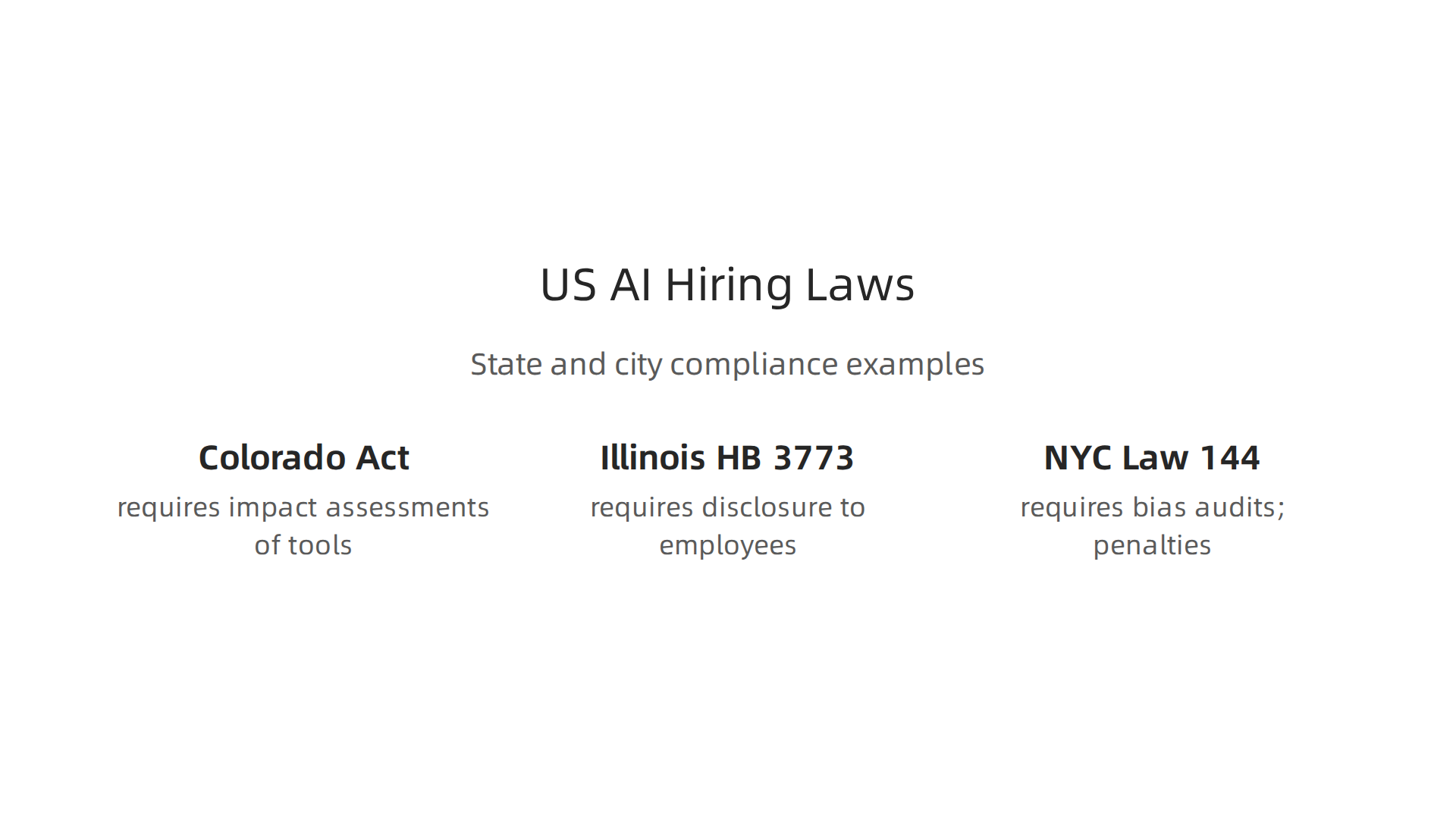
As of 2026, 26 states now have their own rules for AI in recruiting 26 States Now Regulate Algorithmic Recruiting (2026 Guide).
- Colorado’s AI Act: This law, which starts in February 2026, makes companies look at how their AI tools work and if they might cause unfairness before they even use them.
- Illinois’s House Bill 3773: Starting January 1, 2026, this law says companies must tell employees when AI is used for things like hiring or promotions.
- New York City’s Local Law 144: This law has been around for a bit and is now being strongly enforced, with fines for companies that don’t do bias audits.
This "patchwork" of laws means that a company like Eightfold AI must understand and follow many different rules if their customers are in different locations. They have to know the specific rules for each place to keep their customers compliant. Building AI systems to be compliant with these many different rules is a big task. If you want to learn more about navigating these rules, read our guide on AI Regulation 2026: Navigate Compliance and Avoid Risks.
It’s a huge job for any company using or making AI for hiring to stay on top of these rules. They must be careful to design their AI to be fair, transparent, and respectful of people’s privacy across all the different places they operate.
For daily updates on critical AI regulations and tech compliance, be sure to subscribe to The AI Newsletter Worth Reading.
After looking at how tricky it is to follow all the AI rules, it’s also good to understand how companies like Eightfold AI actually work and make money. This helps us see the full picture of their place in the market.
Business model, revenue streams, and partner ecosystem
Eightfold AI earns its money by selling powerful AI tools that help companies find and keep talent. Think of it like a special software package that businesses pay to use. This way of making money is called Software-as-a-Service, or SaaS for short.
Companies pay Eightfold AI a regular fee, usually every month or year, to use their platform. Bigger companies or those who want more features often pay more. This setup helps Eightfold AI have a steady flow of income. In 2024, Eightfold AI’s yearly income was reported to be around $96.6 million, showing how much trust businesses put in their AI systems Eightfold Revenue 2024: $96.6M ARR, $2.1B Valuation.
Eightfold AI focuses on big businesses, signing what are called "enterprise contracts." These are agreements with large companies like Alstom, Aviva, and PwC, who use Eightfold AI for their hiring and talent management needs across many locations 2026 Fosway 9-Grid Talent Acquisition Full Report. As of 2026, many companies, especially in the United States and the Information Technology and Services industry, use Eightfold AI for their talent needs Companies using eightfold.ai in 2026. Eightfold AI holds about 15% of the worldwide market for talent intelligence platforms, serving over 2,500 big customers Platform Economics, Data Supply Chains, and the Race.
Beyond just the software, Eightfold AI also works closely with other companies. They connect their AI tools with many different HR systems, like those used for tracking job applicants (ATS) or managing all human resources information (HRIS). These connections mean that Eightfold AI can easily fit into how companies already work, making it a very useful part of a bigger list of AI tools.
By connecting with these other systems, Eightfold AI helps its customers have a smooth experience. This also means Eightfold AI can reach more customers because their product works well with many existing setups. Such partnerships are important for AI companies to grow and stay a top choice in a busy market. If you are a business leader looking to use these kinds of tools, understanding how to best use them is key. You might find it helpful to learn more about Mastering AI Capabilities: A Strategic Guide for Tech Leaders.
After understanding how AI companies like Eightfold AI operate and fit into the market, it’s time to look at what leaders in tech, investing, and compliance should do next. The world of AI is changing fast, especially with new rules coming out.
What tech executives, investors, and compliance leaders should do next
Leaders must act now to handle the swift changes in AI rules. This means looking at how you buy AI tools, how you check them, and how you manage any risks.

Taking smart steps for operations
First, companies need a clear plan for buying and using AI tools. When you choose an AI vendor, like Eightfold AI or any other company from a long list of AI tools, make sure you ask detailed questions. This is called due diligence. You want to know how the AI systems were trained, what data they use, and if they have checks in place to prevent unfairness.
For example, many states are creating new laws for how AI can be used in hiring. In 2026, both California and Colorado have new laws that affect how companies use AI for employment decisions The Rise of AI Legislation in the U.S. – A 2026 Labor …. New York City has also been enforcing rules that require special checks for bias in AI hiring tools Where AI Hiring Laws Stand in 2026 and What’s Coming …. This means you must ask your AI providers if their tools have independent bias audits and if they share the results. Ignoring these rules could lead to big fines.
Here’s what to consider for daily operations:
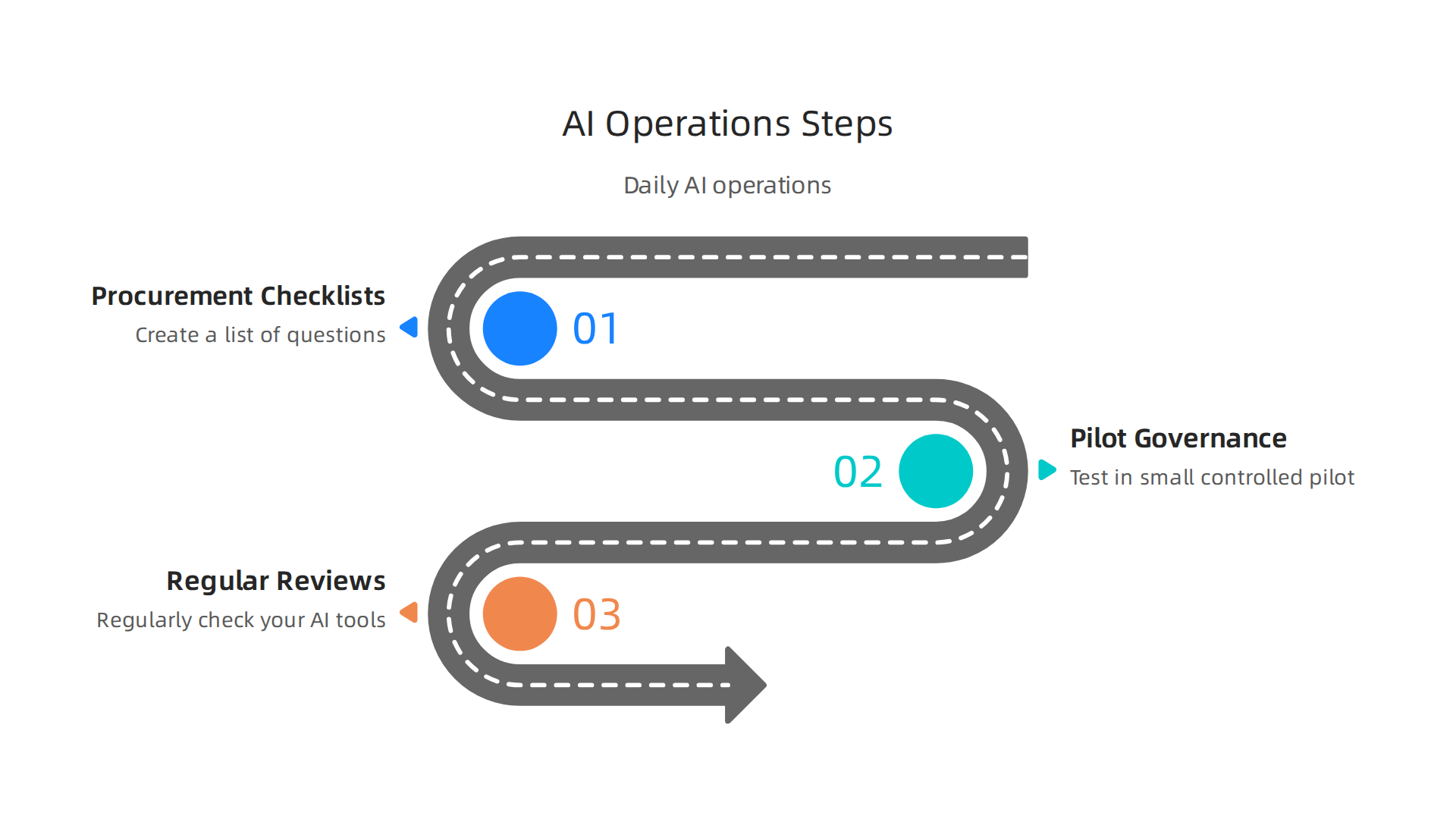
- Procurement Checklists: Create a list of questions for every AI vendor. Ask about their data sources, how they prevent bias, and how they keep user information safe.
- Pilot Governance: Before using any AI tool broadly, test it in a small, controlled way. This "pilot" helps you see if the AI works as expected and if it follows all the rules. It also helps you spot any unexpected problems early on.
- Regular Reviews: AI systems change over time. Make sure you regularly check your AI tools, especially for how they make decisions. This helps reduce vendor and regulatory risk. Keeping up with these changes is vital for staying compliant, and you can learn more about this in articles like AI Regulation 2026: Navigate Compliance and Avoid Risks.
What investors and partners should look for
For investors, understanding how well an AI company handles regulations is super important. A company that takes AI compliance seriously is often a safer and better investment. Look for signs that a company has strong internal rules, clear ways of working, and a focus on ethical AI.
Partnerships also need careful thought. If you’re teaming up with another company, make sure their AI tools and practices meet the same high standards as yours. This helps both sides avoid problems. The goal is to avoid "algorithmic discrimination," which means the AI makes unfair choices based on things like race or gender. Many states have specific rules against this in 2026 Current Regulations on AI in Employment Decisions.
Key indicators for investors and partners include:
- Compliance Readiness: Does the AI company have a clear plan for following existing and new regulations?
- Strong Governance: Do they have good leaders and teams in place to oversee their AI systems?
- Ethical AI Practices: Are they committed to using AI in fair and transparent ways?
- Transparency: Do they openly share information about how their AI works and how they address problems?
Staying on top of these complex and quickly changing rules can be hard.
Get clear daily AI updates from The AI Newsletter Worth Reading.
Staying on top of these complex and quickly changing rules can be hard. But looking ahead, we can see some clear paths for how AI will be used and controlled.
Future trends, regulatory trajectories, and scenarios to watch through 2026 and beyond
The world of AI is still growing fast, and so are the rules around it. For tech leaders, investors, and compliance teams, it is important to watch how these rules change in 2026 and beyond. This will help you know what to expect and how to keep your company safe.
New rules and how companies will respond
In the United States, we are seeing more and more states making their own AI laws. California, Colorado, and Illinois are leading the way, with new rules about how AI can be used, especially in hiring. For example, California passed laws that require companies using generative AI tools to share what data these AI systems were trained on, starting in January 2026 With Federal Restrictions Removed, a Wave of State Laws Highlights Risks of Using Artificial Intelligence in Hiring and Employment Decisions. Colorado’s new law also requires impact assessments before companies use AI hiring tools, to make sure they do not cause harm AI Hiring Compliance, Automated. In fact, 26 states now regulate algorithmic recruiting, showing a clear trend towards more control over AI tools 26 States Now Regulate Algorithmic Recruiting (2026 Guide).
Beyond the US, the European Union has its own big set of rules called the EU AI Act. This act will fully take effect on August 2, 2026. It says that AI systems used in hiring are "high-risk." This means companies using tools like Eightfold AI must do documented bias audits and have human checks on any automated decisions. Not following these rules could lead to very large fines AI Adoption in Recruiting: The Complete 2026 Industry Report.
Because of these rules, companies will have to be more open about how their AI works. This means:
- Transparency: Companies will need to clearly explain how their AI makes decisions.
- Auditability: It will be easier to check AI systems for fairness and accuracy, similar to how financial audits are done. This increased legal and ethical scrutiny is intensifying as these systems scale AI in Recruitment (2026): Trends, Tools, and Hiring Impact.
- Human Oversight: Even with advanced AI systems, there will still be a need for people to oversee and approve important decisions.
To navigate these changes, businesses need strong strategies for compliance. You can learn more about this by reading about AI regulations 2026 compliance strategies for businesses.
How AI products might change
These new rules will push AI companies, including those on any list of AI tools, to make their products more responsible. Companies like Eightfold AI will have to build these checks right into their core offerings.
We also expect to see AI systems become even smarter and more independent. This means they will not just recommend things but will take actions on their own. These are sometimes called "agentic AI" systems. As these agentic AI systems become more common, they will face even stricter rules because their impact can be greater. Understanding What is Agentic AI and How It Is Changing Business in 2026 is key for any leader.
Industry groups, like the Consumer Technology Association, will play a big role in helping companies understand and follow these new rules. They will also help shape new laws as they come up. For companies to stay relevant and trusted, they must focus on ethical AI and build strong governance into their core business. The deadlines are real, and non-compliance carries serious consequences AI Recruiting: The Complete 2026 Guide for Talent Teams.
Summary
This article is a strategic primer on Eightfold AI, a leading talent-intelligence company that uses deep learning to help organizations hire, redeploy, and develop employees more fairly and efficiently. It explains Eightfold’s origins, core Talent Intelligence Platform modules (Talent Intelligence, Candidate Rediscovery, Talent Marketplace), and the technical and patent-backed features that set it apart. The piece reviews Eightfold’s market position—enterprise focus, roughly 15% market share, thousands of customers—and its SaaS revenue model. It also outlines the major regulatory, privacy, and bias risks employers must manage when using talent-AI tools, including the patchwork of U.S. state laws and the EU’s high-risk classification. Finally, the article gives practical next steps for executives, investors, and compliance teams on vendor vetting, pilot governance, and ongoing audits so organizations can deploy talent AI while reducing legal and operational risk.