
Why Quantum Artificial Intelligence Labs Matter Now
Imagine a world where computers solve problems that are currently too big for even our best machines.

This is not science fiction. In 2026, we are seeing two powerful computer technologies, quantum computing and artificial intelligence (AI), come together faster than ever before. This exciting mix is changing everything, and places called quantum artificial intelligence labs are at the heart of this big change.
This special meeting of quantum and AI is creating new ways to think about data and solve complex puzzles. Experts agree that AI and quantum information are growing together quickly, with AI helping quantum systems, and quantum offering new ways for AI to learn [1]. In fact, some even believe that by 2026, quantum computers will start outperforming regular computers on important real-world tasks [2]. This shows just how fast things are moving. Big names like NASA already have their own NASA Quantum Artificial Intelligence Laboratory (QuAIL) to explore these possibilities.
For business leaders, investors, and teams that ensure rules are followed (compliance teams), understanding this shift is super important. Decisions made today about these advanced AI systems could greatly affect your company’s future. You need to know about new rules, how to protect your ideas and inventions (intellectual property or IP), and what to include in your business plans. The way these two fields are growing together, sometimes called Quantum AI, is making big impacts across all areas of technology and science [3].
This article will give you a clear, easy-to-understand guide. We will explain what these terms mean, how these new kinds of computer technology are built, what new rules and laws might apply, how companies can make money from them, and how to manage them safely and smartly.
For more daily updates and insights on the fast-changing world of AI and technology rules, consider getting The AI Newsletter Worth Reading. It helps you stay informed and make smart choices.
References
- [1] arxiv.org. When AI meets quantum information: A comprehensive review.
- [2] YouTube. Top 15 New AI and Quantum Computing Breakthroughs of 2026.
- [3] arxiv.org. Quantum computing and artificial intelligence: status and ….
To really understand this new world, let’s look at what a quantum artificial intelligence lab actually is. Simply put, it’s a special place where scientists and engineers work to bring quantum computing and artificial intelligence (AI) together. They do this to create super-powerful computer technology that can solve problems regular computers can’t.
These labs have a few main jobs:
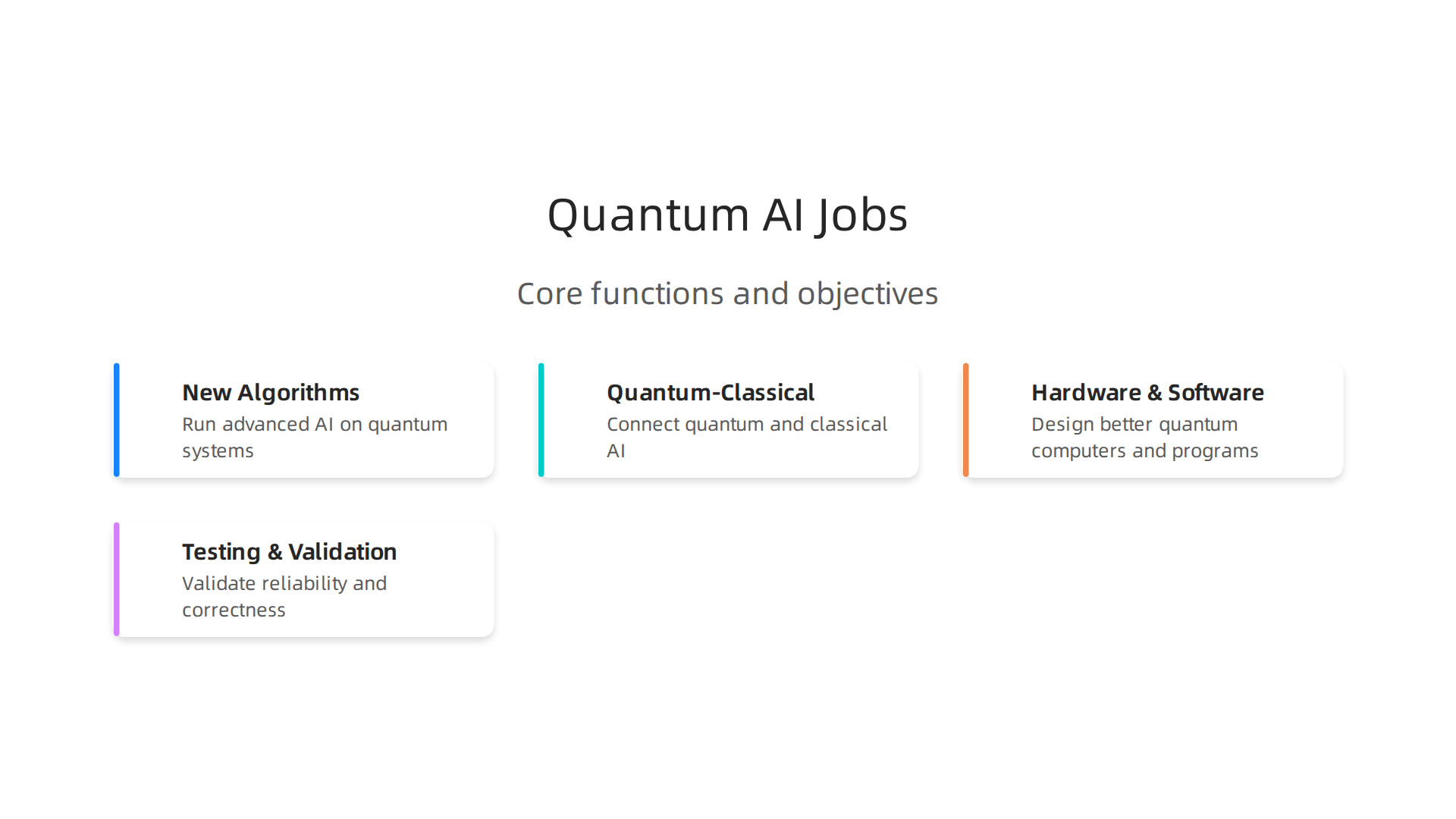
- Creating New Algorithms: They invent new sets of instructions, or algorithms, that help quantum computers run advanced AI programs. This often involves exploring quantum machine learning, which combines quantum principles with machine learning techniques to handle huge amounts of data in new ways Quantum Machine Learning: A Comprehensive Scientific Review.
- Connecting Quantum and Regular Computers: They work on ways to make quantum computers talk and work with the AI systems we use every day. This is called quantum-classical integration.
- Building Hardware and Software Together: They design better quantum computers and the special programs (software) that run on them at the same time. This ensures everything works smoothly and powerfully.
- Testing and Making Sure It Works: They constantly check and test these new systems to make sure they are reliable and deliver correct results.
You’ll find these important quantum artificial intelligence labs in different places. Many top universities have them, where smart students and professors explore new ideas. Government-funded national labs also play a big part, often focusing on projects that benefit the whole country. And, of course, large companies like Google have their own research groups, such as their Research Publications showing their work in quantum AI. New, smaller companies called startups are also joining the race, bringing fresh ideas to the table.
Often, these different groups don’t work alone. They team up in what are called academic-industrial-government partnerships. For example, the MIT-IBM Computing Research Lab is a great example of a university and a big company working together to push the boundaries of AI and quantum computing. These collaborations are key to moving this complex computer technology forward quickly. They share knowledge and resources to build stronger AI systems for tomorrow. For business leaders wanting to understand the foundational elements of these advancements, learning about the core concepts of artificial intelligence and machine learning is a crucial first step.
Now, let’s look at the special parts inside a quantum artificial intelligence lab.
These labs focus on a few key things to build new computer technology.
Key research areas and technical building blocks (quantum ML, hardware, software stacks)
One big area is quantum machine learning algorithms. These are like special recipes that teach quantum computers to learn from data.

Researchers in a quantum artificial intelligence lab work hard to create new ways for AI systems to use quantum power. For example, they look at how to make "transformer ai" models, which are good at language tasks, even better with quantum ideas. But it’s not easy. There are many challenges, like dealing with errors that happen in quantum computers. This is called "error mitigation." Scientists also work on "hybrid architectures" which means mixing quantum computers with regular ones to solve problems together. Even with these efforts, current quantum deep learning often needs a big leap to match regular computers for real-world data Quantum Deep Learning Still Needs a Quantum Leap.
Next, there’s the hardware. This is about the actual parts of the quantum computer. The tiny building blocks are called qubits. Scientists need to make sure these qubits stay stable for a long time, which is called "coherence." They also need to connect many qubits so they can work together, known as "connectivity." Today, most quantum computers are "NISQ" devices. This means they are "Noisy Intermediate-Scale Quantum" machines. They have some errors and are not perfect. The big goal is to build "fault-tolerant" quantum computers, which would have very few errors. As of 2026, the performance of quantum machine learning algorithms is limited by current hardware that has short coherence times and few qubits A Survey on Quantum Machine Learning: Basics, Current ….
Then, we have the software and tools. These are the programs that make quantum computers do their work. A quantum artificial intelligence lab uses "quantum SDKs," which are like toolkits for writing quantum programs. They also use "simulators" to test these programs on normal computers before running them on actual quantum hardware. To make AI systems work smoothly, they create "data pipelines." These are like pathways that move information between the quantum parts and the regular parts of a computer system. Many labs are exploring "open source ai" tools to share their work and help others build on it.
Lastly, benchmarking is super important. This means testing and comparing how well different quantum AI solutions work. It helps researchers understand what’s good, what needs improvement, and how new computer technology can truly make a difference. Understanding the bigger picture of how AI is regulated can also help shape how these advanced technologies are developed and deployed. For more on navigating rules in this fast-changing world, check out AI Regulations 2026: Compliance Strategies for Businesses.
If you want to keep up with the latest in this exciting field, make sure you get daily updates.
The AI Newsletter Worth Reading
Beyond just making new computer technology work, a quantum artificial intelligence lab also needs to think about bigger questions.

These questions are about rules, what is fair, and keeping countries safe. In 2026, these topics are very important for quantum AI research.
Regulatory, ethical, and national-security implications of Quantum AI research
One big area of concern is policy domains. This includes things like export controls, which decide what special technology can be shared with other countries. There’s also "dual-use research," which means a technology could be used for good things but also for harmful ones. Experts are looking at how to make sure these powerful quantum AI technologies are used responsibly Responsible Quantum AI Governance: From Ethical Principles to Global Frameworks. Plus, there are rules about protecting data and making sure AI systems don’t make unfair decisions. The US government is working on national frameworks to add security, openness, and oversight to important AI systems National Security in Age of AI and Quantum. Understanding these rules helps labs develop AI systems that follow the law. For more details on US tech rules, you can read about US Tech Regulations 2026 Navigating Data Privacy AI Governance And Antitrust Rules.
Then come the ethical issues. It’s important for quantum AI research to be clear about how its AI systems work, which means having good transparency. Researchers also need to show that their work can be checked and get the same results again and again, which is called reproducibility. We also need to think about how these powerful new computer technologies will affect society. Things like job changes, privacy, and fairness are all big topics to consider as quantum AI grows.
Lastly, national security is a huge part of the conversation. Governments around the world are very interested in how quantum-enabled tools can change defense and intelligence. For example, in 2026, the US government has already taken steps to promote innovation and security in advanced AI, while also working to protect American ideas and property from threats Promoting Advanced Artificial Intelligence Innovation and Security. The White House has also issued a special directive to make sure the best and most secure AI systems are available for national defense

Fact Sheet: President Donald J. Trump Signs Historic Directive on AI in the National Security Enterprise. They are also focusing on protecting the nation against new kinds of digital attacks that quantum computers might make possible Securing the Nation Against Advanced Cryptographic Attacks. This means a quantum artificial intelligence lab often works closely with government agencies to ensure that these cutting-edge developments are both safe and secure. Learning about these government policies is key for anyone involved in this field, especially when it comes to Mastering Oversight Of Classified And Sensitive Technologies For 2026 Compliance.
While rules and safety are super important for a quantum artificial intelligence lab, thinking about how these amazing new computer technology tools can help businesses is just as key.
Commercialization pathways and industry use cases for Quantum AI labs
In 2026, quantum AI is not just a dream. It’s already showing up in real businesses. Think about things like making new medicines faster or finding better materials. These are called short-to-medium-term use cases. For example, labs are exploring how quantum-accelerated parts can make complex calculations much quicker, giving companies an edge. The 2026 Global Quantum and AI Challenge is even pushing for practical enterprise uses right now.
So, how does a quantum artificial intelligence lab get its cool new discoveries out to companies? There are a few ways.
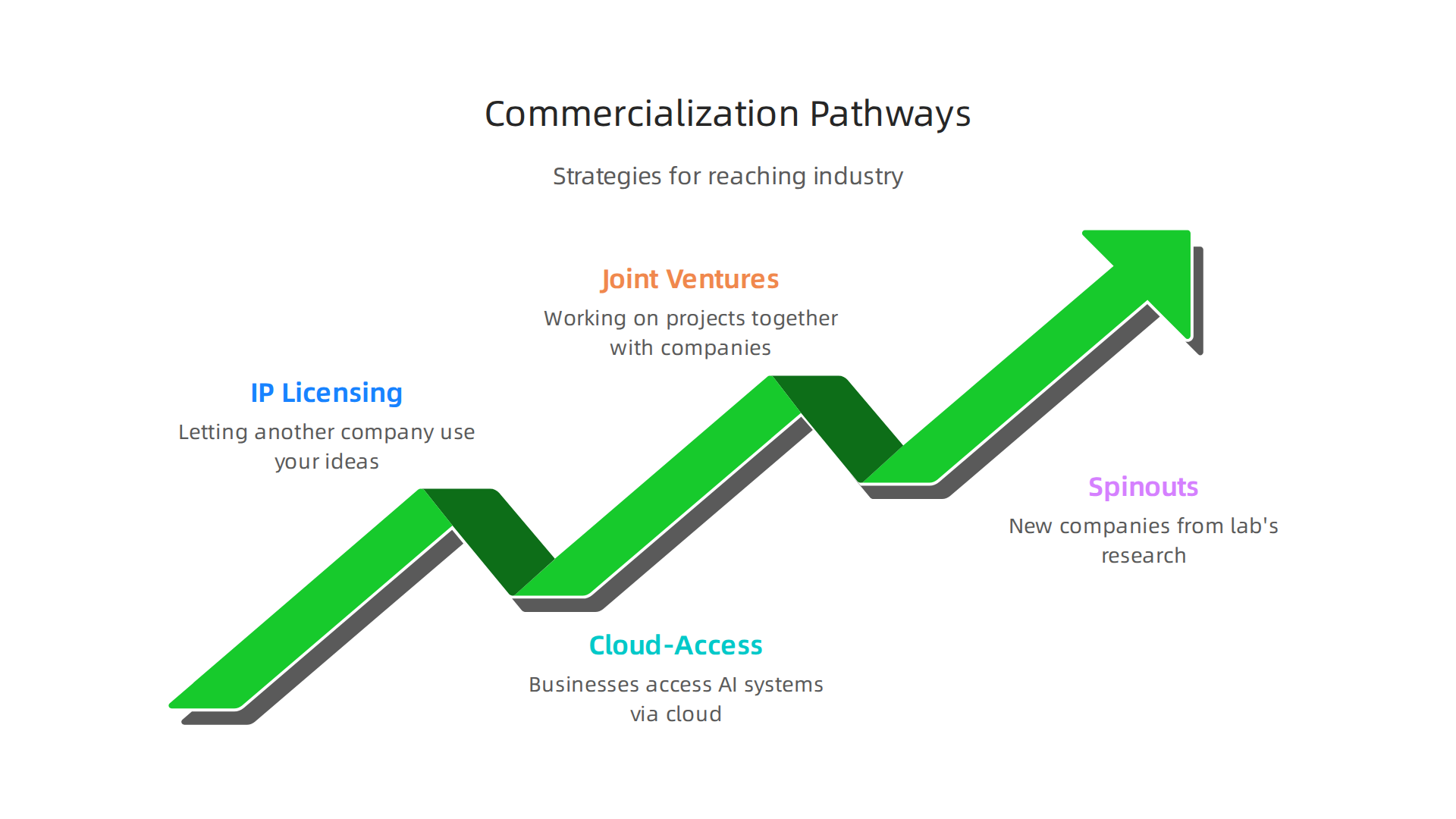
One is IP licensing. This is like letting another company use your special ideas for a fee. Another way is through cloud-access models, where businesses can use powerful quantum AI systems over the internet, without having to buy all the expensive hardware themselves. Think of it like renting computing power. Labs can also form joint ventures with bigger companies to work on projects together. Or, they can create spinouts, which are new companies started directly from the lab’s research to focus on one specific product or service.
Many different industries are seeing big chances with quantum AI.
- Pharma and Materials: This is a top area. Companies are using quantum computer technology to simulate molecules, which helps in finding new drugs and creating better materials much faster 8 Industry Use Cases for Quantum Computing. This includes developing new catalysts or specialized compounds.
- Finance: Banks and investment firms are using quantum AI to manage risks better, figure out stock prices, and make smart investment choices Quantum Computing Commercial Applications 2026 Explained. It helps them make faster decisions Quantum-AI: Empowering Modern Businesses in 2026.
- Logistics: For companies that move goods around, quantum AI can help plan the best routes and manage supply chains more efficiently. This saves money and time. Other areas include things like customer behavior prediction in marketing, making digital models of customers, and better enterprise AI decisions 3 Forces That Will Redefine Marketing in 2026.
Many of these breakthroughs are happening now, as industries use quantum computing to solve real-world problems 7 Quantum Computing Trends That Will Shape Every Industry in 2026. You can learn more about how to use these new tools in your business with a guide on how to use AI strategically a decision makers guide for 2026.
Keeping up with these fast changes in quantum AI and its business uses is super important for anyone working in tech. If you want to stay informed about the newest developments in AI and how they affect business and regulation, you should definitely sign up for The AI Newsletter Worth Reading.
Getting new inventions out to the world is exciting, but for a quantum artificial intelligence lab, it also brings big responsibilities. It’s super important to think about the rules, who owns ideas, and where data goes. These are called risks.
Compliance Risks: Export Controls and Dual-Use Tech
First, let’s talk about rules, or "compliance." Quantum-enabled tools are very powerful. Governments worry about who uses them and for what reasons. Many quantum computer technology tools and AI systems can be "dual-use." This means they can be used for good things, like making new medicines, but also for serious defense purposes.
Because of this, there are strict rules called "export controls." These rules stop important technologies from going to places that might use them in harmful ways. A quantum artificial intelligence lab has to be very careful to classify its technologies correctly. In 2026, the US government is focused on keeping advanced AI and quantum innovation safe for national security, aiming to protect American ingenuity Promoting Advanced Artificial Intelligence Innovation and Security. The President also signed a historic plan to bring the most advanced and secure AI systems to national security efforts Fact Sheet: President Donald J. Trump Signs Historic Directive on AI in the National Security Enterprise. If you need to know more about these controls, check out this guide on Classified Technologies in 2026.
IP Complexities for Hybrid Innovations
Next up is Intellectual Property (IP), which means who owns the ideas. When a quantum artificial intelligence lab creates new things, it often mixes quantum methods with regular (classical) computer technology. This is called hybrid innovation. For example, combining quantum parts with smart transformer AI models. Figuring out who owns the ideas in these new hybrid systems can be tricky.
It gets even more complicated when different labs or companies work together. Everyone needs to have very clear agreements about who owns what. Some labs might even use open source AI tools, which come with their own set of rules about how they can be used and shared. The White House has released a national plan for AI that includes these kinds of concerns White House Releases a National Policy Framework for Artificial Intelligence. To help manage these challenges, it’s wise to learn about AI regulation 2026 and how to navigate compliance and avoid risks.
Cross-Border Data Flows and Cloud Governance
Lastly, let’s talk about where data goes. Many labs use cloud services to run their powerful AI systems. These services can be all over the world. But here’s the thing: different countries have different rules about where data can be stored and how it can be used. This is called cross-border data flow.
If a quantum artificial intelligence lab uses a cloud service in another country, it must follow both its own country’s rules and the other country’s rules. This can get very confusing, especially with sensitive data. Leaders in Congress are already looking closely at the "cloud landscape" for quantum and AI to understand these challenges THE QUANTUM, AI, AND CLOUD LANDSCAPE. Keeping up with these global rules is key for any lab working with advanced computer technology. You can read more about US Tech Regulations 2026 Navigating Data Privacy AI Governance and Antitrust Rules.
After looking at the tough challenges of compliance, intellectual property, and data rules, a quantum artificial intelligence lab needs a strong plan to keep things safe and fair. This plan is called a governance framework. It helps labs create wonderful new technologies responsibly.
Building Strong Governance for Quantum AI
Having a good governance framework means setting up clear ways to check for risks, have smart people watch over projects, keep track of experiments, and even test systems to find problems before they become big issues. This is especially important for advanced AI systems and new computer technology. In 2026, many experts believe that quantum AI needs different rules than older AI technologies Why Quantum AI Won’t Be Regulated Like Classical AI – CodeX.
Here are some key parts of a good governance framework for a quantum artificial intelligence lab:
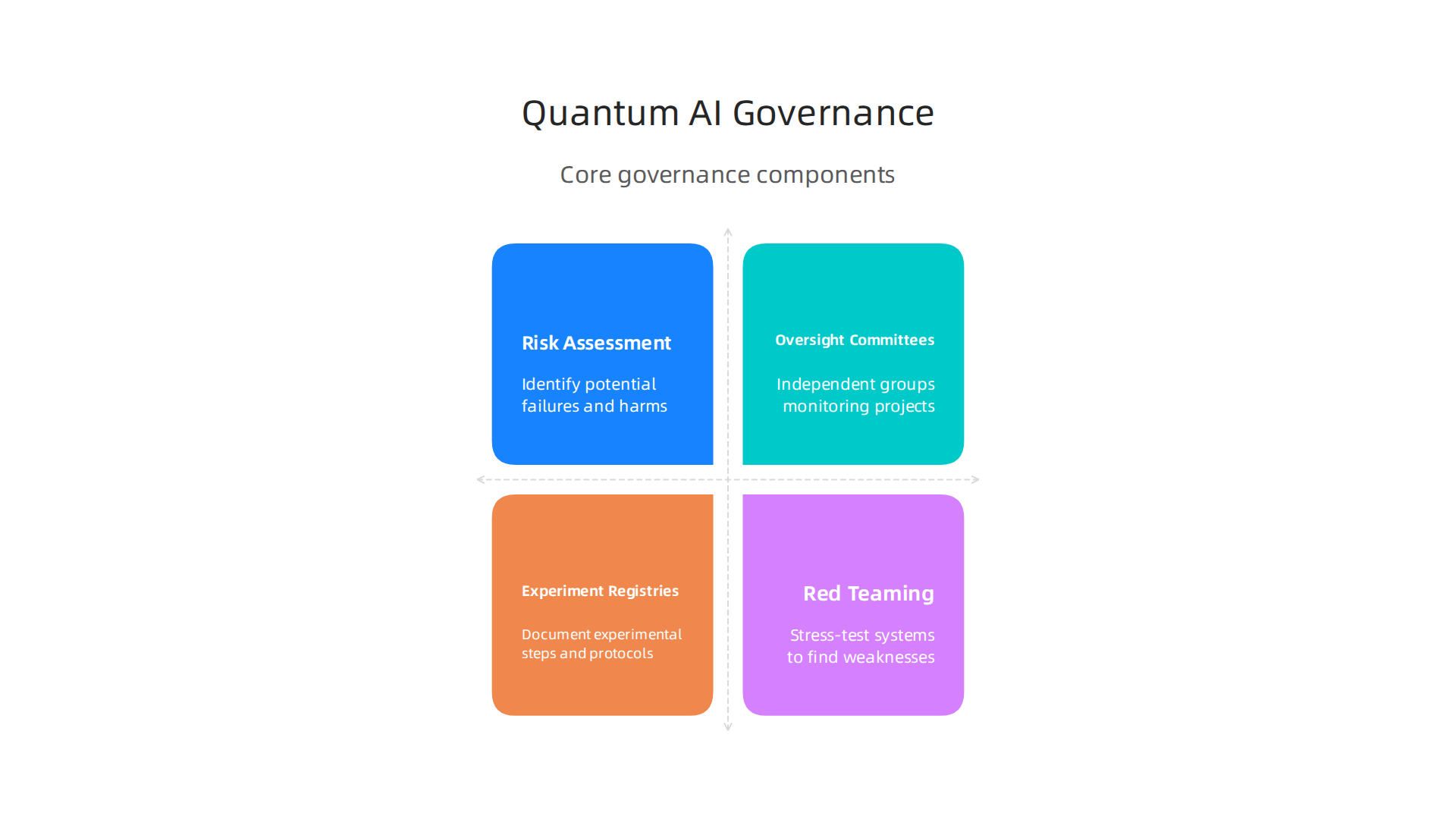
- Risk Assessment Processes: Labs should always look for what could go wrong. This means thinking about ethical problems, security risks, and if the technology might be used for bad purposes. This check should happen often, not just once.
- Oversight Committees: These are groups of people who keep an eye on projects. They should include experts from different areas, like scientists, lawyers, and people who understand policy. These committees help guide the lab to make good choices. Some even suggest establishing quantum governance at the board level to oversee these new technologies Quantum Technologies & Governance for Energy Transition in 2026.
- Experiment Registries: It’s super important to write down every step of an experiment. What was done, what tools were used (like a new transformer AI model or an open source AI tool), and what happened. This helps to show how results were reached and keeps things honest. It’s also helpful for making sure things can be repeated later Audit Trails & Backups for AI-Assisted Quantum Research.
- Red-Teaming: This is like having a "good hacker" team. They try to find weaknesses in the AI systems and quantum tools. By trying to break things in a safe way, the lab can find and fix problems before others do. The White House has also pointed to the importance of an AI framework that requires testing models for risks Key White House AI Framework & Google Quantum Takeaways.
Working Together: A Team Approach
Managing quantum AI is not just for scientists. It needs many different kinds of experts working together. This is called a cross-disciplinary review. It means having technical experts, legal experts, and policy experts all look at the work. This way, the lab can make sure its innovations are not only smart but also safe and follow the rules. It also helps consider ethical, legal, and social issues right from the start UNESCO Global Quantum Initiative for Sustainable Development.
Your Starter Checklist for Responsible Innovation
To help your quantum artificial intelligence lab stay on track, here’s a simple checklist:
- Have clear policies: Write down how your lab handles everything from data to new inventions.
- Train your team: Make sure everyone knows the rules and why they are important.
- Keep good records: Document every decision, every experiment, and every change.
- Review regularly: Have your oversight committee meet often to check on progress and risks.
- Stay updated: Rules for AI systems and computer technology change fast, especially in 2026. Keep learning about new laws and best practices.
By following these steps, a quantum artificial intelligence lab can move forward with amazing discoveries while making sure they are developed and used in a way that benefits everyone.
For professionals trying to understand the ever-changing world of tech regulation, staying informed is key. Get clear daily AI updates from The AI Newsletter Worth Reading.
To get ready for the exciting world of quantum AI, a business needs a clear plan. This means making smart choices about how to get the technology, finding the right people, and knowing how to measure success. For a quantum artificial intelligence lab, these early steps are very important.
Strategic Choices for Your Quantum AI Journey
When a company wants to work with quantum AI, it has a few big choices to make:

- Build It Yourself: This means creating all the quantum AI systems and tools from scratch. It can be very costly and takes a lot of smart people and time.
- Buy It: Sometimes, it’s easier to buy ready-made quantum AI solutions from other companies. This can save time and money but might mean less control over the technology.
- Partner Up: Working with another company or a university lab can be a good way to share the work and costs. Many businesses are choosing this path, as enterprises are speeding up how they bring quantum AI into their work in 2026 Why Enterprises Are Accelerating Quantum AI Integration in 2026.
It’s also important to plan for different possible outcomes. This is like "hedging your bets." You spread out your investments in research and development (R&D) so that if one area doesn’t work out as planned, you still have other options.
Finding the Right Team
A successful quantum artificial intelligence lab needs very special people.
- Quantum Algorithmists: These are the brilliant minds who design how quantum computers solve problems. They understand the complex math and physics behind quantum operations.
- Hybrid Engineers: These engineers know how to make quantum computers work together with regular computer technology. They are key to building practical solutions that use both old and new methods.
- Compliance Specialists: With new rules coming out for AI systems all the time, especially in 2026, you need people who understand the laws. They make sure the lab follows all the ethical and legal guidelines. Knowing how to find and engage top artificial intelligence experts in 2026 is a big part of building this team.
Measuring Your Progress
For leaders and investors, it’s key to know if the quantum artificial intelligence lab is making good progress. Here are some simple ways to keep track:
- Early Wins: Look for small, successful tests or projects that show the technology works as expected. These are called "proof-of-concept" projects.
- Meeting Small Goals: Break down big goals into smaller steps. Are these smaller steps being met on time?
- Testing New Ideas: How many new ideas are being tested? Even if some don’t work, testing shows that the lab is trying new things.
- Working with Others: Are there new partnerships with other companies or research groups? This shows growing interest and collaboration in the field.
By carefully planning, bringing in the right talent, and tracking progress, your organization can move forward confidently in the world of quantum AI.
To stay on top of all the fast changes in tech rules and AI, staying informed is vital. Get clear daily AI updates from The AI Newsletter Worth Reading.
Summary
Quantum artificial intelligence labs bring together quantum computing and AI to solve problems beyond today’s classical machines. This article explains what those labs do—from inventing quantum machine‑learning algorithms and building coherent qubit hardware to creating software stacks, simulators, and benchmarking tools—and why they matter for industry, government, and society. It covers practical commercialization paths such as IP licensing, cloud-access models, joint ventures and spinouts, and shows where early business value appears in pharma, finance and logistics. The piece also highlights urgent compliance and security topics—export controls, dual‑use risks, cross‑border data governance, and IP complexity—and gives governance advice including oversight committees, experiment registries and red‑teaming. Finally, it offers strategic guidance for leaders on build vs. buy decisions, hiring the right mix of specialists, and practical metrics to track progress so organizations can adopt Quantum AI responsibly and effectively.