

Keeping up with all the news about Artificial Intelligence can feel like a big puzzle.

In 2026, the media covers AI from so many angles, making it hard for leaders, investors, and legal teams to know what’s truly important. It’s not just about exciting new tools or what’s happening in IBM news or with Tencent AI; it’s also about understanding the rules.
The truth is, information about AI is often spread out and changes very fast. Think of all the different tech blogs and news channels reporting daily. This makes it tough to see the full picture. For example, countries around the world have very different rules for AI. The way places like the US, EU, and China set up their AI laws is quite different, making a complex map for businesses to follow AI Regulation in 2026: Comparing US, EU, and China Policy.
This messy situation means businesses can easily miss important changes, leading to big risks with laws and how they plan for the future.
This fast pace can make you wonder when did AI become popular, because it feels like a new rule or development pops up almost every day. Because of this, it’s super important to track not just the breakthroughs, but also how governments and watchdog groups are talking about and trying to control AI. This article will help you sort through all the noise. We will put together the big media trends, important stories about new rules, clues about how these rules will be put into action, and clear steps for company leaders, investors, and compliance teams. It’s all about helping you understand what’s coming next so you can make smart choices. For more on navigating these complex rules, learn about Mastering Global AI Regulations 2026 for Wave AI Compliance.
To help you keep up with these quick changes and avoid missing important news, we offer: The AI Newsletter Worth Reading.
1) How major media narratives shape regulatory priorities
The media plays a very important role in deciding what kinds of AI rules get made. What news outlets, online tech blogs, and even social media covers AI stories and events, they help shape what people think is important. These stories often focus on a few main ideas.
For example, many stories talk about:
- AI safety: Are AI systems secure and won’t cause harm?
- Bias: Do AI tools treat some groups of people unfairly?
- Surveillance: Is AI watching us too much, harming our privacy?
- Economic impact: How does AI change jobs and money matters?
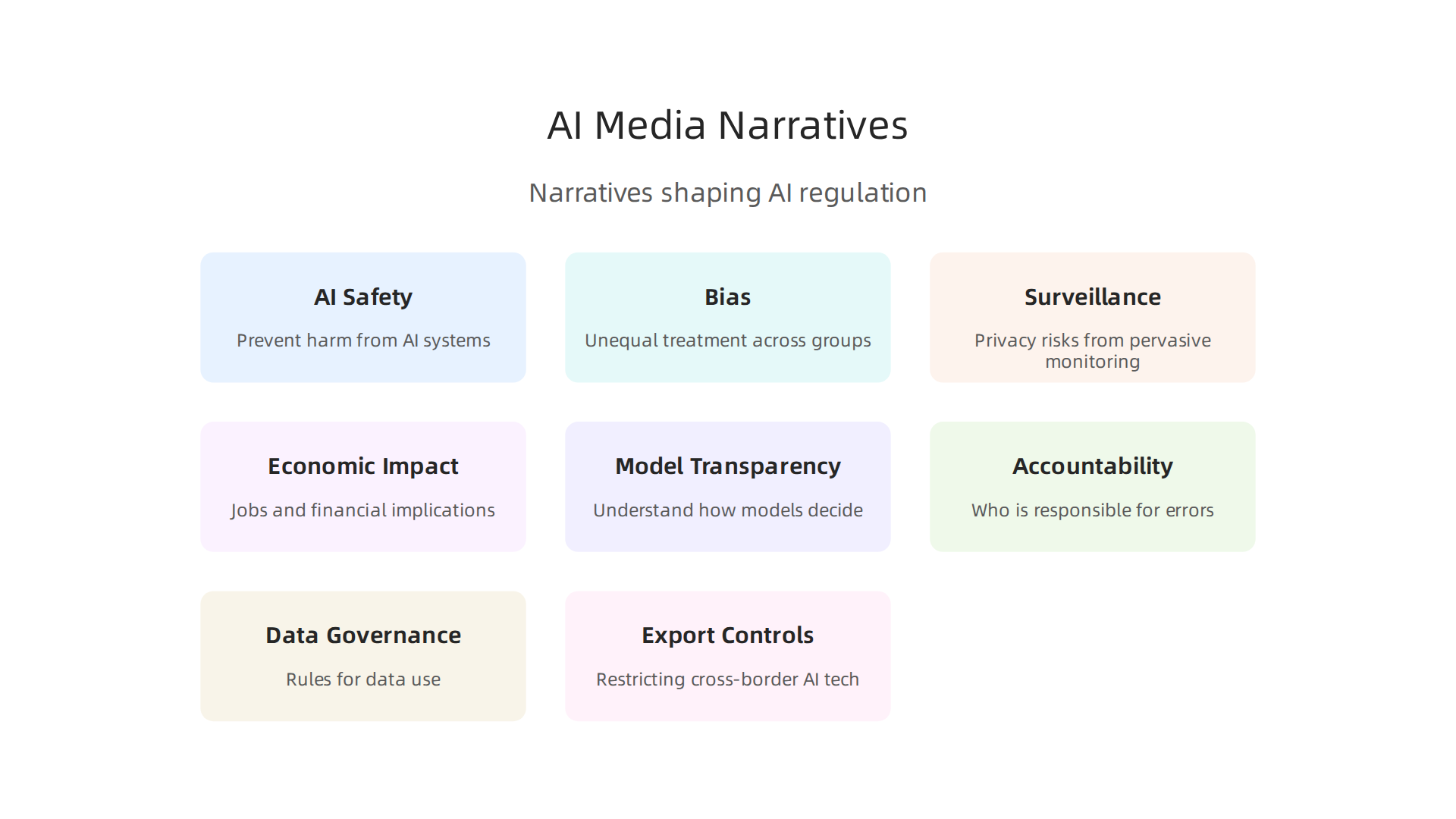
When these ideas appear often in news reports, they become big topics for lawmakers too. They start to think about what new rules are needed to fix these problems. A report from 2026 shows how news outlets across the world cover AI, looking at what feelings and depths of analysis are most common How the World’s Media is Covering AI in 2026. This tells us that media helps decide which AI issues get the most attention.
It’s like a loop: when news reporters find problems or share a big incident involving AI, it can make lawmakers move faster. For instance, if there’s a widely reported case of AI being unfair or causing harm, this can push governments to create new laws or enforce old ones more strongly. You can see how this leads to action by looking at data on AI rules and problems Research Data Catalog: AI Governance Datasets. In 2026, tech companies faced billions in fines for things like using data improperly to train AI Tech companies hit with $3.5B in AI fines since 2022, led by ….
This shows that when the media shines a light on these issues, it directly impacts what regulators do.
The Federal Trade Commission (FTC) in the US, for example, has been very active in stopping unfair or misleading AI practices, partly because media stories have highlighted these issues. They even have a special effort called "Operation AI Comply" to target companies that make false claims about their AI US AI regulations 2026: the state laws you must comply with. This all makes it clear that staying on top of media stories isn’t just for understanding public opinion. It’s a key way to predict when did AI become popular enough to draw serious regulatory attention and what rules might come next. For businesses, knowing how to handle these media-driven concerns is crucial for good AI regulations 2026 compliance strategies to avoid million dollar fines.
2) Quantifying media coverage: metrics that matter
Since media stories have such a big effect on what rules are made, it’s really smart for companies to track these stories closely. It’s not enough to just know that news covers AI. You need to measure how much and what kind of attention AI gets. This helps business leaders and compliance teams see problems before they grow too big.
Here are some important ways to measure media coverage of AI:
- Volume: This means counting how many news articles, online reports, or social media posts are talking about AI. A sudden jump in mentions often signals growing interest or a new problem that might catch the eye of lawmakers.
- Sentiment: This looks at whether the stories are mostly positive, negative, or neutral. For example, if many stories are negative about AI safety, it could mean new rules are coming for that specific issue. Tools now exist that use AI itself to understand how the media covers AI topics Best AI Tools for Media Monitoring and Earned.

- Topic Concentration: What specific parts of AI are being talked about most? Is it AI bias, privacy issues, or how AI affects jobs? When one topic is highlighted over and over, it usually means regulators will focus there too. Studying global news shows how different frames and feelings about AI appear across countries Global news media coverage of artificial intelligence (AI).
- Source Credibility: Who is reporting the news? Is it a well-known newspaper, a respected tech blog, or a smaller online site? News from major outlets like what you might find in IBM news can have more weight than from less known sources.
- Amplification Vectors: How widely do these stories spread? Do they get shared a lot on social media? Are other news sites picking them up? This shows how quickly an issue can become a widespread public concern.
Tracking these metrics helps businesses do two main things:
First, you can anticipate regulatory heat. By seeing trends in media coverage, you can guess which AI issues will become important for regulators in the future.

This lets you prepare your business and avoid potential fines. For example, if there’s a lot of talk about unfair AI practices, you might want to review your own AI systems for fairness.
Second, it helps manage reputational risk. Knowing what the public and media are saying about AI lets you protect your company’s image. If negative stories appear, you can act quickly to fix problems or share your side of the story.
Understanding these signals is key for any company using AI in 2026. It allows you to stay ahead of the curve, not just react to new rules. To keep up with the fast-changing world of AI and its rules, you need reliable information.
Get clear daily AI updates from The AI Newsletter Worth Reading. Staying informed is the first step in creating solid strategies for AI in your business. This helps you understand how to make an AI compliant with global regulations in 2026.
3) Global regulatory storylines to watch in 2026
Even though countries have different rules for AI, some big ideas keep showing up in laws all over the world. These ideas are like common themes that regulators care about. Understanding them helps businesses stay ready for new rules in 2026.
Here are some important topics that global rules for AI often cover:
- Model Transparency: This means that people should be able to understand how an AI system works and why it makes certain choices. It’s about making AI less like a "black box."
- Accountability: Who is responsible when an AI system makes a mistake or causes harm? Laws want to make sure someone can be held answerable.
- Data Governance: Rules about how AI uses data are very important. This includes making sure data is collected fairly, kept private, and used in ways that do not harm people.
- Export Controls: Governments are also looking at rules for sending powerful AI technologies to other countries. This is about national safety and keeping important tech safe. For example, some rules might affect how companies like Tencent AI operate in different markets.
These common themes show that, while approaches differ, there is agreement on core principles like human oversight and risk-based checks for AI systems AI Governance and Regulation 2026: A Complete Guide to ….
However, how each place puts these ideas into practice can be very different. These differences greatly affect how companies design their AI products and where they can sell them.

- Europe (EU): The EU AI Act is known for being very strict, especially for AI systems that are "high-risk." It wants AI to prove it is safe before it is used. This can mean more steps for businesses to follow when creating products for the European market AI Regulation Compared: EU, US, UK, China (2026) – Legalithm.
- United States (US): The US often takes a different path. Instead of one big law for all AI, it focuses on specific industries or types of AI. US states also have their own rules, which can make things complex for companies selling across the country.
- China: China’s approach often looks at how AI affects national security and public opinion. They focus on making sure AI tools are stable and follow certain social values.
These different ways of making rules mean that a company might need to change its AI product to fit the rules in Europe, then change it again for the US, and again for China. This impacts how AI is developed and sold around the globe in 2026. Businesses must keep track of these varied rules to manage their legal risks and ensure they can reach all their customers. Staying updated helps companies create effective AI regulations 2026 compliance strategies for businesses.
When countries make rules about AI, they do not just write them down and forget them. They also watch closely to make sure companies follow these rules. This is called enforcement. By looking at how these rules are enforced in 2026, we can learn what matters most to regulators and what kinds of mistakes companies should avoid.
Here are some main areas where regulators are focusing their enforcement efforts:
- Protecting People: Many enforcement actions happen when AI systems might harm users. This can be if an AI gives bad advice, makes unfair decisions, or uses personal information in ways people did not agree to. Regulators want to make sure AI is safe and fair for everyone.
- Handling Data Wrongly: A big part of AI is the data it uses. Regulators are very strict about how data is collected, stored, and used. If a company uses data without permission, or if the data leads to bias in the AI, it can lead to big problems. Many billions of dollars in fines have been given out since 2022 for unauthorized data practices Tech companies hit with $3.5B in AI fines since 2022, led ….
- Stopping Unfairness: AI should not treat people differently based on things like their race, gender, or age. If an AI system, for example, for hiring or loan applications, shows bias, regulators will step in. The US Federal AI Enforcement Tracker shows how different agencies like the FTC and EEOC look for these issues US Federal AI Enforcement Tracker. In Europe, the EU Enforcement Tracker also tracks actions related to AI Act violations EU Enforcement Tracker 2026 — Annual Dataset.

These enforcement actions are like warnings for other businesses. When a company gets fined or investigated, it tells others what not to do. For example, some companies have faced trouble for "AI washing," which means they pretend their products are more advanced or AI-driven than they actually are. This kind of misleading practice can lead to fines from agencies like the Federal Trade Commission (FTC) in the US US AI regulations 2026: the state laws you must comply with.
Understanding these patterns helps companies. It shows them where to put their money to make sure their AI is compliant. It also helps them decide what features to build into their AI products. By learning from past mistakes, businesses can create better product roadmaps and make sure their AI products, whether from big names like Tencent AI or smaller startups, meet all the rules. It is crucial for businesses to learn how to make an AI compliant with global regulations in 2026 to avoid costly errors.
Staying informed about these fast-changing rules and enforcement actions is key for any business that covers AI.
Get clear daily AI updates from The AI Newsletter Worth Reading.
How Media Coverage Influences Investor Sentiment and Valuations
Even when businesses work hard to follow AI rules, what people read and hear about AI can change how investors think about companies. This is where media coverage comes in. The stories and news we see about AI can make a big difference in how valuable a company seems.
How News Stories Affect Investor Decisions
The way media covers AI can spread quickly and shape opinions. Investors pay close attention to several places:
- Company Updates: When companies like Tencent AI or IBM news share how well their AI products are doing, investors listen. Good news can make their stocks go up, but bad news can make them fall. These updates often happen during "earnings calls," where companies talk about their money and plans.
- Market News: General news outlets and tech blogs constantly share stories about new AI breakthroughs, problems, or how AI is being used. This kind of coverage helps build a common idea about AI in the public’s mind. For example, when did AI become popular in the news? It really took off as stories about its power grew.
- Expert Reports: People who study the market, called analysts, write detailed reports about companies and their AI efforts. These reports help investors decide where to put their money. If an analyst says a company’s AI is risky because of new rules, investors might sell their shares.
Sometimes, the media can create "hype" around AI, making it seem even better or more important than it really is. This hype can make investors excited and push company values up quickly. One study shows how media hype can really shape how new AI projects get money Financing Futures: How Hype Shapes.
How Investors Can Look Beyond the Hype
For smart investors, it is important to look deeper than just exciting headlines. Here are some ways to tell the difference between real value and just a lot of talk:
- Check for Facts: Do not just believe everything you read. Look for numbers and proof. Is the AI truly helping the company make more money, or is it just a new idea?
- Understand Regulatory Risks: As we know, AI faces many rules in 2026. If a company’s AI might break these rules, it faces big fines. Investors should ask: Is the company ready for these rules? Are they trying to avoid costly mistakes? Staying up to date on these issues can help prevent financial losses, as understanding AI regulations 2026 compliance strategies to avoid million dollar fines is vital.
- Look at Long-Term Plans: Good companies have clear plans for how their AI will work over many years, not just for a short time. This means thinking about future rules and how they might affect business. To truly understand the basics of AI, investors might find it helpful to look into a guide to AI fundamentals and regulatory readiness.
By watching what the media says carefully and looking at the real facts, investors can make better choices. This helps them find companies with strong AI that will do well, not just those that get a lot of buzz.
When looking at what the media says, companies also need a clear plan for their teams that handle rules. This plan helps them keep an eye on everything about AI so they can avoid problems. It’s like having a special map to guide them through all the new AI rules in 2026.
Your Simple Plan for AI Monitoring
For teams that make sure a company follows the rules, it’s key to have a playbook. This playbook tells them how to watch for news and changes that could affect their AI. Here’s what it should include:
- Where to Look for Information: Your team needs to know all the places to find important news about AI. This means checking general news, special tech blogs, and government websites that talk about new rules. It’s also helpful to look at what other companies like Tencent AI or IBM news are doing. A good guide for this is a complete guide to media monitoring for compliance.
- When to Ring the Alarm: Not every small piece of news is a big deal. Your team needs to set clear limits for when something is important enough to get everyone’s attention. This is called setting "alerting thresholds." If a news story shows a big new risk, that’s when the alarm should go off. Thinking about a 2026 playbook for agentic AI observability can give you ideas for this.
- Who Needs to Know and What Happens Next: Once an alarm goes off, who should hear about it? There should be a clear path for telling the right people, like managers or legal experts. This is an "escalation path." Everyone needs to know their part so that problems can be fixed fast.
- Making Sure Everyone Agrees: All the different teams in a company should work together. The people who make AI, the people who sell it, and the people who check the rules must all understand the plan. This makes sure everyone is on the same page about how to handle AI risks.
Turning News into Action
It’s not enough to just watch for news. Compliance teams must also know how to use what they learn to make things better.
- Prioritize Risks: Some risks are bigger than others. Your team should figure out which AI risks are most urgent based on the news they see. This helps them fix the most important problems first. Adding AI risks to your 2026 risk assessment playbook is a smart step.
- Update Your Rules: When new rules come out or problems with AI are in the news, your company’s own rules need to change. This means updating how your company uses AI and making sure it follows all the latest guidelines. Learning how to make an AI compliant with global regulations in 2026 is a vital part of this.
- Keep an Eye on All Technologies: It’s also important to have good oversight of all the different technologies your company uses, especially if they handle secret or important information. You can learn more about mastering oversight of classified and sensitive technologies for 2026 compliance to help with this.
By having a good monitoring plan, compliance teams can stay ahead of problems. This helps the company use AI safely and responsibly in 2026.
Get clear daily AI updates from The Deep View Newsletter. The AI Newsletter Worth Reading
Spotlight: Media-analysis tools and resources for executives
Executives need more than just a plan; they need the right tools to understand how the media covers AI. These tools help leaders make smart choices about how they use AI and follow new rules in 2026.
Let’s look at some important tools:
- Media Monitoring Tools: These tools watch news stories, social media, and tech blogs to see what people are saying about AI. They can track mentions of your company, like if someone talks about Tencent AI or IBM news, or how the wider world covers AI in 2026 in general. AI helps these tools by sifting through a lot of information fast. They are key for getting timely updates on how AI is seen, as highlighted by new trends in media monitoring in 2026.
- Sentiment Analysis: This type of tool helps you understand if news about AI is mostly good, bad, or neutral. It goes beyond just counting mentions; it tells you the feeling behind the words. This can show if the public is worried or excited about new AI rules. These tools often use special computer programs to find these feelings in text, as seen in methods for analyzing news articles.
- Topic Modeling: These tools look at many news articles and find the main topics or themes. For example, they might show that most news about AI is now about new laws, or about how AI is changing jobs. This helps executives see the big picture without reading every single article.
- Regulatory Trackers: These are special tools that keep an eye on new laws and rules related to AI. They alert companies to changes, so they can make sure their AI use is always within the law. Staying on top of these rules is vital to avoid big problems and potential fines. You can find more helpful information on AI Regulations 2026 Compliance Strategies To Avoid Million Dollar Fines.
Companies of all sizes can use these tools. Smaller companies might start with simpler, less costly options, while larger ones might invest in full-featured platforms that can track global news about how AI is impacting various sectors. It is about choosing what fits your team and budget best. For general understanding, a Virtual Intelligence Your 2026 Guide to AI Fundamentals And Regulatory Readiness can be very helpful.
AI tools are great for quickly checking lots of information. They can spot patterns and tell you what’s happening. But for very important issues, especially those about new rules or ethical concerns, human experts are still needed. A person can understand details and feelings that a computer might miss. For example, while many articles are written by AI in 2026, people generally feel more comfortable with news that has human involvement, according to a Generative AI and News Report 2025. This means that for high-stakes regulatory issues, a human touch is often best. It’s about using both automated tools and smart human review. This way, executives can get a clear view of how the media covers AI and make the best decisions for their company in 2026.
Summary
This article explains how media coverage of artificial intelligence shapes regulatory priorities, enforcement actions, investor sentiment, and corporate risk in 2026. It shows why volume, sentiment, topic concentration, source credibility and amplification matter for predicting where lawmakers and regulators will focus next. The piece compares broad global trends—EU transparency and high-risk rules, U.S. sectoral approaches, and China’s security-driven stance—and explains how enforcement around data misuse, bias, and misleading AI claims has already produced large fines. Readers will learn practical monitoring metrics, a simple playbook for compliance teams (where to look, when to alert, who to escalate to), and which tools combine automated signals with human review. The article also explains how executives and investors should separate hype from durable value and offers concrete steps to turn media signals into compliance and product decisions that reduce legal and reputational risk.