

Why ‘field AI’ matters now: scope, stakes, and what this guide delivers
In 2026, we hear a lot about Artificial Intelligence, or AI. But not all AI is the same. When we talk about "field AI," we mean AI tools and systems designed to work in very specific areas or "fields." These are not the general-purpose AI models you might chat with online. Instead, field AI is built to tackle unique challenges within a certain industry or job, using its own special set of data and rules.
Think of it like this: a general AI model is like a very smart student who knows a little about everything. A field AI, however, is like an expert who deeply understands one specific topic. For example, some AI systems, like Paige AI MSK, are made just for looking at medical images to help doctors. Others, like those from Metropolis Technologies, might manage traffic flow in cities. Then there’s Radiance Technologies which works on defense projects, each with its own field AI solutions. These special AI systems are very powerful because they are so focused.
But with this power comes big responsibilities and risks, especially for those in charge of companies.

Leaders, investors, and teams that ensure rules are followed (compliance teams) must pay close attention to field AI. Why? Because the rules for AI are getting stricter, and not following them can lead to serious problems. In fact, regulators have become very active. Since 2022, tech companies have faced huge penalties, with billions of dollars in AI-related fines handed out, especially for how data is used to train AI systems Tech companies hit with $3.5B in AI fines since 2022. This trend shows a clear shift from AI compliance guidance to penalties in 2026.
This means executives need to think carefully about the artificial intelligence cost estimation for their projects. It’s not just about how much it costs to build the AI, but also the potential expenses from legal issues. Companies have been fined millions for privacy violations or making false claims about what their AI can do. Even courts are fining lawyers for using AI that makes up facts, with over $145,000 in penalties for AI-generated fake citations in just the first few months of 2026. The European Union’s AI Act has also started handing out first fines related to AI enforcement in 2026.
This guide is here to help you understand these important issues. We will explain how to make sure your field AI projects are not only useful but also follow all the rules, helping you avoid big problems and costly mistakes. If you want to dive deeper into the strategies to keep your business compliant, you can explore more about AI regulations 2026 compliance strategies for businesses.
To stay updated on these fast-moving changes, you’ll need reliable information.
Get clear daily AI updates from The AI Newsletter Worth Reading.
Field AI: Concrete Business Use Cases Across Domains
Now let’s look at how specialized artificial intelligence, or field AI, is actually used in different jobs and industries today.
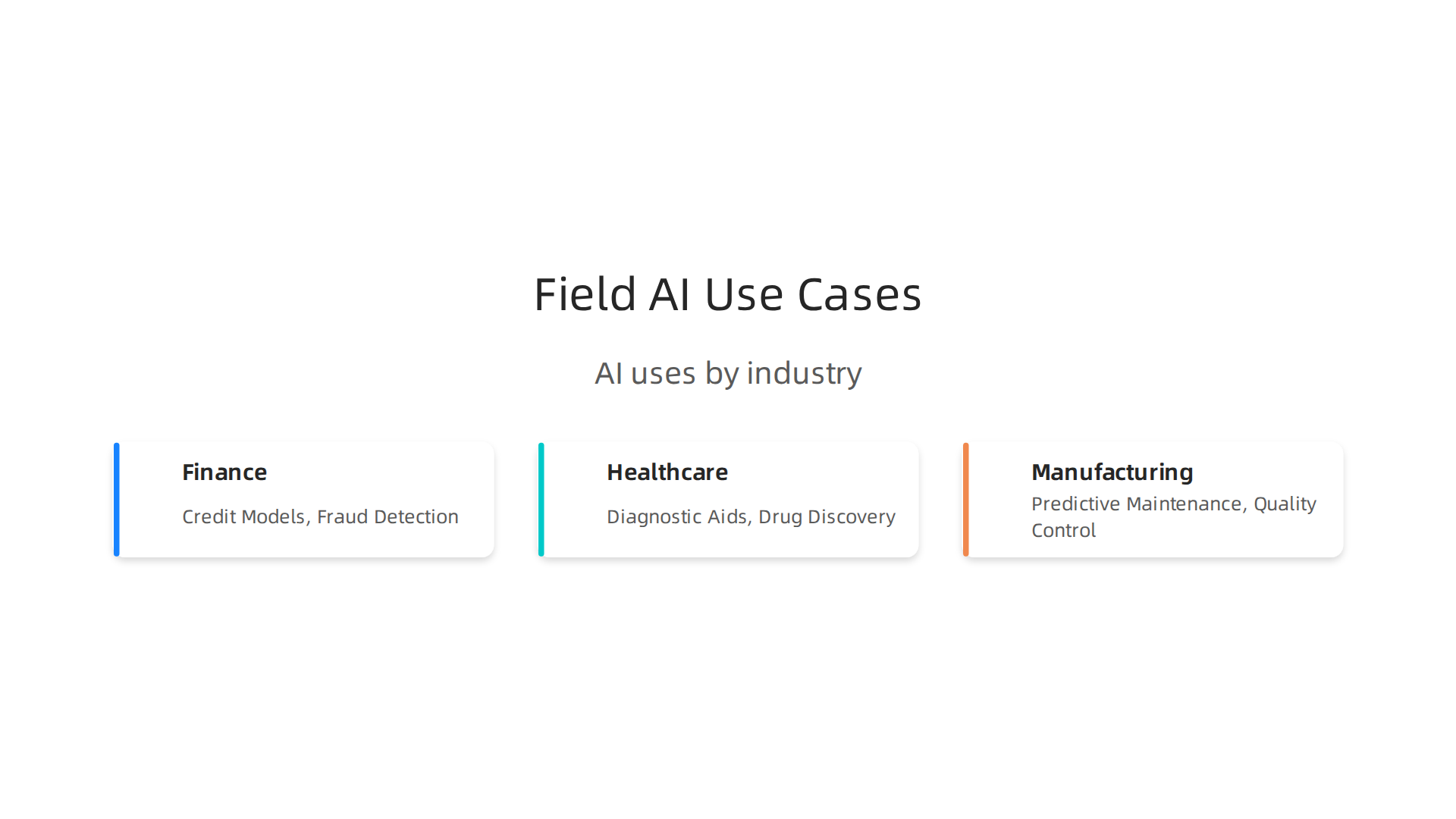
You’ll see that these AI tools are built very specifically to handle the unique parts of each field. This means the rules and care needed for them also change a lot from one area to another. Many businesses are finding smart ways to use AI for specific tasks across various sectors in 2026, as highlighted in several AI Use Cases by Industry reports for 2026.
In Finance
Imagine banks and other money businesses. They use field AI to make big choices every day.
For example:
- Credit Models: AI can look at lots of information to decide if someone should get a loan. It helps figure out who is a good risk and who might have trouble paying back money.
- Fraud Detection: Field AI is very good at spotting strange money movements. It can tell quickly if someone is trying to steal money or make fake transactions. This helps protect people’s accounts. According to a 2026 report, banks use machine learning models to score credit risk and flag fraudulent transactions in real-time.
For finance, the rules are very strict because money is so important. AI systems in this field must be very accurate and fair. They also need to be super fast because problems can happen in a blink. Any mistake could mean big financial losses or even harm people’s lives if they are unfairly denied a loan.
In Healthcare
Healthcare is another big area where field AI makes a difference. Here, AI helps doctors and hospitals save lives and improve care.
For example:
- Diagnostic Aids: AI can look at medical images, like X-rays or MRI scans. It helps doctors find problems earlier, such as diseases, sometimes even before a human eye might notice them. Systems like Paige AI MSK are designed for this kind of specific medical imaging analysis. AI can pre-screen these images, pointing out possible issues and prioritizing urgent cases for doctors 50 AI Use Cases by Industry: Real Examples That Drive ROI.
- Drug Discovery: AI is speeding up how new medicines are found. It can look through countless chemicals and predict which ones might work best to fight a sickness.
When AI is used in healthcare, safety is the most important thing. The data used must be private, and the AI must work without errors. Rules around patient privacy and how accurate medical tools need to be are very tight. Regulators want to make sure these AI systems help, not hurt, people. If you want to learn more about how to make AI safe and reliable, you can read about how to make an AI compliant with global regulations in 2026.
In Manufacturing
Factories and production lines also use field AI to make things better and safer.
For example:
- Predictive Maintenance: Machines often break down unexpectedly. Field AI can watch how machines work and predict when they might fail. This lets companies fix them before they stop working, which saves a lot of money and keeps production going smoothly. This is a common AI use case in 2026, especially in telecom and manufacturing, leading to less downtime and lower costs Top 10 AI Use Cases Across Industries In 2026.
- Quality Control: AI cameras can check products very quickly to make sure they are made correctly. This helps factories make high-quality items and find any defects early.
For manufacturing, field AI needs to work well in tough environments and often in real-time. The main worries are how reliable the AI is, if it’s fair to workers, and if it makes products that are safe for everyone. The rules here might focus on product safety and making sure the AI does not cause harm in the workplace.
In all these examples, you can see how field AI is not just a general helper. It’s a special expert, built for a specific job, with its own set of challenges and rules. Understanding these special needs is key for businesses to use AI smartly and safely in 2026.
Now, let’s look at the rules that guide how field AI is used in different industries. These rules are very important because they make sure AI is safe, fair, and does not cause harm. In 2026, many places around the world are getting serious about AI laws, moving from just talking about them to making sure businesses follow them. This means that using field AI smartly also means understanding these laws.
Global Push for AI Rules
Around the world, new rules for AI are popping up. In 2026, binding AI laws are already in effect in places like Europe and South Korea, while other regions are developing their own specific guidance. For example, the European Union’s AI Act will be fully in place by August 2026, setting a global example for how to manage AI risks. This law uses a "risk-based" approach, meaning that AI systems that could cause more harm, like those used in healthcare or for credit decisions, face stricter rules.
In the United States, there isn’t one big federal AI law yet, but many states are passing their own data privacy laws. Also, a new bill called the SECURE Data Act has been introduced to create national privacy rules for consumers. Government bodies like the Federal Trade Commission (FTC) are also active, taking action against companies that make false claims about their AI or use it in unfair ways. Staying updated on these changing rules is key for any business. You can read more about how AI Regulation is Heading in 2026: A Global Outlook.
Regulatory Landscape by Sector
The type of rules that apply to field AI depend a lot on where and how it’s being used.
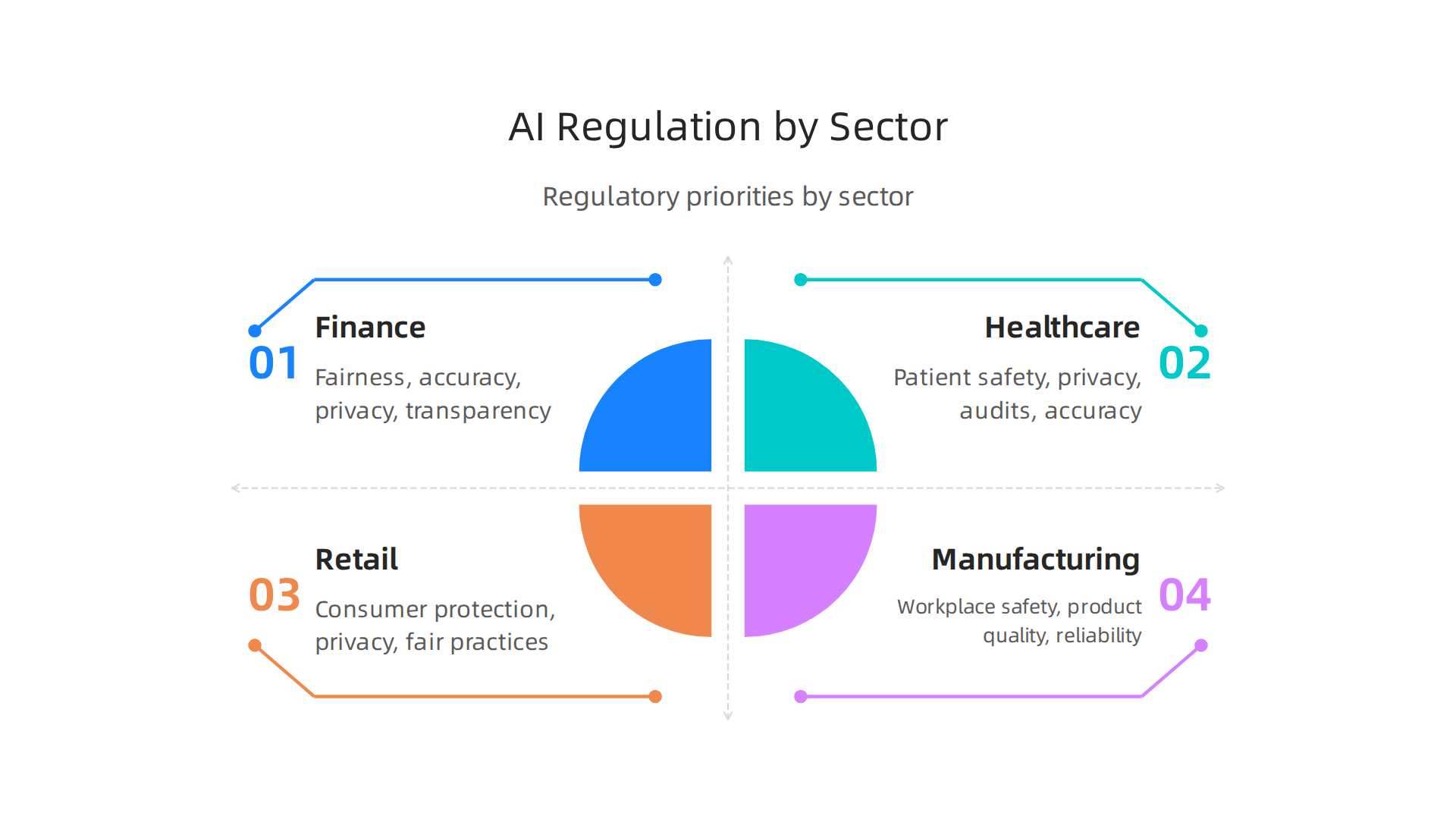
In Finance
For banks and financial services, the rules are very tough. Financial field AI systems are often seen as "high-risk" because they affect big parts of people’s lives, like getting a loan or investing money.
Key rules include:
- Fairness: AI must not unfairly deny loans or services based on a person’s background.
- Accuracy: Financial decisions need to be very precise to avoid big money mistakes.
- Data Privacy: Protecting customers’ sensitive financial information is a top priority, with strict data security laws. According to a 2026 update, several U.S. state laws and international regulations are taking effect to cover Data Privacy AI Regulatory and Compliance.
- Transparency: It’s important to understand how an AI makes a financial decision, especially if something goes wrong.
In Healthcare
In healthcare, keeping patients safe and healthy is the main goal. Field AI tools like those used for diagnostics (e.g., Paige AI MSK) or drug discovery are under very close watch.
Important rules here include:
- Patient Safety: AI must be thoroughly tested to ensure it doesn’t harm patients or give wrong medical advice.
- Data Privacy: Medical records are very personal. Laws strictly control how AI can use and protect patient data.
- Accuracy and Reliability: AI tools used to help doctors must be highly accurate, as mistakes can have serious consequences.
- Mandatory Audits: Often, these high-risk AI systems must go through regular checks to prove they are working as intended and meeting safety standards.
In Retail
The retail world uses field AI for everything from helping customers to managing what’s on store shelves. The rules here focus on protecting consumers and their personal information.
Key areas of regulation include:
- Consumer Protection: AI should not trick customers with fake reviews or misleading prices. The FTC has started "Operation AI Comply" to stop companies from making deceptive claims about their AI.
- Data Privacy: When AI uses customer shopping habits or personal details to offer recommendations, strict privacy laws apply. Many privacy laws are surging in 2026, with huge fines for companies that do not protect consumer data. For example, California has seen over $9 million in fines for privacy policy failures since 2025, and an additional $2.75 million fine against Disney in February 2026, as discussed in Privacy Enforcement Is Surging in 2026.
- Fair Practices: AI systems used for pricing or targeted ads must not discriminate against certain groups of people. Companies like
Metropolis TechnologiesorRadiance Technologiesthat use AI for customer interaction need to be especially careful about these rules.
In Manufacturing
For factories and production lines, field AI helps make things more efficient and safer. Regulations here are often about product safety and protecting workers.
Points of focus for AI rules:
- Workplace Safety: AI systems, especially robots or predictive maintenance tools, must operate safely around human workers.
- Product Quality and Safety: AI used in quality control needs to ensure products meet safety standards before they go to customers.
- Reliability: AI systems need to be dependable to prevent costly breakdowns or production errors.
- Transparency to Workers: If AI is used to monitor worker performance or schedule tasks, there may be rules about being clear with employees.
Navigating Different Countries’ Rules
It’s not just about what rules exist, but also where those rules apply. A company using field AI in Europe might face different obligations than one in the U.S. or Canada.
- Risk-Based Approach: Many global frameworks, including the EU AI Act and Canada’s Artificial Intelligence and Data Act (AIDA), focus on the level of risk an AI system poses. Higher-risk systems, like those influencing access to jobs, credit, healthcare, or education, have more duties to follow, such as mandatory audits and transparency requirements.
- Mandatory Audits and Assessments: Some high-risk AI systems must be regularly checked to ensure they are fair, accurate, and safe.
- Sector-Specific Compliance: Besides general AI laws, each industry has its own long-standing rules that field AI must also follow. For instance, medical device rules in healthcare or financial regulations in banking.
- Penalties: Not following these rules can lead to big problems, including huge fines. In 2026, regulators have already imposed billions in AI-related penalties, often for issues like unauthorized data use or deceptive practices. Learn about AI Regulations 2026 Compliance Strategies to avoid these costly mistakes.
Understanding these different rules and how they change from one place to another is very important for any business using field AI today. It helps companies use AI responsibly and avoid expensive problems.
Want to keep up with all the latest rules and changes in AI?
The AI Newsletter Worth Reading
Get clear daily AI updates from The Deep View Newsletter.
The last section showed us that rules for field AI are everywhere. Now, let’s talk about how companies can actually follow these rules. This means putting together a clear plan for your field AI systems. It’s about knowing the risks, setting up good policies, using the right tools, testing everything, and keeping good records.
The Field AI Compliance Journey: What to Do
Making sure your field AI is compliant isn’t a one-time thing. It’s an ongoing journey with several key steps.
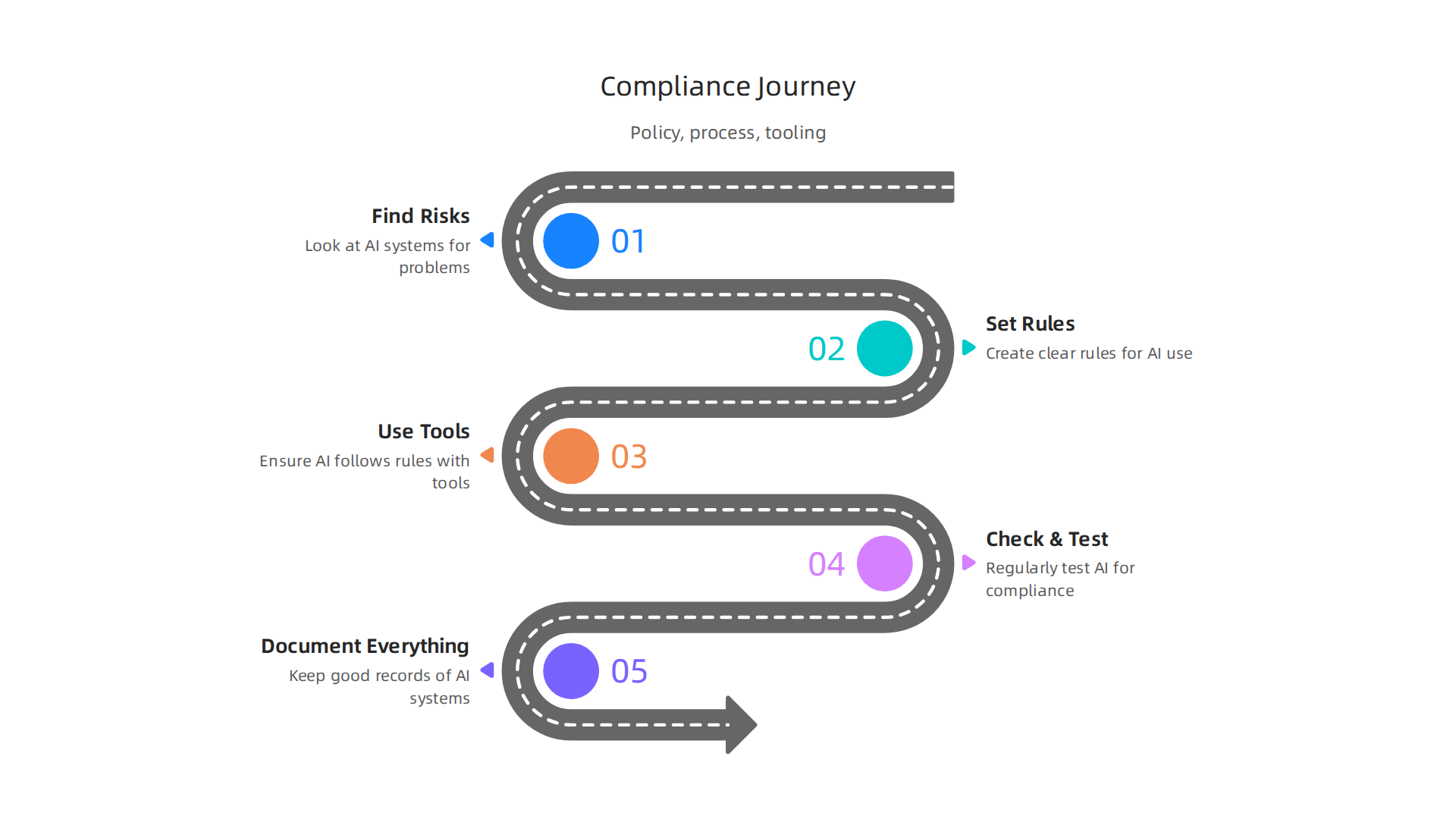
1. Find the Risks (Risk Assessment)
First, you need to look at your AI systems and figure out where they could cause problems. For example, an AI like Paige AI MSK used in healthcare has very high risks if it makes mistakes. An AI used by Metropolis Technologies or Radiance Technologies for customer service might have different risks related to privacy or fairness. You need to ask:
- Could this AI make unfair decisions?
- Could it harm people or their money?
- Is it using private information correctly?
Identifying these risks early helps you put more focus on the most important areas.
2. Set Your Company’s Rules (Policy Mapping)
Once you know the risks, you need to create clear rules for how your company uses field AI. These rules should match the laws we talked about earlier. Many companies look to frameworks like the ISO/IEC 42001 standard or the NIST AI Risk Management Framework to guide them. These frameworks help you build a strong plan for using AI safely and fairly. Think of it as creating a map that shows everyone how to use AI the right way. Experts say that common rules like ISO/IEC 42001 are becoming key for showing good AI management AI Risk & Compliance in 2026: What Enterprises Must ….
3. Use the Right Tools (Technical Controls)
This is where you make sure your AI systems actually follow your rules. It involves using special tools and setups.
- Data Control: Make sure only the right people can see and use data. This means clear rules for who accesses data and why. Your AI needs good data governance frameworks for AI compliance to manage and protect its information.
- Logging and Tracking: Keep a record of every important decision your AI makes. This is like a journal for your AI, showing how it reached an outcome. This "audit trail" is very important for checking fairness and finding mistakes later. In 2026, a good AI audit trail should capture many details, including the AI’s output and any human checks AI Audit Trail Requirements: 2026 Checklist for Finance, ….
- Monitoring: Constantly watch your AI systems to ensure they are working as expected and not doing anything risky or unfair.
4. Check and Test (Testing and Auditing)
You can’t just set up rules and forget about them. You need to test your field AI regularly to make sure it’s working properly and still following all the rules. This includes looking for any bias and making sure the AI’s decisions can be understood. Many high-risk AI systems now need regular checks to prove they are fair, accurate, and safe. Having clear audit trails and logs makes this easier. An important part of this is "explainable AI," which means the AI can show why it made a certain decision, not just what the decision was. Some regulations even demand automated audit tools to keep continuous checks on AI systems Audit-as-code: a policy-as-code framework for continuous AI ….
5. Write Everything Down (Documentation)
Keep good records of all your AI systems. This includes how they were built, what data they use, how they were tested, and all the risk checks you’ve done. This is especially important for high-risk AI. Good documentation helps you show regulators that you are taking compliance seriously. According to a 2026 guide, you need technical documents, risk assessments, and reports on model evaluations EU AI Act 2026 Compliance Guide for US Companies.
Simple Checklist for Small Teams
If you’re part of a small team or a company that doesn’t have a lot of people just for compliance, here’s a simple checklist to get started:
- Know Your AI: Make a list of all the field AI you use. For each, think about what kind of problems it could cause.
- Protect Data First: Focus heavily on making sure the data your AI uses is safe, private, and used with permission. This is often the easiest and most important place to start. You can learn more about how to do this in our guide on how to make an AI compliant with global regulations in 2026.
- Keep Records of AI Choices: Set up a simple way to record the key decisions your AI makes and why. Even a basic log can be very helpful.
- Check for Unfairness: Regularly look to see if your AI is treating everyone fairly. This means checking its results for different groups of people.
- Stay Updated: Rules for AI are changing all the time. Make sure someone on your team keeps an eye on new laws and updates.
Following these steps can help even small businesses use field AI responsibly and avoid big problems or large fines. It’s about being smart and thoughtful with how you use this powerful technology.
Want to keep up with all the latest rules and changes in AI?
The AI Newsletter Worth Reading
Get clear daily AI updates from The Deep View Newsletter.
Making sure your field AI systems follow rules is a lot about how you handle data. Every piece of information your AI uses, from where it comes from to how long you keep it, matters a lot. This is called data governance, and it’s super important for keeping things fair, private, and legal.
The Special Journey of Data in Field AI
Field AI often uses unique types of data. Think about specific systems like Paige AI MSK in healthcare, which deals with sensitive patient scans, or systems used by Metropolis Technologies and Radiance Technologies that handle customer information. The way data moves through these systems needs careful rules.
- Where Data Comes From (Label Provenance): You need to know exactly where your data started. Who gathered it? Who marked it up (labeled it) for the AI to learn from? For example, if an AI learns from medical images, knowing the source helps make sure the data is good and fair. If the data has unfair parts, the AI might make biased decisions. Knowing the source helps fix problems.
- How Long You Keep Data (Retention): Laws tell us how long we can hold onto different types of data. You can’t just keep everything forever. Having clear rules for how long you keep data is key, especially for sensitive personal information. This also impacts the
artificial intelligence cost estimationfor data storage and management. - Using Data Again (Re-use): Can you use data collected for one AI system for a completely different AI system later on? Sometimes yes, sometimes no. It depends on why the data was collected in the first place and if you have permission. For instance, customer data from a service AI might not be allowed for a marketing AI without new permission.
- What You Have Permission For (Consent Boundaries): This is about respecting privacy. When people give you their data, they agree to certain ways you can use it. Your field AI must stick to these agreements. This is very important because many global rules in 2026 are making data privacy even stricter, with new laws in places like the U.S. and the EU Data Privacy AI Regulatory and Compliance Update 2026.
Smart Ways to Control Your AI Data
To manage these data challenges, companies need practical steps and tools.
- Who Gets to See What (Access Controls): Only people who need to see certain data should be able to. This means setting up clear roles and permissions. For example, a developer working on an AI model might need access to training data, but they might not need to see the names or private details of individuals in that data. Strong access controls are a core part of effective
AI regulations 2026 compliance strategies. - Hiding Private Details (Anonymization Techniques): To protect privacy, you can change data so that it cannot be linked back to a specific person. This is called anonymization. It lets you use data for training AI without giving away sensitive information. It helps keep user information safe, which is a big part of US tech regulations 2026.
- Tracking Data’s Whole Life (Data Lineage for Auditability): It’s like having a detailed map of your data’s journey. From the moment data is collected to when it’s used by
field aiand beyond, you need to track it. This trail, known as data lineage, helps you understand how decisions were made and makes it easier to check for mistakes or unfairness. Knowing the full journey of your data is a key part of showing that you are handling data responsibly, as noted by experts focusing on Access Control And Data.
By putting these controls in place, businesses can make sure their field ai systems are not only smart but also safe, fair, and compliant with all the rules. It’s about building trust in your AI.
Making sure your field AI systems follow rules is a lot about how you handle data. Every piece of information your AI uses, from where it comes from to how long you keep it, matters a lot. This is called data governance, and it’s super important for keeping things fair, private, and legal. This focus on data also extends to how the AI models themselves work. You need to be sure the AI is safe, that you can explain its decisions, and that you can check its actions.
AI Safety, Explainability, and Auditability: Standards to Watch
Just like with data, there are important rules for how AI models should behave. In 2026, regulators and people who check systems (auditors) want to see that AI is safe, understandable, and can be checked easily. This helps build trust and makes sure AI systems like Paige AI MSK or those used by Metropolis Technologies and Radiance Technologies are fair.
What Does "Explainability" Mean for AI?
Explainability means you can understand how an AI came up with its answer or decision. It’s not enough for an AI to just give an answer. You need to know why it gave that answer.

Imagine a doctor using an AI to help decide on a treatment. The doctor needs to know how the AI thought about it to agree or disagree.
New rules, like the EU AI Act, say that AI systems must offer "step-by-step explainability." This means you should be able to follow each step the AI took to reach a conclusion, including any choices it thought about but did not make Audit-Ready Before August 2026. Companies are looking at frameworks like ISO/IEC 42001 to guide them in making their AI systems trustworthy and explainable Why Audit AI Decision Making: A 2026 Guide. Without this clear understanding, it’s hard to trust the AI, especially in important areas.
Keeping AI Systems Safe and Strong
AI safety is about making sure AI systems work well and do not cause harm. This means building AI that is strong and reliable, even when facing unexpected information. It’s also about making sure your field ai system doesn’t make big mistakes. This is a crucial part of managing the overall artificial intelligence cost estimation because mistakes can lead to very expensive problems. Organizations are now using frameworks like the Microsoft Responsible AI Standard to set clear policies for AI safety Governance, risk, and compliance frameworks for AI Security ….
The Power of Auditability: Checking AI’s Work
Auditability means you can check what an AI system has done in the past. It’s like having a detailed report of every decision the AI makes. This is super important because regulators want proof that your AI is acting correctly and fairly. Many standards in 2026 now expect detailed logs of AI decisions. For example, a good AI audit trail should record things like the AI’s response, how confident it was, and if a human checked or approved the decision AI Audit Trail Requirements: 2026 Checklist for Finance, ….
Having clear audit trails helps you prove that your AI systems meet all the rules. This includes tracking every step of the AI’s journey from its first data to its final output. If there’s ever a problem, these records help you find out what went wrong. Keeping good records helps avoid penalties, which are becoming more common. In 2026, regulators are imposing billions in fines for companies that don’t follow the rules, especially around how AI uses data Tech companies hit with $3.5B in AI fines since 2022, led …. You can learn more about these requirements and how to make an AI compliant with global regulations in 2026.
How Companies Manage AI: Validation, Monitoring, and Response
To handle these demands, companies need a clear plan:
- Model Validation: Before a
field aisystem is used, it must be thoroughly tested. This is called model validation. It makes sure the AI works as it should and does not have hidden problems. - Continuous Monitoring: Once an AI is running, you can’t just set it and forget it. You need to watch it all the time. This is continuous monitoring. It helps catch new problems, like the AI starting to make unfair choices or acting strangely over time.
- Incident Response: Even with the best plans, things can sometimes go wrong. Companies need a clear plan for what to do if an AI system makes a big mistake or causes harm. This is called incident response, and it helps fix problems quickly and learn from them.
In 2026, many companies are adopting global standards like ISO 42001 and the NIST AI Risk Management Framework. These standards help them create strong systems for managing their AI and showing that they are compliant An Ultimate Guide to AI Regulations and Governance in 2026. This structured approach to AI governance helps companies avoid the real cost of non-compliance, which can include big fines and damage to their reputation The Real Cost of AI Non-Compliance: Fines, Lawsuits, and ….
Keeping up with these rules can feel like a lot of work. To help you stay informed and navigate the changing landscape of AI regulations, consider subscribing to The AI Newsletter Worth Reading for clear, daily updates.
Keeping your AI systems safe, explainable, and auditable is just one part of the puzzle. To truly succeed with AI, companies in 2026 must also look ahead. This means planning for new rules and changes, building strong systems for how AI is managed, and making smart choices about money.
Regulatory foresight and strategic planning: building resilient roadmaps
Companies that do best with field ai think about future rules even before they are made. They weave this "regulatory intelligence" into all their big plans.

This helps them make strong roadmaps for their products, prepare for risks, and even talk to investors about why their AI is a safe bet.
Building AI into Your Plans
Imagine you’re building a new field ai product, like a smart tool for medical imaging at Paige AI MSK or a traffic flow system for Metropolis Technologies. You need to know what rules might apply tomorrow, not just today.
This means putting regulatory checks into your product roadmaps. For instance, when planning features, ask:
- Will this new feature need special approval?
- How can we design it to be fair and easy to understand?
- What data privacy rules might change next year?
Many companies are now using AI in many parts of their business, from making things smarter in manufacturing to helping doctors. Understanding how different industries use AI can help with planning. For example, AI can help with predictive maintenance in telecommunications and manufacturing or improve quality checks in factories Comprehensive Guide to AI Use Cases by Industry.
Managing Risks and Talking to Investors
Regulatory foresight also helps with your company’s risk register. This is a list of all possible problems and how you plan to deal with them. If you know a new rule about artificial intelligence cost estimation or data use is coming, you can add it to your risk list. Then, you can plan how to lower that risk.
When talking to investors, being ready for rules shows you’re smart and careful. Investors like to see that you have a plan for how new AI laws might affect your business. This makes your company look more reliable.
Setting Up for Success: Teams and Budgets
To stay agile and respond quickly to changes, companies need the right setup. This often means:
- Cross-functional committees: These are teams with people from different parts of the company, like legal experts, tech builders, and business leaders. They all work together to understand and follow AI rules.
- Policy owners: Each important AI rule or area (like data privacy) should have a person or small team in charge of it. They make sure everyone knows the rules and follows them.
- Smart budgets: You need to put money aside for things like legal advice, training staff on new rules, and tools that help you check if your AI is compliant. This makes sure you can quickly adapt when rules change.
By planning ahead, setting up the right teams, and spending money wisely, companies can build strong AI systems. These systems, whether from Radiance Technologies or another firm, can handle new rules and keep growing. For deeper insights into how to guide your overall AI strategy, explore how to use AI strategically for your business.
Summary
This article explains why "field AI"—AI systems built for specific industries—matters in 2026 and what business leaders must do to deploy it safely and legally. It reviews concrete use cases in finance, healthcare, manufacturing and retail, then maps the current regulatory landscape including the EU AI Act and growing enforcement trends. The guide walks through a practical compliance journey: risk assessment, policy mapping, technical controls, testing and documentation, plus data governance steps like provenance, retention, and access controls. It also covers model-level requirements—explainability, audit trails, validation, monitoring and incident response—and why those capabilities reduce legal and financial exposure. Small teams get a compact checklist to get started, while larger organizations are shown how to embed regulatory foresight into product roadmaps, budgets, and cross-functional teams. Overall, readers will learn how to evaluate field AI risk, implement core controls, and prepare for audits and fines so their projects remain effective and compliant.