

Why the ‘Wave AI’ Moment Matters: A concise orientation for executives, investors, and compliance teams
Imagine a big ocean, and sometimes really powerful waves come through. Right now, in 2026, we are living through what experts call the "wave AI" moment. This is a very special time for Artificial Intelligence, different from anything we have seen before. Past times with AI were like smaller ripples. This new wave AI is much bigger and moves much faster. It’s not just about new computer programs anymore; it’s about smart systems that are everywhere, changing how businesses work and how we live our daily lives. We are seeing more "mostly AI" solutions in many products, making them smarter and more helpful.
This current wave AI is special because of two main things: how fast AI is growing and how governments are trying to keep up with rules. It brings big changes for leaders in tech, people who invest money, and teams that make sure companies follow the law.

New Rules and Big Business Ideas
For technology companies, this wave AI means they need to think fast and smart. They must figure out how to use the latest AI to make their products better and find new ways to help customers. For investors, knowing about wave AI is key to picking the right companies to put money into. They want to find businesses that can handle the new challenges and grow big.
One of the biggest changes this wave brings is how governments around the world are making rules for AI. By 2026, many countries have different ideas about how to control AI. For example, some places have very clear rules about what AI can and cannot do, especially for things that might be risky. Other places are still figuring it out, with many different groups making rules for their own areas. This means that a company might face different rules depending on where it does business. Staying on top of these complex and often conflicting rules is a huge task for any business, especially when dealing with advanced systems that include "lightchain AI" or "smartest AI" features.
Actually, the global AI rulebook is quite complicated. Different parts of the world, like the European Union, the United States, and China, all have their own ways of looking at AI and making laws for it Global AI Regulations 2026: EU, US, China & Key Themes.
This can make it hard for companies to know what to do. They need to find ways to make sure their AI systems are safe and fair, no matter where they are used. This includes making sure any "contextual AI" or similar advanced systems are compliant.
For those whose job it is to make sure companies follow the law, this new wave AI means they need to be extra careful. They have to understand all the new rules and help their companies avoid problems like big fines. It is important to know how to make an AI compliant with global regulations in 2026. Staying informed is not just helpful; it’s a must.
Keeping up with all these quick changes can be a lot of work. But don’t worry, there are ways to make it easier. Get clear daily AI updates from The AI Newsletter Worth Reading.
1) The technological drivers behind the Wave AI: models, compute, and data
To really understand this "wave AI" moment, we need to look at what makes it so powerful. Think of it like a giant engine that has gotten much, much stronger. This engine has three main parts: the smart models, the fast computers (compute), and all the information (data) they learn from.
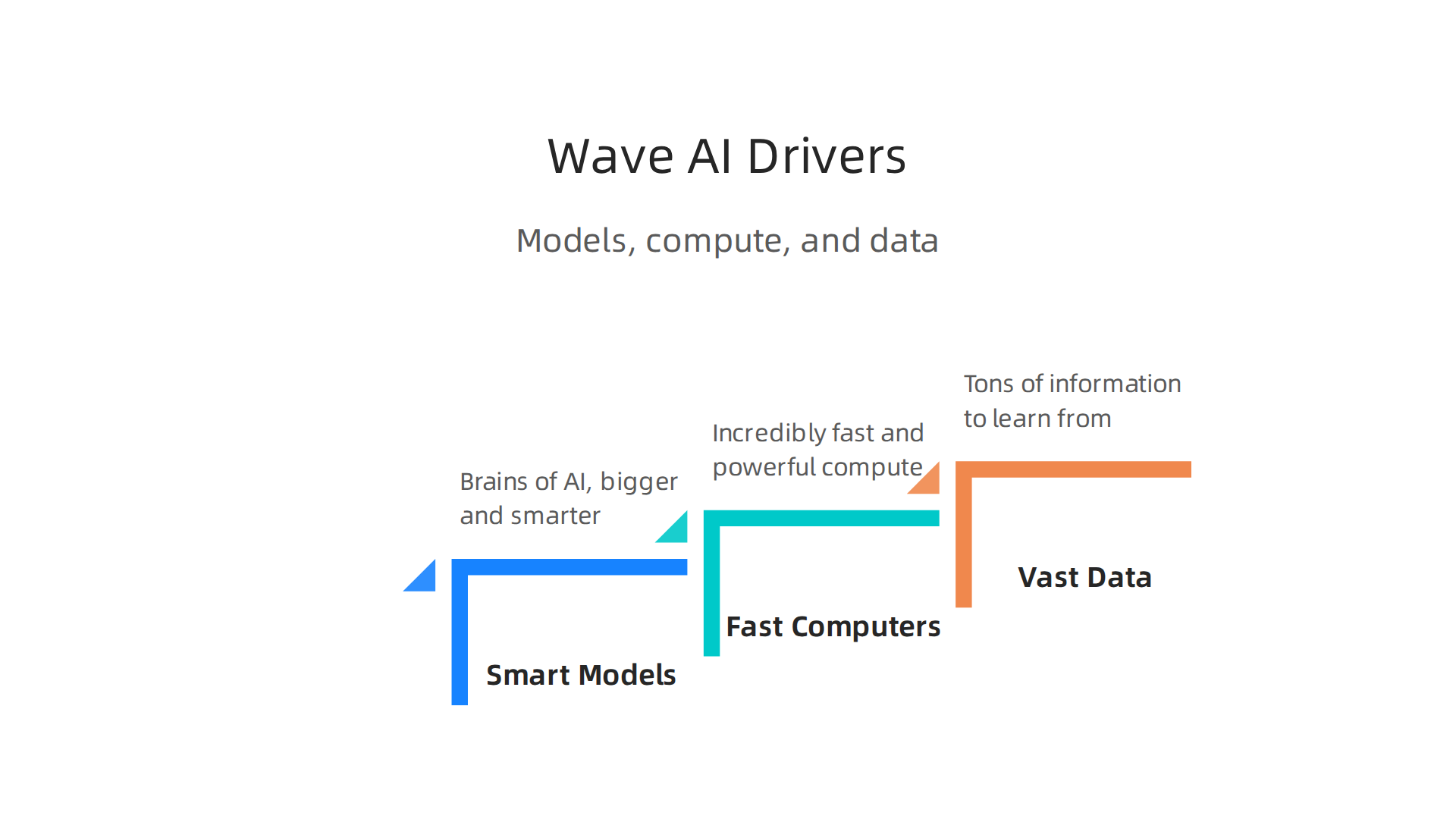
These three things have grown together in amazing ways, pushing wave AI to new heights in 2026.
First, let’s talk about the models. These are like the brains of the AI. Over the past few years, these AI models have become much bigger and smarter. They are built in new ways that let them understand and create things better than ever before. We’ve gone from simple computer programs to complex systems that can learn from huge amounts of information. This includes things like "lightchain AI" and "smartest AI" features that help them work across many different tasks. If you want to learn more about how these brains work, you can explore the Artificial Neural Network Basics.
Next up is "compute," which just means how much computer power is available. Imagine needing to solve a very big puzzle. The bigger the puzzle, the more space and time you need. AI models are like these big puzzles. Luckily, computers have gotten incredibly fast and powerful. This means they can train these huge, complex AI models much quicker than before. Without these super-fast computers, the new smart models simply wouldn’t be possible. This big jump in computer power is a key reason why we see so many "mostly AI" solutions in products today. For a broader look at the core ideas, check out Artificial Intelligence and Machine Learning Explained.
Finally, we have data. AI models learn by looking at tons and tons of information. The more good information they see, the smarter they become. In this wave AI period, we have much more data than ever before. It’s not just more data, but also more types of data, like pictures, sounds, and text. We even use "synthetic data," which is data created by other computers, to help train these models even further. This huge amount of diverse data allows for more refined "contextual AI," where the system can understand situations better because it has learned from so many different examples.
So, the big leap in models, the powerful computers, and the vast ocean of data are all working together. They create this current wave AI that is changing businesses and lives around the globe.
2) The global regulatory landscape for Wave AI: jurisdictional approaches and emerging norms
As this wave AI continues to grow and change how we live and work, countries all over the world are trying to figure out how to make rules for it. In 2026, we see different ways countries are handling this. These rules are very important for businesses that use wave AI, especially when they work in different places.
Generally, by 2026, there are three main ways countries are trying to control AI:
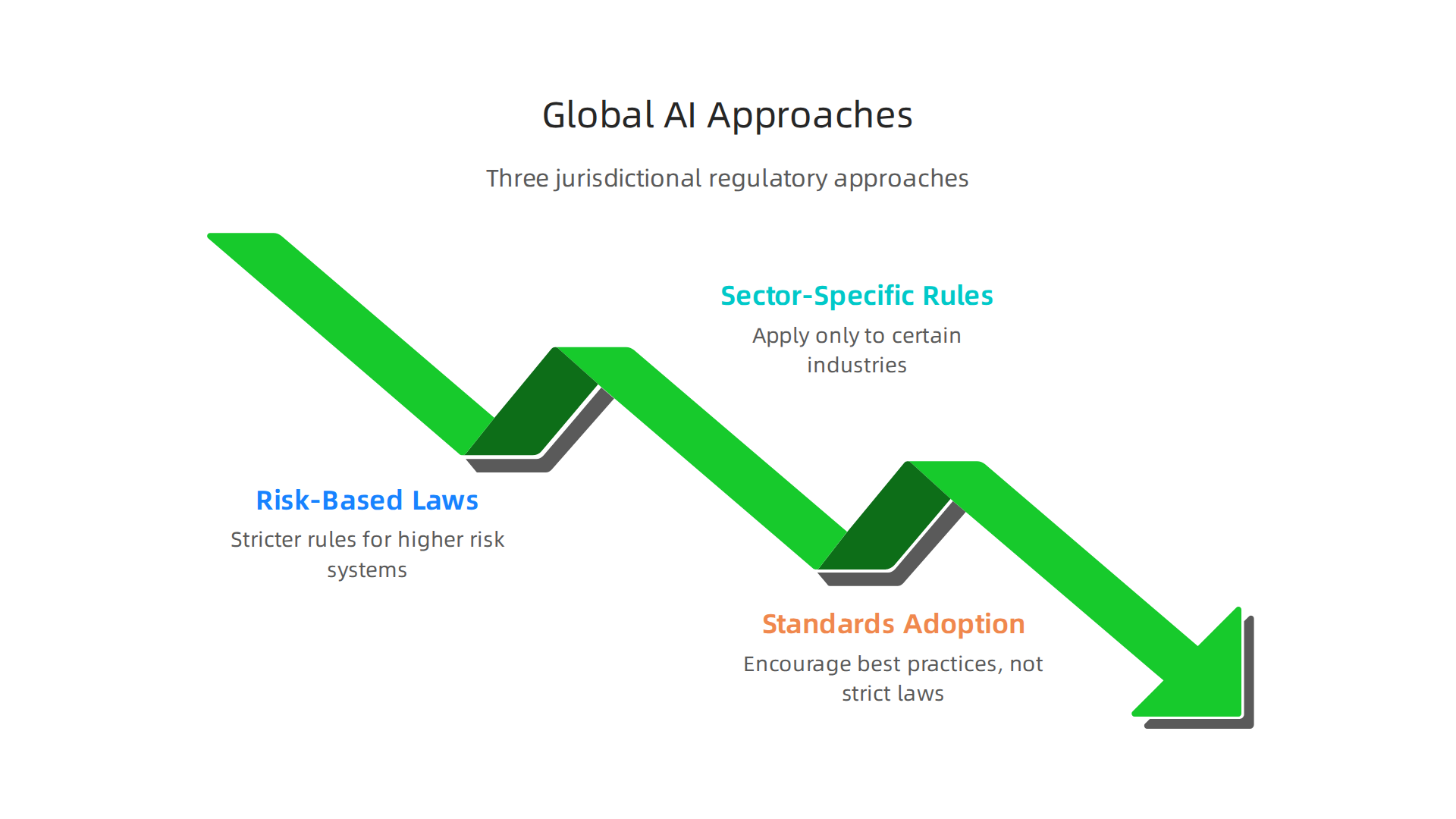
- Risk-Based Laws: These laws look at how risky an AI system is. The higher the risk, the stricter the rules.
- Sector-Specific Rules: These rules apply only to certain industries, like healthcare or finance, and not all AI systems.
- Standards Adoption: Some places encourage companies to follow certain best practices and standards, but these are not always strict laws.
One of the biggest players in setting AI rules is the European Union (EU). They have a very complete law called the EU AI Act 2026 Compliance Guide for US Companies.
This law became fully active in stages, with many parts enforceable in 2025 and more coming in 2026. It uses a "risk-based" approach, meaning that AI systems that could cause a lot of harm, like those used in hiring or law enforcement, face very strict rules. The EU’s law is known for reaching outside its own borders, meaning companies in other countries might also have to follow these rules if their AI systems affect people in the EU. If companies do not follow these rules, they can face very big fines, sometimes millions of dollars or a large part of their yearly earnings. For an overview of these rules, you can read about Global AI Regulations 2026: EU, US, China & Key Themes.
In contrast, the United States (US) has taken a different path. Instead of one big law for all AI, the US uses a more broken-up approach. Different government groups look at how AI affects their areas. For example, some rules might come from groups that handle fair trading or banking. Also, many US states are starting to make their own AI laws, which adds more layers of rules for businesses to keep track of. You can learn more about these different rules in US AI regulations 2026: the state laws you must comply with.
Other major players like China and the United Kingdom (UK) also have their own ways of handling AI. China tends to use more centralized rules and special registration systems. The UK often lets industry-specific regulators set the rules for AI in their particular fields. It is clear that AI Regulation Compared: EU, US, UK, China (2026) – Legalithm shows that no two big places regulate AI in exactly the same way.
These different rulebooks mean that companies using wave AI, especially advanced forms like contextual AI, face a big challenge. They need to understand and follow many different rules depending on where they operate and who they serve. This makes things tricky for market access and knowing how to make sure their AI systems are always compliant.
If you are a business leader or compliance professional, staying on top of these fast-changing global rules is super important to avoid penalties and make smart choices for your wave AI products. For a deeper dive into how to manage these complex requirements, check out our guide on AI Regulations 2026: Compliance Strategies to Avoid Million Dollar Fines.
It can be hard to keep up with all these changes. Get clear daily AI updates from The Deep View Newsletter. Subscribe to The AI Newsletter Worth Reading to stay informed.
3) Standards, datasets, and model auditing: the practical levers for trustworthy AI
Understanding global rules for wave AI is one thing, but actually following them needs practical steps.

In 2026, companies that use wave AI, including more advanced forms like contextual AI, are turning to special standards, good data practices, and careful checks of their AI models. These tools help them make sure their AI systems are fair, safe, and trustworthy, which is key to avoiding problems with laws.
How Standards Help with AI Rules
Think of standards as a guidebook for how to build and use AI responsibly. They are not always strict laws, but following them shows that a company is trying its best. One important international standard is ISO 42001. This standard gives companies a way to manage how they use AI, from planning to checking for risks and making sure they follow rules. It helps build trustworthy and safe AI systems, which is important for any business using wave AI today, as discussed in AI in 2026: How to Build Trustworthy, Governed & Safe AI Systems.
Beyond these general rules, many industries are creating their own specific standards. These often focus on making sure the data used to train AI is well-known and trustworthy. For example, some big companies have proposed standards for "data provenance." This means they want to know exactly where AI data comes from and how it was collected, to make sure it is of high quality and used correctly. You can find out more about these efforts in Proposed data provenance standards aim to enhance trustworthiness of AI.
The Importance of Datasets
The data that trains an AI system is super important. If the data is bad or biased, the AI will likely be bad or biased too. This is especially true for wave AI systems that learn from huge amounts of information. To meet new regulations, companies must show where their training data comes from and how it was handled. This idea is called "data lineage" or "provenance."
For example, the EU AI Act asks companies to keep good records of their training data. They need to show where every piece of data came from, how it was gathered, and how it was prepared for the AI model. This helps regulators see if the data used for mostly AI tasks or more complex systems is appropriate and doesn’t cause harm. This focus on tracing data is a big part of AI Data Governance in 2026: Guide for Engineering Leaders. Without clear data records, an AI model can become its "weakest link," making it hard to trust, as highlighted in Your AI Model’s Weakest Link? The Data You Can’t Trace.
Checking AI Models: Auditing and Reproducibility
After an AI model is built, companies need to check it carefully. This is called "model auditing." It means having a close look at how the AI works, if it’s fair, and if it does what it’s supposed to do without causing unintended problems. Auditing helps make sure that wave AI systems are not making unfair choices or creating risks.
Another key part is "reproducibility." This means that if someone else uses the same data and the same AI model, they should get similar results. This helps show that the AI is working as expected and isn’t a "black box" that no one can understand. Both auditing and reproducibility are important tools for companies to prove their AI systems are compliant and trustworthy. Businesses should always think about how to make an AI compliant with global regulations in 2026 to manage risks effectively.
By using these standards, taking good care of their data, and regularly checking their AI models, companies can build wave AI systems that not only work well but also follow all the important rules. This helps everyone feel safer about how AI is used in the world.
4) Compliance Challenges and Enforcement Trends: What Legal Teams Must Watch
Even with good standards and careful checks, businesses using wave AI still face real legal challenges. In 2026, legal teams need to pay close attention to where companies often fall short and how regulators are stepping up their efforts. Not following the rules can lead to big problems and high costs.
Common Gaps in Following AI Rules
Regulators are finding that many companies struggle in a few key areas when it comes to AI compliance:
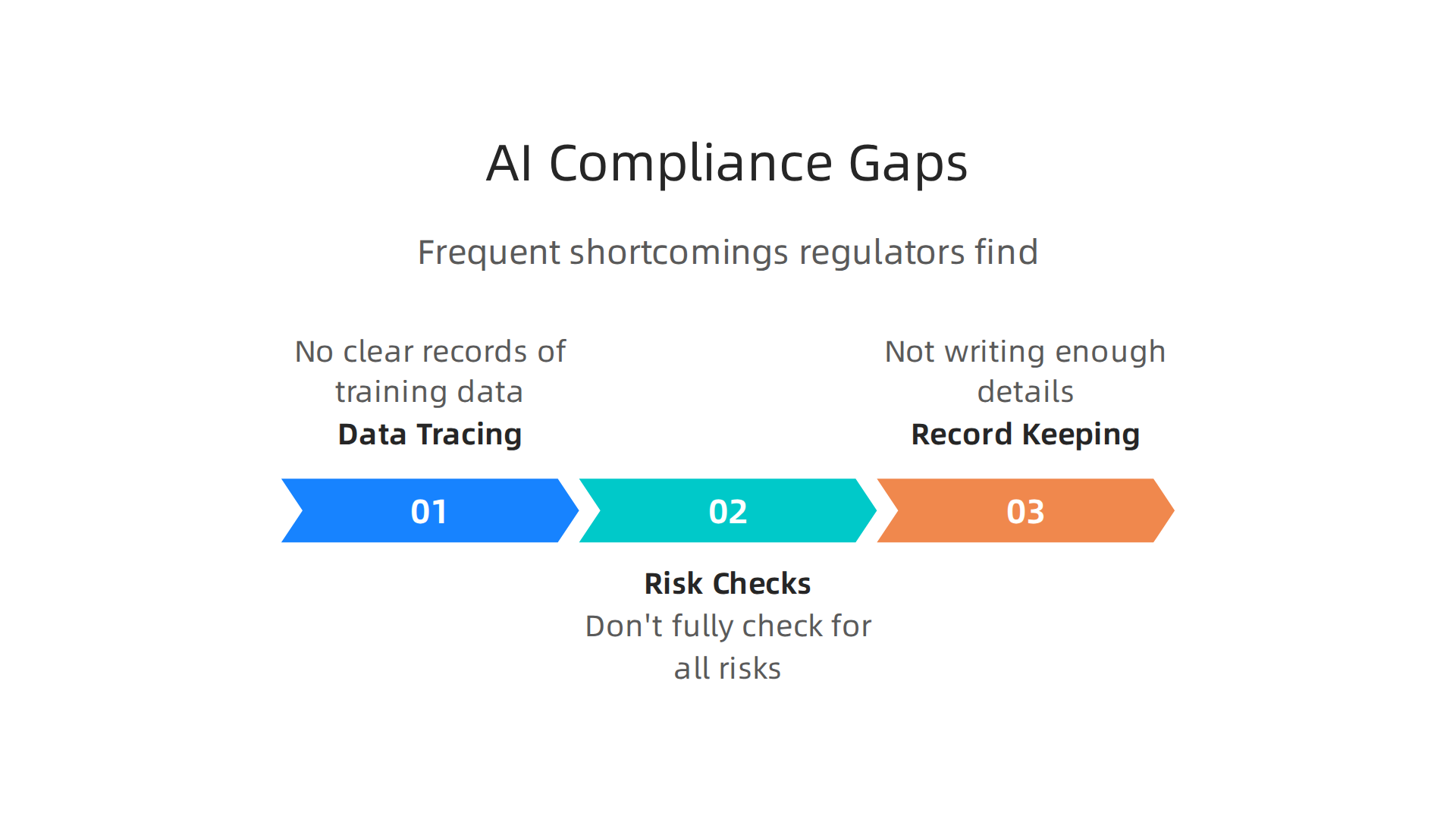
- Not Tracing Data Well: This is a big one. Companies often do not have clear records of where their AI training data comes from or how it was handled. For wave AI systems that learn from vast amounts of information, knowing the "story" of the data is critical. The EU AI Act, for example, now demands that companies make training data easy to check and track from its origin. This includes details like who gathered it and how it was processed. This applies especially to high-risk AI systems and general-purpose AI, making AI training data provenance a major risk in 2026. Legal teams must ensure that contracts with AI vendors clearly state these data tracking requirements.
- Missing Risk Checks: Many companies do not fully check for all the risks their AI systems might cause. This means they might not see potential harms related to fairness, privacy, or safety until it is too late. All AI, including contextual AI, needs thorough risk assessments.
- Poor Record Keeping: Simply put, not writing down enough details. Companies need to keep good records of how their AI models were built, tested, and changed over time. This helps show regulators that they thought about the rules at every step.
What Regulators Are Doing Now
The way regulators are enforcing AI rules is also changing quickly in 2026. Legal teams are seeing these trends:
- Global Investigations: AI systems are used all over the world, so laws in one country can affect companies everywhere. Regulators from different countries are now working together more to investigate issues. This means an AI problem in one place could lead to investigations in many other places.
- Focus on Specific Industries: Some industries are getting extra attention. For example, if a business uses mostly AI for hiring or lending money, regulators might look at them more closely to make sure the AI is fair. This is because these areas can have a big impact on people’s lives.
- Protecting Consumers: If an AI system harms customers, for example, by making unfair decisions or causing privacy issues, consumer protection groups and government agencies will step in. They are ready to take action against companies that do not protect their users from unsafe or biased AI.
Staying on top of these trends is essential. Companies need strong strategies to avoid million dollar fines from AI regulations in 2026.
To stay updated on the latest shifts in AI compliance and enforcement, make sure you are getting the information you need.
The AI Newsletter Worth Reading gives clear daily AI updates.
Beyond just watching what regulators do, companies also need strong internal rules for how they use AI. This is called corporate governance for AI. In 2026, it is super important for leaders at the very top of a company to guide how AI risks are managed. This means everyone, from the board of directors down, needs a clear plan.
Board and Top Leaders Must Oversee AI
Good AI governance starts with the board of directors. The board is like the company’s highest decision-making group. They need to make sure AI is used safely and fairly.

Many experts say companies should either create a new special committee just for AI issues or add AI tasks to groups they already have, like the audit committee 2026 Corporate Governance Guide for the AI Era. This ensures that someone at the top is always looking at the potential problems and promises of AI, like those found in advanced wave AI systems AI Governance and Risk: What Boards Must Know in 2026.
Also, someone at the very top of the company, like a Vice President or a C-suite executive (CEO, CTO, etc.), should be directly in charge of how AI systems perform and the results they bring AI Governance Lessons Businesses Can’t Ignore In 2026. This person makes sure the company isn’t just following rules but is also making good choices with its AI tools. Understanding these broad regulatory changes is key to staying compliant, as detailed in guides like US Tech Regulations 2026.
How to Blend AI Risk into Daily Company Work
Companies already have ways to manage risks, check compliance, and perform audits. The trick is to weave AI risks into these existing ways. Here’s a simple guide:
- Know Your AI: Make a list of all the AI tools your company uses, whether they are mostly AI or just a small part. For each tool, find out what kind of data it uses and how important its decisions are AI Risk Management: What Enterprise Leaders Must Address in 2026. This is true for any AI, from simple contextual AI to complex wave AI.
- Set Clear Rules: Figure out where AI can make decisions by itself and where people need to approve things first. This helps avoid surprise problems AI Risk 2026: What Business Leaders Need to Know – Aon.
- Keep Good Records: Write down how your AI models are made, tested, and changed. This shows that the company is thoughtful about its AI. It also helps if regulators ever ask questions.
- Watch and Check: Regularly check how your AI systems are working. If something looks wrong, have a clear way to report it and fix it fast.
By building a strong structure for AI governance, companies can be ready for the future. They can ensure their AI, including any advanced wave AI or contextual AI, works well and follows all the rules. For more help with these structures, explore resources on how to build a technology strategy board for EU AI Act 2026 compliance.
Building a strong structure for AI governance helps companies prepare for the future. It ensures their AI works well and follows all the rules. Now, let’s see how these rules and new AI technologies change big company plans, how they sell their products, and when they might buy or merge with other businesses.
Strategic implications: product strategy, investment theses, and market timing
The way AI rules change can make companies rethink their whole business plan. For example, laws like the EU AI Act, which will be fully in force by August 2026 for most parts, mean companies must design their products with safety and fairness in mind from the very start. If a company makes a new "wave AI" system or any product that is "mostly AI," it needs to follow these rules, or it could face big fines, up to 7% of its total money earned worldwide [Enforcement / fines in the European Union – AI Laws of]. This means that product teams need to build AI differently. They can’t just focus on making the "smartest AI" but also the most compliant AI.
When it comes to selling products, companies that have strong AI compliance can use this as a big advantage. It shows customers and other businesses that their AI tools are trustworthy and safe. This can make them stand out in a crowded market. Also, knowing when to launch a new AI product or enter a new market depends a lot on where the regulations are headed. Being ready for changes helps companies plan better.

If you want to keep up with these fast changes, you can get daily updates in The AI Newsletter Worth Reading.
For investors, looking at "wave AI" companies is also changing. It’s not just about how advanced their technology is, but also about their "regulatory moat." This means how well a company is protected from future rule changes because it has already built strong compliance into its products and processes. Investors want to see that a company is ready for new laws and has a clear plan for managing AI risks. This includes companies making advanced "lightchain AI" or simple "contextual AI." For more about how companies manage these widespread changes, you can read about AI Governance and Regulation 2026: A Complete Guide to Global.
Also, the timing for buying other companies (M&A) is important. A larger company might look to buy a smaller one that has already sorted out its AI compliance. This is because it’s often easier to buy a company with good practices in place than to fix a company’s compliance issues after the fact. This strategic view helps everyone make smarter decisions in the world of AI.
Putting smart decisions into practice means product teams need clear steps to make sure their AI tools are safe and follow the rules. This is true for any kind of AI, from a basic "contextual AI" to a complex "wave AI" system. It’s not just about making the "smartest AI" but also the most compliant one.
Operational best practices for product teams: documentation, testing, and deployment controls
To build AI systems that are both powerful and responsible, product teams can follow some simple but important steps.
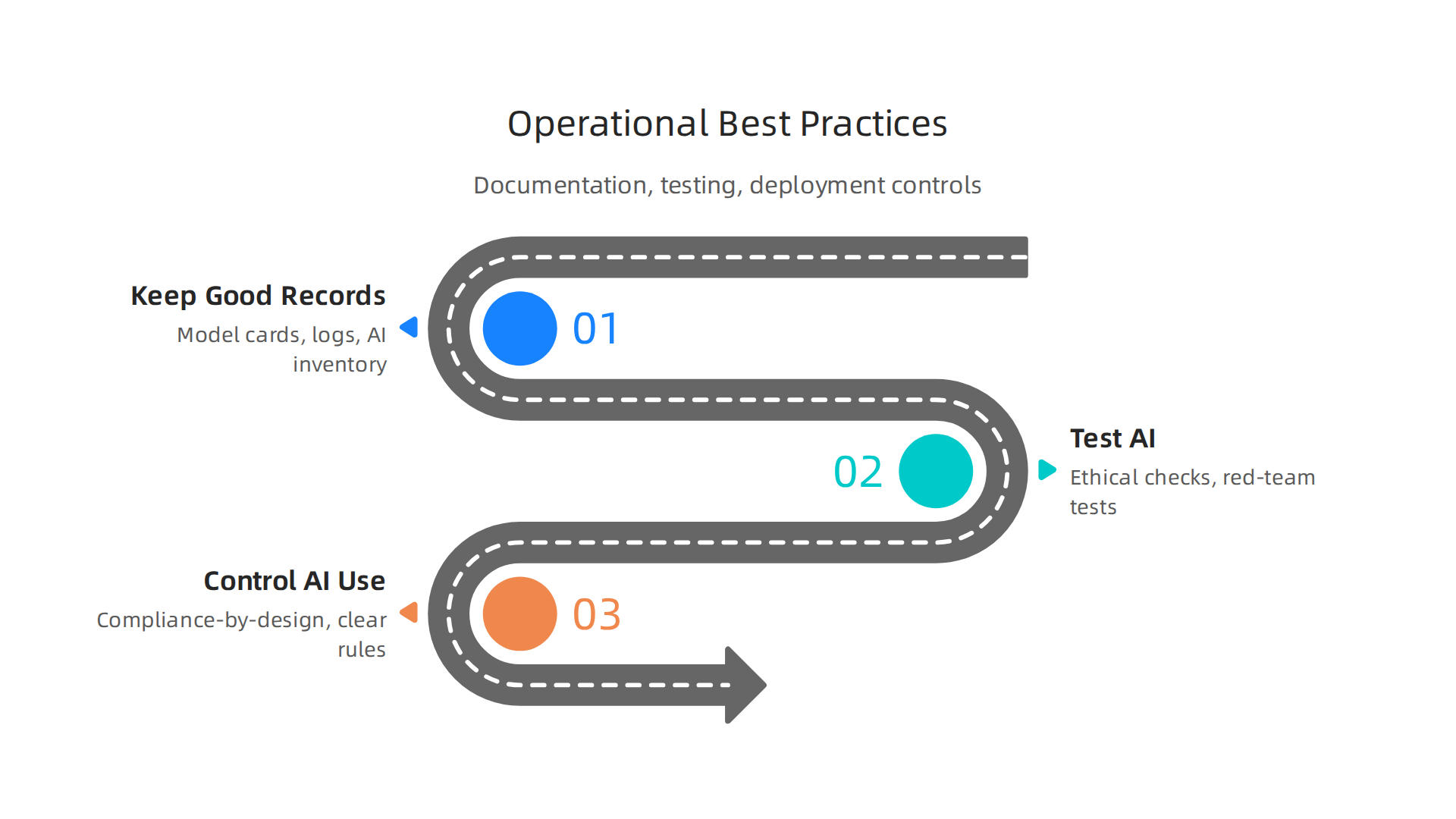
These steps help reduce the chances of problems with rules and safety.
Keep Good Records
One key step is to keep good records of your AI. This means:
- Model Cards: Imagine a nutrition label for your AI. A "model card" explains how the AI works, what data it uses, and what its limits are. This helps everyone understand the AI better and can be used to show that you’ve thought about its design and fairness. Leaders in the field suggest using things like model cards and clear user messages about what AI can and cannot do as part of a "safety-by-design" approach [AI in Product Management Guide for 2026 …].
- Detailed Logs: Keeping logs of how your AI makes decisions helps you trace back what happened if a problem comes up. Think of it like a flight recorder for your AI.
- AI Inventory: It’s helpful to have a list of all the AI tools your company uses. This way, you know what you have and can classify each one by how risky it might be.
Test Your AI Well
Before any AI product, especially one that is "mostly AI," goes out to users, it needs strong testing.
- Ethical Checks: Right from the start, when you’re just planning an AI product, you should think about how it might affect different people. This is called an ethical impact assessment and helps catch potential harms early on [AI Ethics for Product Management: What to consider when …].
- Red-Team Tests: This means having a special team try to find problems or ways to break your AI. They act like hackers or people who might misuse the system to uncover hidden risks. This helps make your AI stronger and safer.
Control How AI Is Used
Making sure AI follows the rules doesn’t just happen at the end. It needs to be part of the whole process of building and launching AI.
- Compliance From the Start: Bring in legal and ethics experts early in the planning of any new AI project. This is called "compliance-by-design" and helps make sure rules are built into the AI from day one, not just added later [Compliance-by-design for AI | AI Governance Lexicon].
- Clear Rules and Teams: Many companies are setting up groups, like an "AI risk committee," that meet regularly. These groups have the power to stop AI products from being released if they’re not safe or compliant. Having a clear leader, like a CTO, who is in charge of AI risk is also a common practice in 2026 [how enterprises are really managing AI compliance in 2026].
- Balance Speed and Safety: Sometimes, companies want to release new AI quickly. But with strong rules, it’s important to find a good balance. By weaving compliance into how you build things every day, you can still move fast without cutting corners on safety. This helps ensure that even advanced "lightchain AI" or new "wave AI" systems are developed responsibly. If you’re wondering more about this, learn how to keep your AI in line with global laws in How to Make an AI Compliant with Global Regulations in 2026.
By following these best practices, product teams can build AI tools that people trust and that meet all the necessary rules in today’s fast-changing world.
Summary
The article orients executives, investors, and compliance teams to the 2026