

Introduction: The Regulatory Maze and the Promise of DeepSearch AI
Keeping up with tech regulation in 2026 feels like drinking from a fire hose.

New AI laws, privacy rules, and compliance requirements land almost daily. And they come from every direction. The EU AI Act. State-level privacy bills in the US. Antitrust decisions in Asia. Export controls that shift without warning.
For tech executives, this creates a real problem. Your teams need to track updates across multiple jurisdictions. Then they need to understand what each new rule means for your products, your data, and your bottom line. Miss one critical update, and you could face fines that run into the millions.
Traditional monitoring methods just do not cut it anymore. Scanning news feeds, subscribing to endless alerts, or waiting for legal counsel to flag changes. These approaches are slow, fragmented, and easy to miss things.
According to the latest State of AI in the Enterprise 2026 report from Deloitte, worker access to AI jumped by 50 percent in 2025. The speed of adoption means regulations are evolving just as fast. Businesses that rely on outdated tracking methods are already falling behind.
That is where DeepSearch AI changes the game. Instead of manually hunting for regulatory signals across scattered sources, DeepSearch AI surfaces the updates that actually matter to you. It analyzes new rules, connects them to your specific compliance obligations, and helps you act before deadlines hit.
The regulatory maze is not going away. But with the right approach, you can navigate it with clarity and confidence.
If you want to stay ahead of every daily shift in tech policy, The AI Newsletter Worth Reading delivers clear, practical updates straight to your inbox. And for a deeper look at building a solid compliance foundation, explore these compliance strategies to avoid fines tailored for 2026.
What Is DeepSearch AI? Core Technology and Capabilities
So what exactly is DeepSearch AI, and how does it help you cut through the noise? At its core, DeepSearch AI combines large language models with a method called retrieval-augmented generation, or RAG for short. Think of RAG as a smart library assistant. Instead of just guessing an answer from memory, it first searches through your company’s documents, emails, contracts, and databases. Then it pulls the most relevant pieces and uses the language model to give you a clear, accurate answer. That means you get results grounded in your actual data, not just a generic response.
Unlike a traditional keyword search that only matches exact words, DeepSearch AI understands context and intent. You can ask a question in plain language, like "What are our new data privacy requirements under the EU AI Act?" and it will find the right clauses across thousands of pages. It works across both structured data, like spreadsheets, and unstructured data, like PDFs and emails. The global enterprise search market is growing fast because of this shift. According to the State of Enterprise Search 2026 market report, the industry is moving from experiments to full-scale deployment of AI-powered document intelligence.
In the real world of 2026, DeepSearch AI is already powering three key use cases for businesses like yours.
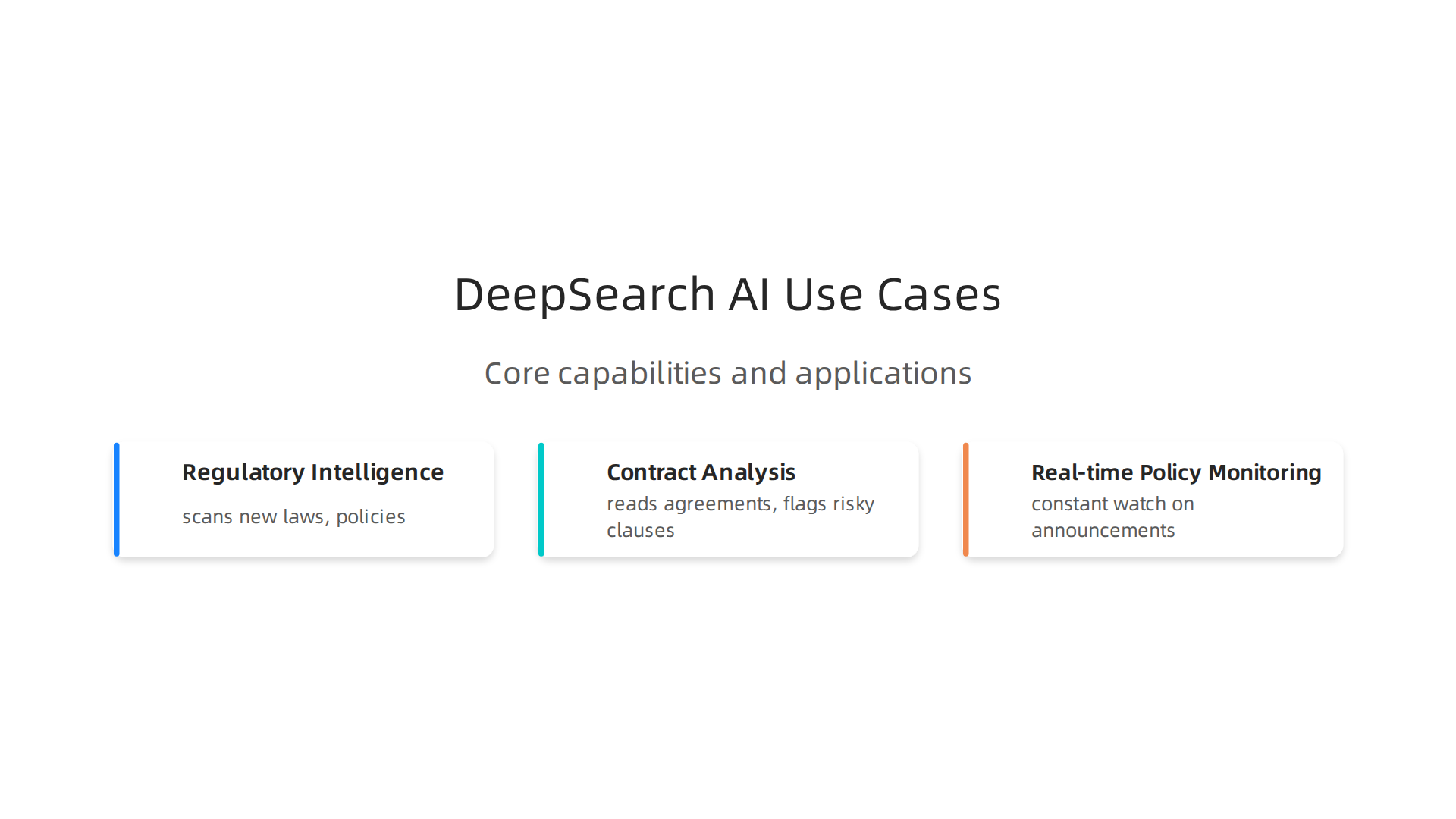
First, regulatory intelligence. It scans new laws and policies across jurisdictions and surfaces only the changes that matter to your specific compliance obligations. Second, contract analysis. It reads through hundreds of agreements and flags risky clauses or missing terms in seconds. Third, real-time policy monitoring. It keeps a constant watch on government and industry announcements so you never miss a critical update.
If you are new to how AI works under the hood, our guide on artificial intelligence and machine learning explained breaks it down for business leaders in plain language.
Benefits for Tech Executives: Strategic Decision-Making and Regulatory Foresight
For tech executives, the biggest challenge isn’t just keeping up with today’s regulations. It’s seeing what’s coming next.

DeepSearch AI turns that guessing game into a clear advantage. By scanning thousands of regulatory sources across jurisdictions in real time, it flags changes that could affect your business weeks or months before they become active. That early warning gives you time to adjust strategy, reallocate resources, and avoid costly last-minute scrambles.
Here is a concrete example. A financial services executive told us their compliance team used to spend 15 hours per week reading through new policy documents from multiple countries. With DeepSearch AI, they now get a daily two paragraph summary focused only on the rules that apply to their specific operations. The time savings alone justified the investment. And the real payoff came when an upcoming data privacy law was flagged six weeks early. The team had enough lead time to redesign their data handling process before the deadline, avoiding a potential fine that could have reached millions.
The tool also accelerates market entry decisions. When your team needs to know whether a new product complies with regulations in five different regions, DeepSearch AI delivers a digestible comparison in minutes instead of days. This speed means you can move into new markets faster than competitors who still rely on manual reviews. The AI’s ability to summarize complex legal texts into plain language means even non legal team members can grasp the key risks and opportunities.
For a fuller picture on staying compliant across global jurisdictions, check out our summary of AI regulations 2026 compliance strategies. It walks through practical steps that align with the foresight DeepSearch AI provides.
And if you want to stay ahead of every regulatory shift as it happens, consider subscribing to The AI Newsletter Worth Reading. It delivers clear daily updates that complement what DeepSearch AI surfaces, so you never miss a critical development.
For Compliance Teams: Automating Risk Identification and Monitoring
Now let’s talk about the team that actually lives in the regulatory trenches every day. Compliance officers know the feeling well. You wake up, open your email, and find three new guidance documents, a revised enforcement memo, and a lawsuit filing that changes everything you thought you knew. The pile never shrinks. DeepSearch AI was built to carry that load for you.
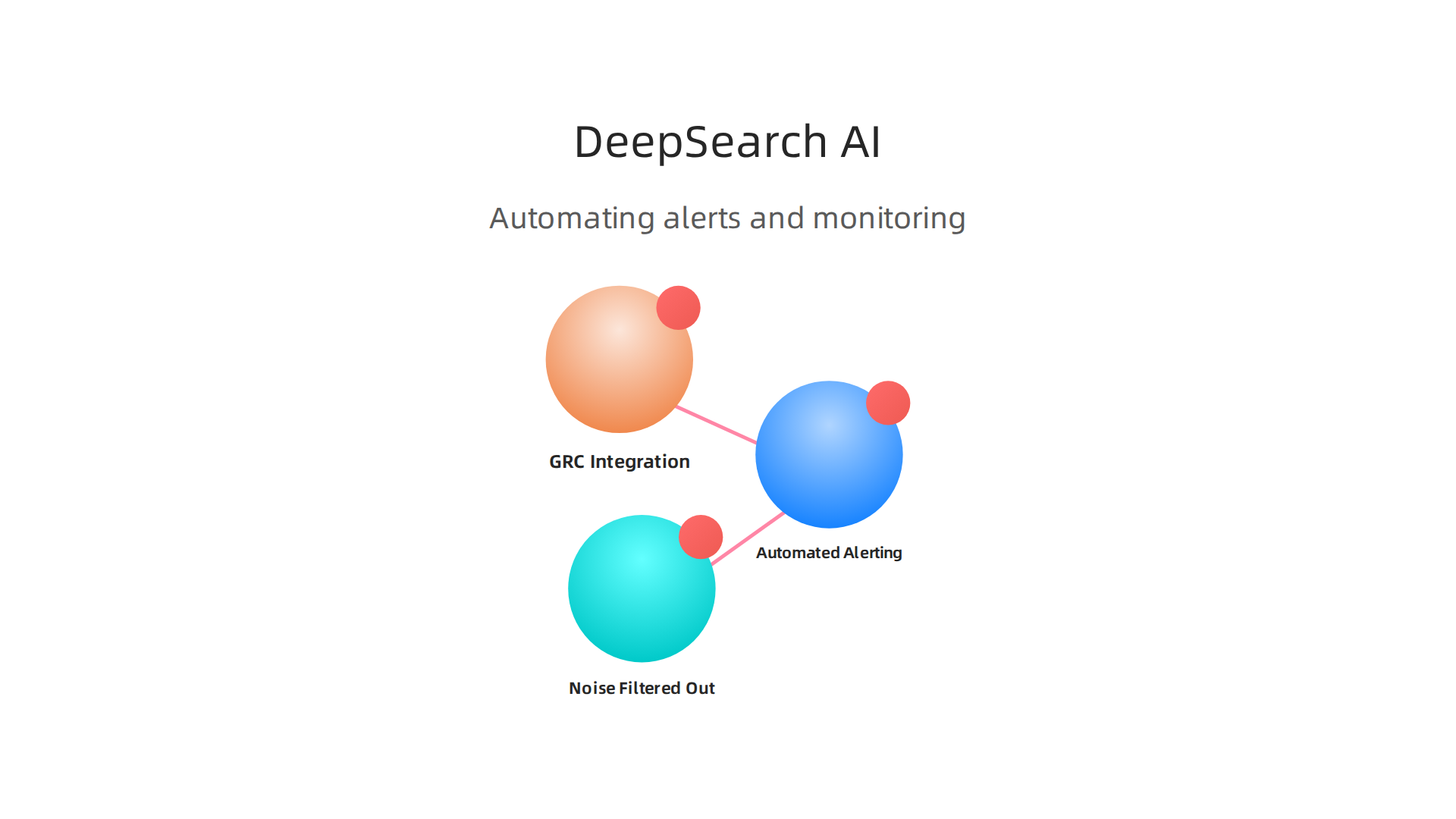
Instead of having people manually scan through regulatory databases and legal journals each morning, DeepSearch AI does it continuously. It runs in the background watching dozens of sources across multiple jurisdictions. When something shifts, you get an alert that tells you exactly what changed and why it matters to your organization.
No more wondering if you missed a critical update buried in page 47 of a PDF.
Automated alerting takes the pressure off. Your team can focus on analysis and response instead of data gathering. And because DeepSearch AI surfaces only the changes that apply to your specific operations, the noise is filtered out. This directly reduces the risk of missing a deadline or overlooking an enforcement action. According to one analysis of the latest industry developments, the shift toward these kinds of AI driven monitoring tools is one of the top AI compliance trends for 2026.
The real power comes from integration. DeepSearch AI plugs into your existing Governance, Risk, and Compliance (GRC) platforms. That means the alerts land right where your team already works. A flagged regulation can automatically create a task, update a risk register, or trigger a review workflow. Everything stays connected and nothing falls through the cracks.
For a broader look at how different organizations are tackling this challenge, read through our guide on making AI compliant with global regulations. It covers the practical steps that pair well with the monitoring power DeepSearch AI delivers.
Investor Applications: Due Diligence and Portfolio Risk Assessment
Investors face their own version of that morning email pile. But instead of compliance deadlines, they are watching for regulatory surprises that could sink a portfolio company overnight.

A new enforcement action, a sudden policy shift, or a proposed law can change the value of an investment in hours. DeepSearch AI helps investors stay ahead of those surprises.
Here is how it works. You point DeepSearch AI at the regulatory filings, enforcement actions, and policy proposals that matter to your portfolio. The tool scans continuously across jurisdictions. When something relevant pops up, you get a clear alert. No more hoping someone on your team caught the buried update in a 200 page SEC filing.
This changes how you think about risk. Instead of guessing which regulatory shifts might affect your holdings, you know. DeepSearch AI quantifies the exposure across different regions and sectors. One portfolio company might face new data privacy rules in Europe while another contends with shifting AI governance guidance in the US. You see both risks in one place. This kind of automated monitoring is becoming standard practice. As one analysis of the investment landscape explains, the rise of AI’s compliance takeover is reshaping how firms evaluate regulatory exposure in their portfolios.
Early adopters in venture capital and private equity already report better investment committee discussions. Instead of relying on hunches, they bring hard data about regulatory risk into every decision. The conversation shifts from "we think this might be fine" to "we know exactly what the regulatory exposure looks like."
To get a broader view of how the regulatory landscape is shifting across different markets, check out our breakdown of the latest US tech regulations for 2026. It pairs well with the risk intelligence DeepSearch AI delivers.
Stay on top of these fast moving regulatory developments with daily updates. Read The AI Newsletter Worth Reading to get clear insights delivered straight to your inbox.
Policy Watchers: Trend Analysis and Legislative Tracking
If you are a policy analyst, you know the feeling. A new bill drops in one parliament while another country issues a revised AI governance framework. Keeping up with all of it feels impossible. You dig through hundreds of pages of legislative text, trying to figure out what actually matters for your research. That is where DeepSearch AI changes the game.
Point DeepSearch AI at the legislative databases and policy portals you care about. It monitors proposed legislation across multiple parliaments at once. When a new bill appears or an existing one gets amended, you get a concise alert with a summary of the key provisions. No more manual scanning of official gazettes. No more relying on secondhand summaries that might miss the nuance.
The tool’s summarization capabilities make cross-country comparison much easier. Instead of reading a 300 page bill from the EU and another from Brazil side by side, DeepSearch AI generates clear comparisons. It highlights where the approaches overlap and where they diverge. This is exactly the kind of insight that helps you produce better trend analysis for your organization.
Think tanks are already adopting AI search tools to accelerate their publication of regulatory outlooks. Instead of spending weeks on research, they cut that time to days. They can publish more frequently and with greater confidence. As one overview of the compliance landscape notes, the Top 10 AI Compliance Trends in 2026 show that automated monitoring and summarization are becoming standard in policy shops.
To see how this fits into a larger compliance strategy, check out our guide on how to make an AI compliant with global regulations in 2026. It gives you a framework that pairs well with the legislative tracking DeepSearch AI provides.
Implementation Best Practices: Integration, Data Security, and Governance
Getting DeepSearch AI up and running is only the first step. The real work comes when you connect it to your actual systems and data. Here is how to do that the right way.
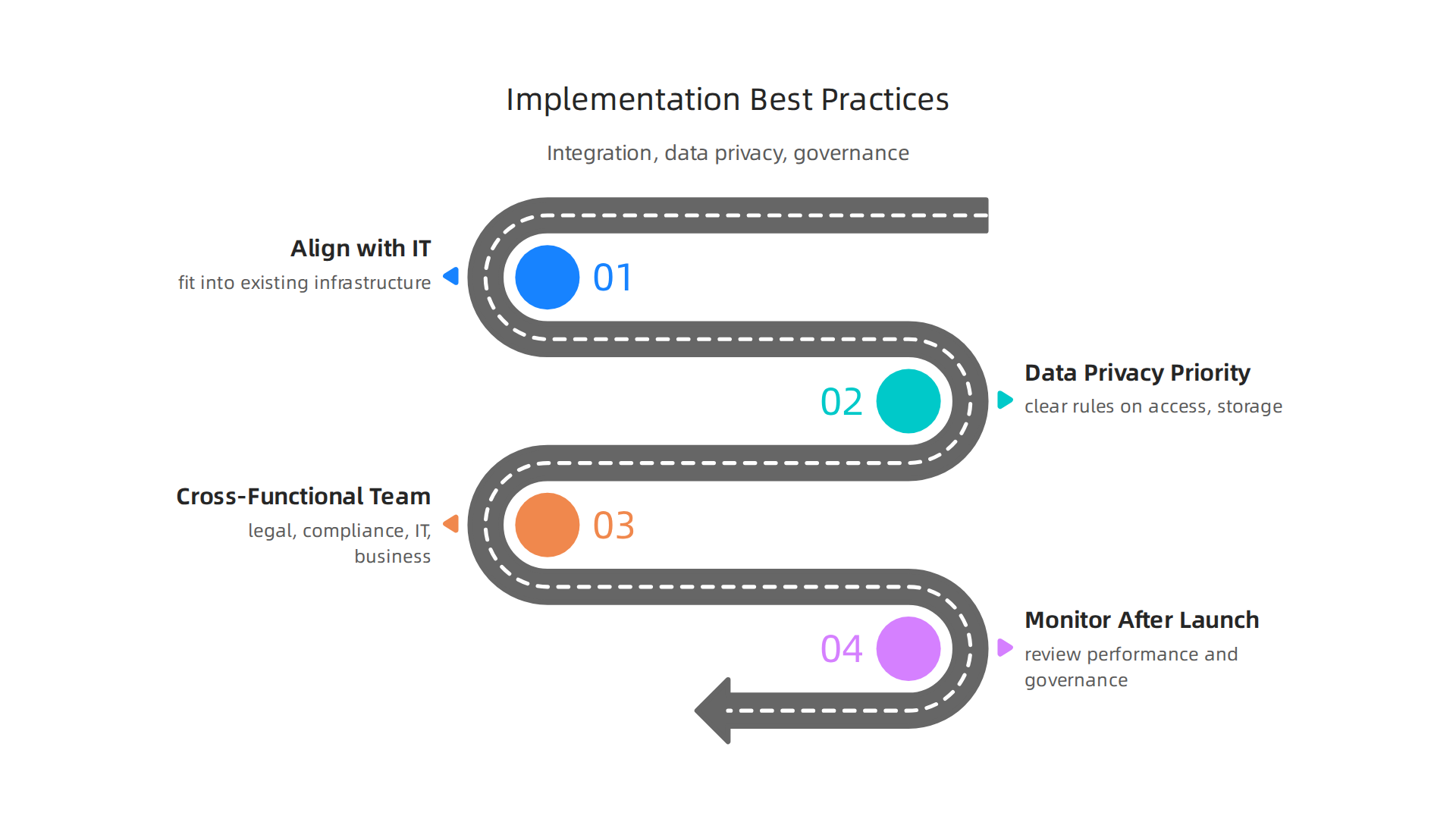
Align with Your Existing IT Setup
Your organization already has infrastructure, access controls, and data storage in place. DeepSearch AI needs to fit into that world, not fight against it. Work with your IT team from day one to map out how the tool connects to your document repositories and compliance platforms. A phased rollout works best. Start with one team or one document set, test everything, and then expand. This approach helps you catch integration issues early before they become big problems.
Make Data Privacy Your Top Priority
When DeepSearch AI indexes internal regulatory documents and external sources, it touches a lot of sensitive information. That includes proprietary business data, client records, and possibly personal data. You need clear rules about what the tool can access and how that data is stored and used. Many organizations are working through these exact challenges right now. A solid overview of the Top 10 Privacy, AI & Cybersecurity Issues for 2026 recommends maintaining an enterprise AI inventory and classifying systems by risk level. That kind of structure helps you stay ahead of privacy concerns.
Strong data governance is the foundation here. The Data Governance for AI In 2026: Definition & Comprehensive Guide highlights that regulators increasingly expect organizations to document data provenance and maintain strong protection practices. Make sure your governance framework covers these areas before you let DeepSearch AI loose on your full document library.
Build a Cross-Functional Rollout Team
Do not let IT handle this alone. You need voices from legal, compliance, IT, and the business side all working together. Legal understands regulatory requirements. IT knows the technical limits. Compliance keeps risk management front and center. And business leaders make sure the tool actually solves real problems instead of just creating new processes. This team should meet regularly during rollout and after. Given the AI Governance Challenges Enterprises Face in 2026, having clear ownership and cross-functional accountability is more than a nice to have. It is essential.
Keep Monitoring After Launch
Once DeepSearch AI is live, the work continues. Regulations shift. Your document collections grow. New data privacy rules pop up. Schedule regular check ins to review how the tool is performing and whether your governance practices still hold up. A tool is only as good as the policies that surround it.
For a deeper look at setting up governance structures that last, check out our guide on how to build a technology strategy board for EU AI Act 2026 compliance. It walks through the team structure and oversight practices you need.
And if you want to keep receiving clear daily updates on AI regulation without the noise, consider subscribing to The AI Newsletter Worth Reading. It delivers what matters straight to your inbox.
Overcoming Common Challenges: Accuracy, Bias, and Compliance
Even the best AI search tools come with real risks. DeepSearch AI is powerful, but it is not perfect. Knowing where it can slip helps you put the right safeguards in place before problems show up.
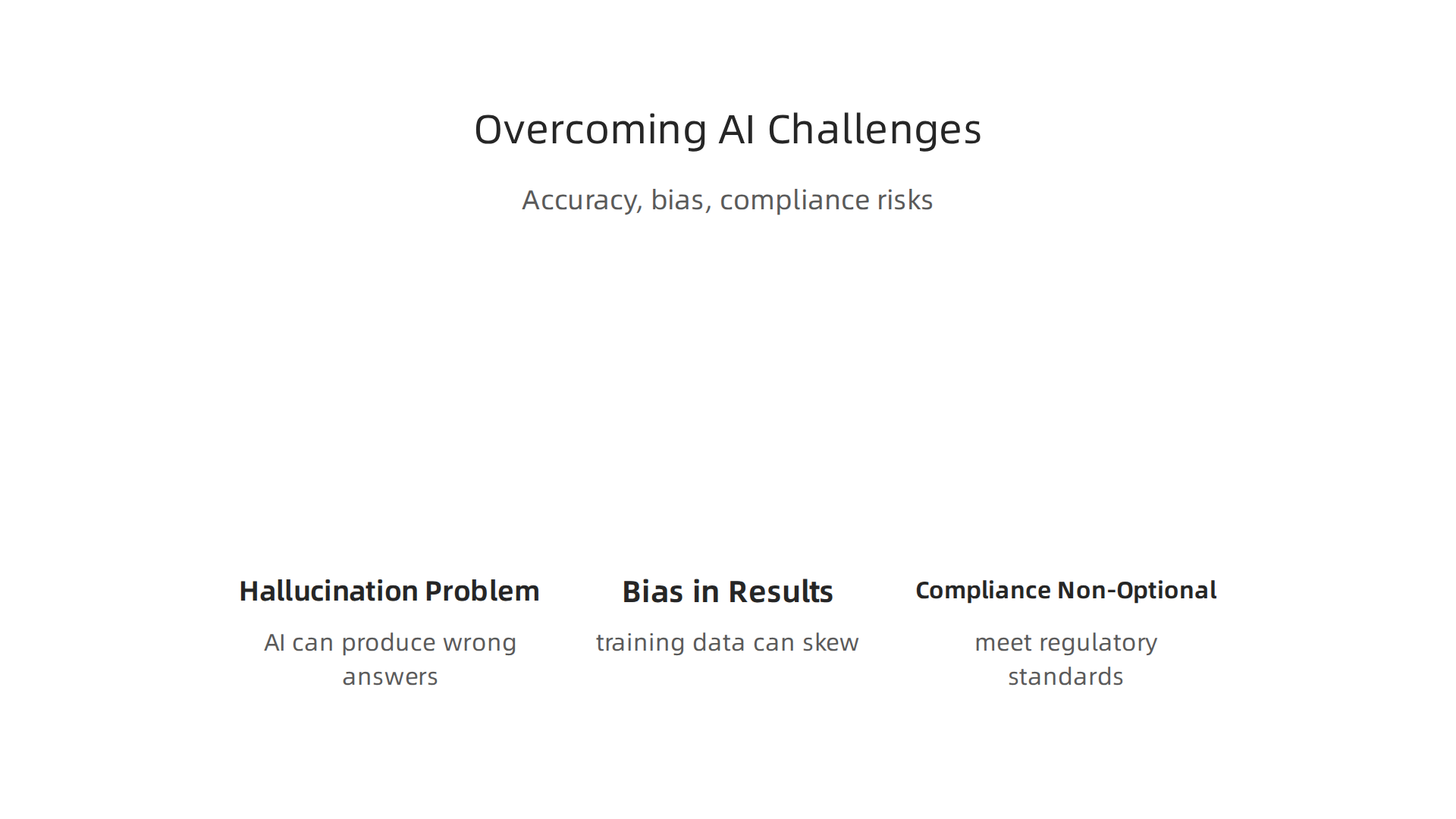
The Hallucination Problem
AI models sometimes produce answers that sound confident but are completely wrong. This is called hallucination. In a regulatory setting, a hallucinated legal interpretation could lead to costly mistakes. That is why human oversight stays critical. Every output from DeepSearch AI should be reviewed by someone who knows the subject matter. Think of the tool as a very smart research assistant, not a replacement for expert judgment.
Bias That Skews the Results
Training data is never fully neutral. If the data behind DeepSearch AI has gaps or imbalances, the search results reflect those same problems. Certain regulatory topics might get more attention than others. Some interpretations could be overrepresented. The fix is simple but takes effort: run periodic audits. Check whether the results on key compliance topics stay balanced and accurate over time. The AI Adoption and Data Management report from Loeb’s 2026 conference notes that organizations need to actively manage data quality to avoid these kinds of skews.
Compliance Is Not Optional
Regulations like the EU AI Act put strict rules on AI systems used in high risk contexts. If DeepSearch AI helps drive decisions about compliance, regulatory filings, or legal strategy, it likely falls into a higher risk tier. That means you need documentation, transparency, and audit trails. The overview of industries with stringent AI compliance needs in 2026 shows that finance, healthcare, and legal sectors face the toughest requirements. Make sure your deployment meets those standards before going live.
For a deeper look at what those regulations actually require, check out our guide on AI regulations 2026 compliance strategies to avoid million dollar fines. It breaks down what you need to have in place.
Future Outlook: DeepSearch AI and the Evolving Regulatory Landscape
The regulatory world is not slowing down. In 2025 alone, US states introduced over 1,200 AI-related bills and enacted 145 of them into law.

That pace is only picking up. So where does DeepSearch AI fit in all of this?
DeepSearch as Standard Compliance Infrastructure
As regulations pile up, the teams responsible for tracking them cannot keep up manually. That is where DeepSearch AI steps in. It will likely become a standard part of compliance infrastructure, not a nice to have. Companies will use it to scan thousands of regulatory documents, flag relevant changes, and summarize what matters for their specific industry. This shift from manual tracking to AI powered monitoring is already happening across sectors that face the heaviest regulatory loads.
Predicting Regulations Before They Drop
Here is where it gets really interesting. The same technology that powers DeepSearch AI can integrate with predictive analytics. Imagine knowing about a regulatory change before it is officially published. By analyzing patterns in legislative proposals, public comments, and enforcement actions, DeepSearch AI could help organizations prepare weeks or months in advance. That kind of foresight changes the compliance game entirely.
Localized Search for Sovereign AI Rules
Different countries are going their own way on AI regulation. The EU has its AI Act. The US has a patchwork of state laws. China has its own framework. This fragmentation creates a demand for localized deep search capabilities. A company operating across multiple jurisdictions needs search tools that understand the specific rules of each region. The AI regulation wave predictions for 2026 and 2027 suggest that sovereign AI regulations will keep multiplying, making localized search even more critical.
Staying ahead of all these changes requires consistent attention. That is why AI predictions for 2026 covering sovereign AI and compliance can help you map out what is coming next.
For daily updates that cut through the noise, try The AI Newsletter Worth Reading. It delivers clear, actionable AI regulatory news straight to your inbox so you never miss a shift that matters.
Summary
This article explains how DeepSearch AI helps organizations navigate the fast-changing regulatory landscape by combining large language models with retrieval-augmented generation to surface relevant legal and policy updates from enterprise documents and public sources. It covers core technology, three primary use cases (regulatory intelligence, contract analysis, and real-time policy monitoring), and concrete benefits for executives, compliance teams, investors, and policy analysts. The piece also offers practical implementation advice—aligning with IT, enforcing data governance, building cross-functional rollout teams, and integrating with GRC tools—and warns about common risks like hallucinations and bias. Readers will learn how to set up DeepSearch responsibly, what organizational processes to change, and how AI-driven monitoring can save time, reduce regulatory exposure, and accelerate market decisions. The article closes with a look at future capabilities such as predictive regulation tracking and localized search for sovereign AI rules.