
Introduction: Beyond the Headlines — What ‘AI Taking Over Jobs’ Really Means in 2026
You’ve probably seen the headlines. "AI is coming for your job." "Robots will replace millions of workers." These stories grab attention, but they don’t tell the whole truth.
The fear of ai taking over jobs isn’t new. But in 2026, the pace and scale of change demand a closer look. This article moves past the scare stories to bring you clear, data-driven insights.

Here’s what the numbers really say. According to AI job replacement statistics for 2026, over 90 million jobs could shift globally by 2030 while new roles are being created at the same time.
The picture is more complex than simple job loss.
In this guide, we break down which roles face the highest risk from ai automation, which new careers are emerging, and how professionals with a business professional background can adapt. We also cover recent regulations, historical parallels, and expert strategies to help you prepare.
For a deeper look at how rules are shaping ai training and deployment, check out our AI predictions for 2026 guide.
Stay informed and ahead of the curve. The AI Newsletter Worth Reading delivers clear daily updates on the trends that matter most for your career and business.
Lessons from History: What the Industrial and Information Revolutions Teach Us About AI
To really understand what’s happening today with AI, it helps to look back. History shows that every major technology shift follows a similar pattern. At first, machines replace human labor, and people panic. But over time, new kinds of work emerge that nobody could have predicted.
Take the Industrial Revolution. When steam engines and factories appeared, many farm workers lost their jobs. It was painful. As the Industrial Revolution’s pros and cons show, factory jobs paid better than farm work, and goods became cheaper. But the transition was hard. Some workers faced long stretches of unemployment. Yet overall, more jobs were created than lost. New roles like factory managers, machine operators, and engineers simply didn’t exist before.
Now think about the Information Revolution. When computers entered offices in the 1980s and 1990s, people feared massive job losses for secretaries and clerks. And yes, some jobs did disappear. But look what happened next. The internet created entire new industries: web design, software development, digital marketing, data analysis. According to a historical study of technology and jobs, laborsaving machines have always generated new employment opportunities, but the short-term transitions can be brutal for workers who lose their roles.
So what does this tell us about ai taking over jobs in 2026? Two big lessons.
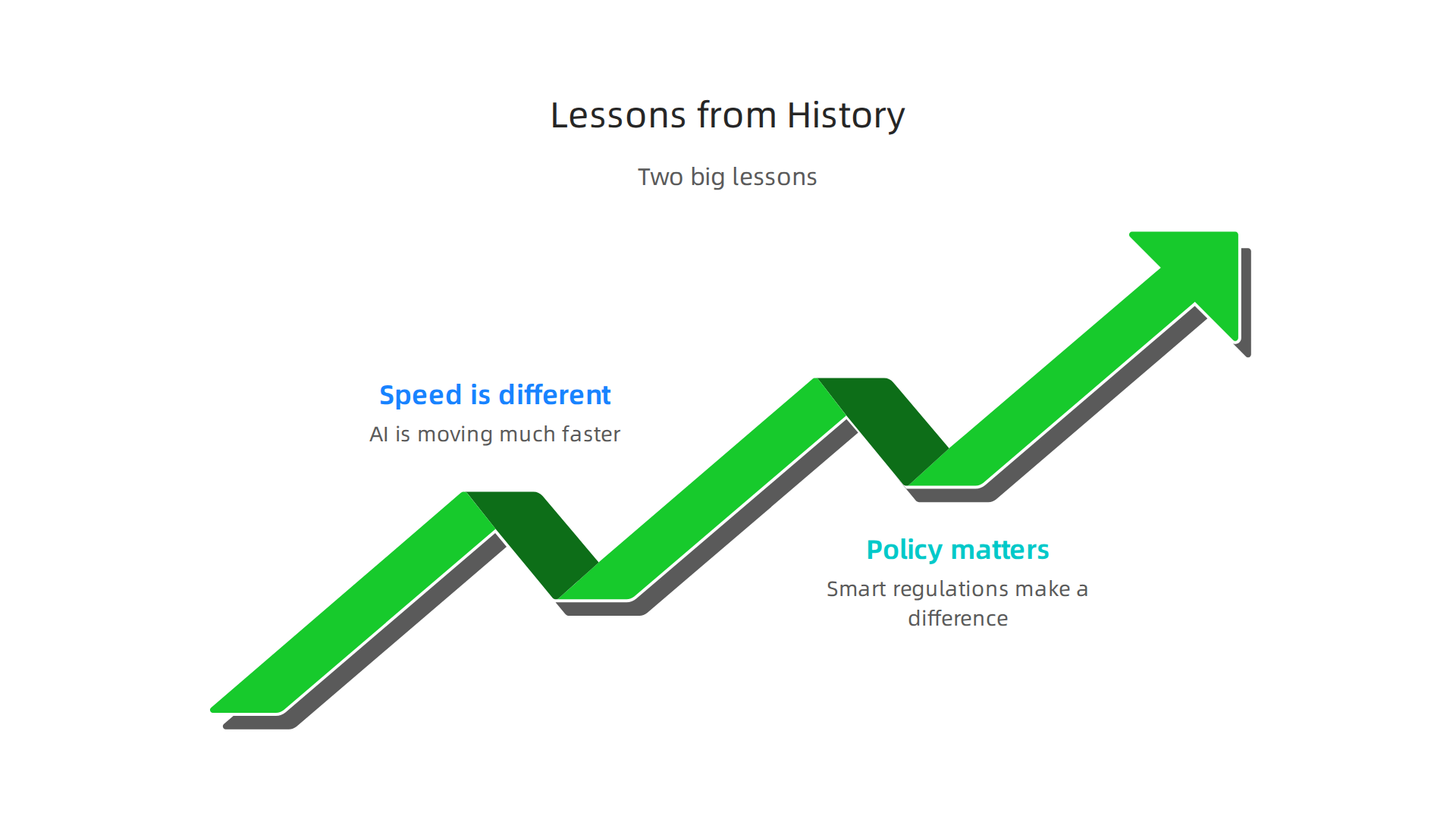
First, the speed is different this time. Past revolutions took decades to fully change the workforce. The steam engine spread over nearly a century. Computers took about 30 to 40 years to reach every desk. AI is moving much faster. New tools like ChatGPT and AI automation tools went mainstream in just a couple of years. That means workers and companies have less time to adapt. For anyone with a business professional background who wants to stay relevant, the window to reskill is shrinking.
Second, policy matters more than technology alone. During the Industrial Revolution, governments eventually created labor laws, worker protections, and public education systems. These helped people transition into new jobs. The same happened with computers: community colleges and online training programs helped workers learn digital skills. Today, smart regulations can make a big difference in how smoothly we handle ai automation. If you want to understand what kinds of rules are being proposed, check out the latest AI regulations 2026 compliance strategies.
These policies will shape whether the transition is fair or chaotic.
The key takeaway? History says we will get through this. New jobs will appear. But the transition period will be bumpy, and the speed of AI adoption makes it even more urgent to prepare now. The next section shows exactly which jobs are most at risk in 2026 and why some roles are safer than you might think.
The 2026 Reality: Which Jobs Are AI Taking Over Right Now?
So, which jobs are actually being hit by ai taking over jobs in 2026? The numbers might surprise you. According to recent data, over 11% of U.S. jobs are already technically automatable today. That is more than 1 in 10 workers whose roles could be done by AI right now. If you want the full picture, the AI job replacing statistics for 2026 show that 92 million jobs could be displaced globally by 2030.
But displacement is not spread evenly. Some roles are in the danger zone, while others are much safer.
Jobs Facing the Highest Disruption Risk
The most vulnerable jobs are the ones with routine, repeatable tasks. These include:
- Data entry and clerical work – AI can process forms, handle documents, and manage records much faster than humans. Expect 65% to 80% of these roles to disappear by 2028.
- Customer service (tier 1 support) – Chatbots and voice agents now handle the first level of customer questions. Automation potential here is up to 80%.
- Legal document review – AI systems can scan contracts and flag issues in seconds. About 44% of legal work tasks are exposed to automation.
- Basic content writing and translation – Generative AI tools can write simple articles, product descriptions, and translations. Commodity content roles are shrinking fast.
Even in the tech world, junior programmers and QA testers face medium risk as AI coding assistants get better.
Which Jobs Are Still Safe?
On the flip side, roles that need human creativity, strategic thinking, or deep personal connection are much harder for AI to replace.

Think of nurses, teachers, therapists, and skilled trades like electricians. These jobs involve empathy, judgment, and physical presence that AI cannot replicate.
The AI job displacement statistics 2026 also highlight that while 40% of jobs worldwide are exposed to AI, advanced economies face a much steeper challenge, with exposure rates climbing to 60%. So where you live matters too. Workers in developed nations are more likely to see their tasks automated than those in emerging markets.
What This Means for You
The key takeaway? If your job involves repetitive information processing, now is the time to start building new skills. But even if your role seems safe, the way you work will change. AI will reshape more jobs than it eliminates. The AI compliance for business strategies can help you understand what regulations are coming and how they might affect your industry.
Staying ahead of these changes requires constant learning. The AI Newsletter Worth Reading delivers clear daily AI updates to help you prepare for the shifting job landscape.
Adaptation Playbook: How Professionals Are Reskilling and Upskilling for the AI Era
Okay, so AI is changing jobs fast. But here is the good news: you can take control. The smartest professionals in 2026 are not sitting around worrying about ai taking over jobs. They are actively reskilling and upskilling to stay ahead. And companies are finally stepping up to help.
What the Best Reskilling Programs Look Like
The most effective programs mix technical AI literacy with human skills that machines still cannot match. Think critical thinking, empathy, creativity, and emotional intelligence. These durable human abilities become more valuable as AI handles the routine stuff.
Companies like Airbus and PwC have already proven that AI-powered training delivers strong returns. According to the latest workforce transformation reskilling strategies, organizations that invest in reskilling see measurable ROI, faster internal mobility, and higher productivity.
That is a win for businesses and for workers.
How Companies Are Closing the Skills Gap
Big employers are not leaving this to chance. They are building internal training programs and partnering with online platforms to give employees actual learning paths. The best platforms use AI to analyze your current skills and create a personalized curriculum just for you.
For example, some companies use skills mapping tools to identify gaps and then offer role-based courses. Others run cross-training rotations so workers can try new roles before fully switching. If you are looking to build your own skills, you might explore tech education and workforce development programs that focus on real-world, hands-on experience.
What Individual Professionals Are Doing Differently
The workers who thrive right now are not thinking in terms of one career track. They are building portfolios of adaptable competencies. That means stacking skills like data analysis, prompt engineering, project management, and communication.
Here are practical steps you can take today:
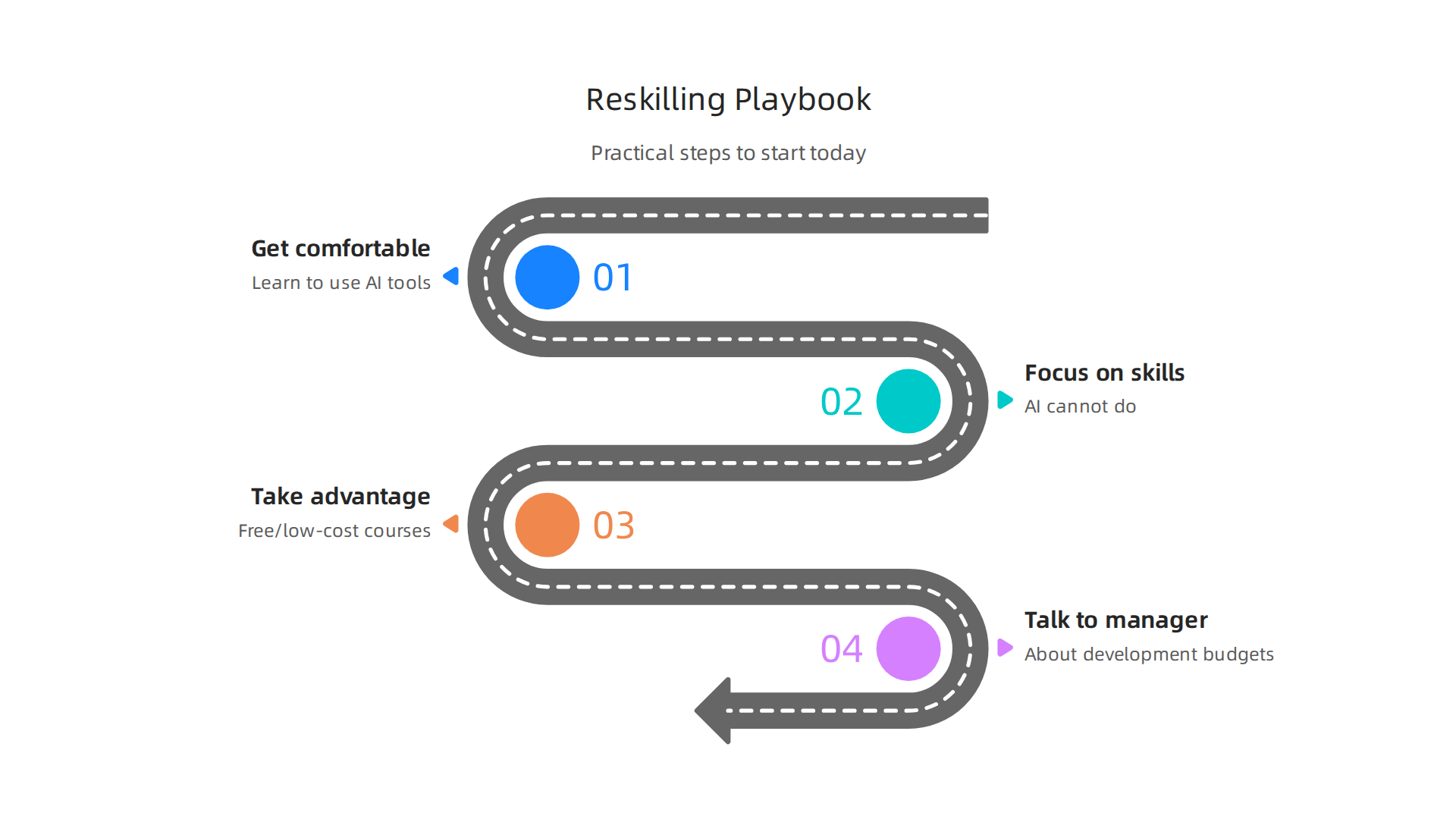
- Get comfortable with AI tools. Learn how to use ChatGPT, Copilot, or Midjourney for your field. The goal is to augment your work, not replace it.
- Focus on skills that AI cannot do. Problem solving in messy situations, negotiating, leading teams, and creative strategy are all high value.
- Take advantage of free or low-cost courses. Platforms like LinkedIn Learning, Coursera, and Udemy offer affordable training. Some governments and nonprofits even subsidize employee upskilling.
- Talk to your manager about development. Many companies have budgets for learning. Ask about internal mobility programs or tuition reimbursement.
Staying Ahead Requires Continuous Learning
The pace of change is not slowing down. The same AI that is reshaping jobs is also creating new ones. The key is to stay curious and keep building.
To keep yourself informed on the latest shifts in AI and tech regulation, The AI Newsletter Worth Reading delivers clear daily updates straight to your inbox. It is a simple way to stay ahead of the curve without drowning in noise.
Reskilling is not a one-time event. It is a mindset. And in 2026, it is the smartest career move you can make.
The Regulatory Chessboard: How Policy Shapes AI Job Displacement and Creation
While you focus on building your skills, governments around the world are busy reshaping the rules. In 2026, new regulations are changing how companies can use AI in hiring, performance reviews, and even daily worker management.

These laws directly affect ai taking over jobs by setting boundaries on what automation is allowed.
The EU AI Act Sets the Global Standard
The most important piece of regulation right now is the European Union’s AI Act. It came into force in August 2024, but the key compliance deadlines are hitting in 2026. Under this law, any AI system used for recruitment, employee evaluation, or workforce management is classified as high risk. That means companies must run mandatory risk assessments, test for bias, keep detailed documentation, and ensure human oversight at every step.
According to the official EU AI Act overview for staffing businesses, deployers who fail to meet these high-risk obligations face fines up to EUR 15 million or 3% of global annual turnover. For prohibited AI practices, that ceiling jumps to EUR 35 million or 7% of turnover. These are not small penalties.
The law also applies extraterritorially. Even U.S. employers without a physical EU presence can be covered if their AI tools are used to recruit EU candidates or evaluate EU-based workers. One legal analysis of EU AI Act compliance for U.S. employers explains that operating global HR platforms with AI functionalities accessible to EU teams triggers obligations under the Act.
What This Means for Your Job Security
Here is the real impact. When AI systems used in hiring must be transparent and bias tested, companies cannot simply replace recruiters with black box algorithms. The requirement for human oversight means someone must review and override AI decisions. That preserves jobs that might otherwise vanish.
At the same time, these regulations create entirely new compliance roles. Companies now need AI ethics officers, compliance specialists, and legal teams who understand both technology and the rules. If you want to stay ahead of the curve, learning how to navigate the compliance landscape is a smart career move. Take a look at this practical guide on how to make AI compliant with global regulations in 2026 for actionable steps you can take.
Regulatory Uncertainty Creates Its Own Challenges
Not every government is moving at the same speed. In the U.S., states like California are passing their own AI laws, creating a patchwork of requirements. This uncertainty can slow hiring and investment. Companies hesitate to commit to new roles or tools while waiting for clarity on what is allowed. But one thing is clear: the trend is toward more regulation, not less. The sooner you understand the rules, the better positioned you will be to thrive.
Human + Machine: Emerging Roles and the New Collaboration Paradigm
So what does this all mean for your day to day work? The regulations we just covered are creating a new breed of jobs. And the smartest companies are already building teams where humans and AI work side by side, not against each other.

The Brand New Job Titles You Probably Haven’t Heard Of Yet
Walk into any forward thinking company in 2026 and you will find roles that did not exist five years ago. AI trainers teach systems how to respond better. Prompt engineers craft the exact language that gets the best results from generative tools. Ethics compliance specialists make sure everything stays inside the legal lines we talked about earlier. And human AI interaction designers figure out how people and machines can work together without friction.
These are not science fiction jobs. They are real, they pay well, and they are growing fast. According to data from the OECD and the U.S. Bureau of Labor Statistics, careers that rely on advanced human judgment, emotional intelligence, and ethical decision making remain among the lowest risk for displacement. You can see the full breakdown in this 2026 list of AI resistant careers backed by labor data. The common thread is that none of these roles try to beat AI at its own game. Instead, they do what humans do best while directing the machine.
How the Best Teams Actually Use AI
Here is the thing that separates the winners from everyone else. The most productive teams do not hand everything over to automation. They strategically delegate. Repetitive data entry goes to the bot. First draft content goes to the bot. Number crunching goes to the bot. But judgment, creativity, relationship building, and final sign off stay with the human.
Think about it like this. You would not ask an AI to negotiate a contract with a long time client. You would not ask it to read the room during a tense team meeting. But you absolutely should ask it to summarize last month’s sales data so you can walk into that meeting prepared. That is the new collaboration paradigm in action. You keep the decisions. The AI handles the grunt work.
Why This Is Your Career Opportunity
The professionals who are advancing fastest right now are not the ones fighting against AI automation. They are the ones learning to use it as a daily tool. They spend less time on busywork and more time on strategic thinking. That shift shows up in their performance reviews, their productivity numbers, and their paychecks.
If you want to stay ahead, start treating every tool at your desk as a chance to learn. Experiment. Ask your AI assistant to draft emails, analyze spreadsheets, or brainstorm ideas. The more you practice, the more natural it becomes. And if you want to keep your finger on the pulse of what is changing next, The AI Newsletter Worth Reading delivers daily updates straight to your inbox so you never miss a shift in the landscape.
The future does not belong to people who fear the machine. It belongs to people who learn to dance with it.
Future-Proofing Your Career: Long-Term Strategies for a World of Continuous Automation
Here is the honest truth about AI taking over jobs. It is happening in some areas.
But history shows us something important. Every major technological shift has created as many new opportunities as it has removed. The key is knowing where to invest your energy now.
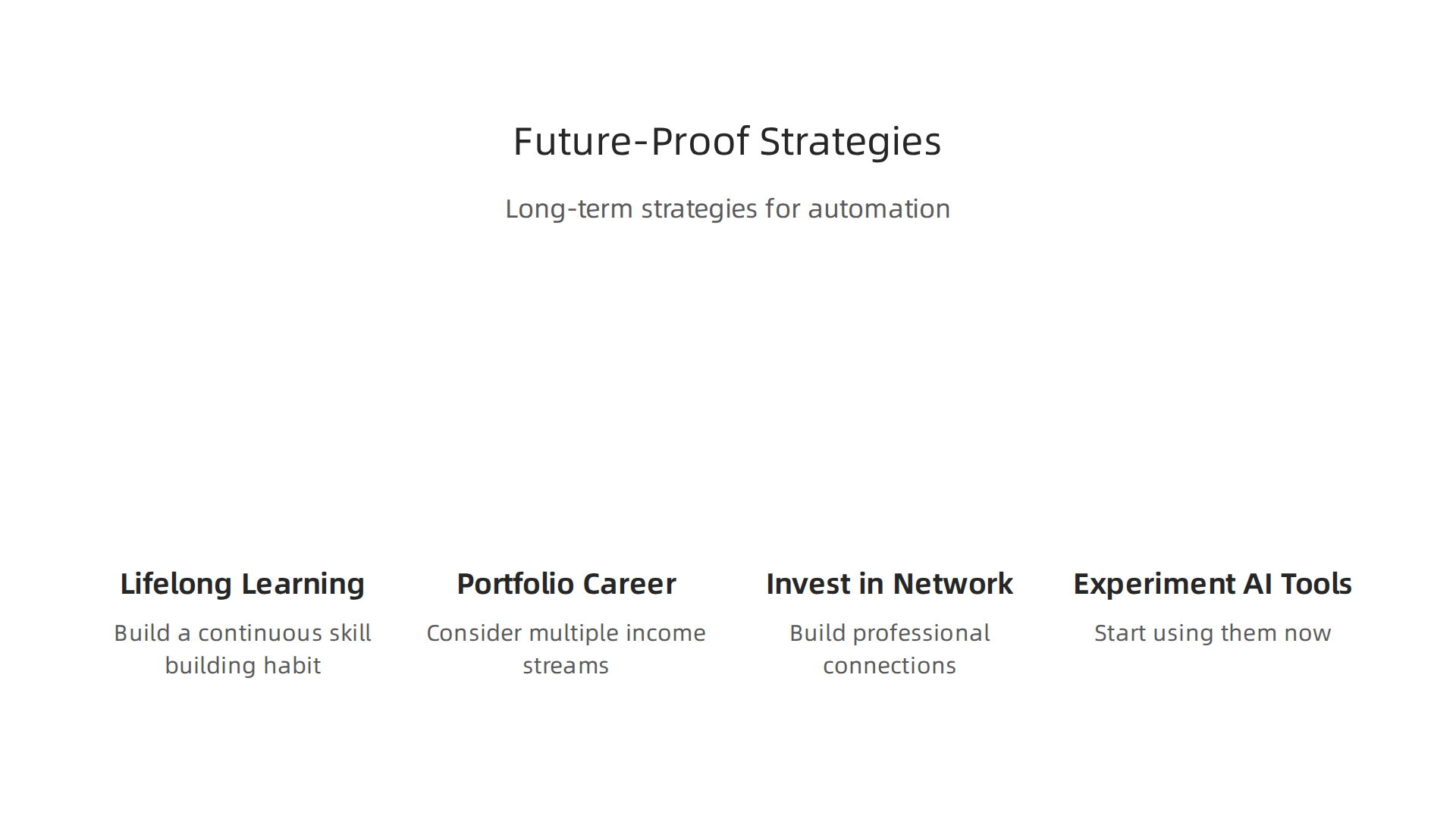
Build a Lifelong Learning Habit
The days of learning one skill and coasting for forty years are over. In 2026, continuous skill building is not a nice to have. It is your professional survival kit. Research on the long term impacts of technological change confirms that new jobs have consistently emerged to replace those that disappeared. But those jobs required new skills that workers had to actively pursue.
Start small. Dedicate thirty minutes each week to something new. Learn how to prompt an AI tool better. Take a short course on data analysis. Watch a tutorial on a platform you have never used. The professionals who stay relevant are the ones who treat learning like a weekly habit, not a one time event.
Consider a Portfolio Career
AI is lowering the barrier to starting your own business. You can launch a side project with minimal upfront cost using tools that handle the busywork for you. This is why entrepreneurship and portfolio careers are becoming more viable than ever.
You do not have to quit your day job. Start a small freelance gig. Build a digital product. Offer consulting in your area of expertise. Multiple income streams act as a buffer if your main role shifts or disappears. And the experience of running your own thing teaches you adaptability faster than any training program ever could.
Invest in Your Network
Here is a fact that rarely gets discussed. When layoffs happen, the people who land on their feet fastest are not always the most technically skilled. They are the ones with strong professional networks. Your reputation for being adaptable and reliable is a career insurance policy that no algorithm can replace.
Attend industry events. Stay in touch with former colleagues. Share what you are learning publicly. The goal is to make yourself known as someone who can figure things out. When change comes, and it will, your network becomes your safety net.
Experiment with AI Tools Now
The fastest way to build confidence with AI is simply to start using it. Pick one or two tools relevant to your field and test them on real tasks. Use AI to draft emails, generate reports, or summarize research. Document what works and what does not. This practical experience is what employers look for in 2026.
If you are unsure where to begin, check out this list of the best AI tools for business productivity.
It gives you a solid starting point for tools that professionals are actually using right now.
And to keep learning every day without getting overwhelmed, The AI Newsletter Worth Reading delivers clear daily updates straight to your inbox. It is an easy way to stay ahead of what is changing.
Summary
This article looks beyond alarmist headlines to explain what