

Introduction — Why AI and ML Matter Now
In 2026, it feels like everyone is talking about artificial intelligence (AI) and machine learning (ML). You hear these words everywhere: in the news, from business leaders, and even in daily conversations. But what do they really mean? And why is it so important to understand them clearly right now?
Actually, these terms can be a bit confusing. Many people use them without knowing the true difference.

Artificial intelligence, first named in 1955, is a big idea about making machines smart enough to do tasks that normally need human thinking, like solving problems or understanding language ^1^. Machine learning is a key part of AI. Think of it as how AI systems learn from data without being told every single step to take. It helps computers get better at tasks over time, like how a child learns by seeing many examples ^2^.
Getting a clear picture of artificial intelligence and machine learning isn’t just for tech experts. It’s really important for many different people:
- Executives need to know where to put their company’s money and how to use these new tools.
- Investors want to understand where to invest wisely and what risks are involved.
- Legal teams and policy watchers have to deal with new rules and laws around AI. Knowing the difference helps them make sense of things like
AI regulations 2026 compliance strategies.
This article is here to help you cut through the noise. We’ll give you a simple, clear guide to artificial intelligence and machine learning. Our goal is to make it easy to understand, so you don’t feel overwhelmed by too much information. We will focus on the big picture, like how artificial intelligence and machine learning affect business plans, legal rules, and what’s next. This guide will help you understand the risks and chances that AI brings, giving you a solid AI Business and Compliance Roadmap.
If you want to stay updated on all the fast changes in AI and its rules every day, there’s a great way to do that. Get clear daily AI updates from The Deep View Newsletter.
The AI Newsletter Worth Reading can help you keep up without feeling swamped.
Note: The anchor text for citation [^1^] and [^2^] are generated based on the titles in "Supporting Search Results" and formatted to fit the constraints.
[^1^]: SETR 2026: Artificial Intelligence
[^2^]: Artificial Intelligence in Medicine: A Definition of TermsIn 2026, it feels like everyone is talking about artificial intelligence (AI) and machine learning (ML). You hear these words everywhere: in the news, from business leaders, and even in daily conversations. But what do they really mean? And why is it so important to understand them clearly right now?
Actually, these terms can be a bit confusing. Many people use them without knowing the true difference. Artificial intelligence, first named in 1955 by John McCarthy, is a big idea about making machines smart enough to do tasks that normally need human thinking, like solving problems or understanding language SETR 2026: Artificial Intelligence. Machine learning is a key part of AI. Think of it as how AI systems learn from data without being told every single step to take. It helps computers get better at tasks over time, much like a child learns by seeing many examples Artificial Intelligence in Medicine: A Definition of Terms.
Getting a clear picture of artificial intelligence and machine learning isn’t just for tech experts. It’s really important for many different people:
- Executives need to know where to put their company’s money and how to use these new tools.
- Investors want to understand where to invest wisely and what risks are involved.
- Legal teams and policy watchers have to deal with new rules and laws around AI. Knowing the difference helps them make sense of things like regulations that could lead to big fines.
This article is here to help you cut through the noise. We’ll give you a simple, clear guide to artificial intelligence and machine learning. Our goal is to make it easy to understand, so you don’t feel overwhelmed by too much information. We will focus on the big picture, like how artificial intelligence and machine learning affect business plans, legal rules, and what’s next. This guide will help you understand the risks and chances that AI brings, giving you a solid AI Business and Compliance Roadmap.
If you want to stay updated on all the fast changes in AI and its rules every day, there’s a great way to do that. Get clear daily AI updates from The Deep View Newsletter. The AI Newsletter Worth Reading can help you keep up without feeling swamped.
The previous section helped us see that artificial intelligence and machine learning are big ideas, but they are also different. Think of AI as the main goal of making smart machines, and machine learning as a key tool to get there.
Core Concepts: What AI and ML Are (and Aren’t)
Let’s break down these ideas even more clearly.

-
Artificial Intelligence (AI): This is the biggest umbrella term. It means making machines act and think in ways that seem smart, almost like a human. This can be anything from a computer that plays chess to one that understands your voice. When we talk about
artificial intelligence and machine learning, we mean AI is the broad field, and ML is a part of it. Sometimes people mistakenly call any smart computer program "AI," but it’s more specific than that. For example, a simple calculator is smart, but it’s not AI because it doesn’t learn or adapt. A system that can recognize faces in photos, that’s an example of AI at work. -
Machine Learning (ML): This is a powerful way for AI systems to learn. Instead of someone writing out every rule for the computer, machine learning lets the computer learn from lots of data. Imagine showing a child hundreds of pictures of cats and dogs. After a while, they learn to tell the difference. Machine learning works similarly. You feed a computer many examples, and it finds patterns on its own. This is a big part of how modern AI systems, like
IBM Introduction to Artificial Intelligence, are built
The 2026 Guide to Machine Learning – IBM.
- Deep Learning: This is a special, more advanced type of machine learning. Think of deep learning like a very complex brain made of many layers. Each layer helps the computer understand a different part of the information. This makes deep learning especially good at tasks like understanding speech, translating languages, or recognizing images very well. It’s why some people feel like it’s
magic AIbecause it can do things that seem almost human.
So, to recap: AI is the big picture, ML is how AI learns, and deep learning is a super-powered way for ML to learn.

How Machine Learning Works: A Simple Journey
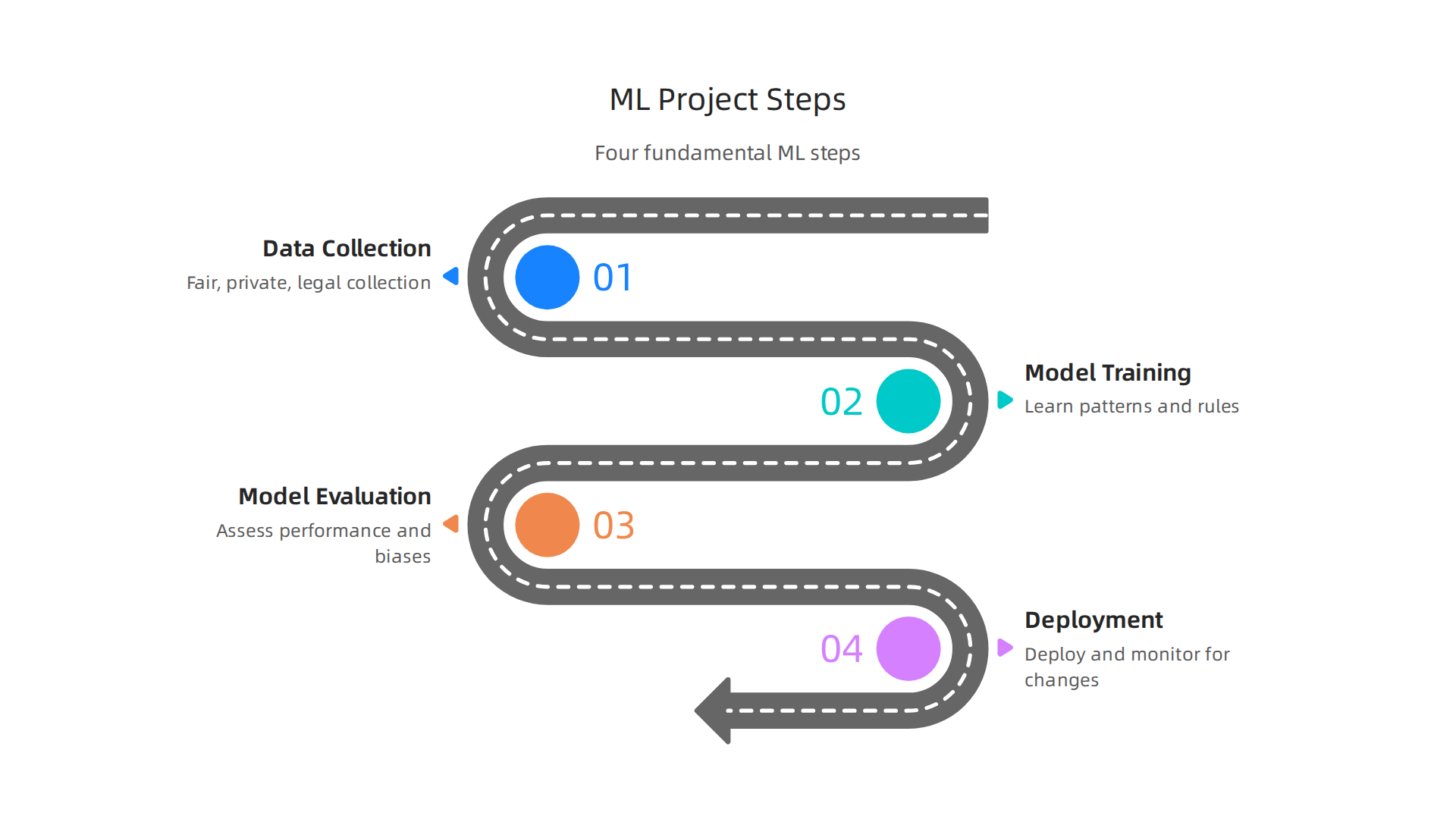
To really understand artificial intelligence and machine learning, let’s look at the basic steps of a machine learning project.
This is important for everyone, especially for managing risks and following rules in 2026.
-
Data Collection: First, you need data. Lots of it. This could be pictures, words, numbers, or anything else the computer needs to learn from.
- Why it matters for compliance: The data must be fair, private, and gathered legally. If the data has unfairness (bias), the AI will learn that bias. For example, if you only show an AI pictures of one type of person, it might struggle to recognize others. This can lead to big problems and fines.
-
Model Training: Next, you "train" the machine learning model using the data. The computer looks for patterns and rules within the data. It’s like teaching the computer to connect the dots.
-
Model Evaluation: After training, you check how well the model works. Does it make good guesses? Is it fair to everyone?
- Why it matters for compliance and risk: This step helps you find out if the AI makes mistakes or has unfair biases. It’s crucial to test it thoroughly before it affects real people. Ignoring this could lead to bad decisions, harm to users, and serious legal trouble.
-
Deployment: Once the model is good enough, you put it to work. It starts making predictions or helping with tasks in the real world.
- Why it matters for compliance: Even after deployment, the AI needs to be watched. Rules and laws change, and what was fine last year might not be in 2026. Regular checks are needed to make sure the AI continues to follow rules and works as expected. Not doing so could open up your business to serious consequences. Learn more about how to protect your business from potential penalties with effective AI Regulations 2026 Compliance Strategies to Avoid Million Dollar Fines.
Understanding these steps helps everyone, from business leaders to legal teams, grasp how AI really works and where potential problems or artificial intelligence and machine learning risks might show up.
After understanding the general steps of machine learning, let’s look at the special "brains" and "rules" that make artificial intelligence and machine learning systems work. These are called algorithms and architectures. Knowing about them helps us see why some AI systems are easier to trust and check than others, which is very important for rules and safety in 2026.
Key Algorithms and System Architectures
Think of algorithms as recipes that tell the computer how to learn.

Different recipes are good for different tasks.
Common Machine Learning Recipes (Algorithm Families)
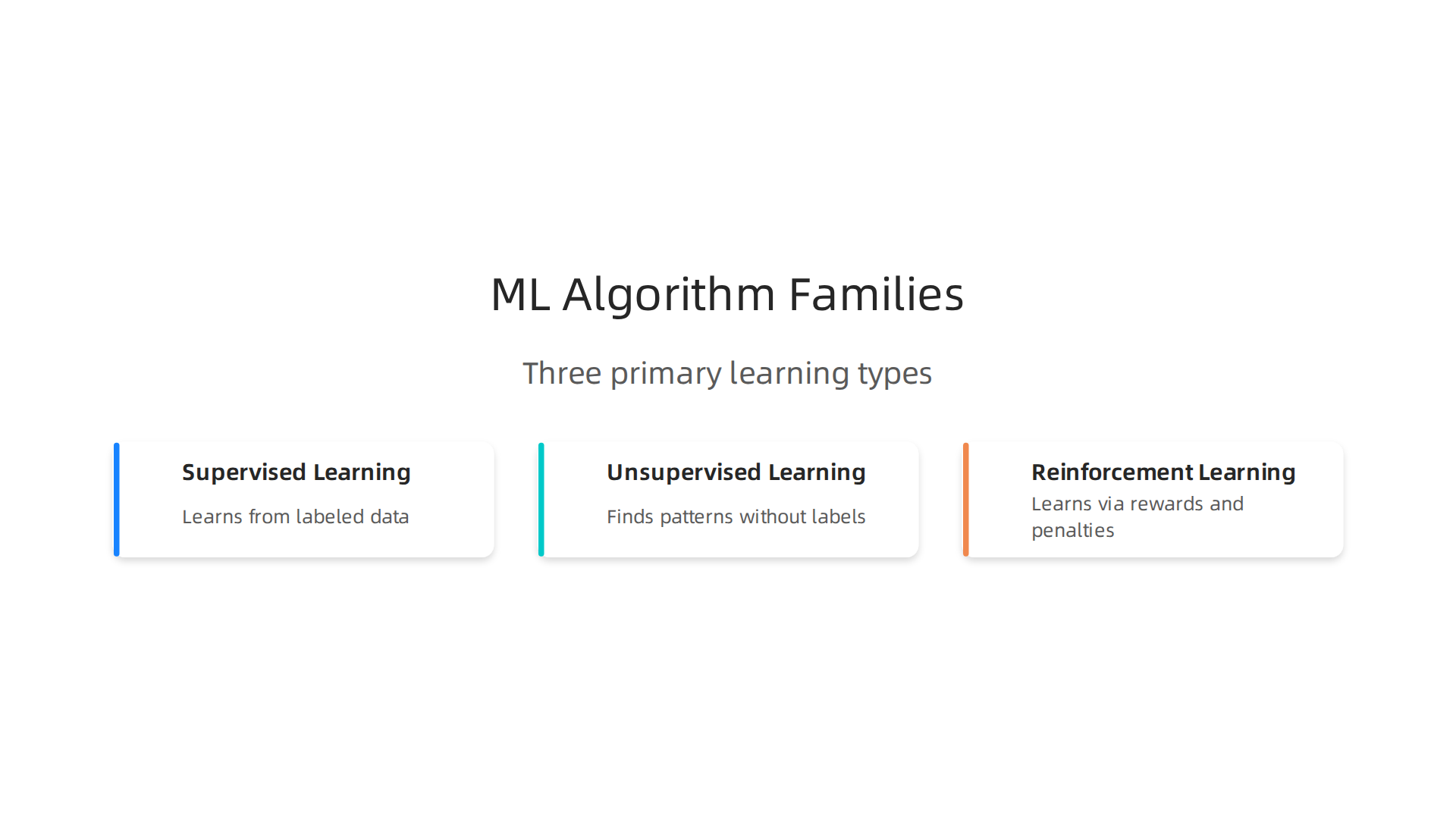
There are three main ways machine learning models learn:
-
Supervised Learning: This is like a teacher guiding a student. The computer learns from data that has all the right answers. For example, you show it many pictures of cats and dogs, and each picture is already labeled "cat" or "dog." The computer learns by seeing these examples and their correct labels. This is a common way for
artificial intelligence and machine learningsystems to learn to sort things or make predictions. A good Introduction to Machine Learning explains these core types. -
Unsupervised Learning: Here, there’s no teacher. The computer gets data without any labels and tries to find hidden patterns or groups on its own. Imagine giving a computer a pile of different colored beads and asking it to sort them into groups without telling it what the groups are. It might sort them by color, size, or shape. This is useful for finding new things in data that people might not notice.
-
Reinforcement Learning: This is like training a pet with rewards. The computer learns by trying things and getting feedback (rewards or penalties) based on its actions. It tries to figure out the best actions to get the most rewards over time. This type of learning is often used in games or for robots that need to move around and learn how to do tasks.
Advanced AI Brains: Modern Architectures
Beyond these basic learning types, there are special ways these "brains" are built, especially in deep learning. These are called architectures. They allow for some truly magic AI abilities.
- Convolutional Neural Networks (CNNs): These are very good at understanding pictures and videos. They break images into small pieces, like looking at puzzle pieces, to understand what the whole picture is. This is how many AI systems can recognize faces, objects, or even diseases in medical scans. You can learn more about how they work in this Convolutional neural network explanation.
-
Transformers: These are newer and super powerful, especially for language and text. They are great at understanding how different parts of a sentence or a conversation relate to each other. This is why AI tools can now write stories, translate languages, or answer complex questions so well. For a deeper dive, check out What are Transformers in Artificial Intelligence?.
-
Graph Neural Networks (GNNs): These are used for data that is connected like a web, such as social networks or scientific links. They help AI understand relationships between many different items.
Why Choice of Algorithm Matters for Rules and Trust
The type of algorithm or architecture used can make a big difference in how well we can understand and trust an AI system. Some, especially very complex deep learning models like large transformers, can be like a "black box." It means they work really well, but it’s hard to see why they made a certain decision.
For compliance in 2026, it’s vital to be able to:
- Explain Decisions: Can we clearly explain why an AI approved a loan or flagged a person? If the AI is a black box, it’s tough to show it’s fair and not biased. The challenge of explaining how these complex systems arrive at decisions is a key focus in Interpretable Machine Learning: A Comprehensive Review of research.
- Audit and Reproduce Results: Can we check the AI’s work and get the same results if we run it again with the same data? This helps ensure the system is reliable and follows all rules.
- Document the Model: Having clear records of how the AI was built and trained is a must.
When artificial intelligence and machine learning systems are used in important areas, like healthcare or law, the need for explainability and auditability becomes even more pressing. Choosing the right algorithm for the task, one that balances power with transparency, is a key part of responsible AI development. Understanding these strategies is crucial for every business. Learn more about how to navigate these challenges with effective AI Regulations 2026 Compliance Strategies for Businesses.
Keeping up with all these changes and their rules can be a lot. If you want simple, clear daily updates on AI and technology rules, consider getting The AI Newsletter Worth Reading.
Choosing the right "brain" or recipe for artificial intelligence and machine learning is just one part of the puzzle. For these systems to work well and follow rules, they need good fuel. That fuel is data.
Data, Labeling, and Infrastructure Requirements
Think of data as the food that helps an AI learn and grow. The type of food, how it’s prepared, and where it comes from all matter a lot for trust and safety in 2026.
The Food for AI: Data Types
AI systems learn from many kinds of data:
- Structured Data: This is like information neatly organized in tables, like customer names, addresses, or sales figures. It’s easy for computers to read and understand.
- Unstructured Data: This is messier. It includes things like emails, social media posts, videos, and images. It takes more work for AI to make sense of it, but it often holds richer information. For example, systems that understand images or text are using this kind of data. The market for training AI with such data is big, reaching $3.19 billion in 2025 and expected to grow much more by 2030, according to the AI Training Dataset Market Share, Size, Trends, Report 2026.
- Images and Text: These are special types of unstructured data. Many
magic AItools today, like those that create pictures or write stories, rely heavily on huge amounts of image and text data. There’s even talk about whether we might run out of data for large language models in the future if we keep scaling them up.
Making Data Ready: Labeling and Provenance
For an AI system to learn, especially through supervised learning, raw data often needs "labels." This means someone has to go through pictures and label them "cat" or "dog," or highlight important words in a sentence. This labeling process is very important:
- Quality and Bias: If the labels are wrong, or if the people doing the labeling have hidden biases, the AI will learn those mistakes. This can lead to unfair or incorrect decisions, which is a big problem for fairness and compliance.
- Data Provenance: It’s super important to know where the data came from. Was it collected with permission? Does it respect people’s privacy? Rules in 2026 often require clear records of where data originated and how it was handled. For official statistics, being AI-Ready Official Statistics: Opportunities, Challenges, and Transformations means having good metadata and quality checks.
Companies use special tools to prepare data for artificial intelligence and machine learning because it’s so complex. Research is even looking into Automated Data Preparation for Machine Learning: A Survey to make this process easier.
Where AI Lives: Infrastructure Requirements
Running artificial intelligence and machine learning systems also needs special tools and setups, known as infrastructure.
- Compute Power: AI needs powerful computers to do all the heavy math for learning and making decisions. This means special chips like GPUs that can do many calculations at once.
- Storage: AI uses huge amounts of data. This data needs to be stored safely and be easy to access.
- MLOps (Machine Learning Operations): This is like the factory for AI. It includes tools and practices to build, deploy, monitor, and update AI models regularly. It helps make sure AI systems keep working correctly and safely over time.
Having the right infrastructure isn’t just about speed; it’s also about control. Good operational controls within your infrastructure help meet regulatory rules. They ensure data is kept private, models are updated correctly, and you can always trace how an AI made a decision. Knowing about these technical parts is key for any business trying to understand The Definition Of Technology How It Shapes Business Compliance And Risk In 2026.
Knowing about these technical parts is key for any business trying to understand The Definition Of Technology How It Shapes Business Compliance And Risk In 2026. Now, let’s look at how all this artificial intelligence and machine learning is used in the real world and what rules come with it.
Applications, Industry Use Cases, and Regulatory Touchpoints
Artificial intelligence and machine learning tools are showing up everywhere in 2026. They help businesses, governments, and everyday people. But with these powerful tools come new rules and things to watch out for.
AI in Different Industries
Let’s explore some common ways AI is being used:
- Money and Banking (Finance): Banks use
artificial intelligence and machine learningto spot fraud, which means catching bad guys trying to steal money. They also use it to decide who gets a loan.- Regulatory Concerns: For loans, AI must be fair. It can’t decide based on things like a person’s race or gender. This is where rules about fairness and preventing bias become very important. There’s a whole report on 2026 Global AI in Financial Services Report that talks about this.
- Doctors and Hospitals (Healthcare): In healthcare, AI helps doctors find diseases earlier, like looking at X-rays to spot problems. It can also help create new medicines faster.
- Regulatory Concerns: When AI is used in healthcare, safety is the number one concern. Any AI tool used for diagnosis or treatment must be very accurate and reliable. Patient privacy is also a huge deal; AI systems must protect sensitive health information.
- Government and Public Services: Governments use AI to manage traffic better, to make public services easier to access, and to even help with emergency responses.
- Regulatory Concerns: Transparency is key here. People need to know when a government agency is using AI to make decisions that affect them. Accountability is also important: who is responsible if the AI makes a mistake? The OECD Governing with Artificial Intelligence report shares insights on this.
- Everyday Tech for People (Consumer Tech): Think about
magic AItools like smart assistants on your phone or programs that suggest what movie you might like. These useartificial intelligence and machine learningto make your life easier.- Regulatory Concerns: Privacy is a big one. These tools collect a lot of your personal data, so rules make sure companies handle it with care. Also, companies need to be clear about how their AI works and what it’s doing with your information.
If you’re interested in understanding the risks of AI, especially when it’s not checked properly, you can read more about why is AI bad the real risks of unrestricted artificial intelligence in 2026.
Different Rules in Different Places
One big challenge for businesses using artificial intelligence and machine learning is that the rules change depending on where you are in the world.
- Europe (EU AI Act): Europe has been a leader in setting up clear rules for AI. The EU AI Act is the world’s first big law about AI.
It sorts AI systems into different risk levels, with stricter rules for high-risk AI, like those used in hiring or law enforcement.
- United States: The U.S. has a different approach. Instead of one big law, many different state and federal groups are making their own rules. This means a company might face different rules for their AI in California compared to New York. The way the EU and U.S. diverge on AI regulation is a key point for businesses to understand.
- Other Countries: Many other countries, like Canada, China, and the UK, are also creating their own AI policies. This global patchwork of rules can make it hard for businesses to sell their AI products everywhere. Staying on top of these worldwide changes is crucial, as highlighted in "Comparative Global AI Regulation: Policy Perspectives from the EU" which gives a good overview of comparative global AI regulation.
To navigate this complex world of rules, businesses need clear strategies for AI regulations 2026 compliance strategies for businesses.
Keeping up with all these changes can feel like a full-time job. That’s why having reliable information is so important for leaders, legal teams, and anyone working with artificial intelligence and machine learning.
Get clear daily AI updates from The AI Newsletter Worth Reading.
Keeping up with all these changes can feel like a full-time job. That’s why having reliable information is so important for leaders, legal teams, and anyone working with artificial intelligence and machine learning.
Risks, Ethics, Governance, and Compliance Frameworks
As artificial intelligence and machine learning become a bigger part of our daily lives and business operations, it’s super important to understand the bad things that could happen. We also need to know how to set up good rules and ways to check these powerful tools. This is what we call risks, ethics, governance, and compliance.
Understanding AI Risks
Using AI can bring many benefits, but it also comes with certain dangers:
- Bias and Fairness: Sometimes, AI systems can make unfair decisions. This happens if the data used to teach the AI has hidden biases. For example, an AI hiring tool might unfairly reject certain groups of people if it was trained on past hiring data that wasn’t fair. This can lead to big problems and goes against ethical guidelines.
- Privacy Concerns:
Artificial intelligence and machine learningoften need a lot of data to work well. This can mean collecting personal information from many people. If this data isn’t protected properly, it could get into the wrong hands. Companies must be very careful with how they collect, store, and use private data. - Robustness and Reliability: AI systems should work correctly every time. If an AI used in a hospital or self-driving car makes a mistake, it could be very dangerous. It’s important that
magic AItools are reliable and can handle unexpected situations without failing. - Cybersecurity Threats: Just like any other computer system, AI tools can be hacked. Bad actors could try to trick an AI into doing something it shouldn’t, or steal the sensitive data it processes. Protecting AI systems from cyber attacks is a must in 2026.
- Legal and Regulatory Risks: With new rules coming out all the time, businesses face fines or other legal trouble if their AI doesn’t follow the law. This is why understanding the
AI regulation landscape for 2026is so important for legal and compliance leaders.
AI Governance: Keeping Things in Check
To manage these risks, businesses need good AI governance. This means having clear rules and processes for how AI is used. Good governance helps make sure AI is used in a responsible and ethical way.
- Model Cards: Think of a model card like an instruction label for an AI. It explains what the AI does, how it was trained, what data it uses, and any known limitations or risks. This helps people understand
what is artificial intelligence with examplesand makes AI more transparent. - Impact Assessments: Before an AI system is put into use, companies should do an "AI impact assessment." This is like a check-up to find out if the AI might cause any harm, like being unfair or harming privacy. It’s a key part of responsible AI. You can find out more about building trustworthy AI governance in 2026 by incorporating best practices for technical and ethical standards Building trustworthy AI governance.
- Audit Trails: It’s important to keep records of how an AI system makes its decisions. This "audit trail" helps people understand why an AI did something and can be useful if there’s a problem or a legal question. These trails are vital for
AI complianceand showing that the system is working as intended. A good guide to achieving ethical AI success is available in AI Governance 2026: Guide to Responsible & Ethical AI Success.
A Simple Checklist for Your Team
For legal and compliance teams, here’s a basic checklist to evaluate AI projects:

- Before starting: What is the AI’s goal? Is it fair and legal? What kind of data will it use?
- During development: How are we checking for bias? What happens if the AI makes a mistake? Is it secure from hackers?
- Before launch: Has a human reviewed the AI’s fairness and accuracy? Does it follow all local and global AI rules, like those in the AI Compliance Guide 2026?
- Ongoing: How do we report problems with the AI? Who is responsible if something goes wrong? How often do we re-check the AI for new risks?
By following these steps, businesses can better navigate the complex world of artificial intelligence and machine learning regulations and use AI safely and fairly. Staying on top of AI regulations 2026 compliance strategies to avoid million dollar fines is crucial for business success.
Making smart choices about artificial intelligence and machine learning isn’t just about following rules. It’s also about looking ahead, planning carefully, and making good investments. For business leaders and people who invest money, knowing about future rules and risks is super important for where they steer their company.
Integrating Regulatory Risk into Strategic Planning
When leaders think about where their company is going, they must consider the rules for AI. This means putting AI regulation landscape for 2026 right into their main business plans. If a new AI product might face tough laws, it’s better to know that early. This way, companies can change their plans or build the product in a way that fits the rules.
For investors, doing their homework, called "due diligence," means looking closely at how companies use AI. They want to know if the company is ready for new laws. If a company ignores AI rules, it could lose money or get into legal trouble later on. This makes it a bad investment.
Product teams also need to think about regulations when they make new artificial intelligence and machine learning tools. It’s much easier to build in fairness and privacy features from the start than to try and fix them later. This forward thinking ensures products stay legal and trustworthy. You can learn more about what legal and compliance leaders need to know about the current AI landscape by checking out The AI Regulation Landscape for 2026.
Near-Term Trend Signals and Preparing for Change
The world of AI rules is always moving. In 2026, we see clear signs of even more changes coming. For instance, the European Union’s AI Act is a big step, showing that governments worldwide are serious about controlling how AI is used. Companies need to watch these trends closely, especially if they work across different countries. What works in one place might not work in another. Staying updated helps businesses avoid surprises and keep their AI projects on track.
Practical Next Steps for Teams with Limited Resources
Not every team has lots of money or people to keep up with all the AI rules. But even small teams can build strong AI practices. Here are a few simple ideas:
- Start Small: Don’t try to solve every problem at once. Pick one AI project and focus on making it compliant first. Learn from that experience.
- Use Simple Guides: Look for easy-to-understand guides on
what is artificial intelligence with examplesand basic AI ethics. Many free resources can help. - Educate Everyone: Make sure everyone on the team knows the basics of responsible AI. Even a short meeting can help people understand why it matters.
- Ask for Help: If you’re stuck, reach out to experts or online communities. There are many people willing to share their knowledge.
- Build in Checks: Even simple checks, like having a human review AI decisions, can make a big difference. Remember,
magic AIisn’t perfect.
By taking these steps, any team can start to build a responsible and regulation-ready approach to artificial intelligence and machine learning. Knowing the right compliance strategies can save businesses from big problems, as discussed in AI Regulations 2026 Compliance Strategies to Avoid Million Dollar Fines.
To keep up with the fast-changing world of AI and its rules, you need reliable and timely information.
The AI Newsletter Worth Reading offers clear daily updates from The Deep View Newsletter.
Summary
This article explains the difference between artificial intelligence (AI), machine learning (ML), and deep learning, and shows why clear understanding matters for executives, investors, legal teams, and product builders in 2026. It walks through the practical ML workflow — data collection, model training, evaluation, and deployment — and highlights compliance concerns at each step, such as bias, provenance, and auditability. The guide outlines common algorithms and modern architectures (CNNs, transformers, GNNs), describes data types and infrastructure needs (compute, storage, MLOps), and reviews how AI is applied across finance, healthcare, government, and consumer tech. It also surveys the evolving regulatory landscape, governance tools like model cards and impact assessments, and offers a simple checklist and low-cost next steps for small teams. After reading, you’ll be able to identify where AI risks appear, choose appropriate controls, and integrate regulatory considerations into product and business planning.