

Introduction
You probably feel it too. Every week, there’s a new AI tool promising to change everything. Another platform adding chatbots. Another update claiming to save you hours. It can be overwhelming.
But here’s the truth. In 2026, artificial intelligence isn’t just hype anymore. More than 75% of small and midsize businesses in the US now use AI regularly, and 43% say it has directly increased their revenue according to the latest AI statistics and trends. The question isn’t if you should use AI. It’s how you use it wisely.
That’s where HubSpot AI comes in. HubSpot has built AI features directly into its platform so businesses can grow smarter.

It helps you generate leads, automate follow-ups, write content, predict customer behavior, and more. Instead of juggling a dozen separate tools, HubSpot AI brings everything into one place.
But there’s a catch. The rules around AI are changing fast. New regulations in the US, Europe, and other regions are forcing businesses to think about compliance from day one. Using HubSpot AI without understanding these rules could put you at risk. On the other hand, using it wisely gives you a huge advantage over competitors who ignore the law.
This article covers seven proven strategies for using HubSpot AI in 2026. Each one is backed by real data and expert insights. You’ll learn how to automate tasks, improve customer retention, scale your outreach, and stay compliant along the way. Whether you’re new to AI or already experimenting with generative AI assistants and automation AI, these strategies will help you get real results.
Ready to make HubSpot AI work for you? Get clear daily AI updates from the AI Newsletter Worth Reading. It’s a free resource designed to help professionals like you navigate the fast-moving world of AI regulation and innovation.
1. Automated Lead Scoring with HubSpot AI
Not every lead is ready to buy. Some are just browsing. Others are comparing options. And a few are actively looking for a solution like yours.
The old way of sorting leads means your sales team wastes time chasing people who will never convert. The better way is automated lead scoring with HubSpot AI.
HubSpot AI scores your leads in real time. It looks at behavior like email opens, website visits, content downloads, and form submissions. Then it combines that data with intent signals and past conversion patterns. The result is a clear picture of which prospects deserve immediate attention.
Here is how HubSpot’s AI lead scoring works, according to the HubSpot lead scoring 2026 guide. The system uses machine learning to analyze large amounts of data and spot patterns humans would miss. It does not rely on guesswork. It learns from your actual history of what converts and what does not.
There are two ways to use lead scoring in HubSpot.
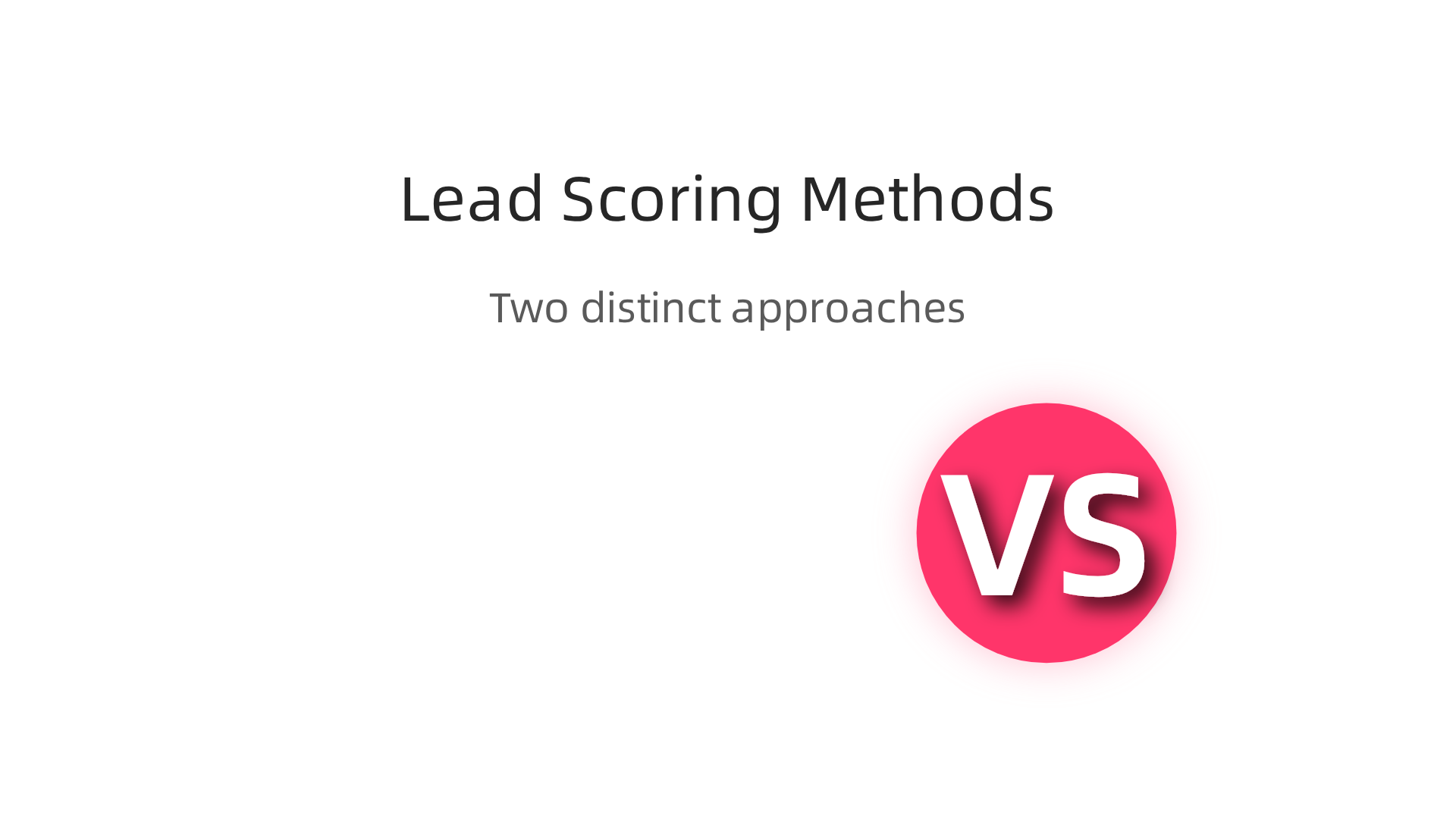
You can set up manual rules on Professional plans. Or you can use AI-powered predictive scoring on Enterprise plans. The AI version is smarter because it automatically adjusts as new data comes in. It finds hidden relationships between actions and outcomes that you might never think to score manually.
The real benefit is time. Your sales team no longer has to dig through hundreds of contacts. HubSpot AI surfaces the highest quality leads and flags them for follow-up.

One case study showed that companies using AI lead scoring see 138% better ROI on their lead generation efforts.
And here is an important bonus. When AI handles the scoring, you also reduce human bias. The system judges each lead by the same rules, applied consistently. That means fairer treatment of prospects and better data for your business.
Compliance Tip for Lead Scoring
Here is something many businesses miss. When you collect behavioral data to train your scoring model, regulations like GDPR and CCPA apply. You need clear consent from contacts before tracking their actions. You also need to explain how their data is used.
The safest approach is to review your data collection practices before turning on AI scoring. Make sure your privacy policy covers behavioral tracking. And give users an easy way to opt out.
These rules also apply to other AI tools you use. For practical guidance on staying compliant, check out these 2026 AI compliance strategies for businesses. They explain how to set up your systems without running into legal trouble.
Using HubSpot AI for lead scoring saves hours of manual work and helps your team focus on the right people. But it only works well when you combine smart technology with smart data practices.
2. Personalizing Customer Journeys with AI
Scoring tells you who to talk to. But that is only half the job. The next question is what to say and how to say it. That is where personalization comes in.
HubSpot AI helps you tailor every touchpoint. It looks at past interactions like pages visited, content downloaded, and emails opened. Then it uses that data to change what each person sees. Your website can show different messaging to a first-time visitor versus a returning lead. Your email sequences can adapt based on clicks and opens. Product recommendations become smarter.
This kind of tailored experience drives results. People respond better when content feels made for them. Engagement goes up. Customer lifetime value grows too. You build trust by showing you understand their needs.
The HubSpot AI tools guide explains how the platform’s AI content writer and behavioral tracking work together. It generates personalized subject lines, email body copy, and even blog ideas based on CRM data. The system learns from every action and keeps improving.
Here is a real example. A prospect visits your pricing page three times and downloads a case study. HubSpot AI notices that pattern. It can trigger a follow-up email offering a demo, rather than a generic newsletter. Or it can change the homepage banner to highlight a success story relevant to their industry.
The Compliance Side of Personalization
Personalization requires data. A lot of it. You are tracking behavior, preferences, purchase history, and more. That means you need clear policies on how you collect and use that information.
Being upfront builds trust. When people know what data you are collecting and why, they are more likely to share it willingly. It also keeps you safe under regulations like GDPR and CCPA. For a deeper look at how these systems work, read our piece on AI and machine learning explained for 2026 business leaders.
The goal is personalization without creepiness. Transparent practices make that possible.
Personalization powered by HubSpot AI is a game changer when you do it the right way. And as AI regulations keep shifting, staying informed matters. The AI Newsletter Worth Reading gives you clear daily updates on what changes and what stays the same.
3. AI-Powered Content Generation and Optimization
Personalization only works if you have the right content to share. That is where content creation comes in. And it is often the biggest bottleneck for marketing teams.
HubSpot AI helps you move faster. Its AI content writer, part of the Breeze AI platform, can draft blog posts, social media copy, and email subject lines in seconds.
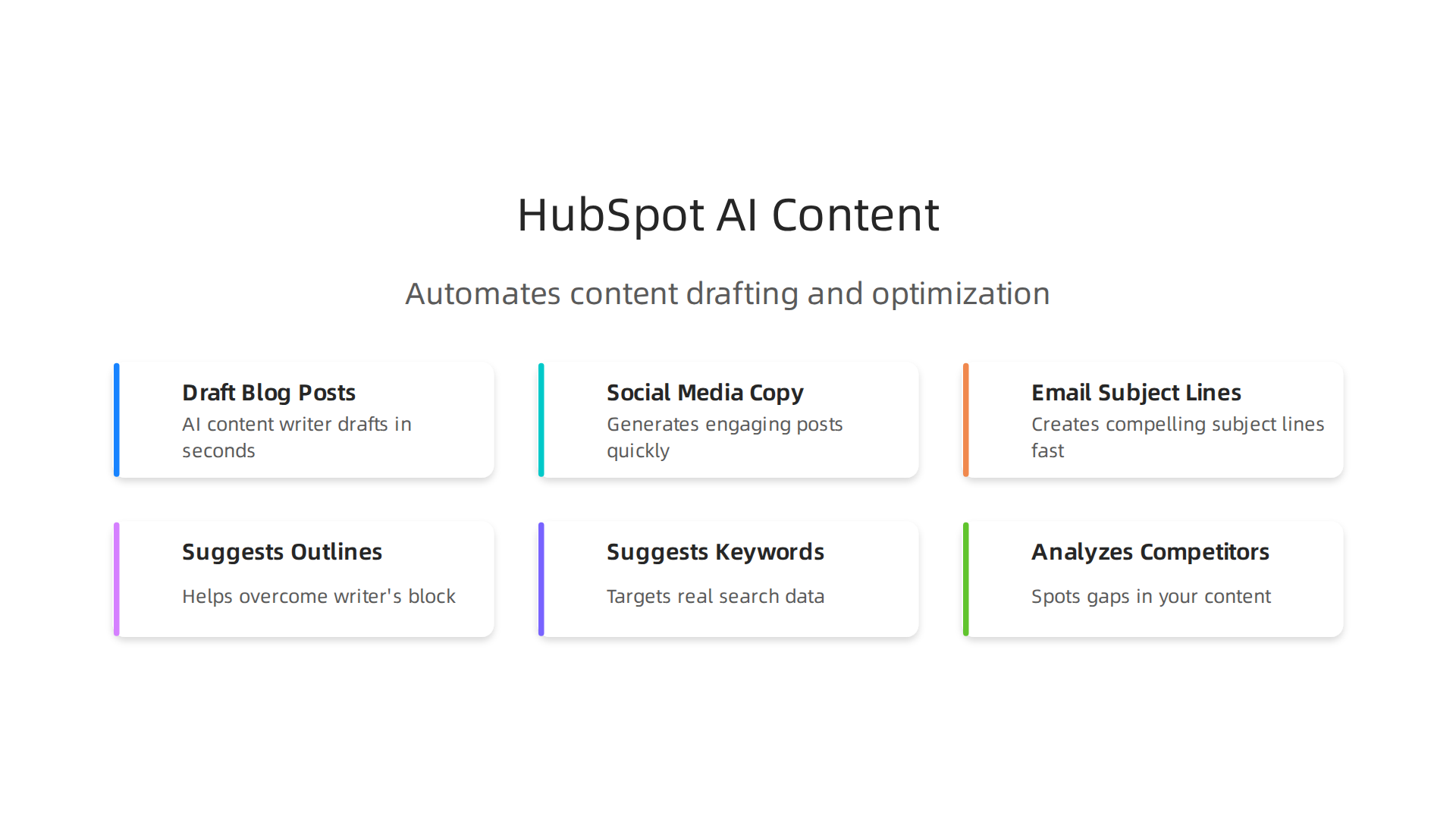
It learns your brand voice from existing content. So the first draft usually sounds like you.
Many marketers find the HubSpot AI Features in 2026 useful for creating first drafts and overcoming writer’s block. The tool suggests outlines, intros, and even full paragraphs based on a short prompt.
But drafting is just the start. HubSpot AI also helps you optimize what you write. It suggests keywords to target based on real search data. It can analyze competitor pages to spot gaps in your own content. This lifts your SEO performance without needing a separate expensive tool.
Here is the thing though. AI is great at writing fast. But it can get facts wrong. It might invent statistics or use outdated information. If you publish those mistakes, you risk misleading your audience. That hurts trust and can even create compliance problems.
So always verify AI-generated content. Fact-check every number. Make sure claims match your actual product or service. For more on keeping your AI use safe and legal, check out our guide on AI Regulations 2026 Compliance Strategies. It covers how to avoid misleading claims and stay compliant with new rules.
When you combine HubSpot AI’s speed with careful human review, you get the best of both worlds. Quality content that ranks well and builds real trust with your audience.
4. Predictive Analytics for Sales Forecasting
Content creation is not the only area where HubSpot AI shines. The platform also helps you look ahead. Its predictive analytics tools use your historical data and real-time market signals to forecast future sales trends and pipeline performance.
Instead of guessing how much revenue you will close next quarter, HubSpot AI calculates it for you. It looks at past deal patterns, seasonal shifts, and even external signals like industry growth. The result is a forecast you can actually trust.
Accurate forecasting changes how you plan.

You can allocate your sales team’s time to the right leads. You can set realistic revenue targets. And you can adjust your budget before problems hit. This kind of clarity is a game changer for any business.
The numbers back this up. A large number of senior executives say that using AI and predictive analysis is a primary contributor to growth. In fact, 65% of executives report that leveraging these tools directly helps their company expand. You can read more about how AI and predictive analysis drive growth in a recent survey.
But there is another reason to pay attention to predictive analytics right now: compliance. New AI accountability rules require businesses to understand how their AI models make decisions. HubSpot AI builds in model transparency. It shows you which factors influenced each prediction. That openness helps you meet emerging regulations without extra work.
For a deeper look at how AI models work and why transparency matters, check out our guide on artificial intelligence and machine learning explained for business leaders.
As you build your sales forecasting process with HubSpot AI, you will see that accuracy and compliance go hand in hand. You get better predictions. You also get the documentation needed to prove your AI is fair and trustworthy.
To stay ahead of all these changes, we recommend subscribing to The AI Newsletter Worth Reading. It delivers clear daily updates on AI developments and regulations that can affect your forecasting strategy.
5. Automating Customer Service with AI Chatbots
Customer service can drain your team’s time and energy. Simple questions repeat day after day. Leads go cold while waiting for a reply. And your support agents burn out trying to keep up.
HubSpot AI chatbots solve this. They handle the repetitive stuff so your people can focus on what matters most.
Here is how these bots work in practice.
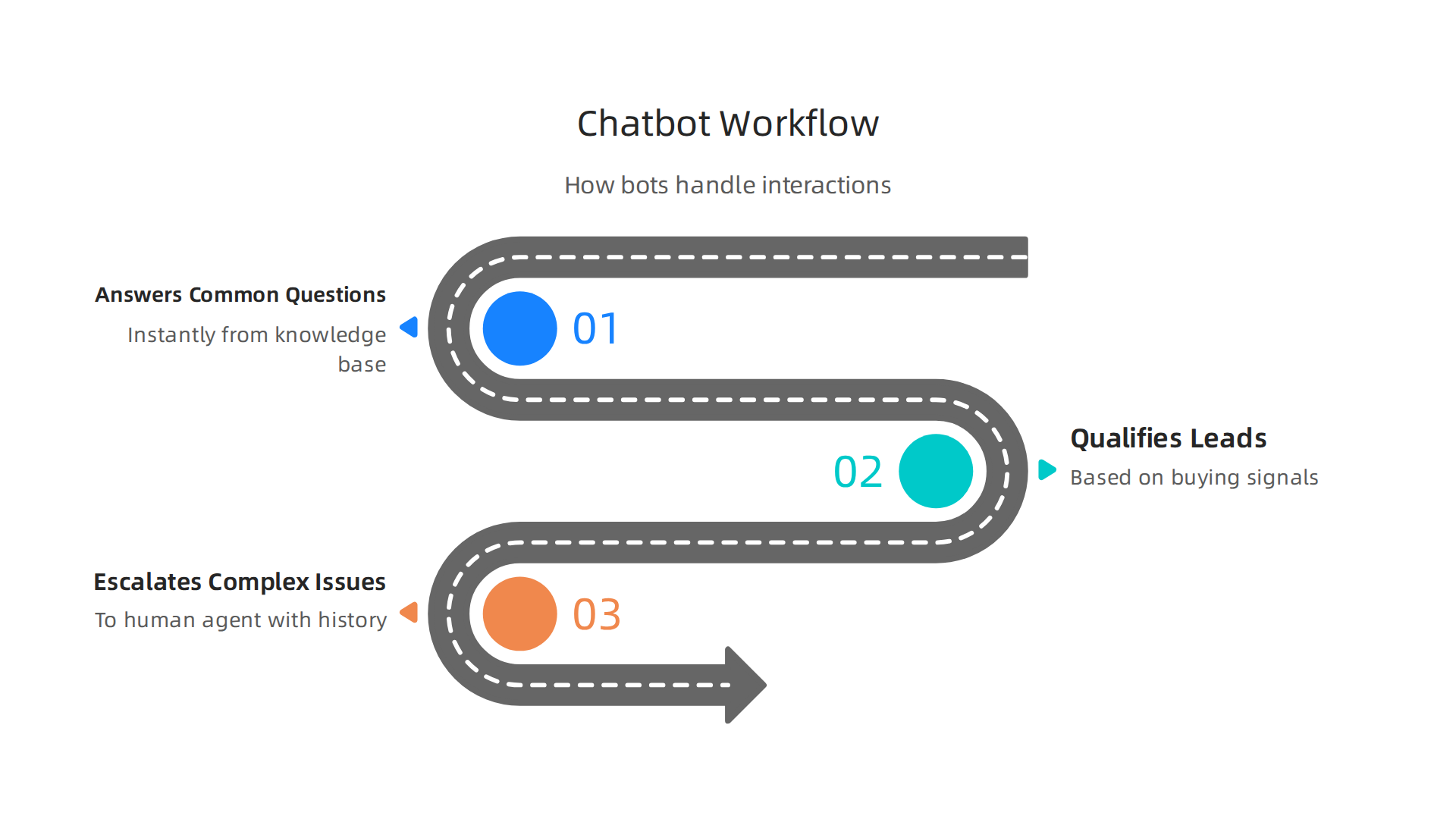
When a customer asks a common question about shipping times or pricing, the chatbot answers instantly from your knowledge base. When a visitor shows buying signals like looking at your pricing page, the chatbot qualifies that lead by asking about budget and timeline. If the issue gets complex, the chatbot escalates to a human agent with full conversation history attached.
The results are real. Your response times drop from hours to seconds. Your support costs go down because one bot handles hundreds of conversations at once. And your customer satisfaction scores go up because people get answers fast.
But there is a catch. AI chatbots collect personal data every time someone types a question. That means they fall under strict privacy rules. The 2026 CCPA updates require businesses to provide clear pre-use notices when automated systems make significant decisions about consumers. If your chatbot qualifies leads or routes them based on automated scoring, you need to tell users how that works and give them opt out options. You can read the full details in the CCPA Requirements 2026 Complete Compliance Guide.
Your chatbot must also handle consent properly. When a user starts a chat, you need to explain what data you collect and why. And if a user asks to delete their chat history, your system must honor that request.
For a deeper look at how these compliance rules apply to your AI tools, check out our guide on AI regulations 2026 compliance strategies to avoid fines.
The good news? HubSpot AI builds these privacy features into its chatbot tools. You get the automation benefits without the compliance headaches.
Regulations change fast though. To keep your chatbot compliant all year long, we recommend getting clear daily updates from The Deep View Newsletter. It covers the latest AI rules so you never miss a critical deadline.
6. AI-Driven A/B Testing and Experimentation
A/B testing is another area where AI makes a huge difference. The old way of testing is slow and full of guesswork. You pick a headline, change a button color, wait weeks, and then hope the results mean something. Most people get this wrong.
HubSpot AI changes the game entirely.
The system can automatically design and run A/B tests on your landing pages, emails, and CTAs. It sets up the variants, splits your traffic, and tracks the results in real time. Here is the big win. It knows the exact moment a test reaches statistical significance. That means it stops the losing variant early and shows the winner to everyone else. No more guessing. No more wasted traffic.
This is a perfect example of how automation AI speeds up real marketing work. Your team stops babysitting spreadsheets and starts focusing on creative strategy instead.

But there is an ethical side to this you cannot ignore. When you test different headlines or button colors, you are running experiments on real people. The 2026 CCPA updates and the EU AI Act require businesses to avoid manipulative design patterns. You cannot trick users into clicking something. Dark patterns are not just unethical in 2026. They carry serious legal penalties.
So what does compliant A/B testing look like? You track user behavior but anonymize the data. You test messages but never hide the unsubscribe button. And if your AI system makes decisions that significantly affect users, you need to tell them clearly. For a full breakdown of these rules, read our guide on ai regulations 2026 compliance strategies.
The tools are powerful and the results are real. Businesses that embrace AI driven testing grow faster and spend less. A recent report shows that businesses using AI report higher revenue and lower costs across the board. You can check out the 22 Top AI Statistics & Trends For 2026 for more detail.
If you want to keep up with how these compliance rules change across the US and Europe, we recommend getting clear daily AI updates from The Deep View Newsletter. It helps you stay ahead so your experiments never put your business at risk.
7. Enhancing Email Marketing with AI
The same smart approach applies to email marketing. HubSpot AI makes your email campaigns smarter by figuring out the best time to send, the best subject line, and the best content for each person on your list. No more guessing. No more blasting the same email to everyone.
Here is how it works. The AI studies each subscriber’s past behavior.
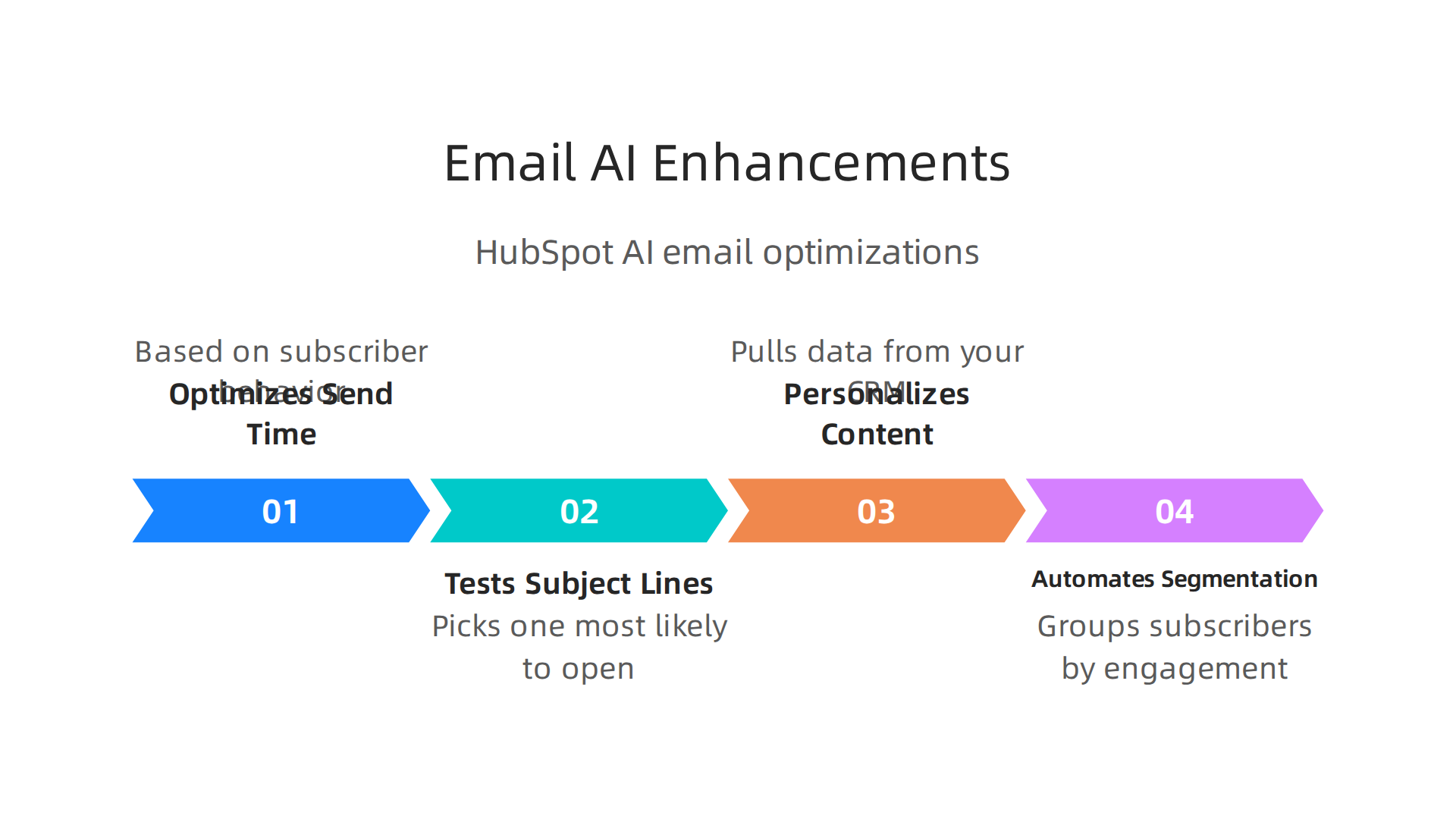
It learns when they open emails, what topics they click, and how often they engage. Then it picks the perfect send time just for them. Some people open emails at 8 AM. Others check at 10 PM. HubSpot AI knows the difference and sends at the right moment.
Subject lines also get a boost. The AI can test dozens of subject line variations and pick the one most likely to get opened. It writes personalized content too, pulling data from your CRM to make each email feel one-on-one. This is a real time saver. As one review notes, the AI content writer generates personalized subject lines and email content based on CRM data, helping you improve open and click rates. You can read more about these capabilities in the HubSpot AI Tools guide for 2026.
Audience segmentation becomes automatic. Instead of manually sorting people into lists, HubSpot AI groups your subscribers by predicted engagement. It identifies who is likely to buy, who is drifting away, and who needs a nudge. Then it sends the right message to each group.
But there is a catch. All this personalization uses personal data. In 2026, you must follow anti-spam laws like CAN-SPAM and data protection rules like the CCPA. You need clear permission to send emails. You need an easy way to unsubscribe. And if your AI uses automated decision-making for significant choices about subscribers, you may need to tell them. For a deeper look at what compliance looks like in 2026, check out our guide on AI regulations compliance strategies for businesses.
The bottom line is simple. HubSpot AI can supercharge your email marketing, but only if you respect your subscribers’ privacy. Get the personalization right, and your open rates and conversions will thank you.
8. Integrating HubSpot AI with Other Tools for Unified Insights
So far we have looked at how HubSpot AI can improve emails, content, and sales. But here is the bigger picture. Your business likely uses many different tools. Maybe you have a CRM, an analytics platform, and an ad manager. Without a connection, your data lives in silos. That means you cannot see the full picture of what works and what does not.
HubSpot AI helps you break down those silos. It connects with your CRM, analytics tools, and advertising platforms to create one single source of truth. When all your data flows into one place, you get unified insights.

You can see exactly which marketing channel drove a sale, how many touches it took, and what content worked best. This is called attribution, and it makes your ROI much easier to measure.
The integration works both ways. HubSpot AI can pull in data from outside sources and push your HubSpot data out to other tools. For example, you can connect it with Google Analytics, Facebook Ads, or Salesforce. Many third-party AI tools also integrate directly with HubSpot. These include tools for content creation, lead enrichment, and meeting insights. In 2026, there are many options to choose from. As one guide explains, there are eight great AI tools that work with HubSpot to automate manual work and improve sales processes. You can explore AI tools that integrate with HubSpot to find the right fit for your team.
One of the most useful integrations is with generative AI assistants. These tools can pull customer data from HubSpot and help you draft personalized messages, summarize records, or even forecast trends. The result is faster work and better decisions.
But there is a catch. When you move data between tools, especially across borders, you have to follow privacy laws. In 2026, rules like the CCPA and GDPR require you to be careful about cross-border data transfers. You need to know where your data goes, how it is stored, and that you have permission to move it. If you send personal information to an AI tool in another country, that may trigger extra compliance steps. To stay safe, make sure your contracts with each tool cover data protection. You can read more about navigating these global privacy rules in our guide on Beta Technologies compliance for 2026.
The bottom line is that integrating HubSpot AI with your other tools unlocks powerful insights. But keep your data governance tight. Respect privacy rules, and you will get the full benefit of a connected system.
If you want to stay ahead of changing AI and data privacy rules, getting daily updates can help. Consider subscribing to a newsletter that delivers clear, actionable AI news straight to your inbox. The AI Newsletter Worth Reading is a great way to keep your compliance knowledge current.
Summary
This article lays out seven practical strategies for using HubSpot AI in 2026, showing how to speed up marketing, sales, and support while staying on the right side of new AI and privacy rules. It explains how to implement automated lead scoring, personalized customer journeys, AI-assisted content creation, predictive sales forecasting, chatbots for service, AI-driven A/B testing, and smarter email campaigns. Each section covers how the HubSpot features work, the measurable benefits (like time saved and higher conversion rates), and common pitfalls such as hallucinations or biased models. The piece emphasizes compliance—GDPR, CCPA, and emerging AI laws—and gives guidance on consent, transparency, and data governance so you can scale safely. By the end, readers will understand which HubSpot AI tools to use, how to verify AI outputs, how to integrate data across systems, and what operational controls to put in place to protect customers and the business.